
A four-line office phone system isn’t just about having extra wires on the wall. It determines whether your front desk can put a client on hold, take a second incoming call, and transfer to a manager without missing a beat. Get this wrong, and you’ll have important callers bumping into busy signals or getting lost in a voicemail loop. Get it right, and your team sounds professional from the very first ring.
I’m Min — the co-founder and writer behind Gadgets Feed. I’ve spent hundreds of hours digging through technical datasheets, cross-referencing Asterisk-based open-source specs against DECT 6.0 analog bridges, and stacking customer review patterns to separate the rock-solid business phone systems from the ones that cause more headaches than they solve.
This guide cuts through the marketing noise to help you identify the best 4 line pbx system for your office size, technical comfort level, and long-term reliability needs.
How To Choose The Best 4 Line PBX System
Choosing a 4-line PBX means deciding between two fundamentally different architectures: traditional analog PBX (plugged directly into copper POTS lines) and VoIP-based hybrid PBX (which connects to SIP trunking services). Each path has distinct hardware requirements, installation complexity, and ongoing operational costs. Your choice dictates whether you need to buy digital desk phones separately or if you can keep your existing analog handsets.
Analog vs. VoIP: Which Architecture Fits Your Office?
Analog PBX units (like the AT&T SynJ or Panasonic KX-TA824) connect directly to standard landlines without needing an internet connection. This makes them bulletproof during power outages if backed up, and they are dead simple to troubleshoot with standard telephone wiring. However, they typically lack advanced features like voicemail-to-email or mobile app integration, and they are harder to scale beyond six lines. VoIP-based systems (like the ring-u Hello Hub or Grandstream UCM63xx series) require a stable broadband connection and a SIP provider, but they offer virtual receptionists, ring groups, and softphone extensions for remote workers out of the box.
Port Configuration: FXO, FXS, and Expansion Slots
The single most important spec to check on a 4-line PBX is the FXO (Foreign Exchange Office) port count. Each FXO port connects to one outside phone line — so for four lines, you need at least four FXO ports. Some units ship with only two FXO ports but include expansion slots for daughter cards. FXS (Foreign Exchange Station) ports connect to analog phones, fax machines, or analog cordless base stations. If you plan to use standard desk phones, make sure the unit has enough FXS ports or supports SIP (digital) endpoints through a network switch with PoE+.
Auto Attendant, Voicemail, and Multi-Layer Routing
A professional 4-line PBX should route incoming calls without manual intervention. Look for a built-in auto attendant that can play a recorded greeting and accept DTMF (touch-tone) input to transfer calls to specific extensions. Confirm how many voicemail mailboxes the system supports (per-user mailboxes versus a single general mailbox). Advanced systems allow direct inward system access (DISA) with fax detection, three-level auto attendant menus, and call-forward-to-cell features that let you stay reachable when away from the desk.
Quick Comparison
On smaller screens, swipe sideways to see the full table.
| Model | Category | Best For | Key Spec | Amazon |
|---|---|---|---|---|
| Grandstream UCM6302 | VoIP Hybrid | Growing offices with up to 3000 users | 2 FXO + 2 FXS ports, 450 concurrent calls | Amazon |
| Grandstream UCM6304A | VoIP Hybrid | Offices needing 4 analog trunks plus SIP | 4 FXO + 4 FXS ports, 1000 users | Amazon |
| AT&T SynJ SB67158 | Analog Corded/Cordless | Small offices wanting a 1-4 line DECT base | DECT 6.0, 4-line capability, digital answering system | Amazon |
| ring-u Hello Hub | VoIP Service + Hub | Non-technical teams wanting plug-and-play VoIP | Up to 20 concurrent calls, 75 extensions | Amazon |
| AT&T TL88102 + 2 TL88002 | Analog Cordless | Small offices with 2-line cordless expansion | 2-line DECT 6.0, 14-min digital answering system | Amazon |
| EnGenius FreeStyl 2 | Analog Long Range | Warehouses and large facilities | 900 MHz, 100,000 sq ft, 9 handsets | Amazon |
| Yealink W76P + 4x W56H | SIP Cordless | VoIP offices wanting DECT cordless bundles | 10 SIP accounts, 30-hr talk time, DECT | Amazon |
| Panasonic KX-TA824 | Analog Hybrid | Installations with existing analog wiring | 3 CO lines expandable, 8 station ports | Amazon |
| XBLUE X16 Plus + 7 XD10 | Digital Key System | Offices wanting a complete turnkey bundle | 6 outside lines, 16 digital phones | Amazon |
In‑Depth Reviews
1. Grandstream UCM6302 IP PBX
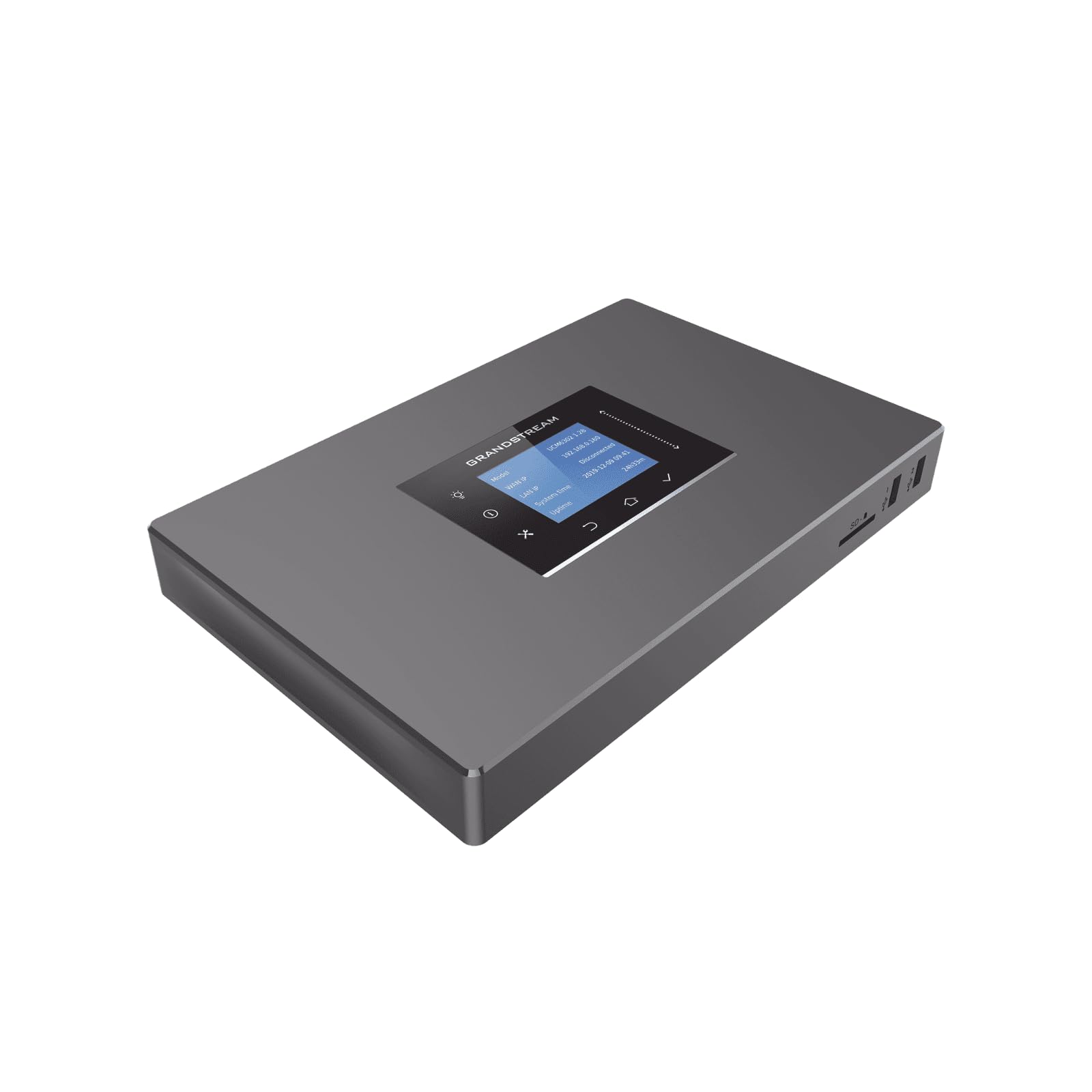
The Grandstream UCM6302 is a powerhouse VoIP PBX packed into a desktop form factor. Its Asterisk-based operating system supports zero-configuration provisioning for Grandstream SIP endpoints, meaning you can plug in compatible IP phones and have them auto-register without manually entering extension numbers. The 2 FXO ports let you connect two analog trunk lines for failover or legacy POTS lines, while the 2 FXS ports power analog phones, fax machines, or cordless base stations. With a capacity of 3000 users and 450 concurrent calls, this unit can comfortably handle a 4-line office with plenty of headroom for growth into a multi-department setup.
Built-in conferencing and the free Wave desktop/mobile app give remote workers seamless access to the same PBX features as on-site staff — including voicemail, instant messaging, and extension-to-extension calling. The three Gigabit network ports with integrated PoE+ simplify wiring by powering your IP phones directly from the PBX without needing a separate PoE switch. Security features include secure boot, a unique device certificate, and a random default password to prevent unauthorized access to your phone network.
Setup requires familiarity with SIP terminology and network configuration. Users comfortable with router interfaces or who have experience with open-source phone systems will find the UCM6302 liberating. Those expecting a consumer-grade plug-and-play experience may need to budget for professional configuration. But the sheer feature density — full-band Opus codec support, jitter resilience up to 50% packet loss, GDMS cloud management — makes it the most future-proof mid-range PBX on the market today.
Why it’s great
- Zero-config auto-provisioning for Grandstream SIP phones saves hours of manual extension programming.
- Three Gigabit ports with integrated PoE+ eliminate the need for a separate power injector or PoE switch.
- Full-band Opus codec and 50% packet loss resilience deliver acceptable voice quality even on imperfect internet connections.
Good to know
- Requires SIP trunk service or VoIP provider — it does not connect directly to analog landlines without the FXO ports.
- No bundled handsets; you must purchase Grandstream or compatible SIP phones separately.
- Advanced features like CRM integration need API knowledge or third-party help to configure.
2. Grandstream UCM6304A Audio IP PBX

The UCM6304A is the audio-only variant of Grandstream’s top-tier small-business PBX, and it substantially upgrades the port configuration over its younger sibling. Four FXO ports let you connect four analog trunk lines directly, while the four FXS ports can serve analog phones, fax machines, or cordless base stations without needing external ATAs. With support for 1000 users and a built-in four-party audio conferencing bridge, this unit is engineered for offices that expect steady call volume across multiple departments.
Zero-configuration provisioning is identical to the larger UCM series — any Grandstream SIP phone plugged into the same LAN segment will auto-register and pull its extension from the PBX database. The system also includes a free Wave app for Android, iOS, Chrome, and Firefox, enabling desktop and mobile workers to make and receive calls using their office extension number.
Programming complexity is the trade-off for this level of capability. Users with Asterisk background or those willing to pay for remote configuration will unlock a system that rivals enterprise PBX platforms costing five times as much. The automated NAT firewall traversal service is a welcome addition for offices with complex network topologies, and GDMS cloud management allows remote monitoring and firmware updates without on-site visits. For a 4-line office planning to scale to six or eight lines down the road, the UCM6304A is the most strategic investment.
Why it’s great
- Four FXO ports provide direct analog trunk connectivity without requiring a separate gateway or SFP module.
- Free Wave app with desktop and mobile browser support extends office extension functionality to remote workers instantly.
- GDMS cloud management enables remote provisioning, monitoring, and firmware updates for multi-site deployments.
Good to know
- Audio-only variant means no native H.264/H.265 video conferencing is built into the base unit.
- Configuration depth can overwhelm users who just want a simple out-of-the-box phone system.
- No handsets included in the box; requires separate purchase of SIP endpoints.
3. AT&T SynJ SB67158 DECT 6.0 4-Line Corded/Cordless

The AT&T SynJ SB67158 is a traditional analog small-business phone system that handles 1 to 4 landline connections through a single base unit. It uses DECT 6.0 technology for interference-free cordless communication, and the base includes a digital answering system. The base unit comes with a corded console that provides direct access to all four lines with dedicated line buttons, making it easy to see which line is ringing and place calls on hold across lines. This is a turnkey solution that includes the base, one corded desk phone console, and support for up to 8 cordless handsets.
Users report that the sound quality on the corded base is clear and that the range from the DECT 6.0 radios is solid — up to two floors in multi-story buildings. The setup is genuinely simple for anyone who has plugged in a landline phone before: connect the base to your phone jacks, pair handsets, and start making calls. There is no network configuration, no SIP trunk credentials to enter, and no VLAN setup. For small law offices, real estate agencies, or retail shops with four active phone lines, this unit delivers exactly what they need without overcomplicating the process.
The 3-way conferencing is functional but limited — you cannot add a fourth party to an existing call. More importantly, the system does not support rolling over an incoming call from line 1 to line 2 when line 1 is busy, which forces callers to either leave a voicemail or wait for the line to free up. The answering machine quality has been noted as mediocre by some users, with dropped recordings and garbled playback. If you need basic four-line functionality with a familiar DECT cordless experience, the SynJ SB67158 is a solid workhorse, but it lacks the routing intelligence of a true PBX.
Why it’s great
- True plug-and-play analog setup with no network configuration required — works with standard PSTN lines.
- Reliable DECT 6.0 range with multi-floor penetration and interference-free cordless operation.
- Includes a corded base console with dedicated line buttons for visual line status and easy hold management.
Good to know
- Cannot roll over a call from one line to another when the first line is busy — callers may hit a busy signal.
- Only 3-way conferencing; no option for a larger audio bridge or conferencing room.
- Answering machine has received mixed reliability reports with dropped recordings and poor playback clarity.
4. ring-u Hello Hub Small Business Phone System

The ring-u Hello Hub is a VoIP PBX that prioritizes ease of use above all else. The device itself arrives pre-configured with ring-u’s no-contract VoIP service, meaning you plug it into your router and register for service through a web portal. There is no need to compile Asterisk code, no SIP trunk passwords to hunt through admin menus, and no VLAN tagging. The hub supports up to 20 concurrent calls (lines) and 75 extensions, making it far more capable than the average small-office phone system — but the real selling point is the 90-day 100% money-back satisfaction guarantee.
Because the Hello Hub ships without any phones, you will need to purchase Grandstream GXP or GRP series SIP phones separately. The plug-and-play auto-configuration for those specific models is genuinely impressive — approved Grandstream phones will detect the hub on the network and auto-assign extensions without manual input. Mobile phone integration is first-class: you can use your smartphone as an extension through the ring-u softphone app, or configure offsite landline phones as remote extensions for satellite workers. The virtual receptionist (auto attendant) can be customized with open/closed/holiday schedules and ring groups without requiring IT support.
You are locked into ring-u’s VoIP service to use the Hello Hub. While the company charges by the line (not by the extension), and there is no contract, you are betting on a single vendor’s platform longevity. Customer support has received near-unanimous praise for being US-based and responsive — multiple reviews specifically call out representatives like Nick and Mike H. for going beyond expectations during setup. If you want a fully managed VoIP experience without touching SIP configuration files, the Hello Hub is the least intimidating path to a professional 4-line phone system.
Why it’s great
- True plug-and-play VoIP with auto-discovery of compatible Grandstream SIP phones — no manual extension assignment.
- Smartphone as extension support via softphone app, SMS texting from desktop interface, and offsite landline remote extensions.
- 90-day money-back guarantee provides confidence for businesses nervous about switching to VoIP.
Good to know
- Requires ring-u’s proprietary phone service; not compatible with generic SIP trunk providers.
- No handsets included in the box; you must purchase compatible SIP phones separately.
- Setup is easy for non-technical users, but advanced customization options are less discoverable in the web portal.
5. AT&T TL88102 + (2) TL88002 3 Handset Cordless Phone
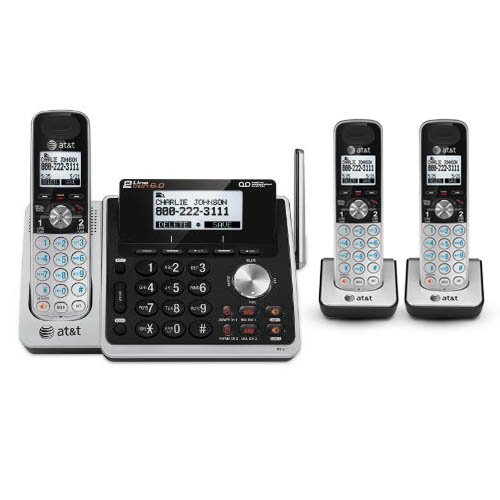
The AT&T TL88102 bundle combines two TL88002 handsets with one TL88102 base for a total of three cordless handsets operating on two landline connections. This is strictly a 2-line system, so it does not qualify as a full 4-line PBX — but it is a popular entry point for micro-offices that currently have two lines and want DECT 6.0 cordless functionality without spending on a full multi-line control unit. The base handles 4-way conferencing, meaning you can bridge three other parties into a call, and it is expandable up to 12 handsets if you purchase additional TL88002 units.
Setup is straightforward: plug the base into your wall jack and phone line, pair handsets by pressing the page button on the base, and start making calls. The backlit keypad and 50-entry caller ID memory cover basic needs well. The 14-minute digital answering system provides adequate recording capacity for a small office with moderate traffic. Voice quality gets consistently high marks from users, and the interference-free DECT 6.0 band ensures clear conversations even in environments with heavy Wi-Fi interference.
The speakerphone quality is notably poor, with both parties on the call struggling to hear each other. And because this is fundamentally a 2-line system, you cannot use it to manage four separate outside lines unless you buy a second base unit. For a micro-office on a tight budget that only needs two lines, this bundle represents solid value, but it is not a replacement for a proper 4-line PBX.
Why it’s great
- Incredibly affordable entry point into a multi-handset DECT 6.0 cordless phone system with expandability to 12 handsets.
- Clear DECT 6.0 voice quality with interference-free operation in Wi-Fi-dense environments.
- 4-way conferencing and a 14-minute digital answering system included in the base unit.
Good to know
- Only supports 2 landline lines — cannot manage 4 separate phone numbers without a second base.
- 50-entry caller ID memory fills up fast in an active business, forcing manual deletion of old entries.
- Speakerphone audio quality is poor, with both sides struggling to hear during hands-free calls.
6. EnGenius FreeStyl 2 Extreme Long Range Cordless Phone

The EnGenius FreeStyl 2 is not a traditional 4-line PBX — it is a single-line analog cordless phone system built for extreme physical coverage. It operates on the 900 MHz frequency band rather than 1.9 GHz DECT or 2.4/5 GHz Wi-Fi, which gives it fundamentally better penetration through concrete, metal shelving, and wood compared to any DECT 6.0 phone on the market. EnGenius claims 100,000 square feet of facility coverage, 6 floors of in-building penetration, and up to 10 acres of open area — claims backed by user reports of reliable performance through warehouses with pallets, machinery, and dense foliage.
The FreeStyl 2 also functions as a 2-way radio / intercom between handsets without involving the phone line, which is genuinely useful for warehouse staff or retail floor teams who need to communicate without tying up a line. The intercom is private (handset-to-handset) and supports multi-cast broadcast to all handsets simultaneously. An RSSI tool built into the base station lets you walk around your facility and measure signal strength to find the optimal mounting location — a rare and practical feature for large-space deployments.
The handset build quality feels less premium than the price suggests — buttons are small and stiff, and the default volume is low (though adjustable). The audio quality over the telephone line has been described as “like a cheap radio” by some users, which may be a dealbreaker for client-facing calls. This system is a specialist tool for environments where range and concrete penetration matter more than audio fidelity or multi-line routing. If your office is a warehouse, factory floor, or multi-acre property where DECT phones fail, the FreeStyl 2 is the only real option.
Why it’s great
- 900 MHz analog delivers up to 100,000 square feet of coverage with concrete and metal penetration that DECT cannot match.
- Built-in 2-way radio/intercom with multi-cast broadcast to all handsets works independently of phone line.
- RSSI measurement tool helps find optimal base placement for maximum facility coverage.
Good to know
- Single-line analog only — cannot manage 4 separate outside phone numbers without multiple base units.
- Handset build quality feels less refined than similarly priced DECT systems.
- Audio quality over telephone lines is not as crisp as modern DECT or VoIP phones.
7. Yealink IP Phone W76P Bundle + 4 W56H Handsets
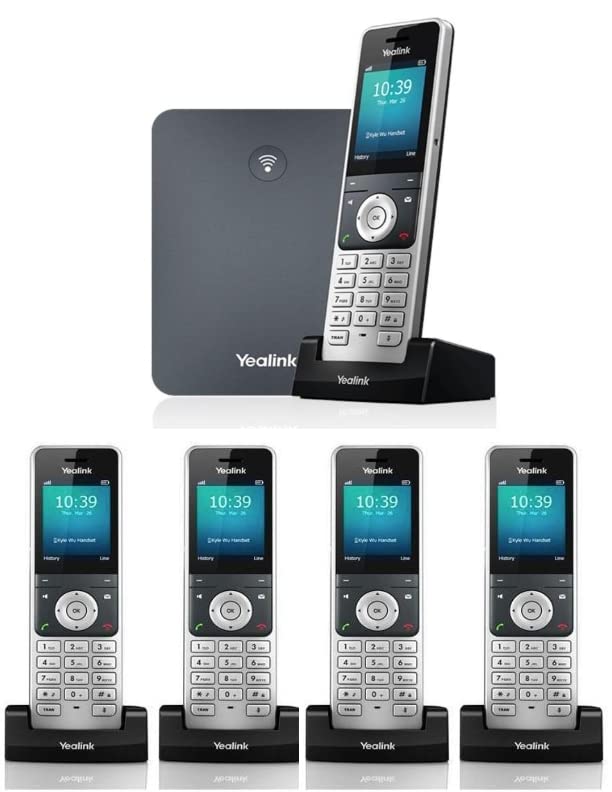
The Yealink W76P bundle pairs a W70B DECT base station with four W56H cordless handsets, creating a pure SIP-based cordless phone system that registers with an external VoIP PBX or SIP trunk. This is not a standalone PBX — it is the endpoint side of a phone system, designed to connect to a Grandstream UCM series, ring-u hub, or third-party SIP server. The W70B base supports up to 10 VoIP accounts and 10 cordless handsets, with a 30-hour talk time and 400-hour standby per handset on a single charge. Quick charging delivers 2 hours of talk time from a 10-minute charge — genuinely useful for busy offices.
The 2.4-inch 240×320 color display is a step up from the monochrome LCDs found on most analog cordless phones, making the phonebook and caller ID information much more readable. DECT radio coverage reaches 50 meters indoors and 300 meters outdoors, which is typical for DECT but falls short of the 900 MHz EnGenius system. Twenty simultaneous calls across the base mean that even with 10 registered handsets, you will not run into capacity issues during peak hours. The headset jack (3.5 mm) allows for a wired headset connection directly to the handset.
Setup difficulty is the primary barrier — the first-time configuration requires connecting the W56H handsets to the W70B base (conceptually similar to pairing Bluetooth devices), and then registering the base with your PBX or SIP provider. Users without experience in SIP account configuration may struggle. There have been reports of receiving incorrect handset counts in the bundle, and some users found the speakerphone volume too low for noisy environments. For businesses already running a SIP PBX that need high-quality DECT cordless endpoints, this bundle is excellent — but it is not a self-contained phone system.
Why it’s great
- 10-minute quick charge provides 2 hours of talk time, minimizing downtime during the workday.
- 2.4-inch color display with intuitive UI makes phonebook navigation and caller ID much easier compared to analog cordless phones.
- Supports up to 10 VoIP accounts and 20 simultaneous calls for multi-line business use.
Good to know
- Requires an external SIP PBX or SIP trunk service to function — this is a cordless endpoint system, not a standalone PBX.
- Speakerphone volume has been reported as too low for noisy office environments by several users.
- Initial pairing and SIP registration can be challenging for users without VoIP configuration experience.
8. Panasonic KX-TA824 Advanced Hybrid Analog Telephone System

The Panasonic KX-TA824 is a legacy analog hybrid PBX control unit that connects to CO lines (analog telephone company lines) and supports both proprietary digital and standard single-line analog telephones. Out of the box, it handles 3 CO lines and 8 station ports, with expansion capabilities up to 8 CO lines and 24 station ports via optional cards. Built-in caller ID support (with a pre-installed KX-TA62493-3 card) gives each CO line Caller ID and Call Waiting functionality.
The KX-TA824 supports three levels of voice mail integration: APITS integration, CO-based voicemail, or an internal VM card. The auto attendant/OGM feature provides 180 seconds of recorded greeting over a single channel, with 3-level menu branching — professional enough for a small business but limited in multi-lingual or complex routing scenarios. PC programmable (on-site and remote) with Panasonic’s proprietary software, the system offers deep feature control, including DISA (Direct Inward System Access) with fax detection, call forwarding, and tenant service for sharing the system between two separate businesses.
The biggest hurdle with the KX-TA824 is its age — it requires a computer running Windows XP (or a virtual machine) for the initial programming software, as the USB driver is not compatible with modern Windows versions. The physical hardware is robust and reliable, but the software toolchain feels frozen in time. Users replacing an identical Panasonic unit will find the swap trivial, but anyone new to the platform may spend hours digging through online forums to find programming documentation. If you need a 4-line analog system that simply works without cloud services, the KX-TA824 is a proven tank — but modern SIP-based alternatives are far easier to manage.
Why it’s great
- Proven analog hybrid reliability with decades of real-world deployment in small offices and medical clinics.
- Expandable from 3 to 8 CO lines and 8 to 24 station ports via optional cards, supporting growth without replacing the chassis.
- Three-level auto attendant with 180-second greeting, DISA, fax detection, and tenant service for shared office setups.
Good to know
- Requires legacy Windows XP software for programming — modern computers need a virtual machine or older OS.
- USB driver may not be readily available, complicating the initial setup for newcomers.
- Limited to analog voice quality; no native VoIP support or SIP trunking without an additional ATA gateway.
9. XBLUE X16 Plus Small Business Phone System Bundle
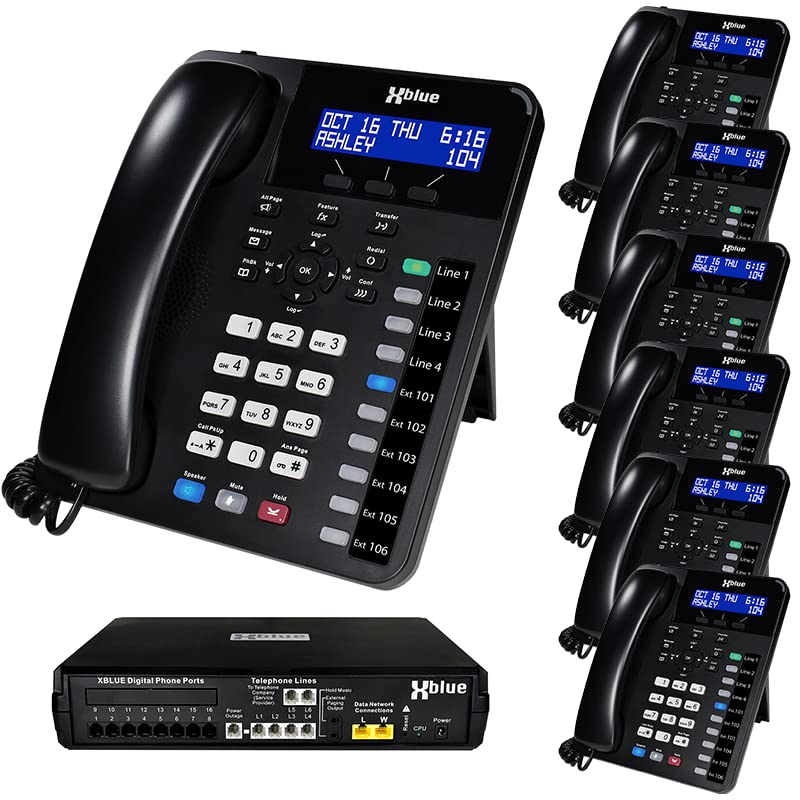
The XBLUE X16 Plus bundle is the most complete all-in-one solution in this list. It ships with the X16 Plus control unit, seven XD10 digital desk phones, and all required cabling — everything needed to set up a professional office phone system out of the box. The system supports up to 6 outside telephone company lines and 16 digital phones, with each XD10 phone providing 10 programmable buttons with indicator lights showing line and extension status. This is a digital key system that does not require the internet to operate — all voicemail is stored on-site, and the system remains fully functional during internet outages.
Feature depth is impressive for a bundle at this price point. The built-in auto attendant can answer calls with a professional greeting and route them by department. Every user gets their own voicemail box with message waiting indication. Call announce intercom with hands-free answer-back lets you reply to internal pages without picking up the handset. Music on hold, paging, call recording, call forwarding to cell phones, and conference calling are all included. Users report that the XD10 digital phone audio quality is noticeably better than typical analog phones, and the dedicated line buttons with LED status make it immediately obvious which lines are in use.
The X16 Plus is wired only — there are no cordless handsets included, and the system uses standard telephone wiring (POTS), so you cannot move phones without running cable. The intercom ring volume may be too quiet for very noisy environments like workshops with loud machinery. While the initial cost is higher than any other system on this list, users consistently report saving thousands compared to quotes from traditional phone system vendors. For an office that wants a turnkey, internet-independent digital phone system with professional auto attendant and voicemail, the XBLUE X16 Plus bundle represents the highest-value complete package available.
Why it’s great
- Complete bundle with control unit and seven XD10 digital phones — everything needed for a 2-16 person office in one box.
- Does not require internet for core operation; voicemail stored on-site and system remains functional during internet outages.
- Professional auto attendant, per-user voicemail, call announce intercom, and music on hold included without extra licensing fees.
Good to know
- Corded system only — no cordless handsets included or easily added without separate cordless base stations.
- Infrastructure loss (power failure) disables auto attendant and voicemail unless backed up with a UPS battery.
- Intercom ring may be too quiet for very loud workspaces with construction or industrial noise.
FAQ
Can I use a 4-line PBX with VoIP service instead of analog landlines?
What is the difference between a digital key system and a PBX for a 4-line office?
Do I need a separate phone for each line on a 4-line PBX?
Final Thoughts: The Verdict
For most small businesses seeking a 4 line pbx system that balances future-proofing with manageable complexity, the winner is the Grandstream UCM6302 because it combines 2 FXO analog ports with powerful VoIP functionality and room to scale to thousands of users at a reasonable price point. If you want a true turnkey bundle with digital phones included, nothing beats the XBLUE X16 Plus for offices that want to avoid separate phone purchases and SIP configuration. And for a completely internet-independent analog system that is rock-solid reliable, the Panasonic KX-TA824 remains a time-tested workhorse for traditional landline setups.