
Tossing a flake of hay onto the ground is the fastest way to watch your feed budget get trampled, soiled, and refused by even the hungriest goat. A proper automatic goat feeder changes that dynamic entirely, keeping forage elevated and grain separate so every ounce of feed serves its purpose instead of rotting into the dirt.
I’m Min — the co-founder and writer behind Gadgets Feed. My research into this category focused on comparing steel gauge, weld quality, capacity sizing, and real-world feedback from goat owners who have tested these units through wet winters and aggressive herd behavior.
After sorting through dozens of models and hundreds of owner experiences, I’ve assembled the clearest comparison of the best automatic goat feeder options that balance durable construction with practical daily feeding.
How To Choose The Best Automatic Goat Feeder
Selecting the right feeder means matching the build material, capacity, and design to your specific herd size and housing situation. Goats are destructive eaters that will test every joint and weld, so cutting corners on construction almost always leads to a second purchase sooner than expected.
Material and Weather Resistance
Hot-dipped galvanized steel offers the best protection against rust and impact in outdoor pens. Powder-coated steel looks good initially but chips when goats climb or rub against it, exposing bare metal to moisture. Polyethylene feeders work well for grain-only setups under cover but degrade faster in direct sunlight and cannot handle the abuse of hay feeding.
Capacity and Herd Size
A 25-gallon feeder works for two to three goats, but a herd of six or more needs at least 45 to 55 gallons of hay capacity to reduce refilling frequency and prevent dominant animals from blocking access. The bottom grain tray should hold at least 20 gallons if you supplement with pellets or grain regularly.
Safety and Assembly Quality
Wide gaps at the bottom of hay racks can trap goat heads, especially with smaller breeds like Nigerian Dwarfs. Look for designs with narrow slot spacing or add your own grid. Pre-drilled holes and included tools save significant assembly time, but inspect welds and bolt connections — loose bars and sharp edges are the most common failure points reported by owners.
Quick Comparison
On smaller screens, swipe sideways to see the full table.
| Model | Category | Best For | Key Spec | Amazon |
|---|---|---|---|---|
| Kojem 4 Ft Livestock Feeder | Premium | All-weather heavy duty | 73.8 lb steel frame | Amazon |
| BUYYAH 5 Ft Pasture Hay Feeder | Premium | Large herds | 55 gallon total | Amazon |
| KANE Lamb/Goat Feeder | Premium | Grain-only creep feeding | 72 lb polyethylene | Amazon |
| YXJSTO 69 Gallon Pasture Feeder | Mid-Range | Large herd 2-in-1 feeding | 69 gallon capacity | Amazon |
| BUYYAH Mini Horse Hay Feeder | Mid-Range | Compact pasture feeding | 35 gallon capacity | Amazon |
| Gelacie Pasture Hay Feeder | Mid-Range | Value 2-in-1 hay and grain | 55 gallon hay + 22 gallon grain | Amazon |
| RYFT Pasture Hay Feeder | Mid-Range | Economical 2-in-1 setup | 69 gallon total | Amazon |
| Goatzy Wall Mount Hay Feeder | Budget | Wall-mounted space saving | 25 gallon galvanized | Amazon |
In‑Depth Reviews
1. Kojem 4 Ft Long Livestock Feeder

The Kojem unit tips the scales at nearly 74 pounds of heavy-duty steel with a powder-coated silver finish that resists rust through humid summers and wet winters. Its 47-inch width accommodates multiple goats eating simultaneously without crowding, and the 2-in-1 design with a flat bottom tray catches dropped hay so nothing goes to waste. Owners consistently report this feeder outlasts cheaper alternatives, with one noting it survived a blind 1,000-pound horse walking directly through it.
Assembly takes roughly ten minutes thanks to pre-drilled holes and included hardware, though the bottom feed pan attaches via spot welds rather than a continuous bead. Some units arrive with minor shipping dents or scratches that expose bare metal, so inspect upon delivery and touch up any damage immediately. The bar spacing allows good access for goats and sheep while keeping hay contained, and the flat tray leaves only sticks behind rather than edible forage.
For herds of six or more animals, the Kojem delivers the sturdiest build in this price tier with the lowest risk of weld failure over time. Its weight prevents tipping even when goats climb onto the frame, and the powder coating holds up better than most when applied over a properly prepared surface. Apply a coat of rust inhibitor annually if you park it in a constantly wet environment.
Why it’s great
- Heaviest steel frame in its class resists tipping and impact
- Flat bottom pan catches virtually all dropped hay
- Pre-drilled assembly reduces setup time
Good to know
- Spot-welded pan attachment is weaker than continuous weld
- Shipping damage and dents reported on some units
- Powder coating chips if scratched during assembly
2. BUYYAH 5 Ft Pasture Hay Feeder
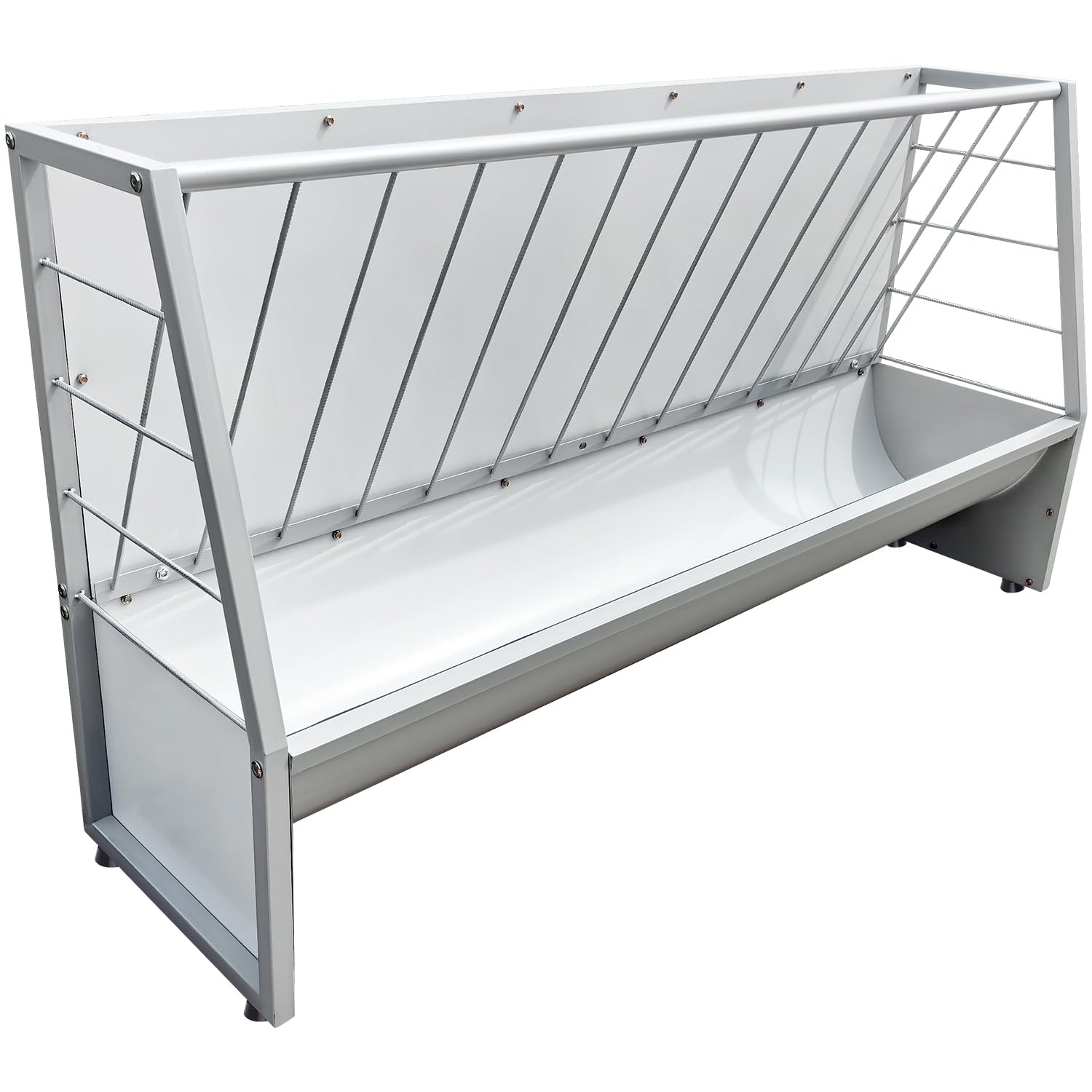
The 5-foot BUYYAH feeder provides a massive 35 gallons of hay storage plus a 22-gallon lower tray for grain or shredded forage, making it one of the highest-capacity single-unit options available. Constructed from robust galvanized steel with a silver finish, it withstands all-weather exposure without rusting through, and the seamless 2-in-1 design lets you load feed from one side to save space in tight barn aisles. Owners of dwarf goats and sheep report the unit holds about one-third of a small bale in the upper rack and accepts a full bale when you load through the bottom.
Assembly takes around 15 minutes with included tools, though the box does not contain printed instructions — the process is straightforward enough for anyone comfortable with basic hardware. The vertical hay rack bars are secured by welds that have shown weakness in some units, with reports of bars popping loose under smaller goats like Nigerian Dwarfs and Lamancha crosses. This is the most common durability complaint, so reinforce the welds with a portable welder if you have aggressive herd members.
The sheet metal construction feels thin in the lower feed tray, which can dent if a goat steps through it, and sharp edges on some units require filing before safe use. But for sheer volume and the ability to feed a large herd with minimal daily refilling, this BUYYAH model delivers excellent value. Add a tarp over the top to protect feed from rain if the feeder sits fully exposed.
Why it’s great
- 55-gallon combined capacity reduces refill frequency
- Seamless side-load design saves barn space
- Galvanized construction resists rust long-term
Good to know
- Hay rack welds can break under active goats
- No printed instructions included in the box
- Lower tray sheet metal is thin and dents easily
3. KANE Lamb/Goat Feeder
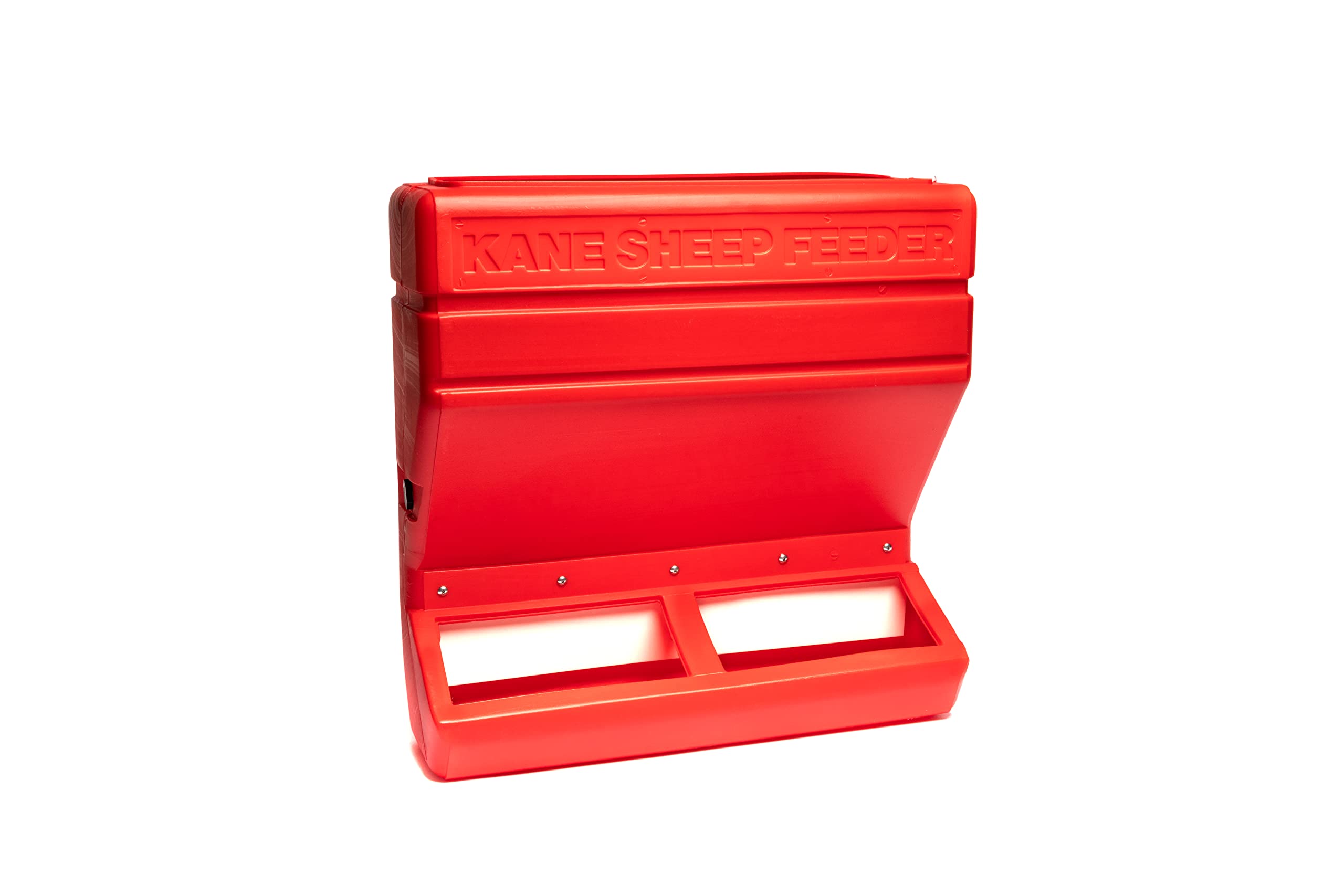
The KANE feeder takes a completely different approach from the steel hay racks above — it is a wall-mounted polyethylene unit designed specifically for dry feed such as pellets or ground grains, holding up to 72 pounds at a time. Its low-profile panel design maximizes feed consumption by allowing lambs and kids to access the entire trough without wasting material, and the heavy-duty plastic construction eliminates rust concerns entirely. Owners using it as a creep feeder for up to 20 lambs report it holds roughly 40 pounds of pelleted feed and holds up well under daily use.
The feeder mounts to a wall or fence panel using included hardware, but several buyers note the lack of a mounting template or printed instructions makes alignment tricky — you will need to measure carefully and level the bracket yourself. The open top leaves feed exposed to rain and debris unless installed under cover, and the size is smaller than many expect at 25 by 25 inches with a 9-inch depth. For a dedicated grain station inside a barn or covered shelter, this KANE unit performs perfectly with zero metal fatigue to worry about.
Polyethylene does not handle UV exposure as well as steel, so keep this feeder in a shaded or covered location to prevent material degradation over multiple seasons. Its lightweight design makes it easy to remove for cleaning, and the smooth interior surfaces prevent feed from caking in corners. If your feeding regimen relies heavily on pellets or ground grains, this is the most practical dedicated grain feeder in the lineup.
Why it’s great
- 72-pound capacity holds enough for multiple days
- Polyethylene eliminates rust and corrosion
- Made in the USA with consistent quality
Good to know
- No mounting template or instructions included
- Open top exposes feed to rain and birds
- Smaller footprint than many buyers anticipate
4. YXJSTO 69 Gallon Pasture Hay Feeder
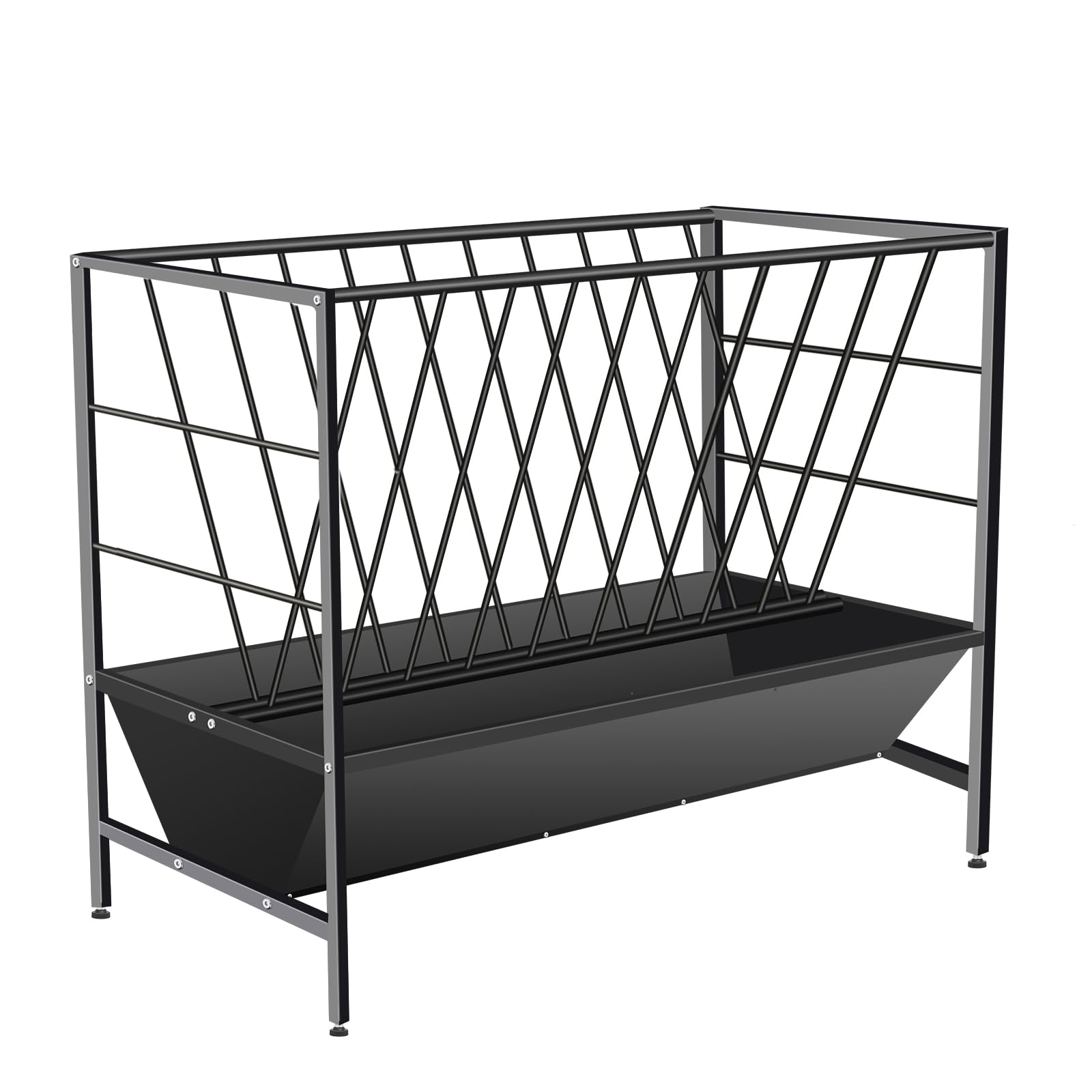
The YXJSTO feeder packs a true 69 gallons of combined capacity with 45 gallons allocated to the upper hay rack and 24 gallons in the lower grain or shredded forage trays. The galvanized steel construction includes black powder coating for additional rust resistance, and the 2-in-1 design keeps feed and forage separate to prevent fouling of grain with hay dust. Multiple owners report this feeder works well for smaller goats and sheep, with easy assembly from included screws and instructions requiring only basic tools.
The main durability concern involves the hay rack bars, which some owners of rams and aggressive goats found knocked loose over time, posing an injury risk if the bars fall or create sharp edges. The lower trays lack a cover, so grain and pellets stay exposed to weather, and several buyers suggested adding wood strips or a tarp over the top to protect feed. At 35 pounds, the unit is relatively light for its capacity, making it easy to relocate but also easier for large animals to push around if not anchored.
For a mixed herd of goats and sheep in a pasture setting with moderate weather, the YXJSTO provides outstanding volume at a reasonable investment. Inspect the weld joints on the hay rack bars before first use and consider reinforcing them if your herd includes large, pushy animals. The galvanized base metal should outlast the powder coating by several seasons.
Why it’s great
- 45/24 gallon split offers optimal hay-to-grain ratio
- Light enough at 35 lb to move between pastures
- Easy screw-together assembly in under 15 minutes
Good to know
- Hay rack bars can dislodge under aggressive animals
- No weather cover for lower grain trays
- Light weight allows tipping by large animals
5. BUYYAH Mini Horse Hay Feeder

The BUYYAH Mini Horse Hay Feeder is a 35-gallon freestanding unit (30 gallons hay, 5 gallons shredded catch) that prioritizes portability and ease of assembly over sheer capacity. Its galvanized steel frame holds up well in all weather, and the thickened nylon fabric trough underneath catches loose hay so animals can still access dropped forage. Owners of Nigerian dwarf goats and Icelandic sheep consistently praise how easy this unit is to move around the barn and pasture — light enough to relocate daily yet heavy enough not to tip under normal feeding.
The most serious safety issue reported involves the triangular hay access opening: the bottom gap is wide enough for a Nigerian dwarf goat to get its head stuck, requiring design changes at the lower corners to prevent entrapment. Some owners also note the feeder flips over more easily than expected if goats climb onto the frame rather than eating from the sides. Assembly is straightforward with just screws, and the lightweight build allows one person to handle placement without assistance.
This feeder works best for small herds of miniature goats, sheep, or ponies in a controlled barn environment where you can supervise feeding and adjust positioning as needed. The nylon trough holds up well to repeated use but should be inspected for tears periodically. If you have larger breed goats or aggressive feeders, consider a heavier model with narrower bar spacing.
Why it’s great
- Lightweight and easy to move between locations
- Nylon catch trough reduces ground waste
- Quick screw-together assembly
Good to know
- Triangular opening can trap small goat heads
- Tends to flip over when goats climb the frame
- Best suited for small or miniature breeds
6. Gelacie Pasture Hay Feeder
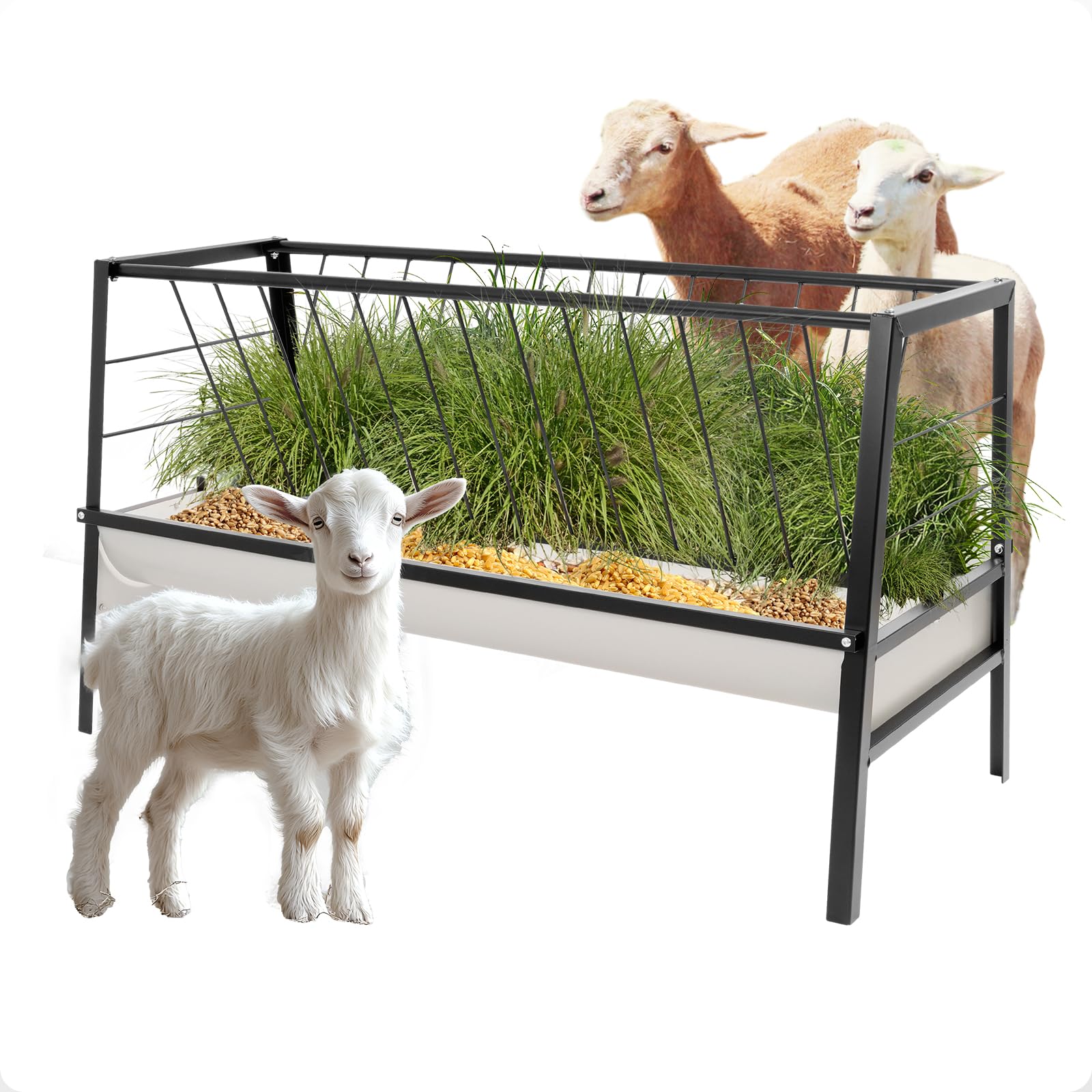
The Gelacie feeder uses high-strength steel with a silver powder-coated finish and a full-welded frame that provides genuine long-term durability compared to bolt-together alternatives. Its 55-gallon upper hay rack paired with a 22-gallon lower grain pan feeds up to 14 goats or sheep at once, and the deep feeding pan layout minimizes spillage while keeping feed contained. The rounded edges protect livestock from cuts and scrapes during feeding, a detail many budget feeders overlook.
Assembly requires two people for certain steps, particularly when attaching the metal flex feed trays where the bolt holes may not align perfectly — some owners resorted to zip ties to secure the bottom grain pans. The design allows goats to climb onto and even crawl underneath the unit, which can lead to tipping or entrapment if the legs are not stabilized. Despite these quirks, owners of Boer goats and Nigerian Dwarfs report significant hay waste reduction and expect the feeder to match the durability of more expensive brands.
Compact dimensions of roughly 60 by 27 by 34 inches make this feeder suitable for smaller barns and sheds, and the 50-pound weight provides enough mass to resist casual pushing. Check the pre-drilled holes for alignment before starting assembly and have a second person available for the feed tray installation steps. The powder coating provides decent rust protection for covered outdoor use but may chip in full sun exposure over multiple seasons.
Why it’s great
- Full-welded frame for long structural integrity
- Feeds up to 14 animals simultaneously
- Rounded edges prevent livestock injury
Good to know
- Bolt holes on feed trays may not align perfectly
- Goats can climb underneath and risk entrapment
- Requires two people for full assembly
7. RYFT Pasture Hay Feeder
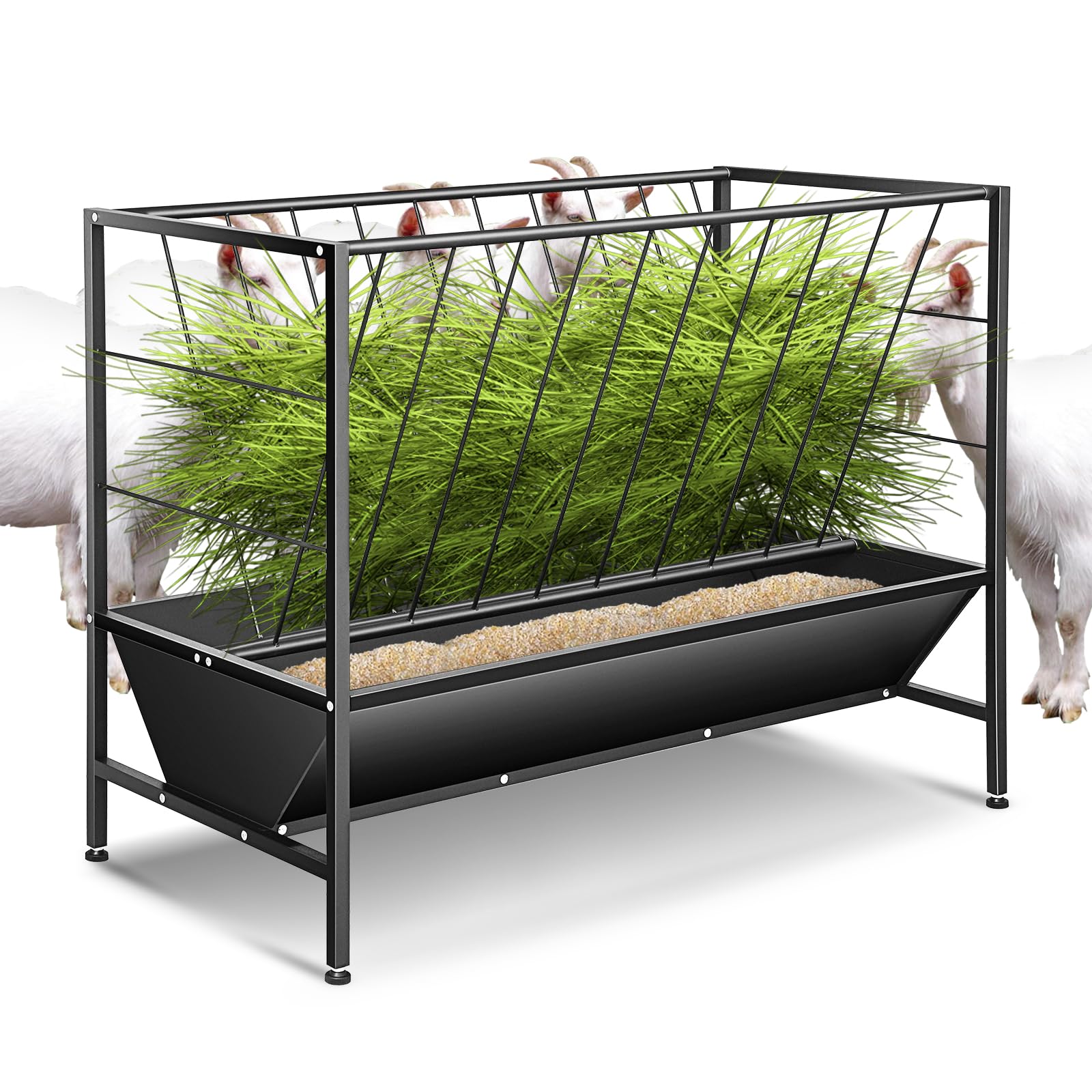
The RYFT feeder combines a 45-gallon hay rack with a 24-gallon grain pan in a 2-in-1 design that significantly reduces feed waste by catching fallen hay in the lower tray where animals can still reach it. The metal steel construction includes an anti-corrosion coating and rounded corners that prevent scratches and injury to livestock, and the freestanding design includes pre-drilled holes with all necessary screws and installation tools for a 10-minute setup. Owners of goats and sheep consistently report cleaner feeding areas and less wasted hay after switching to this feeder.
The unit is somewhat lightweight for its capacity, and buck goats that enjoy pushing objects around can shift the feeder out of position. The hay bars have been known to loosen or fall out after a few months of use with larger goats, which is the most common durability complaint. Adding extra wire mesh across the hay rack helps contain feed and prevents bars from spreading under pressure. The included tools are functional but basic — having your own ratcheting screwdriver speeds up assembly considerably.
For a mid-range investment, the RYFT delivers strong waste-reduction performance and a clean, organized feeding station that makes daily chores faster. The anti-corrosion coating holds up well in covered outdoor areas but may show wear faster in fully exposed, rainy environments. Inspect the weld points on the hay rack bars after the first month of use and tighten any loose connections immediately.
Why it’s great
- 45/24 gallon split catches fallen hay for reuse
- Pre-drilled holes and tools included for quick assembly
- Rounded corners protect livestock from injury
Good to know
- Lightweight frame shifts under aggressive goats
- Hay rack bars can loosen and fall out over time
- Anti-corrosion coating thinner than galvanized steel
8. Goatzy Wall Mount Hay Feeder
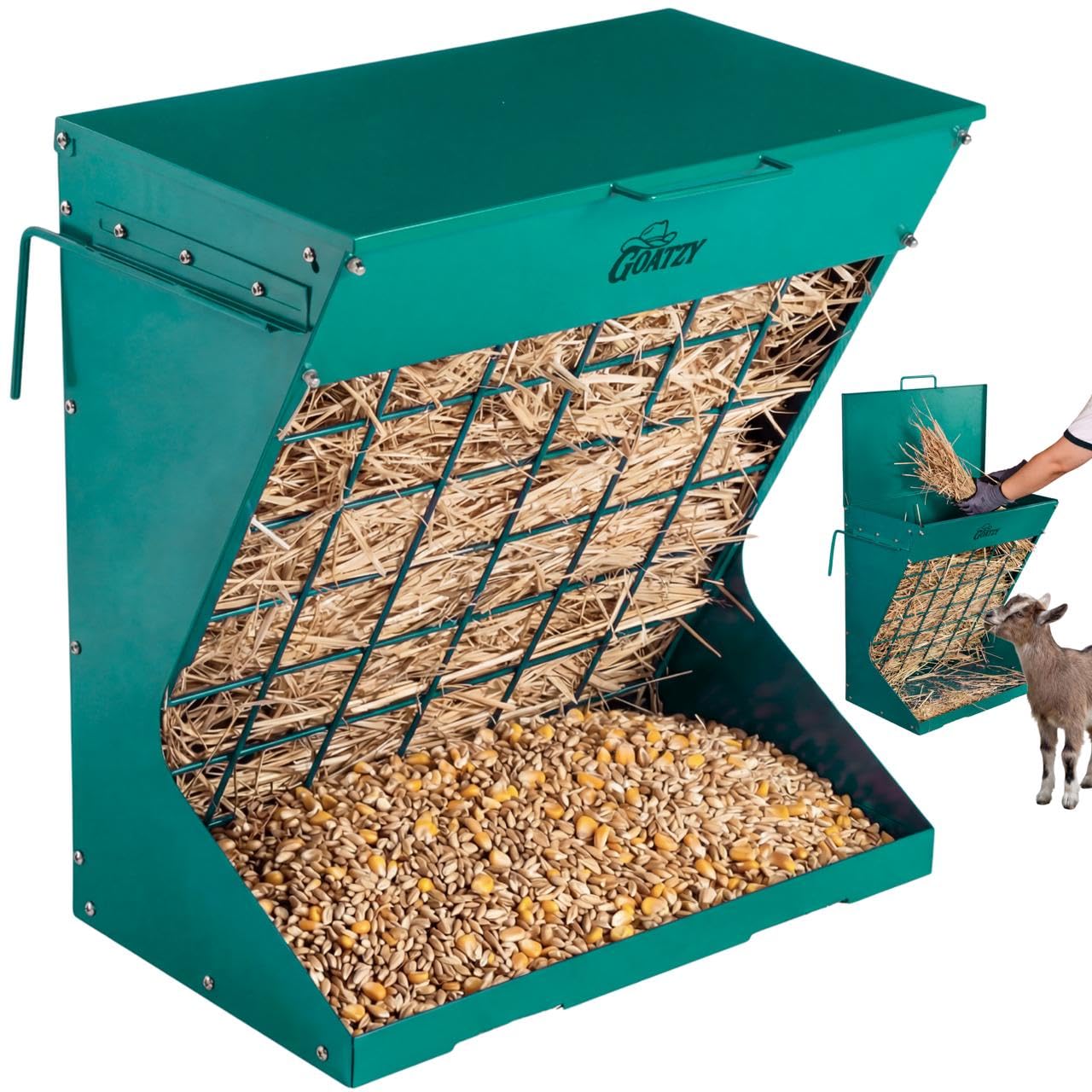
The Goatzy Wall Mount Hay Feeder takes up zero floor space by attaching directly to walls or fence panels, making it ideal for small pens or stalls where every square foot counts. Its 2-in-1 design combines a 25-gallon hay rack with a grain feeder tray, and the hinged roof keeps forage dry during rain or snow while allowing easy top-loading. The hot-dipped galvanized steel construction provides genuine rust resistance, and the unit ships flat for easy assembly with all hardware included.
The thin metal construction has drawn criticism from owners who report screws loosening frequently, the lid falling off, and goats learning to open the roof to access hay. Some units arrive missing side panels or bolts, requiring replacement parts from the manufacturer. The metal dents relatively easily compared to heavier-gauge feeders, and the mounting hooks can pull away from the wall if not secured with heavy-duty anchors into studs. Several owners added washers to the wall hooks and replaced the supplied screws with stronger hardware.
Despite these limitations, the feeder effectively reduces hay waste in controlled indoor settings and keeps three to four flakes of hay compact and accessible. The hinged roof is a genuine advantage for covered feeding stations where you want to protect feed without a separate tarp. This unit works best for small herds in barns where you can monitor and reinforce the mounting points regularly.
Why it’s great
- Wall mount saves valuable floor and pen space
- Hinged roof protects hay from rain and snow
- Hot-dipped galvanized steel resists rust
Good to know
- Thin metal dents easier than heavier gauge feeders
- Screws loosen and lid may detach over time
- Some units arrive missing side panels or hardware
FAQ
What size automatic goat feeder do I need for six goats?
Is powder-coated or galvanized steel better for outdoor goat feeders?
Final Thoughts: The Verdict
For most users, the best automatic goat feeder winner is the Kojem 4 Ft Long Livestock Feeder because its 74-pound steel frame and flat catch pan deliver the best combination of durability and waste reduction for mixed herds. If you want ulta-large capacity for a big herd, grab the BUYYAH 5 Ft Pasture Hay Feeder. And for a dedicated grain station inside a barn, nothing beats the KANE Lamb/Goat Feeder for pure simplicity.