
The difference between a 60-mph laydown and walking away clean often comes down to a single piece of gear. An automotive racing helmet isn’t just about meeting a minimum safety standard—it’s about managing rotational forces through MIPS or multi-density EPS, shaving grams off the shell so your neck doesn’t fatigue mid-session, and getting a seal that won’t lift at triple-digit speeds.
I’m Min — the co-founder and writer behind Gadgets Feed. I spend my days buried in spec sheets, certification documents, and real-world crash reports to separate marketing noise from genuine advancements in impact protection.
Whether you’re strapping in for a track day or a weekend autocross event, this guide breaks down the shell materials, liner technologies, and fitment nuances that define the very best automotive racing helmets on the market today.
How To Choose The Best Automotive Racing Helmets
Selecting a race helmet comes down to three pillars: certification level, shell construction, and interior fit system. The wrong combination can mean a helmet that’s either too heavy, too hot, or simply not certified for your specific racing discipline. We break down each factor so you can match the gear to the grid.
Certifications: DOT, ECE, and Snell
DOT is the legal floor in the US, but ECE 22.06 and Snell standards impose more rigorous impact-energy management, oblique impact testing, and shell penetration resistance. For wheel-to-wheel competition or track days, an ECE 22.06 or Snell-rated helmet provides a measurable safety buffer that a bare DOT sticker cannot guarantee.
Shell Materials and Weight
Polycarbonate shells are the most affordable but add noticeable mass—aim for under 3.5 pounds if you’ll be in the car for extended sessions. Fiberglass composite shells split the difference on weight and cost. Full carbon fiber shells, like those on premium offerings, shave ounces off the top of your spine, reducing muscle fatigue during long stints and improving the helmet’s overall crash energy absorption profile.
Liner Tech: MIPS and Multi-Density EPS
MIPS (Multi-directional Impact Protection System) adds a low-friction layer that allows the helmet to rotate relative to the head, reducing rotational forces transmitted to the brain during angled impacts. Multi-density EPS liners stack different foam firmnesses to manage a wider range of impact speeds. A helmet with both MIPS and multi-density EPS offers the most comprehensive concussion protection currently available in a street-legal package.
Quick Comparison
On smaller screens, swipe sideways to see the full table.
| Model | Category | Best For | Key Spec | Amazon |
|---|---|---|---|---|
| Simpson Mod Bandit | Premium | Modular street & track use | Tri-composite shell, DOT/ECE | Amazon |
| Shoei X-Fifteen Escalate | Premium | Hardcore track day and competition | Snell & ECE 22.06 certified | Amazon |
| Bell Race Star Flex DLX | Premium | All-day comfort with photochromic visor | 3K carbon shell, MIPS | Amazon |
| ILM Carbon Fiber 861C | Mid-range | Budget-friendly carbon fiber option | Full carbon shell, dual visor | Amazon |
| ScorpionEXO Covert FX | Mid-range | Quiet street fighter / cafe racer | ECE 22.06, 2.9 lb composite | Amazon |
| Fox Racing V1 MIPS | Mid-range | Entry-level dirt track / off-road | MIPS, DOT/ECE 22.06 | Amazon |
| Bell MX-9 Adventure MIPS | Mid-range | Dual-sport adventure riding | MIPS, composite shell | Amazon |
| iXS Trigger FF MIPS | Mid-range | Ultra-light mountain bike / pit bike | 595g, MIPS, Fidlock buckle | Amazon |
| Alpinestars SM3 Solid | Budget | Cost-effective motocross / off-road | ECE 22.06, polycarbonate shell | Amazon |
In‑Depth Reviews
1. Simpson Mod Bandit Modular Motorcycle Helmet
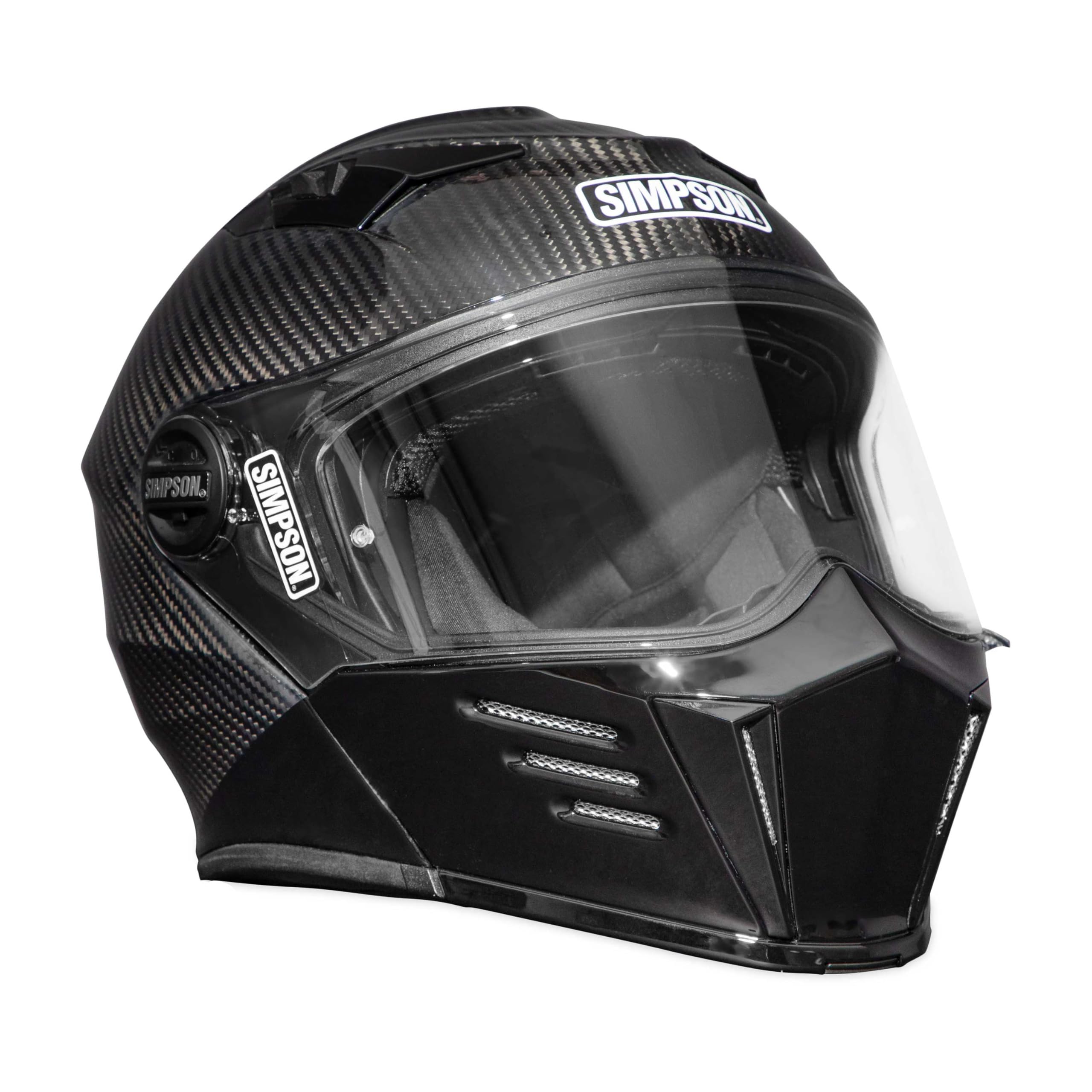
The Simpson Mod Bandit brings a modular flip-front design into serious track territory with a tri-composite shell that balances weight and impact dispersal. It meets both DOT and ECE standards, so it’s legal for most road-racing organizations that require a full-face lid. The one-hand chin bar operation lets you flip up at pit stops without fumbling, and the metal locking components add long-term durability where plastic clips would fatigue.
Inside, the helmet features multiple adjustable intake vents paired with free-flow exhaust ports that actively pull hot air out—a critical feature when you’re sitting in a closed cockpit. The integrated spoiler adds high-speed stability by cutting lift, and the communication system compatibility means you can wire into a race intercom without drilling. Expect a snug, intermediate oval fit; some users note it runs slightly large, so consult the size chart carefully.
The biggest trade-off is wind noise above 40 mph. Even with the chin curtain in place, earplugs become mandatory for longer sessions. The internal sun shield is a welcome addition for variable lighting, and the clear external shield provides optical clarity at speed. If you want a modular helmet that doesn’t compromise on structural integrity, this is the premium benchmark.
Why it’s great
- DOT/ECE dual certification for broad track legality
- Modular flip-front with metal chin bar lock
- Integrated spoiler reduces lift at speed
Good to know
- Notable wind noise above 40 mph
- Runs large; verify sizing before ordering
2. Shoei X-Fifteen Escalate Full Face Helmet

The Shoei X-Fifteen is the direct descendant of the helmets worn by MotoGP world champions, carrying Snell M2025, ECE 22.06, and DOT certifications simultaneously—a rare triple crown. The shell uses a fiberglass-reinforced matrix that keeps weight at roughly 3.8 pounds while delivering progressive impact absorption across multiple speed ranges. The aerodynamic shape has been refined in a wind tunnel to reduce drag and lift at over 150 mph, which matters for open-track lapping.
Comfort is driven by an independently adjustable center pad system. Instead of a one-piece liner, you get replaceable sections that let you dial the fit around the crown, occiput, and temples separately. The multi-density EPS liner integrates improved air tunnels and cheek pad cooling ducts to push airflow across the rider’s temples. The CWR-F2R racing shield uses a double-lock mechanism that stops the visor from popping open during a crash or at extreme speed.
On the track, the ventilation is noticeably more aggressive than the RF-1400—you feel air moving across the scalp even at moderate speeds. The included breath guard, chin curtain, and lower air spoiler help manage fog and noise, though wind noise is still present at highway pace. If your budget allows for a true flagship lid, the X-Fifteen delivers the most advanced safety engineering in this lineup.
Why it’s great
- Triple-certified (Snell, ECE, DOT)
- Replaceable center pad system for custom fit
- Wind-tunnel-optimized aerodynamics
Good to know
- Premium price point
- Wind noise present; earplugs recommended
3. Bell Race Star Flex DLX Helmet
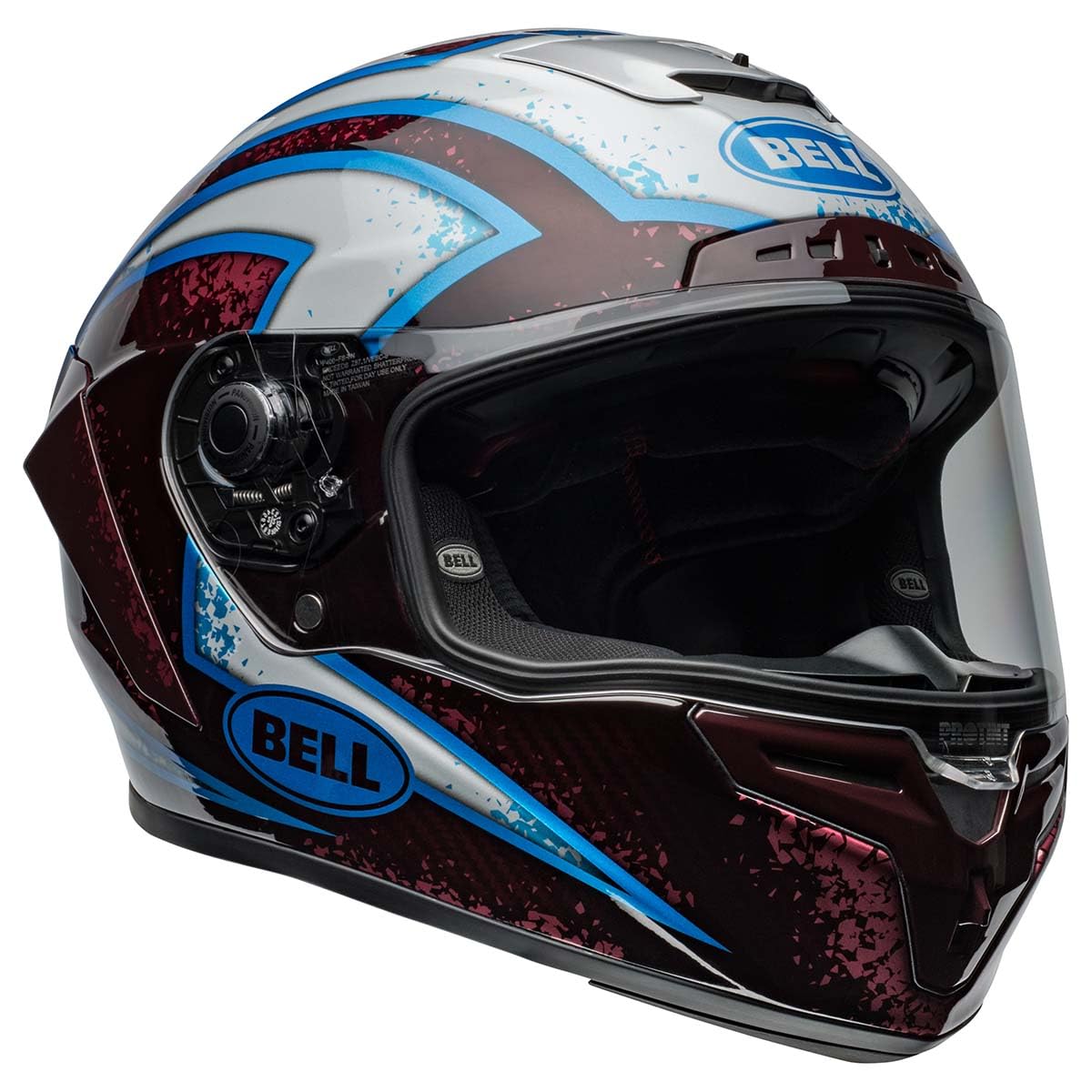
Bell’s Race Star Flex DLX sits at the sweet spot between track-ready specs and street practicality. The 3K carbon shell is lightweight without the astronomical price of full-on race-replica lids, and it integrates MIPS for rotational impact management. The standout feature is the ProTint Photochromic Shield Technology—the visor automatically darkens in bright sunlight and clears up in lower light, eliminating the need to swap shields mid-session.
The interior has been updated with speaker pockets for Bluetooth comms and new triple-density cheek pads that combine a soft comfort layer with a firmer impact layer. The fit is a Bell intermediate oval, which tends to run snug—several riders recommend going one size up from your typical street helmet size. The ventilations system is well-vented, with brow, chin, and exhaust ports that keep things cool even in 90-degree paddock heat.
At speed, the Race Star feels stable and planted, with minimal buffeting. The photochromic shield is a genuine convenience, though the auto-darkening could be slightly more aggressive in direct sun. The liner is removable and washable, and the magnetic closure strap is a nice touch for gloved use. For a do-it-all helmet that bridges track days and spirited canyon runs, this is a compelling pick.
Why it’s great
- Photochromic shield eliminates visor swaps
- Lightweight 3K carbon fiber construction
- MIPS for rotational impact protection
Good to know
- Fits small; order one size larger
- Photochromic could be darker in bright sun
4. ILM Carbon Fiber Motorcycle Helmet 861C

The ILM 861C brings a genuine carbon fiber shell to a mid-range price point, making it one of the few budget-conscious options to offer the weight savings of a premium material. The shell is paired with EPS buffer foam and meets DOT FMVSS 218 standards, so it’s track-legal for most organizer requirements. The dual visor system includes a clear outer shield with Pinlock EVO pins (Pinlock insert sold separately) and a retractable inner sun visor for quick adjustments.
The cheek pads are plush and removable for washing, and the metal quick-release strap is easier to manage with gloves than a traditional double-D ring. The rear spoiler is functional as well as cosmetic—it houses a passive vent that extracts warm air from the helmet interior. Build quality is solid for the price, with a sleek snake-effect carbon weave that turns heads in the paddock.
Where the 861C shows its price point is noise management and finish consistency. Multiple users report noticeable wind noise above 50 mph, especially with the top vents open, and a few have received tinted visors with minor scratches out of the box. Replacement visors can be difficult to source. Still, the safety margin of a carbon shell at this price is hard to ignore for budget-minded racers.
Why it’s great
- Full carbon fiber shell at an accessible price
- Dual visor system with integrated sun shield
- Rear spoiler aids hot-air extraction
Good to know
- Wind noise is elevated above 50 mph
- Replacement visors are hard to find
5. ScorpionEXO Covert FX Full Face Helmet

The ScorpionEXO Covert FX uses a TCT-Ultra composite shell that’s both lightweight (2.9 pounds in medium) and certified to the stringent ECE 22.06 standard, which includes oblique impact and shell penetration tests that the older DOT-only helmets skip. The street-fighter styling nods to classic drag-race aesthetics, but the aero-tuned ventilation is thoroughly modern—a large top intake forces cool air in while dual-position mouth vents can function as a defroster or direct airflow.
Inside, the KwikWick C liner wicks moisture effectively, and the KwikFit cheek pads are sculpted to accommodate eyeglasses without pressure points. The EverClear fog-free shield works well in cool, humid morning sessions, and a spare dark smoke shield is included in the box. Communication readiness is handled by 50mm speaker pockets that fit most Bluetooth units without needing to carve foam.
The biggest selling point is how quiet this helmet is—multiple riders call it the quietest full-face they’ve owned, thanks to the neoprene chin skirt and tight seal around the neck roll. That said, wind noise complaints do emerge above 50 mph, and the dual-position vent control inside the chin area is fiddly with gloves on. For a mid-range helmet that punches above its weight on comfort and safety certifications, the Covert FX is a standout.
Why it’s great
- ECE 22.06 certified for modern safety testing
- Very lightweight at 2.9 pounds
- Excellent noise management for the price bracket
Good to know
- Internal vent controls are hard to operate with gloves
- Wind noise increases notably above 50 mph
6. Fox Racing V1 Motocross Dirt Bike Helmet

The Fox Racing V1 brings MIPS and dual DOT/ECE 22.06 certification to a price point that’s often reserved for simple polycarbonate shells. The construction uses an ABS outer shell mated to an EPS liner, keeping the weight manageable while maintaining energy absorption across a wide speed range. It’s available in both youth sizes (YS–YL) and adult sizes (XS–XXL), making it a viable option for younger racers or riders with smaller head circumferences.
The ventilation is aggressive, with large front intake ports that channel air across the scalp—a genuine advantage in hot off-road conditions or poorly ventilated car cockpits. The adjustable visor works well with dirt goggles or standard glasses, and the padding is plush out of the box, though some riders find the cheek pads initially tight. After a break-in period of a few rides, the comfort level improves significantly.
Where the V1 saves cost is in the shell material and finish. The ABS shell is heavier than composite or carbon alternatives, and the paint can chip more easily if dropped. Wind noise is higher than full-face street helmets due to the open-port design, but earplugs resolve that easily. For an entry-level MIPS helmet that doesn’t cut corners on safety standards, the V1 is hard to beat.
Why it’s great
- MIPS and ECE 22.06 at an entry-level price
- Excellent ventilation for hot conditions
- Wide size range includes youth options
Good to know
- ABS shell is heavier than composite options
- Higher wind noise due to open vent design
7. Bell MX-9 Adventure MIPS Motorcycle Helmet

The Bell MX-9 Adventure MIPS is engineered for the dual-sport and adventure crowd, which means it bridges off-road ventilation with street-friendly aerodynamics. The composite shell is paired with MIPS for rotational protection, and the visor is positioned high enough to clear most goggles while still reducing lift at highway speed. It’s compatible with the Bell ProTint shield if you want to upgrade to photochromic later.
Fit is consistent with Bell’s intermediate oval shape, and the interior padding is comfortable for long days in the saddle. The ventilation is always-on—there’s no way to close the front vents—which is great for hot weather but a drawback in cold conditions. Wind noise is present above 60 mph, but that’s typical for adventure-style helmets with a peak visor. Earplugs solve the issue cleanly.
Where the MX-9 really shines is value: you get MIPS and a solid composite build without straying into the + territory of competitors like the Shoei Hornet X2. The Cardo communication system fits easily into the cheek pads, and the shield removal is tool-less for quick swaps. If your racing includes mixed surfaces or long-distance navigation stages, this lid covers the bases without overcomplicating the design.
Why it’s great
- MIPS at a mid-range adventure price
- Goggle-compatible visor with reduced lift
- Tool-less shield removal for quick swaps
Good to know
- Front vents are always open—not ideal for cold weather
- Wind noise above 60 mph
8. iXS Trigger FF MIPS Full Face Helmet
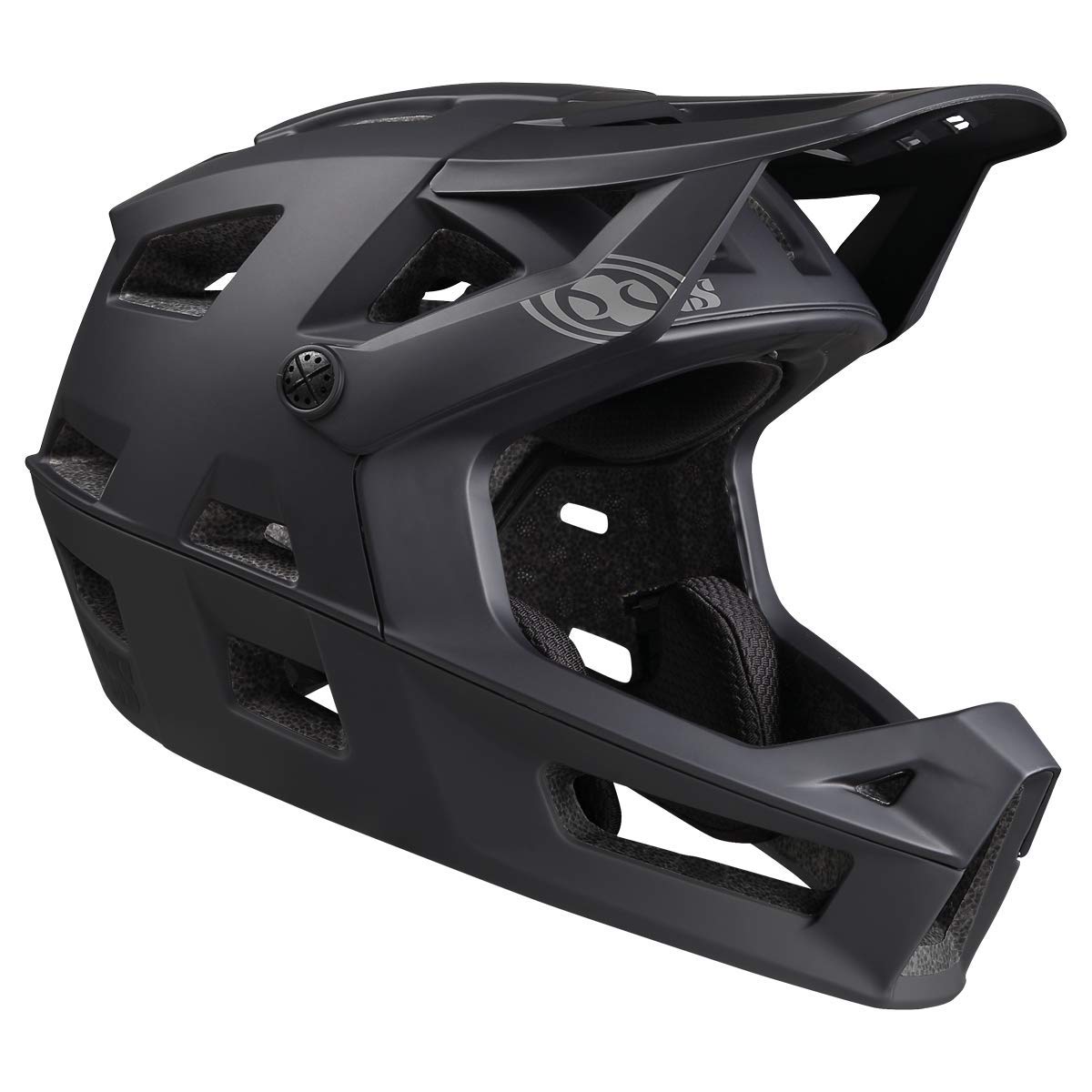
At roughly 595 grams, the iXS Trigger FF MIPS is one of the lightest full-face helmets on the market that still carries a downhill mountain bike certification (ASTM F1952-15) and MIPS integration. The patented all-in-one design fuses the EPS liner and chin bar into a single piece, which eliminates weight from fasteners and overlapping layers while maintaining structural integrity. The Ergo-Fit Ultra system lets you dial both vertical and circumference tension with one knob.
The Fidlock magnetic buckle is a standout convenience feature—it clicks together instantly when you bring the strap near, even with thick gloves on. Ventilation is generous, with internal channels that push air over the top of the head and out through rear exhaust ports. The two-position adjustable visor sits high enough to accommodate goggles without pressure on the bridge of the nose.
This helmet is primarily designed for mountain biking and enduro racing, so it lacks the ECE or Snell certifications required for most automotive track events. However, for pit bike racing, karting, or off-road automotive disciplines like rally where lower speeds and different impact angles apply, the sub-600-gram weight dramatically reduces neck fatigue over a full day. The trade-off is that the EPS liner is less dense than automotive-grade foam, so it won’t handle a 60-mph car crash the same way a Shoei X-Fifteen would. Use it for the right context.
Why it’s great
- Extremely lightweight at 595 grams
- Fidlock magnetic buckle for fast, gloved use
- Patented one-piece EPS/chin bar design
Good to know
- Not ECE or Snell rated for automotive track use
- EPS density is lower than automotive-grade helmets
9. Alpinestars SM3 Solid Motocross Helmet
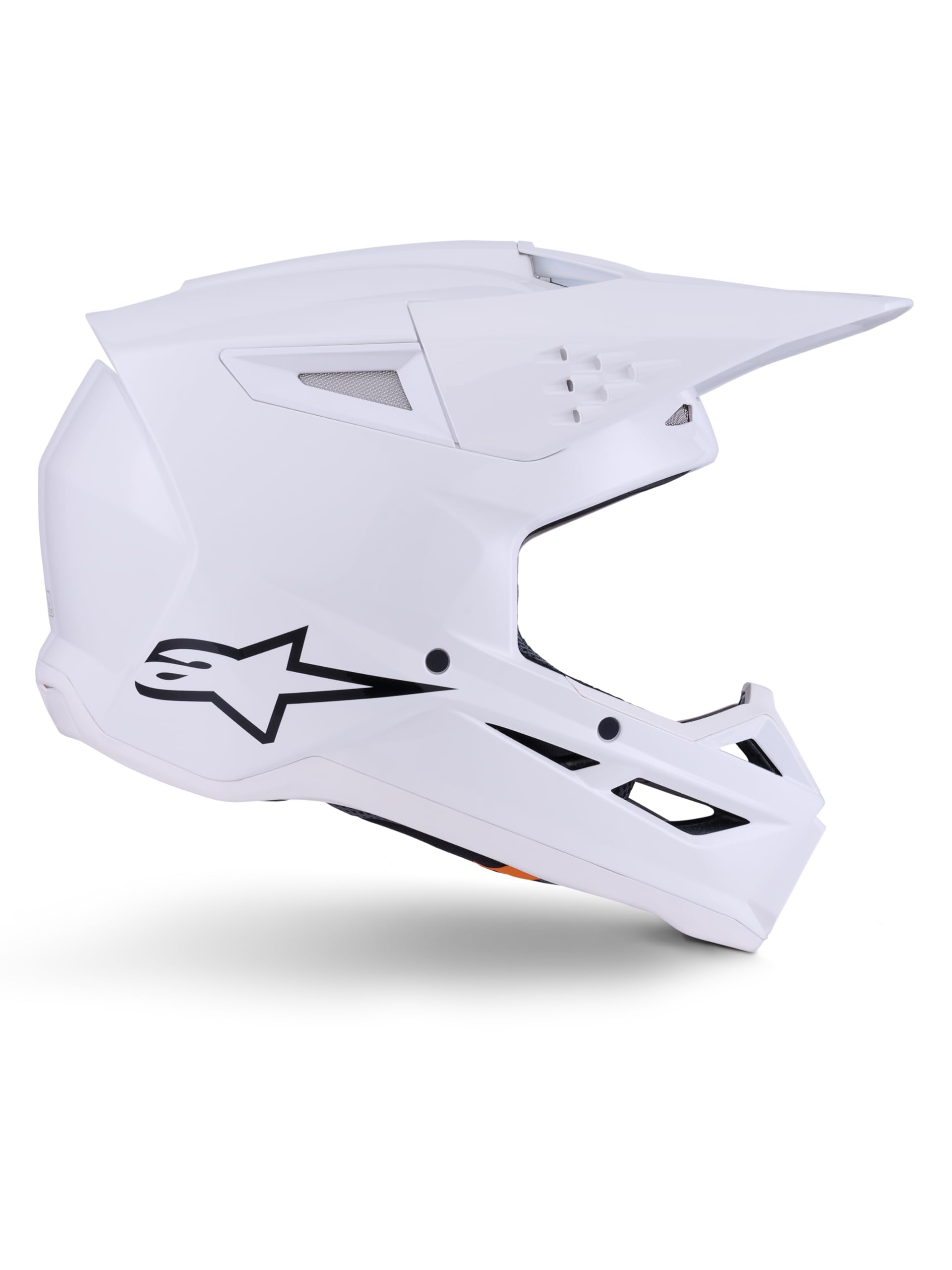
The Alpinestars SM3 Solid is a no-frills motocross and off-road helmet that prioritizes certification and fit over flashy features. The thermo-injected polycarbonate shell is built with variable thickness zones to manage impact energy across different parts of the helmet, and it carries both ECE 22.06 and DOT certifications—a solid baseline for track entry. The shell weight is reasonable for the price, though not as light as composite or carbon alternatives.
The interior is fully removable and washable, with padding that feels secure without being overly tight. Ventilation is respectable for motocross use, with multiple intake and exhaust ports that keep the interior from turning into a sauna during extended sessions. The goggle-ready design positions the eye port high enough to fit standard motocross goggles without the chin bar interfering.
Customers consistently praise the fit and value—it’s a helmet that feels more expensive than it is, with solid build quality and a secure, confidence-inspiring closure. The drawbacks are the polycarbonate weight penalty versus composite lids and the lack of MIPS, which some competitors at similar price points now include. For off-road racing, pit bike use, or as a budget-friendly backup helmet, the SM3 gets the fundamentals right.
Why it’s great
- ECE 22.06 and DOT certified for track legality
- Comfortable, true-to-size fit right out of the box
- Removable and washable interior padding
Good to know
- Polycarbonate shell is heavier than composite options
- Does not include MIPS for rotational protection
FAQ
Can I use a motorcycle helmet for automotive racing?
How often should I replace an automotive racing helmet?
What is the real difference between polycarbonate, composite, and carbon fiber shells?
Final Thoughts: The Verdict
For most users, the best automotive racing helmets winner is the Simpson Mod Bandit because it combines modular convenience with dual DOT/ECE certification, a tri-composite shell, and communication readiness in a package that works for both track and street. If you want the ultimate in certification layering and fit customization, grab the Shoei X-Fifteen Escalate. And for those who prioritize lightweight feel and photochromic convenience at a value price, nothing beats the Bell Race Star Flex DLX.