
Pulling weeds from a flower bed or vegetable patch is a repetitive chore that steals hours from your weekend. A quality weed barrier fabric stops seeds from germinating below the surface while letting water and air reach the soil, cutting your maintenance time to nearly zero. The right roll turns a season-long battle into a single afternoon of installation.
I’m Min — the co-founder and writer behind Gadgets Feed. I’ve spent countless hours analyzing the weave density, oz-per-yard weight, UV stabilization, and permeability specs of dozens of landscape fabrics to separate the rolls that actually suppress weeds from those that degrade into a tangled mess within a single season.
After comparing commercial-grade rolls, home-garden staples, and heavy-duty geotextiles, I’ve compiled a targeted list of the best barrier for weeds that balances durability, water flow, and ease of installation for any outdoor project.
How To Choose The Best Barrier For Weeds
A weed barrier is a simple sheet of fabric, but the differences in weave, weight, and material determine whether it lasts one season or a decade. Focus on the specs that match your ground conditions and traffic level.
Fabric Weight and Weave Type
Heavier fabrics measured in ounces per square yard (oz/sq.yd) resist punctures from rocks and roots and block more light. A 3 oz fabric works fine under light mulch in a flower bed, while a 5 oz woven barrier handles foot traffic and gravel drives. Woven polypropylene is the strongest choice for high-traffic areas; non-woven felted fabrics allow better water flow but tear more easily.
Permeability and Drainage
A barrier that blocks water creates puddles and drowns plant roots. Look for fabrics described as permeable or needle-punched, which create microscopic channels for moisture and air. If the barrier sits under a driveway or patio, zero-permeability geotextile fabric is preferable because it stabilizes the base and prevents stone migration into the soil.
UV Stabilization and Lifespan
Exposed fabric edges degrade quickly under direct sunlight. UV-treated barriers resist cracking and fraying for years, while untreated polypropylene turns brittle within months. If your barrier will be partially exposed around tree rings or pathway borders, choose a roll with UV inhibitors built into the polymer.
Quick Comparison
On smaller screens, swipe sideways to see the full table.
| Model | Category | Best For | Key Spec | Amazon |
|---|---|---|---|---|
| VIVOSUN Premium 5oz | Needle Punched | Flower Beds & Gardens | 5 oz/sq. yd, dual-layer | Amazon |
| Dewitt 12-Year Non-Woven | Non-Woven | Long-Term Beds | 3 oz/sq. yd, UV treated | Amazon |
| Snail Weed Barrier 5oz | Woven PP | General Landscaping | 5 oz/sq. yd, woven | Amazon |
| Pattiumo 3.2oz Dual Layer | Needle Punched | Large Coverage Areas | 3.2 oz/sq. yd, 300 ft | Amazon |
| Vanver 3.2oz Heavy Duty | Woven PP | Paths & Walkways | 3.2 oz/sq. yd, anti-aging | Amazon |
| Super Geotextile Woven 4oz | Geotextile | Driveways & Roads | 4 oz/sq. yd, 50-year | Amazon |
| DeWitt Pro Max 4.1oz | Woven Commercial | Professional Installations | 4.1 oz/sq. yd, 250 ft | Amazon |
In‑Depth Reviews
1. VIVOSUN Premium Weed Barrier 5oz
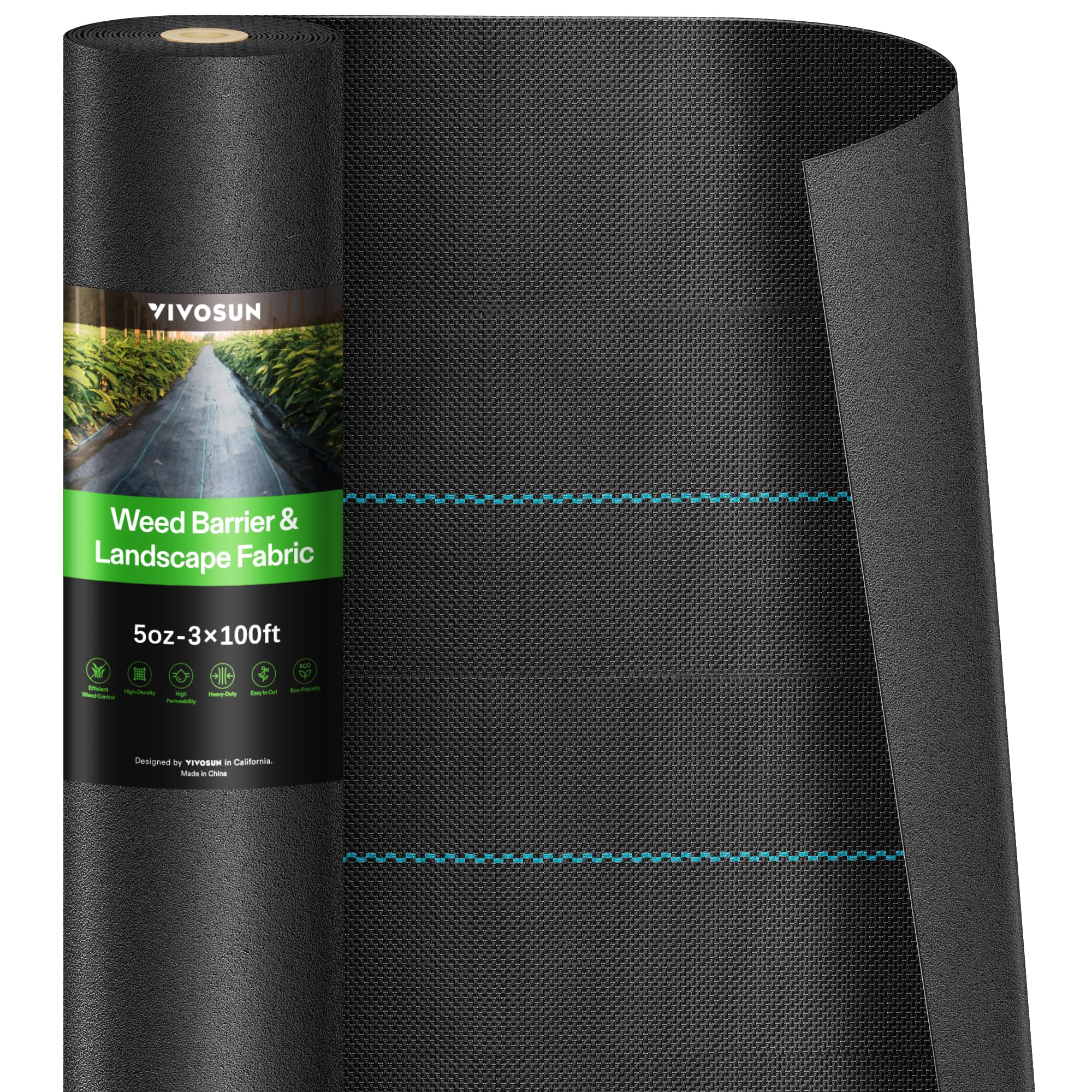
VIVOSUN’s 5 oz fabric uses a needle-punching process that bonds a non-woven layer with a woven base, creating a material that is both dense enough to block sunlight and porous enough to let water pass at six times the rate of standard woven barriers. The dual-layer design prevents the fuzzy underside from separating, which is a common failure point in cheaper felted fabrics. Gardeners note that the fabric holds up under daily foot traffic around raised beds and does not degrade after a full season of exposure.
The green line guides printed every foot simplify plant spacing, and the 3×100-foot roll covers a substantial area without needing to piece together multiple strips. A few reviewers mention that the cut edges fray noticeably, but this is typical for needle-punched fabric and can be minimized with a quick pass from a lighter or heat gun. For a mix of durability and water permeability in a single roll, this is the most balanced option available.
Under a layer of wood mulch or river stone, this barrier keeps soil moist while starving weed seeds of light. The commercial-grade construction also resists animal digging better than thin plastic sheets. If you want a set-it-and-forget-it solution for garden beds, this fabric delivers consistent results without frequent replacement.
Why it’s great
- Dual-layer weave blocks weeds while passing water 6x faster than standard fabrics
- Thick enough at 5 oz to resist punctures from tools and animal claws
- Green alignment lines speed up plant layout and row spacing
Good to know
- Cut edges can unravel if not sealed with heat
- The 3-foot width limits its use for wide driveways without seaming
2. Dewitt 12-Year Non-Woven Fabric

Dewitt’s non-woven fabric is engineered with a hydrophilic treatment that actively draws water into the soil rather than letting it bead on the surface. The 3 oz weight feels lighter than the heavy-duty 5 oz options, but the UV stabilizers and anti-degradation coating allow it to last up to 12 years in full sun exposure. This makes it a strong candidate for open flower beds where the fabric edge remains visible around plantings.
The non-woven construction does not fray when cut, which is a practical advantage over woven fabrics that require edge sealing. Reviewers working in wet climates like Florida report that the fabric maintains its permeability even during heavy downpours, preventing the pooling that can rot shallow-rooted plants. The trade-off is that the material is less puncture-resistant than a dense woven barrier, so it is best suited for beds covered with mulch rather than gravel paths.
For gardeners who want a single installation that carries them through a decade, this roll provides the longest stated lifespan among the lighter weight fabrics. The 3×100-foot size covers standard residential beds, and the lack of fraying reduces cleanup time during installation. It is a thoughtful choice for anyone prioritizing longevity and water flow over brute strength.
Why it’s great
- Hydrophilic coating improves water absorption into the soil
- 12-year UV warranty means it won’t crumble after one summer
- Does not fray when cut, saving time during layout
Good to know
- At 3 oz it is less resistant to punctures from sharp rocks
- Not ideal for high-traffic walkways or gravel drives
3. Snail Weed Barrier 5oz Pro

Snail’s 5 oz woven polypropylene fabric matches the weight of premium competitors at a lower entry point, making it a strong value pick for covering large areas on a budget. The high-density weave blocks light completely while still allowing water to percolate through the warp and weft gaps. Users consistently note that the material feels more like a flexible plastic sheet than a cloth, which gives it superior tear resistance compared to felted barriers.
The 4×100-foot roll is wider than the standard 3-foot format, reducing the number of seams needed for wide beds or pathways. Reviewers highlight that the fabric stays in place without excessive pinning, though the smooth surface can allow lightweight mulch to slide off slopes. A common tip is to use the included green stripes for alignment and to overlap edges by at least six inches to prevent weeds from sneaking through gaps.
For homeowners tackling a full-yard overhaul — think perennial beds, vegetable patches, and side pathways — this roll delivers professional-grade density without the professional-grade price tag. The one-year warranty and free replacement policy add a layer of security that most budget rolls lack. It is a straightforward, no-nonsense barrier that gets the job done.
Why it’s great
- 5 oz woven construction provides excellent puncture resistance
- 4-foot width reduces seams and installation labor
- One-year warranty with free replacements if damaged
Good to know
- Smooth surface does not grip mulch as well as felted fabrics
- Requires sharp shears for clean cuts without fraying
4. Pattiumo Weed Barrier 3.2oz Dual Layer

Pattiumo’s 3.2 oz needle-punched dual-layer fabric comes in a massive 3×300-foot roll, designed for acreage-scale projects like orchards, large vegetable plots, or commercial landscaping. The dual-layer construction combines a woven core with a non-woven surface, balancing light blockage with moderate water permeability. At this length, it can cover a 50-foot-long bed in six continuous passes without needing to join multiple rolls.
Reviewers note that the fabric is thinner than the 5 oz options, which makes it easier to cut and position alone, but the lighter weight means it is more susceptible to tearing if stretched over sharp rocks. The green alignment lines are printed at regular intervals, helping to keep rows straight across hundreds of feet. For long-term use under gravel, users recommend overlapping seams by a foot and using landscape staples every three feet to compensate for the lighter material.
This roll is the most economical per square foot option when covering vast areas. The needle-punched design prevents water from pooling, which is critical for sloped sites where runoff can wash away soil. If you are managing a large garden or agricultural plot and need a barrier that balances coverage area with effective weed suppression, this is the roll to consider.
Why it’s great
- 300-foot roll covers large properties without frequent splicing
- Needle-punched dual layer allows good water penetration
- Lightweight material is easy to handle and cut by hand
Good to know
- 3.2 oz weight is less durable under heavy foot traffic
- Edges may fray; sealing with heat is recommended
5. Vanver 3.2oz Heavy Duty Landscape Fabric
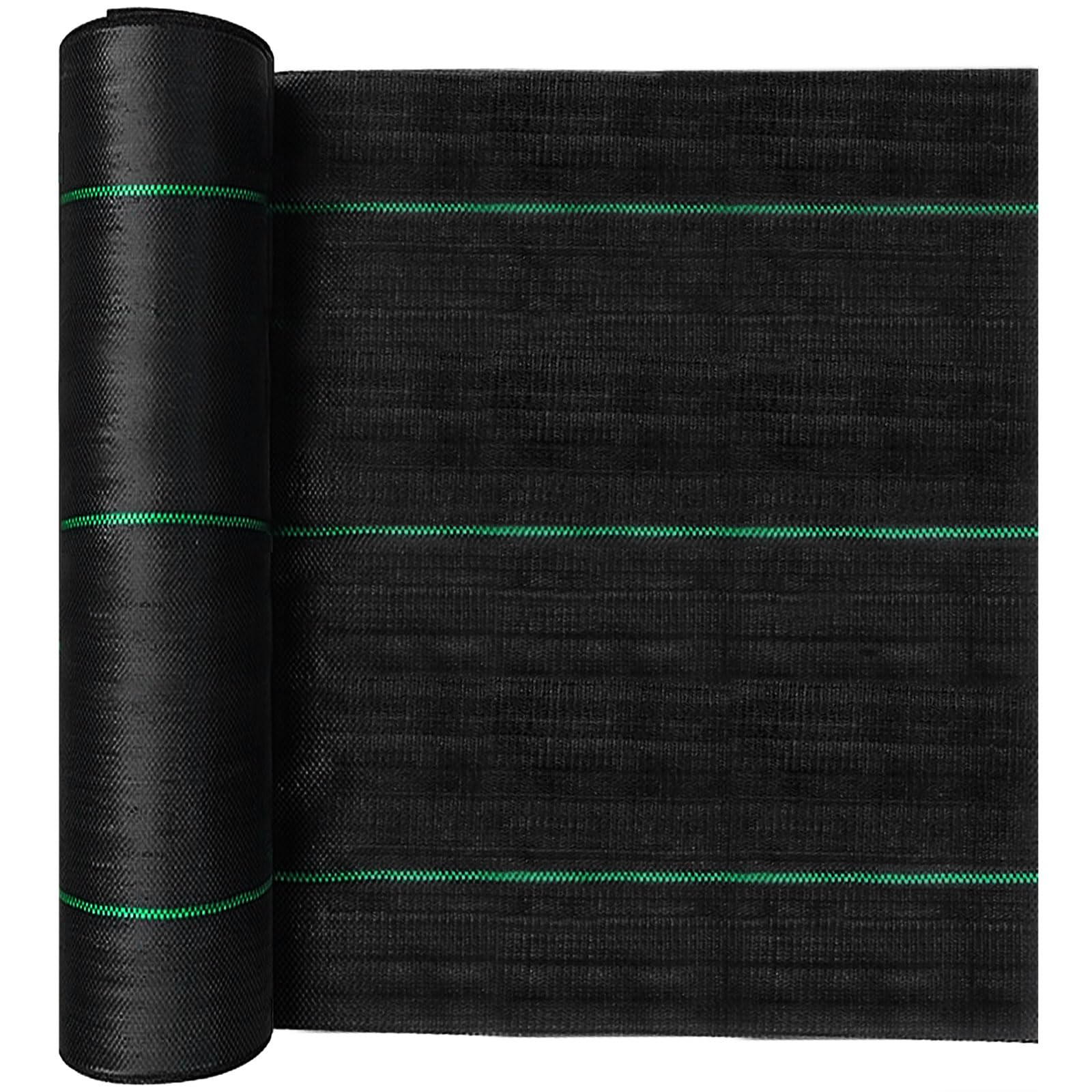
Vanver’s 3.2 oz woven polypropylene fabric includes anti-aging additives that slow degradation from sun and temperature swings, making it a reliable mid-weight barrier for pathways, decomposed granite patios, and gravel borders. The 100% polypropylene warp and weft weave allows air and water to exchange slowly while preventing light from reaching the soil below. Users specifically praise its performance between raised beds where they walk daily, noting that the fabric does not tear or bunch up.
Installation is straightforward: lay the fabric, secure with landscape pins, and cover with your chosen surface. The anti-aging formulation means exposed edges around tree rings or stepping stones resist cracking longer than standard untreated polypropylene. A small number of reviewers note that the cut ends can begin to unravel if not properly anchored, but tucking the edges under the base material solves this issue.
For homeowners who need a barrier that sits under walking surfaces rather than deep garden beds, the Vanver fabric hits the sweet spot between cost and durability. It is not the heaviest option, but the anti-aging treatment extends its useful life beyond what the weight alone suggests. If your project involves paths, patios, or play areas, this fabric holds up well under repeated pressure.
Why it’s great
- Anti-aging additives slow UV degradation in exposed areas
- Woven construction withstands foot traffic and light vehicle weight
- High permeability prevents puddling on walkways
Good to know
- Cut ends may fray if not tucked or secured with staples
- Lighter weight than commercial 5 oz barriers
6. Super Geotextile Woven 4oz Driveway Fabric

Super Geotextile’s 4 oz woven polypropylene fabric is engineered for structural applications like gravel driveway stabilization, paver base separation, and erosion control. The heavy-duty weave is dimensionally stable, meaning it will not stretch or shift under the weight of crushed stone, and the manufacturer rates its lifespan at 50 years if properly buried. This is not a fabric for delicate flower beds — it is a geotechnical barrier meant to separate subsoil from aggregate.
Users report that the fabric cuts cleanly with sharp shears and recommends two people for handling the 6-foot-wide rolls. The low permeability is by design: it prevents stone from sinking into the clay below, which is the primary cause of rutted driveways. Reviewers using it as a weed barrier under gravel paths note that the dense weave stops even aggressive rhizome grasses from pushing through, though the reduced water flow means it is best paired with a sloped base for drainage.
For anyone building a new driveway, laying pavers, or reinforcing a gravel road, this fabric provides the structural integrity that lightweight landscape fabrics lack. The 50-year lifespan essentially makes it a permanent part of the ground. If your project involves heavy loads and long-term ground stabilization, this is the correct tool.
Why it’s great
- 4 oz woven construction supports gravel roads and paver bases
- 50-year buried lifespan eliminates replacement cycles
- Zero permeability prevents aggregate from sinking into soil
Good to know
- Very low water permeability, not suitable for garden beds
- Wide 6-foot roll requires two people for easy handling
7. DeWitt Professional Max 4.1oz Woven Barrier
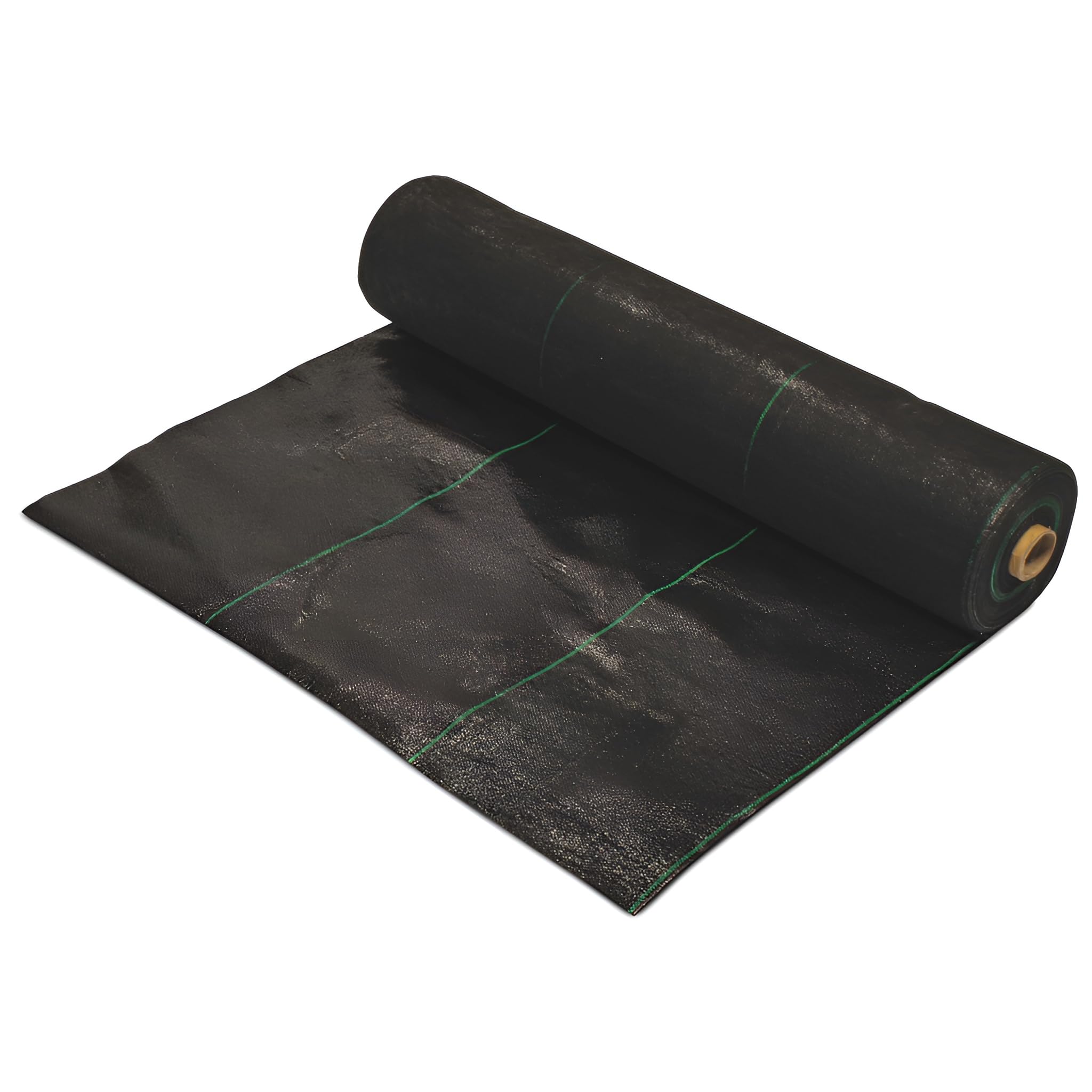
DeWitt’s Professional Max fabric is a 4.1 oz woven polypropylene barrier built for large-scale commercial installations. The 4×250-foot roll is proportioned for nurseries, landscape contractors, and property managers who need to cover extensive areas with minimal seams. The fabric is striped every 12 inches for precise plant spacing, and the commercial-grade material resists punctures from machinery and foot traffic alike.
Reviewers who have used this fabric for five years or more report that it remains intact with no visible degradation, though they note that a layer of mulch or cardboard underneath helps prevent determined weeds from rooting through the weave. The material feels substantial without being stiff, which makes it easier to contour around trees and bed edges compared to heavier geotextiles. One common observation is that the roll is heavy and benefits from a fabric cutter or a second person during unrolling.
For professional landscapers or ambitious homeowners laying out a permanent planting scheme, this fabric offers the highest coverage per roll in the DeWitt lineup. The 20-year expected lifespan aligns with long-term landscape designs, and the woven structure allows enough air exchange to keep soil biology active. It is a premium investment for installations where replacing the barrier would be disruptive or expensive.
Why it’s great
- 4.1 oz commercial-grade weave resists punctures and tears
- 250-foot roll minimizes seams for large installations
- 12-inch alignment stripes make plant spacing precise
Good to know
- Heavy roll requires two people for easy handling
- Best paired with a mulch layer to prevent surface rooting
FAQ
Should I overlap weed barrier fabric at the seams?
Can I put weed barrier directly over existing weeds?
How long does woven polypropylene weed barrier last?
Will a weed barrier stop tree roots from growing into garden beds?
Final Thoughts: The Verdict
For most users, the barrier for weeds that offers the best balance of durability, water flow, and ease of installation is the VIVOSUN Premium 5oz because its dual-layer design blocks weeds effectively while allowing six times more water through than standard woven fabrics. If you need a barrier that will last over a decade in a flower bed, the Dewitt 12-Year Non-Woven is the right choice. And for stabilizing a gravel driveway or paver project, nothing beats the Super Geotextile Woven 4oz with its 50-year lifespan.