
Wired PC headsets under hit a sweet spot between decent microphone clarity, comfortable padding for long sessions, and reliable plug-and-play connectivity. Skip the Bluetooth latency and battery anxiety — a good wired headset with a noise-canceling boom mic and 50mm drivers delivers consistent positional audio for gaming or crystal-clear conference calls every time you sit down.
I’m Min — the co-founder and writer behind Gadgets Feed. I spent dozens of hours analyzing the technical specifications, frequency response curves, driver sizes, and real customer feedback across the most popular affordable PC headsets to separate the true long-term value buys from the disposable plastic temptations.
Whether you need a lightweight headset for back-to-back remote meetings or a durable gaming headset with virtual surround sound, this guide breaks down seven wired models to help you find the best affordable headsets for pc without compromising on build quality or audio clarity.
How To Choose The Best Affordable Headsets For PC
Picking the right wired headset under means balancing three trade-offs: audio driver size for immersive sound, microphone pattern for clear voice pickup, and build materials that survive daily use. Beginners often fixate on RGB lighting or virtual surround sound marketing, but the real differentiators are concrete specs like impedance, ear cushion density, and frame construction.
Driver Size and Frequency Response
The driver diameter — measured in millimeters — directly determines how much low-end thump and spatial separation you hear. Budget headsets typically use 40mm drivers, which are adequate for voice calls and casual music. Mid-range upgrades to 50mm or 53mm drivers (like the HyperX Cloud II) push deeper bass extension and cleaner mids, helping you hear faint footsteps or directional cues in competitive shooters. Look for a frequency response that extends down to 20 Hz for sub-bass rumble without distortion.
Microphone Design and Noise Cancellation
Not all noise-canceling mics are equal. A cardioid pickup pattern — found on the Razer BlackShark V2 X — rejects side and rear ambient noise like keyboard clatter or fan hum, focusing only on your voice. Omnidirectional mics (common on budget gaming headsets) capture sound from all directions, which can make you sound clear in a quiet room but amplify background chaos in a shared space. Detachable boom mics add flexibility: remove the mic for music-listening mode or replace it if damaged.
Build Quality and Long-Term Comfort
The frame material separates a headset that lasts two years from one that cracks in six months. Entry-level models often use all-plastic construction with thin headbands that develop stress fractures. Mid-range and premium picks in this budget — like the HyperX Cloud II — use an aluminum frame fork that withstands drops and daily flexing. Memory foam ear cushions covered in leatherette or breathable fabric distribute clamping force evenly, reducing hotspot pain during three-hour sessions.
Quick Comparison
On smaller screens, swipe sideways to see the full table.
| Model | Category | Best For | Key Spec | Amazon |
|---|---|---|---|---|
| HyperX Cloud II | Premium Wired | Gaming with 7.1 virtual surround | 53mm dynamic drivers | Amazon |
| FIFINE AmpliGame H13BP | RGB Gaming | Streaming with customizable lighting | 50mm drivers with 7.1 surround | Amazon |
| JBL Quantum 100M2 | Entry-Level Gaming | Beginner PC/console gaming | 40mm JBL QuantumSOUND drivers | Amazon |
| Jabra Evolve 20 (2025 Edition) | Office & WFH | Remote meetings and conference calls | 28mm speakers with noise-canceling mic | Amazon |
| Razer BlackShark V2 X | Competitive Gaming | Lightweight FPS with cardioid mic | 50mm Triforce Titanium drivers | Amazon |
| Poly Blackwire 3220 | Business Pro | Professional calls across platforms | 40mm drivers with USB-C/USB-A | Amazon |
| EKSA E900 | Budget All-Rounder | Cross-platform casual gaming | 50mm dynamic drivers | Amazon |
In‑Depth Reviews
1. HyperX Cloud II Gaming Headset

The HyperX Cloud II remains the benchmark for wired PC headsets in this price tier, largely because of its 53mm dynamic drivers — the largest in this roundup. Those oversized drivers push deep bass extension and crisp highs, giving you footstep clarity in PUBG or Rainbow Six Siege that smaller 40mm units simply cannot reproduce. The aluminum frame fork is a durability standout: where plastic headsets develop hairline cracks over months, this solid alloy structure withstands daily drops and backpack stuffing without flexing.
The included USB sound card enables hardware-driven 7.1 virtual surround sound on PC and Mac, with a dedicated control box for volume and mic mute at your fingertips. Closed-back leatherette ear cups seal out ambient noise passively, and the memory foam padding distributes weight evenly — users with larger heads report zero hotspot pain even after four-hour sessions. The detachable noise-canceling microphone is Discord and TeamSpeak certified, delivering clear voice chat without the hollow echo typical of budget mics.
The one trade-off: the 7.1 virtual surround implementation is less precise than software-based solutions like Dolby Atmos for gaming, and stereo purists may prefer plain audio without digital processing. Some users noted the mic gain runs low, requiring third-party software like Voicemeeter to boost voice levels. However, with proven longevity (customers report five-plus years of daily use), the Cloud II justifies its position as the most reliable long-term investment in this list.
Why it’s great
- 53mm drivers deliver authoritative bass and clean mids unmatched at this price
- Aluminum frame construction resists cracking and bending over years of use
- Memory foam ear cushions stay comfortable through marathon gaming sessions
Good to know
- 7.1 virtual surround lacks the spatial precision of dedicated software solutions
- Mic output volume runs low; may require software gain adjustment on some PCs
- Leatherette ear cups can cause heat buildup after extended wear
2. FIFINE Wired Gaming Headset AmpliGame H13BP
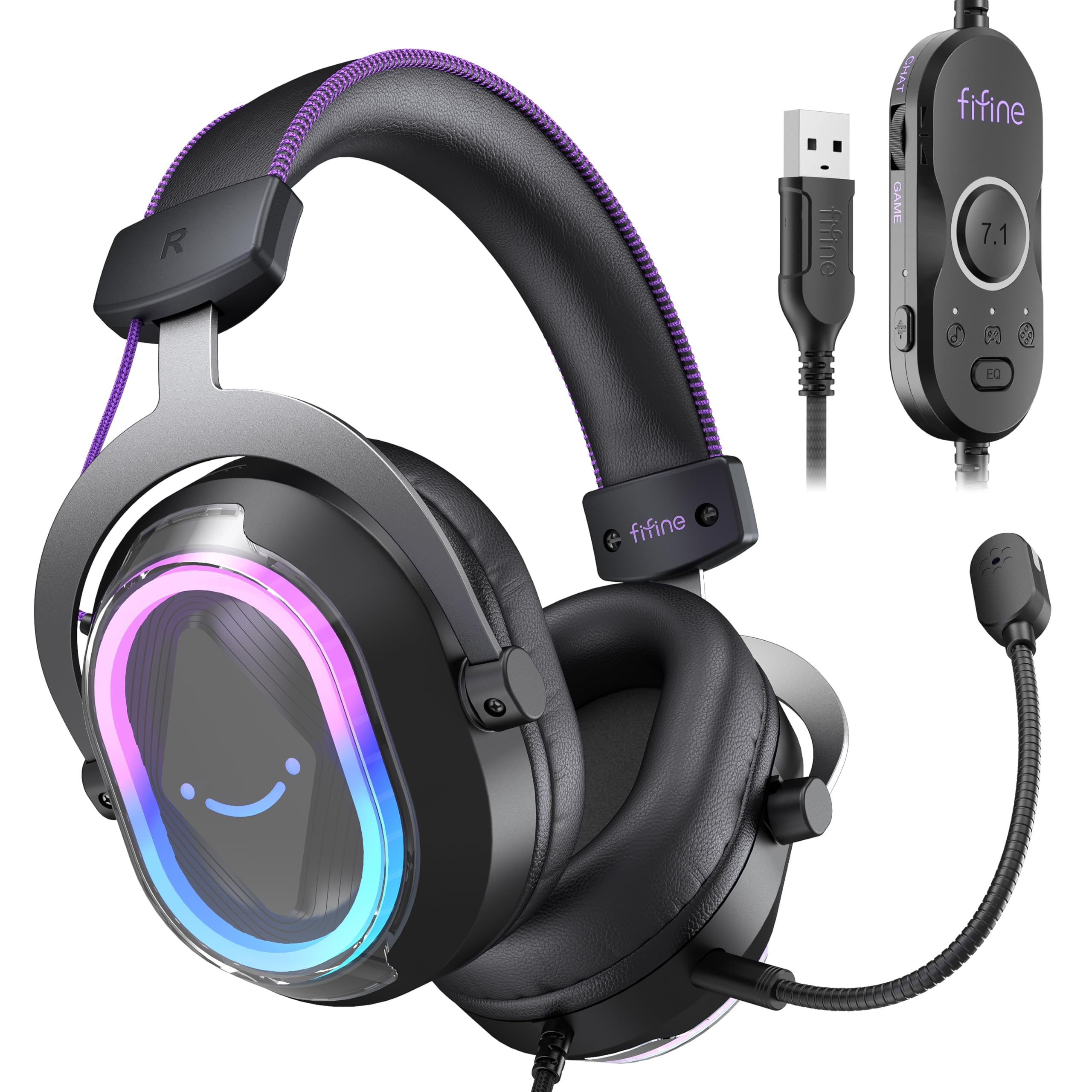
The FIFINE H13BP takes a different approach from the HyperX classic formula by packing 11-mode RGB lighting and a futuristic transparent earcup shell into a USB-only headset aimed squarely at streamers and gaming aesthetes. Behind the visual flair, the 50mm dynamic drivers with an OFC copper voice coil deliver a clean frequency split — the highs are brighter than the Cloud II, which helps directional audio cues like grenade pins or reload clicks cut through gunfire. The 7.1 surround sound mode is toggleable via an inline control box, and a long press switches between three EQ presets (game, movie, music) that genuinely alter the soundstage.
Comfort is handled by protein skin ear pads filled with soft memory foam; early reviews note a break-in period of a few days before the clamping pressure eases. The inline USB control box is the standout feature: you get a dedicated game/chat balance wheel, a physical mute button with a red LED indicator, and the 7.1 toggle — all without alt-tabbing to software. The detachable noise-canceling microphone uses an omnidirectional pickup pattern, which captures voice clearly in quiet rooms but lets ambient sound bleed through if you have a mechanical keyboard or desk fan running.
The main limitation is platform compatibility — USB-A only, so it works on PC, Mac, PS5, and PS4, but Xbox and Nintendo Switch users are locked out. The 7.55-foot braided cable offers generous reach, though the cable itself is a bit stiff and transmits brushing noise against clothing. Build quality is solid for the price: the rhombus shell uses high-gloss plastic that won’t crack under normal use, but it lacks the premium feel of the Cloud II’s aluminum frame.
Why it’s great
- 11 dynamic RGB lighting modes add visual flair for streaming and LAN setups
- Inline control box with game/chat balance and 7.1 toggle is genuinely useful mid-game
- 50mm drivers with OFC coil deliver clear, bright audio with good treble detail
Good to know
- USB-only connectivity blocks Xbox and Nintendo Switch compatibility
- Omnidirectional mic picks up ambient noise in shared or noisy rooms
- Stiff braided cable transmits brushing sounds when moved against clothing
3. JBL Quantum 100M2

JBL brings its decades of consumer audio tuning to the budget PC headset space with the Quantum 100M2, a wired over-ear model that prioritizes ease of entry and JBL’s QuantumSOUND Signature tuning. The 40mm dynamic drivers are tuned to emphasize mid-bass punch and crisp highs — footsteps in Call of Duty and gunshots pop with an energy that flat-tuned knockoffs cannot match. The 20 Hz to 20 kHz frequency response is standard for the price, but the implementation sounds noticeably more refined than generic OEM drivers thanks to JBL’s proprietary equalization curves.
The detachable directional boom microphone includes a mute toggle and a foam windshield, and its omnidirectional pattern picks up your voice with decent clarity for Discord calls and in-game chat. The standout feature for extended wear is the memory foam ear cushions covered in breathable fabric — not leatherette — which reduces sweat buildup during hot summer gaming sessions. The lightweight headband (weighing under 250 grams) and even clamping force make this a solid choice for younger gamers or those with smaller head sizes who find bulky headsets uncomfortable.
Build quality is the weak link here: the all-plastic frame with thin headband tubing does not inspire confidence for rough handling. A minority of customers report the 3.5mm jack’s solder joint failing after a few months, causing audio cutout when the cable is angled. The 100M2 also lacks the virtual surround sound processing of the HyperX or FIFINE models — it supports Windows Sonic Spatial Sound natively, but the experience is software-dependent and less immersive than dedicated DAC solutions.
Why it’s great
- JBL QuantumSOUND Signature delivers punchy, energetic tuning for gaming immersion
- Breathable fabric memory foam ear cushions reduce heat buildup during long sessions
- Lightweight sub-250g frame suitable for kids, teens, and users with smaller heads
Good to know
- All-plastic construction is less durable than aluminum-framed competitors
- Reported 3.5mm jack quality issues require careful cable handling
- No built-in virtual surround DAC; relies exclusively on Windows Sonic software
4. Jabra Evolve 20 (2025 Edition)
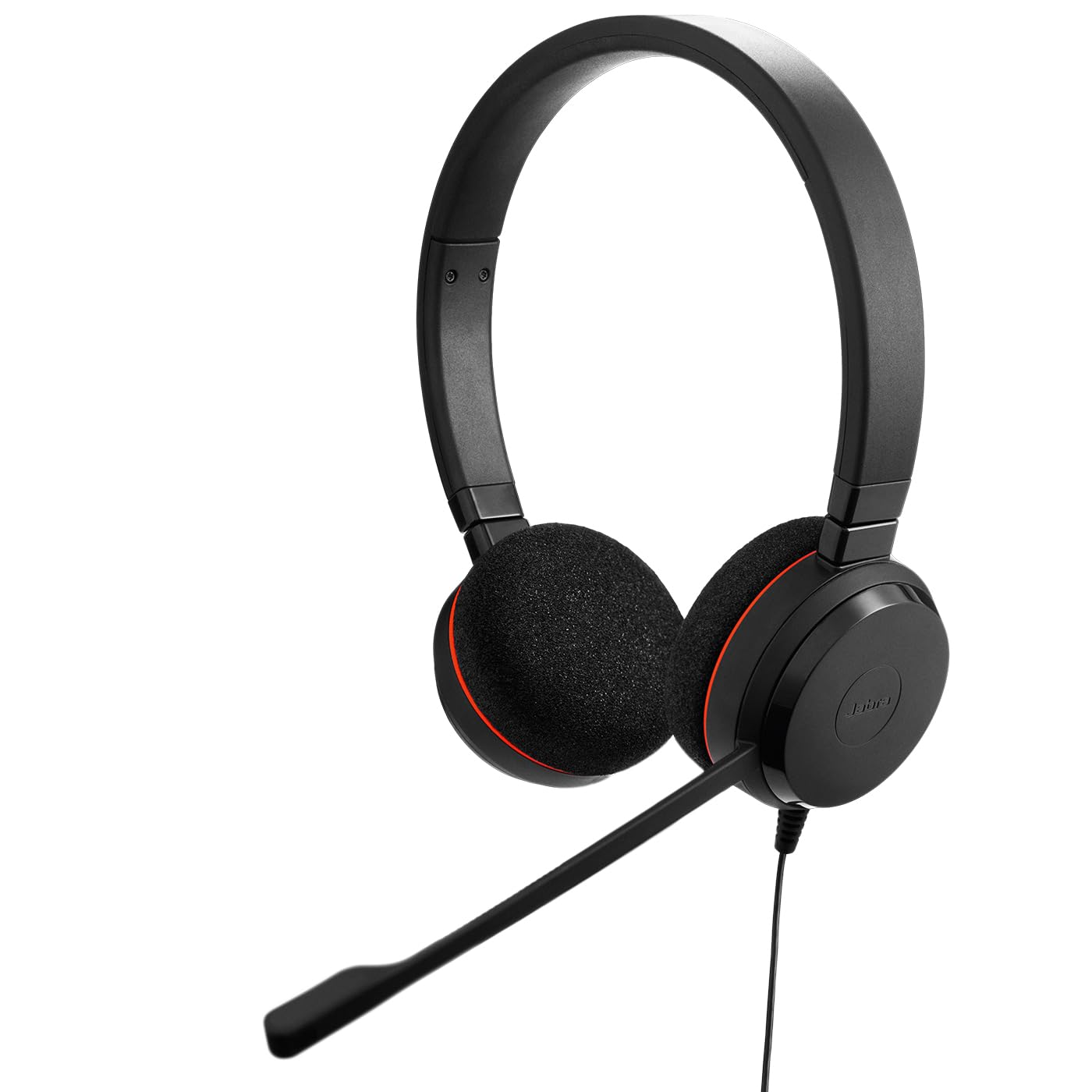
The Jabra Evolve 20 is the outlier in this gaming-focused roundup — it is a purpose-built professional headset designed for remote meetings, telemedicine, and enterprise softphones. The 28mm speakers are physically smaller than every other headset here, but they are tuned for vocal clarity and spoken-word intelligibility rather than sub-bass rumble. What the Evolve 20 lacks in low-end thump, it makes up for with a noise-canceling microphone that actually works: customers report the person on the other end cannot hear barking dogs, lawnmowers, or screaming toddlers in adjacent rooms.
The 2025 Edition adds USB-C connectivity alongside the tethered USB-A adapter, making it plug-and-play with modern ultrabooks and older desktops alike. The on-ear form factor (not over-ear) uses either foam or leatherette cushions that sit on the ear cartilage rather than fully enclosing it — some users find this less isolating for office awareness, while others report pressure points after a full eight-hour shift. The inline call control unit manages volume, mute, and call answer/hang-up, and the headset is certified for Avaya and Cisco platforms beyond standard Teams and Zoom compatibility.
The biggest caveat is audio quality for entertainment: 28mm drivers with a narrow frequency range sound flat and constrained when playing music or game audio. This is firmly a voice-first tool, not a gaming device. The plastic construction is lightweight but feels less substantial than the Poly Blackwire 3220’s build. For anyone whose primary use is eight hours of daily voice calls with zero gaming on the side, the Evolve 20’s background noise suppression and comfort justify its position in the lineup.
Why it’s great
- Industry-leading microphone noise suppression — background sounds are nearly eliminated for callers
- USB-C and USB-A dual connectivity works instantly with any modern laptop or desktop
- Certified compatibility with Avaya, Cisco, Teams, and Zoom for enterprise environments
Good to know
- 28mm speakers lack the bass and dynamic range for immersive gaming or music listening
- On-ear design creates pressure points for some users during marathon workdays
- Plastic frame feels less durable than metal-reinforced alternatives in the same price tier
5. Razer BlackShark V2 X Gaming Headset
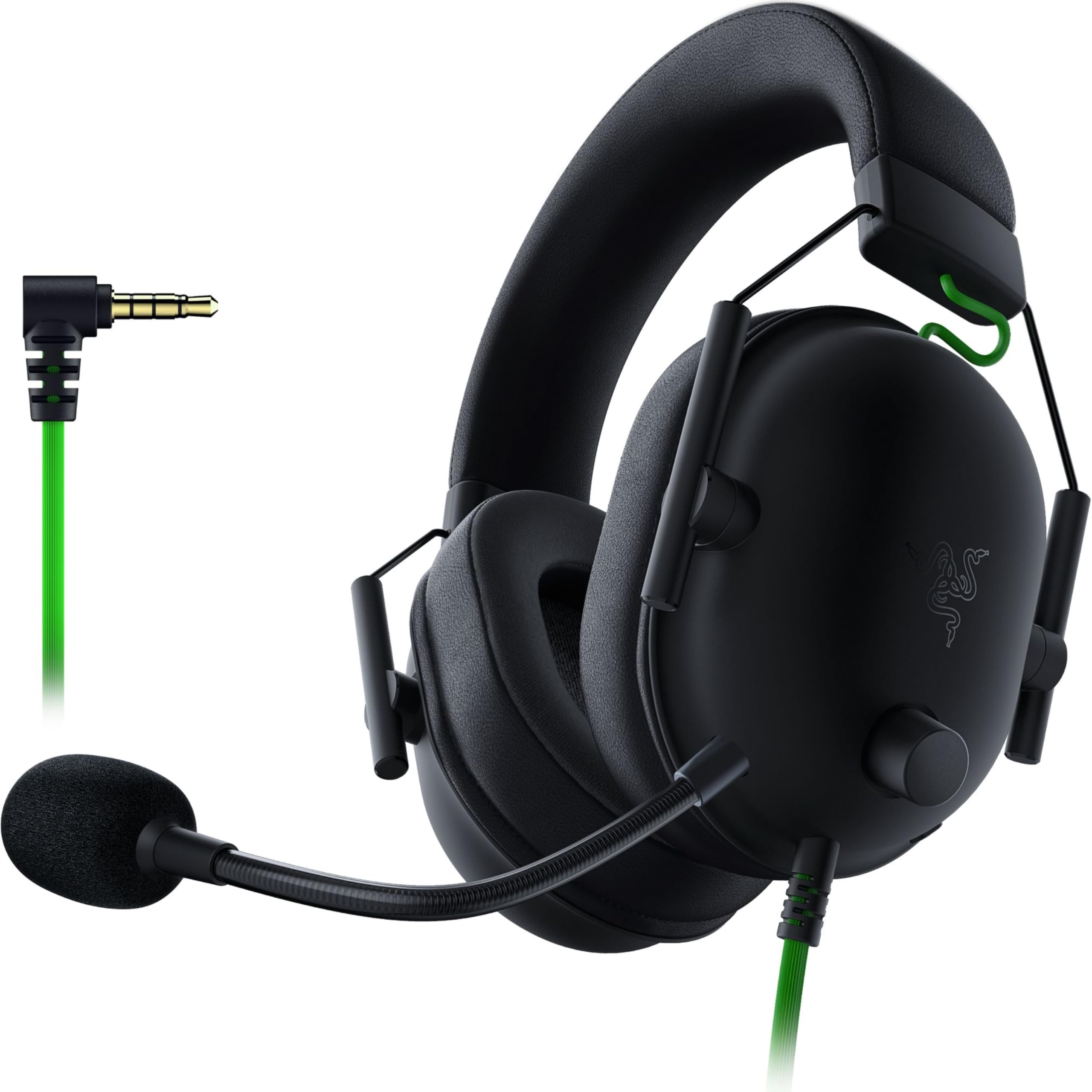
The Razer BlackShark V2 X distills the company’s esports-grade design into a lightweight, no-frills package that weighs just 240 grams — the lightest full-size over-ear headset in this comparison. The key engineering trick is the Triforce Titanium 50mm driver, which uses a titanium-coated diaphragm and separates the driver into three distinct regions for independent tuning of highs, mids, and lows. The result is a cleaner, less muddy sound than standard 50mm drivers — mids stay articulate even when bass hits, making enemy reloads and footsteps easier to isolate in competitive shooters like Valorant or Apex Legends.
The Razer HyperClear Cardioid microphone is the acoustic star here: its cardioid pattern rejects sound from the sides and rear, so keyboard clatter, mouse clicks, and air conditioner hum are dramatically attenuated before they reach your teammates. The breathable fabric ear cushions are less sticky than leatherette but still provide good passive noise isolation through the sealed closed-back design. A 7.1 surround sound upgrade is available via Razer’s Windows-only software, though the V2 X lacks the dedicated USB DAC of higher-tier models like the BlackShark V2 Pro.
The build uses a plastic headband with a steel-reinforced inner arch, but the outer ear cups are entirely plastic and can develop creaking sounds after months of use. The single 3.5mm jack means universal compatibility with PC, PlayStation, Xbox, and Switch, but you lose the inline controls found on USB-only headsets. Some users noted the volume wheel direction is reversed (up for quieter) and there is no mute LED indicator — small ergonomic misses that add up during frantic gaming sessions.
Why it’s great
- 240g weight is barely noticeable during multi-hour gaming sessions
- Cardioid microphone rejects side and rear ambient noise better than omnidirectional mics
- Triforce Titanium driver design delivers cleaner mids and highs for competitive audio
Good to know
- Plastic ear cup housings may develop creaking noises over extended usage
- Volume wheel rotates backward and lacks a mute indicator light
- Requires Windows software for 7.1 surround; no hardware DAC included
6. Poly Blackwire 3220 Wired Headset

The Poly Blackwire 3220 comes from Plantronics’ legacy of enterprise telephony headsets, and it shows in every design decision. The 40mm dynamic drivers are tuned for vocal range — not for game explosions — so voices on Zoom, Teams, and Webex sound natural and full without the metallic edge common to consumer headsets. The noise-canceling boom mic with Dynamic EQ processing ensures your voice remains intelligible even when you speak softly or when background noise rises. This is the headset you buy if your main use case is eight hours of meetings, not fragging.
Connectivity is the Blackwire 3220’s killer feature: the fixed USB-C cable comes with a tethered USB-A adapter, so it works immediately with Thunderbolt docks, USB-C MacBooks, and older desktop PCs without an adapter dongle. The lightweight over-ear design with conforming ear cushions provides a secure fit for smaller and larger heads alike, and the inline control module offers volume up/down and a dedicated mute button with a low beep confirmation tone. Customers with small ears appreciated the compact earpiece shape, which avoids the “loose seal” problem of oversized gaming headsets.
The audio driver size — 40mm — limits bass extension and overall soundstage width compared to 50mm+ gaming headsets. This is not a headset for immersive single-player gaming or music-critical listening. A minority of customers reported that the USB-A adapter introduced slight voice lag on certain PCs, so USB-C direct connection is recommended. The plastic build feels adequate but not premium; the earpiece hinge on one side can feel floppy without posing a break risk.
Why it’s great
- Dual USB-C and USB-A connectivity ensures compatibility across diverse work setups
- Dynamic EQ voice processing keeps speech clear and natural in noisy environments
- Lightweight compact earpieces fit smaller ear shapes without seal gaps
Good to know
- 40mm drivers lack the bass and spatial separation for engaging gaming audio
- USB-A adapter can introduce audio lag; best performance requires USB-C port
- Plastic hinge feels slightly loose on one earpiece, though structurally it holds up
7. EKSA E900 Gaming Headset

The EKSA E900 proves that a wired headset can still deliver 50mm drivers, a detachable noise-canceling microphone, and cross-platform 3.5mm compatibility without feeling like a disposable accessory. The 50mm large-size driver unit uses an OFC copper voice coil — the same material found in the FIFINE H13BP — and provides a surprisingly wide soundstage for the price. Directional audio in games like Rainbow Six Siege lets you pinpoint enemy movement with enough accuracy to compete, even if the bass lacks the depth of the HyperX Cloud II’s 53mm driver.
The padded memory foam ear cushions and adjustable metal headband make the E900 comfortable for extended sessions — customers specifically praised the fit for glasses wearers, noting minimal pressure on the temple arms. The detachable microphone with omnidirectional noise reduction is functional rather than excellent: it captures voice clearly in quiet environments but allows background chat bleed in noisy rooms. The inline remote with volume dial and one-click mute is compact and unobtrusive, unlike the bulky inline boxes found on cheaper gaming headsets.
The plastic build, while lightweight, does not inspire long-term confidence. The headband adjusts smoothly, but the hinge joints and earcup swivels feel less robust than the Poly Blackwire or Razer BlackShark V2 X. The 3.5mm cable is thin and prone to tangling, and the included Y-splitter extension is a cheap add-on. There is no USB DAC or virtual surround sound — this is strictly stereo audio over the 3.5mm jack. For under , the E900 offers remarkable driver hardware, but physical durability remains a question mark past the first year.
Why it’s great
- 50mm OFC copper voice coil drivers deliver a wide soundstage rare at this price point
- Detachable boom mic and memory foam pads add flexibility and comfort for long sessions
- Adjustable metal headband with low pressure on glasses frames
Good to know
- Plastic hinge joints and swivels feel less durable than metal-reinforced alternatives
- Omnidirectional mic picks up background noise in shared or echoey rooms
- No virtual surround sound DAC or USB connectivity — stereo 3.5mm only
FAQ
Is 7.1 virtual surround sound worth it for PC gaming under ?
Can I use a USB gaming headset with Xbox or Nintendo Switch?
How do I know if a wired headset will fit my head size and glasses?
Final Thoughts: The Verdict
For most users, the affordable headsets for pc winner is the HyperX Cloud II because its 53mm drivers, aluminum frame, and memory foam comfort set a durability and audio benchmark that budget models simply cannot match. If you want programmable RGB lighting and an inline game/chat control wheel for streaming, grab the FIFINE AmpliGame H13BP. And for professional remote work where background noise rejection and all-day call clarity matter most, nothing beats the Jabra Evolve 20.