
A hot steel floorboard, a clattering engine bay, a drafty attic hatch, a forge that bleeds heat into the garage — every batt insulation project starts with the same reality: the wrong material wastes time and money. Choosing the best batt insulation means matching the physical form (foam, fiber, reflective, blanket) to the specific temperature, moisture, and sound pressure your space actually produces.
I’m Min — the co-founder and writer behind Gadgets Feed. I’ve logged hundreds of hours cross-referencing thermal conductivity charts, fire ratings, coverage formulas, and real-world adhesion reports to separate marketing claims from measurable performance in this category.
This guide walks through seven serious contenders for the title of best batt insulation, covering ceramic fiber blankets, acoustic foam panels, reflective radiant barriers, and closed-cell spray foam across automotive, home, and high-heat workshop applications.
How To Choose The Best Batt Insulation
Batt insulation covers a broad spectrum — from thin adhesive-backed mats for automotive hoods to thick ceramic blankets for wood stoves and kilns. The right choice depends on three variables: the maximum temperature the surface reaches, the need for sound dampening versus pure thermal blocking, and whether moisture or fire resistance is a concern.
Match the Temperature Rating to Your Application
Ceramic fiber blankets rated to 2400°F are non-negotiable for forges, pizza ovens, and furnace baffles. For automotive engine bays and hoods, a 6mm aluminum foil foam mat handles under-hood heat without risk of ignition. For living spaces and attics, reflective insulation with a Class A fire rating gives the safest balance of thermal performance and safety compliance.
Sound vs. Heat — Two Different Batt Philosophies
Closed-cell polyurethane spray foam and dense ceramic blankets both block heat, but acoustic foam panels rely on open-cell structure to trap sound waves. If the primary goal is reducing echo in a home studio, a 1-inch wedge foam pack is the right tool. If you need to stop both engine noise and floorboard heat in a vehicle, an aluminum-foam composite mat addresses both simultaneously.
Adhesion and Installation Realities
Self-adhesive mats are convenient but fail if the surface isn’t perfectly clean or if the ambient temperature drops below the adhesive’s activation range. Ceramic fiber blankets require gloves and a mask during cutting due to airborne particles. Reflective rolls need mechanical fasteners or staples to stay taught. Spray foam demands careful pass control and a compatible applicator gun. Each installation method affects long-term performance.
Quick Comparison
On smaller screens, swipe sideways to see the full table.
| Model | Category | Best For | Key Spec | Amazon |
|---|---|---|---|---|
| Vega Bond SF001 24-Pack | Spray Foam | Airtight sealing in walls & attics | R-5.66 per inch, 480 board ft coverage | Amazon |
| SmartSHIELD -5mm 24”X50ft | Reflective Roll | Radiant barrier in attics & RVs | R-17, vapor barrier, Class A fire | Amazon |
| Lynn Mfg 2″ Ceramic Blanket (3033E) | Ceramic Fiber | Kilns, forges & wood stove baffles | 2″ thick, 2400°F rating, 8 lb/ft³ | Amazon |
| Lynn Mfg 1″ Ceramic Blanket (3026E) | Ceramic Fiber | Diesel exhaust & pizza oven wrap | 1″ thick, 2400°F rating, dense build | Amazon |
| BACLAUGH 1″ Ceramic Blanket | Ceramic Fiber | Wood stoves & homemade furnaces | 1″ thick, 2400°F, easy to cut | Amazon |
| uxcell 236mil 16.36sqft Mat | Auto Adhesive Mat | Car hood, door & engine bay | 6mm thick, 16.36 sqft coverage | Amazon |
| Burdurry 50 Pack Acoustic Panels | Acoustic Foam | Studio echo reduction & home offices | 1″ x 12″ x 12″, 50-pack wedge | Amazon |
In‑Depth Reviews
1. Vega Bond SF001 24-Pack
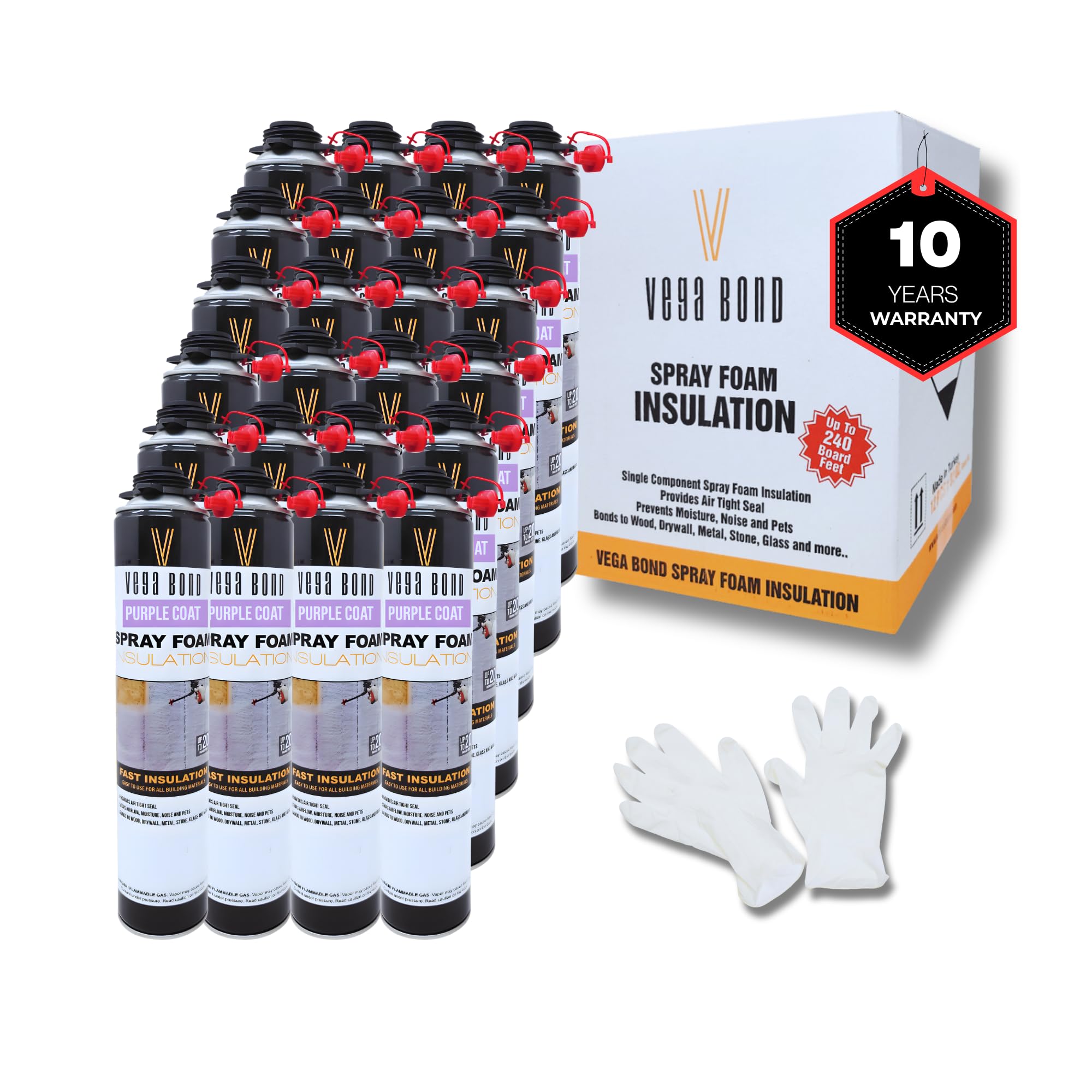
The Vega Bond SF001 delivers a full 5.66 R-value per inch from a single-component closed-cell spray foam, covering up to 480 board feet across the 24-pack. This is the strongest thermal barrier in the lineup when applied at proper depth — it adheres to wood, metal, drywall, and OSB, creating a seamless airtight seal that fiberglass batts cannot achieve.
Real-world users report that warming the cans to 85°F and shaking them aggressively dramatically improves flow and expansion consistency. The foam is effective as a dew point barrier on roof decks, preventing condensation and mold in spaces where fiber insulation would trap moisture. It also provides measurable sound damping compared to open-cell alternatives.
The material dries tougher than standard retail spray foam but has a blobby expansion pattern that may require grinding flush with studs for wall applications. The 29 oz cans cover roughly 20 board feet at one inch, so large open areas will consume multiple cans quickly. Still, for rim joists, crawlspace sealing, and irregular gaps, this is the most versatile and powerful option available.
Why it’s great
- High R-5.66 per inch closed-cell performance
- Seals irregular gaps better than any pre-cut batt
- Adheres to almost all common building materials
Good to know
- Requires careful temperature control and shaking for best results
- Blobby expansion may need grinding to flush with studs
- Higher upfront investment than entry-level alternatives
2. SmartSHIELD -5mm 24”X50ft
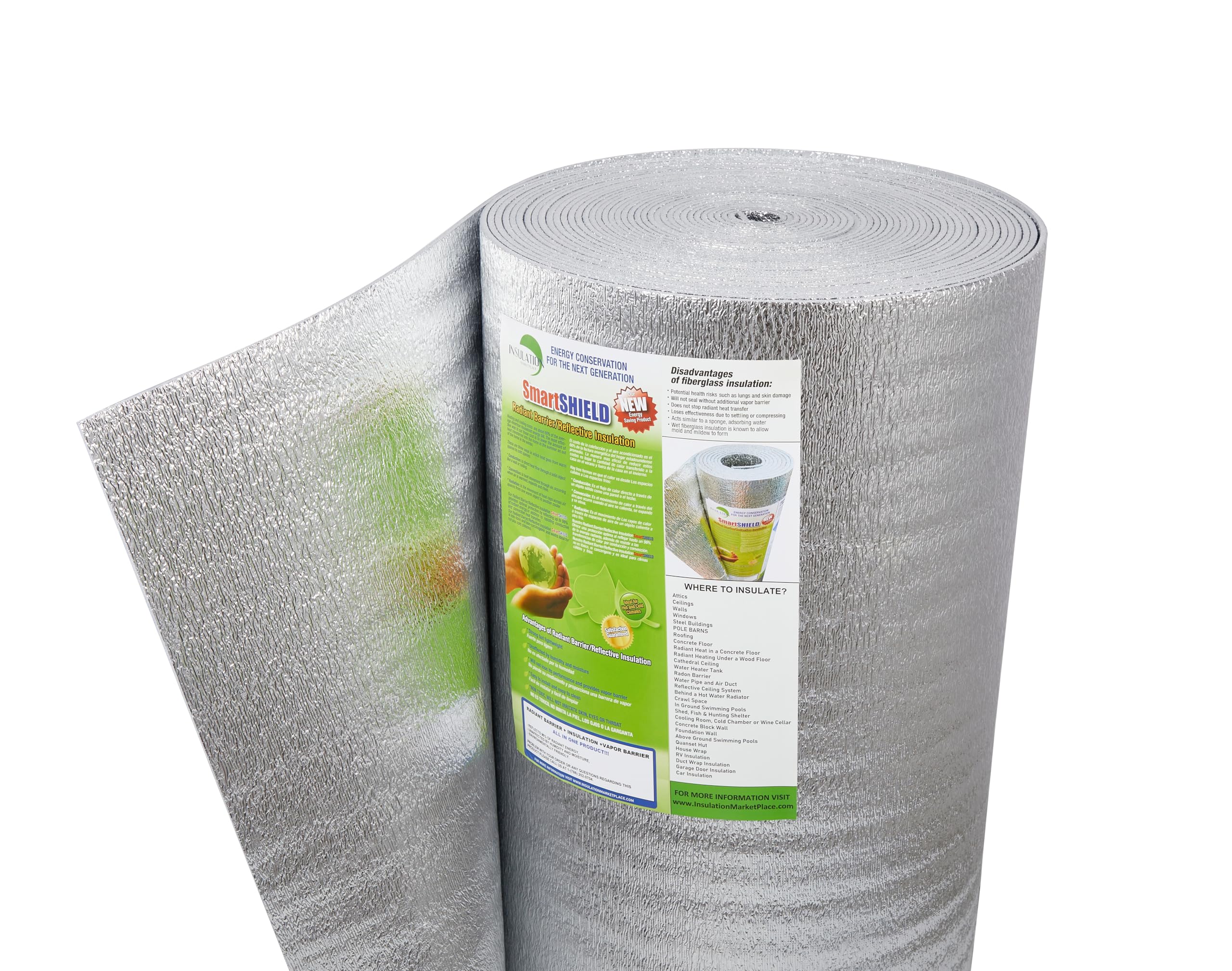
The SmartSHIELD -5mm is a foam-core reflective insulation rated at R-17 with dual-sided aluminum facing that reflects 95% of radiant energy. Unlike fibrous batts, this material works by blocking radiant transfer — the dominant heat path in attics, metal buildings, and RV roofs. It meets ASTM C1313 standards and carries a Class A fire rating, making it code-compliant for occupied spaces.
Users consistently report an 8-10°F temperature reduction in spaces behind the barrier, whether installed over attic hatches, behind AC exhaust hoses, or on RV windows in sub-freezing weather. The material is tear and puncture resistant but cuts easily with utility scissors. It also functions as a vapor barrier, preventing condensation in humid environments where fiberglass would absorb moisture and lose R-value.
The roll provides substantial coverage at 100 square feet (24″ x 50′), but the 5mm thickness means it provides negligible conductive insulation — it relies entirely on the reflective surface. For spaces where conductive or convective heat loss is the primary issue, this product should be paired with a thicker insulation layer rather than used alone.
Why it’s great
- Reflects 95% of radiant heat effectively
- Class A fire rating meets building codes
- Acts as vapor and moisture barrier
Good to know
- Thin 5mm foam core offers minimal conductive insulation alone
- Requires stapling or mechanical fasteners to stay taut
- Best results require pairing with bulk insulation
3. Lynn Manufacturing 2″ Ceramic Blanket (3033E)

The Lynn Manufacturing 3033E ceramic fiber blanket comes in at 2 inches thick with an 8 lb/ft³ density and a 2400°F continuous temperature rating. This is the most rugged batt in the review — users report that a steel kiln running bisque fires to cone 04 (1950°F) over 7 hours and 45 minutes left the exterior steel surface at just 289°F, demonstrating the blanket’s serious thermal resistance.
The 15 x 24 inch sheet covers 2.5 square feet, which is compact but intentional — this material is designed for precise placement inside wood stove baffles, forge linings, and kiln walls rather than large-area coverage. The fibers are heavy and tough, cutting cleanly with a long razor knife, though the production process does create loose silica beads that can migrate during handling.
At this thickness, the blanket provides double the thermal resistance of 1-inch ceramic alternatives in a single layer, but the smaller footprint per sheet means multiple units are required for anything beyond a small forge or baffle. The density also makes it stiffer and less conformable around curved surfaces compared to lighter blankets.
Why it’s great
- 2-inch thickness provides superior thermal resistance in one layer
- High density fibers resist sagging at extreme temperatures
- Made in the USA with consistent quality control
Good to know
- Small sheet size limits large-area applications
- Loose silica beads require careful cleanup during installation
- Higher cost per square foot than 1-inch alternatives
4. Lynn Manufacturing 1″ Ceramic Blanket (3026E)

The Lynn Manufacturing 3026E is the 1-inch version of the same 2400°F-rated ceramic fiber blanket, available in a larger 16 x 48 inch sheet. The lower price point per square foot makes it the go-to choice for projects that need high-temperature protection across a wider area — diesel heater exhaust pipe wraps, toaster oven insulation, and chimney pass-throughs all benefit from this blanket’s density and heat resistance.
Users specifically note that the material is dense and tough compared to cheaper ceramic wool alternatives, which tend to disintegrate under vibration or direct element contact. One reviewer placed the blanket inside a toaster oven where the heating elements touched the fiber directly, and the material showed no damage even when elements were glowing red. Cutting is straightforward with a sharp utility knife.
The same silica bead shedding issue present in the 2-inch version carries over here, and the blanket does begin to break down after a few years of continuous thermal cycling. For occasional-use applications like a weekend forge or seasonal wood stove, this is the most cost-effective high-temp solution in the review. For continuous industrial use, the denser 2-inch variant may hold up longer.
- Excellent 2400°F temperature tolerance
- Large 16″ x 48″ sheet covers significant area
- Dense construction resists direct element contact damage
Good to know
- Silica beads require mask and gloves during handling
- Gradual breakdown after years of thermal cycling
- Not suitable for structural or load-bearing applications
5. BACLAUGH 1″ Ceramic Blanket

The BACLAUGH 1-inch ceramic blanket matches the same 16 x 48 inch dimensions and 2400°F rating as the Lynn Manufacturing 3026E but comes from a newer brand in the category. Real-world tests show it performing well for wood stove draft blocking, oven insulation repair, and homemade forging furnaces — the blanket keeps exterior oven walls cool to the touch while interior temperatures exceed 1100°F.
One notable use case involved wrapping a perlite pizza dome with this insulation in a single layer, with a doubled section at the top. The interior of the dome reached over 1100°F while the exterior remained barely warm, and the oven held heat for hours after the fire died. This speaks to the blanket’s thermal mass and reflective properties when used in enclosed spaces.
The material causes significant itchiness during handling, and users strongly recommend wearing a respirator and long sleeves while cutting. The included razor blade is functional but dulls quickly on the dense fibers — a sharp box cutter with fresh blades makes cleaner cuts. The BACLAUGH is a capable alternative to the more established Lynn brand, especially for first-time builds where budget matters.
Why it’s great
- Holds exterior temperatures low despite 1100°F+ interiors
- Easy to cut and shape for custom applications
- Large sheet eliminates seams in most residential builds
Good to know
- Significant itching requires full protective gear
- Included razor dulls quickly on dense fibers
- Less brand history than Lynn Manufacturing alternatives
6. uxcell 236mil 16.36sqft Mat
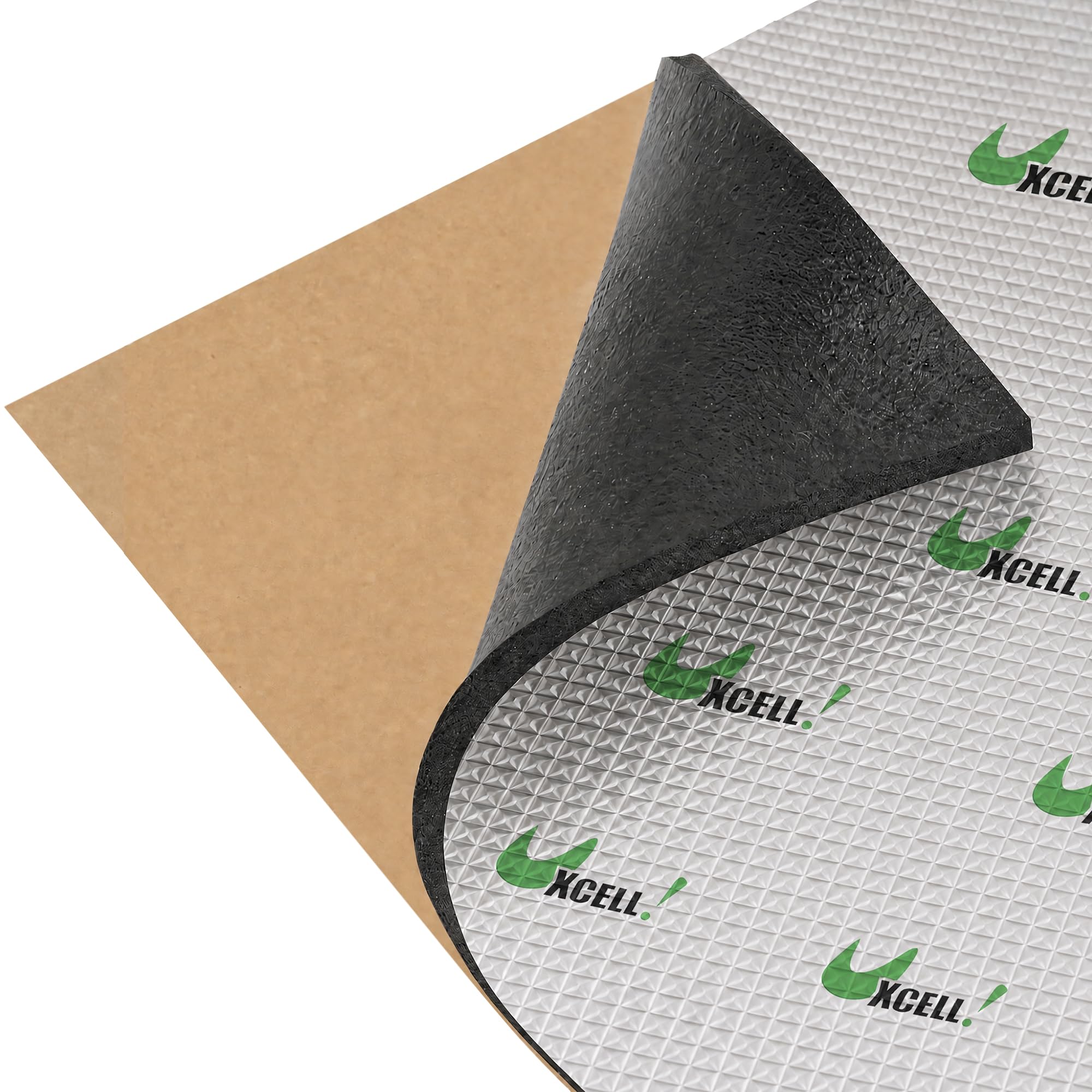
The uxcell 236mil aluminum foil foam mat provides 16.36 square feet of coverage from a single 60 x 40 inch sheet. The 6mm thickness is designed specifically for automotive use — reducing engine, road, and transmission noise while blocking heat transfer from the exhaust and engine bay into the cabin. The self-adhesive backing simplifies installation on hoods, doors, and wheel arches.
Users report measurable noise reduction in vehicles with aftermarket exhaust systems and noticeable temperature drops on floorboards during summer driving. The material also functions in marine and golf cart applications where both heat and moisture resistance are needed. Cutting is straightforward with standard scissors, and the aluminum facing adds durability against incidental contact.
Adhesion strength is the primary variable — several reviewers noted that the backing requires firm pressure and a clean surface to bond properly, and some experienced center bulging after a week in hot environments. Retaining clips or additional adhesive may be needed for vertical applications or areas subjected to direct sunlight exposure. For the coverage area per dollar, this is the most accessible entry into automotive thermal batt insulation.
Why it’s great
- Generous 16.36 sqft coverage from a single sheet
- Combines sound dampening with heat blocking
- Easy to cut and install with self-adhesive backing
Good to know
- Adhesion can fail in high-heat environments without clips
- Not as effective as luxury-grade sound deadening for total isolation
- Surface prep is critical for long-term bond strength
7. Burdurry 50 Pack Acoustic Panels

The Burdurry 50-pack of 1 x 12 x 12 inch acoustic wedge panels is the only dedicated sound absorption batt in this review. Made from 100% polyurethane foam, these panels target echo, reverb, and vibration in recording studios, home offices, and home theaters rather than thermal insulation. The high-density foam structure traps airborne sound waves and reduces slap echo in untreated rooms.
Users report noticeable echo reduction once a full wall or ceiling corner is covered, and the aesthetic upgrade from bare drywall is significant. The panels ship vacuum-packed and require 24-48 hours to fully expand — soaking in warm water and using a dryer accelerates the process. They cut cleanly with a utility knife for custom sizing around outlets and corners.
The adhesive backing industry standard is notably absent — these panels require separate double-sided tape, spray adhesive, or mechanical fasteners. Some users also report an initial chemical smell that dissipates after airing out. The 1-inch thickness provides effective mid- and high-frequency absorption but is insufficient for deep bass null treatment. For vocal booth, podcast, or home theater flutter echo, this pack delivers the highest value per panel in the segment.
Why it’s great
- 50 panels cover substantial wall area for echo reduction
- Lightweight and easy to cut for custom installations
- Visible improvement in room acoustics for spoken word and music
Good to know
- No adhesive backing included — requires separate purchase
- Chemical off-gassing present during initial unpacking
- 1-inch thickness limits deep bass sound absorption
FAQ
Can I use ceramic fiber blanket as a soundproofing batt in a wall?
What thickness of batt insulation do I need for a car hood?
Does reflective bubble insulation really have an R-17 rating?
Can I layer ceramic fiber and reflective insulation together?
Final Thoughts: The Verdict
For most users, the best batt insulation winner is the Vega Bond SF001 24-Pack because it offers the highest thermal resistance per inch and seals irregular gaps that pre-cut batts leave open. If you need a 2400°F-rated radiant and conductive barrier for a forge or wood stove, grab the Lynn Manufacturing 2″ Ceramic Blanket (3033E). And for automotive heat and noise reduction on a budget, nothing beats the coverage and ease of the uxcell 236mil 16.36sqft Mat.