
Scratching at it risks permanent damage to the glass surface, while the wrong chemical can leave a hazy film or even strip nearby paint. The right adhesive remover dissolves the bond cleanly, leaving your glass spotless and unscathed.
I’m Min — the co-founder and writer behind Gadgets Feed. My research for this guide involved cross-referencing real-world user experiences with the chemical profiles of dozens of adhesive removers to determine which formulations actually break down glue bonds on glass without damaging the surface or surrounding materials.
If you need a solution that cuts through sticker goo, tape residue, and industrial adhesives without leaving scratches or a greasy film, you have found the definitive analysis of the best adhesive remover for glass available right now.
How To Choose The Best Adhesive Remover For Glass
Not every adhesive remover is safe for glass. Some solvents etch the surface, others leave a stubborn oily residue that attracts dust, and many simply lack the chemical strength to break the bond of modern industrial adhesives. Here is what matters when picking one.
Solvent Chemistry: Water-Based vs Solvent-Based
Water-based removers are gentler on surrounding painted or plastic trim, but they struggle with cured epoxies, urethanes, and cyanoacrylates. Solvent-based formulas (typically containing n-methylpyrrolidone or d-limonene) penetrate the adhesive polymer faster, but they can stain porous adjacent surfaces. For glass alone, a solvent-based remover is usually the better choice, provided you mask off nearby materials. The 3M Specialty Adhesive Remover and Goof Off rely on stronger solvents, while Goo Gone uses d-limonene for a citrus-based approach.
Viscosity and Application Method
Gels cling to vertical glass surfaces (windows, windshields, shower doors) without dripping, giving the solvent more dwell time to soften the bond. Sprays cover wider areas faster but can run off vertical panels before the chemistry activates — this is why the RapidTac kit includes a trigger spray and claims a 60-second activation window. Brush-on applicators, like the Starbond gel debonder, give you pinpoint control for small spots of superglue on glass tabletops or picture frames.
Included Tools and Scrapers
Plastic scrapers are essential: metal blades will scratch glass, no matter how careful you are. The best kits bundle plastic razor blades or a dedicated scraper tool. The MCTRHG and RapidTac kits include these, saving you a separate purchase. The Max Strip product relies on a spray-and-wipe method, meaning you will need a non-abrasive pad or plastic tool on hand.
Quick Comparison
On smaller screens, swipe sideways to see the full table.
| Model | Category | Best For | Key Spec | Amazon |
|---|---|---|---|---|
| RapidTac Rapid Remover Kit | Premium Kit | Industrial adhesive & PPF removal | 32 oz bottle + Lil Chizler + 5 plastic razors | Amazon |
| 3M Specialty Adhesive Remover | Solvent-Based | Epoxy, urethane & silicone residue | 15 fl oz solvent-based can | Amazon |
| Goof Off FG790 | Professional Strength | Tape residue & graffiti on glass | 12 oz gel/spray bottle | Amazon |
| Goo Gone Original | Citrus Solvent | Everyday labels & sticker residue | 8 fl oz liquid, citrus scent | Amazon |
| Max Strip 22oz | Spray Gel | Large-area glue & sap removal | 22 oz spray gel, no methylene chloride | Amazon |
| Starbond Super Glue Remover | CA Debonder | Cyanoacrylate (superglue) on glass | 2 oz gel with brush cap | Amazon |
| MCTRHG Adhesive Sticker Remover | Entry-Level Spray | Car decals & window tint removal | 3.3 oz spray + plastic & metal scraper | Amazon |
In‑Depth Reviews
1. RapidTac Rapid Remover Kit

The RapidTac kit is the complete package for anyone tackling stubborn adhesives on glass. The 32-ounce trigger spray delivers a non-toxic formula that breaks down adhesives in as little as 60 seconds — real-world users report it turning 8-year-old vinyl wrap glue into white globules that wipe away cleanly. The included Lil Chizler tool and five plastic razor blades mean you do not need to buy additional scrapers, and because the formula is non-toxic with a mild lemony scent, it is safe for indoor use on shower doors or glass tabletops without harsh fumes.
This kit shines brightest on automotive glass applications. Multiple verified buyers successfully removed thick paint protection film (PPF) adhesive residue and 15-year-old decals from hoods and doors with zero damage to the clear coat or glass itself. The plastic razors are gentle enough for painted surfaces underneath the glass edge, which is a common weak point where solvent runoff can stain trim. The only noted issue is that on heavily textured black plastic trim, the solvent can leave a slight whitish stain — easily fixed with a trim restorer.
For the price, you get a professional-grade solvent volume (32 oz) that outperforms smaller boutique bottles, plus tools that cost extra with other brands. If you need to remove large decals, vinyl wraps, or industrial adhesives from glass and surrounding painted surfaces, this kit earns its top spot by combining chemical effectiveness with a complete safety toolkit.
Why it’s great
- Works in 60 seconds; verified on 14-year-old PPF adhesive
- Non-toxic formula with mild lemon scent — safe for indoor use
- Complete kit with 32 oz spray, Lil Chizler, and 5 plastic blades
Good to know
- Can slightly stain black plastic trim; needs trim restorer afterwards
- Heavy buildup may require a second application after 1-2 minutes
2. 3M Specialty Adhesive Remover

The 3M Specialty Adhesive Remover is the go-to choice for reactive adhesives — epoxies, urethanes, and silicones that cure through chemical cross-linking. Unlike mild citrus-based removers, this solvent-based formula penetrates the polymer matrix of cured construction adhesives, making it the only product on this list specifically engineered for industrial-grade bonds. It comes in a 15-fluid-ounce can, and the liquid consistency works best when applied with a rag or brush before scraping with a plastic putty knife.
Real-world testing shows it excels at removing filament tape residue from primed MDF and decal adhesive from trailers and vehicle bodies. Users note that it requires manual effort — soaking and scraping with plastic blades — but it succeeds where milder products fail entirely. The solvent is potent, so you must avoid breathing the fumes and protect nearby painted surfaces, as it can strip paint if left to pool. However, for glass applications where the surrounding frame is metal or factory-painted, it is remarkably effective at breaking down cured silicone and epoxy dribbles.
The trade-off is clear: this is not an everyday sticker remover but a targeted weapon for tough jobs. It is noticeably more expensive per ounce than consumer-grade removers, and it is labeled for industrial/occupational use. If you are removing construction adhesive from a glass backsplash or epoxy residue from a glass workbench, this is the product that gets the job done without endless reapplication.
Why it’s great
- Specifically formulated for epoxies, urethanes, and reactive adhesives
- Stronger than citrus-based alternatives; saves time on tough jobs
- Safe on glass and factory-painted auto surfaces
Good to know
- Strong fumes require ventilation; avoid inhalation
- Can remove paint if left on non-baked finishes too long
3. Goof Off FG790 Gunk & Adhesives Remover

Goof Off is the name you reach for when Goo Gone is not enough. The FG790 formulation comes as a gel that stays put on vertical glass surfaces — windows, vehicle windshields, glass shower enclosures — giving the solvent time to dissolve tape residue, sticker adhesive, and even wall graffiti. Users consistently note that it removes sticky buildup with noticeably less scrubbing than the citrus competitors, and the pleasant orange scent is a welcome surprise for a professional-strength solvent.
The gel consistency is the key advantage here: it does not run off vertical glass panels, so you can apply it precisely to the adhesive spot and let it work for several minutes without pooling at the bottom. Verified buyers have used it successfully on tape residue on tables, cars, and glass jars, and one community manager noted it removed frequent wall graffiti that Goo Gone could not touch. The formula is safe for glass, metal, brick, concrete, and non-acrylic plastics, though it should be spot-tested on painted surfaces.
At 12 ounces, the bottle offers a solid amount of product for the price. The main limitation is that it is not labeled for reactive adhesives like epoxies — for those, step up to the 3M product. But for the vast majority of everyday adhesive problems on glass, this gel offers the best balance of strength, precision, and value in the mid-range tier.
Why it’s great
- Gel formula stays on vertical glass without dripping
- Removes residue faster than citrus-based alternatives
- Pleasant orange scent; safe on multiple surfaces
Good to know
- Not designed for cured epoxies or urethanes
- Should be spot-tested on acrylic plastics
4. Goo Gone Original Gunk & Adhesive Remover
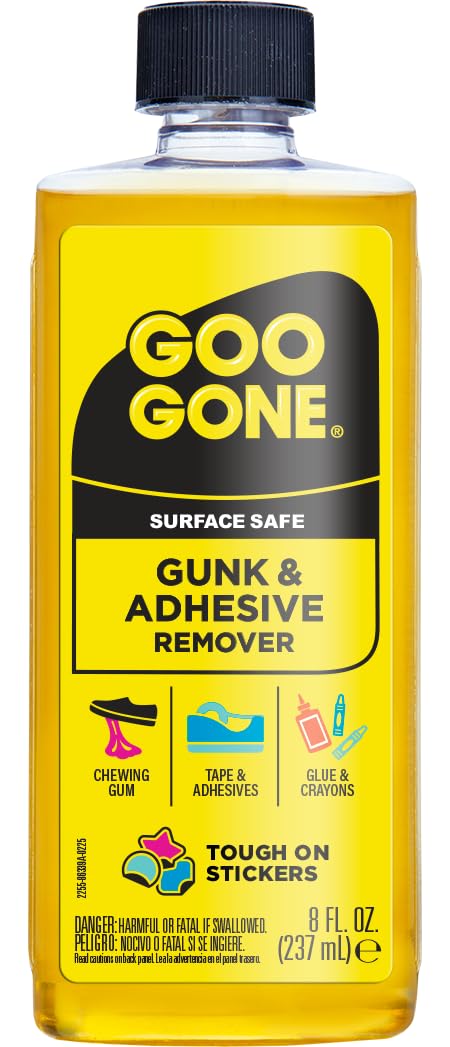
Goo Gone Original is the household standard for a reason — it safely removes sticker residue, tape adhesive, and label glue from glass without harsh fumes or surface damage. The citrus-scented d-limonene formula is tough enough to dissolve the sticky backing on washed-on clothing labels yet gentle enough for use on glassware, drinking glasses, and dinnerware. The 8-ounce bottle is small, but a little goes a long way: users report that a few drops on a paper towel easily erase leftover marks from price tags and shipping labels.
Where Goo Gone differentiates itself is in surface versatility. It is safe on carpets, fabrics, hard surfaces, wine glasses, and even clothing, which makes it the best choice if you need a single product for household use across multiple materials. Real buyers have used it to remove glue left by baby-proofing devices throughout a home, and it performed flawlessly on glass and painted walls without stripping the paint. The oily residue it leaves behind is a minor inconvenience — a quick soap-and-water wash solves it.
The trade-off is that it is not the fastest or strongest option. It requires a few minutes of dwell time and may need multiple applications on heavy buildup like industrial-grade adhesives. But for the price, it offers the widest safety margin for beginner users and the best performance on everyday sticky messes around the home.
Why it’s great
- Safe on glass, fabric, carpet, and painted surfaces
- Pleasant citrus scent; no harsh chemical fumes
- Removes label residue, tape adhesive, and crayon easily
Good to know
- Leaves an oily residue that requires washing afterwards
- Not strong enough for cured epoxies or urethanes
5. Max Strip Tape, Glue & Adhesive Remover

Max Strip delivers a generous 22-ounce spray gel that excels on large-area adhesive removal projects — think glue-down carpet tiles, rug tape residue on hardwood, or tree sap on a windshield. The formula contains no methylene chloride or NMP, making it safer for indoor use than many industrial strippers. It comes out as a spray gel that clings to vertical surfaces, and the manufacturer advises checking the surface every 15 minutes until the adhesive softens enough to scrape away.
Real-world results are mixed but impressive in the right scenarios. Users report it performed flawlessly on adhesive residue from sticker tiles on glass, outperforming Goo Gone, which required more effort and had a stronger smell. One restorer used Max Strip to dissolve old black velvet adhesive from an antique Victorian chest drawer — a job that defeated Goo Gone, a heat gun, and other solvents. On the other hand, some users found it ineffective on rug tape residue on wood floors, even with a scraper and multiple applications.
The key insight is that Max Strip works best on factory-finished or baked-on coatings (like vehicle paint and glass) rather than aftermarket varnishes or paints. For glass specifically, the spray gel provides excellent coverage for large decals or extensive sap coatings. The lack of harsh odor is a genuine advantage for enclosed spaces, but the inconsistent results on porous surfaces mean it is best reserved for non-porous glass and metal.
Why it’s great
- 22 oz spray gel offers great coverage for large areas
- No harsh fumes; safe for confined spaces
- No methylene chloride or NMP chemicals
Good to know
- Inconsistent results on some wood floor adhesives
- Not designed for painted or varnished surfaces
6. Starbond Super Glue Remover

Starbond’s Super Glue Remover is the only product on this list specifically formulated for cyanoacrylate (superglue) and CA glues. The gel formula stays put on vertical glass surfaces — a critical feature when you need to remove superglue drips from a glass table edge or mirror frame. The built-in brush cap delivers precise application to the exact spot, avoiding over-pouring that could spread the glue or soak adjacent materials. It is a mild, non-acetone formula, so it will not fog or etch glass like pure acetone can.
Users report consistent success on hard, non-porous surfaces like glass and metal. One verified buyer removed dried superglue from a metal lighter with a single application, and another cleared a superglue stain from a leather couch without any trace. The process requires patience: apply the gel, wait 10-15 minutes, then wipe or scrape. Unlike stronger solvents, this gel does not work instantly, but it avoids damaging the surface. Some users noted it failed on synthetic leather and certain plastics, so it is best reserved for glass, metal, ceramic, and wood.
The 2-ounce bottle is small, but a little gel covers many small glue spots. This is the right tool for anyone who works with CA glues regularly — model builders, repair technicians, and crafters — and needs a controlled, non-destructive way to undo mistakes on glass surfaces without risking the surrounding finish.
Why it’s great
- Brush cap delivers precision on small glue spots
- Non-acetone formula won’t etch glass
- Safe on ceramic, metal, and wood surfaces
Good to know
- Requires 10-15 minute dwell time; not instant
- May not work on synthetic leather or porous furniture
7. MCTRHG Adhesive Sticker Remover
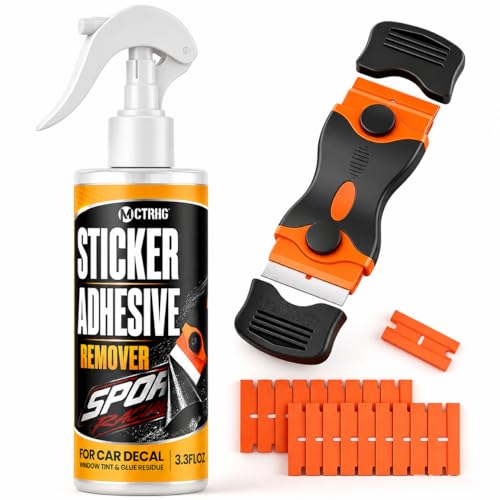
MCTRHG offers an entry-level spray that punches above its weight class, especially for automotive decal removal on glass. The 3.3-ounce bottle is small, but the kit includes 19 plastic razor blades and a dual-blade scraper (plastic and metal blades) — a tool bundle that costs as much as the product itself if bought separately. The water-based formula is ultra-safe on glass and painted surfaces, leaving no oily film or gummy residue, and it carries a mild odor that is comparable to Expo whiteboard cleaner.
Real-world results are impressive for the price point. A verified buyer removed 10-year-old stickers from a Jeep Wrangler’s windows, hood, and body with thorough buffing afterwards — the glass came out clean with no ghosting. Another user successfully removed double-sided tape residue from a whiteboard without damaging the surface. The main caveats: the spray tube can be too long for the bottle, requiring a cut, and the bottle’s spray mechanism occasionally fails, leading some users to pour the liquid into a separate sprayer. It also requires a little patience, as the water-based formula needs more soak time than solvent-based alternatives.
For the price, this is the most budget-friendly way to get a complete adhesive removal kit with scrapers included. It is ideal for occasional use — removing bumper stickers, window decals, or price tag glue from glass jars — where you want a safe, non-toxic formula and do not mind waiting a few extra minutes for the chemistry to work.
Why it’s great
- Includes 19 plastic razors and dual-blade scraper
- Water-based formula safe on glass and paint
- No oily residue; cleans up with water
Good to know
- Small 3.3 oz bottle; may need multiple applications
- Spray mechanism can malfunction; may need decanting
FAQ
Will adhesive remover damage the glass surface?
What is the difference between water-based and solvent-based formulas?
Can I use these removers on tinted window film or privacy glass?
Final Thoughts: The Verdict
For most users, the adhesive remover for glass winner is the RapidTac Rapid Remover Kit because it combines a fast-acting, non-toxic solvent with the best included toolkit for safe scraping on glass. If you need to remove cured epoxies or construction adhesive, grab the 3M Specialty Adhesive Remover. And for precise superglue removal on glass without risking etching, nothing beats the Starbond Super Glue Remover.