
A child’s helmet that slips, wobbles, or feels heavy turns every ride into a negotiation — and worse, it compromises the very protection it’s meant to provide. The difference between a proper fit and a bad one isn’t comfort alone; it’s whether the EPS liner stays positioned over the frontal lobe during an impact. That’s why every gram of foam, every vent channel, and every MIPS layer matters more in youth sizing than it does for adults.
I’m Min — the co-founder and writer behind Gadgets Feed. I’ve spent countless hours cross-referencing CPSC and ASTM certification documents, analyzing MIPS rotational force data, and comparing real-world consumer reports on buckle reliability and pad durability to build this guide.
After scouring user feedback across dozens of models to find the safest, most comfortable options, I’ve narrowed the field to the seven strongest contenders for the best bicycle helmets for youth.
How To Choose The Best Bicycle Helmets For Youth
Youth helmets sit in a tricky zone: they must accommodate a growing skull without sacrificing the snug, non-rotational fit that makes a helmet effective. Many parents mistakenly size up for room to grow, but a helmet that shifts more than an inch in any direction during a fall loses its protective geometry. Focus on the adjustable retention system and liner density first — not the paint job.
MIPS vs. Standard EPS: The Rotational Force Difference
Multi-directional Impact Protection System (MIPS) adds a low-friction layer between the outer shell and the EPS liner. In an angled impact — the most common type in bike crashes — this layer allows the helmet to rotate slightly relative to the head, reducing the rotational acceleration transferred to the brain. Standard EPS helmets absorb linear energy well but offer little defense against the twisting motion that causes concussions. For active kids riding scooters, mountain bikes, or skateboards, MIPS is a meaningful upgrade.
Fit System Types: Dial, Strap, and Sizing Range
The retention system dictates whether a helmet stays put. A rear dial adjuster (often called ErgoKnob or Roc Loc) offers micro-adjustments that let you tighten or loosen in seconds. Cheaper models rely on foam pads alone, which compress over time and allow shifting. Look for a full-ring dial that wraps around the occipital bone — that keeps the helmet anchored during forward falls. Also verify the sizing range in centimeters against your child’s measured head circumference; two helmet sizes (YS and YM) typically cover ages 3 to 14.
Shell Construction: ABS vs. PC and Vent Count
The outer shell material affects impact distribution and weight. ABS (Acrylonitrile Butadiene Styrene) is tougher and more impact-resistant than Polycarbonate (PC), making it ideal for multi-sport use where hard landings on concrete are possible. PC shells are lighter and often paired with in-mold construction, where the PC is fused directly to the EPS liner. Vent count matters for thermal comfort: 11 to 21 vents create a pressure differential that pulls hot air out, critical for kids who overheat quickly. But more vents mean less foam coverage, so look for deep channeling rather than just a high vent count.
Quick Comparison
On smaller screens, swipe sideways to see the full table.
| Model | Category | Best For | Key Spec | Amazon |
|---|---|---|---|---|
| NÜDL Youth MIPS | MIPS / Premium | Maximum rotational protection | MIPS layer + Fidlock buckle | Amazon |
| Giro Register II MIPS | MIPS / Premium | Older youth / small adult | Integrated MIPS + Roc Loc fit | Amazon |
| Retrospec Remi | Mid-Range | Built-in sun visor usage | ErgoKnob dial + reflective straps | Amazon |
| SIFVO Youth 21-Vent | Mid-Range | Hot weather ventilation | 21 vents + 360° coverage | Amazon |
| OnBros Kids w/ Visor | Value | Lightweight multi-sport use | 240g + detachable visor | Amazon |
| Bell Axle Youth | Value | Classic tapeless design | True Fit self-adjust system | Amazon |
| LANOVAGEAR Kids | Entry-Level | Budget twin-pack compatibility | 11 vents + carry bag included | Amazon |
In‑Depth Reviews
1. NÜDL Youth MIPS Bike Helmet
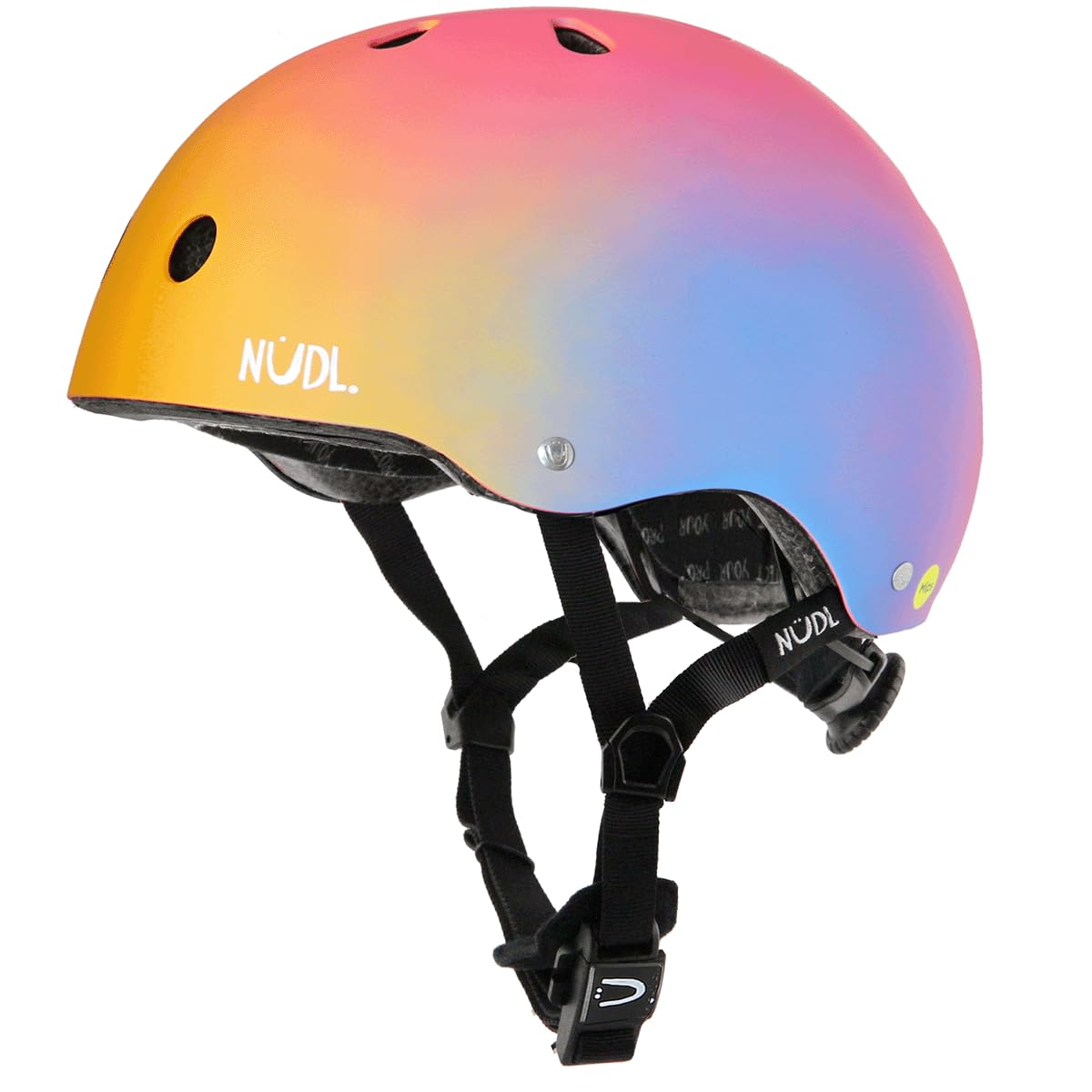
This helmet brings the full MIPS rotational protection suite to a youth-specific shell, with a Fidlock magnetic buckle that eliminates the pinching nightmare of traditional plastic clasps. The YS size (52–55 cm) covers ages 3–8, and the YM (56–60 cm) extends to teens — both feature an easy-turn dial that locks the occipital ring firmly in place. Eleven contoured vents channel air from the front scoops out the rear exhaust ports, keeping active riders cool even on long climbs.
The ABS outer shell wraps a dense EPS liner, and the entire unit weighs just under 900 grams for the larger size — light enough that a 5-year-old won’t complain of neck strain. Multiple verified reviews note that toddlers who previously refused helmets now wear this one without fuss, thanks to the intuitive one-handed magnetic clasp. The MIPS layer adds about 30–40 grams versus a standard helmet, but the safety gain — reduced rotational force in oblique impacts — justifies the extra weight on any ride involving pavement or hard surfaces.
Colorways like Sherbert and Mint pop visually, and the matte finish resists scuffs from being tossed into a bike basket. The dial system holds adjustment even after repeated clicks, a common failure point on budget helmets. If your child rides a scooter, e-bike, or skateboard in addition to cycling, this helmet’s multi-sport certification covers all of those activities under one lid.
Why it’s great
- MIPS layer reduces rotational force in angled impacts.
- Fidlock magnetic buckle enables one-handed, pinch-free fastening.
- Two shell sizes cover a wide age range (3–16).
Good to know
- Premium pricing reflects the MIPS and Fidlock components.
- Not certified for snow sports or downhill skateboarding.
- Smaller YS size may be snug for kids at the top of the age range.
2. Giro Register II MIPS
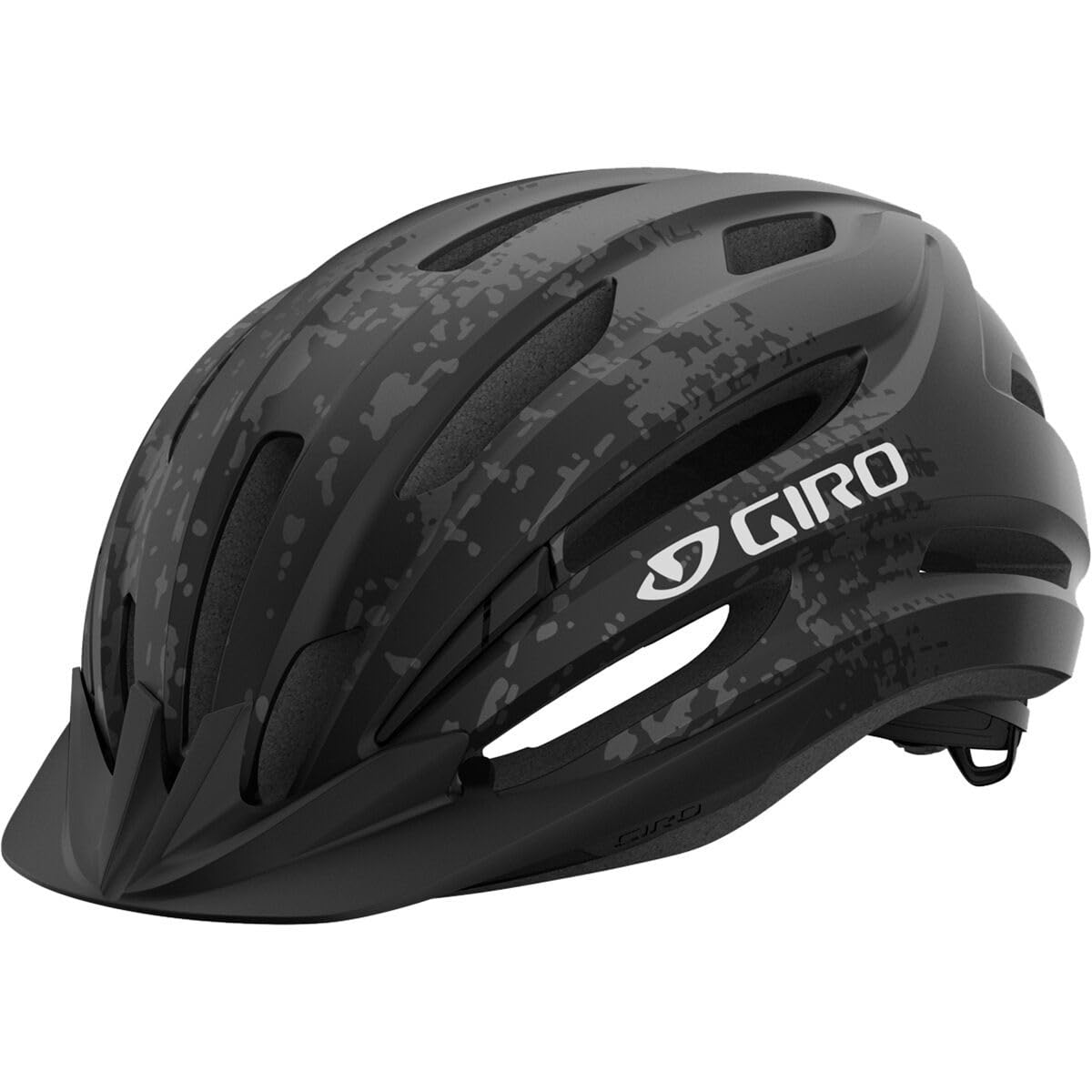
Giro’s Register II brings adult-tier safety engineering — specifically the Integrated MIPS system and a two-piece shell with a Hardbody lower wrap — into a form factor that fits older youth and smaller adults. The in-mold construction fuses a polycarbonate outer to the EPS liner, keeping weight down to 280 grams while maintaining impact distribution. The Roc Loc fit dial adjusts the occipital cradle independently of the straps, allowing a precise fit that doesn’t shift when the child looks up or down.
The 16 vents are sculpted to pull air through the front and exhaust it at the rear, a design that performs well on road rides and mountain bike trails alike. A small visor attaches at the front to block low-angle sun without obstructing peripheral vision. Several buyers report using this helmet for 9- to 12-year-olds who transitioned from kid-specific models and appreciate the more mature color schemes like Matte Black/White and Matte Red.
One consideration: the Roc Loc dial is reported by some long-term users to be susceptible to breakage with aggressive daily adjustments, so it’s best suited for families who set the fit once and leave it. The adult sizing (Universal Fit) runs larger than typical youth models, so measure head circumference carefully — it’s ideal for 54–58 cm heads. The reflective rear decals add a layer of visibility for evening neighborhood rides.
Why it’s great
- Integrated MIPS reduces rotational forces effectively.
- In-mold PC+EPS construction keeps weight at 280 grams.
- Roc Loc dial offers independent occipital adjustment.
Good to know
- Roc Loc dial may weaken with frequent re-adjustments.
- Adult sizing may be too large for children under 8.
- Visor attachment feels less robust than the rest of the helmet.
3. Retrospec Remi Kids Bike Helmet

The Remi from Retrospec packs a surprising amount of utility into a mid-range price point. Its integrated sun visor extends far enough to shield eyes from glare without blocking upward visibility — a detail that matters when kids are scanning for traffic. The ErgoKnob dial at the rear tightens around the occipital bone, and the no-chafe chin strap uses a soft pad that prevents the irritation that makes some children refuse to buckle up.
Eleven air vents are arranged with deep channeling rather than simple holes, creating a noticeable airflow difference on humid summer rides. The ABS outer shell and EPS inner liner meet CPSC standards for ages 5 and up. Reflective strips on the rear and sides boost low-light visibility. Quick-release padding snaps out for hand washing, and the interior dries fast enough to be ready for the next day’s use.
Buyers consistently mention that the fit works well for toddlers (as young as 2) through early elementary ages, with the dial offering enough range to accommodate growth over two to three seasons. The matte navy and matte black finishes hide scuffs well. One minor complaint: the chin strap webbing lacks a splitter near the ear, so the straps can twist if not adjusted carefully after each use.
Why it’s great
- Integrated visor blocks glare without blocking upward view.
- ErgoKnob dial provides precise occipital fit.
- Reflective straps enhance visibility at dusk.
Good to know
- Chin strap webbing lacks ear-splitter, prone to twisting.
- Padding is hand-wash only, not machine-washable.
- No MIPS layer for rotational force reduction.
4. SIFVO Youth Bike Helmet

With 21 aerodynamic vents, the SIFVO Youth helmet is engineered for children who generate serious heat during multi-sport use — cycling, scooter, hoverboard, and skateboarding all fall under its CPSC+ASTM+CE certification. The deep ventilation channels work as a pressure-differential system: cool air enters the front scoops and hot air exhausts through the top and rear ports, keeping head temperature noticeably lower than a standard 11-vent helmet after 30 minutes of exertion.
The PC shell is fused to a dense EPS liner with 360° coverage that extends lower at the back of the head — a critical zone that budget models often leave exposed. A three-position rear dial adjusts the fit, and the removable visor can be snapped off for skatepark sessions where the visor might snag on ramps. The entire helmet weighs 0.69 pounds (about 313 grams), which is light enough for a 5-year-old to wear without neck fatigue.
Multiple buyers with kids aged 5–10 report that the black-and-white plaid pattern appeals to children who resist bright, childish colors. The visor does an effective job of blocking sun glare during afternoon rides. One trade-off: the large number of vents means slightly less EPS foam coverage than a solid-shell design, so this helmet is best suited for warm-weather riding rather than cold or wet conditions.
Why it’s great
- 21 vents create superior airflow for hot-day riding.
- 360° coverage protects the back of the skull.
- Detachable visor adapts to different sports.
Good to know
- Higher vent count reduces total EPS coverage area.
- Visor may loosen with repeated removal.
- No MIPS layer for rotational protection.
5. OnBros Kids Bike Helmet

At just 240 grams, the OnBros helmet is one of the lightest in this comparison — a meaningful advantage for children who are new to wearing helmets and prone to complaining about weight. The PC shell and shock-absorbing EPS foam meet both CPSC and CE safety standards, and the extended rear end provides coverage that extends lower than many similarly priced models. The sizing span of 50–57 cm covers ages 5–14, making it a buy-once option that can grow with the child for several seasons.
Fifteen ventilation holes are distributed across the shell, and the removable soft lining wicks moisture away from the forehead. The rear dial adjusts in small increments, and multiple buyers with 5-year-olds and 10-year-olds alike confirm that the fit stays secure even during fast turns on a scooter. A detachable visor is included, and the rainbow colorway (A-Rainbow1) delivers high visibility that helps drivers spot the rider from a distance.
The included storage bag is a practical bonus for families who toss the helmet into a backpack during transit. Some users note that the chin strap’s velcro ear-cover helps prevent the strap from twisting, a small but appreciated detail. The main compromise is the absence of a MIPS layer; this is a solid standard-protection helmet for neighborhood cruising rather than aggressive trail riding.
Why it’s great
- Only 240 grams — negligible neck strain.
- 50–57 cm range fits 5–14 year olds.
- High-vis rainbow color improves daytime spotting.
Good to know
- No MIPS rotational protection system.
- Visor attachment feels less secure than fixed designs.
- Padding is not machine-washable.
6. Bell Axle Youth Bike Helmet

Bell has been a household name in helmet manufacturing for decades, and the Axle Youth model demonstrates why: it strips away unnecessary complexity and delivers a reliable, well-ventilated shell that fits right out of the box. The True Fit self-adjusting system uses a flexible band that conforms to the head shape without a manual dial, making it one of the easiest helmets to get on a resistant child. The tapeless technology means there are no exposed adhesive strips inside the shell to peel or degrade over time.
High-impact reflectors are embedded into the rear and sides, providing 360° visibility that exceeds the minimum CPSC requirement. The 10.58-ounce weight (about 300 grams) is middle-of-the-pack but still light enough for all-day wear. The pink radiant and blue color options appeal to older youth who want a more mature aesthetic than cartoon-character helmets. Multiple reviews from parents of 6- to 9-year-olds highlight that the fit works well for oval-shaped heads — a common shape that some rounder helmet molds accommodate poorly.
One trade-off: the lack of a rear dial means the fit range is less customizable than models with an occipital adjuster. Children with very small or very large heads within the youth range may find the fit too loose or too tight. The EPS foam liner is standard density, offering solid impact absorption but no rotational-force mitigation. This is a straightforward, no-fuss helmet for kids who ride primarily on paved paths and residential streets.
Why it’s great
- True Fit self-adjust system works without a dial.
- Tapeless construction avoids interior peeling.
- High-impact reflectors provide 360° visibility.
Good to know
- No rear dial for fine-tuned fit adjustment.
- Standard EPS liner without MIPS rotational protection.
- Fit is best for oval head shapes; may not suit round heads.
7. LANOVAGEAR Kids Bike Helmet
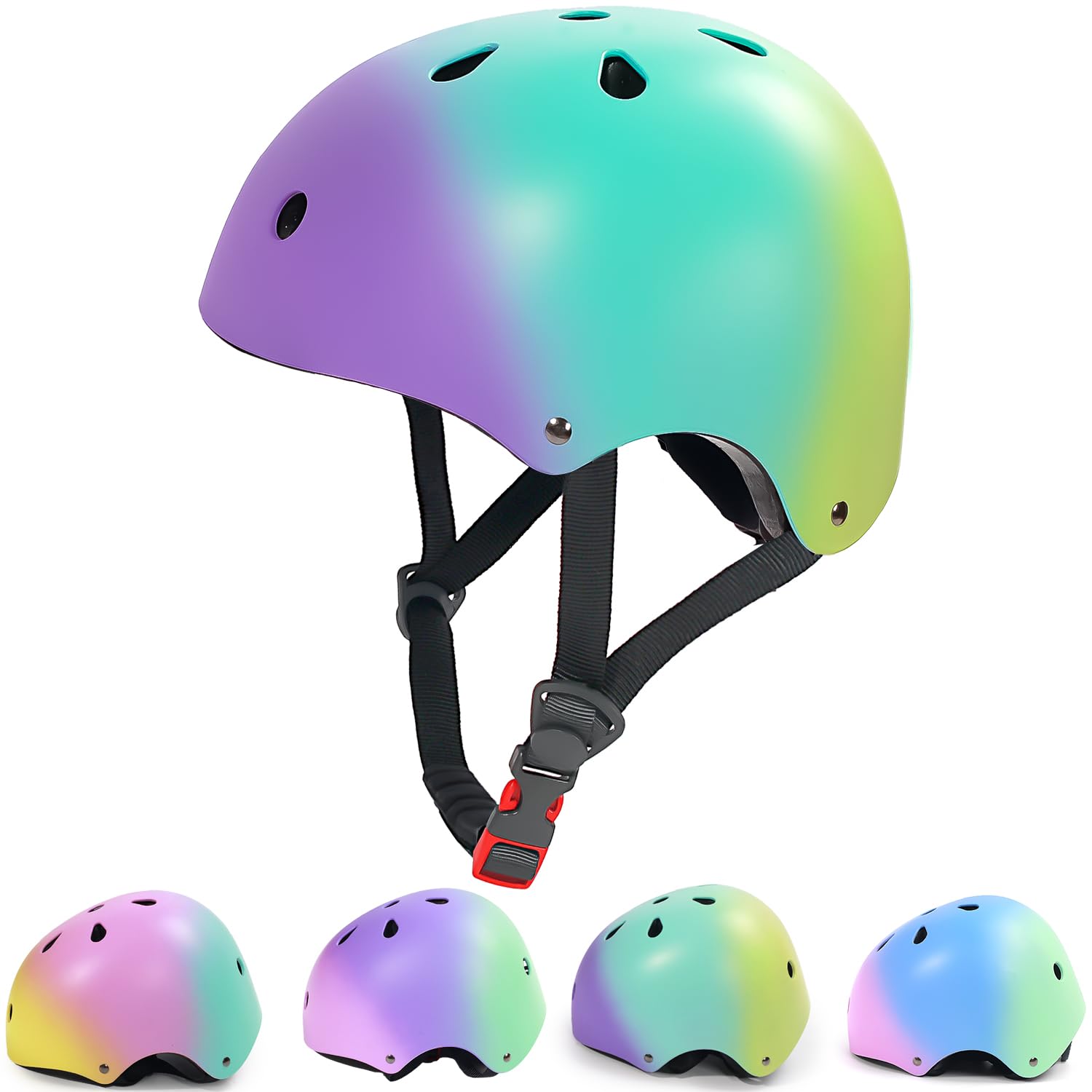
The LANOVAGEAR helmet proves that budget-tier pricing doesn’t have to mean bare-bones protection. It carries CPSC certification with a dual-layer construction: a durable ABS outer shell bonded to an EPS foam core. The gradient purple-blue-green color scheme is visually striking and doubles as a passive safety feature — the bright transitions make the rider more visible in peripheral vision. The Small size (48–54 cm) fits toddlers and young children, while the Medium (55–58 cm) extends to teens.
Eleven airflow channels are cut deep enough to allow cross-ventilation during warm rides, and the moisture-wicking inner pads are removable and machine-washable — a practical feature for helmets that get dropped in dirt or soaked in sweat. The dial fit system tightens around the occipital bone, and the padded chin strap adjusts at both side points for a balanced feel. An included carry bag and knee/elbow pad set make this a complete starter package for a child getting their first multi-sport helmet.
Customer feedback shows two recurring notes: the chin strap clip can arrive defective in rare cases (though the seller replaces defect units quickly), and the inner back cushion on some units peeled away after a few days of use, suggesting the adhesive used in early production batches may need improvement. The 1.1-pound weight (about 499 grams) is heavier than mid-range options — noticeable on longer rides for smaller children, but acceptable for casual neighborhood cruising.
Why it’s great
- CPSC-certified ABS+EPS shell at a budget-friendly price.
- Machine-washable inner pads for easy maintenance.
- Includes carry bag and protective pad set.
Good to know
- Heavier than average at ~499 grams.
- Chin strap clip has occasional quality-control issues.
- Inner cushion adhesive may peel after a few uses.
FAQ
How do I measure my child’s head for a youth helmet?
At what age should a child switch from a toddler helmet to a youth helmet?
Is MIPS necessary for casual neighborhood riding?
Final Thoughts: The Verdict
For most users, the best bicycle helmets for youth winner is the NÜDL Youth MIPS because it combines the full rotational protection of MIPS with the pinch-free convenience of a Fidlock magnetic buckle, all in a youth-specific shell that fits ages 3–16. If you want the extra ventilation of a 21-vent design for hot-weather riding, grab the SIFVO Youth. And for a budget-friendly starter package that includes a carry bag and pad set, nothing beats the LANOVAGEAR Kids.