
Acrylic and polycarbonate glazing has become the go-to alternative to glass for sunrooms, greenhouses, and patio enclosures. The reason is simple: these panels deliver high light transmission while being significantly more impact-resistant and easier to handle than traditional glass. But not all clear panels perform equally when exposed to years of UV radiation, temperature swings, and physical wear.
I’m Min — the co-founder and writer behind Gadgets Feed. I’ve spent countless hours analyzing the technical specifications, customer feedback, and material performance data behind every panel on this list to separate durable construction from thin, brittle sheets that will fail within a season.
After comparing over two dozen options on strength, UV resistance, thermal efficiency, and ease of installation, I’ve curated this definitive guide to the best acrylic windows for sun rooms so you can choose panels that let light in and keep weather out.
How To Choose The Best Acrylic Windows For Sun Rooms
Choosing the right panel for your sunroom or greenhouse involves more than just picking the cheapest sheet on the shelf. You need to balance light transmission, insulation, durability, and ease of installation. Here are the critical factors to consider before making your purchase.
Single-Layer vs. Twin-Wall Construction
Single-layer acrylic sheets are solid, uniform panels that offer excellent clarity and moderate impact resistance. Twin-wall polycarbonate panels, on the other hand, feature two layers separated by vertical ribs that create air pockets. This design provides superior thermal insulation — helping keep your sunroom cooler in summer and warmer in winter — while also diffusing light more evenly.
UV Protection and Light Transmission
All quality sunroom panels should have a UV-resistant coating on at least one side. This coating prevents the material from yellowing and becoming brittle over years of sun exposure. Look for panels that block 99% or more of harmful UV rays while still transmitting 80-89% of visible light. Panels without UV coating will degrade quickly, especially in climates with intense sun.
Panel Thickness and Structural Rigidity
Thickness is measured in inches or millimeters. For sunroom applications, 0.24 inches (6mm) is the sweet spot for twin-wall panels — thick enough to resist hail, wind, and physical impact without becoming too heavy to handle. Thinner panels under 0.16 inches (4mm) may be adequate for temporary structures but will bow, crack, or warp under snow loads or strong winds.
Pack Size and Coverage Dimensions
Consider how much total surface area you need to cover. Multi-pack options (like 10, 12, or 14 panels) offer better value per square foot than buying individual sheets. Measure your sunroom or greenhouse dimensions precisely and look for panels that match your framing bays to minimize waste from cutting.
Quick Comparison
On smaller screens, swipe sideways to see the full table.
| Model | Category | Best For | Key Spec | Amazon |
|---|---|---|---|---|
| Sinimaka 10 Pack 8’x4’x0.24″ | Premium Multi-Pack | Large sunrooms & greenhouses | 0.24″ twin-wall, 89% light transmission | Amazon |
| Bezseller 12 Pack 5’x2’x0.16″ | Mid-Range Multi-Pack | Gazebo roofs & patio covers | 0.16″ twin-wall, 99% light transmission | Amazon |
| Sibe-R-Plastics Lexan 0.5″ Thick | Heavy-Duty Single Sheet | Storm windows & high-impact zones | 0.5″ solid Lexan polycarbonate | Amazon |
| FAHKNS 14 Pack 4’x2’x0.24″ | Best Value Twin-Wall | Greenhouse repairs & small sunrooms | 0.24″ twin-wall, 80% light transmission | Amazon |
| Robosource Polycarbonate 40″x48″x0.118″ | DIY Single Sheet | Custom window replacements & hobby projects | 0.118″ solid polycarbonate, EasyRuler film | Amazon |
| Roowest 2 Pack Acrylic Sheet 24″x48″x0.19″ | Thick Acrylic Value | Storm window inserts & crafts | 0.19″ cast acrylic, two panels | Amazon |
| NIANXINN Polycarbonate Roll 6’x19.7ft | Flexible Roll Material | Curved awnings & temporary covers | Rolled thin polycarbonate, 6’x19.7ft | Amazon |
In‑Depth Reviews
1. Sinimaka 10 Pack 8′ x 4′ x 0.24″ Twin-Wall Polycarbonate Panels

The Sinimaka 10-pack delivers exceptional value for anyone covering a large sunroom or greenhouse. Each panel measures a full 8 feet by 4 feet with a substantial 0.24-inch twin-wall construction, giving you 320 square feet of coverage from a single box. The twin-wall design traps air between layers, providing thermal insulation that keeps your sunroom comfortable through seasonal temperature swings — a critical advantage over single-sheet acrylic.
UV protection is a standout feature here, with the panels blocking 99.9% of harmful rays while transmitting 89% of visible light. The light diffusion effect reduces harsh glare and hot spots, creating a more evenly lit interior for plants or relaxation space. Customers consistently report that these panels withstand hail, heavy rain, and snow loads without cracking, and the material cuts cleanly with a utility knife or circular saw without splintering.
The 0.24-inch thickness gives these panels a rigidity that thinner alternatives lack — they don’t bow or flap in wind. While the panels are lighter than glass equivalents, they still feel substantial during installation. The only practical consideration is the large 8-foot length, which may require a helper during installation. For anyone needing serious coverage with proven durability, this pack delivers unmatched per-panel value.
Why it’s great
- 0.24″ twin-wall provides excellent insulation and impact resistance
- Blocks 99.9% of UV rays while transmitting 89% of light
- 10 panels cover 320 sq. ft. — best value for large structures
Good to know
- 8-foot length can be cumbersome to handle alone during installation
- Translucent finish diffuses light more than fully clear acrylic sheets
2. Bezseller 12 Pack 5′ x 2′ x 0.16″ Twin-Wall Polycarbonate Panels
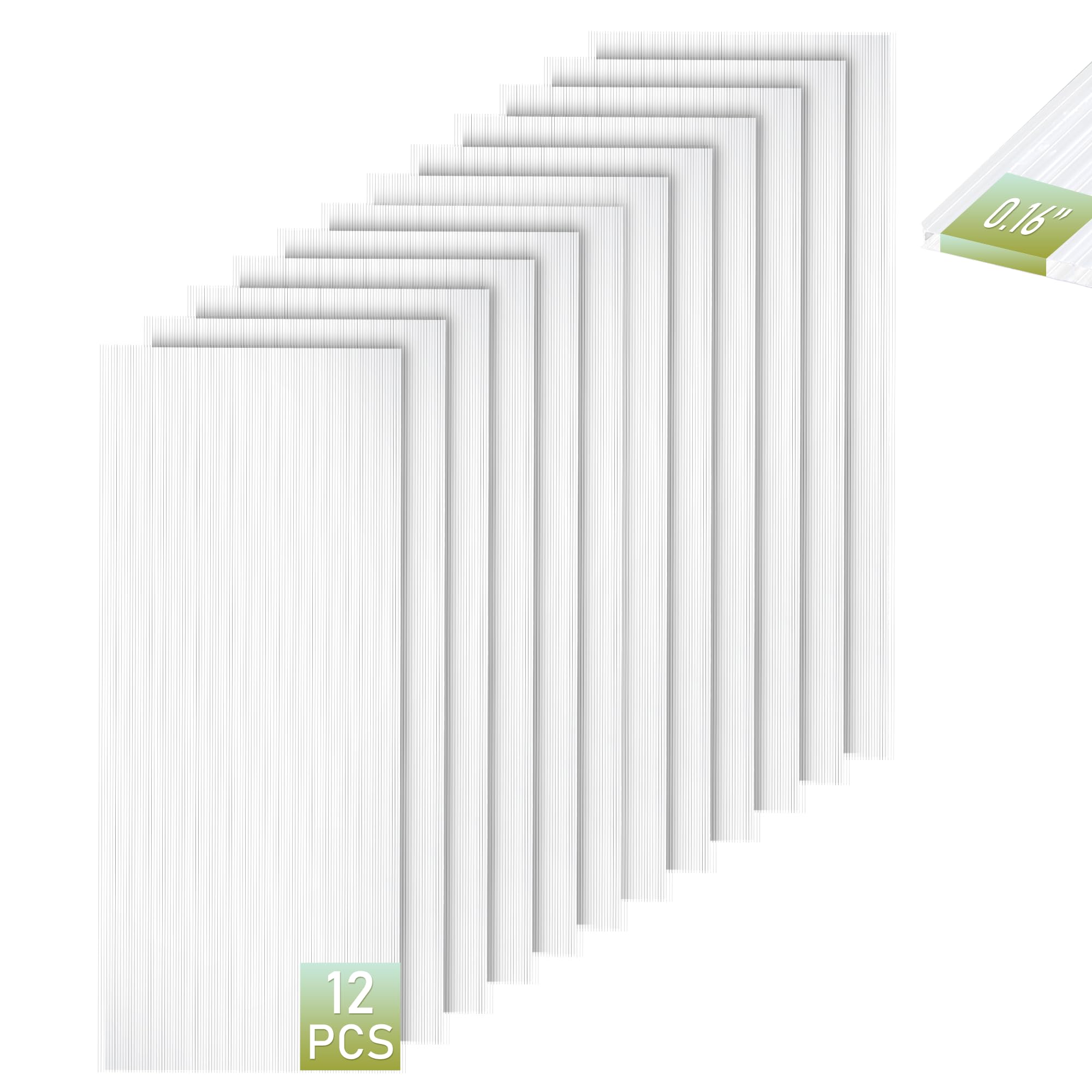
The Bezseller 12-pack is a fantastic middle-ground option for sunroom roofs, gazebo covers, and patio shade structures. Each panel measures 5 feet by 2 feet with a 0.16-inch twin-wall construction — slightly thinner than the premium Sinimaka panels but still offering meaningful impact resistance and thermal insulation. The 12-panel count gives you 120 square feet of coverage, making it ideal for smaller to mid-sized glazing projects.
One of the most praised features is the light transmission quality. These panels let through up to 99% of natural light while blocking harmful UV rays, creating a bright but shaded environment underneath. Multiple buyers mention using these over pergolas and patios to reduce afternoon heat while preserving daylight. The twin-wall air gap does help regulate temperature, though the thinner 0.16-inch walls mean slightly less insulation than heavier-duty options.
Installation is straightforward — the panels trim easily with a utility knife, and the 2-foot width fits standard framing gaps without excessive cutting. Customer reviews highlight the sturdy packaging and minimal damage during shipping. The main trade-off with the 0.16-inch thickness is reduced rigidity compared to 0.24-inch panels; these may flex more under heavy snow loads, so ensure your supporting structure is close-spaced.
Why it’s great
- 99% light transmission with UV blocking — very bright under-panel feel
- 12 panels provide flexible coverage for typical gazebo or small sunroom
- Easy to cut with standard tools and lightweight enough for solo installation
Good to know
- 0.16″ thickness is less rigid than 0.24″ panels under snow or heavy wind
- Air gap insulation is decent but not as effective as thicker twin-wall designs
3. Sibe-R-Plastics Supply 0.5″ Thick Clear Lexan Polycarbonate Sheet (18″ x 48″)

When your sunroom project demands maximum strength and security, the Sibe-R-Plastics Lexan sheet is the undisputed heavyweight. At a full half-inch thick (0.5 inches), this is not a lightweight DIY panel — it’s a bullet-resistant-grade polycarbonate sheet intended for storm doors, high-security glazing, and areas prone to severe impact. The material is authentic Lexan, a brand-name polycarbonate known for exceptional shatter resistance and optical clarity.
The 18-by-48-inch size is tailored for specific applications like window replacements, machinery guards, or small storm panels. Unlike twin-wall panels, this is a solid sheet, so it doesn’t offer the same thermal insulation from dead air space. However, its sheer mass provides excellent sound dampening and virtually unbreakable protection. Customers have used it for sewing table extensions, heavy-duty sanding blocks, and custom window inserts where security matters more than insulation.
Handling and cutting require more effort than thinner alternatives. You’ll need a table saw with a fine-tooth blade and patience — this material is dense. The thickness does mean zero bowing or flexing, even under extreme conditions. For a sunroom window that needs to withstand hurricane-force winds or potential vandalism, this Lexan sheet is the most robust single-sheet option available, but it comes at a premium price per square foot.
Why it’s great
- 0.5″ solid Lexan provides unmatched impact and shatter resistance
- Genuine brand-name polycarbonate with excellent clarity
- Zero flex or bowing — stays rigid in any weather condition
Good to know
- No twin-wall insulation — less thermally efficient than multi-wall panels
- High weight (111 lbs for this sheet) and difficult to cut without power tools
4. FAHKNS 14 Pack 4′ x 2′ x 0.24″ Twin-Wall Polycarbonate Panels

The FAHKNS 14-pack is the budget-friendly heavyweight of this list — you get fourteen 4-by-2-foot twin-wall panels with a full 0.24-inch thickness at a per-panel cost that is hard to beat. Each panel matches the thickness of premium options, meaning you don’t sacrifice insulation or impact resistance for the lower price tag. The panels allow approximately 80% light transmission, which is excellent for greenhouse environments where direct sunlight needs partial diffusion.
Customer reviews heavily emphasize the panel’s rigidity and ease of modification. Multiple buyers used these to repair or replace existing greenhouse panels that were damaged by storms, noting that the FAHKNS panels are noticeably more rigid than factory-original panels. The twin-wall design provides a working temperature range from -44°C to 120°C, ensuring the material stays stable across all four seasons. Users confirm easy trimming with a straight edge and razor knife without cracking.
The main difference from more expensive options is the 80% light transmission versus 89-99% seen in pricier panels — a non-issue for most greenhouses but worth noting if maximum brightness is your priority. Also, the panels ship with a protective film on both sides that must be peeled off before installation. For budget-conscious buyers who refuse to compromise on thickness or durability, this pack offers the best thickness-to-dollar ratio in the lineup.
Why it’s great
- 0.24″ twin-wall at the lowest per-panel cost among multi-packs
- 14 panels provide extensive coverage for greenhouse repairs or new builds
- High rigidity — customers report it’s stronger than factory OEM panels
Good to know
- 80% light transmission is lower than premium panels offering up to 99%
- Protective film must be peeled before installation, which takes time
5. Robosource 40″ x 48″ x 0.118″ Clear Polycarbonate Sheet with EasyRuler
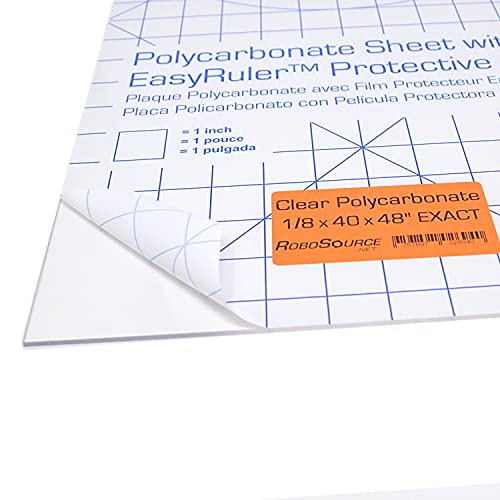
The Robosource polycarbonate sheet is a superb choice for DIY window replacements and smaller sunroom glazing projects. At 0.118 inches thick (approximately 3mm), it’s a solid single-layer panel — not twin-wall — making it ideal for applications where optical clarity and ease of fabrication matter more than thermal insulation. The 40-by-48-inch size is precisely cut to dimensions, unlike nominal sheets that can be up to a quarter-inch undersized.
What sets this sheet apart is the integrated EasyRuler protective film, which has measurement markings printed directly on the film. This feature eliminates the need for separate measuring and marking when cutting — you line up your cut line with the printed ruler and score or saw. Customers praise how easily this material cuts without cracking or chipping, unlike acrylic (Plexiglas), which is prone to fracturing. The polycarbonate also cold-bends, so you can curve it gently for arched window applications.
Many buyers have successfully used this sheet as a temporary replacement window, motorhome window glazing, or storm window insert. The 0.118-inch thickness is adequate for vertical window installations but will flex noticeably if used as a horizontal roof panel without strong support. This is best suited for vertical glazing, craft projects, or any application where you value clarity and workability over pure insulation. The material ships rolled in a tube, so minor flattening may be needed before installation.
Why it’s great
- EasyRuler film allows direct measurement on the sheet — no separate ruler needed
- Cuts and drills without cracking, unlike acrylic sheets
- Precise 40×48″ dimensions with square, straight edges
Good to know
- 0.118″ is too thin for unbacked roof panels — best for vertical windows
- Single sheet with no thermal insulation benefit from twin-wall design
6. Roowest 2 Pack 24″ x 48″ x 0.19″ Clear Acrylic Sheets

The Roowest 2-pack offers a pair of thick cast acrylic sheets at a price that competitors charge for a single sheet of similar dimensions. Each panel measures 24 by 48 inches with a substantial 0.19-inch thickness, making them significantly sturdier than thin hobby-grade acrylic. The cast acrylic material provides excellent optical clarity with no wavy distortion, and the panels withstand temperatures from -40°F to 190°F without warping.
These sheets are particularly well-suited for storm window inserts and sunroom window replacements. Multiple customer reviews confirm successful installations as storm windows, noting that the 0.19-inch thickness provides good insulation and sound deadening compared to single-pane glass. The protective film on both sides does a respectable job of preventing scratches during shipping — most units arrive intact, though some reviews mention corner damage from delivery handling.
It’s important to note that acrylic is more brittle than polycarbonate — it can crack if overstressed during cutting or if struck hard. The manufacturer recommends using a table saw at low speed for cutting to prevent chipping. For sunroom windows, vertical installations are ideal; avoid using these as roof panels where they could be struck by falling branches or hail. The two-pack format is excellent for replacing a pair of matching windows or for symmetrical craft projects.
Why it’s great
- 0.19″ cast acrylic provides good clarity and rigidity for vertical windows
- Two sheets included at a price that beats single-sheet competition
- Wide temperature tolerance (-40°F to 190°F) suitable for all climates
Good to know
- Acrylic is more prone to cracking than polycarbonate under impact
- Not suitable for horizontal roof panels — use only for vertical glazing
7. NIANXINN Polycarbonate Panel Roll 6′ x 19.7ft

The NIANXINN polycarbonate roll is a fundamentally different product from the rigid panels above. It arrives rolled up, delivering a continuous sheet measuring 6 feet by 19.7 feet. This format is designed for applications where you need a large uninterrupted span — like a curved awning, chicken run roof, or temporary greenhouse covering. The thin, flexible polycarbonate material can be cut with scissors and bent to follow arched or irregular shapes.
Customer feedback reveals a mixed experience that correlates with intended use. Buyers using it for protected structures like chicken coops reported success, citing easy installation and effective weather protection. However, several customers in hot climates reported that the material failed under direct sun exposure — cracking, developing holes, or becoming brittle within weeks. This suggests the UV resistance and overall durability are not on par with thicker twin-wall panels. Multiple verified reviews mention the material arrived with cracks or was thinner than expected.
The sheer size of this roll — nearly 120 square feet — makes it very economical per square foot if you can work with its limitations. But for permanent sunroom windows that face continuous sun and weather, this product carries significant risk of premature failure. The flexible format is best reserved for low-stakes applications like temporary shading, plant protection, or projects where replacing material in a season or two is acceptable. If you need long-term sunroom glazing, the rigid panel options above are far more reliable.
Why it’s great
- Large continuous sheet covers irregular or curved structures without seams
- Trims easily with household scissors — no power tools needed
- Cost-effective per square foot for temporary or protected applications
Good to know
- Several reports of cracking and UV degradation in direct sun
- Very thin and flimsy compared to rigid panels — not for permanent sunroom roofs
- Arrives rolled and requires flattening/weighting before installation
FAQ
Can I use single-layer acrylic sheets as a sunroom roof panel?
How do I cut polycarbonate panels without cracking them?
Do all polycarbonate panels yellow over time in a sunroom?
Final Thoughts: The Verdict
For most users, the best acrylic windows for sun rooms winner is the Sinimaka 10 Pack 8’x4’x0.24″ because it combines premium 0.24-inch twin-wall construction with excellent 89% light transmission and the best coverage-per-dollar ratio in the lineup. If you want a smaller or more affordable multi-pack, grab the Bezseller 12 Pack 5’x2′ for bright, lightweight patio coverage. And for maximum security in a single panel, nothing beats the Sibe-R-Plastics 0.5″ Lexan sheet for heavy-duty storm window protection.