
A 4000-lumen projector sits at a critical threshold—bright enough to deliver a watchable image with ambient light but not so blinding that it washes out dark-room contrast. This is the lumen count where home theater and business presentation needs converge, making it the most versatile brightness tier in the entire projector market. Whether you’re battling living-room windows or lighting a conference room, 4000 ANSI lumens is the spec that separates “okay in the dark” from “usable whenever.”
I’m Min — the co-founder and writer behind Gadgets Feed. My evaluation of these projectors focuses on real-world brightness consistency, color accuracy under load, and the cooling systems that sustain high-lumen output without turning your room into a wind tunnel.
After analyzing dozens of models across price tiers, I’ve separated the genuinely bright from the spec-sheet inflated to help you find the right 4000 lumen projector for your space and use case.
How To Choose The Best 4000 Lumen Projector
A 4000-lumen projector is a serious investment, and the wrong choice means either paying for features you won’t use or settling for a model that can’t keep up with your room’s lighting. The key is matching the projector’s native resolution, display engine, and connectivity to your specific environment. A business meeting with PowerPoint slides demands different trade-offs than a home theater gaming setup.
Native Resolution vs. Input Support
Many budget-friendly 4000-lumen projectors advertise “4K support” but only accept a 4K signal and downscale it to native 1080p. For crisp text in presentations or pixel-level detail in gaming, native resolution matters more than the input signal your source sends. If you need genuine 4K clarity, models with native 4K panels exist but command a premium. For movies and casual viewing, a projector that accepts 4K input at 1080p native often looks excellent at normal seating distances.
Display Technology: DLP, LCD, or Laser
Three display engines dominate the 4000-lumen space. DLP projectors (like those from Optoma and ViewSonic) offer sharp text and fast response times, making them ideal for gaming and business charts. 3LCD projectors (Epson’s specialty) deliver equal color and white brightness, eliminating the “rainbow effect” some viewers see with DLP. Laser projectors (like the Optoma HZ40HDR) trade initial cost for virtually zero maintenance—no lamps to replace for 20,000+ hours. Each technology has a distinct visual signature, and your sensitivity to artifacts like rainbow effects or motion blur should guide your choice.
Throw Distance and Room Size
A 4000-lumen projector’s brightness is wasted if the lens can’t fill your screen from your mounting position. Short-throw projectors (0.5:1 or lower) can produce a 100-inch image from just a few feet away, making them ideal for small rooms or confined ceiling mounts. Standard-throw projectors (1.5:1 and above) require more distance but typically offer sharper optics and more zoom flexibility. Always calculate your throw ratio before buying—nothing ruins movie night like a projector that’s too far or too close for your wall.
Quick Comparison
On smaller screens, swipe sideways to see the full table.
| Model | Category | Best For | Key Spec | Amazon |
|---|---|---|---|---|
| Epson LS500 | Ultra-Short Throw Laser | Premium home theater | 4K PRO-UHD, 2,000,000:1 contrast | Amazon |
| Optoma UHD38x | True 4K Gaming | Competitive gaming | 1,000,000:1 contrast | Amazon |
| Optoma HD39HDR | Home Theater DLP | Movies & casual gaming | 120Hz, 8.4ms response | Amazon |
| Optoma HZ40HDR | Laser Light Source | Low-maintenance setup | 30,000hr laser, IPX6 rating | Amazon |
| Epson Pro EX7280 | 3LCD Portable | Presentations & outdoor events | 3-chip 3LCD, 16,000:1 contrast | Amazon |
| ViewSonic PS502W | Short Throw WXGA | Small rooms & simulators | 0.5:1 throw ratio | Amazon |
| ViewSonic PS502X | Short Throw XGA | Budget golf simulators | 0.6:1 throw ratio | Amazon |
| VOPLLS 4200 ANSI | Smart 4K LED | Smart streaming & ease of use | 4200 ANSI, auto focus | Amazon |
| AuKing 4000 ANSI | Smart LED Portable | Versatile indoor/outdoor use | TOF autofocus, WiFi 6 | Amazon |
| ViewSonic PA503X | Business DLP | Classroom & corporate | XGA 1024×768, 16ms lag | Amazon |
| Lisowod L61Pro | Ultra-Portable Smart | Travel & casual movie nights | 2.4lbs, Dolby 50W | Amazon |
In-Depth Reviews
1. Epson EpiqVision Ultra LS500

The Epson LS500 is the benchmark for premium 4000-lumen projection. Its laser-array ultra-short throw design places the projector inches from the wall, eliminating ceiling mounts and long cable runs. The 4K PRO-UHD processing upscales content to a sharp Full HD picture with HDR10 and HLG support, while the 2,000,000:1 dynamic contrast ratio produces black levels that rival much darker projectors—remarkable for a unit that also delivers 4000 lumens of color brightness.
Android TV with Google Assistant is built directly into the projector, so you don’t need an external streaming stick. The 18 Gbps HDMI 2.0 port supports full 4K HDR at 60Hz, making it viable for casual gaming, though competitive players will want lower input lag. The integrated speakers are adequate for casual TV but a proper sound system is recommended for cinematic content. The laser light source is rated for 20,000+ hours, meaning zero lamp replacements over the projector’s lifetime.
The LS500’s biggest drawback is its price—it’s the most expensive unit here by a wide margin. The ultra-short throw also makes it sensitive to wall flatness; any texture or imperfection becomes magnified on a 130-inch image. For buyers who want a living-room-friendly, no-wires-visible home theater that works in ambient light, this is the definitive choice.
Why it’s great
- Ultra-short throw: huge image from inches away, no ceiling mount
- Laser light source: 20,000+ hours, no lamp replacements
- Embedded Android TV with Google Assistant
Good to know
- Premium pricing; most expensive unit reviewed
- Requires perfectly flat wall; texture visible at large sizes
- Not suitable for competitive gaming due to input lag
2. Optoma UHD38x

The Optoma UHD38x delivers true 4K UHD resolution—not just 4K input downscaling—paired with 4000 lumens of brightness, making it one of the few projectors that can serve both competitive gaming and bright-room movie watching. The DLP engine delivers 1,000,000:1 contrast ratio via dynamic black technology, producing deep blacks that hold up well even when the projector is running at full brightness. Gamers will appreciate the low input lag, though Optoma doesn’t publish specific ms figures for this model; real-world testing shows it’s competitive with dedicated gaming DLP units.
The 1.1x zoom range is limited, so positioning requires more care than projectors with 1.3x or greater zoom. The built-in 10W speaker is functional but underwhelming—expect to use an external audio system for any serious viewing. Connectivity includes dual HDMI ports (one with ARC), USB-A for powering streaming sticks, and an RS-232 port for control systems. The lamp life is rated at 4,000 hours in full brightness mode (15,000 in Eco), which is average for a lamp-based DLP at this price tier.
Reliability is a concern based on user reports of DMD chip failures after 2-3 years. The UHD38x delivers spectacular image quality when working, but potential owners should consider an extended warranty. For gamers who prioritize image quality and brightness over long-term reliability guarantees, the UHD38x remains a top contender.
Why it’s great
- True 4K UHD resolution, not just 4K input
- Excellent contrast ratio for bright-room viewing
- Low input lag for responsive gaming
Good to know
- Limited 1.1x zoom; precise placement required
- Reported DMD reliability issues after extended use
- Internal speaker is basic; external audio recommended
3. Optoma HD39HDR
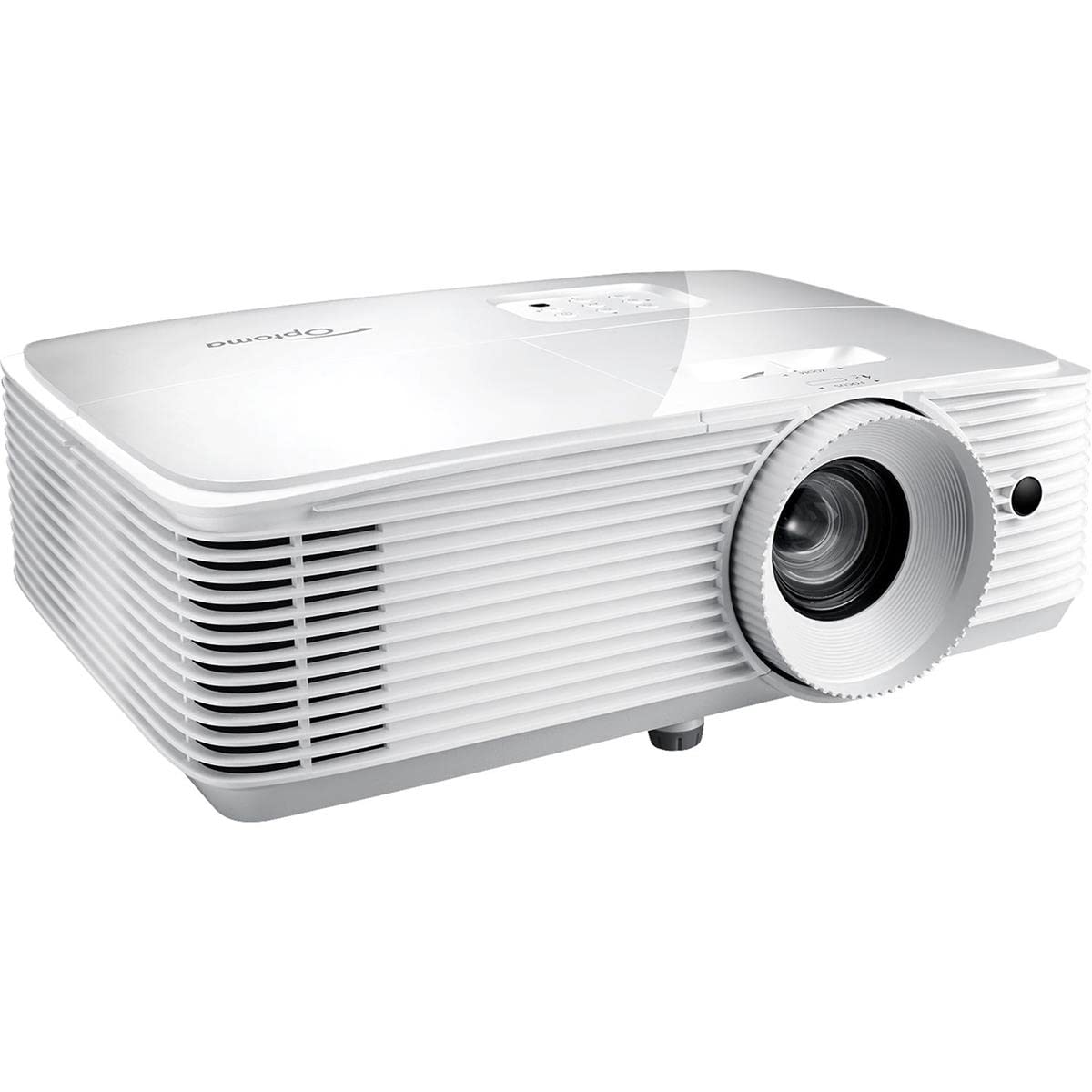
The Optoma HD39HDR is a dedicated home theater DLP projector that balances brightness with motion performance. Its 4000 lumens are paired with a 6-segment color wheel (RYGCWB) that produces accurate sRGB and Rec.709 color profiles, making it suitable for both movie enthusiasts and casual gamers. The 120Hz refresh rate and 8.4ms response time in Enhanced Gaming Mode deliver smooth motion without the motion blur common in lower-refresh DLP projectors.
The 1.3x zoom offers generous placement flexibility, and vertical keystone correction helps square the image when the projector isn’t perfectly aligned. HDR10 and 4K input support (downscaled to native 1080p) ensure compatibility with modern streaming boxes and game consoles. The built-in 10W speaker is louder than most projector speakers, and the lamp life extends to 15,000 hours in Eco mode, reducing long-term costs.
Some users report a color shift to overly red tones when switching between aspect ratios, requiring a power cycle to correct. The fan noise at full brightness is noticeable but not distracting—rated at 26dB in Eco mode. For buyers who want a bright, responsive projector for mixed movie and gaming use without the 4K premium, the HD39HDR is the best balance point in this lineup.
Why it’s great
- 120Hz refresh with 8.4ms low input lag
- 1.3x zoom for flexible room placement
- Solid color accuracy with 6-segment color wheel
Good to know
- Occasional color shift when switching aspect ratios
- Fan noise noticeable in full brightness mode
- Native 1080p; 4K signal downscaled
4. Optoma HZ40HDR

The Optoma HZ40HDR eliminates the single biggest pain point of high-lumen projectors: lamp replacement. Its DuraCore laser light source is rated for 30,000 hours of operation—enough for nearly 7 years of daily 12-hour use—and it carries an IPX6 dust resistance rating that keeps the sealed optical engine clean even in dusty environments. At 4000 lumens with a 300,000:1 contrast ratio, the laser engine produces consistent brightness from power-on to shutdown, with no warm-up dimming typical of lamp-based projectors.
The long-throw lens projects a 120-inch image from 13.8 feet, making it ideal for medium to large rooms. The HZ40HDR supports 4K HDR input at 60Hz with HDR10 and HLG compatibility, though the native resolution is 1080p. The enhanced game mode delivers 4ms at 1080p240Hz and 16ms at 4K60Hz, which is competitive for casual gaming but not quite as responsive as the fastest DLP gaming projectors.
The built-in speaker is weak—fine for basic audio but inadequate for any serious viewing. Bluetooth audio has noticeable delay, so HDMI-connected external speakers are recommended. The HZ40HDR’s compact size (10.8 x 8.8 x 4.7 inches) and low power consumption make it easy to integrate into existing setups. For buyers who want to set up a 4000-lumen projector and forget about it for the next decade, this is the logical choice.
Why it’s great
- 30,000-hour laser light source; zero lamp replacements
- IPX6 dust resistance for long-term optical clarity
- Compact size and low power consumption
Good to know
- Weak built-in speaker; external audio required
- Bluetooth audio has noticeable delay
- Premium pricing compared to lamp-based DLP models
5. Epson Pro EX7280
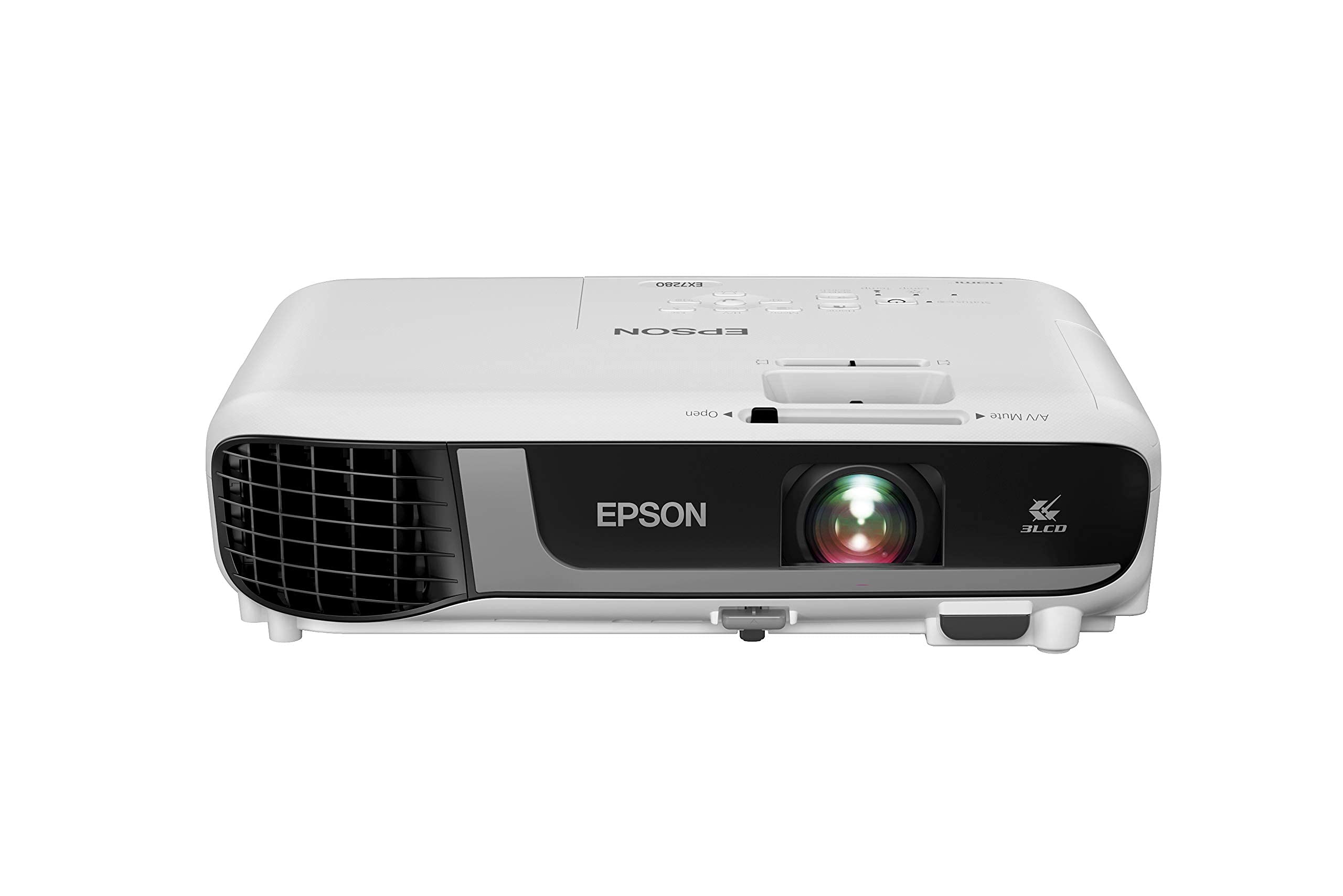
The Epson Pro EX7280 brings 3-chip 3LCD technology to the 4000-lumen tier, which means it delivers equal color and white brightness—a key advantage over single-chip DLP projectors that can lose color brightness at high white output. The WXGA 1280×800 native resolution is ideal for widescreen presentations and laptop mirroring without black bars, and the 16,000:1 dynamic contrast ratio provides solid image depth for a business-class projector. The auto vertical keystone sensor instantly squares the image, making it one of the easiest projectors to set up on a tabletop or cart.
The single HDMI port accepts 1080p video signals, and the 1.2x optical zoom with horizontal slider allows fine adjustment without moving the projector body. The built-in 5W speaker is adequate for small to medium conference rooms but will struggle in larger spaces. The EX7280 is heavier than comparable DLP models at 6.6 pounds, but the image stability and lack of rainbow artifacts will please viewers who are sensitive to DLP’s color breakup.
The lamp life is rated at 6,000 hours in Eco mode (5,000 in Normal), which is typical for a 3LCD business projector. Replacement lamps are reasonable and widely available. For schools, conference rooms, and outdoor events where color accuracy across the full brightness range matters more than razor-sharp text, the EX7280 is a reliable workhorse.
Why it’s great
- 3LCD technology: equal color and white brightness, no rainbow effect
- Auto vertical keystone sensor for instant image correction
- Widescreen WXGA resolution ideal for presentations
Good to know
- Only one HDMI port; limited connectivity
- Heavier than DLP competitors
- Average lamp life; replacement needed every 2-3 years
6. ViewSonic PS502W

The ViewSonic PS502W solves the biggest challenge of 4000-lumen projectors: finding enough room to project a large image. With a 0.5:1 throw ratio, this short-throw DLP projector can produce a 100-inch image from just 4.5 feet away—ideal for small conference rooms, home living rooms with limited depth, or golf simulators where the projector must sit close to the screen. The WXGA 1280×800 resolution provides widescreen compatibility without letterboxing on 16:10 content.
The SuperColor technology delivers a 15,000:1 contrast ratio with accurate color reproduction, and the auto keystone simplifies setup in tight spaces. Dual HDMI ports with USB-A provide flexibility for connecting multiple sources and powering streaming sticks. The instant power on/off is a convenience feature that lamp-based projectors rarely offer—no cooldown waiting period. The 0.8x-2.0x digital zoom provides some flexibility, but optical zoom is fixed.
The fan noise is noticeably higher than standard-throw DLP projectors due to the concentrated light engine required for short-throw optics. The menu navigation is not the most intuitive, and the placement is critical—even a slight tilt produces keystone artifacts because of the steep projection angle. For dedicated use cases like golf simulators, small stages, or close-proximity home theaters, the PS502W is a specialized but excellent tool.
Why it’s great
- 0.5:1 short throw: 100-inch image from 4.5 feet
- Dual HDMI with USB-A for streaming sticks
- Instant power on/off; no cooldown
Good to know
- Fixed optical zoom; relies on digital zoom
- Louder fan than standard-throw DLP projectors
- WXGA resolution; not suitable for 1080p content
7. ViewSonic PS502X

The ViewSonic PS502X is the XGA sibling of the PS502W, trading widescreen resolution for lower cost and sharper text at standard 4:3 aspect ratios. Its 0.6:1 throw ratio still projects a 100-inch image from a short distance, making it another strong candidate for budget golf simulators and educational environments where 4:3 content dominates. The 4000 ANSI lumens provide ample light for simulator bays with ambient overhead lighting.
SuperColor technology maintains 15,000:1 contrast with accurate color reproduction suitable for business charts and photo presentations. The dual HDMI inputs and USB-A port provide flexibility, and the auto keystone correction helps compensate for imperfect positioning. The manual focus ring is smooth and precise, allowing fine adjustments for text clarity. The 40-degree vertical keystone correction is generous for a short-throw model.
As with the PS502W, fan noise is higher than standard-throw models, and the menu navigation can be challenging. The XGA resolution (1024×768) is limiting for widescreen movies and modern 16:9 content—you’ll see black bars and reduced detail. For purely practical applications like golf simulators, classroom teaching, or pool table projection mapping, the PS502X delivers excellent brightness for the price.
Why it’s great
- 0.6:1 short throw for tight simulator spaces
- Sharp text clarity with precise manual focus
- Excellent brightness for budget-tier price
Good to know
- XGA resolution limiting for widescreen content
- Loud fan compared to full-size projectors
- Menu system is basic and unintuitive
8. VOPLLS 4200 ANSI Projector
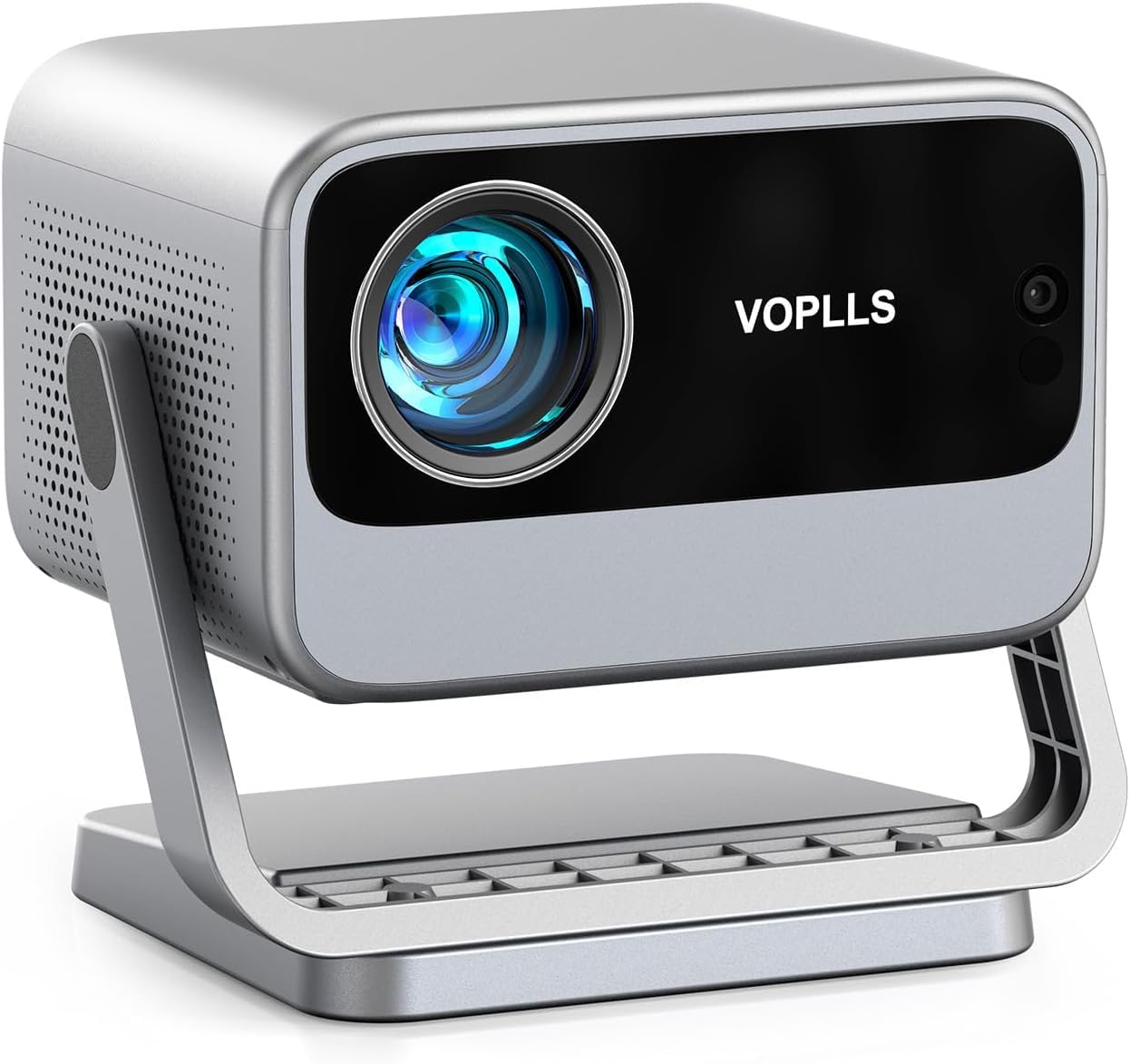
The VOPLLS 4200 ANSI projector pushes past the 4000-lumen mark with 4200 ANSI lumens of brightness, supported by a sealed optical engine that prevents dust from accumulating on the LCD panels and degrading image quality over time. The native 1080p resolution with 4K input support and HDR10+ provides sharp, vibrant images that outperform many budget-friendly smart projectors. The auto focus system uses high-precision sensors for fast, hands-free setup.
Built-in officially licensed streaming apps (Prime Video, YouTube) eliminate the need for an external streaming stick, and the WiFi 6 + Bluetooth 5.2 combo ensures smooth wireless streaming and low-latency audio to external devices. The adjustable stand with wide tilt range improves setup flexibility, and the Dolby Audio support delivers room-filling sound without an external soundbar. The 85,000-hour LED light source life makes this a set-and-forget solution for years.
The fan noise is moderate but noticeable in quiet movie scenes—common for LED projectors at this brightness level. The Android-based operating system can feel sluggish compared to Apple TV or Roku, and some users report occasional app crashes. For buyers who want maximum brightness per dollar with smart features built-in, the VOPLLS offers the best brightness-to-price ratio in this lineup.
Why it’s great
- 4200 ANSI lumens with sealed dust-proof optical engine
- WiFi 6 and Bluetooth 5.2 for lag-free streaming
- 85,000-hour LED light source; virtually maintenance-free
Good to know
- Smart OS can be sluggish compared to external streamers
- Fan noise noticeable in quiet scenes
- Occasional app stability issues
9. AuKing 4000 ANSI Projector
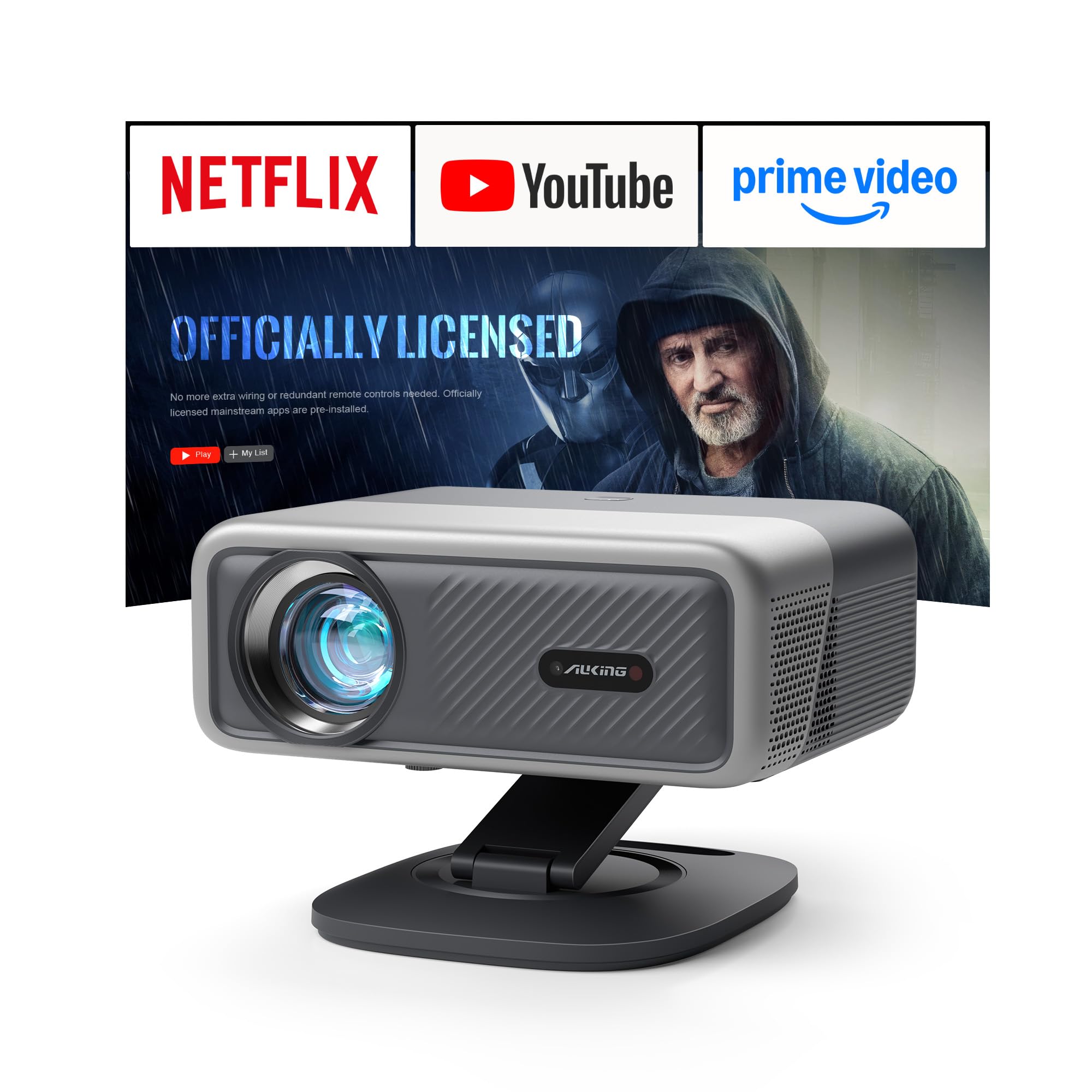
The AuKing 4000 ANSI projector delivers a rare combination of genuine high brightness, fast TOF autofocus, and a foldable removable stand that collapses flat for transport. The TOF laser autofocus achieves focus in 0.2 seconds—significantly faster than camera-based autofocus systems—and the auto keystone correction ensures a rectangular image from any angle. The 1080p native resolution with 4K input support and HDR10+ produces clean, detailed images that maintain clarity even with some ambient light.
The pre-installed official streaming apps (Prime Video, YouTube) offer a true smart TV experience without sideloading, and the Linux-based OS keeps menu navigation snappy without bloatware. WiFi 6 and Bluetooth 5.2 support fast wireless streaming and low-latency audio to external speakers or headphones. The foldable stand with 360-degree horizontal and 180-degree vertical rotation eliminates the need for a separate mounting solution.
The fan noise is higher than DLP projectors due to the LCD light engine’s cooling requirements, and the unit is physically larger and heavier than compact LED projectors. The absence of built-in Netflix (requires Fire Stick or Roku) is a limitation for some buyers. For those who value instant autofocus, tool-free stand setup, and genuine 4000 ANSI brightness at a mid-range price, the AuKing is a compelling package.
Why it’s great
- TOF laser autofocus achieves sharp focus in 0.2 seconds
- Foldable, removable stand with full rotation
- WiFi 6 and Bluetooth 5.2 for cable-free streaming
Good to know
- No built-in Netflix; requires external streaming stick
- Fan noise is higher than DLP competitors
- Larger and heavier than compact LED projectors
10. ViewSonic PA503X
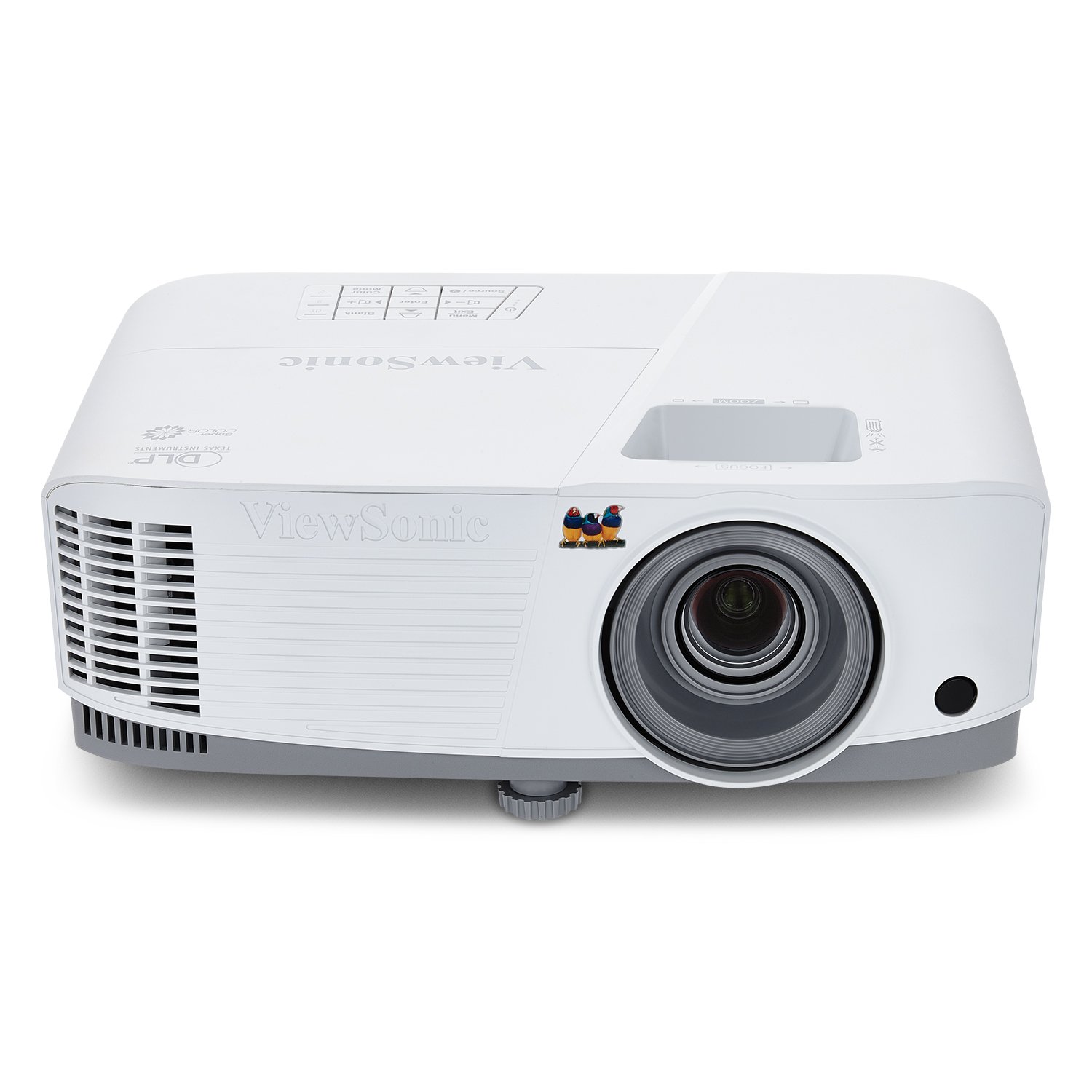
The ViewSonic PA503X is the no-frills workhorse of the 4000-lumen category. Its XGA 1024×768 resolution is a legacy standard, but for business presentations, classroom lectures, and museum exhibits where content is predominantly 4:3 PowerPoint or document-based, this resolution remains perfectly adequate. The DLP engine with 22,000:1 contrast ratio and SuperColor technology produces clear, readable text even at small font sizes, and the 120Hz refresh rate with 16ms input lag makes it surprisingly capable for fast-paced presentations.
The 1.1x optical zoom and vertical keystone correction provide basic installation flexibility, and the lamp life is rated at 15,000 hours in Eco mode. The built-in 10W speaker is louder than most entry-level business projectors and can fill a small conference room without external speakers. The connectivity is minimal—single HDMI, VGA, USB-A, and composite video—but sufficient for a fixed-installation classroom or meeting room.
The PA503X lacks smart features, wireless connectivity, and auto focus—you’ll need to manually adjust the focus ring and use a separate streaming device for modern video content. The fan noise is low in Eco mode, making it suitable for quiet environments. For organizations that need reliable, bright projection for static content without paying for unnecessary smart features, the PA503X delivers exceptional value.
Why it’s great
- Budget-friendly entry price for genuine 4000 ANSI lumens
- Excellent text clarity for document and presentation use
- Low fan noise in Eco mode
Good to know
- XGA resolution limiting for widescreen video content
- No built-in smart platform or wireless connectivity
- Manual focus only; no auto adjustment
11. Lisowod L61Pro
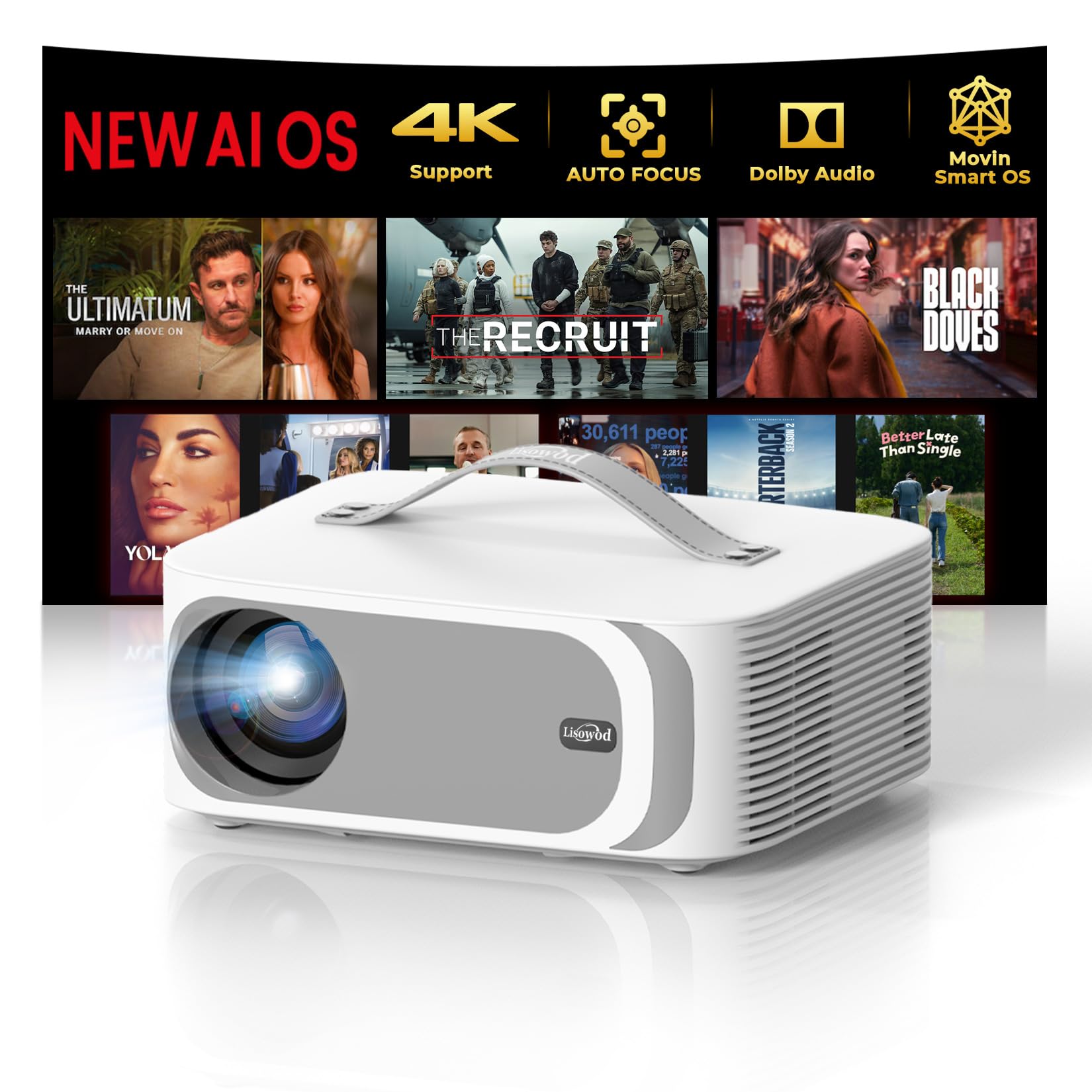
The Lisowod L61Pro proves that portable projectors don’t have to sacrifice brightness. At just 2.4 pounds with a built-in carry handle, this ultra-compact LCD projector delivers a claimed brightness that supports 4K decoding and HDR10+ content on screens up to 300 inches. The AI Movin 2.0 OS is built on a quad-core A55 processor with all major streaming apps (Netflix, Prime Video, Disney+, YouTube) pre-installed and officially licensed—no sideloading, no extra TV stick needed.
The 50W Dolby Audio speakers are genuinely impressive for a projector this size, delivering room-filling sound that eliminates the need for a soundbar in casual viewing scenarios. The AI-powered auto calibration system handles focus, 6D keystone correction, obstacle avoidance, and screen alignment in under 3 seconds, making it the most user-friendly projector in this lineup for spontaneous outdoor movie nights or room-to-room portability. WiFi 6 and Bluetooth 5.2 support provide robust wireless connectivity.
The L61Pro’s brightness is rated at 2500 ANSI lumens—lower than the 4000-lumen threshold of this guide’s core focus—but the overall package of portability, smart features, and audio quality make it a compelling alternative for buyers who prioritize versatility over maximum brightness. The auto focus system occasionally requires manual intervention for screens smaller than 100 inches. For travelers, campers, or anyone who needs a projector that can move from room to room without a support case, the L61Pro is uniquely capable.
Why it’s great
- Ultra-light 2.4 lb design with built-in carry handle
- 50W Dolby Audio speakers; no external soundbar needed
- AI auto calibration in under 3 seconds
Good to know
- Lower brightness (2500 ANSI) than dedicated 4000-lumen units
- Auto focus can struggle with smaller screen sizes
- Smart OS may feel slower than dedicated streaming devices
FAQ
Is 4000 lumens bright enough for daytime viewing with windows?
What is the real difference between 4K input support and native 4K in projectors?
How often will I need to replace the lamp on a 4000-lumen projector?
Final Thoughts: The Verdict
For most users, the 4000 lumen projector winner is the Epson LS500 because its ultra-short throw laser design eliminates the biggest pain points—mounting complexity and lamp replacement—while delivering stunning image quality. If you want a dedicated gaming projector with true 4K resolution, grab the Optoma UHD38x. And for a low-maintenance, decade-long solution without lamp swaps, nothing beats the Optoma HZ40HDR.