
Routing conditioned air through tight joist bays, around attic obstructions, or into a grow tent demands a duct that bends without collapsing and seals without leaking. A flimsy hose that kinks at the first turn chokes your system’s static pressure, kills airflow, and wastes every BTU your furnace or AC unit works to produce. The right 6-inch flexible duct has to balance flexibility against structural integrity — a wire helix that holds its shape under negative pressure, a jacket that resists punctures from sharp metal studs, and an inner core that won’t shed fibers into the airstream.
I’m Min — the co-founder and writer behind Gadgets Feed. I’ve analyzed dozens of flex duct samples, cross-referenced customer reports of tearing and insulation gaps, and measured the real-world trade-offs between layer counts, R-values, and material thickness to separate the durable performers from the frustration-inducing rolls.
Whether you are retrofitting a mobile home’s trunk line, adding an exhaust run for a range hood, or insulating a portable air conditioner’s discharge hose, this guide isolates the strongest options. My goal is to save you the wasted weekend of fighting a duct that fights back by recommending only the most trustworthy 6 in flexible ductwork on Amazon right now.
How To Choose The Best 6 In Flexible Ductwork
Selecting a 6-inch flex duct is a decision driven by three interlocking factors: the insulation R-value required by your local code, the mechanical toughness needed for your specific installation path, and the material compatibility with the air you are moving (heated, cooled, or fume-laden). Ignoring any one of these turns a simple duct run into a recurring energy loss or a premature failure.
Insulation Layer Count and R-Value
The most critical spec for attic or unconditioned-space runs is the thermal resistance rating. Standard non-insulated aluminum ducts offer no R-value and will sweat condensation in cooling mode. Insulated ducts range from R-4.2 to R-6.0. A higher R-value directly reduces conductive heat gain in summer and heat loss in winter, and the thicker fiberglass blanket also dampens the mechanical roar of high-CFM fans. For long horizontal runs exceeding 10 feet, prioritize an R-6.0 rated product.
Wire Helix Pitch and Material Stiffness
A duct that kinks at a 90-degree turn is useless. Look for a steel-wire helix that is spaced tightly enough (roughly 1.5 to 2 inches between coils) to hold the duct open even when compressed or bent. Aluminum wire is lighter but deforms permanently under sharp bends; galvanized or carbon steel wire holds its memory much better over years of thermal cycling. The jacket material also matters — PVC offers superior puncture resistance for woodshop environments, while multi-layer aluminum foil with PET film is lighter and easier to cut with a utility knife.
End Connections and Clamp Compatibility
A duct that cannot be securely fastened to a 6-inch collar or take-off is a leak liability. The included clamps on many budget ducts are thin-gauge stainless steel with thumbscrews that strip easily — consider upgrading to worm-gear clamps for a permanent seal. The duct’s inner core should have a reinforced foil cuff or a molded end that resists tearing when the clamp tightens down. For fume applications, a fully clear PVC wall lets you visually inspect for blockages without dismantling the run.
Quick Comparison
On smaller screens, swipe sideways to see the full table.
| Model | Category | Best For | Key Spec | Amazon |
|---|---|---|---|---|
| AC Infinity Flexible 6-Inch | Four-Layer | HVAC & grow tents | 4-layer aluminum/thermoplastic, steel wire | Amazon |
| HVAC Premium Aluminum Hose | Aluminum | Bath & range exhaust | Aluminum jacket, airtight inner core | Amazon |
| Hon&Guan Insulated Duct | Insulated | Noise reduction | 4-layer PVC/aluminum/glass wool, 8-ft | Amazon |
| Rubber-Cal HVAC Insulated-Flex | Insulated | Permanent AC setups | Fiberglass-insulated, 25-ft aluminum | Amazon |
| Qucship PVC Fume Hose | PVC | Dust & fume collection | Clear PVC, carbon steel wire, 10-ft | Amazon |
| VEVOR R-6.0 Insulated Duct | R-6 Insulated | Energy-efficient HVAC | R-6.0, 3-layer aluminum/PET/fiberglass | Amazon |
| Cuchiillo R6 Silver Jacket | R-6 Insulated | Residential HVAC | R-6.0, silver jacket, 25-ft aluminum | Amazon |
In‑Depth Reviews
1. AC Infinity Flexible 6-Inch Aluminum Ducting

AC Infinity’s four-layer construction (aluminum and thermoplastic bonded over a steel-wire spiral) delivers the best balance of flexibility and tear resistance in this lineup. The 25-foot length stretches out to a genuine 19-20 feet in practice, but the material holds its expanded shape without sagging — critical for maintaining consistent cross-sectional area in a long attic run. The black outer jacket hides dust and dirt noticeably better than standard silver foil, and the included pair of stainless steel duct clamps saves a trip to the hardware store.
Installation is straightforward for a single person because the duct compresses down to roughly a third of its deployed length, making it manageable to carry up a ladder. The inner layer feels slick and airtight, which reduces pressure loss compared to single-ply aluminum ducts that leak at the wire perforations. Users replacing RV ductwork or retrofitting grow-room exhaust report that this duct holds up to repeated handling without developing pin-hole leaks at the fold points.
Where this duct shines is its calibrated stiffness — stiff enough to resist kinking at a 90-degree bend but pliable enough to snake between floor joists without fighting you. The thermoplastic layer adds a meaningful vibration damping effect that quietens the characteristic “flapping” noise of thin metal ducts under high CFM loads. For a do-it-all mid-priced duct in the 6-inch category, this is the reference standard.
Why it’s great
- Four-layer construction resists tears and cuts far better than single-ply aluminum ducts
- Steel-wire helix holds its shape under negative static pressure without collapsing
- Includes two stainless steel clamps for a secure, leak-free connection
Good to know
- Advertised 25 feet stretches to roughly 19-20 feet — account for this gap in long runs
- Not insulated, so condensation may form in unconditioned spaces without a vapor barrier
2. HVAC Premium 6-Inch Aluminum Hose

The HVAC Premium duct wraps an airtight inner core in a tough metallized polyester jacket that resists punctures from sharp sheet-metal edges during installation. Users consistently report this duct handles tight bends and sharp turns without kinking — the aluminum wire helix maintains its memory even after being crushed in shipping. At a per-foot cost that undercuts most insulated competitors, this is the go-to choice for budget-conscious renovations where a vapor barrier is not needed.
At 1.18 kilograms for the full 25-foot roll, this is one of the lightest options in the category, making overhead installation in a crawlspace or above a drop ceiling much less fatiguing. The aluminum-on-aluminum design (outer housing and inner core both aluminum) minimizes the risk of fiberglass erosion into the airstream, which is a legitimate health concern with some insulated ducts. Mobile home and RV owners specifically note that the 6-inch diameter mates perfectly with standard manufactured-home duct collars.
The trade-off is that this duct offers zero thermal insulation — in an unconditioned attic, the surface temperature of the duct will match the ambient air, which can cause condensation dripping during cooling season. It is also not as structurally rigid as the AC Infinity four-layer duct, so very long unsupported horizontal runs may sag over time. For short exhaust runs (bathroom fans, range hoods, dryer vents) where insulation is irrelevant, this is the most cost-effective 25-foot roll available.
Why it’s great
- Extremely lightweight (1.18 kg for 25 feet) reduces installation fatigue in tight spaces
- Airtight inner core prevents fiberglass erosion and reduces static pressure loss
- Withstands sharp bends and tight turns without kinking the airflow path
Good to know
- No thermal insulation — not suitable for unconditioned attics or cold-air returns without a vapor barrier
- Single-layer aluminum jacket is less tear-resistant than four-layer composite ducts
3. Hon&Guan 6-Inch Insulated Flexible Duct

Hon&Guan’s 8-foot insulated duct stands apart for its noise reduction performance — the dense glass wool core between two layers of aluminum foil and an outer PVC jacket absorbs up to 50% of airborne duct noise. Users replacing the thin plastic hose on portable air conditioners report a dramatic reduction in the low-frequency rumble that transmits through the wall. The 25-millimeter nominal wall thickness provides meaningful thermal resistance, keeping the exterior surface temperature far lower than uninsulated alternatives.
The four-layer protection design (PVC + 2x aluminum foil + glass wool) makes this duct resistant to pet damage and accidental punctures, a genuine advantage when routing through a garage or basement where the duct is exposed. The included pair of clamps is functional, though users recommend reinforcing the inner foil cuff with duct tape before tightening the clamp to prevent tearing. The temperature endurance range of -22°F to 302°F covers virtually any residential HVAC or exhaust application.
The short 8-foot length limits this duct to point-to-point connections — it is ideal for bridging a portable AC window kit to the unit, connecting a dryer to the wall vent, or running from a rangehood to a roof cap. It is not suitable for long trunk-line replacements. Some users note that the inner foil is thin and requires careful handling during installation to avoid ripping at the clamp point. For targeted noise and condensation control on a single appliance connection, this is the most effective short-length insulated duct available.
Why it’s great
- Glass wool insulation core reduces airborne duct noise by up to 50%
- Four-layer construction resists pet bites and accidental punctures
- Wide temperature tolerance (-22°F to 302°F) suits both residential and shop applications
Good to know
- Only 8 feet long — not suitable for long trunk-line or extended attic runs
- Inner foil is thin and tears easily if clamp is over-tightened
4. Rubber-Cal HVAC Insulated-Flex Ducting

Rubber-Cal’s Insulated-Flex duct wraps a standard aluminum air duct in a thick blanket of fiberglass insulation, then encases the whole assembly in a reinforced foil vapor barrier. The 25-foot length gives you enough material to run through unconditioned attic or crawlspace without needing to splice sections. The insulation jacket provides genuine acoustic dampening — the duct runs noticeably quieter than an uninsulated aluminum duct at the same CFM, and the exterior surface stays cool to the touch even when moving 140°F furnace air.
The fiberglass insulation is dense and effective at maintaining air temperature over long runs, but it generates significant airborne dust during cutting. Users strongly recommend wearing long sleeves, gloves, and an N95 mask when trimming the duct to length, and rolling the outer foil sheath back to contain the loose fibers. The duct compresses down to fit into a small box for shipping, but once expanded, it does not fully return to its original uncompressed length — measure your actual run before cutting.
At its price point, this is the most cost-effective insulated 25-foot duct in the category, but the build quality reflects the budget positioning. The inner aluminum layer is thin, and the fiberglass can settle or shift if the duct is frequently moved or flexed. This is best suited for a permanent, single-position installation where the duct will not be relocated. For a stationary HVAC line in an unconditioned space, the thermal and acoustic performance per dollar is hard to beat.
Why it’s great
- Fiberglass insulation maintains air temperature over long runs in unconditioned spaces
- 25-foot length provides enough material for extended runs without splicing
- Acoustic dampening reduces mechanical duct noise compared to uninsulated aluminum
Good to know
- Fiberglass insulation sheds heavily during cutting — requires full PPE for installation
- Inner aluminum layer is thin and can tear if the duct is repeatedly flexed or moved
5. Qucship 6-Inch PVC Fume Collection Hose
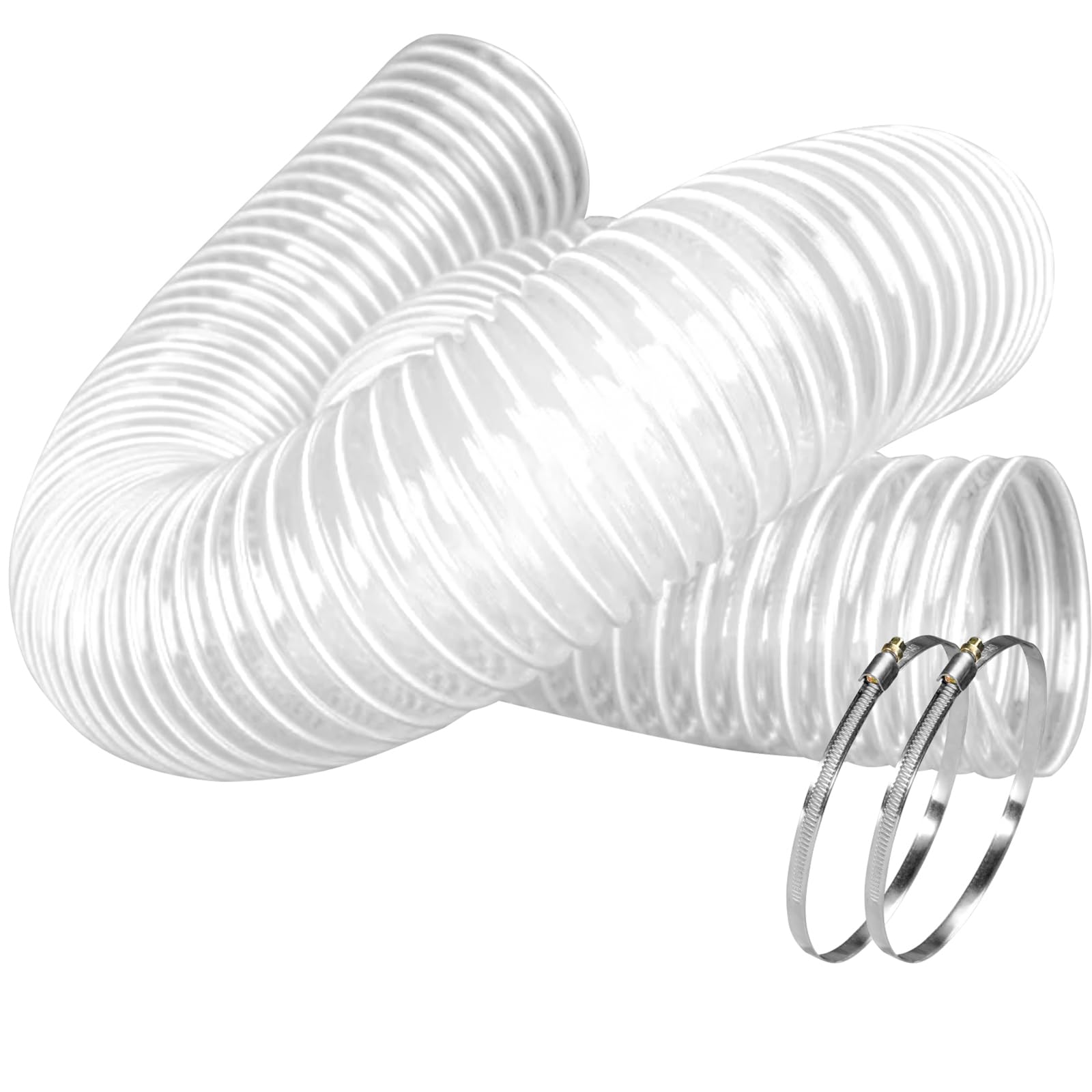
The Qucship PVC hose is a fundamentally different product from the aluminum flex ducts — its clear, thickened PVC wall lets you visually inspect for clogs, sawdust bridging, or debris accumulation without dismantling the run. The embedded carbon steel wire coil provides structural rigidity that prevents the hose from collapsing under the negative pressure of a dust collector or shop vacuum, and it enables electrostatic discharge when grounded at both ends. The 3:1 compression ratio means the 10-foot hose compresses to roughly 3.3 feet for storage.
Woodworkers and laser engraver operators consistently praise the puncture resistance of this hose — it handles the abrasive dust stream from a planer or sander without developing the pin-hole leaks that plague thin-walled flex ducts. The 6-inch diameter matches standard dust collector ports, and the included thumbscrew clamps provide a reasonably secure connection, though some users prefer to swap in worm-gear clamps for a tighter seal. The white PVC is translucent enough to spot a blockage at a glance.
The main limitation is the 10-foot length — for long shop runs, you will need to purchase multiple sections and couplers. The PVC material is also less flexible than aluminum foil ducts in cold temperatures (below 40°F), becoming stiff and harder to manipulate. This is not a duct for HVAC air distribution; it is purpose-built for material handling and fume extraction. For that specific job, the clear wall and carbon wire reinforcement make it the most reliable 6-inch fume hose at this price tier.
Why it’s great
- Clear PVC wall enables visual inspection for clogs without disassembly
- Carbon steel wire coil maintains shape under vacuum and allows electrostatic grounding
- Thickened PVC is highly puncture-resistant against sawdust and wood chips
Good to know
- Only 10 feet long — multiple sections needed for extended shop runs
- PVC becomes stiff and difficult to work with in cold temperatures below 40°F
6. VEVOR 6 Inch Insulated Flexible Duct R-6.0

The VEVOR R-6.0 insulated duct delivers the highest thermal resistance rating in this roundup, with a nominal wall thickness of 0.98 inches of fiberglass insulation sandwiched between a durable aluminum foil inner layer and a reinforced PET film outer jacket. The R-6.0 value meets or exceeds most residential energy code requirements for unconditioned attic duct runs, directly reducing cooling load in summer and heat loss in winter. The 25-foot length weighs 9.59 pounds, giving it a substantial feel that translates into denser, more effective insulation.
The three-layer construction (aluminum + fiberglass + PET) uses a fiberglass grid reinforcement that prevents the insulation from settling or shifting inside the jacket, even when the duct is bent around tight corners. Users installing this in double-wide mobile homes and standard stick-frame attics report a measurable improvement in airflow and temperature consistency compared to the R-4.2 ducts they replaced. The included stainless steel clamps are functional but have stiff screws — some users substitute zip ties for a faster, more secure connection.
Where the VEVOR duct falls short is flexibility — the thick insulation layer makes it noticeably more rigid than non-insulated or R-4.2 ducts. Routing it around sharp obstacles or through narrow joist bays requires more force and careful planning. The outer PET film is also thinner than some users expect, and it can tear if dragged across rough framing. For a straight or gently curved run where maximum thermal efficiency is the priority, the VEVOR R-6.0 is the most energy-efficient 6-inch flex duct in this lineup.
Why it’s great
- R-6.0 thermal resistance meets or exceeds energy code requirements for unconditioned spaces
- Fiberglass grid reinforcement prevents insulation settling and maintains consistent R-value
- Measurable improvement in airflow and temperature delivery compared to lower-rated insulated ducts
Good to know
- Thick insulation (0.98-inch wall) makes the duct stiff and hard to route around obstacles
- Outer PET film is thinner than expected and can tear against rough framing edges
7. Cuchiillo 6 Inch Insulated Flexible Duct R6
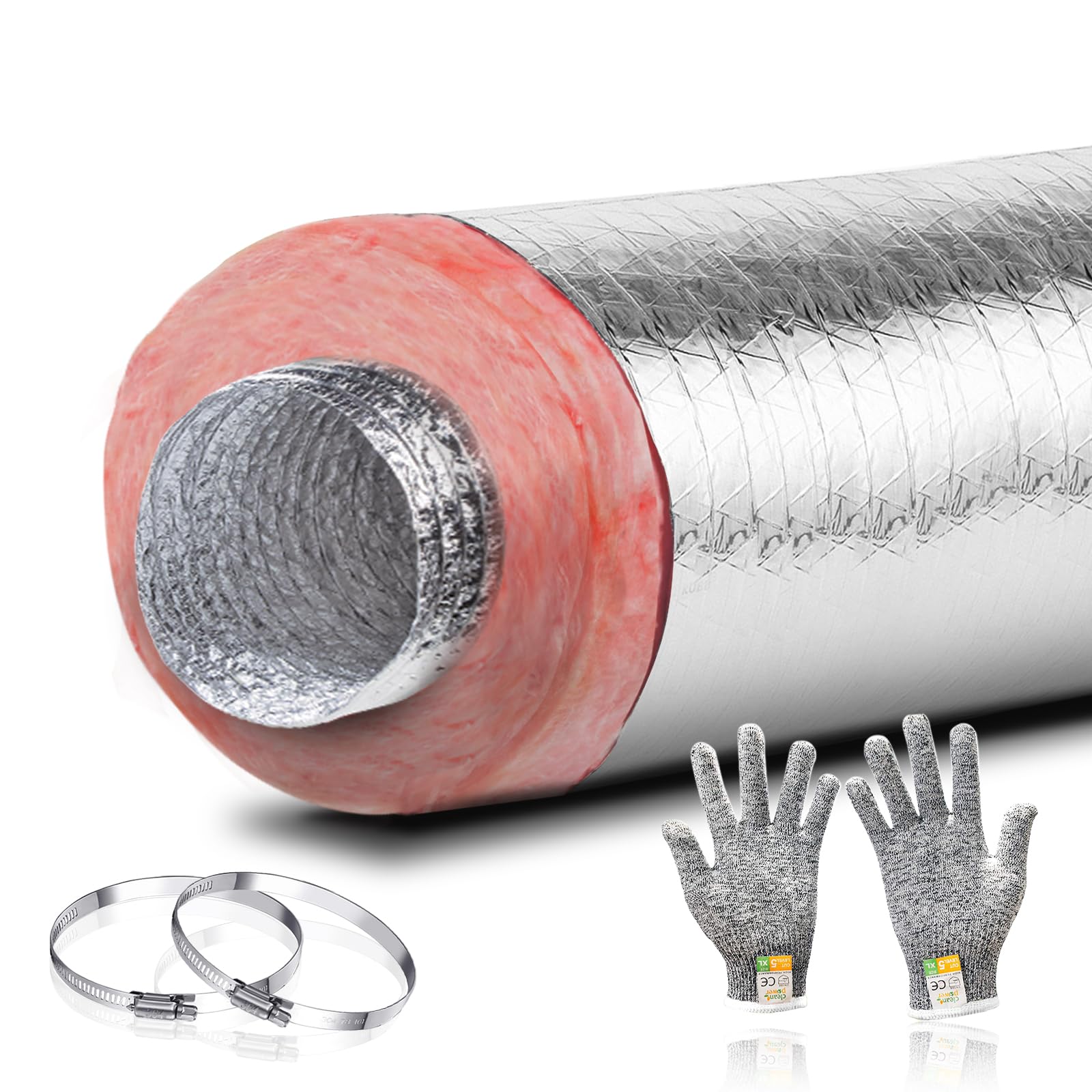
The Cuchiillo R6 Silver Jacket duct delivers dense, high-quality fiberglass insulation that users consistently describe as “twice as thick as cheap alternatives.” The 25-foot length meets the needs of most residential retrofit or new-build runs, and the R-6.0 rating provides the same energy code compliance as the VEVOR duct. Where the Cuchiillo differentiates itself is in the build quality of the inner core — a sturdy aluminum liner that resists tearing during installation, a common failure point on budget insulated ducts.
Users praise the duct’s overall workability despite the thick insulation layer, noting that it is easier to flatten and shape around attic trusses than comparably rated products. The silver jacket reflects radiant heat in attic environments, adding a secondary thermal benefit beyond the fiberglass core’s conductive resistance. The duct has been used successfully for furnace exhaust, air conditioning supply runs, and whole-house ventilation retrofit projects, with customers reporting that it feels more substantial than the 0.02-inch nominal wall thickness suggests.
The primary downside is the fit on 6-inch collars — the inside foil can be difficult to slide over the take-off fitting, and some users found the inner diameter to run slightly tight. The product ships compressed in a box that some initially mistake for a smaller item, but it expands to full length without damage. For an R-6 insulated duct with a visibly denser insulation blanket and a more durable inner liner, the Cuchiillo is the premium alternative to the VEVOR for buyers who prioritize long-term integrity over upfront savings.
Why it’s great
- Dense, high-quality fiberglass insulation core is noticeably thicker than budget alternatives
- Sturdy inner aluminum liner resists tearing during installation and clamp tightening
- Silver jacket reflects radiant heat for additional thermal performance in attic environments
Good to know
- Inner diameter runs slightly tight — may require effort to slide over standard 6-inch collars
- Higher upfront investment compared to competing R-6 options with thinner insulation
FAQ
What R-value do I need for my 6-inch flex duct in an attic?
Can I use an uninsulated 6-inch aluminum duct for a portable air conditioner exhaust?
How do I cut a 6-inch insulated flex duct without shedding fiberglass everywhere?
Final Thoughts: The Verdict
For most users, the 6 in flexible ductwork winner is the AC Infinity Flexible 6-Inch Ducting because its four-layer construction delivers the best combination of tear resistance, flexibility, and airtight performance for both HVAC and ventilation applications. If you need thermal insulation for an unconditioned space, grab the VEVOR R-6.0 Insulated Duct for maximum energy efficiency. And for a short, noise-sensitive connection between a portable appliance and its vent, the Hon&Guan 8-Foot Insulated Duct with glass wool core is the quietest choice available.