
The difference between a clean fence line and a jungle of woody brush is usually a single spray session — but only if the chemistry inside the bottle is strong enough to punch through bark and dormant root systems. Standard weed killers that work on dandelions and crabgrass simply bounce off tough perennial brush like poison ivy, wild blackberry, and multiflora rose, leaving the stumps to resprout within weeks.
I’m Min — the co-founder and writer behind Gadgets Feed. For this guide, I’ve cross-referenced the active ingredient concentrations, mixing ratios, and field performance data on seven of the most popular brush-killer concentrates to find which ones actually deliver on the promise of total top-to-root kill.
Whether you’re clearing a pasture, maintaining a fence row, or fighting back invasive vines on your property, you need a concentrate that matches the specific threat level of the brush on your land. After hundreds of hours of research, I’ve narrowed the market to this complete list of the best brush killer options available today.
How To Choose The Best Brush Killer
Not all brush killers share the same chemistry. A product that works on tender green shoots will fail against a locust tree stump with a root system spreading 20 feet. Understanding the differences in active ingredients, formula types, and application methods is the only way to avoid wasting money on repeated applications.
Match the Active Ingredient to the Brush Species
Brush killers rely on three primary active ingredients: triclopyr, glyphosate, and 2,4-D. Triclopyr is the gold standard for woody plants — it penetrates bark and translocates deep into root systems of vines like poison ivy, blackberry, and kudzu. Glyphosate is a non-selective generalist, excellent for grass and broadleaf weeds but less effective on thick-barked brush. 2,4-D is often paired with triclopyr in premixed formulas to broaden the weed spectrum. For hardwood stumps and persistent woody regrowth, a triclopyr-dominant concentrate is the smarter choice.
Check the Mixing Ratio and Coverage Area
Concentrates vary wildly in potency — some require only 2 to 4 ounces per gallon of water, while others demand 8 to 10 ounces. A high-concentration formula may cost more per bottle but treat a larger area, lowering your per-application cost. The label’s recommended mixing ratio also tells you whether the product is designed for spot treatment of specific stalks or for broadcast spraying over acres of pasture. Always calculate how many gallons of finished spray you need before committing to a container size.
Prioritize Rainfast Windows and Residual Activity
Rainfast time — the period required after spraying before rain wipes the herbicide off the leaves — can be as short as 15 minutes or as long as two hours. Shorter windows give you more flexibility in unsettled weather. Some brush killers also leave residual activity in the soil that prevents seeds from germinating, but this can conflict with replanting plans. If you intend to plant new trees or grass in the treated area within weeks, choose a formula with low residual soil activity.
Quick Comparison
On smaller screens, swipe sideways to see the full table.
| Model | Category | Best For | Key Spec | Amazon |
|---|---|---|---|---|
| Southern Ag Crossbow | Premium | Large acreage & pasture brush | 2,4-D + triclopyr blend, 128 oz | Amazon |
| Roundup Poison Ivy Plus | Premium | Tough vines & poison ivy | Triple-active (triclopyr + fluazifop + diquat) | Amazon |
| Remedy Ultra | Premium | Rangeland & fence-line restoration | Triclopyr concentrate, 128 oz | Amazon |
| Ortho GroundClear Super Concentrate | Mid-Range | Driveway cracks & patio edges | 1,120 sq ft per 32 oz bottle | Amazon |
| Spectracide Weed & Grass Killer | Mid-Range | Fast knockdown on annual weeds | Diquat dibromide, 1,350 sq ft | Amazon |
| Southern Ag Triclopyr | Value | Spot-treating vines & stumps | Triclopyr 8%, 32 oz concentrate | Amazon |
| Control Solutions Eraser | Value | General weed & grass clearing | 41% glyphosate concentrate | Amazon |
In‑Depth Reviews
1. Southern Ag Crossbow Specialty Herbicide

The Crossbow formula combines 2,4-D with triclopyr in a 128-ounce gallon that treats up to 2.23 acres, making it the most efficient value for large property owners. Users report complete die-off of ivy, vines, 8-foot weeds, and small trees within 48 hours of application, with full root system death inside one week. The 2,4-D component broadens the weed spectrum to include broadleaf perennials that pure triclopyr products may miss, while the triclopyr handles the woody stems and stumps.
This is a low-volatile formula designed for pasture and fence-line restoration, which means it drifts less in wind compared to standard ester formulations. Several long-term customers note they’ve used Crossbow for years, particularly for creeping Charlie, pokeberry, and multiflora rose control. The three-day soil half-life also means you can plant grass or legumes in treated areas faster than with high-residual alternatives.
One user noted that performance varies by soil type — the product excelled in Ohio’s brown loam but struggled in rich Illinois topsoil where rain within two days reduced efficacy. The strong odor is also a consistent note, so a respirator is recommended during mixing and spraying. For the coverage-to-cost ratio, this remains the best brush killer for serious property maintenance.
Why it’s great
- Massive 2.23-acre coverage from a single gallon
- Low-volatile formula reduces drift on windy fence lines
- Rapid 48-hour visual kill on most woody brush species
Good to know
- Strong chemical odor requires respiratory protection
- Efficacy drops if rain falls within 48 hours of application
2. Roundup Poison Ivy Plus Tough Brush Killer

Roundup combined three active ingredients — triclopyr, fluazifop-P-butyl, and diquat dibromide — specifically to address the triple threat of poison ivy, poison oak, and poison sumac. The diquat delivers visible browning within hours, the triclopyr works systemically through the root system, and the fluazifop provides grass-specific control that prevents opportunistic species from filling the void. This is the most targeted product on this list for homeowners fighting urushiol-producing vines.
The concentrate is rainproof in just 30 minutes, which is significantly faster than the two-hour windows typical of many brush killers. Users report excellent results using the “hack and squirt” method — cutting woody stems and applying the concentrate directly to the cut surface. The formula also handles wild blackberry, kudzu, and small woody shrubs around cabins and fence lines.
Several experienced users note that this is a strong chemical blend and strongly advise wearing a respirator during application. The 32-ounce bottle treats 1,500 square feet, which is modest compared to gallon-sized options. For users who need to spot-treat poison ivy without harming nearby trees, the stem-painting method works well because the triclopyr component does not volatilize significantly.
Why it’s great
- Visible results in hours thanks to the diquat component
- Rainproof in 30 minutes — great for unpredictable weather
- Triple-active formula specifically targets poison ivy and tough brush
Good to know
- Small 32-ounce bottle treats only 1,500 square feet
- Respirator is essential — the chemical mix is potent
3. Remedy Ultra Specialty Herbicide
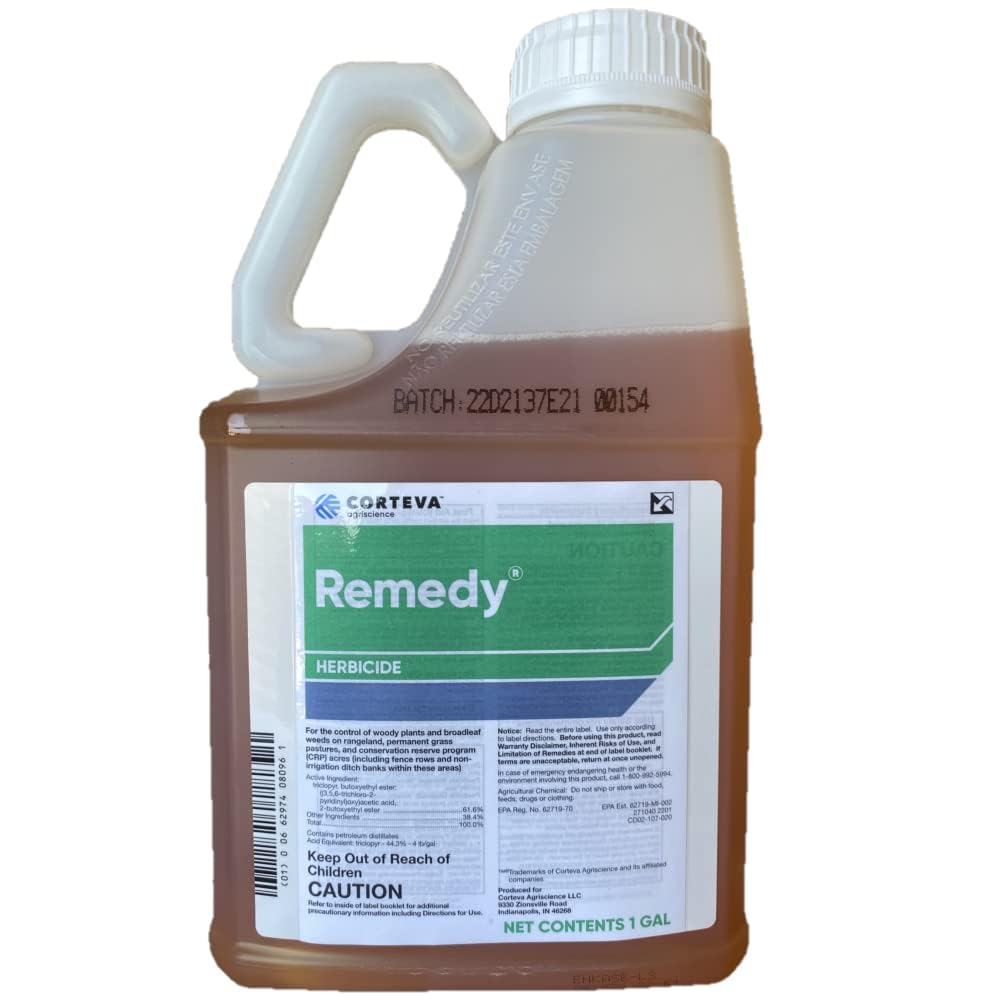
Remedy Ultra is a straight triclopyr concentrate manufactured by Dow AgroSciences, designed specifically for rangeland, pasture restoration, and heavy fence-line brush control. Where other brush killers target soft vines, Remedy is built for mid-size trees — honey locust, wild pear, and multiflora rose — and it handles them with brutal efficiency. Users report that mixing 1 part Remedy with 3 parts diesel creates a basal bark application that stops saplings with a single squirt to the trunk.
The low-odor formulation is a major advantage for users sensitive to chemical smells, though it remains a strong enough concentrate to require careful safety practices. For pasture owners trying to reclaim land from encroaching brush, the gallon-sized container delivers the lowest per-ounce cost of any triclopyr product in this guide. The product is safe around children and pets once the spray has dried, per the label instructions.
One user noted that while Remedy annihilated their cogon grass problem in Florida, the price tag is steep for a single bottle. Another pointed out that it is ineffective on seasonal weeds and unwanted grasses — this is not a general-purpose herbicide. It is a specialized tool for deep-rooted woody plants, and using it on non-woody targets wastes its potency and your money.
Why it’s great
- Professional-grade triclopyr for mid-size trees and stubborn brush
- Low-odor formula compared to other heavy-duty herbicides
- Gallon size offers the best per-ounce cost for large-scale use
Good to know
- Ineffective on annual weeds and non-woody grasses
- Premium price point — not a budget buy for small jobs
4. Ortho GroundClear Weed and Grass Killer Super Concentrate
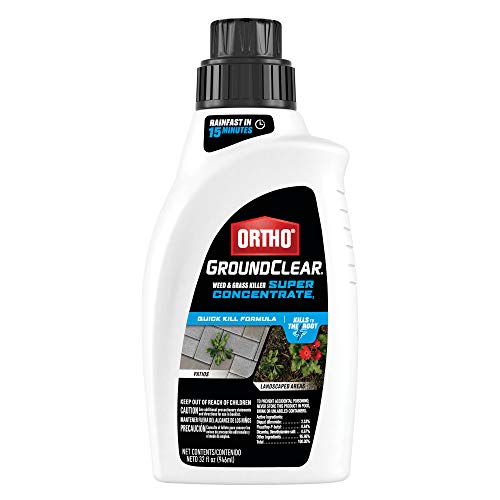
Ortho GroundClear Super Concentrate is a fast-acting formula that starts working immediately on contact and is rainfast in just 15 minutes — the shortest rain protection window of any product in this guide. The 32-ounce bottle treats up to 1,120 square feet, making it a strong mid-range choice for homeowners managing driveway cracks, patio edges, and paths. Users report seeing full kill on crabgrass, dandelion, and clover within three to four days.
The concentrate is designed to be used with a tank sprayer and mixes easily with water without clumping. Many users noted the absence of a strong, lingering odor compared to some of the more chemical-heavy brush killers. The formula kills weeds to the root and is labeled for use around perennial landscape plants, trees, and shrubs — though caution is still required around desirable vegetation.
One experienced user noted that they prefer to mix the concentrate slightly stronger than the label recommends for particularly tough weeds, though this reduces the total coverage per bottle. The active ingredient composition is not disclosed in full detail on the label, which makes it harder to assess its effectiveness against specific woody species compared to triclopyr-dominant alternatives.
Why it’s great
- Rainfast in 15 minutes — best weather flexibility in the lineup
- Mixes easily with no strong chemical odor
- Kills weeds to the root including tough crabgrass and clover
Good to know
- Active ingredient transparency is limited on the label
- Less effective on thick-barked woody brush than triclopyr formulas
5. Spectracide Weed and Grass Killer Concentrate
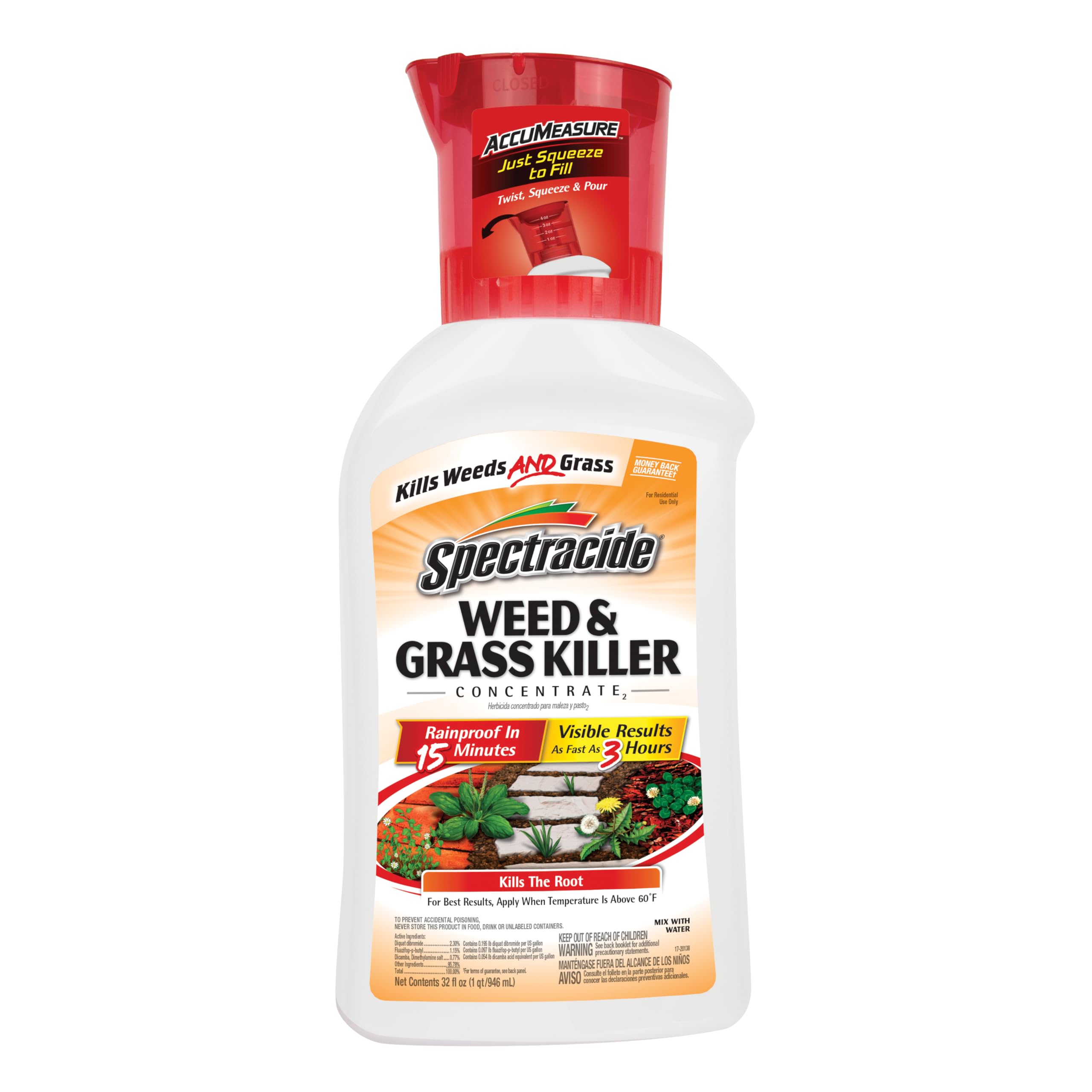
Spectracide relies on diquat dibromide, a contact herbicide that produces visible results in as fast as three hours — faster than any systemic option on this list. The 32-ounce concentrate covers 1,350 square feet, and the Accumeasure cap system is designed to simplify mixing by allowing you to twist, squeeze, and pour directly into your sprayer. Users consistently report seeing dead weeds along their curbs and driveways within a single day after application.
The formula is rainfast after 15 minutes and allows replanting of flowers, trees, and shrubs the same weekend, which is a major advantage for gardeners who want to clear a bed and replant without waiting weeks for soil residue to dissipate. The concentrate is effective against grasses and broadleaf weeds but is not labeled for deep-rooted woody brush, making it better suited for maintenance spraying rather than primary brush clearance.
Several users found the Accumeasure cap unreliable and switched back to using the lid from an older bottle for measurement. The diquat-based formula kills the top growth quickly but does not translocate to deep root systems, so persistent woody perennials may regrow from underground runners. For sheer speed on annual weeds and top growth, however, this is the fastest product in the review.
Why it’s great
- Visible results in as little as 3 hours — fastest knockdown speed
- Rainfast in 15 minutes with same-weekend replanting allowed
- Covers 1,350 square feet per 32-ounce bottle
Good to know
- Does not translocate to deep roots — woody brush may regrow
- Accumeasure measuring cap is finicky and disliked by many users
6. Southern Ag Triclopyr Brush Weed Killer

Southern Ag’s 32-ounce triclopyr concentrate offers the same active ingredient found in premium pasture herbicides at a fraction of the price per bottle. Users consistently report that it kills tough vines and hard-to-control plants that standard big-box store weed killers fail to touch. The 1-quart bottle covers between 512 and 1,024 square feet per gallon of mixed spray, making it suitable for spot treatment of poison ivy patches and fence-line regrowth.
Multiple verified buyers switched to this product after being disappointed by national-brand herbicides, and they confirm that the triclopyr concentration matches BioAdvanced step for step. The formula is labeled for use on non-crop areas like roadsides, rangeland, pastures, and fence lines. For homeowners fighting a specific patch of strangler fig, blackberry, or wild rose, this provides the necessary chemistry without buying a gallon-sized container they won’t finish in a single season.
One user noted that while the product worked well on most brush, it did nothing to a strangler fig plaguing a tree, suggesting that some extremely persistent woody vines may require a stronger concentration or a different application method like cut-stem treatment. The 32-ounce size is best for small to medium infestations; users with acres of brush should consider the gallon-sized Crossbow or Remedy instead.
Why it’s great
- High-concentration triclopyr at a very accessible price point
- Perfect for spot-treating poison ivy, vines, and stumps
- Matches the active ingredient of premium brands for less
Good to know
- 32-ounce size runs out quickly for larger properties
- May struggle against extremely persistent species like strangler fig
7. Control Solutions Eraser Weed & Grass Killer Concentrate
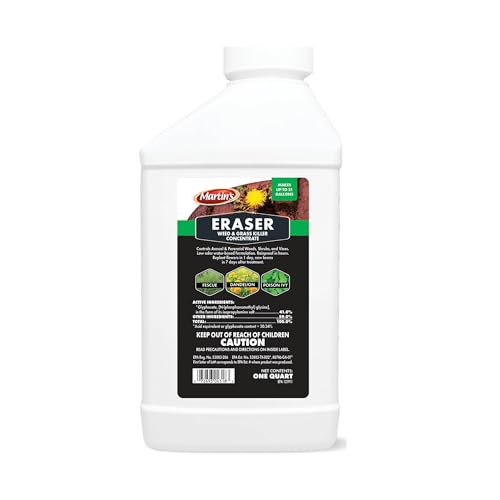
Control Solutions Eraser is a 41% glyphosate concentrate in a low-odor, water-based formula that provides no residual soil activity, making it safe to replant in treated areas soon after application. Where many glyphosate products come pre-diluted for consumer ease, this concentrate requires mixing at 8 ounces per gallon, which gives you control over the strength and stretches the bottle further. Users confirm it kills everything green — weeds, grass, clovers, and flowers — within one to two weeks.
Multiple long-term users have relied on this product for 17 years, noting that the performance matches consumer Roundup at a significantly better value. The formula is effective against annual and perennial weeds, trees, vines, and shrubs. Users recommend adding a surfactant for better leaf adhesion and applying on sunny mornings for maximum absorption. The product becomes rainproof within hours after drying.
One user cautioned that glyphosate acts more slowly than diquat-based formulas — no visible effect for the first two days, yellowing at days four to seven, and full death at days seven to fourteen. Poison ivy may require reapplication. The 32-ounce size is best for homeowners managing garden beds, fence lines, and pathways where broad-spectrum non-selective control is needed.
Why it’s great
- 41% glyphosate concentrate offers better value than consumer brands
- No residual soil activity — safe for replanting soon after treatment
- Low-odor, water-based formula for comfortable mixing
Good to know
- Slower visible results — 7 to 14 days for full kill
- Glyphosate requires surfactant for best adhesion on waxy leaves
FAQ
How long does brush killer take to show results?
Can I mix brush killer with diesel or cooking oil?
Will brush killer kill grass around my trees?
Final Thoughts: The Verdict
For most users, the best brush killer winner is the Southern Ag Crossbow because its 2,4-D and triclopyr blend delivers the widest coverage and fastest knock on woody brush at the lowest cost per treated acre. If you want a formula specifically optimized for poison ivy and tough vines, grab the Roundup Poison Ivy Plus. And for heavy-duty pasture restoration or fighting mid-size trees like honey locust, nothing beats the Remedy Ultra.