
Cutting fiberglass with the wrong blade is a textbook recipe for frayed edges, melted resin, and an hour of sanding what should have been a five-second cut. The glass fibers dull standard steel-tooth blades in moments, while general-purpose wood blades generate enough friction heat to re-liquefy the binding resin and ruin your workpiece. A dedicated blade for cutting fiberglass uses specialized tooth geometry, carbide or diamond tips, and anti-friction coatings to shear through the abrasive composite without heat buildup or edge chipping.
I’m Min — the co-founder and writer behind Gadgets Feed. I’ve spent hundreds of hours analyzing blade catalogs, comparing tooth counts, arbor sizes, and carbide grades specifically for abrasive composite materials like fiberglass, carbon fiber, and engineered decking to separate the blades that deliver clean, repeatable results from those that burn up on the first pass.
This guide breaks down the exact tooth configurations, material compositions, and dimensional specs that define the best blade for cutting fiberglass—from 7-1/4-inch circular options for portable saws to 12-inch high-tooth-count monsters for miter stations.
How To Choose The Best Blade For Cutting Fiberglass
Fiberglass is an abrasive composite of fine glass filaments suspended in a resin matrix. This dual-material structure means the cutting tool must simultaneously shear through hard glass particles without melting the thermoplastic binder. Three critical specifications determine performance in this specific application: tooth geometry, tip material, and anti-friction coatings.
Tooth Geometry: TCG vs. ATB vs. MTCG
Alternate Top Bevel (ATB) teeth, common on wood-cutting blades, create a slicing action that produces clean crosscuts in timber but generates excessive heat in fiberglass, leading to resin melting and chipping. Triple Chip Grind (TCG) teeth, by contrast, use a flat-top tooth followed by a chamfered tooth, effectively grinding rather than slicing through the glass fibers. Modified Triple Chip Grind (MTCG) adds a slight bevel to reduce impact spalling on the exit side of the cut. For fiberglass, TCG or MTCG geometries are the only correct choices — ATB blades will fail before finishing a single sheet.
Tip Material: Carbide Grade and Diamond
Standard C2-grade carbide dulls rapidly against the silica content in fiberglass. Look for blades explicitly listing TiCo Hi-Density Carbide, C3/C4 micrograin formulations, or polycrystalline diamond (PCD) tips. A PCD-tipped blade like the Janchi 10-inch offers up to 60 times the lifespan of standard carbide in fiber cement and fiberglass applications, justifying its higher upfront cost for heavy users. For occasional jobs, a premium tungsten carbide blade such as the Benchmark Abrasives TCT provides a solid balance of durability and affordability.
Kerf, Hook Angle, and Heat Management
A thin kerf (under 0.090 inches) reduces the volume of material removed per pass, lowering friction and heat generation — critical for preventing resin melting. A negative or neutral hook angle (-3° to 0°) further reduces the blade’s tendency to grab and pull, giving the operator better control and a cleaner edge. Anti-stick coatings like Perma-SHIELD on Diablo blades prevent resin and glass dust from welding to the carbide tips, maintaining cutting efficiency across multiple passes.
Quick Comparison
On smaller screens, swipe sideways to see the full table.
| Model | Category | Best For | Key Spec | Amazon |
|---|---|---|---|---|
| Benchmark Abrasives TCT 7-1/4″ | Circular | Multi-material versatility | 80 Teeth, TCG | Amazon |
| FOXBC 8-1/4″ | Circular | Table saw precision | 80 Teeth, TCG, 0.087″ Kerf | Amazon |
| BOSCH DCB760 7-1/4″ | Circular | Extra-fine finish on wood | 60 Teeth, ATB | Amazon |
| Diablo TrexBlade D0744CD | Circular | Melt-free composite cuts | 44 Teeth, MTCG, -3° Hook | Amazon |
| Janchi 10″ PCD | Circular | Fiber cement durability | 6 Teeth, Diamond Tips, 2.2mm Kerf | Amazon |
| Fein Starlock Plus Diamond | Oscillating | Detail/finish work | Diamond Coated, 1-3/8″ x 2″ | Amazon |
| Diablo D12120N 12″ | Circular | High-volume miter saw work | 120 Teeth, TCG, 0.091″ Kerf | Amazon |
In‑Depth Reviews
1. Benchmark Abrasives TCT 7-1/4 Inch Circular Saw Blade
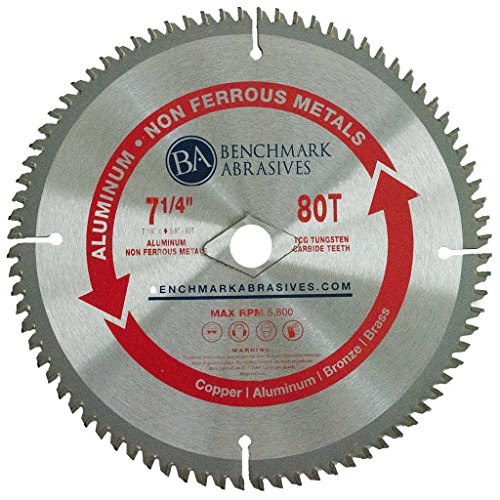
The Benchmark Abrasives TCT runs an 80-tooth Triple Chip Grind geometry on a steel core with tungsten carbide tips, precisely the recipe needed for fiberglass sheets and tubing. At 7-1/4 inches with a 5/8-inch arbor, it fits most portable miter saws and circular saws from Dewalt, Milwaukee, Makita, and Bosch — no adapter rings required. Multiple verified buyers confirm clean cuts on acrylic, PVC pipe, and fiberglass window trim with zero melting or burning, even at moderate feed rates.
The TCG tooth pattern is what separates this blade from standard ATB wood blades. Each tooth grinds through the glass fibers rather than slicing, which dramatically reduces heat buildup at the cut interface. The bronze-colored anti-friction coating further prevents resin from welding to the carbide tips, maintaining consistent chip evacuation across dozens of cuts. At 0.35 kg, it’s light enough for a cordless saw without bogging the motor.
Users report cutting multiple sections of 2-inch fiberglass pipe and vinyl window z-bars with a clean, chip-free finish. One reviewer noted it cuts plexiglass well enough for flame polishing after minimal sanding. The only compromise is that 80 teeth create a slower feed rate than lower-tooth-count blades, but for fiberglass that trade-off ensures edge quality over speed.
Why it’s great
- 80-tooth TCG geometry eliminates resin melting on fiberglass and acrylic
- Tungsten carbide tips resist abrasive wear longer than standard steel or C2 carbide
- Fits virtually all 7-1/4-inch saws across major brands without modification
Good to know
- 80 teeth mean slower feed rate than 40- or 60-tooth blades on thicker stock
- Bronze coating may wear off after extended use on heavily abrasive materials
2. FOXBC 8-1/4 Inch Metal Cutting Table Saw Blade

The FOXBC 8-1/4-inch blade brings the same 80-tooth TCG geometry as the Benchmark but in a larger diameter optimized for table saws and stationary miter saws. The 0.087-inch thin kerf reduces motor load and heat generation — a critical advantage when cutting through fiberglass sheets that tend to trap heat between the blade and the material. Laser-cut stabilizer vents in the plate trap vibration and reduce audible noise, which matters during long cutting sessions on composite materials.
High-density tungsten carbide tips with a Triple Chip Grind pattern deliver burr-free cuts on fiberglass, aluminum extrusions, copper pipe, and acrylic sheets. The 5/8-inch arbor with diamond knockout fits most table saws and 8-1/4-inch miter saws. Users report that the blade cuts 0.125-inch tinted acrylic with a finish that requires no secondary sanding, which is identical to the behavior you want in fiberglass — clean shear without edge fuzz.
Several owners noted the packaging is professional-grade, with a cardboard sleeve and tooth protector that prevents damage during shipping — no frustrating clamshell plastic. The blade has held its edge through a full month of ripping framing lumber without noticeable dulling, which suggests the carbide formulation is genuinely above entry-level C2 grade. For fiberglass users with a table saw setup, this is the most precise option at this size.
Why it’s great
- Thin 0.087-inch kerf minimizes heat and motor strain during fiberglass cuts
- Stabilizer vents reduce vibration for more accurate cuts on thin sheets
- High-density carbide holds edge longer than budget blades on abrasive composites
Good to know
- 8-1/4-inch size may not fit all standard miter saws designed for 8-inch or 10-inch blades
- No non-stick coating, so resin buildup may occur without periodic cleaning
3. Diablo TrexBlade D0744CD 7-1/4″

Diablo engineered the TrexBlade specifically for composite decking and cellular PVC — materials that behave nearly identically to fiberglass in terms of resin content and abrasive load. The 44-tooth Modified Triple Chip Grind (MTCG) geometry is the standout feature here: it keeps the material cool during cutting, preventing the melt-back that ruins edge quality on fiberglass panels. The -3° hook angle is deliberately negative, reducing the blade’s tendency to climb and grab, giving the operator more control on thin or flexible sheets.
TiCo Hi-Density Carbide tips combined with Perma-SHIELD non-stick coating address the two biggest failure modes in fiberglass cutting — rapid wear and resin adhesion. The coating reduces drag and prevents gumming, which means the blade runs cooler cut after cut. At 7-1/4 inches with a 5/8-inch arbor, it drops into any standard circular saw or miter saw without modification. The 0.065-inch kerf is notably thin, further reducing the power required and the heat generated per pass.
Users report it cuts through Fiberon and Trex composite decking “like a hot knife through butter” with perfectly smooth edges — the exact same performance profile needed for fiberglass sheet goods. The 44-tooth count provides faster feed than 80-tooth blades while still delivering a finish that requires no sanding. For anyone cutting fiberglass on a regular basis, this blade delivers premium performance at a mid-range price point.
Why it’s great
- MTCG tooth geometry actively prevents resin melting on composite and fiberglass materials
- Perma-SHIELD non-stick coating eliminates gumming and reduces friction heat
- Negative hook angle provides superior control on thin, flexible fiberglass sheets
Good to know
- 44 teeth may leave a slightly rougher edge on very thin fiberglass compared to 80-tooth blades
- Designed primarily for composites — not ideal for heavy ferrous metal cutting
4. Janchi 10-Inch 6T PCD Fiber Cement Saw Blade

The Janchi PCD blade takes a fundamentally different approach — six polycrystalline diamond-tipped teeth instead of the typical 40-80 carbide teeth. This design is optimized for ultra-abrasive materials like fiber cement board and HardiePlank, which share fiberglass’s silica content and wear profile. The 2.2mm ultra-thin kerf removes minimal material per pass, reducing dust and heat, while the laser-cut body with anti-vibration slots keeps the cut stable at up to 6000 RPM on 10-inch circular, miter, and table saws.
PCD tips last up to 60 times longer than standard carbide in abrasive applications, which makes this blade the long-term value champion for anyone cutting fiberglass paneling, fiber cement siding, or laminate flooring regularly. The six-tooth design means each tooth takes a larger chip load, but users report it “cuts beautifully” with minimal dust and clean, straight edges on 12-foot cement board planks. One reviewer used it on a Dewalt DCS571 cordless saw to side an entire house, and the blade was still sharp at the end.
The trade-off is that PCD blades are brittle — they handle abrasion extremely well but can chip if subjected to sudden impacts or nails. This blade is not designed for general-purpose wood cutting; it’s a specialist tool for abrasive composites. For the dedicated fiberglass fabricator or contractor who cuts Hardie board or fiberglass panels daily, the Janchi PCD will outlast a dozen carbide blades and deliver a consistently cleaner cut.
Why it’s great
- Polycrystalline diamond tips provide 60x the lifespan of standard carbide in abrasive materials
- Ultra-thin 2.2mm kerf minimizes dust, heat, and motor load during fiberglass cuts
- Anti-vibration slots improve cut accuracy on thin, brittle composite panels
Good to know
- 6-tooth design produces a coarser finish than high-tooth-count carbide blades — sanding may be needed
- Not suitable for wood or metal — strictly for abrasive composites and cement board
5. Fein Starlock Plus E-Cut Diamond Saw Blade

Fein’s diamond-coated Starlock Plus blade addresses a completely different cutting scenario: precision plunge cuts, corner detailing, and short straight cuts in CFRP (carbon-fiber-reinforced plastic) and fiberglass — tasks where a circular saw is too large or aggressive. The diamond coating on the cutting edge delivers clean edges without delamination, which is critical when cutting fiberglass laminates where layers tend to separate with standard blades. The Starlock Plus interface ensures wobble-free attachment to compatible oscillating multitools.
At 1-3/8 inches wide and 2 inches length, this blade is designed for detailed work — trimming fiberglass shower surrounds, cutting access holes in fiberglass boat hulls, or flush-trimming composite panels. Users report chip-free cuts through tile and plaster, with one reviewer noting it “made a chip free cut which was a huge relief” on a bathroom tile threshold. The diamond coating handles the abrasive silica in fiberglass without dulling, unlike steel or carbide oscillating blades that lose effectiveness after a few cuts.
The major caveat is that diamond-coated oscillating blades are not designed for heavy or continuous use on metal — one reviewer reported the coating rubbed off after attempting to cut screws. For fiberglass trimming, however, this blade excels. It’s also significantly more expensive than standard carbide oscillating blades, but for professionals who need precision detail work on fiberglass without edge damage, the cost per cut is justified by the quality of the finish.
Why it’s great
- Diamond coating delivers delamination-free cuts on fiberglass and carbon fiber laminates
- Starlock Plus mount provides wobble-free, tool-free attachment for precision control
- Perfect for fine detail work, corner cuts, and flush trimming that circular saws cannot reach
Good to know
- Diamond coating is not suitable for cutting metal screws or nails — will wear off rapidly
- Premium price point makes it most viable for professionals or frequent fiberglass detail work
6. Diablo D12120N 12-Inch 120-Tooth Aluminum Saw Blade

The Diablo D12120N is the highest tooth count in this roundup — 120 TCG teeth on a 12-inch plate — making it the definitive choice for stationary miter saws and table saws used in high-volume fiberglass cutting. The extreme tooth density produces an exceptionally smooth, burnished edge finish that requires virtually no sanding or secondary processing. Diablo’s TiCo Super-Density Micro-Grain carbide formulation provides superior wear resistance against the abrasive fiberglass dust, while the Tri-Metal Shock Resistant Brazing prevents tips from snapping off during heavy cuts.
The 0.091-inch kerf is moderate but justified by the sheer number of teeth — each tooth removes a very small chip, keeping heat distribution even across the cut line. Laser-cut stabilizer vents reduce vibration and noise, which is critical when running a 12-inch blade on a powerful miter saw. Perma-SHIELD non-stick coating prevents the resin from fiberglass melting and adhering to the carbide tips, maintaining cutting efficiency over extended runs. Users report cutting 4×4 plastic landscaping logs with “much better” results than stock Dewalt blades, and 1×1 aluminum square tube cuts “amazingly well” with minimal burrs.
The 5000 RPM max rating is important — this blade is designed for lower-RPM miter saws, not high-speed circular saws operating above 6000 RPM. Running it over the rated speed risks tip ejection. For professional shops that process fiberglass sheet goods, aluminum extrusions, and plastic stock daily, the D12120N delivers the highest finish quality of any blade here, but at a premium investment that makes sense primarily for production environments.
Why it’s great
- 120 TCG teeth produce a near-polished edge finish on fiberglass and non-ferrous metals
- TiCo Super-Density Micro-Grain carbide resists abrasive wear better than standard carbide
- Perma-SHIELD and stabilizer vents keep cuts cool and vibration-free, even on long runs
Good to know
- Max 5000 RPM rating means it cannot be used on some high-speed circular saws
- 120 teeth require a powerful miter saw — underpowered saws may bog on thick fiberglass
7. BOSCH DCB760 7-1/4 Inch 60 Tooth Circular Saw Blade

The Bosch DCB760 is a well-regarded wood-cutting blade featuring 60 ATB (Alternate Top Bevel) teeth, Brute Carbide C3/C4 micrograin tips, and a Speed Coat anti-friction finish. For wood and plywood, it delivers excellent crosscuts and rip cuts — users report it “cross cuts and rips really clean” and is a “real upgrade from the lousy blade that came on my Bosch table saw.” However, for fiberglass specifically, the ATB geometry is the wrong tool. ATB teeth slice, which generates friction heat that melts fiberglass resin and causes edge fraying.
The 60-tooth count and thin kerf do reduce heat output compared to a standard 24-tooth ripping blade, which means the DCB760 can cut thin fiberglass sheet in a pinch if run at a very slow feed rate with cooling. But this blade was engineered for engineered wood, not glass-reinforced composites, and the Speed Coat is not a melt-prevention coating — it’s designed to reduce burning on wood, not to prevent resin welding on fiberglass.
This blade belongs at the bottom of this list not because it’s poorly made — it’s a fine blade for woodworking — but because it lacks the TCG or MTCG tooth geometry that defines a proper fiberglass-cutting blade. The Bosch DCB760 is best reserved for its intended purpose (fine wood finishing) while choosing one of the TCG-geometry blades above for actual fiberglass work. For occasional users who cut fiberglass once a month and already own this blade, it will get the job done with care, but it will dull faster and produce a rougher edge than the dedicated options.
Why it’s great
- Brute Carbide C3/C4 micrograin formulation offers good impact resistance for wood applications
- Speed Coat anti-friction finish reduces burning on wood and plywood cuts
- 60-tooth ATB design delivers extra-fine crosscuts on timber and MDF
Good to know
- ATB tooth geometry generates friction heat that melts fiberglass resin — not the right profile
- Dulls significantly faster on fiberglass than TCG or diamond-tipped alternatives
FAQ
Can I use a standard wood-cutting blade for fiberglass?
What tooth count is best for cutting fiberglass sheets?
How do I prevent fiberglass resin from melting onto the blade?
Are diamond-tipped blades worth the higher cost for fiberglass?
What saw types can I use fiberglass blades with?
Final Thoughts: The Verdict
For most users, the blade for cutting fiberglass winner is the Benchmark Abrasives TCT 7-1/4″ because its 80-tooth TCG geometry delivers clean, melt-free cuts at a price that makes it accessible for both DIYers and professionals. If you need a blade optimized for table saw precision and vibration control, grab the FOXBC 8-1/4″. And for high-volume production or extreme durability in abrasive materials, nothing beats the Janchi 10-inch PCD for longevity.