
Dead devices during a power outage, a camping trip, or a work-from-anywhere session don’t have to mean panic. A battery-powered wall outlet acts as your personal grid, delivering standard AC power from a compact, rechargeable pack that fits in a backpack or sits quietly on a nightstand. These units translate stored DC energy into the 110V or 120V alternating current your laptop, CPAP machine, mini-fridge, or phone charger expects, effectively turning any spot into a powered workspace or emergency hub.
I’m Min — the co-founder and writer behind Gadgets Feed. This guide comes from analyzing dozens of portable power stations, cross-referencing their AC output ratings with real-world battery management systems and charge cycle durability to separate the reliable power sources from the underbuilt bricks.
Whether you need a weekend solution for running a projector off-grid or a quiet emergency unit that keeps your router alive for hours, finding the right battery powered wall outlet means matching wattage, capacity, and portability to your specific gear.
How To Choose The Best Battery Powered Wall Outlet
Not every portable power station is built the same. The key is to match the unit’s AC wattage and battery chemistry to the specific devices you plan to run, all while keeping size and recharge speed in mind for your intended use case.
Wattage and Surge Capacity
The continuous wattage rating tells you what the unit can sustain, while the surge rating handles the brief startup draw of motors. A 100W unit works for laptops and phones, but a 200W surge-capable unit is necessary for small pumps, fans, or projectors. Check the peak output if you plan to power anything with a compressor or motor.
Battery Chemistry: LiFePO4 vs. Lithium-Ion
LiFePO4 (Lithium Iron Phosphate) batteries offer 3,000 to 3,500 charge cycles before significant degradation, making them ideal for frequent use and long-term ownership. Standard Lithium-Ion packs are lighter and cheaper upfront but typically last 500 to 1,000 cycles and are less stable at high temperatures. For an emergency backup that sits in a closet for months, LiFePO4 holds its charge better over time.
Portability and Recharge Speed
A unit under 2.5 pounds that fits inside a water-bottle pocket is genuinely portable for camping or travel. Faster recharge times (under 2 hours via USB-C PD or a dedicated AC adapter) reduce downtime between uses. Solar input support is a bonus for off-grid scenarios, but verify the panel’s voltage matches the unit’s specifications.
Quick Comparison
On smaller screens, swipe sideways to see the full table.
| Model | Category | Best For | Key Spec | Amazon |
|---|---|---|---|---|
| Anker SOLIX C200 DC | Premium | Highest Capacity & Battery Life | 192Wh / 200W LiFePO4 | Amazon |
| DARAN 89.6Wh LiFePO4 | Premium | Ultra-Fast Recharge & Longevity | 89.6Wh / 100W LiFePO4 | Amazon |
| HOWEASY 98Wh | Mid-Range | High-Power 135W AC Output | 98Wh / 135W AC Outlet | Amazon |
| GENSROCK 24,000mAh | Mid-Range | Multiple Ports & 150W Peak | 88Wh / 150W Peak AC | Amazon |
| ZeroKor 120W | Mid-Range | Dual AC Outlets in Compact Size | 97.6Wh / 120W AC Twin | Amazon |
| powkey 24,000mAh | Budget | Entry-Level AC Backup | 88.8Wh / 65W AC | Amazon |
| SinKeu 24,000mAh | Budget | Lightweight Phone & Laptop Charger | 88Wh / 65W AC | Amazon |
In‑Depth Reviews
1. Anker SOLIX C200 DC Power Bank

The Anker SOLIX C200 DC delivers a massive 192Wh capacity in a body that is 39% smaller than comparable 200W-class units, making it a standout for serious emergency backup or extended off-grid use. Its LiFePO4 battery chemistry supports 3,000 charge cycles, meaning this unit will outlast most of your other electronics by years. The two USB-C ports include a 140W PD 3.1 input/output that can fast-charge a laptop and simultaneously refill the station to 80% in just 1.3 hours.
Despite lacking a traditional AC wall outlet (it relies on high-wattage USB-C ports for AC-style power delivery), users report it keeps a Starlink Mini running for 6–8 hours or a Linux SBC online through power cycles without a glitch. The 100W solar input capability turns it into a renewable generator for long trips, and the built-in WiFi monitoring lets you check battery health from a phone. It is virtually silent during operation, which is a huge bonus for indoor emergency use.
The included wall charger is notably absent from the box, so you must supply your own USB-C PD charger to take advantage of the 140W fast recharge. At 2.56 pounds, it is slightly heavier than some 100Wh competitors, but the trade-off in usable watt-hours and cycle durability is significant. For users who need a reliable, long-lasting power source for sensitive electronics and can work with USB-C PD, this is the premium investment.
Why it’s great
- Highest 192Wh capacity in a compact, portable form factor
- LiFePO4 battery lasts 3,000+ cycles compared to standard lithium-ion
- 140W USB-C PD fast charging recharges the unit to 80% in 1.3 hours
Good to know
- No AC wall outlet; power is delivered through high-wattage USB-C ports
- Wall charger not included and must be purchased separately
- Heavier than some lower-capacity LiFePO4 alternatives
2. DARAN 89.6Wh LiFePO4 Power Station
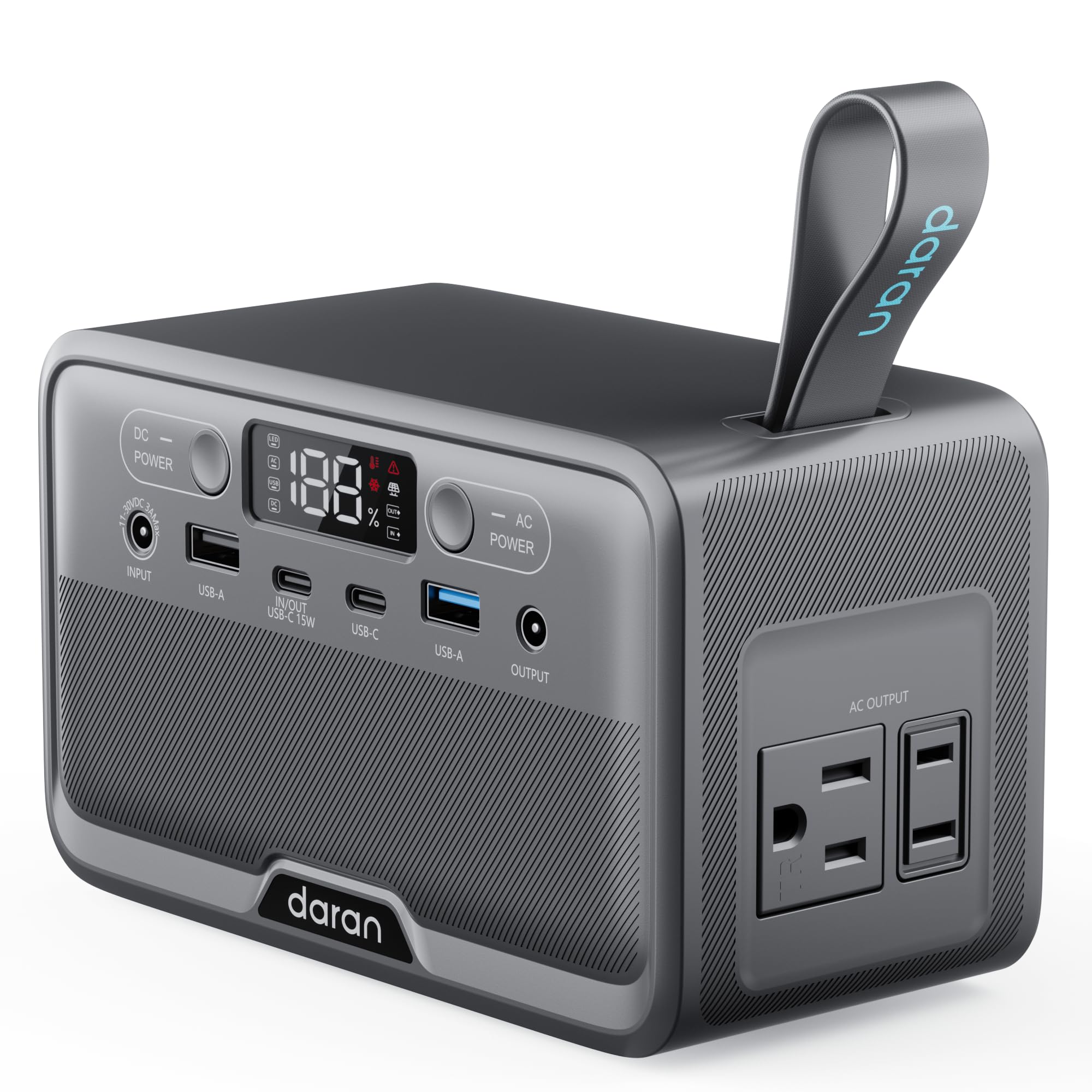
DARAN packs an 89.6Wh LiFePO4 battery into a frame the size of a smartphone, weighing just 2.54 pounds, making it one of the most portable units on this list that still offers a true AC outlet. The 100W continuous (200W peak) inverter is enough to power a laptop, a projector, or a mini-fridge, but the real standout is the recharge speed: it reaches 80% from a wall outlet in only 1.5 hours thanks to its dual-input fast charging technology that accepts AC and USB-C simultaneously.
The seven output ports include two AC sockets, two USB-C (one at 45W PD), two USB-A, and one DC5521 barrel port. Users consistently praise the fanless, silent operation, which makes it a top choice for sleeping in a tent or using as a bedside UPS during a blackout. The 4-level LED flashlight with SOS mode adds practical emergency value, and the LiFePO4 chemistry ensures over 3,500 cycles with minimal capacity fade.
Potential buyers should note the 45W cap on the USB-C PD port, which is slower than some competitors’ 65W or 100W ports for charging larger laptops. Also, the AC output is limited to 100W total between both sockets, so you cannot run two high-draw devices simultaneously. For quiet, compact, and fast-recharging backup power for small electronics, this unit is a smart mid-range-to-premium choice.
Why it’s great
- Ultra-compact size comparable to a smartphone for easy packing
- Fast 0-80% recharge in 1.5 hours via AC or simultaneous inputs
- Silent, fanless operation ideal for sleeping areas
Good to know
- USB-C PD limited to 45W, slower for large laptops
- Total AC output capped at 100W between both sockets
- Basic LCD display with small status icons
3. HOWEASY 98Wh Portable Power Station
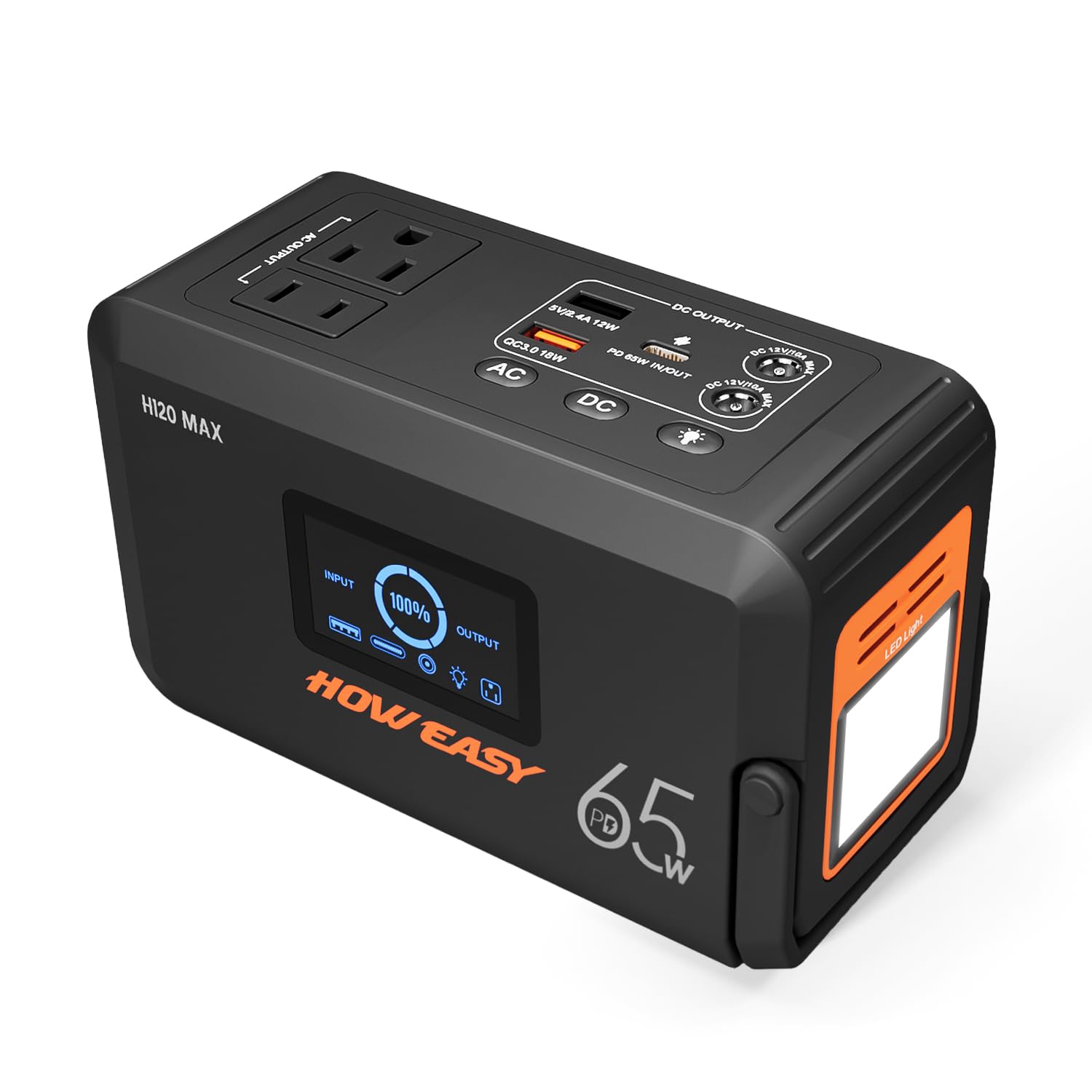
The HOWEASY 98Wh station strikes a strong balance between power and price, offering a 135W continuous (270W peak) AC inverter that can handle more demanding devices like small projectors, mini-fridges, or multiple laptops. With a 98Wh capacity that meets FAA regulations for airline carry-on, it fits well into travel or daily carry scenarios. The 65W PD port is a highlight, refilling laptops to 80% in about an hour and also serving as the fast input for recharging the station itself.
Its seven output ports—two AC outlets, one 65W USB-C, one QC3.0, one standard USB, and two DC ports—allow simultaneous charging of up to seven devices. The multi-mode LED flashlight with low, high, and SOS settings is a practical addition for camping or emergency use. Real-world feedback confirms it serves as a reliable emergency kit staple, with users noting its ability to power a small fan and lights for hours during an outage.
Some users report that the internal cooling fan can be audible during AC charging, which might be distracting in a quiet room. Also, the unit’s 135W continuous output cannot run high-draw appliances like hair dryers or coffee makers. For the buyer who needs a mid-tier station with a higher wattage ceiling than typical 100W units and fast PD charging, the HOWEASY is a strong value pick.
Why it’s great
- Higher 135W continuous AC output and 270W peak surge rating
- 65W USB-C PD fast charging for laptops and self-recharge
- FAA-approved 98Wh capacity for carry-on airline travel
Good to know
- Cooling fan can be audible during high-load charging
- Not powerful enough for hair dryers or high-wattage kitchen appliances
- No dedicated on/off power switch for the unit
4. GENSROCK 24,000mAh Power Bank

GENSROCK’s 88Wh station packs an impressive eight output ports, including two AC outlets that deliver 120W each with a combined peak of 150W. This makes it one of the most versatile units for powering multiple device types at once—laptops, phones, tablets, drones, and even small gaming consoles. The port selection includes two QC3.0 USB-A ports, a 12W standard USB-A, a Type-C port, and two DC 5521 barrel jacks, covering nearly every charging cable standard you might carry.
The 2.3-pound weight and 6.6 x 4 x 3-inch dimensions make it easy to toss in a duffel bag for camping or emergency car trips. The built-in dual LED light modes (steady and SOS) add a layer of practicality for power outages or night use. Real users report it can charge a Samsung Galaxy Ultra from low to full in under half an hour when paired with a high-wattage cable, and it holds charge well during travel. The BMS protection with a cooling fan keeps temperatures in check during sustained loads.
One notable quirk is that using the DC and AC outputs simultaneously can cause the DC side to cut out, so you may need to stagger connections for certain setups. The 88Wh capacity is on the lower side for the premium segment, meaning a single high-draw laptop charge will consume most of the reserve. For users who prioritize a wide array of ports over raw capacity, this is a flexible and reliable option.
Why it’s great
- Eight output ports for charging multiple devices at once
- Dual AC outlets with 150W peak for versatile gear
- Lightweight 2.3-pound design with built-in LED flashlight
Good to know
- DC output may drop if AC and DC are used simultaneously
- 88Wh capacity is modest for high-draw laptop charging
- Cooling fan activates under sustained load
5. ZeroKor 120W Portable Power Station

The ZeroKor 120W station is a cube-shaped unit (5.7 x 4.4 x 4.1 inches) that offers two AC outlets in a surprisingly small footprint. With a 97.6Wh capacity and 120W max on AC, it can handle inflating air mattresses, running a projector and speakers for a movie, or powering a laptop and phone simultaneously. The built-in handle makes it easy to grab and go, and the orange-gray exterior gives it a rugged, outdoorsy look reminiscent of premium brands.
It supports three charging methods: wall outlet, car cigarette lighter, and solar panel (up to 120W input). The LED screen clearly shows remaining battery, AC output status, and DC output status. Real-world reports confirm it blew up five air mattresses without dropping a single bar on the battery indicator, demonstrating efficient power delivery for non-resistive loads. The onboard LED flashlight includes reading mode and SOS mode for emergencies.
Some users have reported that the unit outputs only 5V on its USB-A and USB-C ports regardless of the device connected, which severely limits fast charging for modern phones and tablets. Additionally, the AC and DC activation requires a long-press that is not intuitive from the manual alone. For buyers who need dual AC outlets in a compact body and can work around its USB limitations, it is a capable power source for camping and light home backup.
Why it’s great
- Dual AC outlets in a compact, portable cube design with handle
- 97.6Wh capacity suitable for camping gear like projectors and air pumps
- Three recharging methods including solar panel support
Good to know
- USB ports may only output 5V regardless of device requests
- AC/DC activation long-press behavior is not intuitive
- Not suitable for high-wattage tools or appliances over 120W
6. powkey 24,000mAh AC Power Station

The powkey 24,000mAh station is a no-frills entry point into battery-powered AC outlets. Its 88.8Wh capacity and 65W AC outlet are enough to charge a Surface tablet from empty to full, power a cat cam for 12 hours on 40% of its reserve, or keep a fan and phones running through an 8-hour power outage. The neon green shell is loud, but the 1.3-pound weight is light enough to stash in a glovebox or backpack without noticing.
It includes two USB outputs (one QC3.0), one DC 9–12.6V output, and the 110V AC port. The LED display shows battery level as bars, and the unit can be recharged via wall outlet, car charger, or solar panel with the right adapter. Users consistently call it a “must get” for weekend camping trips, noting it holds a charge in the car windshield for days without draining. The 4-hour self-recharge time is reasonable for the price point.
Reliability can be a concern, as a subset of users report the unit stops charging after a few uses. The instructions are poor, and powkey advises keeping the charge above 30% and recharging every three months to avoid battery damage. For a budget entry into portable AC power, this unit works well for occasional use but may not hold up to frequent cycling. It is a good starting point for someone unsure how much they will use a battery-powered wall outlet.
Why it’s great
- Very affordable entry point for portable AC power
- Lightweight 1.3-pound design for easy portability
- Adequate for small devices like tablets, phones, and CPAP
Good to know
- Some units have reported failure after limited use
- Must maintain battery above 30% to prevent damage
- Instructions are sparse and not user-friendly
7. SinKeu 24,000mAh AC Power Bank

The SinKeu power bank is nearly identical in specification to the powkey, sharing the same 88Wh capacity, 65W AC output, and DC input charger. Its slight edge comes from a lighter build at 1.1 pounds and a blue color that some users prefer over neon green. The 2,000mAh port and AC outlet can fuel a MacBook to full twice or charge an iPhone and Galaxy up to eight times, making it a practical companion for long hikes or multi-day trips where AC access is unavailable.
It includes a carabiner for clipping onto a backpack, and the lithium polymer cells are rated for over 1,000 recharge cycles. The smart chip provides overcharge, overvoltage, and short-circuit protection, adding a layer of safety for use in tents or vehicles. Real-world reviews highlight that it holds a charge for months without draining and that the 65W AC output is genuinely useful for topping off a Surface or MacBook during a power outage.
Battery runtime can be disappointing for continuous AC loads; some users noted the unit only lasted about two hours of moderate use before depleting. The included wall charger also takes around 4 hours to fully recharge the battery. For those who want a lightweight, ultra-portable AC battery bank for short-term use with small devices, and who are willing to accept the capacity limitations, the SinKeu is a solid budget-friendly option.
Why it’s great
- Extremely lightweight at just 1.1 pounds for easy carry
- Holds charge well over long periods of storage
- Safety protections including overcharge and short-circuit protection
Good to know
- Short AC runtime of around 2 hours under moderate load
- Slow 4-hour self-recharge time via included wall adapter
- Limited to 65W; cannot power higher-draw appliances
FAQ
Can a battery powered wall outlet run a CPAP machine all night?
What is the difference between a pure sine wave and modified sine wave inverter?
Can I take a battery powered wall outlet on a plane?
Final Thoughts: The Verdict
For most users, the battery powered wall outlet winner is the Anker SOLIX C200 DC because its 192Wh capacity and 3,000-cycle LiFePO4 battery deliver the best long-term value for serious backup and travel needs. If you want the fastest recharge and quietest operation in a truly pocketable size, grab the DARAN 89.6Wh. And for affordable dual AC outlets in a compact frame that handles camping gear without breaking the bank, nothing beats the ZeroKor 120W.