
Watching your cat strain in the litter box, pass hard, dry stools, or go days without a bowel movement is distressing. Constipation in cats is often a sign that their diet lacks sufficient moisture and the right type of fiber—two things a properly formulated canned food can deliver directly. The challenge is cutting through the marketing noise to find a wet food that actually moves things along without causing diarrhea or picky-eating standoffs.
I’m Min — the co-founder and writer behind Gadgets Feed. This guide is built on hours of comparing fiber profiles, moisture content, ingredient sourcing, and vet-recommended formulas across dozens of canned options to isolate what truly helps with feline constipation.
After evaluating prebiotic blends, moisture levels, protein digestibility, and real-world owner feedback, here is my curated selection of the best canned cat food for constipation available right now.
How To Choose The Best Canned Cat Food For Constipation
Constipation in cats is frequently a symptom of chronic dehydration and insufficient dietary fiber. Switching from dry kibble to a moisture-rich canned food is the single most effective dietary change you can make. However, not all canned foods are created equal—you need to target specific factors that directly affect stool transit time and bulk.
Moisture Content: The Primary Driver
Most canned cat foods hover around 78% moisture, but that baseline is only the starting point. Cats with recurring constipation need every gram of hydration they can get. Look for foods that explicitly avoid thickeners like carrageenan or excessive starches that can bind water. The goal is to get your cat’s total daily water intake closer to what they’d naturally get from prey—roughly 70-80% of their food weight as water. A pâté or loaf style often holds moisture better than shredded varieties, which can lose liquid in the bowl.
Fiber Profile: Not All Fiber Is Laxative Fiber
Two types of fiber matter here. Soluble fiber (from sources like psyllium husk, pumpkin, or chicory root) absorbs water in the gut and forms a gel-like mass that softens stool and makes it easier to pass. Insoluble fiber (from cellulose or beet pulp) adds bulk but can sometimes aggravate constipation if the cat isn’t drinking enough. The best foods for constipation emphasize prebiotic soluble fibers. Check the ingredient list for specific sources—”natural fiber” is meaningless; you want to see chicory root, dried pumpkin, psyllium seed husk, or inulin listed near the top.
Protein Digestibility
Highly digestible protein sources (chicken, salmon, whitefish) reduce the amount of undigested material reaching the colon, which in turn reduces gas, bloating, and the risk of impaction. Avoid foods with generic “meat meal” or “by-product” meals that are less digestible. The food should list a named protein as the first ingredient, and ideally carry a “highly digestible” claim on the label or in the manufacturer’s marketing.
Quick Comparison
On smaller screens, swipe sideways to see the full table.
| Model | Category | Best For | Key Spec | Amazon |
|---|---|---|---|---|
| Hill’s Prescription Diet GI Biome Stress | Prescription | Chronic digestive issues & stress reduction | ActivBiome+ prebiotic blend, L-tryptophan | Amazon |
| Hill’s Science Diet Perfect Digestion | OTC Therapeutic | Non-prescription stool regulation | ActivBiome+, pumpkin, 78% moisture | Amazon |
| Royal Canin Digestive Care | Veterinary Diet | Sensitive stomachs & odor reduction | Highly digestible proteins, 3 oz loaf | Amazon |
| Forza10 Digestive Wet Cat Food | Veterinary Diet | GI symptom relief (gas, vomiting, diarrhea) | Psyllium husk, dried rose hips, 3.5 oz cans | Amazon |
| Purina Pro Plan Sensitive Skin & Stomach | Sensitive Stomach | Gentle digestion with skin support | Chicory root prebiotic, 3 oz pâté | Amazon |
| Purina Pro Plan Hairball Control | Hairball Management | Moving hair through digestive tract | Natural prebiotic fiber, 3 oz pâté | Amazon |
| Applaws Chicken with Pumpkin | Limited Ingredient | Pumpkin fiber boost, minimal additives | 2.47 oz cans, 2 ingredients (chicken, pumpkin) | Amazon |
In‑Depth Reviews
1. Hill’s Prescription Diet Gastrointestinal Biome Stress
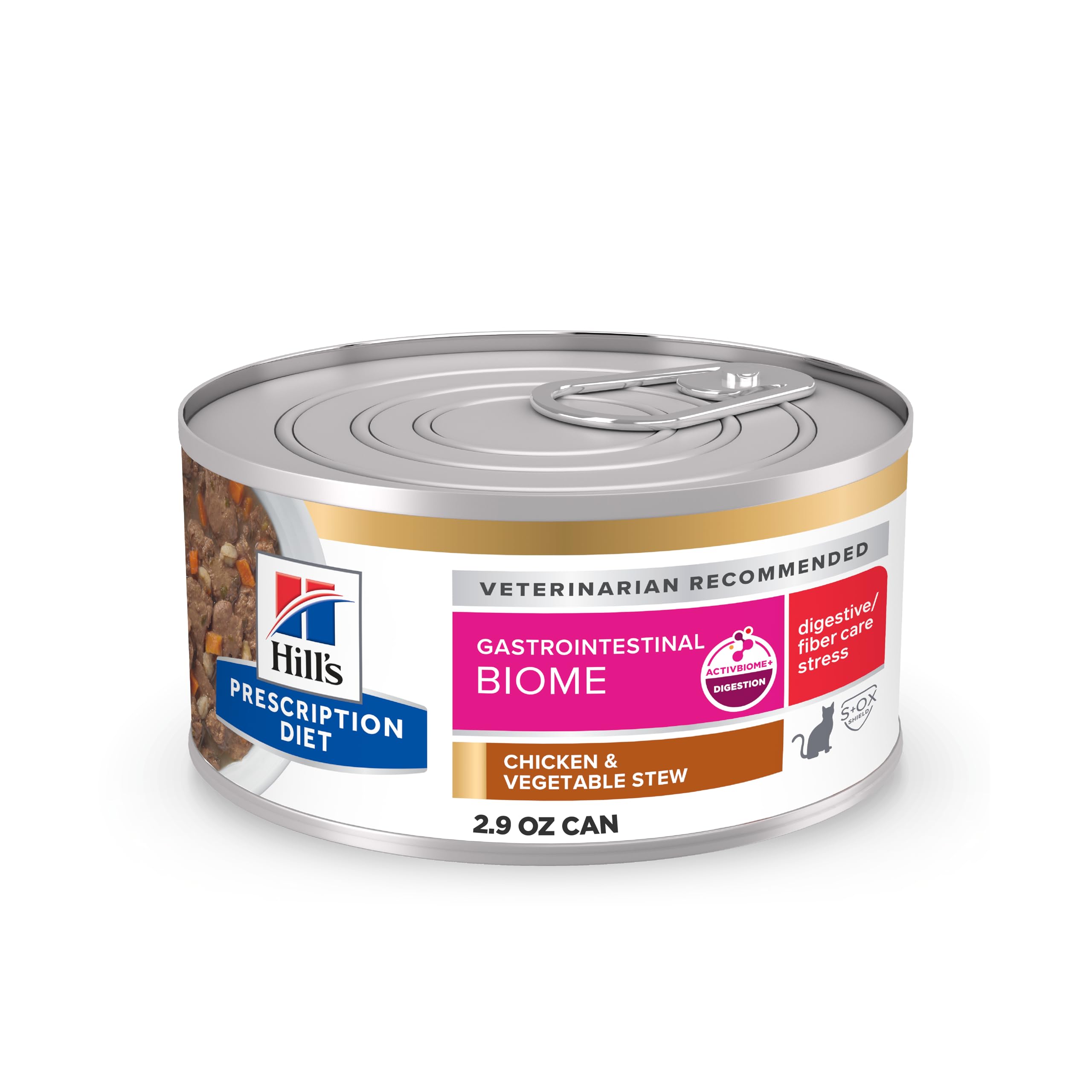
This is Hill’s most advanced gut-targeted formula, pairing their proprietary ActivBiome+ prebiotic blend with hydrolyzed casein and L-tryptophan to address both the physical and stress components of digestive upset. The chicken and vegetable stew texture holds moisture well—each 2.9 oz can delivers roughly 78% water content, directly helping soften stool. Vet-recommended for cats with chronic constipation or stress-induced gastrointestinal flare-ups.
Clinical data from Hill’s shows it can promote regular healthy stool in as little as 24 hours, largely because the ActivBiome+ technology rapidly feeds beneficial gut bacteria that produce short-chain fatty acids to stimulate colonic motility. The added omega-3 fatty acids (DHA and EPA) also help reduce intestinal inflammation, which is often a hidden factor in recurring constipation.
This is a prescription diet, so you will need a vet’s approval. That requirement is a feature, not a bug—it means your cat’s specific constipation cause has been professionally diagnosed before committing to this precise nutritional intervention.
Why it’s great
- Clinically proven to normalize stool within 24 hours
- ActivBiome+ directly supports gut microbiome health
- Stress-reducing ingredients address behavioral triggers
Good to know
- Requires veterinarian authorization to purchase
- Higher cost per can than over-the-counter alternatives
- Some cats dislike the stew texture versus pâté
2. Hill’s Science Diet Adult 1-6 Perfect Digestion

Hill’s translated their prescription GI technology into an over-the-counter formula specifically aimed at “perfect poop in 7 days.” The ActivBiome+ prebiotic technology is present here too, supplemented with added pumpkin—a well-known soluble fiber source that pulls water into the colon to soften stool. Reviews consistently report normalized bowel movements in cats that previously struggled with hard, infrequent stools.
At roughly 78% moisture, this is a strong hydrating option for cats that still have a decent appetite but need the extra fiber push. The chicken, vegetables, and rice stew format provides enough texture to encourage chewing, which helps with saliva production and overall digestion. It’s also formulated with clinically proven antioxidants (vitamin C and E) to support immune function while you fix the motility issue.
The biggest advantage here is accessibility—no prescription required, and it’s widely available in 24-can packs. If your cat doesn’t have severe underlying disease but needs dietary support to maintain regularity, this is the logical first step before moving to a prescription diet.
Why it’s great
- ActivBiome+ prebiotic technology without needing a prescription
- Added pumpkin for extra soluble fiber to soften stool
- Clinically tested for stool improvement within 7 days
Good to know
- Some cats may need the prescription-strength version for severe cases
- Stew texture may not suit cats accustomed to pâté
- Higher fiber content can cause initial gas during microbiome adjustment
3. Royal Canin Feline Digestive Care

Royal Canin’s approach to constipation focuses on protein digestibility—selectively sourcing proteins that are broken down and absorbed in the small intestine, minimizing the residue that reaches the colon. This reduces the risk of impaction while also cutting stool odor significantly. The loaf-in-sauce texture is notably palatable, with multiple reviewers noting that even the pickiest cats with IBS will eat this consistently.
Each 3 oz can provides complete and balanced nutrition specifically formulated for adult cats 1 year and older. The precision of the nutrient profile matters: too much fiber can actually worsen constipation by forming a plug, and Royal Canin balances prebiotic fibers carefully rather than loading them. Owners report their cats have “less stomach problems” and more consistent stool quality after switching.
The 24-can variety pack offers a good rotation of flavors (salmon, chicken, tuna), which helps prevent flavor fatigue in long-term feeding. However, this food has a notably strong fishy aroma that some owners find off-putting—your cat likely won’t care, but you’ll smell it when opening the can.
Why it’s great
- Highly digestible proteins reduce undigested residue in the colon
- Proven stool odor reduction
- Loaf-in-sauce texture is palatable for picky cats and seniors
Good to know
- Strong aroma when opening the can
- Some cats may need the food mixed with a familiar brand initially
- 3 oz cans are small—large cats may need two cans per feeding
4. Forza10 Digestive Wet Cat Food
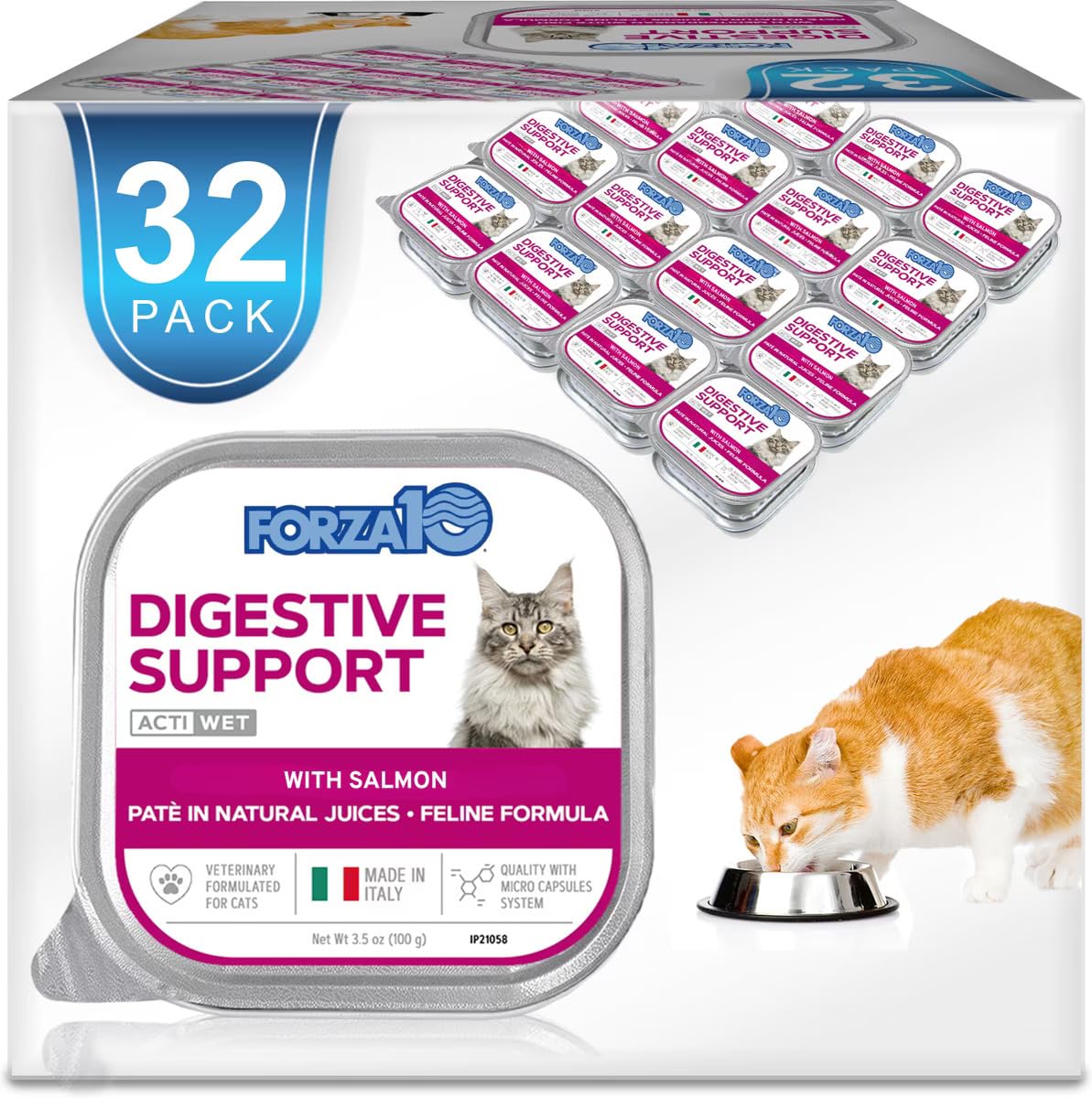
Forza10 is an Italian brand with veterinary-formulated recipes that include some unique botanical ingredients for digestive support. The key player here is psyllium seed husk—a well-studied soluble fiber that absorbs many times its weight in water, forming a gel that lubricates the colon and softens stool. The formula also includes dried rose hips and oregano, which provide natural polyphenols that may support gut lining health.
Each 3.5 oz can is slightly larger than the standard 3 oz, and the 32-pack provides great value for multi-cat households. The salmon-based protein is highly digestible and provides omega-3 fatty acids for anti-inflammatory benefits. Multiple owners report firmer, more consistent stools and reduced gas in cats that previously had chronic loose stools mixed with constipation episodes.
However, some cats are picky about this formula—the pâté has a distinct fishy smell and a dense texture that not all cats accept. A handful of reviewers noted their cats refused to eat it entirely, or required mixing it with a topper they already knew. The fish bones mentioned in some reviews are occasional fragments that need to be removed manually.
Why it’s great
- Psyllium husk is a proven soluble fiber for constipation relief
- 32-can pack offers the best per-can value in this lineup
- Unique botanical ingredients support gut lining health
Good to know
- Some cats refuse the pâté texture or fishy smell
- Occasional fish bone fragments may need to be removed
- Not all cats accept it without mixing with a preferred food
5. Purina Pro Plan Sensitive Skin & Stomach

Purina Pro Plan’s Sensitive Skin and Stomach formula addresses constipation from the angle of overall gastrointestinal sensitivity. The prebiotic fiber comes from chicory root (inulin), which feeds beneficial Bifidobacteria and Lactobacillus species in the gut to improve stool consistency. The pâté texture is smooth and highly palatable, making it a gentle option for senior cats or those with dental issues.
The formula is grain-free and includes probiotics from the chicory root, plus high-quality chicken, tuna, and Arctic char for protein variety. Many veterinarians recommend this as a first-line option for cats with intermittent constipation that isn’t severe enough to warrant a prescription diet. The variety pack (24 cans across 3 flavors) helps prevent flavor fatigue.
This is a maintenance food, not a rescue intervention. If your cat is already severely constipated (not passing stool for 48+ hours), you need a prescription diet or a vet visit first. But for daily feeding to prevent recurrence, this is a solid, widely available option that most cats accept readily.
Why it’s great
- Chicory root prebiotic supports healthy gut bacteria
- Grain-free and highly palatable pâté texture
- Three-flavor variety pack prevents mealtime boredom
Good to know
- Not a prescription-strength solution for severe constipation
- Some cats may need a probiotic supplement alongside this food
- 3 oz cans are portioned for smaller meals
6. Purina Pro Plan Hairball Control

Hairballs often cause constipation by forming a physical obstruction in the digestive tract. Purina Pro Plan Hairball Control uses natural prebiotic fiber to help move ingested hair through the system and out with the stool, rather than accumulating in the stomach. High protein content supports lean muscle mass while the fiber helps stool bulk and transit time.
The pâté texture is the same smooth, digestible format as the Sensitive Stomach formula, and multiple reviews from vet techs confirm its effectiveness at reducing hairball-related vomiting and subsequent constipation. Cats with medium to long coats (especially Maine Coon mixes) benefit enormously from this formula, as regular brushing alone rarely prevents hairball formation.
This food is not a constipation fix for a cat without a hairball problem—the fiber profile is optimized for hair passage, not general stool softening. If your cat’s constipation is primarily dietary (not hairball-related), you would get better results from a dedicated digestive care formula.
Why it’s great
- Specifically targets hairball-related constipation with transit fiber
- Vet tech recommended for effectiveness in reducing vomiting
- Pâté is more digestible than chunk-style wet foods
Good to know
- Not a general-purpose constipation fix—best for hairball cats only
- Fiber blend may not be strong enough for chronic constipation
- Large cats with heavy coats may still need regular hairball gel supplements
7. Applaws Chicken with Pumpkin in Broth
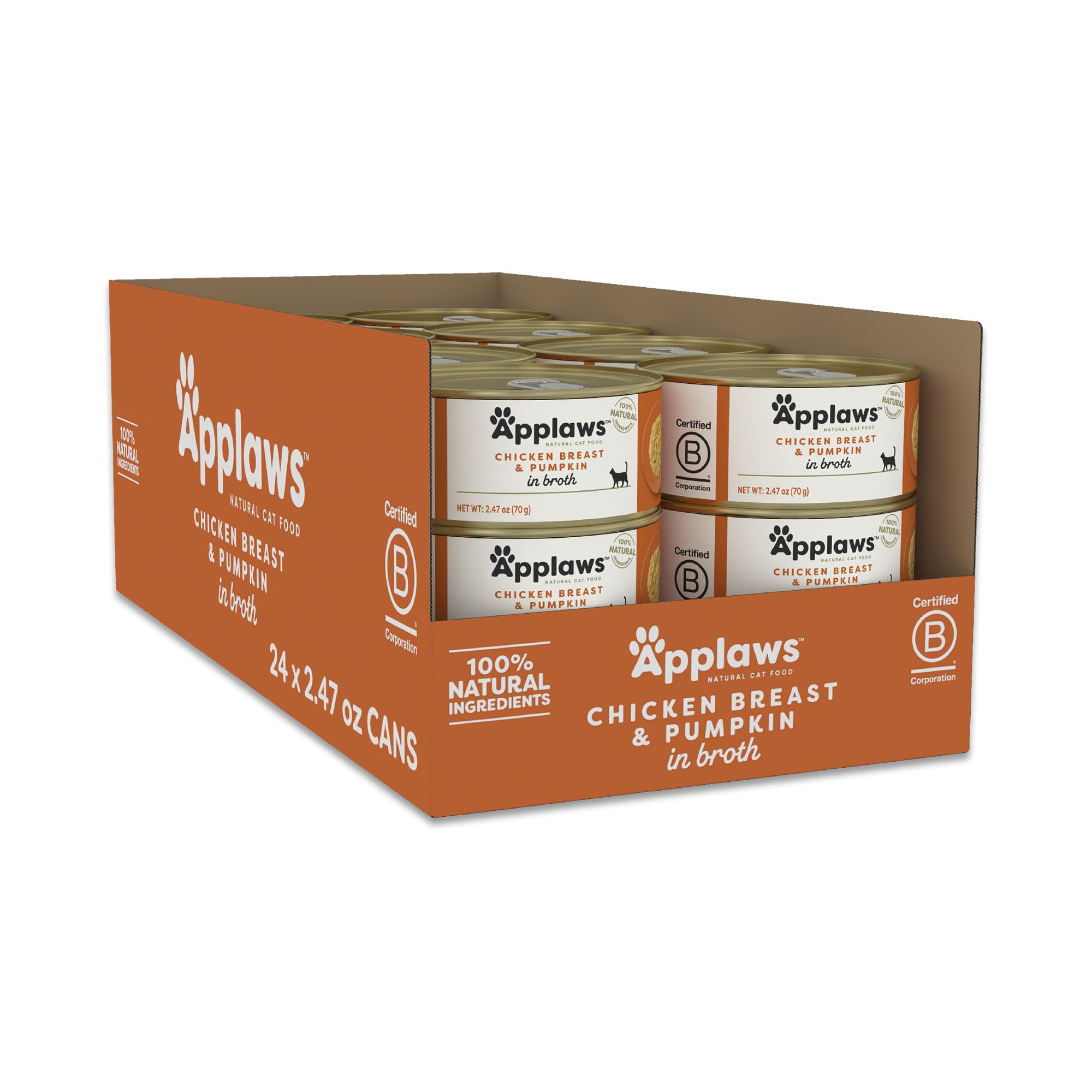
For cats with food sensitivities that may be contributing to constipation, Applaws offers a minimal-ingredient solution: chicken and pumpkin, and nothing else. There are no thickeners, gums, or artificial additives—just real meat and a known natural laxative fiber. Pumpkin is a classic home remedy for both constipation and diarrhea in cats because its soluble fiber normalizes stool moisture.
The broth format provides extra hydration, which is critical for softening dry, impacted stool. Each 2.47 oz can is essentially a supplement or treat rather than a complete diet—Applaws explicitly states this is a complementary food, not a balanced meal. You would need to mix this with a complete and balanced dry or wet food that provides taurine, vitamins, and minerals.
Some cats had adverse reactions (vomiting, diarrhea) possibly due to a sudden increase in pumpkin fiber, so introduce this slowly over 5-7 days. For picky cats that refuse pâté or loaf textures, this broth-based format is often accepted because it mimics the moisture and texture of natural prey fluids.
Why it’s great
- Two ingredients only—ideal for elimination diets and sensitive cats
- Pumpkin provides soluble fiber proven to soften stool
- Broth format maximizes hydration for stool softening
Good to know
- Not a complete and balanced meal—must be fed with a complete food
- Introduce slowly to avoid digestive upset from the pumpkin fiber
- Small 2.47 oz cans require multiple cans per feeding for most adult cats
FAQ
How quickly should I see results after switching to a constipation-specific wet food?
Can I mix regular dry kibble with these wet foods for constipation relief?
What is the ideal crude fiber percentage for a constipation-prone cat?
Are these foods safe for cats with kidney disease who also have constipation?
Final Thoughts: The Verdict
For most owners seeking relief for their cat, the best canned cat food for constipation is the Hill’s Science Diet Perfect Digestion because it delivers prescription-level ActivBiome+ prebiotic technology without requiring a vet visit, making it the most accessible and effective everyday solution. If your cat’s constipation is stress-related or chronic, the Hill’s Prescription Diet GI Biome Stress adds L-tryptophan and hydrolyzed casein for a dual-action approach. And for cats with hairball-driven constipation, nothing beats the Purina Pro Plan Hairball Control for moving fur through the system.