
Stepping up from a smartphone to a dedicated camera is about reclaiming control over your image. A mirrorless body swaps the reflex mirror of a DSLR for an electronic viewfinder, giving you a live preview of exposure and depth of field before you press the shutter. For a beginner, this direct feedback loop is the fastest way to learn how aperture, shutter speed, and ISO actually shape a photograph — you see the result in real time, not after you’ve chimp the back screen.
I’m Min — the co-founder and writer behind Gadgets Feed. I’ve spent hundreds of hours parsing sensor datasheets, autofocus algorithms, and lens roadmaps to find the threshold where beginner-friendly meets genuine creative potential.
Every camera in this guide was selected for its ability to teach you the craft without punishing mistakes. After cross-referencing a dozen sensor formats, lens ecosystems, and autofocus systems, I’ve narrowed the field to the absolute best beginner mirrorless camera options that reward your first real step into interchangeable lenses.
How To Choose The Best Beginner Mirrorless Camera
A beginner mirrorless camera needs to balance three competing priorities: a forgiving learning curve, image quality that visibly outperforms a phone, and a lens mount that won’t trap you in a dead-end system. The camera body is the start of a relationship with an entire ecosystem of glass.
Sensor Size and Low-Light Ceiling
Sensor physical area determines how much light each pixel captures. Full-frame sensors (36×24mm) offer the cleanest high-ISO performance and thinnest depth of field, but the lenses are larger and more expensive. APS-C sensors (roughly 23.5×15.6mm) strike the best value-to-performance ratio for beginners — you get substantial noise improvement over Micro Four Thirds without the lens cost penalty of full-frame. Micro Four Thirds sensors (17.3×13mm) trade some noise ceiling for dramatically smaller bodies and lenses, making them ideal for travel and casual daily carry.
Autofocus System Type
Phase-detection autofocus (PDAF) is essential for tracking moving subjects like pets, children, or birds. Contrast-detection-only systems hunt in low light and miss fast action. Hybrid systems combine PDAF with contrast refinement — look for at least 100 phase-detection points with eye/face detection for humans and animals. Entry-level cameras with PDAF will keep you from missing focus on spontaneous moments.
Kit Lens Quality and Upgrade Path
Every camera in this guide ships with a zoom kit lens, but not all kit lenses are equal. A lens with a wider aperture (f/3.5‑5.6) and optical stabilization will produce noticeably sharper handheld shots. More importantly, consider the mount ecosystem — Canon RF-S, Nikon Z, Sony E, and Micro Four Thirds all have extensive native glass libraries. A mount with third-party lens support (Sigma, Tamron, Viltrox) gives you budget-friendly primes down the road.
Quick Comparison
On smaller screens, swipe sideways to see the full table.
| Model | Category | Best For | Key Spec | Amazon |
|---|---|---|---|---|
| Canon EOS R100 | Entry APS-C | Budget entry into RF mount | 24.1 MP APS-C / Dual Pixel CMOS AF | Amazon |
| Panasonic G85 | Mid M43 | Video-first hybrid shooting | IBIS + 5-axis stabilization | Amazon |
| Panasonic G100 | Entry M43 | Vlogging with built-in audio | Tracking mic / 12-32mm kit | Amazon |
| Nikon Z 30 | Entry APS-C | Vlogging & streaming | 209-point hybrid AF / 4K 30p | Amazon |
| OM System E-M10 IV | Mid M43 | Travel & selfie shooting | 20 MP / 4.5-stop IBIS | Amazon |
| Sony ZV-E10 Bundle | Mid APS-C | Content creator bundle | 425-point AF / side flip screen | Amazon |
| Fujifilm X-T30 III | Premium APS-C | Film simulations & style | 26.1 MP / 20 Film Sims | Amazon |
| Nikon Z50 II | Premium APS-C | Bird & wildlife entry | 31 color presets / 4K 60p | Amazon |
| Canon EOS RP Kit | Entry Full-Frame | Full-frame on a budget | 26.2 MP FF / 5-stop OIS lens | Amazon |
| Sony a7 III Kit | Pro Full-Frame | Low-light & action hybrid | 693 phase-detect / 10 fps | Amazon |
| OM-1 Mark II Kit | Pro M43 | Extreme weather & speed | IP53 / 50 fps e-shutter | Amazon |
In‑Depth Reviews
1. Canon EOS R100

The Canon EOS R100 is the lightest body in the EOS R series at roughly 356 grams with the RF-S 18-45mm kit lens attached. Its 24.1-megapixel APS-C sensor paired with the DIGIC 8 processor delivers the same Dual Pixel CMOS AF found in far more expensive Canon bodies, covering 143 zones with human face and eye detection. One-Shot AF continuous capture hits 6.5 frames per second — fast enough to freeze a mid-flight arrow at 1/4000 second, as verified by buyers.
For video, the R100 shoots 4K at 24 fps and supports Full HD at 60 fps with 120 fps HD for slow motion. The kit lens includes Optical Image Stabilization rated at 4 stops, which helps novice handheld footage look noticeably smoother than smartphone digital stabilization. The LP-E17 battery lasts a full day of casual shooting, though no charger is included in the box — you’ll need to charge via USB-C or buy a separate external charger.
The RF mount gives you direct access to Canon’s growing RF-S lens lineup plus compatibility with full-frame RF glass, though native prime lenses remain pricey. The menu system retains Canon’s hallmark beginner-friendly GUI with customizable quick menus, and built-in Wi-Fi and Bluetooth enable seamless photo transfer to a phone. This is the most affordable way to enter the Canon mirrorless ecosystem without sacrificing the brand’s excellent Dual Pixel AF.
Why it’s great
- Reliable Dual Pixel CMOS AF with eye and animal detection
- Compact and light body ideal for daily carry
- Quick wireless photo transfer via Canon app
Good to know
- No in-body image stabilization (relies on lens IS)
- 4K video limited to 24 fps with a 1.5x crop
- Battery charger not included in the box
2. Panasonic LUMIX G85

The Panasonic G85 remains one of the most compelling entry-level mirrorless cameras for hybrid shooters because it couples a magnesium-alloy weather-sealed body with 5-axis in-body image stabilization (IBIS) that works in concert with the 12-60mm Power O.I.S. kit lens. The 16-megapixel Micro Four Thirds sensor omits the low-pass filter, resolving nearly 10 percent more fine detail than previous 16 MP M43 sensors. The 2.36-million-dot OLED electronic viewfinder is crisp and lag-free, and the rear 3-inch tilt-and-touch LCD rotates for waist-level or low-angle compositions.
Video performance is the G85’s standout feature: it records 4K UHD at 30 fps and offers exclusive LUMIX 4K Photo mode that captures 8-megapixel stills at 30 fps so you can pull a perfect frame after the fact. Dual I.S. 2 allows you to shoot handheld video with 4K stabilization so effective that tripod use often becomes optional. The autofocus is quick for stills but can hunt in low light during 4K video recording — a typical limitation of contrast-detect systems in this price tier.
The Micro Four Thirds mount gives you access to hundreds of lenses from Panasonic, Olympus (now OM SYSTEM), Sigma, and Tamron, making it one of the most future-proof ecosystems available. The included 12-60mm f/3.5-5.6 lens covers a useful 24-120mm equivalent range and includes its own OIS. The G85 lacks a headphone jack and the battery life is average, but for video-centric beginners, the stabilization alone justifies the purchase.
Why it’s great
- 5-axis IBIS plus lens OIS for ultra-stable handheld video
- Weather-sealed magnesium alloy body
- Extensive Micro Four Thirds lens ecosystem
Good to know
- Autofocus hunts in low light during 4K video
- No headphone jack for audio monitoring
- Battery life is average for the class
3. Panasonic LUMIX G100

The LUMIX G100 is purpose-built for beginners who plan to vlog or record spoken-word content. Its defining feature is a high-performance internal microphone with 360-degree tracking audio that automatically adjusts its directional pickup as you turn the camera — no external mic needed for indoor or outdoor recording. The body is Panasonic’s most compact Micro Four Thirds camera, weighing just 346 grams with the 12-32mm retractable kit lens attached.
The camera uses a 20.3-megapixel Micro Four Thirds sensor with contrast-detect autofocus across 49 zones. In intelligent auto (iA) mode, the camera handles exposure, focus, and white balance automatically, but you can switch to manual modes as your skills progress. The 12-32mm lens retracts to a pancake profile when off, making the G100 genuinely pocketable in a jacket or large purse. 4K video is recorded at 24 or 30 fps, and V-Log L profile support gives you room to color-grade footage later.
The G100 doubles as a plug-and-play webcam via USB-C for streaming at Full HD 60p, and the built-in frame marker helps you compose for social media aspect ratios like 9:16 for TikTok or Instagram Reels. The major trade-off is limited 4K recording time — it stops at a preset maximum length per clip — and the contrast-detect AF is less responsive than phase-detect systems for erratic motion. For pure vloggers, however, the audio solution removes an entire accessory purchase.
Why it’s great
- Built-in tracking microphone with 360-degree auto-adjustment
- Ultra-compact body with retractable pancake kit lens
- Easy webcam operation via USB-C
Good to know
- 4K video recording is time-limited per clip
- Contrast-detect autofocus hunts with fast motion
- No phase-detect AF points for tracking
4. Nikon Z 30

The Nikon Z 30 is Nikon’s most compact APS-C mirrorless camera, engineered from the ground up for vloggers and streamers. It shares the same 20.9-megapixel DX-format sensor and EXPEED 6 processor as the larger Z 50, but removes the electronic viewfinder to shrink the body to just 405 grams with the 16-50mm kit lens. The side-hinged flip-out touchscreen faces forward for self-recording, and a red REC light on the front reminds you when the camera is rolling.
Autofocus is where the Z 30 punches above its weight: a hybrid phase-detect system with 209 AF points covers roughly 90 percent of the sensor area, with real-time eye tracking for humans and pets. Video capabilities include 4K UHD at 30 fps from the full sensor width (no crop) and Full HD at 60p. The camera supports unlimited 4K recording — early users reported no overheating issues unlike the Z 50 — and powers continuously over USB-C, which makes it ideal for long streaming sessions.
The kit lens, the NIKKOR Z DX 16-50mm f/3.5-6.3 VR, includes optical stabilization rated at 4.5 stops and retracts to a very compact profile. Nikon’s SnapBridge app transfers photos wirelessly to your phone in seconds, and the camera works as a UVC/UAC webcam over USB-C without extra software. The lack of a viewfinder may alienate traditional photographers, but for pure content creation at this price point, the Z 30 is hard to beat.
Why it’s great
- Unlimited 4K recording with no crop or overheating
- USB-C power for infinite streaming sessions
- Fast hybrid AF with reliable eye tracking for people and pets
Good to know
- No electronic viewfinder — composing in bright sun is harder
- Single UHS-I SD card slot
- Battery life is below average compared to DSLR alternatives
5. OM SYSTEM Olympus E-M10 Mark IV

The OM SYSTEM E-M10 Mark IV (formerly Olympus) is one of the smallest interchangeable-lens cameras with in-body stabilization, measuring just 122 x 84 x 49 mm and weighing 383 grams with the 14-42mm EZ pancake lens. The 20-megapixel Live MOS Micro Four Thirds sensor pairs with a 5-axis IBIS unit rated for 4.5 shutter speed steps of compensation — that means you can handhold down to one full second and still get a sharp image in good light, a superpower no smartphone can match.
The flip-down monitor is unique: when you tilt it downward 180 degrees for a selfie, the camera automatically enters Selfie Mode with face detection and a dedicated capture button accessible from the front. The camera includes 16 Art Filters (31 total variations) including a new Instant Film filter for nostalgic JPEGs straight out of camera. The 121 contrast-detect AF points are fast for static subjects but less reliable for tracking action — consistent with Olympus’s M43 heritage.
The 14-42mm f/3.5-5.6 EZ pancake lens is the thinnest kit zoom available for any mirrorless system, letting the whole rig slip into a large coat pocket or small crossbody bag. The Micro Four Thirds mount gives you access to the same enormous lens library as the Panasonic G85, including Olympus’s own premium Pro series glass. The USB port is micro-USB rather than USB-C, and the OI Share app requires Wi-Fi for image transfer, which is slower than modern Bluetooth solutions.
Why it’s great
- Class-leading 5-axis IBIS for handheld shots down to 1 second
- Dedicated selfie mode with flip-down monitor
- Compact enough for a jacket pocket with pancake lens
Good to know
- Contrast-detect AF struggles with fast-moving subjects
- Micro-USB port instead of USB-C
- App-based image transfer is slow via Wi-Fi only
6. Sony ZV-E10 Bundle

This Sony ZV-E10 kit bundles the camera body, the Sony E PZ 16-50mm f/3.5-5.6 OSS retractable power zoom lens, and a 40-piece accessory set including two 64GB memory cards, an LED video light, a tripod, a steady grip pod, a filter kit, and spare batteries with a travel charger. The camera itself is built around a 24.2-megapixel APS-C Exmor CMOS sensor with 425 phase-detection AF points covering roughly 93 percent of the sensor area, supporting Real-Time Eye AF and Tracking for both stills and video.
The ZV-E10 is specifically optimized for content creators: a side-hinged flip-out touchscreen, a Background Defocus button that instantly switches to the widest aperture for shallow depth of field, and a directional 3-capsule microphone with a supplied windscreen for outdoor use. Video recording reaches 4K at 30 fps from the full sensor width and Full HD at 120 fps for slow motion. The camera also includes Product Showcase mode, which quickly racks focus from a presenter’s face to an object held up to the lens.
The power zoom lens (16-50mm, 24-75mm equivalent) is one of the most compact APS-C zooms available and includes Optical SteadyShot stabilization. Sony’s E-mount ecosystem is the largest of any mirrorless system, with hundreds of native lenses and full compatibility with Sigma, Tamron, and Viltrox third-party glass. The bundled accessories give a new creator almost everything needed to start shooting immediately, though the kit lens’s variable aperture limits low-light performance until you invest in a fast prime.
Why it’s great
- 425-point hybrid AF with Real-Time Eye Tracking
- Extensive 40-piece bundle includes memory, lighting, and audio gear
- Product Showcase mode for review and tutorial content
Good to know
- Kit lens variable aperture (f/3.5-5.6) limits low-light performance
- No in-body image stabilization — relies on lens OSS
- International version may lack full manufacturer warranty
7. Fujifilm X-T30 III
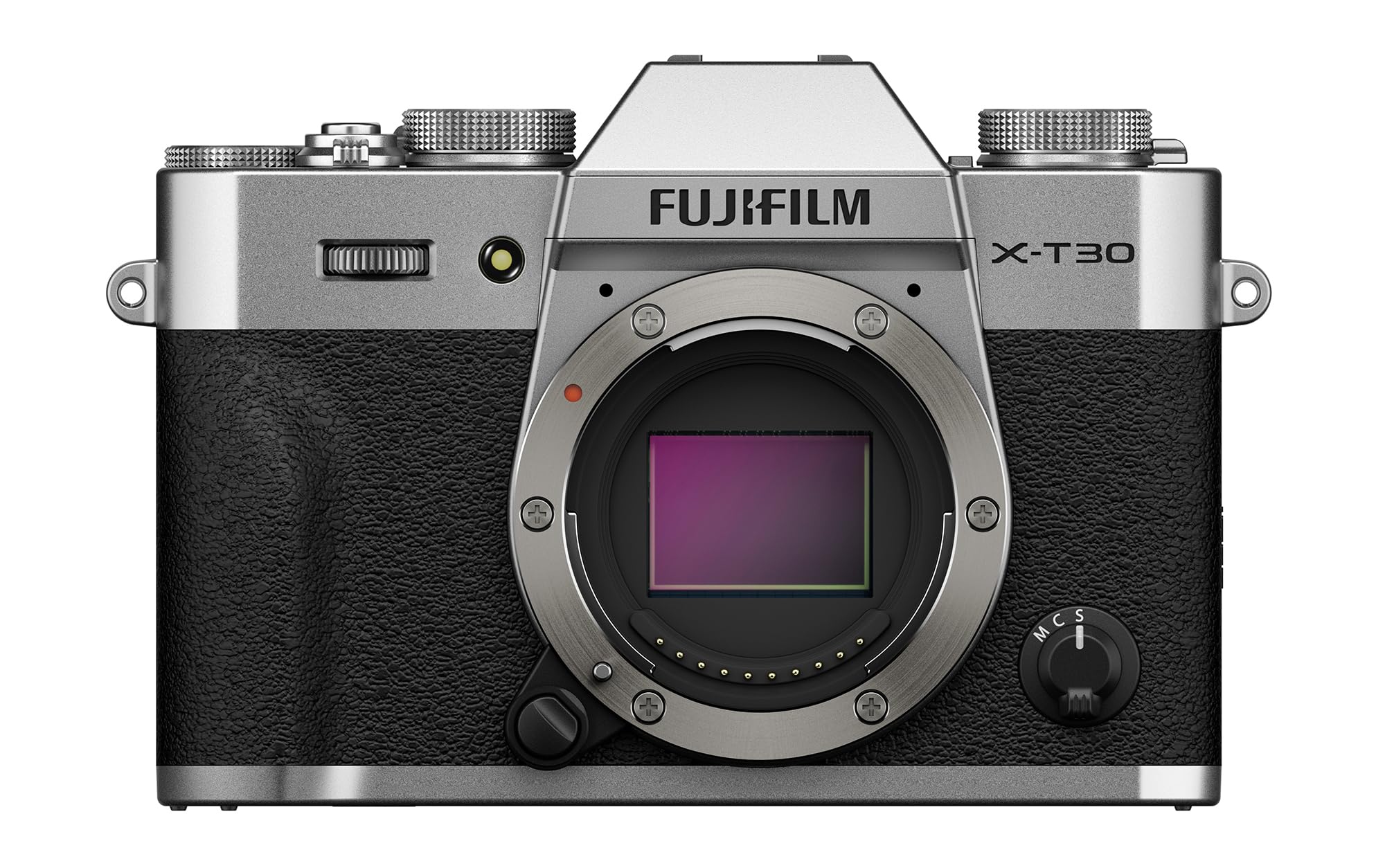
The Fujifilm X-T30 III distills the analog shooting experience into a compact body with dedicated shutter speed, exposure compensation, and ISO dials. Under the hood is a 26.1-megapixel X-Trans CMOS 4 APS-C sensor with no optical low-pass filter, which renders exceptional sharpness and moiré-free color. The bundled XC13-33mmF3.5-6.3 OIS kit lens covers a 19.5-50mm equivalent range and includes optical stabilization for handheld video work.
The 20 built-in Film Simulation modes — including Velvia, Classic Chrome, Nostalgic Neg, and the new Reala Ace — apply sophisticated color science directly to JPEGs, dramatically reducing the need for post-processing. For beginners, this is the fastest way to develop a personal style: you choose a film look, shoot, transfer wirelessly to your phone, and share. The AI-powered subject detection autofocus uses a hybrid 179-point system that identifies humans, animals, birds, cars, and motorcycles.
Video reaches 4K at 30 fps from the sensor’s full width with 10-bit 4:2:2 output via HDMI for external recording, and F-Log support preserves dynamic range for grading. The X-T30 III weighs approximately 378 grams with the kit lens and connects to the Fujifilm Camera Remote app for wireless transfer and remote shooting. The main compromises are the smaller XC lens — a cost-saving measure with a plastic mount and slower aperture — and the fixed rear screen that doesn’t tilt forward for selfies.
Why it’s great
- 20 Film Simulation modes produce gorgeous JPEGs straight from camera
- AI subject detection autofocus with animal and bird tracking
- Dedicated analog dials for tactile shooting control
Good to know
- XC kit lens has a plastic mount and slower aperture than XF models
- Rear screen does not flip forward for self-recording
- No in-body image stabilization (relies on lens OIS)
8. Nikon Z50 II

The Nikon Z50 II is a significant generational upgrade over the original Z50, sharing the same EXPEED 7 processor found in the flagship Z9. The 20.9-megapixel DX-format CMOS sensor captures lifelike detail with 31 built-in Picture Control presets — including Flat, Portrait, and Vivid — plus the ability to download custom Cloud Picture Controls directly to the camera via Nikon Imaging Cloud. This lets you dial in a specific color grade before you shoot, a major advantage for beginners who want to skip RAW editing.
Autofocus is the Z50 II’s headline feature: the hybrid system automatically detects and tracks nine distinct subjects, including birds with a dedicated airplane mode for aviation enthusiasts. The camera shoots 4K UHD at 60p and Full HD at 120p for slow motion, with in-body electronic VR stabilization for handheld footage. The built-in pop-up flash is a rare inclusion in modern mirrorless bodies, and Night Portrait mode automates slow-shutter flash portraits for natural-looking results indoors.
The Nikon SnapBridge app transfers photos to your phone in seconds via Bluetooth LE, and the Z50 II retains the same battery as the original Z50 (EN-EL25) with roughly 300 shots per charge — below average for the class. The camera body weighs about 495 grams with the kit lens, and the Nikon Z mount offers native compatibility with both DX and full-frame NIKKOR Z lenses. The single UHS-I SD slot and lack of sensor cleaning are the main drawbacks for heavy shooters.
Why it’s great
- 31 in-camera color presets with cloud-downloadable options
- Excellent autofocus with dedicated bird, vehicle, and airplane modes
- 4K 60p video with Full HD 120p slow motion
Good to know
- Battery life is shorter than most competitors (~300 shots per charge)
- Single UHS-I SD card slot
- No automatic sensor cleaning mechanism
9. Canon EOS RP Kit

The Canon EOS RP is the most affordable full-frame mirrorless camera on the market, pairing a 26.2-megapixel CMOS sensor with the RF 24-105mm f/4-7.1 IS STM lens. The full-frame sensor delivers a shallow depth of field and low-light noise floor that APS-C cameras cannot match — shooting at ISO 6400 produces clean files with minimal grain in good light. The body weighs just 485 grams, lighter than many APS-C cameras, making it a compelling travel companion.
The Dual Pixel CMOS AF system covers roughly 88 percent of the sensor area with 4779 selectable AF points, and supports eye detection for both stills and video. The RP shoots 4K video at 24 fps with a 1.6x crop factor — a notable limitation for wide-angle work — but Full HD recording is clean and unlimited with excellent face-tracking autofocus. The rear 3-inch vari-angle touchscreen adjusts for selfies, low angles, and overhead shots, and the electronic viewfinder is bright at 2.36 million dots.
The RF 24-105mm IS STM kit lens includes 5 stops of optical image stabilization and a versatile zoom range, though its variable aperture (f/4-7.1) limits low-light capabilities compared to the more expensive f/4 L version. The RP accepts RF mount lenses and all EF/EF-S lenses via Canon’s official adapter, unlocking decades of used glass. Battery life is average, and the single UHS-II SD card slot is fine for beginners, but the 4K crop and 30-minute video limit may frustrate video-first users upgrading from a smartphone.
Why it’s great
- Cheapest path to a full-frame sensor and full-frame shallow depth of field
- Compact and light body for a full-frame camera
- Dual Pixel CMOS AF with excellent face tracking for video
Good to know
- 4K video has a 1.6x crop and a 30-minute recording limit
- Kit lens variable aperture (f/4-7.1) struggles in dim environments
- Single UHS-II SD card slot
10. Sony a7 III Kit

The Sony a7 III remains a benchmark for full-frame value years after its release because of its 24.2-megapixel back-illuminated Exmor R sensor combined with 693 phase-detection AF points covering 93 percent of the frame. The 15-stop dynamic range and native ISO range of 100-51200 (expandable to 50-204800) produce shadow detail and noise control that still rivals many newer cameras. The body is weather-sealed, weighs 650 grams, and includes both a mechanical shutter and a silent electronic shutter that fires at 10 fps with full AF/AE tracking.
The included 28-70mm f/3.5-5.6 kit lens is optically decent but restrained — users consistently report much better results after upgrading to a fast prime like the Sony 35mm f/1.8 or a Sigma f/2.8 zoom. The NP-FZ100 battery delivers approximately 710 shots per charge, dramatically better than most mirrorless cameras and enough for a full day of event shooting without swapping. 4K video is oversampled from 6K for exceptional sharpness, and the camera supports S-Log2 and S-Log3 gamma profiles for color grading.
The Sony E-mount ecosystem is the largest native mirrorless system in existence, with over 70 native lenses including extensive third-party support. The a7 III’s menu system is notorious for its learning curve — Sony partially addressed this with firmware updates but the interface remains dense compared to Canon or Fujifilm. For beginners willing to invest time in mastering the menu, the a7 III offers professional-level image quality and autofocus at an entry-level price that has only become more compelling as newer models drive down used prices.
Why it’s great
- Full-frame 15-stop dynamic range with exceptional high-ISO performance
- 693 phase-detection AF points with 93% frame coverage
- Battery lasts over 700 shots per charge
Good to know
- Kit lens (28-70mm f/3.5-5.6) is optically average — budget for an upgrade
- Complex menu system with a steep learning curve
- No built-in flash and no flip-out selfie screen
11. OM SYSTEM OM-1 Mark II

The OM SYSTEM OM-1 Mark II is the most rugged mirrorless camera in this guide, carrying an IP53 dustproof and splashproof rating with freeze-proof operation down to -10°C. The 20-megapixel Stacked BSI Live MOS sensor paired with the TruePic X processor enables burst shooting at 50 fps with full autofocus tracking and a blackout-free electronic viewfinder. The bundled M.Zuiko Digital ED 12-40mm f/2.8 PRO II lens is a constant-aperture professional zoom with weather sealing matching the body.
Computational photography is the OM-1 II’s superpower: Handheld High Res Shot combines 16 raw images into an 80-megapixel JPEG with no tripod required, Live ND simulates neutral density filters up to 6 stops, and Live Composite builds long-exposure light trails without overexposing the static background. The Cross Quad Pixel AF system deploys 1,053 phase-detection points that are all cross-type, offering 100% frame coverage with instant focus acquisition in low light. The 5-axis in-body stabilization is rated among the industry’s best, compensating for up to 8 stops of camera shake.
The Micro Four Thirds platform means the body and lens together weigh significantly less than equivalent full-frame combinations — the 12-40mm f/2.8 PRO II lens covers a 24-80mm equivalent at less than half the weight of a full-frame f/2.8 standard zoom. Video reaches 4K at 60p with 10-bit 4:2:2 internal recording and OM-Log400 for grading. The BLX-1 battery delivers about 500 shots per charge, and dual UHS-II SD slots provide redundancy. This is an advanced camera that beginners can grow into for years without ever outgrowing its weather sealing or IBIS.
Why it’s great
- IP53 weather sealing and -10°C freeze-proof operation
- 8-stop IBIS and handheld 80-megapixel high-resolution mode
- 50 fps blackout-free shooting with 1,053 cross-type AF points
Good to know
- Premium price reflects pro-level build and computational features
- Micro Four Thirds sensor size limits ultimate shallow depth of field
- Battery life is average despite the larger BLX-1 pack
FAQ
Should a beginner start with APS-C or Micro Four Thirds?
Is it worth buying a full-frame camera as a complete beginner?
How many megapixels do I actually need?
What lens should I buy after the kit lens?
Final Thoughts: The Verdict
For most users, the best beginner mirrorless camera winner is the Canon EOS R100 because it combines Canon’s excellent Dual Pixel CMOS AF, a 24.1-megapixel APS-C sensor, and the most affordable entry into the RF mount ecosystem — all in a body that weighs less than a can of soda. If you want in-body stabilization for handheld video without breaking the bank, grab the Panasonic LUMIX G85. And for the absolute best low-light performance and professional autofocus in a full-frame package that you can grow into for years, nothing beats the Sony a7 III.