
Our readers keep the lights on and my morning glass full of iced black tea. As an Amazon Associate, I earn from qualifying purchases.
A phantom-powered condenser microphone outputs an incredibly detailed signal, but that delicate high-impedance signal is utterly useless without a clean, low-noise preamp and the proper 48V power rail to drive it. Plugging a studio condenser directly into a computer’s 3.5mm jack yields a thin, noisy, and often unusable recording—the audio interface is the critical bridge that converts that electrostatic charge into a digital waveform you can actually work with.
I’m Min — the co-founder and writer behind Gadgets Feed. I’ve spent countless hours analyzing preamp gain staging, Equivalent Input Noise (EIN) figures, converter dynamic range, and phantom power stability across dozens of models to build a buying guide that separates genuine professional hardware from marketing noise.
Whether you are laying down vocals, recording acoustic instruments, or starting a podcast, the right preamp makes the difference between a take that sits in the mix and one that fights it. This guide breaks down the top contenders for the best audio interface for condenser mic across every budget and use case.
How To Choose The Best Audio Interface For Condenser Mic
Selecting an interface for a condenser microphone shifts the priority list. Dynamic mics can survive with lower gain and are forgiving of noisy preamps. Condensers demand clean gain, stable 48V phantom power, and a low-noise floor to preserve the extended frequency response and transient detail they capture. Here are the three most critical factors to evaluate.
Preamp Gain and Equivalent Input Noise (EIN)
Condenser mics require phantom power, but they also need a preamp with sufficient gain to bring the signal to line level without introducing audible hiss. Look for a preamp that offers at least 55 dB of gain. More importantly, check the EIN specification—any preamp with an EIN of -127 dBu or lower is considered very quiet. An interface that delivers 60+ dB of clean gain allows you to run high-SPL condensers at a healthy level without cranking the knob into the noise floor.
Phantom Power Stability and Voltage Regulation
Not all 48V phantom power is created equal. Some budget interfaces deliver a sagging voltage under load, which can cause a condenser capsule to lose its polarizing charge, resulting in lower output and reduced high-frequency clarity. Interfaces with dedicated DC-DC converters maintain a rock-steady 48V rail even when both channels are drawing current. This stability preserves the mic’s original frequency response and SPL handling.
Converter Quality and Latency Drivers
Once the signal is amplified and converted from analog to digital, the converter’s dynamic range determines how much headroom you have before distortion. A converter with 110 dB or more of dynamic range preserves the quietest room tone and the loudest vocal peaks. Driver efficiency matters just as much—a well-written driver (like Focusrite’s or Universal Audio’s) delivers round-trip latency below 10 ms at a 128-sample buffer, which is essential for tracking with real-time effects without hearing a delay.
Quick Comparison
On smaller screens, swipe sideways to see the full table.
| Model | Category | Best For | Key Spec | Amazon |
|---|---|---|---|---|
| SSL 2 MKII | Premium | Studio-grade preamps with analog enhancement | 32-bit / 192 kHz AD/DA converters | Amazon |
| Universal Audio Volt 2 | Premium | Vintage-preamp character with bundled software | Vintage mode 610 preamp emulation | Amazon |
| Focusrite Scarlett Solo 3rd Gen | Mid-Range | Reliable all-rounder with Air mode | Switchable Air mode for brighter capture | Amazon |
| M-AUDIO AIR192x4 VSPro | Premium | Complete bundle with condenser mic and headphones | 2.59 ms round-trip latency (class-leading) | Amazon |
| Arturia MiniFuse 1 | Mid-Range | Ultra-portable travel interface with USB hub | 192 kHz sample rate, 1 combo input | Amazon |
| Shure MVX2U Gen 2 | Mid-Range | Ultra-portable XLR-to-USB-C with onboard DSP | 60 dB gain, Real-Time Denoiser | Amazon |
| Focusrite Vocaster Two | Mid-Range | Podcast recording with two-host workflow | 70+ dB of clean gain (no booster needed) | Amazon |
| FIFINE KS5 Bundle | Budget | Entry-level gaming and streaming setup | 4-channel mixer with XLR/USB dynamic mic | Amazon |
| Universal Audio Apollo Solo HE | Premium | Pro-grade UAD DSP with near-zero latency processing | UAD SOLO Core, Unison preamp emulations | Amazon |
In‑Depth Reviews
1. Solid State Logic SSL 2 MKII

The SSL 2 MKII brings legendary British console sound to a desktop form factor. Its mic preamps deliver a phenomenally low noise floor with an EIN figure that rivals dedicated outboard pres, and the Legacy 4K button injects a subtle high-frequency presence and harmonic saturation that makes condenser mics sound more open and detailed without any post-processing. The 32-bit AD/DA converters offer immense headroom, so you can track hot signals without worrying about clipping the conversion stage.
Build quality is exceptional—a full metal chassis with knobs that carry the same tactile dampening as SSL’s larger consoles. The high-pass filter on each input is a genuinely useful tool for rolling off low-end rumble before it hits the converter, and the stereo loopback function simplifies streaming setups. At 2.57 pounds, it has a reassuring heft that stays planted on a desk.
The bundled SSL Production Pack provides a solid starting point for home producers. The headphone amp is powerful enough to drive high-impedance studio cans like the DT 770 Pro 250-ohm to satisfying levels without distortion. For condenser mic users who want that polished, “mixed” sound straight off the converter, the SSL 2 MKII is the most well-rounded pick.
Why it’s great
- Class-leading preamp clarity with ultra-low EIN
- Legacy 4K analog enhancement adds presence
- 32-bit converters offer massive dynamic range
Good to know
- Not 32-bit float; digital clipping can still occur
- Slightly larger footprint than solo units
2. Universal Audio Volt 2

The Volt 2 distills Universal Audio’s iconic 610 tube preamp topology into a compact, bus-powered interface. Engaging the Vintage mode adds a warm, harmonically rich saturation that tames the brittle edge some budget condenser mics can exhibit, giving vocals a round, “record-ready” quality. The crystal-clear converters operate at up to 24-bit / 192 kHz, capturing the full transient detail of acoustic guitar or spoken word.
Physical build is robust—the metal chassis and chunky knobs feel premium, and the backlit VU meter provides accurate visual feedback on input levels. It ships with a generous software bundle including LUNA DAW, UAD plug-ins, and Ableton Live Lite, which adds significant value for beginners. The vintage preamp mode is genuinely useful, not a gimmick; it subtly compresses and saturates the signal in a way that sounds musical.
On the connectivity front, the Volt 2 offers two combo XLR inputs, two headphone outputs with independent mixes, and a dedicated instrument input. The phantom power delivery is stable and clean, even when both channels are loaded. For musicians who want a touch of analog warmth baked into their tracking chain, the Volt 2 delivers where competitors sound sterile.
Why it’s great
- Vintage 610 mode adds tube-like warmth and presence
- Excellent bundled software package
- Bus-powered for mobile recording
Good to know
- Requires external power supply for iPad/iPhone use
- No built-in DSP for real-time effects
3. Focusrite Scarlett Solo 3rd Gen

The Scarlett Solo has been a best-seller for years, and the 3rd Gen version refines the formula with a cleaner preamp and the switchable Air mode. Air mode applies a fixed high-frequency shelf boost that adds presence and sparkle to condenser mics—particularly useful for vocals that feel dull or for adding air to acoustic sources. The preamp gain is smooth and the 1/4-inch instrument input accepts hi-Z signals without any impedance mismatch.
The software bundle, known as the Hitmaker Expansion, includes Pro Tools First, Ableton Live Lite, Softube Time and Tone Bundle, and a free XLN Addictive Keys instrument. This makes the Scarlett Solo an extraordinary value for someone building their first home studio. The build is compact and lightweight, ideal for a clean desk setup or tossing into a backpack for travel.
One detail that matters for condenser users: the phantom power implementation is reliable and consistent across both the XLR and combo inputs. The direct monitoring switch allows you to blend the input signal with the DAW playback for zero-latency tracking. While it lacks the high-end converter performance of the SSL or UAD units, the Scarlett Solo remains the benchmark for reliability and value in its class.
Why it’s great
- Air mode adds clarity to condenser recordings
- Reliable phantom power delivery
- Exceptional software bundle for beginners
Good to know
- Only one XLR input
- USB port can feel slightly loose over time
4. M-AUDIO AIR192x4 VSPro

The AIR192x4 VSPro is a complete recording solution that bundles a 2-in/2-out interface with the Nova large-diaphragm condenser mic, studio headphones, shock mount, XLR cable, and windscreen. The interface itself is no slouch—its crystal preamps deliver 24-bit / 192 kHz resolution with a class-leading round-trip latency of just 2.59 ms, which is fast enough for real-time monitoring of heavily processed signals.
The Nova condenser is a solid entry-level LDC with a cardioid pattern and a reasonably flat frequency response. It works well for vocals and acoustic instruments, though users looking for a more refined top-end may want to upgrade the capsule later. The bundled HDH40 headphones provide acceptable isolation and clarity for tracking, making this package genuinely useful out of the box without requiring any additional purchases.
Software inclusions are generous: MPC Beats, Ableton Live Lite, and a collection of virtual instruments and effects. The USB-C connectivity ensures compatibility with modern laptops, and the independent headphone level control allows for comfortable cue mixes. For a first-time buyer who needs everything at once, this bundle delivers exceptional per-dollar value.
Why it’s great
- Complete package includes condenser mic and headphones
- Extremely low round-trip latency
- USB-C connection for modern computers
Good to know
- Nova mic’s high-frequency response is not studio-grade
- Some units reported USB power issues over time
5. Arturia MiniFuse 1
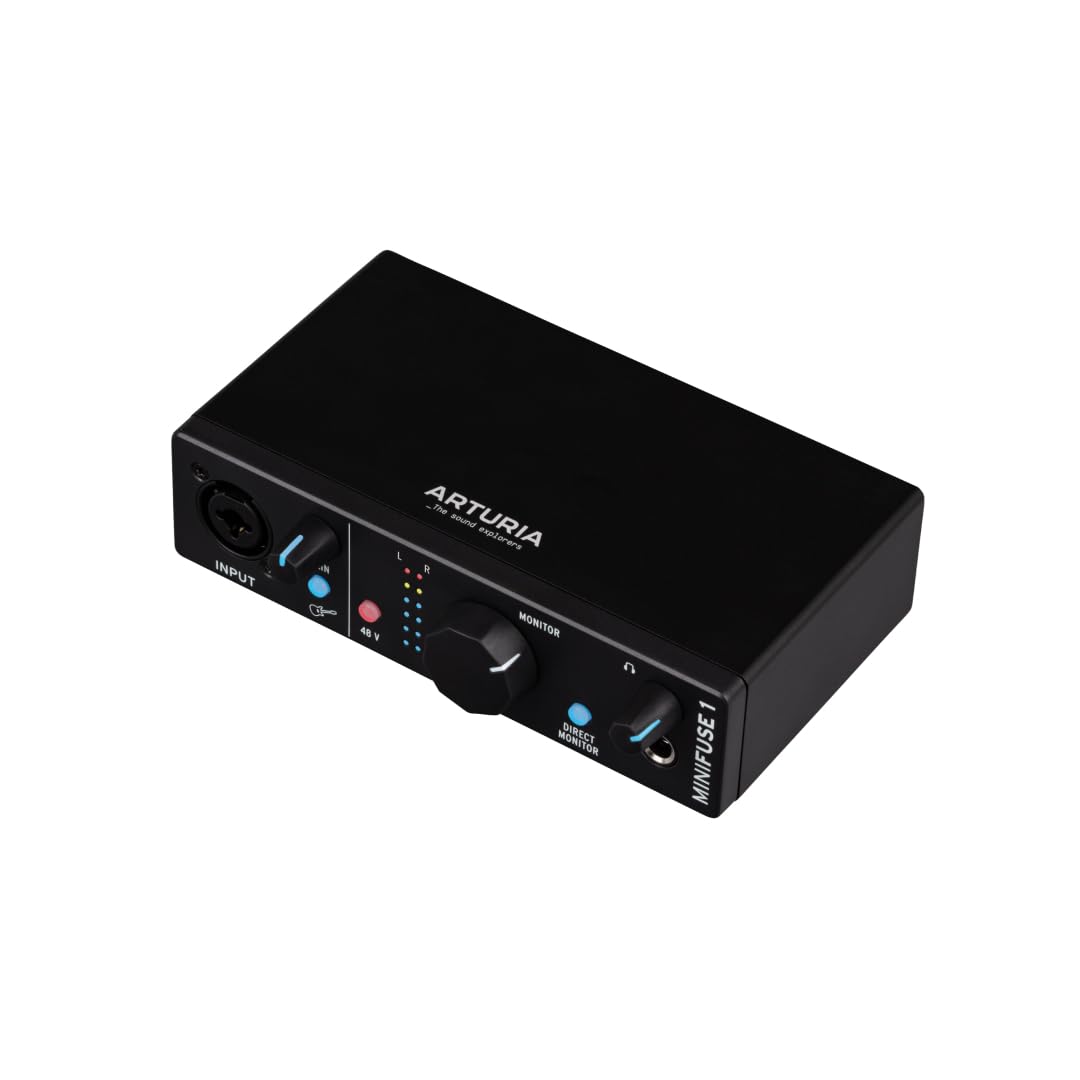
The MiniFuse 1 is defined by its engineering—200 reliability tests per unit and a 5-year warranty back its claims. The single combo input feeds a preamp that sounds impressively neutral and transparent, matching the performance of the Focusrite Scarlett Solo at a lower price while adding a 250 mA USB-A hub on the back for connecting a controller or dongle. The 192 kHz sample rate support ensures high-fidelity capture.
Portability is a core strength: at 0.74 pounds, it disappears into a laptop bag, but the metal chassis feels far more durable than the weight suggests. The loopback function simplifies live streaming setups by mixing the computer’s output with the mic input, making it a versatile choice for content creators. Direct monitoring with blend control allows zero-latency tracking.
The included software bundle is one of the best in its class: Ableton Live Lite, Analog Lab Intro, Native Instruments Guitar Rig 6 LE, Auto-Tune Unlimited, and Splice credits provide everything a beginner needs to start producing immediately. The headphone output is clean and adequately loud for low-impedance headphones. If you need a no-compromise portable interface with a warranty that backs its build, the MiniFuse 1 is the pick.
Why it’s great
- 5-year warranty and robust build quality
- Built-in USB hub for peripherals
- Transparent preamp with neutral sound signature
Good to know
- Single input limits recording sources
- Headphone output lacks power for high-impedance cans
6. Shure MVX2U Gen 2
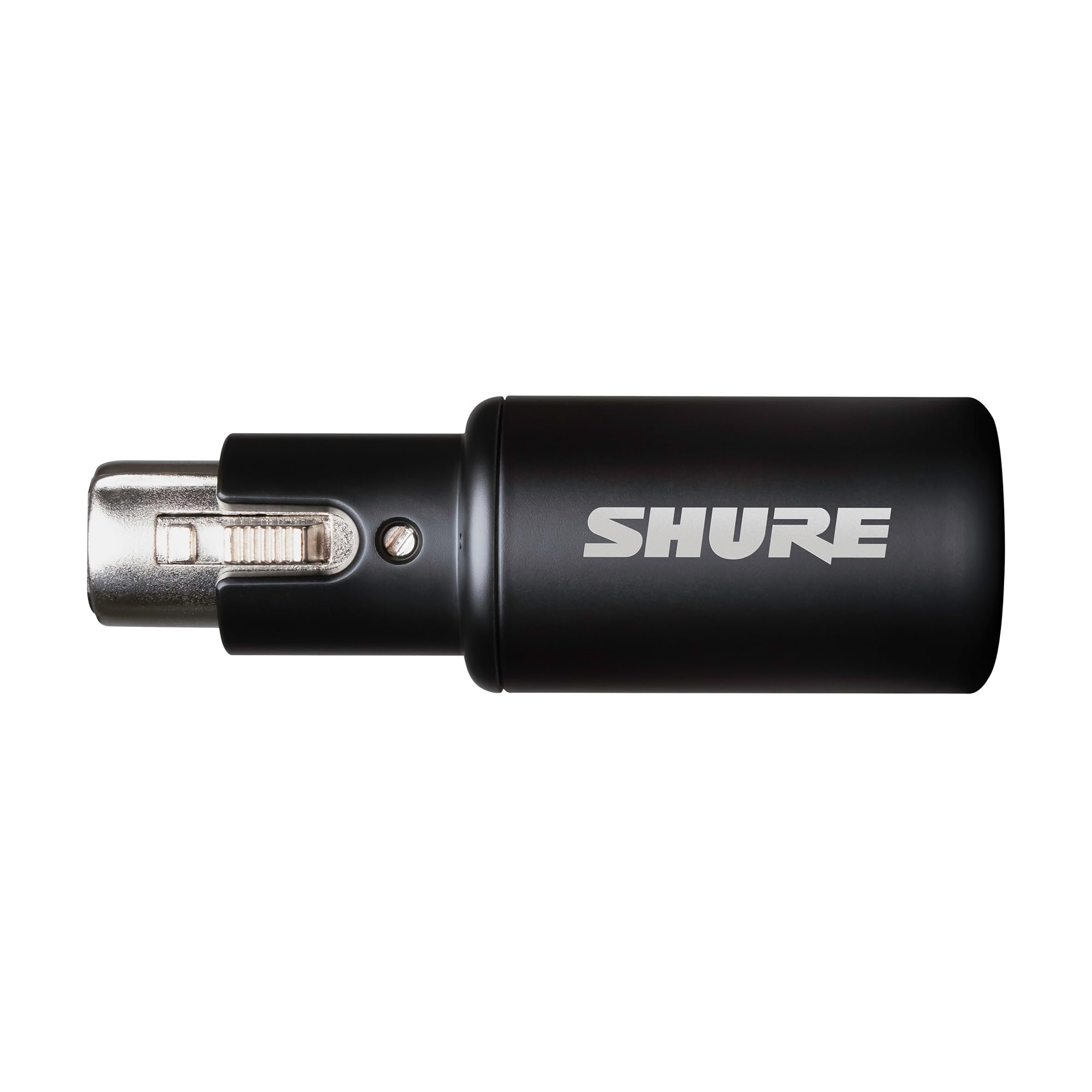
The MVX2U Gen 2 is an XLR-to-USB-C adapter that packs serious DSP processing into a form factor smaller than a deck of cards. It delivers up to 60 dB of clean gain—enough to drive a Shure SM7B without an inline booster—and provides 48V phantom power for any standard condenser mic. What sets it apart is the built-in Real-Time Denoiser, Auto Level Mode, and Digital Popper Stopper, which process the signal entirely on the device before it reaches your computer.
This means zero-latency processing that cleans up background noise and pops without burdening your CPU. The MOTIV companion app (available on desktop, iOS, and Android) lets you tweak EQ, compression, and limiter settings, then store them on the device itself. The Dark, Natural, and Bright tone presets offer quick tonal shaping that works well with most LDC condensers.
The build is premium Shure—metal body with a reassuring weight, though users should be aware that the USB-C connection can be strain-sensitive. For content creators who move between a desktop, phone, and tablet setup, the MVX2U eliminates the need for a bulky interface while delivering pro-grade processing. It is the most portable high-quality option for condenser mic users who need mobile recording.
Why it’s great
- Onboard DSP with denoiser and leveling
- 60 dB of clean gain, no booster needed
- App-based control with onboard setting storage
Good to know
- Single-channel only
- USB-C port is sensitive to lateral force
7. Focusrite Vocaster Two

The Vocaster Two is designed specifically for the two-host podcast workflow. It features two XLR inputs, two independent headphone outputs with volume controls, and a stereo loopback function for integrating phone calls or video chat audio. The preamps offer over 70 dB of gain, which is enough to drive passive dynamic mics like the Shure SM7B or a quieter condenser without any additional inline amplification.
The Auto Gain button sets your optimal input level in seconds—press it, speak at your normal volume, and the interface adjusts the preamp to target -12 dBFS. The Enhance button applies a preset EQ and compressor curve that polishes the signal before it reaches your DAW, reducing the need for post-processing. Bluetooth phone connectivity allows you to wirelessly bring callers into the mix.
Physically, the Vocaster is larger than a typical 2-input interface, but the extra space is used for clearly labeled controls and a prominent mute button. The build is plastic but feels solid enough for desktop use. Phantom power is stable and switches cleanly. For podcasters who interview guests or co-host, the Vocaster Two’s dedicated feature set makes it the most efficient tool for the job.
Why it’s great
- Over 70 dB of gain for quiet mics
- Auto Gain and Enhance one-button processing
- Bluetooth phone integration for remote guests
Good to know
- Plastic chassis, not metal
- Software EQ options are limited on Windows
8. FIFINE Gaming Equipment Bundle KS5

The FIFINE KS5 bundle merges a dynamic XLR microphone with a 4-channel audio mixer, targeting gamers and streamers who want hardware control without a complex setup. The included AmpliGame KS5 mixer provides volume faders, individual mute buttons, and a headphone monitoring path for the mic channel. The microphone operates either via XLR to the mixer or USB directly to the computer, offering flexibility for different recording configurations.
Sound quality is a clear upgrade over typical USB gaming headsets. The dynamic capsule rejects background noise well, making it suitable for live streaming environments where keyboard clicks and fan noise are present. The RGB lighting on both the mic and mixer is controllable and syncs with themed gaming setups, which adds to the immersive experience for the target audience.
There are some compromises at this price point: the function keys (RGB, mute, monitoring) only work in USB mode, not when the mic is connected via XLR. The plastic construction is expected for the tier, and the mixer has been reported to occasionally power-cycle. As a complete entry-level streaming ecosystem, however, the KS5 delivers functionality that separates gaming audio from basic USB mics.
Why it’s great
- All-in-one streaming setup with physical mixer controls
- XLR dynamic mic rejects room noise effectively
- RGB lighting customization for themed builds
Good to know
- Mixer function keys disabled in XLR mode
- Build uses plastic throughout
9. Universal Audio Apollo Solo USB Heritage Edition

The Apollo Solo is Universal Audio’s entry-level door into the UAD ecosystem, and it brings the same Unison preamp technology found in the rackmount Apollos. Unison goes beyond standard modeling by actually reconfiguring the preamp’s impedance and gain staging to match the behavior of vintage Neve, API, or Avalon pres. When you load a Unison plugin on the channel, the physical preamp transforms into that circuit—changing how it interacts with your condenser mic in real time.
The built-in UAD SOLO Core chip lets you track through vintage compressors, EQs, and tape emulations with near-zero latency, meaning the compressor is responding to the mic signal before it ever hits your DAW. This is transformative for vocal recording—you can commit to a compressed, EQ’d sound during tracking just like in a professional studio. The Heritage Edition bundles five premium plugins worth over a thousand dollars.
The headphone amplifier is best-in-class for a compact interface, delivering loud, detailed, and noise-free monitoring even with sensitive IEMs. Build quality is impeccable with a milled metal chassis and premium input jacks. The catch is that the Apollo Solo requires a Thunderbolt 4 cable for stable operation on Windows, and macOS compatibility can lag behind OS updates. For users who need the UAD processing ecosystem, there is no substitute at this form factor.
Why it’s great
- Unison preamp emulations change physical circuit behavior
- Near-zero latency UAD DSP tracking
- Premium build and world-class headphone amp
Good to know
- Requires Thunderbolt 4 cable on Windows
- macOS driver updates can lag behind new OS releases
FAQ
Can I plug a condenser mic into any audio interface?
Do I need a Cloudlifter or Fethead for a condenser mic?
What causes a hum or buzz when connecting a condenser mic?
Final Thoughts: The Verdict
For most users, the best audio interface for condenser mic winner is the SSL 2 MKII because its 32-bit converters, ultra-clean preamps, and Legacy 4K enhancement deliver studio-grade sound without needing external processing. If you want vintage preamp character and a generous software bundle, grab the Universal Audio Volt 2. And for a portable, best-value recording solution, nothing beats the Arturia MiniFuse 1.