
A great pair of binoculars doesn’t just pull the world closer — it reveals details the naked eye simply cannot resolve: the subtle iridescence on a hummingbird’s throat, the crisp edge of a mountain ridge at dusk, or the text on a stadium scoreboard half a mile away. Finding that level of optical performance without exceeding a sensible budget requires sorting through a maze of lens coatings, prism types, and magnification specs.
I’m Min — the co-founder and writer behind Gadgets Feed. I’ve spent countless hours cross-referencing technical datasheets, evaluating light transmission percentages, and analyzing user field reports across multiple categories to find binoculars that deliver genuine optical excellence for serious outdoor enthusiasts.
After extensive research into lens coatings, glass types, and build quality across a wide price range, this guide highlights the top contenders that earn their place as the best binoculars under $1000.
How To Choose The Best Binoculars Under $1000
The $1000 ceiling opens the door to premium features like ED glass, multi-layer dielectric coatings, and magnesium-alloy chassis that were once confined to optics costing twice as much. To make an informed choice, focus on three pillars: optical glass quality, coatings, and mechanical reliability.
Optical Glass and Prisms
Extra-low Dispersion (ED) glass virtually eliminates chromatic aberration — the purple or green fringing you see around high-contrast edges. BAK-4 prisms provide a round, fully illuminated exit pupil; cheaper BK-7 prisms produce a clipped, dimmer view. Combined, these two components determine whether your image looks flat or three-dimensional.
Lens and Prism Coatings
Fully multi-coated (FMC) optics reduce light loss at every air-to-glass surface. Dielectric coatings on the prism reflect more than 99% of incoming light, dramatically boosting low-light performance and color fidelity. Phase-correction coatings on roof-prism binoculars maintain contrast and resolution by correcting phase shifts that otherwise soften the image.
Build Quality and Weather Resistance
Nitrogen or argon purging prevents internal fogging, and O-ring seals ensure waterproof performance in rain or accidental submersion. Magnesium housings shave ounces without sacrificing rigidity, which makes a noticeable difference during long hikes or extended glassing sessions.
Quick Comparison
On smaller screens, swipe sideways to see the full table.
| Model | Category | Best For | Key Spec | Amazon |
|---|---|---|---|---|
| Pentax Papilio III 8.5×21 WR | Mid-Range | Close-up macro observation | 50cm minimum focusing distance | Amazon |
| Bushnell R5 12×50 | Mid-Range | Long-range hunting | 12x magnification, 50mm objective | Amazon |
| HIOPIACO 30-260×80 | Mid-Range | Astronomy and tripod use | 30-260x variable zoom, 80mm aperture | Amazon |
| Athlon Optics 8×42 Midas UHD | Mid-Range | Birding and all-purpose viewing | ED glass, argon purged | Amazon |
| Vortex Diamondback HD 10×42 | Mid-Range | Durable all-weather hunting | Dielectric coating, VIP warranty | Amazon |
| Nikon Monarch M5 10×42 | Premium | Versatile wildlife observation | ED glass, 18.4mm eye relief | Amazon |
| Nikon Monarch M5 8×42 | Premium | Wide-field birding | 335 ft field of view at 1000 yards | Amazon |
| Maven B.3 8×30 | Premium | Ultralight backpacking | 16.6 oz weight, ED glass | Amazon |
| ZEISS Conquest HDX 10×42 | Premium | Top-tier low-light performance | 90% light transmission, LotuTec coating | Amazon |
In‑Depth Reviews
1. ZEISS Conquest HDX 10×42

The Conquest HDX represents the ceiling of this budget category, delivering 90% light transmission thanks to ZEISS T* multi-coating and a dielectric prism coating stack. The image snaps into focus with exceptional edge-to-edge sharpness, aided by FieldFlattener technology and aspherical ED glass elements that eliminate virtually all chromatic aberration.
The magnesium housing is nitrogen-purged and rubber-armored, meeting full waterproof and fogproof standards. The focus wheel requires only 1.3 rotations from end to end, making rapid target acquisition intuitive. The locking diopter and removable flip-down lens covers are thoughtful touches that serious users will appreciate over long days in the field.
With 18mm of eye relief and adjustable click-stop eyecups, eyeglass wearers get a full field of view without vignetting. Users consistently report that the Conquest HDX reveals fine detail on animals at distances where cheaper binoculars produce only a blurry silhouette, and the LotuTec coating sheds rain and fingerprints effortlessly.
Why it’s great
- FieldFlattener technology delivers sharp edges across the entire 345-foot field of view
- Locking diopter prevents accidental adjustment during heavy use
- LotuTec coating effectively repels water, oil, and dust
Good to know
- Snap-on lens covers must be matched to the correct barrel and orientation
- Some units arrive with a previously opened seal due to retailer demo policies
2. Maven B.3 8×30
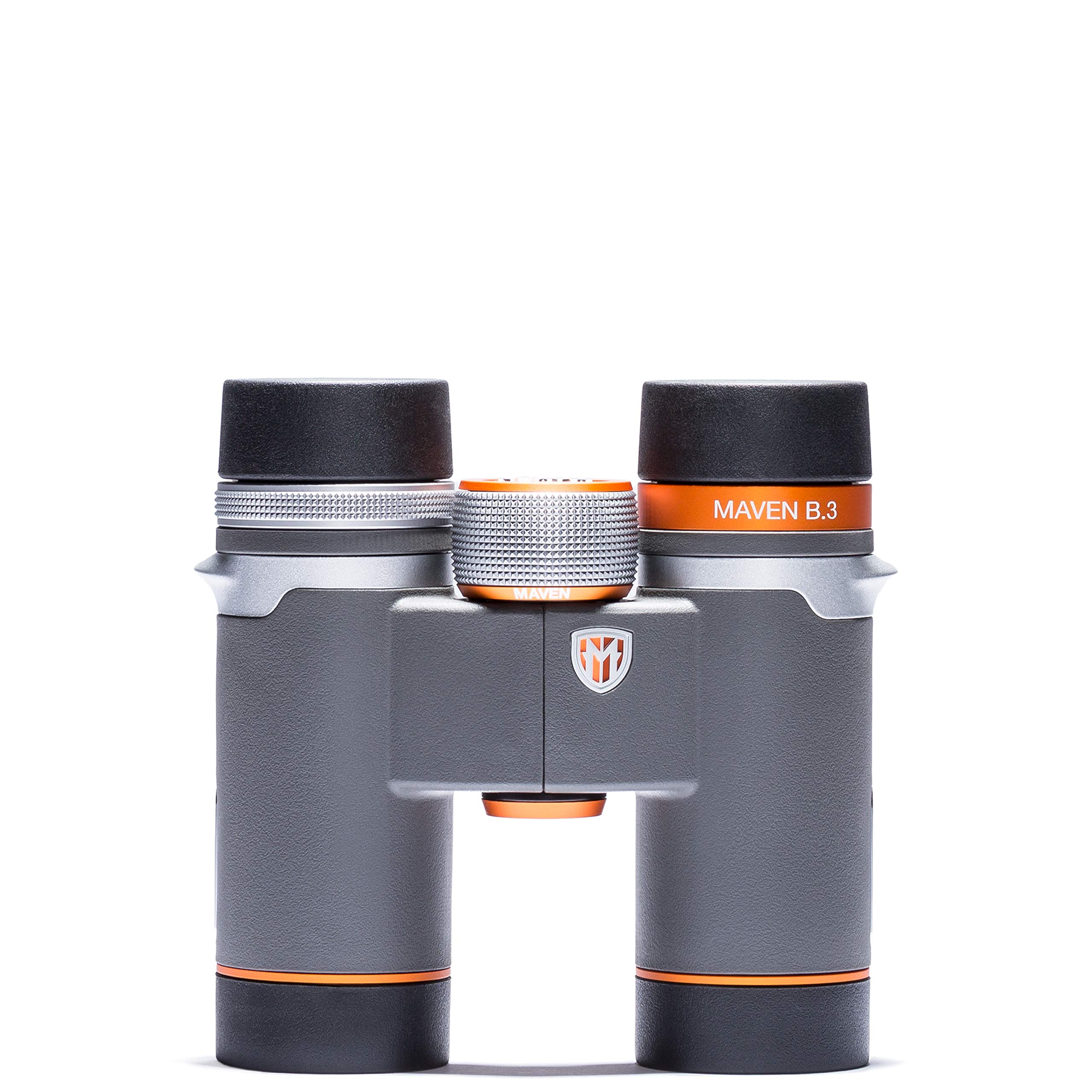
The Maven B.3 proves that premium performance can fit in a jacket pocket. Weighing just 16.6 ounces, this 8×30 roof-prism binocular uses ED glass and fully multi-coated lenses to deliver a remarkably sharp, high-contrast image that punches well above its compact size. The 430-foot field of view at 1000 yards is exceptionally wide for the magnification, making it easy to track birds in flight or moving subjects.
The magnesium chassis is nitrogen-filled and O-ring sealed, guaranteeing fogproof performance in wet or humid conditions. The center focus knob is damped and smooth, with a tight +/-4 diopter adjustment range that stays put once set. The 15.1mm of eye relief is adequate for eyeglass wearers, though not as generous as full-size alternatives.
Real-world feedback highlights the B.3’s ability to produce a stable, one-handed view even during fast-paced birding. The screw-on objective lens covers can be upgraded to clear tempered glass versions without degrading image quality, a detail appreciated by those who spend entire days in the field.
Why it’s great
- Exceptionally light at 16.6 oz for a fully waterproof optic
- Wide 430-foot FOV makes tracking fast-moving wildlife intuitive
- Unconditional lifetime warranty from Maven
Good to know
- 30mm objective limits low-light performance compared to 42mm models
- Eye relief may feel snug for eyeglass wearers needing more than 17mm
3. Nikon Monarch M5 8×42
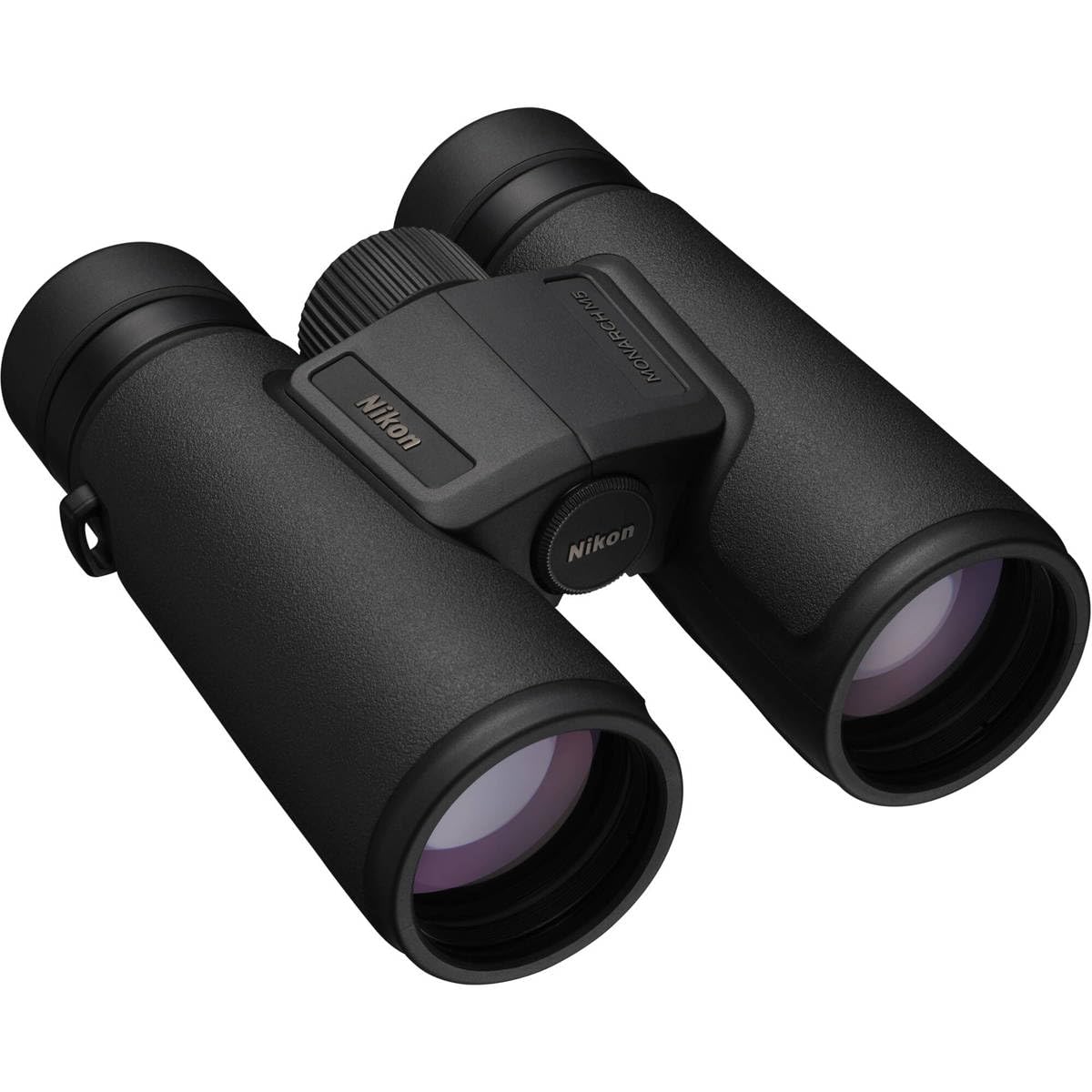
The Monarch M5 8×42 hits the sweet spot of this price bracket by combining ED glass with dielectric-coated prisms in a nitrogen-purged magnesium body. The 5.3mm exit pupil is ideal for dawn and dusk viewing, delivering a bright, steady image even as light fades. The 335-foot field of view at 1000 yards makes it the widest among the full-size options here, which translates directly to easier tracking of birds and wildlife.
With 19.5mm of eye relief and turn-and-slide click-stop eyecups, the M5 is exceptionally eyeglass-friendly. The closed-bridge design provides a natural grip point while keeping the focus wheel large and easy to operate with gloves. Nikon uses lead- and arsenic-free eco-glass, a responsible choice that does not compromise optical performance.
Users transitioning from lower-tier optics consistently describe the M5’s image as “crystal clear” and praise its ability to resolve lunar crater shadows and distant animal forms. Those coming from alpha brands like Swarovski appreciate the lighter weight for longer hikes, though they note a slightly narrower apparent field compared to premium options.
Why it’s great
- 5.3mm exit pupil excels in low-light conditions
- Generous 19.5mm eye relief accommodates most eyeglass wearers
- Closed-bridge design with smooth, ergonomic focus knob
Good to know
- Eyepiece cap is loose and can fall off during transit
- No tripod adapter mount built into the chassis
4. Nikon Monarch M5 10×42
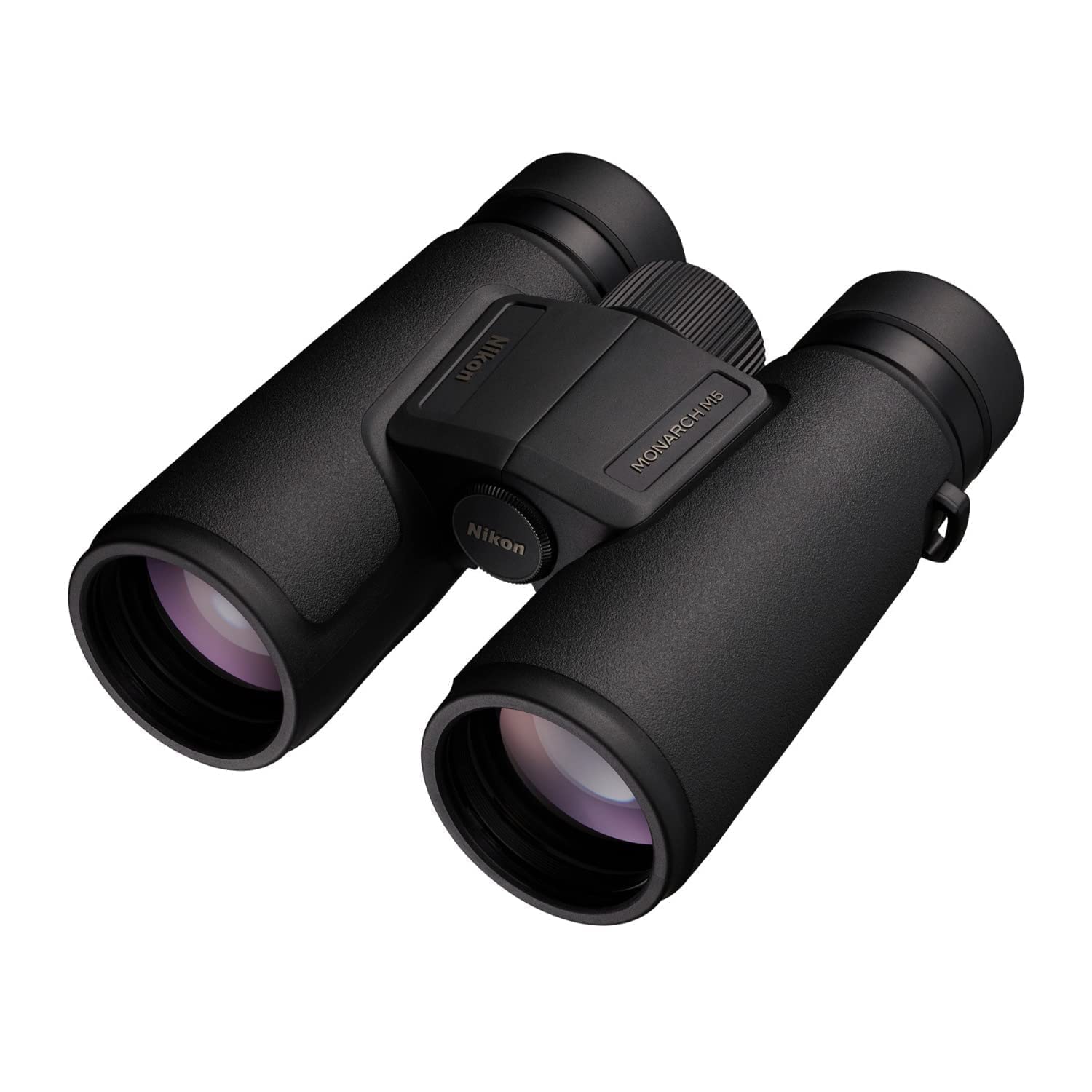
The 10×42 version of the Monarch M5 shares the same ED glass and dielectric coating architecture as its 8×42 sibling but trades a wider field of view for 10x magnification that pulls distant subjects closer. This makes it a strong choice for open-country hunting, whale watching, and long-range wildlife photography spotting. The 18.4mm eye relief is sufficient for eyeglass wearers, though slightly tighter than the 8×42 model.
Build quality mirrors the 8×42 version: rubber-armored magnesium, nitrogen-purged waterproofing, and a large center focus knob with smooth, precise dampening. The 4.2mm exit pupil still provides adequate brightness for most daylight and twilight conditions, though the 8×42 variant has the edge in very low light.
Field reports from Alaska whale-watching trips and African safaris praise the M5 10×42 for its ability to resolve fine details at distances that leave lesser optics struggling. The included case and neck strap are functional, and the VIP-style warranty from Nikon adds peace of mind against defects.
Why it’s great
- 10x magnification with ED glass for sharp long-distance viewing
- Smooth focus mechanism with precise diopter adjustment
- Waterproof, fogproof, and built to withstand rugged use
Good to know
- 4.2mm exit pupil less forgiving in deep twilight than 8×42
- Eyepiece cap fit is loose and prone to falling off
5. Athlon Optics 8×42 Midas UHD

The Athlon Midas UHD brings an impressive suite of optical features to the mid-range tier: ED glass for chromatic aberration control, ESP dielectric coatings that reflect over 99% of light, and advanced fully multi-coated lenses. The result is an image with outstanding color fidelity and brightness that competes with binoculars costing twice as much. The 8.1-degree angular field of view (144m at 1000m) is wide and immersive.
Argon purging provides superior thermal stability compared to nitrogen, and the magnesium housing keeps weight manageable despite the robust build. The 17.2mm eye relief is comfortable for most users, and +/-3 diopters of adjustment cover a wide range of vision differences. The included soft case, cleaning cloth, and padded neck strap add practical value out of the box.
Users report that the Midas UHD resolves details like whale spouts nearly invisible to the naked eye and maintains sharpness edge-to-edge with minimal distortion. Some note that the weight can cause hand fatigue during prolonged standing use, but the optical quality and ergonomics more than compensate for occasional trips to a rest.
Why it’s great
- ESP dielectric coating delivers over 99% light reflection for exceptional brightness
- ED glass virtually eliminates color fringing
- Argon purging offers better thermal stability than nitrogen
Good to know
- Weight may cause hand fatigue after 5-10 minutes of standing use
- Case and strap are functional but not premium
6. Vortex Diamondback HD 10×42
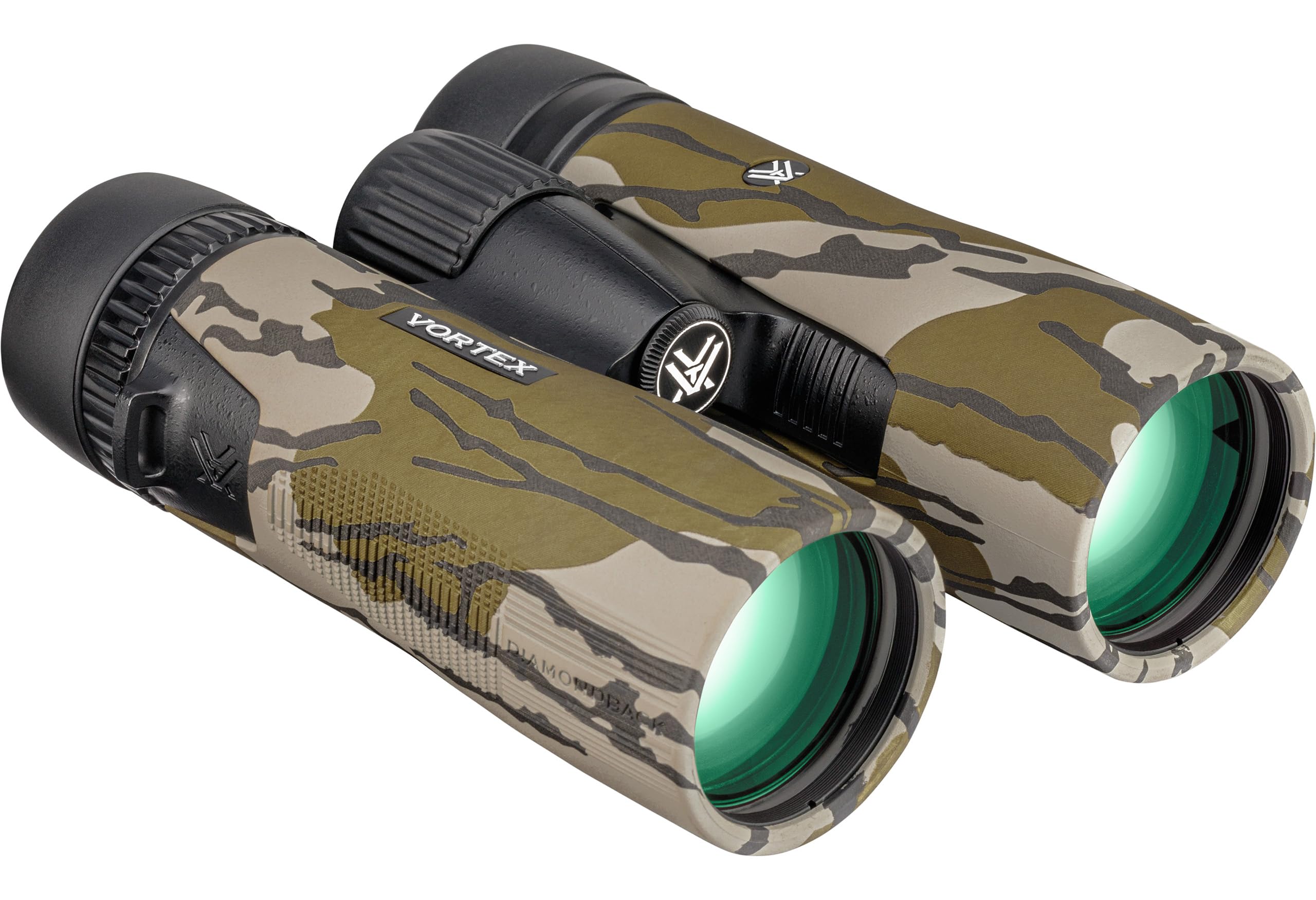
The Diamondback HD line from Vortex has earned a reputation for delivering reliable performance at a reasonable price, and the 10×42 model continues that tradition. Select glass elements are optimized to cut chromatic aberration, while dielectric prism coatings produce bright, color-accurate images. Armortek coating protects exterior lenses from scratches, oil, and dirt in harsh field conditions.
The chassis is O-ring sealed and argon purged, ensuring fogproof performance in any weather. The rubber armor provides a secure grip even in wet conditions, and the adjustable eyecups twist up and down for comfortable use with or without glasses. One standout feature is the VIP warranty — unlimited, unconditional, and fully transferable, covering repair or replacement for any damage.
Users consistently praise the Diamondback HD for its clarity and brightness, particularly in low-light hunting scenarios. The smooth center focus wheel allows one-handed operation, and the included GlassPak harness adds a level of convenience. Some users note that the 12×50 version has oversized objective lenses that require close interpupillary spacing adjustments.
Why it’s great
- Unconditional, transferable VIP warranty covers damage and defects
- Dielectric coating provides bright, accurate color reproduction
- Armortek lens coating resists scratches and smudges
Good to know
- 10×42 offers 4.2mm exit pupil — adequate but not exceptional in deep twilight
- Some users prefer the wider FOV of 8×42 for tracking
7. Pentax Papilio III 8.5×21 WR
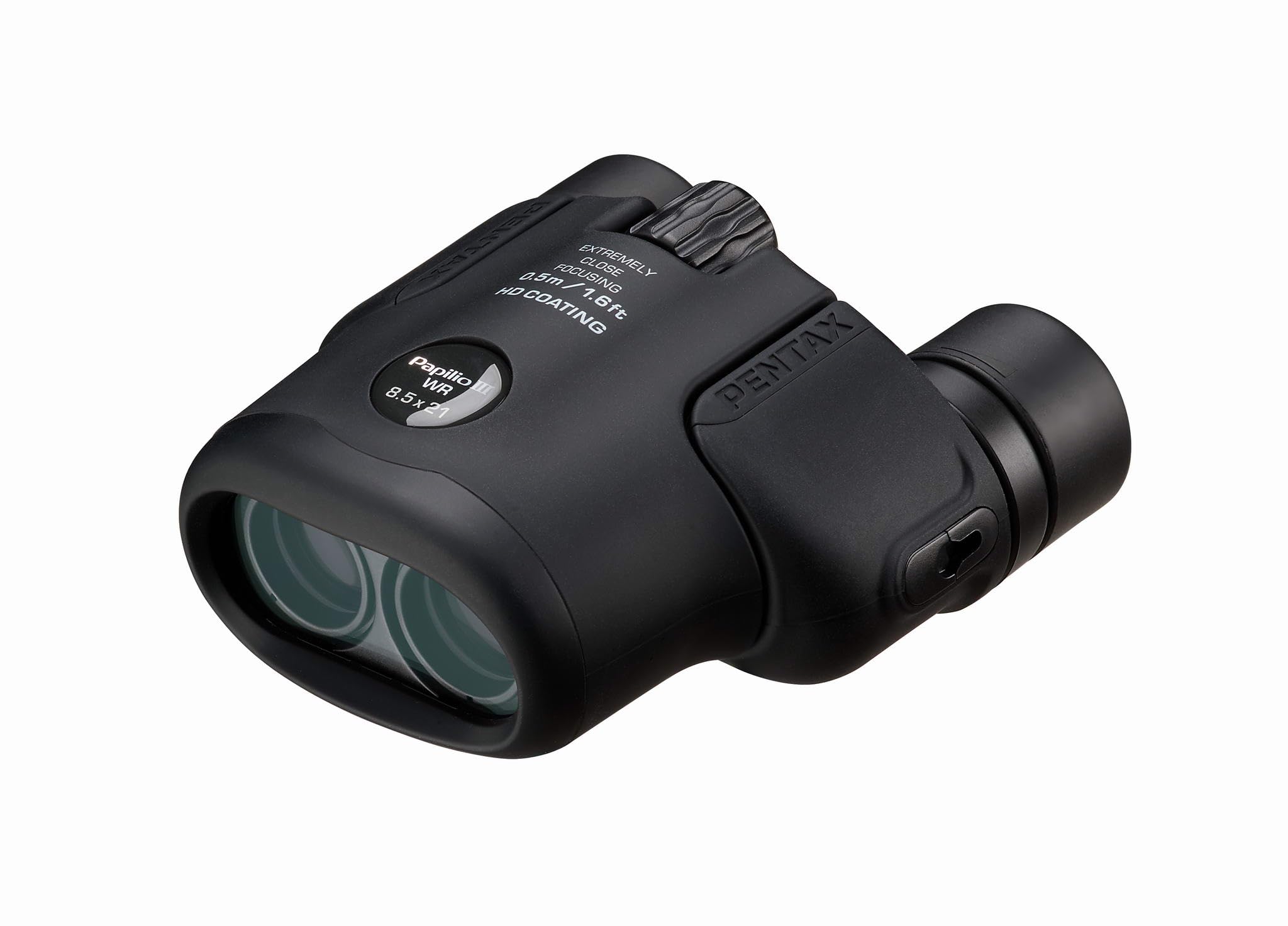
The Pentax Papilio III is not a conventional binocular — it is a specialized tool with a minimum focusing distance of just 50 centimeters, allowing you to observe butterflies, insects, and flowers at close range while still functioning as a capable distance optic. The 8.5×21 configuration is compact and lightweight, with a weather-resistant body that handles light rain and fog without issue.
Pentax applies HD (High Definition) coating to the lenses for higher transmittance and reduced reflection, resulting in a contrast-rich image. Fully multi-coated optics and an anti-stain coating on the eyepieces round out the optical package. The single-hinged eyepiece design and included tripod socket add versatility for long viewing sessions.
Owners rave about the Papilio’s ability to refocus from a butterfly at arm’s length to a distant mountain without any degradation in sharpness. The build is predominantly plastic with a thin rubberized coating, so it is not intended for abusive environments, but its portability and unique macro capability fill a niche that no other binocular in this price range can touch.
Why it’s great
- 50cm close focus is unmatched for macro-style viewing of insects and plants
- HD coating delivers high-contrast, sharp images across the zoom range
- Compact and weather-resistant for everyday carry
Good to know
- Plastic chassis with thin rubber coating may not withstand heavy abuse
- 21mm objective limits brightness in low-light conditions
8. Bushnell R5 12×50
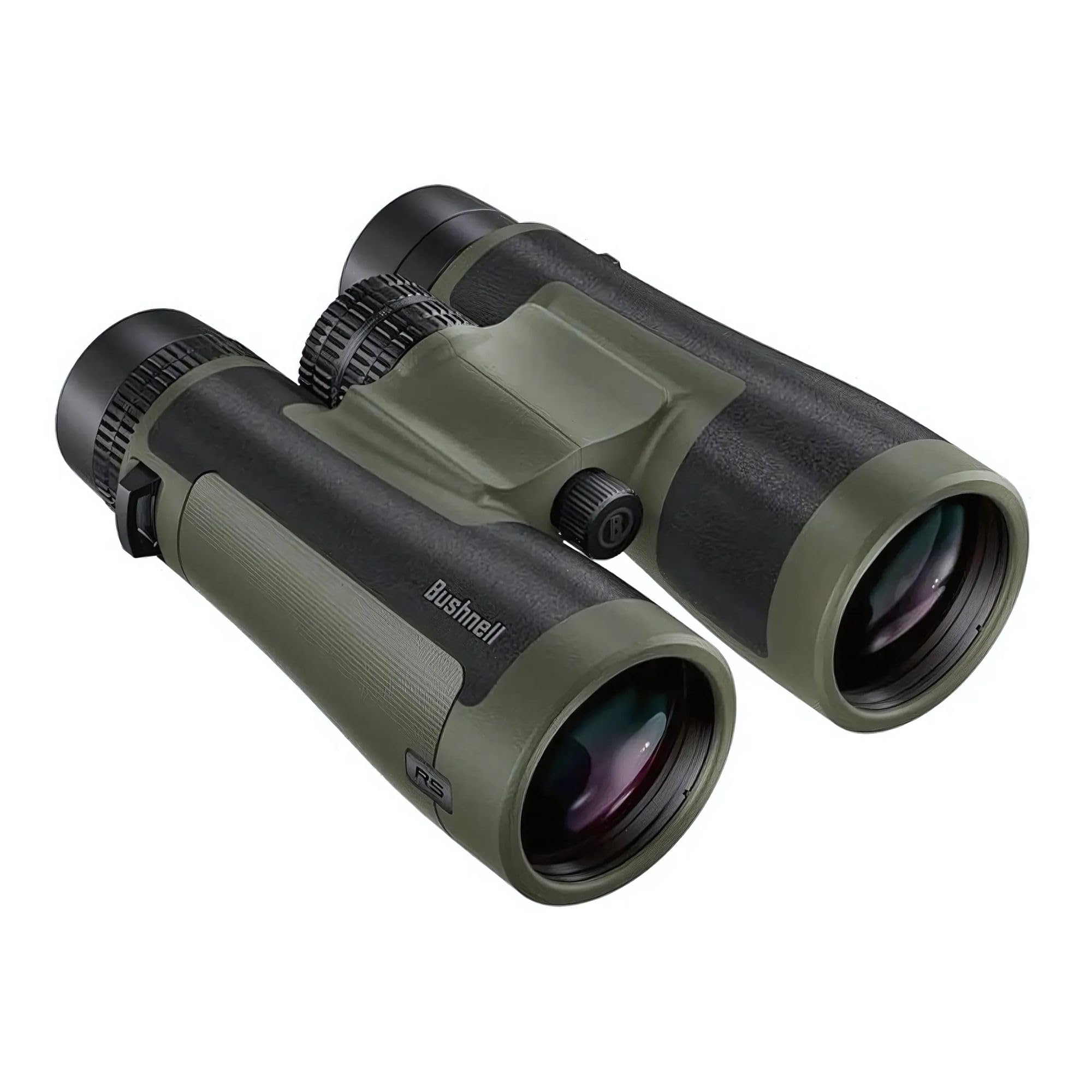
The Bushnell R5 12×50 is built for dedicated long-range viewing, with a 12x magnification that pulls distant details into clear focus. The 50mm objective lenses, combined with Phase 3 dielectric and prism coatings, maximize light transmission and minimize distortion. The EXO Barrier is a permanent exterior coating that repels water, oil, fog, and dust, keeping the lenses clear in messy field conditions.
The IPX7 waterproof rating means these binoculars can survive accidental submersion in up to 1 meter of water for 30 minutes, a significant step above standard splash-proof designs. The shockproof rubber overmold provides a comfortable, secure grip. The included Vault LITE harness is a practical addition for hunters who need quick access without neck strain.
Users comparing the R5 to premium 10×42 options like the Vortex Diamondback note slightly better clarity at last light, while the extra magnification makes a real difference in open country. The fixed-focus design with continuous diopter adjustment simplifies use, though some may prefer a standard center-focus system for rapid reacquisition.
Why it’s great
- 12x magnification with 50mm objectives for serious long-range reach
- EXO Barrier permanently repels water, oil, and dust from external surfaces
- IPX7 waterproof rating provides submersion-level protection
Good to know
- Lens caps are difficult to seat fully and may pop off
- Fixed-focus system may not suit users who prefer center-focus versatility
9. HIOPIACO 30-260×80
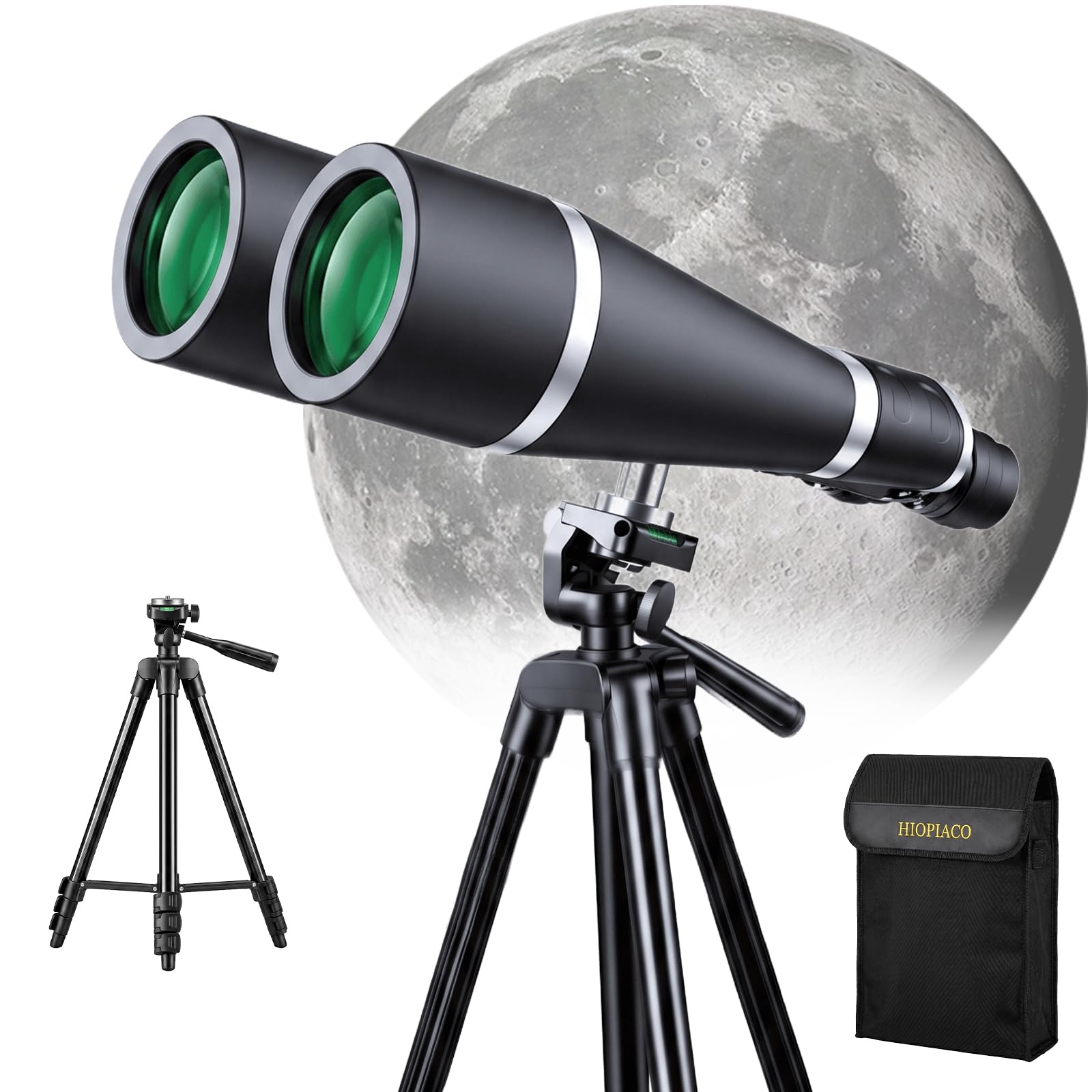
This zoom binocular steps into a different class altogether — a 30x to 260x variable magnification with an 80mm objective lens that gathers substantial light for celestial or extreme long-distance observation. BAK-4 prisms and FMC multi-coated broadband green film deliver bright, color-accurate images with reduced glare. The included tripod is essential given the 3.6kg weight and high magnification.
The aluminum and plastic chassis is weather-sealed against daily moisture and fine dust, though it is not rated for submersion. The focus system combines center and fixed mechanisms, and the diopter adjustment covers a wide range from -50 to +50 diopters. This is not a handheld binocular — it is a tripod-mounted observation instrument meant for astronomy, plane spotting, or long-range terrain scanning.
Users report that the zoom maintains a surprisingly clear image across the magnification range, with effective resolution for lunar observation and distant nautical use. The included tripod is functional but lightweight, and some users recommend upgrading to a sturdier mount for extended stargazing sessions to avoid vibration.
Why it’s great
- 30-260x variable zoom with an 80mm aperture for serious reach
- BAK-4 prisms and FMC coatings deliver bright, sharp images
- Wide diopter range accommodates strong vision prescriptions
Good to know
- Included tripod is too light for stable high-magnification viewing
- Not designed for handheld use — always requires tripod support
FAQ
Is 10x or 8x magnification better for birding under $1000?
What is the practical benefit of ED glass in binoculars?
How does the Maven B.3 8×30 compare to a full-size 42mm for backpacking?
What does a locking diopter add to a binocular?
Final Thoughts: The Verdict
For most users, the binoculars under $1000 winner is the Nikon Monarch M5 8×42 because it delivers the best balance of ED glass, dielectric coatings, wide field of view, and generous eye relief at a price that leaves room for accessories. If you want a compact ultralight for backpacking, grab the Maven B.3 8×30. And for absolute top-tier low-light performance and edge-to-edge sharpness, nothing beats the ZEISS Conquest HDX 10×42.