
The difference between a surfer who links maneuvers down the line and one who gets pitched over the falls often comes down to a single metric: neuromuscular response on an unstable platform. A land-based balance board that mimics the pitch and yaw of a surfboard is the only way to build the micro-adjustments your ankles, knees, and core need before you ever paddle out.
I’m Min — the co-founder and writer behind Gadgets Feed. My research for this guide involved analyzing board dimensions, roller diameters, weight capacities, and stopper systems across seven models to identify which balance board actually translates to better rail-to-rail transitions and pop-up stability in the water.
Whether you are a weekend warrior looking to extend your stamina on a longboard or a competitor dialing in bottom turns, choosing the right balance board for surfing is the single most effective dry-land drill you can add to your training regimen this season.
How To Choose The Best Balance Board For Surfing
Not all wobble boards are built to translate to wave riding. A surf-specific board needs a wider deck for stance, a roller with enough diameter to challenge your rail-to-rail transition, and a stopper system that lets you progress from beginner to advanced without outgrowing the gear.
Roller Diameter and Deck Width
A roller that is too small lets you cheat by micro-adjusting your toes; a roller that is too large becomes a fall hazard before you build any stability. Look for a roller between 4 and 5 inches in diameter — this range forces the same ankle and hip engagement as a surfboard rail-to-rail tilt. Deck width should land between 11 and 12 inches to accommodate your stance without limiting lateral rocking.
Adjustable Stoppers and Progression
The ability to change the maximum tilt angle is critical for surf training. Beginners need stoppers set to a narrower range to build confidence in the pop-up. Advanced riders should be able to remove stoppers entirely for full 360-degree instability, which mimics the feeling of a bottom turn off the foam ball. Look for tool-free magnetic or thumb-screw stoppers that switch between modes in seconds.
Material and Weight Capacity
Canadian maple and multi-layer birch ply are the gold standards — they provide the flex and snap similar to a real surfboard blank. Avoid particle board or single-ply constructions that crack under dynamic loads. A minimum 300-pound capacity ensures the board holds up to repeated impact, especially if you are practicing pop-ups or adding slow, controlled squats to your training set.
Quick Comparison
On smaller screens, swipe sideways to see the full table.
| Model | Category | Best For | Key Spec | Amazon |
|---|---|---|---|---|
| Sportneer 8-in-1 Upgrade | Premium | Advanced multi-mode training | 450 lbs capacity, 30″ length | Amazon |
| Sportneer 7 Modes | Premium | Versatile progression system | 450 lbs capacity, rubber ball included | Amazon |
| XCMAN Leaf Green | Mid-Range | Portable surf-specific training | 350 lbs capacity, 6.6 lbs weight | Amazon |
| Indo Board Original | Premium | Elite athlete-grade stability | 350 lbs capacity, 18″ wide deck | Amazon |
| BECAPRO Purple | Mid-Range | Family-friendly cork roller system | 300 lbs capacity, cork roller | Amazon |
| Fitlaya Fitness | Mid-Range | Canadian maple durability | 350 lbs capacity, 29.1″ board | Amazon |
| Flycoop with Stand | Budget-Friendly | Heavy-duty adjustable stoppers | 330 lbs capacity, magnetic brackets | Amazon |
In‑Depth Reviews
1. Sportneer 8-in-1 Upgrade Balance Board
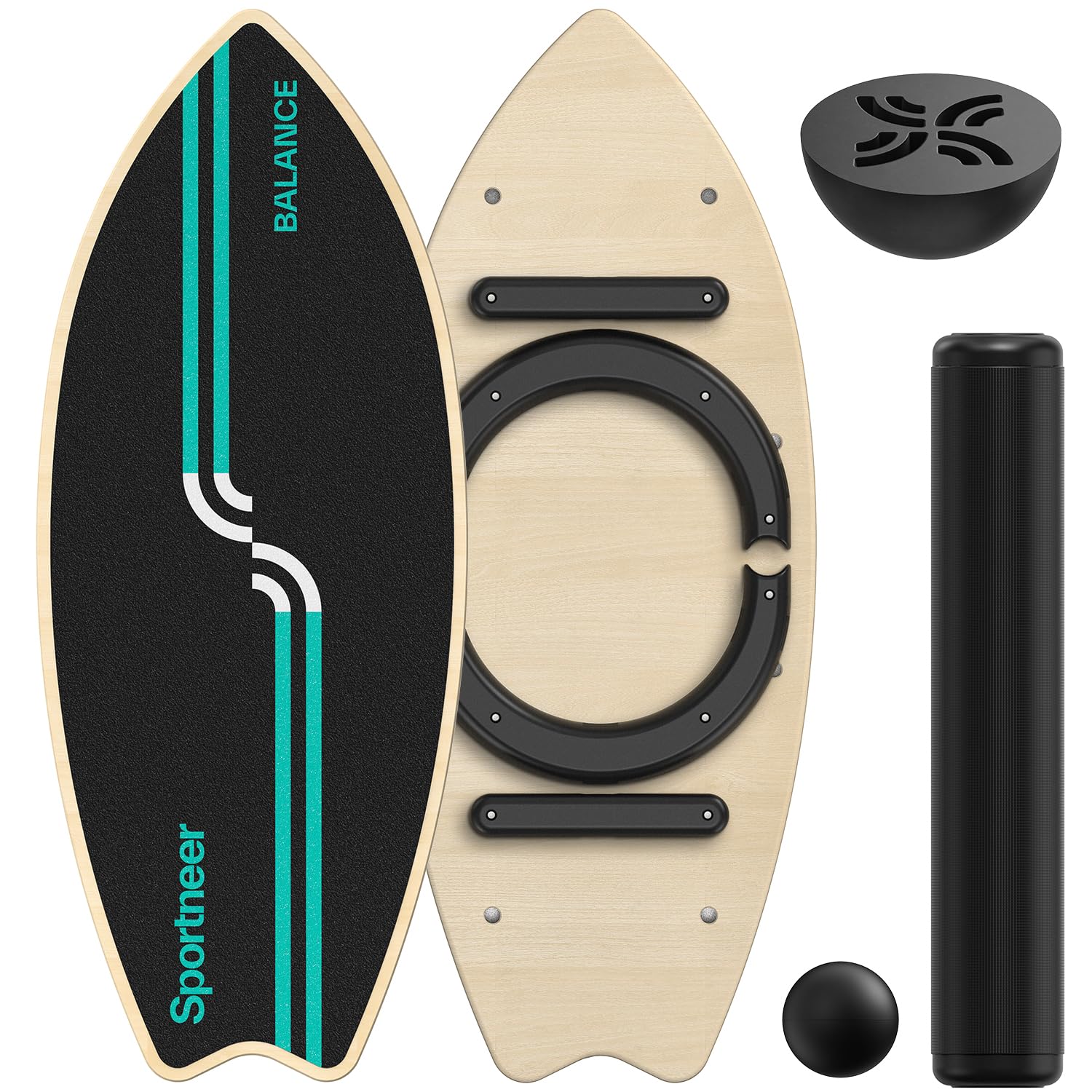
The 13-layer birch wood construction here is not just marketing fluff — it provides the spring-loaded flex that feels closest to a polyurethane surfboard when you shift weight toward the nose. With a roller for smooth rail-to-rail slides, a rubber ball for 360-degree instability, and a half-ball for wobble board oscillations, this single system covers every instability pattern you will encounter in the water.
Magnetic stoppers snap into place without tools, letting you adjust the tilt range between beginner (narrow stop) and advanced (no stops) in under five seconds. The 450-pound max rating means you can add a weight vest or hold a medicine ball for progressive overload without stressing the board’s integrity. The textured grip surface keeps your arch engaged even when barefoot, mimicking the feel of traction wax on a real deck.
At 30 inches long and 11.8 inches wide, the deck provides enough real estate for a shoulder-width stance while remaining compact enough to stash behind a couch. The PVC roller resists dust and pet hair buildup, which is a practical win if you plan to use this as a standing desk fidget device between surf trips.
Why it’s great
- 8-in-1 configuration covers all instability types a surfer faces
- Tool-free magnetic stopper system for instant progression
Good to know
- 13-pound weight makes it less portable than lighter boards
- Half-ball attachment requires extra coordination for beginners
2. Sportneer 7 Modes Wobble Board

Four magnetic removable stoppers let you switch between seven different challenge modes without ever reaching for a screwdriver. This is the board for surfers who want to progress from controlled rail-to-rail rocking (stoppers wide) to full freedom of movement (stoppers removed) without buying a second piece of equipment. The birch wood deck holds up to 450 pounds, which means heavy landings from a failed pop-up drill won’t crack the board.
The 2.8-inch rubber ball adds a 360-degree wobble axis that trains the micro-adjustments your peroneal muscles make when your rail catches a face on a steep takeoff. The deck is 30 inches long with an EVA non-slip surface that provides grip even when your feet are sweaty — a direct parallel to the traction you need on a waxed surfboard. The cushioning also makes barefoot training comfortable for longer sessions.
One detail that stands out in customer feedback is the board’s width of 11.8 inches, which some users note is narrower than premium competitors but still accommodates size 10 feet. The narrower profile actually simplifies storage and makes the board easier to slide under a bed or stand vertically in a closet.
Why it’s great
- Seven distinct training modes from one compact package
- EVA foam surface is grippy and comfortable for barefoot training
Good to know
- Half-circle rail pieces are difficult to remove once snapped in
- Narrower deck may feel restrictive for surfers with larger feet
3. XCMAN Surf Balance Board Trainer
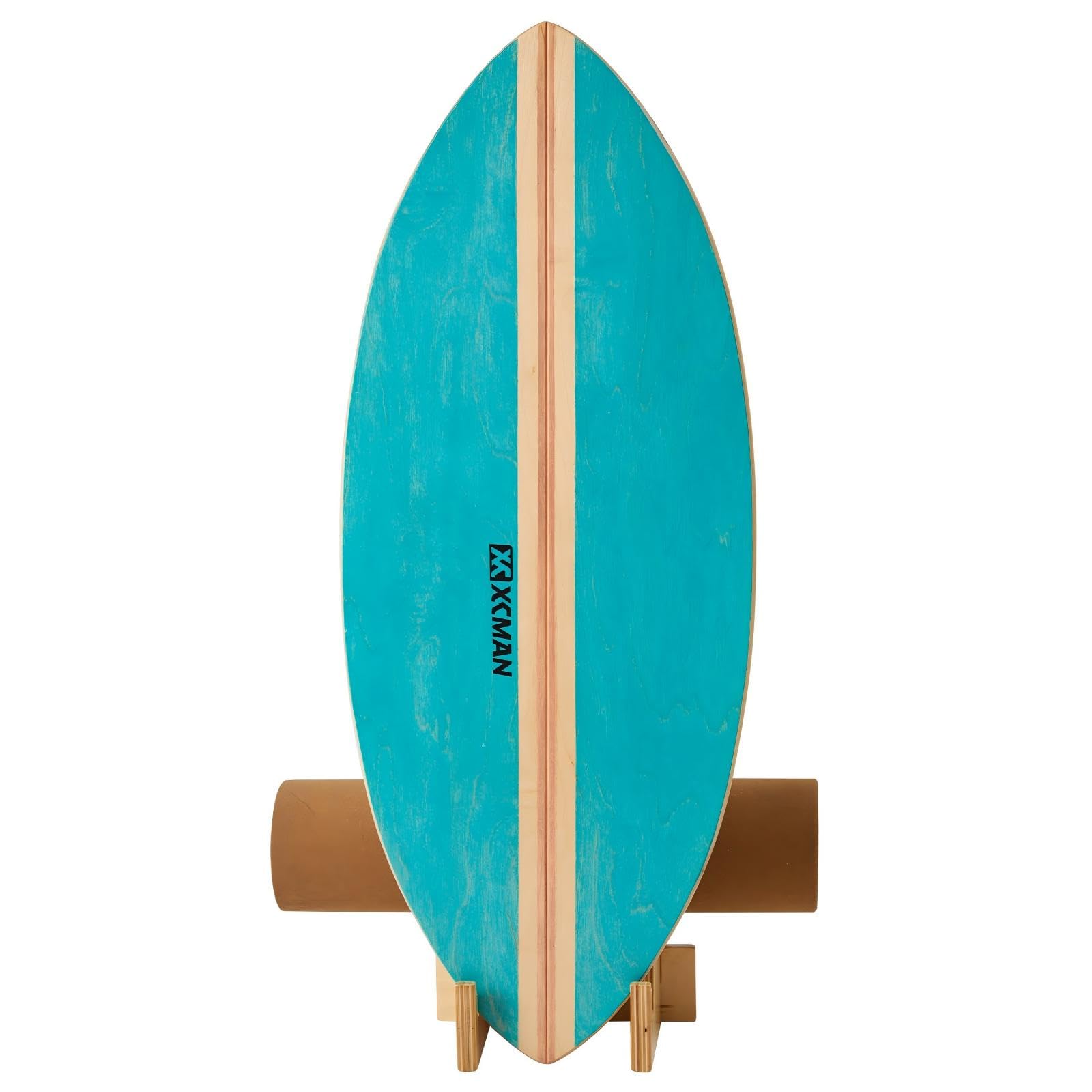
At only 6.6 pounds, this training board is the most portable option for surfers who want to take their dry-land practice to the beach parking lot or a hotel room during a surf trip. The deck is 28.5 inches long and 5.91 inches wide — noticeably narrower than the Sportneer options, which actually forces tighter stance discipline and better mimics the narrow tail area of a shortboard.
The matte anti-slip surface provides traction without the abrasive feel of sandpaper, and the solid rubber roller glides smoothly across carpet, concrete, or wood floors without leaving scuffs. The 350-pound weight rating is identical to the Fitlaya board, but the lighter overall build makes this a better choice for surfers who travel or need to move their gear between rooms frequently. The board comes in a leaf green color that avoids the generic black aesthetic common in this category.
Customer feedback highlights the roller size as a plus for surf-specific training — the diameter provides enough resistance to challenge your ankle stability without being so tall that it becomes a fall hazard. The included holder keeps the board stationary when not in use, though some users wish the board surface were slightly larger for a more natural stance.
Why it’s great
- Ultra-portable 6.6-pound design for travel and transport
- Solid rubber roller glides smoothly without scratching floors
Good to know
- Narrow deck may feel unstable for beginners
- Leaf green color shows dirt more than darker options
4. The Original Indo Board
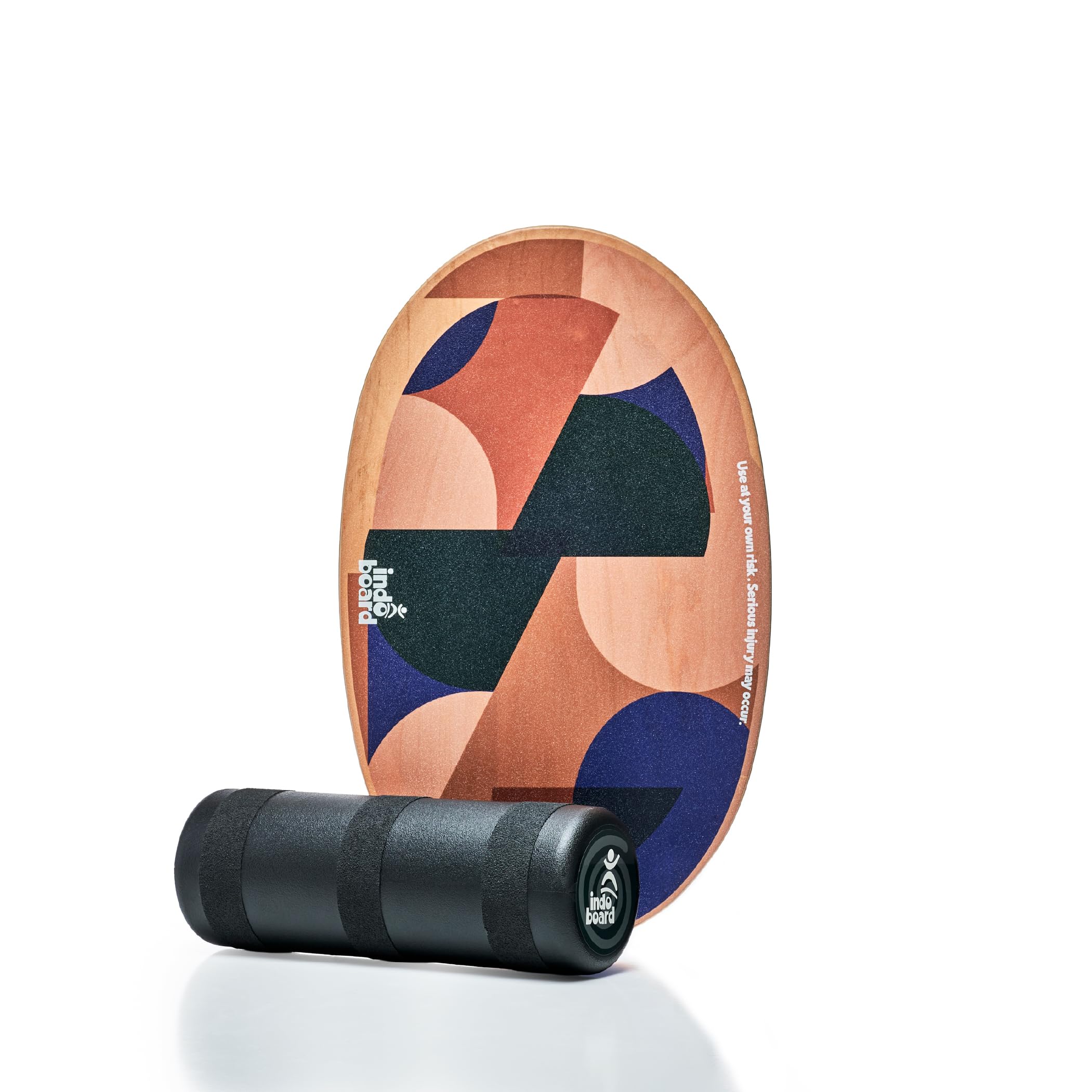
Nearly three decades of surf-specific design iteration have resulted in a deck that is 18 inches wide — significantly broader than any other board in this comparison. The extra width allows for a more natural surf stance, where your feet can be placed hip-width apart without hanging off the edges. This is the board used by national and Olympic champions for a reason: the wide platform does not let you cheat by balancing on your toes, forcing genuine core and hip engagement.
The maple wood construction delivers a lively flex that responds to subtle weight shifts, and the roller is trackless, allowing 360-degree pivot rotation that simulates a bottom turn or cutback. The board supports up to 350 pounds, and the gritty deck texture provides excellent barefoot grip. Customer feedback from experienced surfers is overwhelmingly positive, describing the board as challenging even for those with solid balance — which is exactly the stimulus needed to improve wave performance.
Note that this board does not come with adjustable stoppers or a ball; you are paying for the refined roller and deck geometry that elite athletes trust. Beginners may find the learning curve steep, but for the surfer who has outgrown entry-level equipment, this is the closest land-based approximation to riding a shortboard in overhead surf.
Why it’s great
- Widest deck (18 inches) for a natural surf stance
- Trackless roller enables 360-degree rotational movement
Good to know
- No included ball or stoppers for progressive training
- Steep learning curve for absolute beginners
5. BECAPRO Balance Board Trainer

The cork roller is the standout feature here — it is eco-friendly, cleans easily with soap and water, and provides a different tactile feel compared to PVC or rubber rollers. Cork has a slightly higher friction coefficient, which slows the roll speed and makes the board more forgiving for beginners working on pop-up mechanics. The 10-centimeter diameter is positioned as the optimal height for riders, balancing stability with the challenge of ankle engagement.
Wooden stoppers with plastic thumb-screw heads let you set four distances: 8, 11, 16, and 22 inches. This range covers everything from a beginner trying to find their center of gravity to an advanced rider who wants full freedom. The 11-ply cold-pressed hardwood deck supports up to 300 pounds, and the emery polishing paper surface provides grip whether you are barefoot or wearing booties. The purple color adds personality without being distracting.
Customer feedback consistently notes that the board is a hit for family use — kids and adults both engage with it, which means your surf training doubles as household entertainment. The cork roller does not trap dust or hair like some rubber alternatives, making it a practical choice for indoor carpet use.
Why it’s great
- Cork roller is eco-friendly and easy to clean
- Four adjustable stopper distances for all skill levels
Good to know
- 300-pound capacity is lower than premium competitors
- Cork roller may have different wear characteristics than rubber
6. Fitlaya Fitness Balance Board Trainer

Canadian maple wood construction gives this board a classic solid feel that supports up to 350 pounds while remaining affordable enough for surfers on a tight budget. The board dimensions of 29.1 inches by 11 inches provide a usable surface that fits most surf stances, and the anti-slip surface ensures your feet stay planted during dynamic movements. This is the board that many parents purchase for snowboarding and skateboarding kids, but it translates directly to surf pop-up practice.
The included roller measures 17.8 inches by 4.5 inches — the 4.5-inch diameter provides enough instability to challenge your ankle and knee joints without being so tall that falls become painful. The board is lightweight enough to carry to a park or beach parking lot for outdoor training, and the black with brown edges color scheme hides scuffs well. Customer feedback highlights the board’s ability to pull kids away from screens, which is a nice side benefit if you are a surf parent.
The plastic end cap on the roller tube is a known weak point — several user reviews mention it pops off over time. It is easily reattached, but it is worth noting if you plan to use the board heavily on concrete floors. For the price, this is a reliable entry point into surf-specific balance training.
Why it’s great
- Canadian maple build offers durability at a lower price point
- 4.5-inch roller diameter provides appropriate surf-like challenge
Good to know
- Plastic end cap on roller may detach over time
- No adjustable stoppers for progression control
7. Flycoop Balance Board with Stand
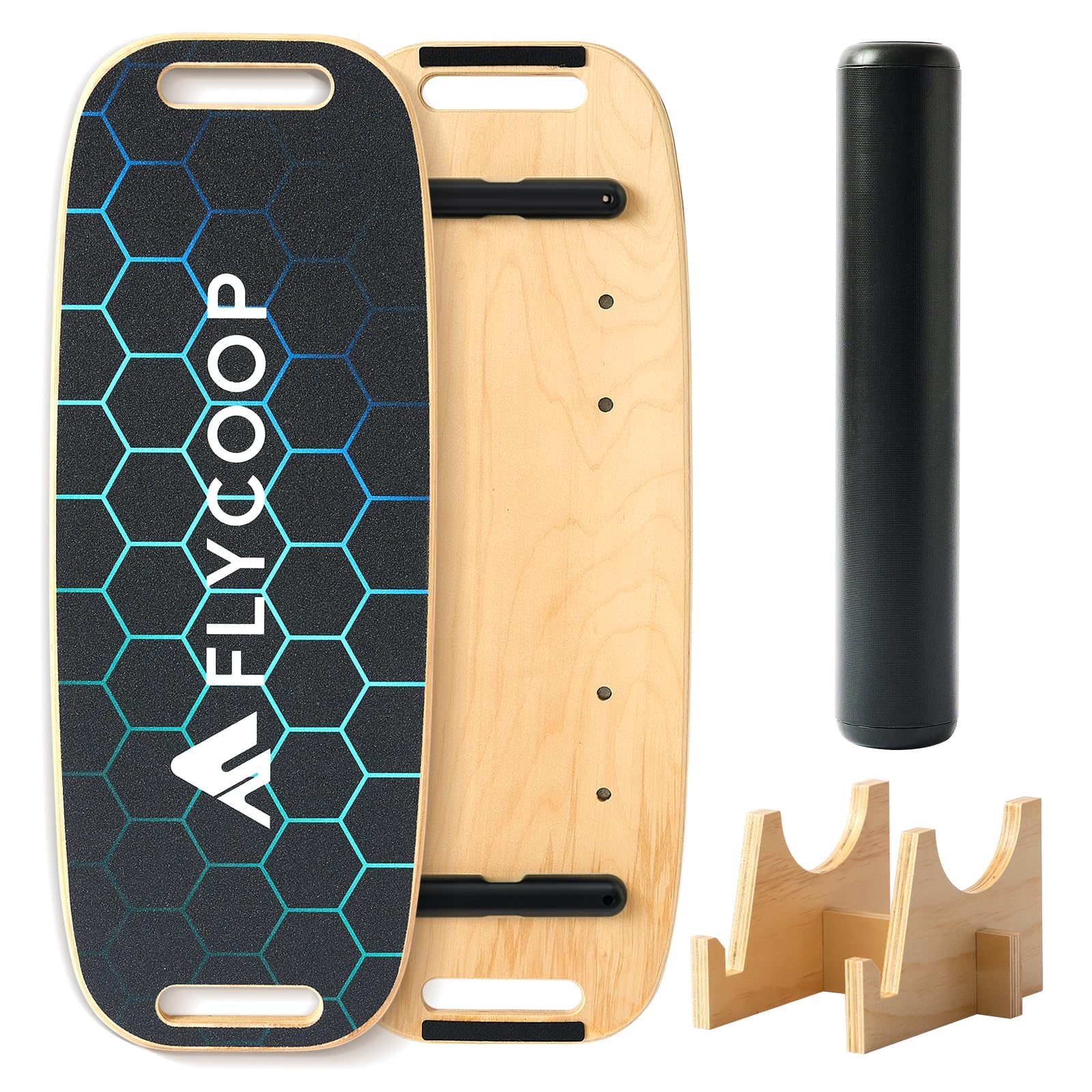
The 15-layer pressed wood construction supports up to 330 pounds and features a unique back design with holes and magnetic brackets that enable diverse training exercises beyond just balance riding. You can attach resistance bands to the holes for upper body work or use the board as a push-up platform, making this the most multi-functional option for surfers who want a full workout from a single piece of equipment. The high-quality sandpaper coating provides non-slip security even during high-intensity movements.
Adjustable stoppers on the bottom let you limit lateral movement at three difficulty levels, making this board suitable for beginners who need to build confidence before progressing to wider ranges. The board is lightweight and easy to transport, despite the heavy-duty construction. Customer feedback specifically mentions that the adjustable guards help dirt bike riders improve technical riding balance, which is directly transferable to surfing where weight distribution matters for maintaining speed down the line.
One trade-off is the 5.2-kilogram (11.5-pound) weight, which is heavier than the XCMAN board but lighter than the Sportneer 8-in-1. The included stand keeps the board and roller organized when not in use. Some users note that the difficulty progression from beginner to advanced feels steeper here compared to boards with more granular stopper adjustments.
Why it’s great
- Unique back design with holes for resistance band training
- Three-level adjustable stopper system for progression
Good to know
- Heavier than some portable options at 11.5 pounds
- Difficulty progression feels steeper than competitors
FAQ
Can a balance board actually improve my surfing or is it just a gimmick?
How long should I train on a balance board per day for surf improvement?
Should I get a flat board or a rocker board for surf training?
Final Thoughts: The Verdict
For most surfers, the balance board for surfing winner is the Sportneer 8-in-1 Upgrade because its 8-in-1 configuration covers every instability pattern you will face in the water, from rail-to-rail glides to 360-degree wobble, all on a 450-pound-rated birch wood deck. If you want the elite platform trusted by professional athletes, grab the Indo Board Original for its 18-inch-wide maple deck and trackless roller that forces genuine surf stance discipline. And for portable training that fits in a car trunk for beach parking lot sessions, nothing beats the XCMAN Surf Balance Board Trainer at just 6.6 pounds with a roller that slides smoothly across any surface.