
Choosing a set of high-end speakers is a deeply personal decision, one that hinges on how you define musical truth. Do you crave the visceral slam of a live concert, or the delicate air around a solo violin? The market is flooded with promises of “reference-grade” sound, but the reality is that room acoustics, amplifier synergy, and your own listening biases play a far larger role than any spec sheet can convey. This guide cuts through the marketing noise to focus on the engineering decisions that genuinely separate exceptional transducers from the merely expensive ones.
I’m Min — the co-founder and writer behind Gadgets Feed. This guide is the result of hundreds of hours spent cross-referencing technical specifications, analyzing driver topology and crossover designs, and distilling dense engineering literature to identify which speakers deliver genuine performance for their investment.
Whether you are building a dedicated listening room or upgrading a home theater, this resource helps you navigate the nuanced world of the best audio high end speakers by focusing on measurable performance and real-world compatibility, not subjective marketing promises.
How To Choose The Best Audio High End Speakers
Selecting premium loudspeakers requires moving beyond brand loyalty and focusing on the interaction between transducer, amplifier, and listening space. The following criteria are the non-negotiable pillars of informed high-end speaker selection.
Active vs. Passive Topology
The first fork in the road is whether to choose an active (self-powered) or passive (amplifier-required) design. Active speakers, like the KEF LS50 Wireless II, integrate amplification and digital-to-analog converters (DACs) that are perfectly matched to their drivers, eliminating guesswork and often providing built-in room correction or streaming. Passive speakers, such as the Polk Audio Reserve R200, give you total freedom to pair with your choice of amplification — whether a warm tube amp or a high-current solid-state unit — but require you to carefully balance power output, impedance, and damping factor.
Driver Configuration and Crossover Design
The number of drivers and the complexity of the crossover network fundamentally dictate a speaker’s behavior. A simple two-way design with a tweeter and woofer can offer excellent coherence but may struggle with dynamic range compared to a three-way design with a dedicated midrange driver, like the Wharfedale Linton. Pay close attention to driver materials: soft dome tweeters (silk, textile) tend toward a warmer, less fatiguing sound, while metal dome tweeters (aluminum, beryllium, diamond-coated) can offer greater detail and extension but risk sounding bright or harsh with poorly recorded material. The crossover slope (how sharply frequencies are divided) affects the “integration” between drivers — a steeper slope reduces driver interaction but can introduce phase issues.
Room Acoustics and Placement Sensitivity
The most expensive speaker will sound mediocre in a poor room. Rear-ported designs, like the SVS Ultra Evolution Bookshelf, require significant clearance from the wall behind them to avoid muddy, boomy bass. Front-ported or sealed designs are more placement-flexible. The size of your room dictates the appropriate driver size and cabinet volume — a massive floorstander with dual 8-inch woofers will overdrive a small, untreated room, leading to standing waves and a confused soundstage. Always audition speakers in a space that mimics your own, or use room correction software (like Dirac Live or Audyssey) to mitigate acoustic problems.
Quick Comparison
On smaller screens, swipe sideways to see the full table.
| Model | Category | Best For | Key Spec | Amazon |
|---|---|---|---|---|
| KEF LS50 Wireless II | Active Bookshelf | All-in-One Hi-Res Streaming | 280W+100W per speaker, Uni-Q driver | Amazon |
| SVS Ultra Evolution Bookshelf | Passive Bookshelf | Reference-Grade Clarity & Bass | Diamond-coated aluminum tweeter, 3-way | Amazon |
| Klipsch RP-8060FA II | Passive Floorstander | Built-in Dolby Atmos | 6.5″ up-firing Atmos driver, 90×90 Tractrix horn | Amazon |
| Sony BRAVIA Theater Quad | Wireless Surround | Cinema-Grade Spatial Audio | 16 speakers, 360 Spatial Sound Mapping | Amazon |
| Nakamichi Dragon 11.4.6 | Soundbar System | Ultimate Immersive Home Theater | 11.4.6 channels, 3000W max output | Amazon |
| Wharfedale Linton with Stands | Passive Bookshelf | Warm, Vintage-Inspired Sound | 8″ woofer, 3-way design, 90dB sensitivity | Amazon |
| Devialet Phantom Ultimate 108 dB | Active Single Speaker | High-Resolution Streaming, Sculptural Design | 108 dB SPL, 14 Hz – 35 kHz, Wi-Fi 6 | Amazon |
| SVS Prime Pinnacle | Passive Floorstander | High-Output, Detailed Soundstage | Triple 6.5″ woofers, 5.25″ midrange | Amazon |
| Klipsch RP-8000F II | Passive Floorstander | High-Sensitivity, Dynamic Home Theater | Dual 8″ Cerametallic woofers, 98dB sensitivity | Amazon |
| Wharfedale – Linton (Speakers Only) | Passive Bookshelf | Classic 3-Way Musicality | 8″ woofer, 2″ midrange, 1″ tweeter | Amazon |
| Polk Audio Reserve R200 | Passive Bookshelf | Detailed, Non-Fatiguing Home Theater | 1″ Pinnacle Ring Tweeter, 6.5″ Turbine Cone | Amazon |
| Edifier S2000MKIII | Active Bookshelf | High-Value Near-Field Listening | Planar tweeter, 130W tri-amped, aptX HD | Amazon |
| KEF LSX II | Active Bookshelf | Compact, Versatile Desktop System | HDMI ARC, USB-C, 24bit/384kHz streaming | Amazon |
In‑Depth Reviews
1. KEF LS50 Wireless II

The KEF LS50 Wireless II represents the pinnacle of integrated high-end audio. It is a complete, end-to-end system built around KEF’s 12th-generation Uni-Q driver array, which places the tweeter at the acoustic center of the mid/bass cone for a remarkably cohesive and wide soundstage. Each speaker houses dedicated amplification — 280 watts for the woofer and 100 watts for the tweeter — designed and tuned by KEF engineers to extract maximum performance from the driver, eliminating amplifier matching concerns.
Connectivity is a standout feature, with support for HDMI eARC, TOSLINK, digital coaxial, and a 3.5mm auxiliary input, allowing seamless integration with a TV, turntable, or game console. Wireless streaming via AirPlay 2, Google Chromecast, and Roon is included, plus built-in support for Tidal, Qobuz, and Amazon Music. The KEF Connect app provides a parametric EQ for room correction and precise subwoofer integration. Users report exceptional clarity, detail, and a warm, non-fatiguing tonal balance that improves after a subtle break-in period.
While the sound quality is reference-grade for the category, the LS50 Wireless II is not without minor quirks. Some users experience intermittent Wi-Fi dropouts requiring a power cycle, and the system is best used with the optional wired connection between speakers for optimal stability. The remote control is basic, and the speaker is heavy for its size. However, for the listener seeking a clutter-free, high-performance system that delivers true hi-fi without the traditional equipment stack, the LS50 Wireless II is an outstanding, cohesive choice.
Why it’s great
- Integrated, perfectly matched amplification and DAC
- Exceptional imaging and soundstage width
- Wide range of digital and wireless inputs
Good to know
- Wi-Fi connectivity can be intermittent for some users
- Wired inter-speaker connection is recommended for stability
- App control is primary, remote is basic
2. SVS Ultra Evolution Bookshelf

The SVS Ultra Evolution Bookshelf is a passive loudspeaker that challenges the status quo of what a bookshelf design can achieve. It employs a sophisticated 3-way, time-aligned architecture, meaning the acoustic centers of all drivers are vertically aligned so sound arrives at the listener’s ears simultaneously for improved phase coherence. The star of the show is the 1-inch diamond-coated aluminum dome tweeter, which pushes the frequency response far beyond 30 kHz, resulting in airy, unveiled highs with vanishingly low distortion.
Bass performance is extraordinary for a bookshelf, thanks to dual opposing 6.5-inch woofers arranged in a force-balanced array that cancels cabinet vibrations and distributes low-frequency energy evenly throughout the room. This design addresses room modes more effectively than traditional layouts. Users who have compared the Ultra Evolution directly with competitors like the B&W 705 S3 and Focal Aria Evo X No1 consistently prefer the SVS for its more engaging sound, deeper bass extension, and superior build quality relative to its price point.
Being a rear-ported design, the Ultra Evolution is highly sensitive to placement — it requires generous clearance from the rear wall to avoid bass bloom. Some users report needing to experiment with toe-in and distance to dial in the soundstage perfectly. The cabinet is substantial and demands robust stands. For the dedicated audiophile willing to invest time in setup, the SVS Ultra Evolution delivers a level of resolution, dynamics, and bass authority that belies its physical size.
Why it’s great
- Exceptional phase coherence from time-aligned design
- Diamond-coated tweeter provides ultra-low distortion highs
- Force-balanced woofers deliver deep, even bass
Good to know
- Rear-ported design requires careful placement away from walls
- Requires robust stands and quality amplification to shine
- Finish options are limited compared to some competitors
3. Klipsch RP-8060FA II

The Klipsch RP-8060FA II is a floorstanding speaker that integrates a dedicated Dolby Atmos elevation channel directly into its cabinet. A 6.5-inch, 2-way up-firing driver is built into the top of the speaker, bouncing sound off the ceiling to create overhead effects without requiring separate ceiling-mounted speakers. This makes it an exceptionally clean and powerful solution for building a Dolby Atmos home theater without visible clutter.
The speaker’s foundation is a new, larger 90° x 90° silicone composite hybrid Tractrix horn mated to a 1-inch Linear Travel Suspension (LTS) titanium diaphragm tweeter, delivering crisp, clear highs with controlled dispersion. Dual 6.5-inch Cerametallic woofers handle the midrange and bass, offering high efficiency and low distortion. Users consistently praise the RP-8060FA II for its incredible detail, instrument separation, and a powerful, dynamic sound that fills large rooms with ease.
These speakers are physically imposing and very heavy, requiring substantial floor space and potentially a helper for placement. The Tractrix horn design can be bright at high volumes with poorly recorded material, and some listeners may find the sound a touch forward for critical music listening. Additionally, the speaker’s high sensitivity means it pairs well with moderate-powered amplifiers, but the integrated Atmos channel benefits from a capable AVR with Dolby Atmos processing.
Why it’s great
- Integrated Atmos elevation channel eliminates ceiling speakers
- High sensitivity (98dB) extracts maximum output from modest amplifiers
- Exceptional clarity, detail, and soundstage for home theater
Good to know
- Very heavy and physically large, requiring careful placement
- Horn tweeter can be bright at high volumes
- Ceiling height and material affect Atmos performance
4. Sony BRAVIA Theater Quad

The Sony BRAVIA Theater Quad is not a traditional speaker set but a wireless 16-speaker array that creates a virtual surround sound field using Sony’s 360 Spatial Sound Mapping technology. Four slim, wireless satellite speakers are placed around the room, each housing multiple driver units. The system automatically calibrates to the room’s acoustics via Sound Field Optimization, mapping a dense grid of phantom speakers to produce an enveloping 3D audio bubble.
Support for Dolby Atmos, DTS:X, and IMAX Enhanced is comprehensive, and the system includes an HDMI eARC input along with three additional HDMI 2.1 inputs supporting 4K120, VRR, and ALLM for gaming. The phantom center channel is remarkably convincing, locking dialogue to the screen without a physical center speaker. The wireless design offers total placement flexibility, with the optional SW5, SW7, or SW9 subwoofers handling deep bass extension.
Despite its spatial prowess, the Quad system requires patience with its software. Users report occasional connectivity hiccups, random switching of the TV back to internal speakers, and a clunky setup process that may require a wired LAN connection for stability. The subwoofer, while adequate, lacks the deep rumble of a dedicated high-end sub. It is a premium, space-conscious solution for immersive audio that excels with movie soundtracks and spatial music, but it demands a high tolerance for software quirks.
Why it’s great
- Creates a convincing, immersive spatial audio bubble
- Wireless placement flexibility for virtually any room
- Supports 4K120, VRR, and ALLM for gaming
Good to know
- Software and connectivity can be buggy
- Requires a dedicated Sony subwoofer for deep bass
- Setup is finicky and may require technical troubleshooting
5. Nakamichi Dragon 11.4.6

The Nakamichi Dragon 11.4.6 is a monumental soundbar system that redefines the ceiling of what a soundbar can achieve. It is an 11.4.6-channel behemoth featuring a 58-inch-wide main unit, two dual-opposing 8-inch subwoofers, and two bipolar Omni-Motion surround speakers with PerfectHeight mechanisms. The system delivers a stunning 3000 watts of peak power and processes audio at true AVR-equivalent depth, supporting Dolby Atmos up to 24.1.10 and DTS:X Pro up to 30.2.
A key differentiator is the use of seven HiFi Air Motion Transformer (AMT) tweeters, which provide razor-clean highs and exceptional dialogue clarity even at extreme volumes. The dual-opposing subwoofers produce deep, physical, and controlled bass that loads the room with cinematic impact. Users report that the Dragon transforms any space into a true theater, with explosive effects, crystal-clear voices, and a fully enveloping 3D sound field that rivals dedicated wired systems.
However, this is not a compact solution — the system ships in three heavy boxes and requires substantial physical space. Setup is relatively straightforward but is a two-person job. Some users note a minor delay when switching audio sources, and the lack of Wi-Fi for automatic updates (requiring a USB drive) is an oversight at this price point. For those who prioritize a plug-and-play, theater-grade experience without the complexity of a traditional AVR setup, the Dragon is an unmatched powerhouse.
Why it’s great
- Unparalleled channel count and power for a soundbar system
- AMT tweeters deliver pristine highs and dialogue clarity
- Dual-opposing subs produce deep, controlled, physical bass
Good to know
- Extremely large and heavy, requiring dedicated space
- Minor input lag when switching sources
- Firmware updates require a USB drive, no Wi-Fi
6. Wharfedale Linton with Stands

The Wharfedale Linton 85th Anniversary edition is a loving tribute to classic British loudspeaker design, wrapped in a walnut veneer that exudes mid-century warmth. It is a substantial, three-way bookshelf design featuring an 8-inch woven Kevlar cone woofer, a 2-inch soft dome midrange, and a 1-inch soft dome tweeter. This driver topology yields a smooth, non-fatiguing, and highly musical presentation that prioritizes tonal richness and texture over transient speed.
The matching stands (included in this bundle) are essential, lifting the large cabinet to the ideal listening height and contributing to the speaker’s impressive soundstage. Users driving the Lintons with tube amplifiers (such as the Willsenton R8) report a magical synergy, with a lush, detailed midrange and a surprisingly tight, non-bloated bass for an 8-inch woofer. The speaker is known for its ability to capture the “analog essence” of recordings, revealing details like the sound of a pick on a bass string or the type of drumstick used.
The Linton is not a speaker for those seeking maximum analytical detail or “flat” frequency response. Its sound is deliberately warm and forgiving, which can round off some of the top-end sparkle. Placement is important — it needs careful positioning to achieve a coherent soundstage, and the stands add to the speaker’s already significant footprint. Its 90dB sensitivity is moderate, requiring a quality amplifier with at least 25-50 watts to drive it properly.
Why it’s great
- Beautiful vintage aesthetic and high-quality build
- Warm, non-fatiguing sound perfect for long listening sessions
- Exceptional midrange detail and texture
Good to know
- Deliberately warm and forgiving, not for analytical listeners
- Large footprint, especially with the essential stands
- Moderate sensitivity requires a quality amplifier
7. Devialet Phantom Ultimate 108 dB
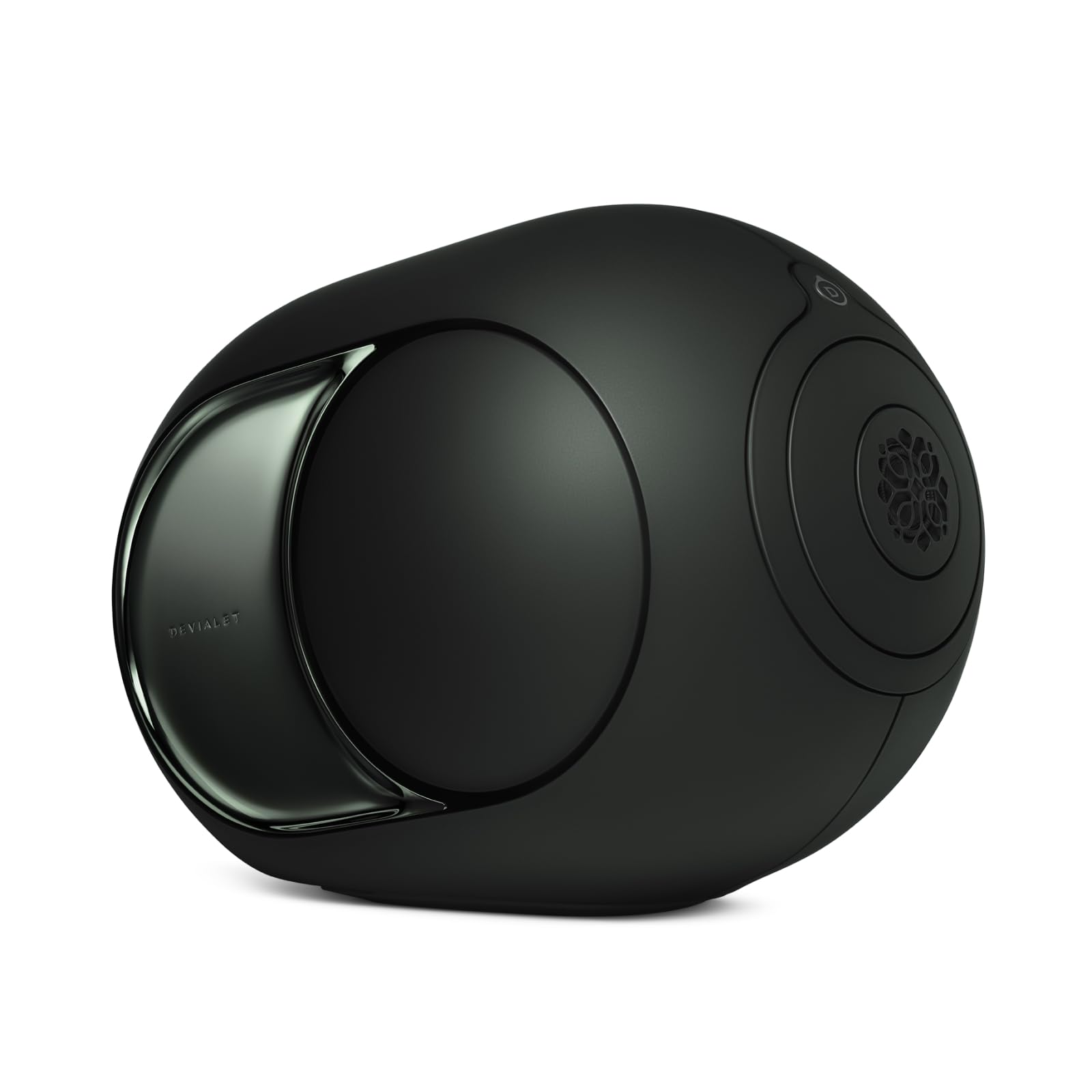
The Devialet Phantom Ultimate 108 dB is a singular piece of audio engineering, housed in a futuristic, sculptural oval designed and manufactured in France. At its core is Devialet’s proprietary Analog Digital Hybrid (ADH) amplification, which combines the warmth of Class A with the power and efficiency of Class D to deliver zero distortion up to its namesake 108 dB SPL. The frequency response extends from a subterranean 14 Hz to 35 kHz, making it one of the few single-speaker systems capable of producing true subsonic bass.
Connectivity is modern and comprehensive, with support for AirPlay 2, Google Cast, Roon, Spotify Connect, TIDAL Connect, and UPnP over Wi-Fi 6 or Ethernet. Bluetooth 5.3 ensures stable streaming from devices. The tactile interface on top of the speaker uses touch sensors for intuitive volume and playback control, and the Devialet app offers a 6-band EQ, night mode, and latency adjustment. Users describe the sound as “joyful,” with astonishing clarity, depth, and a physical, visceral bass that can be felt as much as heard.
The Phantom is not without its compromises. It requires a constant wall power connection, eliminating portability. While deeply impressive in isolation, creating a stereo pair for true soundstage width requires purchasing a second unit, effectively doubling the already premium investment. The app has been cited for occasional connection issues, and the speaker’s unique design may not suit every room’s decor. It is a luxury statement piece for the audiophile who values a singular, high-res streaming experience and is prepared to invest accordingly.
Why it’s great
- Zero-distortion sound up to 108 dB SPL
- Subterranean bass extension down to 14 Hz from a single unit
- Sculptural, high-end design with tactile controls
Good to know
- Requires wall power — not portable at all
- A second unit is needed for true stereo imaging
- Very high price point for a single-speaker system
8. SVS Prime Pinnacle

The SVS Prime Pinnacle is a floorstanding loudspeaker that delivers a remarkable balance of output, clarity, and value. It features a sophisticated 3-way design with a 1-inch aluminum dome tweeter, a 5.25-inch midrange driver, and no fewer than three 6.5-inch woofers. This configuration allows for high overall sensitivity and the ability to move a very large volume of air, resulting in effortless dynamics and a towering, well-defined soundstage.
Despite its size and driver complement, the Prime Pinnacle is known for its smooth, non-fatiguing character. The treble is laid-back and refined, while the bass is tight and impactful, reaching down to about 27 Hz in-room. Users find the speaker sounds clear and precise even at whisper-quiet volumes, coming alive with a sense of scale and authority when the volume is raised. Build quality is excellent for the price point, with a sturdy, well-braced cabinet available in Black Ash or Piano Gloss.
The Prime Pinnacle is a rear-ported design, meaning placement away from the front wall is critical to avoid bass congestion. It is also a large speaker — the triple-woofer array demands floor space. Users with small rooms may find the bass overwhelming, and the lack of bi-amp capability is a minor limitation for some enthusiasts. For those with a medium-to-large room and a quality amplifier, the Prime Pinnacle offers a compelling path to high-decibel, high-fidelity sound without the premium-tier price tag.
Why it’s great
- Exceptional dynamic range and effortless output
- Smooth, non-fatiguing sound signature
- Superb build quality and finish options
Good to know
- Large physical size requires dedicated floor space
- Rear ported, needing careful placement away from walls
- May overdrive small or untreated rooms
9. Klipsch RP-8000F II
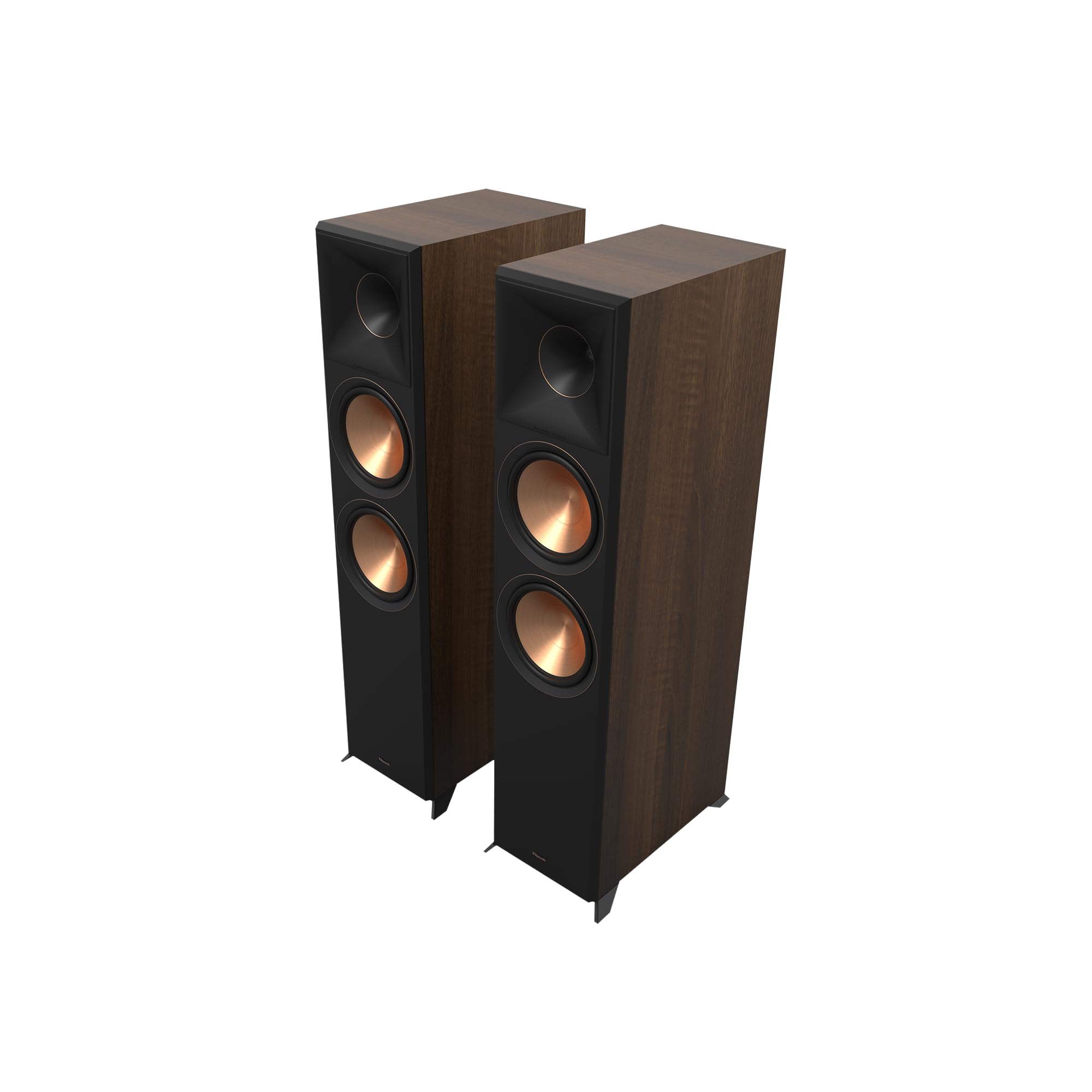
The Klipsch RP-8000F II is a floorstanding speaker built on the brand’s hallmark of high sensitivity and dynamic impact. It employs a 1-inch Linear Travel Suspension (LTS) titanium diaphragm tweeter mated to a new, larger 90° x 90° silicone composite hybrid Tractrix horn, designed for efficient, controlled, and clear high-frequency reproduction. This is paired with new dual 8-inch Cerametallic woofers that promise flawless sound reproduction with minimal distortion and maximum efficiency.
With a sensitivity rating of 98 dB, the RP-8000F II can produce high sound pressure levels with surprisingly modest amplifier power, making them an excellent match for a wide range of electronics. Listeners report that these speakers sound clean and crisp regardless of the power fed to them, producing deep, heavy bass and clear highs. They are particularly praised for their performance in home theater setups, where their dynamic range and clarity bring movie soundtracks to life.
Some users note that the high sensitivity also means the horn tweeter can be unforgiving with poorly recorded or low-quality source material, sounding bright or harsh. They also benefit from a break-in period of 10-12 hours before they settle into their intended performance. The speakers are physically substantial and may require sturdy flooring. They represent a classic Klipsch formula: high output, high efficiency, and a lively, engaging sound.
Why it’s great
- Very high sensitivity (98dB) works well with low-powered amps
- Dual 8-inch woofers deliver powerful, impactful bass
- Classic, attractive design with copper accents
Good to know
- Horn tweeter can sound bright with poor recordings
- Requires a break-in period to sound its best
- Large, heavy speakers requiring substantial space
10. Wharfedale – Linton (Speakers Only)

This entry is for the Wharfedale Linton 85th Anniversary speakers sold without the dedicated stands. This is an important distinction for buyers who already own quality speaker stands or who plan to mount them on a sturdy surface. The core speaker is identical to the one reviewed above: a large, 3-way bookshelf design with an 8-inch Kevlar cone woofer, a 2-inch soft dome midrange, and a 1-inch soft dome tweeter.
The Linton’s signature is its smooth, refined, and balanced acoustic spectrum. It avoids the excessive brightness that can plague modern speakers, offering instead a rich, easy-going presentation that is deeply satisfying for long listening sessions. The midrange is its standout feature, reproducing vocals and acoustic instruments with a stunning realism and warmth. Users describe the sound as “musical” rather than “analytical,” prioritizing engagement and enjoyment over pinpoint imaging.
Without the stands, the speaker loses its ideal listening height and the visual cohesion of the full system. Placement becomes more critical, as the cabinet needs to be at ear level and given some breathing room to sound its best. The speaker is still heavy and requires a capable amplifier (25-200W recommended). This option is best for the buyer who values the Linton’s sonic character but has the flexibility to integrate it into an existing setup with their own stands.
Why it’s great
- Same exceptional 3-way driver design as the full system
- Warm, non-fatiguing, and highly musical sound signature
- Excellent value for the level of driver engineering
Good to know
- Requires third-party stands for optimal performance
- Large and heavy, demanding sturdy support
- Placement is critical for achieving a coherent soundstage
11. Polk Audio Reserve R200

The Polk Audio Reserve R200 is a large bookshelf speaker designed with home theater performance as a primary goal, though it performs admirably in stereo as well. It features a 1-inch Pinnacle Ring Radiator Tweeter (a variation on the ring radiator design) paired with a 6.5-inch Turbine Cone Woofer. This driver combination is engineered for “ultra-clear, crisp highs” and “smooth, detailed midrange” with “effortless bass.”
The R200 is Dolby Atmos and IMAX Enhanced certified, and its bass reflex cabinet features Polk’s patented X-Port technology with Eigentone Filter (ETF) to eliminate port noise and standing waves for a cleaner low-end. Users report that the speaker offers a wide, enveloping soundstage with excellent imaging and off-axis performance. It is notably less bright and less fatiguing than some competitors like the KEF LS50, offering a fuller, warmer sound with superior bass extension.
Some users note that the tweeter’s dispersion is relatively narrow (within about 20 degrees), which can limit the optimal listening “sweet spot” in a multi-seat home theater setup. The speaker is also quite large for a bookshelf design, requiring deep shelves or sturdy stands. For home theater enthusiasts seeking a speaker that delivers impactful, detailed, and non-fatiguing sound for both movies and music, the Polk R200 is a compelling choice in its class.
Why it’s great
- Warm, full, and non-fatiguing sound signature
- Excellent bass extension for a bookshelf speaker
- Dolby Atmos and IMAX Enhanced certified
Good to know
- Narrow tweeter dispersion limits the “sweet spot” width
- Large cabinet size requires deep stands or shelves
- May not have the top-end bite some listeners prefer
12. Edifier S2000MKIII
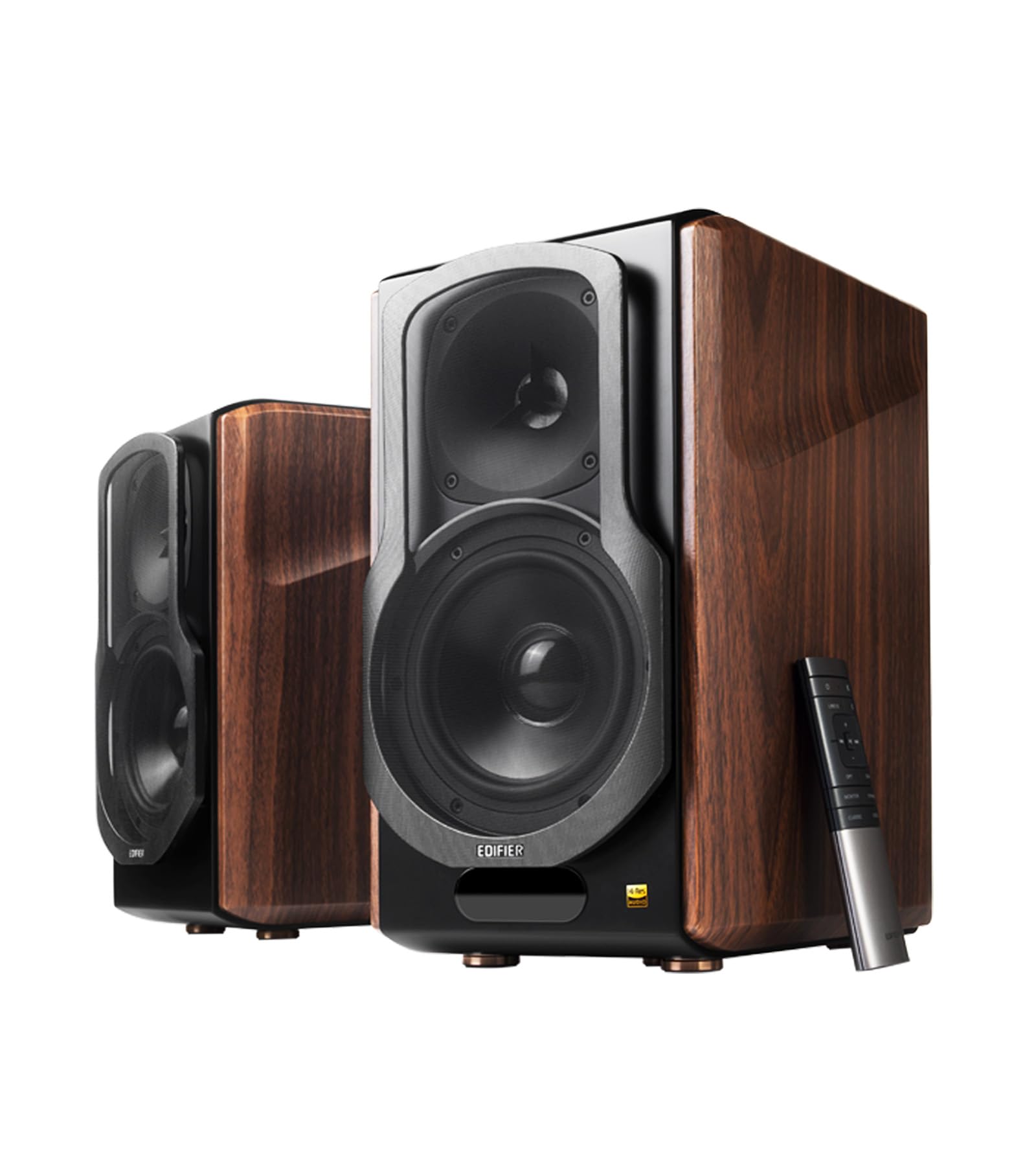
The Edifier S2000MKIII is an active bookshelf speaker that punches significantly above its weight class, offering a taste of high-end performance at a distinctly accessible price. It employs a planar diaphragm tweeter, a design typically found in far more expensive speakers, which provides fast, detailed, and low-distortion high frequencies. This is paired with a 5.5-inch aluminum diaphragm woofer, and the whole system is driven by a tri-amped 130-watt power stage.
Bluetooth 5.0 with aptX HD decoding allows for high-resolution wireless streaming, while physical inputs include optical, coaxial, and dual RCA for connection to TVs, turntables, and computers. The included wireless remote controls volume, input, and a basic EQ. Users consistently describe the sound as “eargasmic” and “excellent,” noting that the speakers produce deep, punchy bass and clear mids and treble that rivals far more expensive systems. At moderate volumes, they offer a genuinely engaging listening experience.
The S2000MKIII has several limitations that mark its budget origins. The soundstage and instrument separation, while good for the price, do not match dedicated passive speakers in a higher tier. Some users report a slightly rolled-off treble that lacks the ultimate sparkle of premium tweeters. The remote control is functional but cheap, with unreadable symbols in low light. It is a superb entry point into high-fidelity audio, but the experienced audiophile will quickly find its boundaries.
Why it’s great
- Planar tweeter provides refined, detailed highs
- Tri-amped design ensures clean power distribution
- Excellent value for its level of performance
Good to know
- Soundstage and separation are limited compared to higher tiers
- Remote control is cheap and hard to use in the dark
- Treble may be slightly rolled off for some listeners
13. KEF LSX II

The KEF LSX II is a compact, wireless active speaker system designed for high-resolution audio in smaller spaces or desktop setups. It shares the same Uni-Q driver technology as its larger sibling, the LS50 Wireless II, but scales it down for a more compact cabinet. The system supports streaming up to 24-bit/384kHz and includes a remarkably versatile array of inputs, including HDMI ARC (for TV connection) and USB-C (for a laptop), which are rare in this form factor.
The LSX II delivers the signature detailed, exceptionally well-imaged sound that KEF is known for, with crisp treble, clear mids, and tight, balanced bass. Wireless streaming is handled via AirPlay 2, Google Chromecast, Roon, and Bluetooth, and the KEF Connect app provides a central control hub. Users praise the LSX II for its ability to turn a desk or small room into a serious listening environment, and the addition of HDMI ARC makes it a compelling alternative to a soundbar for TV audio.
The system’s compact size means it cannot match the sheer room-filling power or bass depth of larger speakers. For optimal sound, the wireless connection is functional, but a wired connection between the speakers is recommended for best performance and stability. The KEF Connect app, while improved, can still be clunky to navigate. The LSX II is a fantastic choice for the discerning listener who needs a versatile, high-fidelity system for a desk or small living space.
Why it’s great
- Versatile inputs including HDMI ARC and USB-C
- Compact form factor with high-resolution sound
- Excellent imaging and detail for its size
Good to know
- Limited bass output and overall power compared to larger systems
- Wired inter-speaker connection is recommended for stability
- App control can be clunky
FAQ
Do I need a powerful amplifier for high-end speakers?
Should I choose active or passive speakers for my first high-end system?
Why do some high-end speakers sound “bright” or “harsh”?
What is the “break-in” period for new speakers?
Final Thoughts: The Verdict
For most users, the audio high end speakers winner is the KEF LS50 Wireless II because it delivers world-class sound, features, and integration in a single, elegant package, removing the complexity of amplifier matching. If you want the ultimate passive bookshelf for a dedicated system, grab the SVS Ultra Evolution Bookshelf. And for a plug-and-play home theater powerhouse that rivals dedicated wired systems, nothing beats the Nakamichi Dragon 11.4.6.