
Mounting a set of dedicated winter tires is the single cheapest insurance policy you can buy against black ice, packed snow, and the kind of sudden stop your all-seasons simply cannot deliver below 45°F. The rubber compound in a true winter tire stays pliable in freezing temperatures, while the deep tread blocks and dense siping literally bite into surfaces that turn summer tires into hockey pucks. Skipping the swap means gambling your daily commute on a compound designed for warm asphalt.
I’m Min — the co-founder and writer behind Gadgets Feed. This guide is the result of dozens of hours cross-referencing load ranges, UTQG ratings, 3PMSF certifications, and real-world owner reports across nine specific models to separate the genuinely competent winter shoes from the ones that just look the part.
Read on for a carefully curated selection of the best budget winter tires that balance cold-weather performance with tread life and predictable handling.
How To Choose The Best Budget Winter Tires
Choosing a winter tire on a budget means knowing where you can compromise and where you absolutely cannot. Tread compound, siping density, and the presence of a 3PMSF certification are non-negotiable for real snow capability, while minor road noise or a slightly stiffer ride are acceptable trade-offs for a lower entry price.
Check for the Three-Peak Mountain Snowflake (3PMSF) Logo
This marking, which appears as a mountain with a snowflake inside it, indicates the tire meets a minimum performance threshold for snow traction set by the ASTM. Tires without this logo may still be marketed as “winter” tires, but they lack the validated test results that guarantee reliable grip in moderate to heavy snow. Every tire on this list is 3PMSF certified unless otherwise noted.
Understand Load Range and Inflation Pressure
Standard Load (SL) tires are adequate for most passenger cars and offer a softer ride, while Extra Load (XL) tires support heavier vehicles and can handle higher air pressures, which is often necessary for crossovers and SUVs. Running an XL tire at lower-than-recommended pressures can cause uneven wear, so always match the load range to your vehicle’s door sticker requirements.
Choose Between Studdable and Non-Studded
If you drive on sheer ice or hard-packed snow regularly — think mountain passes or rural roads that stay iced over for weeks — a studdable tire gives you the option to add metal pins for extra bite. For mixed highway and city driving on plowed roads, non-studded winter tires with dense siping provide quieter performance and less dry-road wear.
Quick Comparison
On smaller screens, swipe sideways to see the full table.
| Model | Category | Best For | Key Spec | Amazon |
|---|---|---|---|---|
| General Altimax Arctic 12 | Premium | Studdable ice traction | Load Index 99 / XL | Amazon |
| Cooper Evolution Winter | Premium | Deep snow performance | Load Index 95 / XL | Amazon |
| Firestone Winterforce 2 | Mid-Range | Reliable daily winter driving | Studdable / SL | Amazon |
| Hankook Winter i*Pike X W429 | Premium | Longer tread life in studded use | Load Index 94 / XL | Amazon |
| NEXEN Winguard Winspike 3 (205/60R16) | Mid-Range | Ice grip with optional studs | 3PMSF / XL | Amazon |
| NEXEN Winguard Winspike 3 (195/65R15) | Mid-Range | Budget ice traction | 3PMSF / XL | Amazon |
| Kenda Kenetica KR217 | Mid-Range | Quiet ride & wet traction | 60k mile warranty | Amazon |
| Bridgestone WeatherPeak | Mid-Range | All-weather versatility | 3PMSF / XL | Amazon |
| Armstrong Ski-Trac PC | Budget | Entry-level winter value | Load Index 92 / SL | Amazon |
In‑Depth Reviews
1. General Tire Altimax Arctic 12

The General Altimax Arctic 12 earns the top spot by delivering studdable ice traction and a 1,709-pound load capacity in its 205/65R16 99T variant, all while carrying a 3PMSF certification that validates its cold-weather compound. Owners report dramatic improvements over all-season tires in snow stopping distance and slush handling, with one driver noting it outperformed an AWD vehicle running all-seasons on a 2016 Hyundai Sonata. The directional tread pattern channels water and slush through deep grooves to resist hydroplaning at highway speeds.
Reviewers consistently praise the tire’s composition for minimal wear after 1,200 miles and note that studs are rarely needed for confident driving on ice — though the option exists for those who face black ice weekly. The ride is slightly firmer than a premium touring tire, but the trade-off is predictable cornering grip in temperatures well below freezing. Noise levels at 70 mph are rated as moderate, well within the typical range for the winter tire class.
Budget-conscious buyers will appreciate that the Altimax Arctic 12 often undercuts more famous Scandinavian winter tires by a meaningful margin while still matching their snow performance in independent owner comparisons. The XL load range makes it suitable for heavier sedans and smaller crossovers without requiring a separate set of reinforced sidewalls.
Why it’s great
- Studdable design offers optional ice grip without sacrificing dry-road comfort.
- 3PMSF certified with proven snow and slush evacuation.
- High load index (99) supports heavier vehicles without sidewall flex.
Good to know
- Slightly bouncier ride compared to premium touring tires.
- Fuel economy drops by approximately 2 mpg in winter conditions.
2. Cooper Evolution Winter
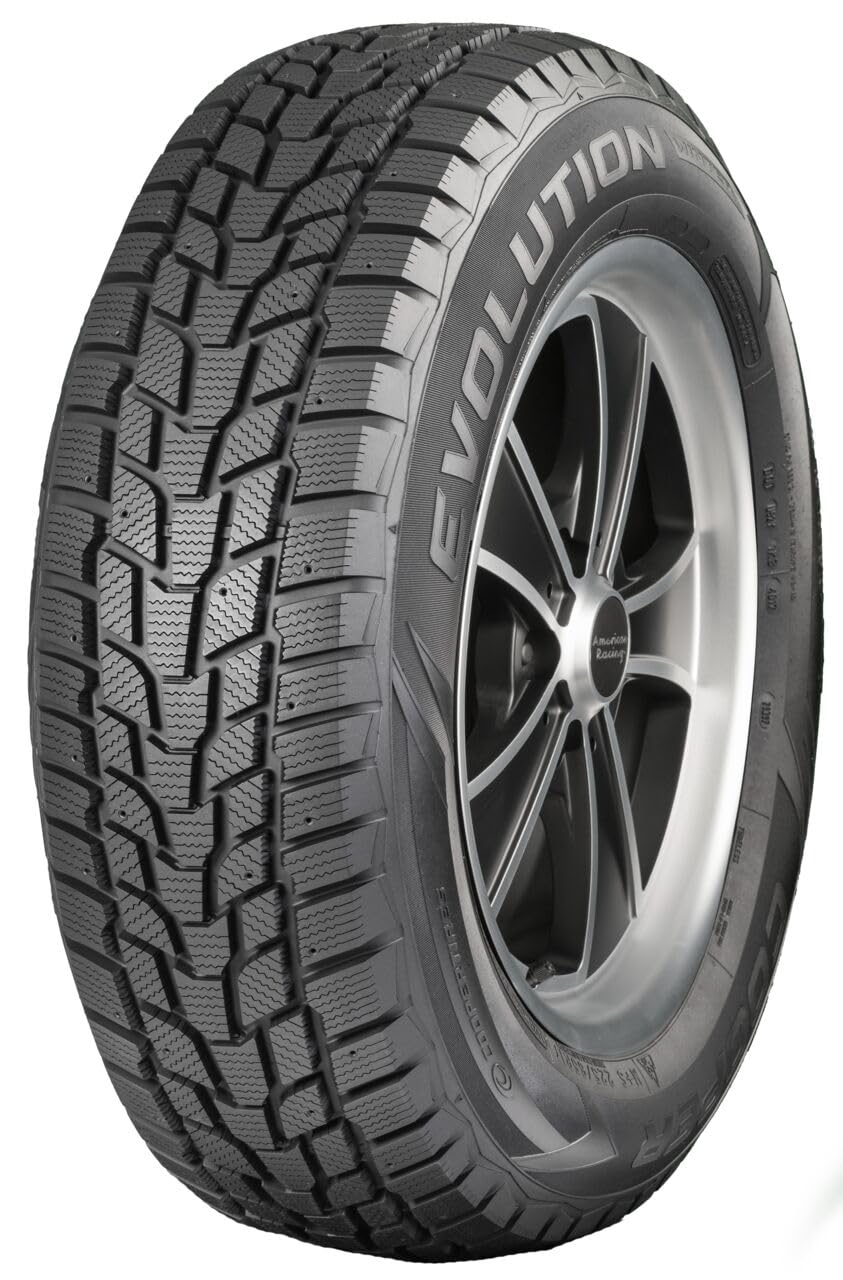
The Cooper Evolution Winter is a dedicated severe-weather tire designed to power through deep snow rather than just skate over it. Its aggressive tread pattern features large, independent blocks that provide the mechanical bite needed to climb steep, unplowed driveways and navigate rural roads where snow accumulates beyond six inches. Owners of Subaru Outbacks and manual Ford Focuses report no sliding on 13-percent gradients and the ability to maintain speed in conditions that force trucks off the road.
This tire is also studdable, giving drivers in extreme ice zones the option to add TSMI-approved pins for additional traction on glare ice. The ribbed tread design reduces highway noise to a negligible level for a winter tire — several reviews noted no audible difference compared to their all-season set on dry pavement. The XL load range supports a 1,521-pound capacity per tire, making it a strong match for both compact cars and smaller SUVs.
Tread life reports are uniformly positive, with owners in northern Michigan and the Rockies logging multiple seasons without significant wear. The compound stays flexible in subzero starts, and the tire balances well at speeds up to 80 mph. Cooper’s reputation for durability in the winter segment is well represented here, and the price point slots it comfortably in the premium-tier value zone.
Why it’s great
- Exceptional deep-snow traction on steep grades and unplowed roads.
- Minimal highway noise for a studdable winter tire.
- Proven durability with multi-season performance reported.
Good to know
- Not ideal for drivers who prioritize dry-road handling above snow grip.
- Best suited for regions with consistent snow coverage rather than sporadic flurries.
3. Firestone Winterforce 2

Firestone’s Winterforce 2 is built for drivers who need dependable winter traction without stepping up to a premium price bracket. It is a studdable tire that delivers notably improved braking and cornering on snow and ice compared to any all-season tire, as documented by owners using it on a VW Jetta and a Toyota Corolla in high-mileage delivery routes. The directional tread pattern pushes slush outward to maintain contact with the road surface, and the stiff sidewalls resist folding during aggressive turns on packed snow.
Multiple reviewers emphasize the tire’s ability to handle 6-to-8-inch snowfalls on a front-wheel-drive sedan, noting a dramatic difference in confidence compared to all-season rubber. The trade-off is an audible hum on dry pavement, though most drivers find it easy to mask with music or cabin noise. Fuel economy impacts are minimal, with several reports indicating no measurable loss versus summer tires.
The Winterforce 2’s Standard Load (SL) rating keeps the ride compliant for passenger cars, but it is not recommended for heavy crossovers or vehicles that require XL sidewall reinforcement. Some owners reported issues with sidewall durability on rough terrain, so it is best suited for maintained roads rather than off-road winter conditions. If you need a set that performs well for the winter months and can be removed in spring, this is a strong choice.
Why it’s great
- Excellent snow and ice performance at a mid-range price.
- Studdable design for optional ice traction enhancement.
- Minimal fuel economy penalty noted in owner reports.
Good to know
- Audible road noise on dry pavement, especially at highway speeds.
- Some reports of sidewall vulnerability on rough, unpaved roads.
4. Hankook Winter i*Pike X W429
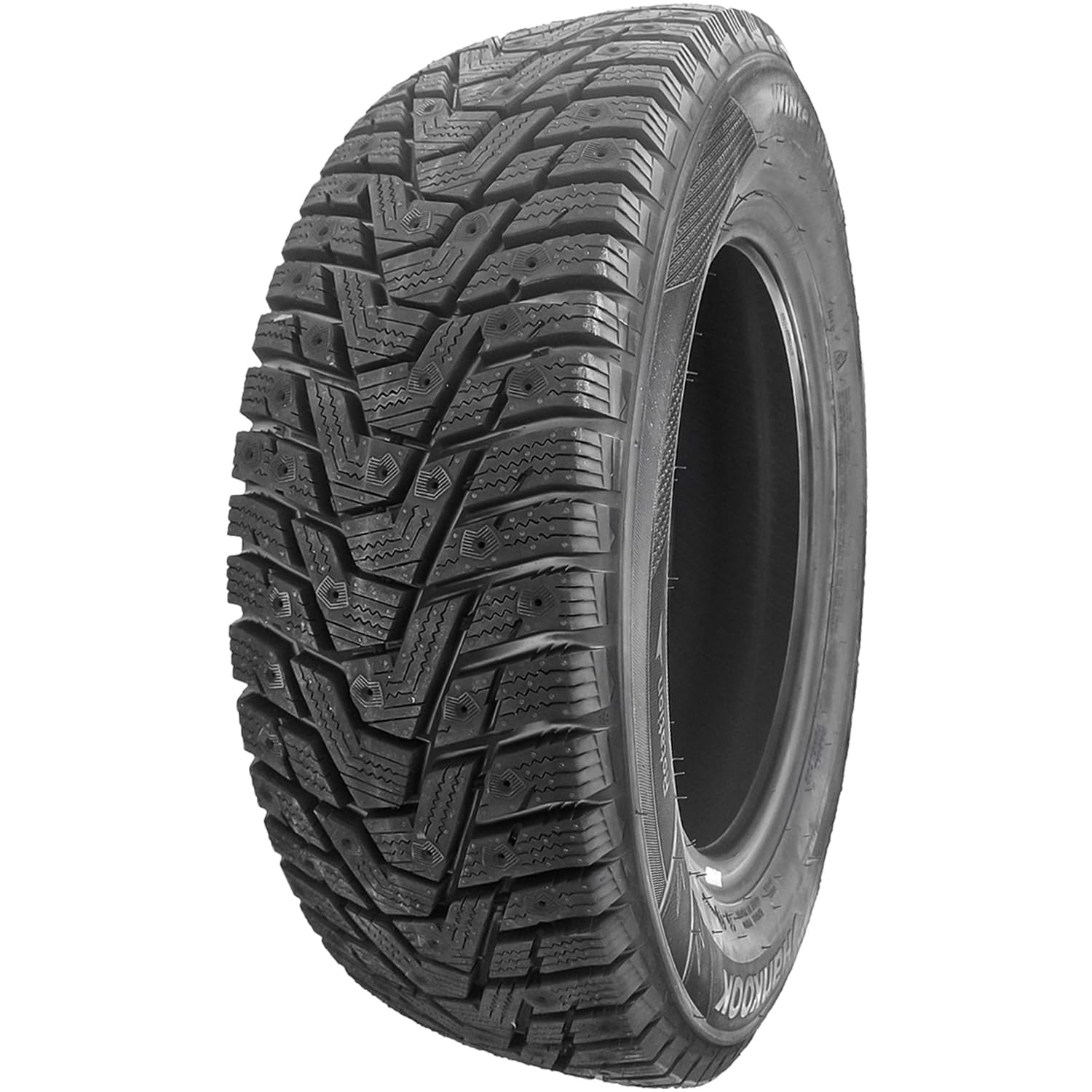
The Hankook Winter i*Pike X W429 is a premium studdable winter tire that prioritizes tread life and compound durability without sacrificing cold-weather grip. Its directional tread pattern features a wide center block that increases the rubber-to-snow contact patch, improving both acceleration and braking on packed surfaces. The rubber formulation is engineered to resist the accelerated wear that often plagues softer winter compounds, with some owners in Minnesota and Alaska reporting multiple seasons of reliable service.
Owner feedback highlights the tire’s smooth ride quality and low noise output — a rare combination for a studdable model. Drivers in Michigan praise its ability to handle wet, cold roads with solid traction, and one reviewer noted that the tire feels quiet enough for daily highway commuting. The XL load range supports up to 1,477 pounds per tire at a maximum pressure of 50 PSI, giving it the structural rigidity needed for heavier sedans and coupes.
A small number of reviews mention accelerated tread wear around the 10,000-mile mark, but the majority of reports indicate normal wear rates consistent with the winter tire category. The W429 can accept TSMI #11 studs for extreme ice conditions, and the 3PMSF certification confirms its snow performance credentials. For buyers who plan to keep a set of winters for three or more seasons, the Hankook’s compound longevity is a clear advantage.
Why it’s great
- Long-lasting tread compound suitable for multiple winter seasons.
- Smooth, quiet ride for a studdable winter tire.
- Wide center block improves snow traction and directional stability.
Good to know
- Some owners report faster-than-expected wear after 10,000 miles.
- Stud insertion requires a professional installation tool or service.
5. NEXEN Winguard Winspike 3 (205/60R16)
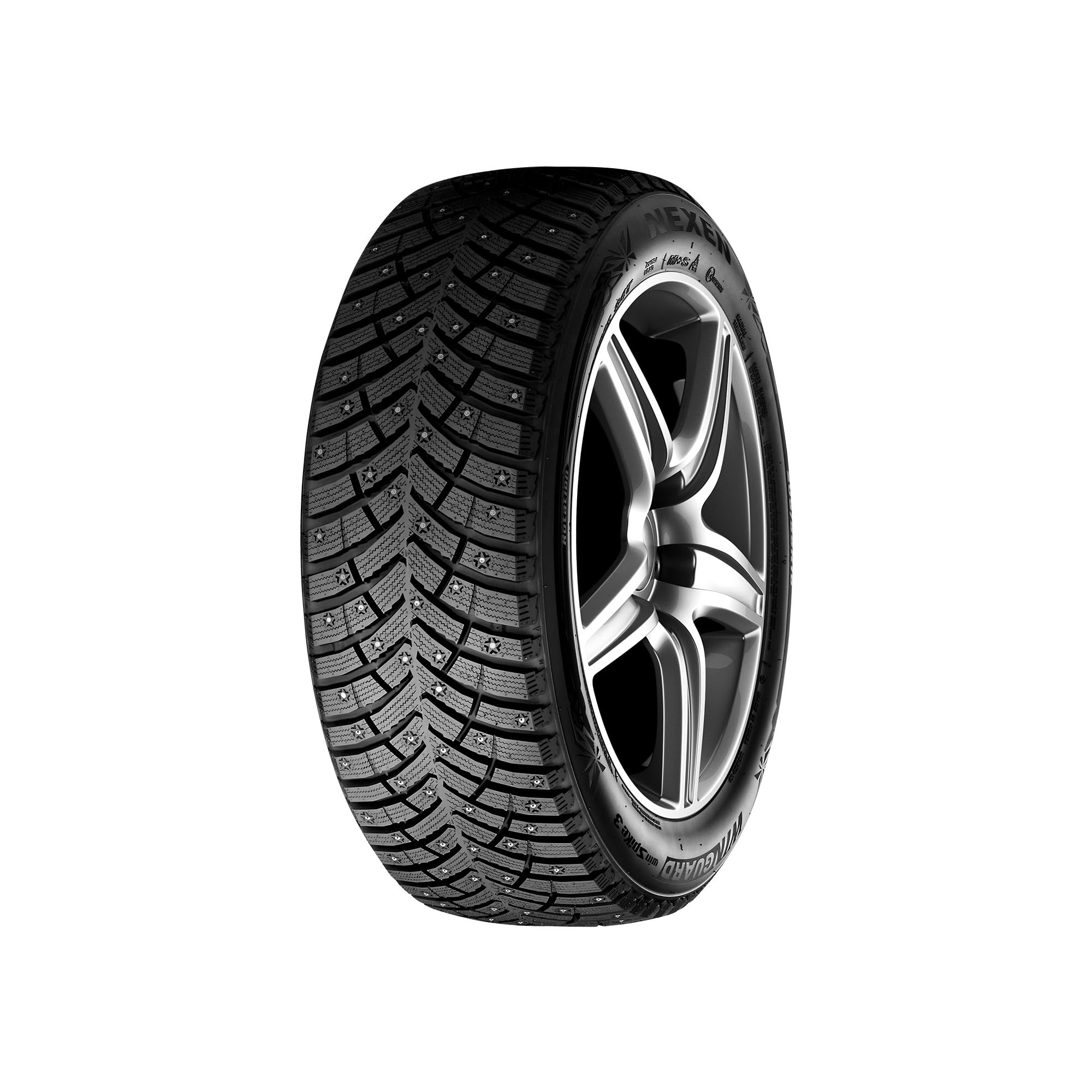
The NEXEN Winguard Winspike 3 in 205/60R16 brings a 3PMSF certification and optional TSMI #12 stud compatibility to the compact crossover and midsize sedan market. Owners driving Subaru Outbacks in the Colorado Rockies report driving 27 miles on solid ice without slipping, attributing the confidence to the directional tread pattern and dense siping that provides hundreds of biting edges per tire. The rubber compound remains pliable in sub-zero temperatures, and the 96 XL load index supports heavier loads without compromising sidewall stiffness.
Highway performance is a standout feature: multiple testers note the tires balance smoothly at 80 mph with no vibration, and road noise is rated as lower than expected for an aggressively treaded winter tire. The deep circumferential grooves evacuate slush quickly to reduce hydroplaning risk during wet snow conditions. One owner in Colorado used a set through a full summer and reported they could have lasted another winter, underscoring the compound’s durability.
The primary concern reported by a small minority of owners involves potential bead-seating issues that led to mysterious air loss on two tires. While the sample size is limited, it is worth verifying the installation seal with a trusted shop. For the vast majority of users, the Winspike 3 delivers ice grip and snow traction that rivals tires costing significantly more, with the added bonus of Nexen’s Total Coverage Warranty including 36 months of roadside assistance.
Why it’s great
- Exceptional ice grip; owners report driving miles on solid ice without slipping.
- Quiet highway ride at speeds up to 80 mph.
- 3PMSF certified with optional stud capability for extreme conditions.
Good to know
- Occasional reports of bead-seal defects causing slow air leaks.
- Directional tread limits rotation options to front-to-rear only.
6. NEXEN Winguard Winspike 3 (195/65R15)
The 195/65R15 variant of the NEXEN Winguard Winspike 3 offers the same ice-eating tread compound and directional groove design as its larger sibling, packaged for compact cars and older sedans that run 15-inch wheels. It carries the same 3PMSF certification and TSMI #12 stud compatibility, meaning the smallest cars can punch above their weight in winter conditions. Owners of a 2024 Toyota Tundra reported no complaints about grip in New England winters, while a driver of a FWD Passat at 9,000 feet in Colorado noted the tires provided enough traction on ice that studs were never installed.
The dense siping pattern creates hundreds of tiny slots that open on hard surfaces to bite into ice and close on dry pavement to preserve rubber. This mechanism helps the tire maintain consistent performance across the variable conditions of a typical winter week — from black ice mornings to dry afternoon highways. Rural postal carriers in the Michigan snow belt have tested these tires extensively, reporting sufficient confidence for off-road mail delivery without ever resorting to the optional studs.
A small number of owners reported identical bead-sealing issues seen in the larger variant, which appears to be an intermittent quality-control concern rather than a design flaw. The tires weigh 20.8 pounds each and carry a 95 XL load rating, making them suitable for vehicles that need extra sidewall reinforcement without stepping up to a heavier, more expensive model. For the price, the Winspike 3 punches far above its weight class in pure ice traction.
Why it’s great
- 3PMSF certified with ice grip that eliminates the need for studs in most conditions.
- Light enough for compact cars yet carries an XL load rating.
- Proven in rural snow belt and high-altitude mountain use.
Good to know
- Some early units had bead-seal quality issues leading to air loss.
- Directional tread limits rotation patterns and spare tire compatibility.
7. Kenda Kenetica KR217

The Kenda Kenetica KR217 takes a different approach to winter performance by prioritizing a quiet, comfortable ride without sacrificing wet and snow traction. Its symmetric tread pattern and computer-optimized design reduce road noise to near-touring-tire levels, which is rare in the winter category. Four large circumferential grooves channel water away from the contact patch to resist hydroplaning, while high sipe density provides the micro-bites needed for snow and ice grip.
The tire is backed by a 60,000-mile limited manufacturer tread life warranty, which is an outlier in the winter tire segment where most models offer no formal mileage guarantee. This makes the Kenetica KR217 an appealing option for drivers who plan to use a single set of tires year-round in milder winter climates, or who simply want a winter tire that won’t wear out in two seasons. Owners report extremely quiet operation on both dry and wet roads, with improved sand traction as a bonus for those who drive on loose surfaces.
The SL load range limits the KR217 to vehicles that do not require XL-rated sidewalls, so it is best suited for standard passenger cars and small crossovers. The maximum pressure of 44 PSI is sufficient for most applications, but heavier SUVs should check their factory recommendations. For buyers who value a serene cabin and long tread coverage over hardcore ice-biting ability, this Kenda is a unique and compelling choice.
Why it’s great
- 60,000-mile tread life warranty — extremely rare for winter tires.
- Exceptionally quiet ride for a winter-focused tread.
- Strong hydroplaning resistance from four wide grooves.
Good to know
- No 3PMSF certification, so deep snow performance is less assured.
- SL load range not suitable for heavy SUVs or trucks requiring XL.
8. Bridgestone WeatherPeak

The Bridgestone WeatherPeak is an all-weather tire, meaning it carries the 3PMSF certification while maintaining a compound designed for year-round use. It is not a full winter tire in the traditional sense — the tread depth and siping density are lower than a dedicated winter model — but it provides superior wet and dry grip compared to typical all-season tires while still meeting the snow traction standard. Owners appreciate the quiet, long-lasting touring characteristics that allow the tire to stay on the car through spring and fall without excessive wear.
The XL load range supports a 1,356-pound capacity per tire, which is sufficient for most sedans and compact crossovers. Reviews consistently praise the tire’s build quality and the production freshness of units received, with DOT codes as recent as 13 months old indicating rapid turnover from the manufacturer. Buyers who need a single set of tires that can handle the occasional snowstorm without swapping twice a year will find the WeatherPeak a practical compromise.
It is important to note that the WeatherPeak is not a replacement for a dedicated winter tire in regions with heavy, prolonged snow cover or frequent ice storms. The tread pattern lacks the aggressive biting edges and deep grooves of a true winter tire, so performance on unplowed roads and glare ice will be limited. For drivers in the southern snow belt or urban areas with rapid plowing, however, it offers a convincing blend of capability and convenience.
Why it’s great
- 3PMSF certified yet works year-round, eliminating seasonal storage needs.
- Quiet, long-lasting touring compound with good wet grip.
- Recent production dates reported by buyers.
Good to know
- Not a dedicated winter tire; deep snow and ice performance is limited.
- Tread design lacks the aggressive siping of purpose-built winter models.
9. Armstrong Ski-Trac PC
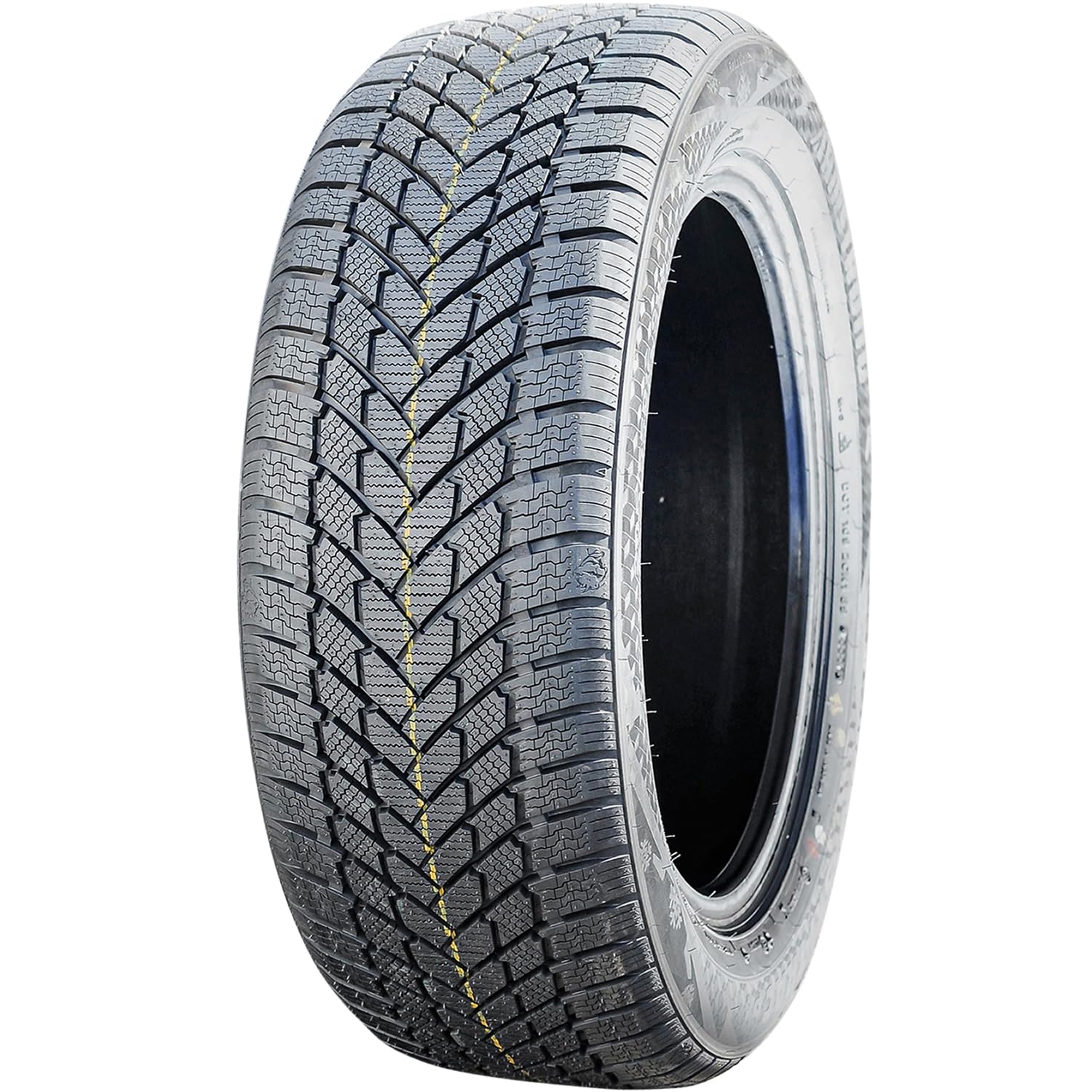
The Armstrong Ski-Trac PC is the definition of a budget winter tire that outperforms its price tag. Designed as a touring winter tire for passenger cars, it offers a directional tread pattern with deep grooves and dense siping that deliver genuine snow and ice traction for drivers who cannot afford premium brands. Owners of 2006 Honda Civics and 2007 Saturn Ions report it outperforms top-tier all-season tires on ice and light snow, with exceptional braking performance that inspires confidence on cold mornings.
Real-world reviews highlight the tire’s ability to handle 6-8 inches of snow, slush, and ice without compromising cornering stability. One buyer saved over compared to a local tire shop quote while receiving a set manufactured in the 33rd week of 2024, which demonstrates that budget does not always mean old inventory. The 20-pound weight keeps unsprung mass low, and the 92 SL load range is appropriate for compact sedans and economy cars.
The trade-offs are predictable: off-the-line traction on loose snow is weaker than premium winter tires, and the ride quality is noticeably more firm than a high-end touring model. The Ski-Trac PC also lacks a 3PMSF certification, so drivers in regions with strict winter tire requirements should verify local laws before purchasing. For the price, this is the tire that proves winter capability does not require a four-figure investment.
Why it’s great
- Extremely affordable entry into dedicated winter tire performance.
- Excellent braking and cornering on ice and packed snow.
- Recent manufacturing dates reported in buyer reviews.
Good to know
- No 3PMSF certification, which may be required in some jurisdictions.
- Weaker off-the-line traction compared to mid-range winter tires.
- Firmer ride quality than premium touring models.
FAQ
Can I use a winter tire year-round if it has a high tread life rating?
What does the “M+S” marking mean on a budget winter tire?
Is it worth buying studded winter tires for city driving?
Final Thoughts: The Verdict
For most drivers, the best choice among the best budget winter tires is the General Altimax Arctic 12 because it delivers studdable ice traction, a high 99-index load capacity, and proven owner satisfaction at a price that undercuts much of the premium competition. If you want deep-snow capability that lets you tackle unplowed driveways and steep grades, grab the Cooper Evolution Winter. And for the absolute tightest budget where every dollar counts, nothing beats the Armstrong Ski-Trac PC for basic winter performance without breaking the bank.