
Picking the wrong CPU for a tight build can bottleneck your entire system, leaving a decent GPU starved for data while your wallet took the hit. The budget processor market is a minefield of older architectures, locked multipliers, and mismatched socket requirements — one wrong move and you are stuck with a chip that struggles to keep Windows 11 responsive. The goal is raw instruction-per-clock efficiency at the lowest possible entry cost, without sacrificing the modern platform features that actually matter.
I’m Min — the co-founder and writer behind Gadgets Feed. I have spent hundreds of hours analyzing benchmark charts, comparing socket compatibility across Intel and AMD generations, and reading through thousands of verified buyer reports to find the processors that deliver real-world speed without the premium upcharge.
This guide cuts through the spec sheet noise to help you find the right best budget cpu for your actual motherboard and performance needs, whether you are building a new PC or squeezing life out of an older platform.
How To Choose The Best Budget CPU
Buying a cheap processor is not just about finding the lowest sticker price — it is about finding the highest IPC (instructions per clock) for your motherboard socket. A modern i3 or Ryzen 5 on a current chipset will often outperform an older i7 on a dead platform, while consuming less power and supporting faster RAM.
Socket and Chipset Compatibility
Your motherboard dictates your CPU choice more than any other factor. LGA 1700 boards support 12th, 13th, and 14th-gen Intel chips, while AM4 boards can run Ryzen 5000-series after a BIOS update. AM5 is the newest AMD platform, supporting only Ryzen 7000 and 9000-series with DDR5. Do not buy a 6th-gen i7 unless you already own a Z170 or Z270 board — the deal dies if you have to buy a vintage motherboard.
Integrated Graphics vs. Discrete GPU Requirement
Processors with an “F” suffix (like the i3-14100F) lack integrated graphics — you must pair them with a dedicated GPU. Non-F Intel chips and most Ryzen G-series include basic graphics, which is fine for office work or media playback but not for gaming. If you are building without a GPU to save money, avoid F-series parts entirely.
Thermal Solution and Cooler Cost
Budget CPUs usually ship with a stock cooler that is adequate for stock speeds but loud under load. AMD’s Wraith Stealth runs quieter than Intel’s RM1 at medium fan speeds, but neither handles sustained all-core loads well. Factor in – for an aftermarket air cooler if you value low noise or plan to run the CPU at full load for extended periods.
Quick Comparison
On smaller screens, swipe sideways to see the full table.
| Model | Category | Best For | Key Spec | Amazon |
|---|---|---|---|---|
| Intel i5-14400F | Mid-Range | Best hybrid core value | 10 cores (6P+4E), 20MB cache, up to 4.7 GHz | Amazon |
| AMD Ryzen 5 7600X | Premium | Fastest single-core in class | 6 cores, 12 threads, 5.3 GHz boost, AM5 | Amazon |
| Intel i3-14100F | Mid-Range | Best entry-level gaming | 4 P-cores, 8 threads, up to 4.7 GHz, LGA 1700 | Amazon |
| AMD Ryzen 5 9600X | Premium | Zen 5 efficiency leader | 6 cores, 12 threads, 5.4 GHz boost, 65W TDP | Amazon |
| AMD Ryzen 5 5600X | Mid-Range | Best AM4 gaming value | 6 cores, 12 threads, 4.6 GHz boost, 65W TDP | Amazon |
| Intel i7-6700 | Budget | Best for LGA 1151 upgrades | 4 cores, 8 threads, 3.4 GHz base, 8MB cache | Amazon |
| Intel i3-12100F | Budget | Cheapest LGA 1700 entry | 4 cores, 8 threads, up to 4.3 GHz, 12MB cache | Amazon |
In‑Depth Reviews
1. Intel Core i5-14400F

The i5-14400F strikes the hardest value per dollar in the budget CPU space by offering a hybrid architecture of six Performance-cores and four Efficient-cores, totaling 10 cores and 16 threads. Its 20MB L3 cache and unlocked 4.7 GHz boost clock let it punch well above its weight in multithreaded tasks like video transcoding and game streaming while remaining cool enough with the included RM1 cooler.
Real-world tests show it running 67°C under sustained gaming load with a cheap air cooler, delivering roughly 25–30 more FPS than the i7-9700F it often replaces. The platform flexibility is notable — drop it into any LGA 1700 board with a 600 or 700-series chipset, and it supports both DDR4 and DDR5 memory, so you can reuse older RAM to keep the total build cost down.
Keep in mind this is an F-series part, so you need a discrete GPU. The included stock cooler is adequate for office work but will spin up under prolonged rendering loads. For gamers building on a strict budget who want headroom for multi-tasking, this chip is the clear winner.
Why it’s great
- 10-core hybrid design handles heavy multitasking better than any 6-core competitor.
- Supports both DDR4 and DDR5 memory for flexible budget builds.
- Runs relatively cool at 67°C under load with a basic air cooler.
Good to know
- Requires a discrete GPU — no integrated graphics.
- Stock cooler is adequate but loud during extended CPU-intensive workloads.
2. AMD Ryzen 5 7600X

The Ryzen 5 7600X is the fastest single-core performer in this entire roundup, with a 5.3 GHz boost clock built on TSMC’s 5nm process. Its six Zen 4 cores push through 32MB of L3 cache plus 6MB of L2, delivering IPC that beats Intel’s Raptor Lake parts in lightly threaded games like Counter-Strike 2 and Valorant by a meaningful margin.
AM5 platform support means you get DDR5-5200+ memory support and PCIe 5.0 lanes for future GPU upgrades. Under load with an aftermarket air cooler, temps hover around 80–85°C — no throttling occurs, but you do need to buy a cooler separately since no thermal solution is included. Users pairing it with an RTX 4070 Super report smooth 1440p gaming at high refresh rates.
The trade-off is platform cost: DDR5 sticks and an AM5 B650 board cost more than equivalent LGA 1700 options. But if you want the best possible frame rates right now and plan to upgrade within the AM5 socket in two years, the 7600X is the smarter long-term investment.
Why it’s great
- Highest single-core boost clock in class at 5.3 GHz for maximum gaming FPS.
- PCIe 5.0 and DDR5 support future-proofs the entire platform.
- AM5 upgrade path to Ryzen 9000-series chips later.
Good to know
- No cooler included — factor in + for a decent air tower.
- Runs hot at 80+ °C under sustained load, requiring good case airflow.
3. Intel Core i3-14100F

Four P-cores and eight threads on a modern Raptor Lake Refresh architecture give the i3-14100F a massive IPC advantage over any Skylake-era i7. Running at up to 4.7 GHz out of the box with a 12MB L3 cache, this chip handles Hogwarts Legacy and Baldur’s Gate 3 at 1080p Ultra settings when paired with an Arc A580 or RX 580 without breaking a sweat.
The real trick is platform versatility: it works on both 600-series (after a BIOS update) and 700-series LGA 1700 boards, and it accepts DDR4 or DDR5 memory. Boot times from an M.2 NVMe drive land around 8 seconds into Windows 11. The RM1 stock cooler is adequate for stock settings, though buyers note it gets audible under extended gaming sessions.
It is also a popular choice for light home servers thanks to its low TDP and solid single-threaded performance in applications like Plex transcoding.
Why it’s great
- Excellent 1080p gaming performance for under with modern IPC.
- Dual memory support (DDR4/DDR5) saves money on the motherboard.
- Low power draw makes it ideal for budget builds and home servers.
Good to know
- No integrated graphics — requires a discrete GPU for any video output.
- Stock cooler is loud under sustained load.
4. AMD Ryzen 5 9600X

The Ryzen 5 9600X is the Zen 5 flagship for budget-conscious builders who still want the latest architecture. Its six cores boost to 5.4 GHz, and the 38MB total cache (6MB L2 + 32MB L3) improves data throughput in cache-sensitive workflows like game physics calculations and compilation tasks. The TDP stays at a modest 65W, making it one of the coolest-running processors in this list.
Owner reports consistently show load temperatures below 65°C even with air cooling, and the chip handles DDR5-6400 memory with tight timings without instability. The AM5 platform gives you PCIe 5.0 support on B650 and X670 motherboards. While raw gaming FPS is similar to the 7600X, the 9600X runs cooler and consumes about 15W less under full load, which matters in small form factor builds.
No cooler is included, so you will need to budget for an aftermarket solution. The Zen 5 architecture also has a known BIOS quirk where some boards hang at the cursor during cold boots — a quick BIOS update from the manufacturer usually resolves it. This is the best option if you want the latest tech without the power draw.
Why it’s great
- Zen 5 architecture with 5.4 GHz boost for top IPC in its class.
- 65W TDP keeps temperatures low even with compact coolers.
- AM5 platform with PCIe 5.0 for future-proofing.
Good to know
- No cooler included — requires aftermarket purchase.
- Some BIOS quirks on early motherboards need firmware updates.
5. AMD Ryzen 5 5600X

The Ryzen 5 5600X remains the gold standard for AM4 upgrades. Six Zen 3 cores and 12 threads with a 4.6 GHz boost clock and 35MB of total cache deliver Cinebench R23 scores around 11,000 multi and 1,600 single — numbers that still trade blows with Intel’s i5-12600K while drawing only 65W. The bundled Wraith Stealth cooler keeps noise in check at stock speeds.
In gaming, it pushes 100+ FPS consistently at 1080p and 1440p when paired with an RX 6700 XT. CP2077 runs at roughly 90 FPS, Tomb Raider at 140 FPS, and CS:GO at 400 FPS. The AM4 platform means you can drop it into a B450 or X570 board after a BIOS update, making it the cheapest upgrade path for anyone still on Ryzen 3000 or older.
The only real downside is that PCIe 4.0 support requires a B550 or X570 board — older B450 boards will run the chip at PCIe 3.0 speeds, which is still fine for most current GPUs. If you own an AM4 motherboard and want a massive performance boost without replacing the entire platform, this is the move.
Why it’s great
- Elite 100+ FPS gaming performance at a mid-range price point.
- Includes a quiet and effective Wraith Stealth cooler.
- Drop-in AM4 upgrade for B450/X570 owners with a BIOS update.
Good to know
- PCIe 4.0 requires B550 or X570 motherboard.
- No integrated graphics — dedicated GPU mandatory.
6. Intel Core i7-6700
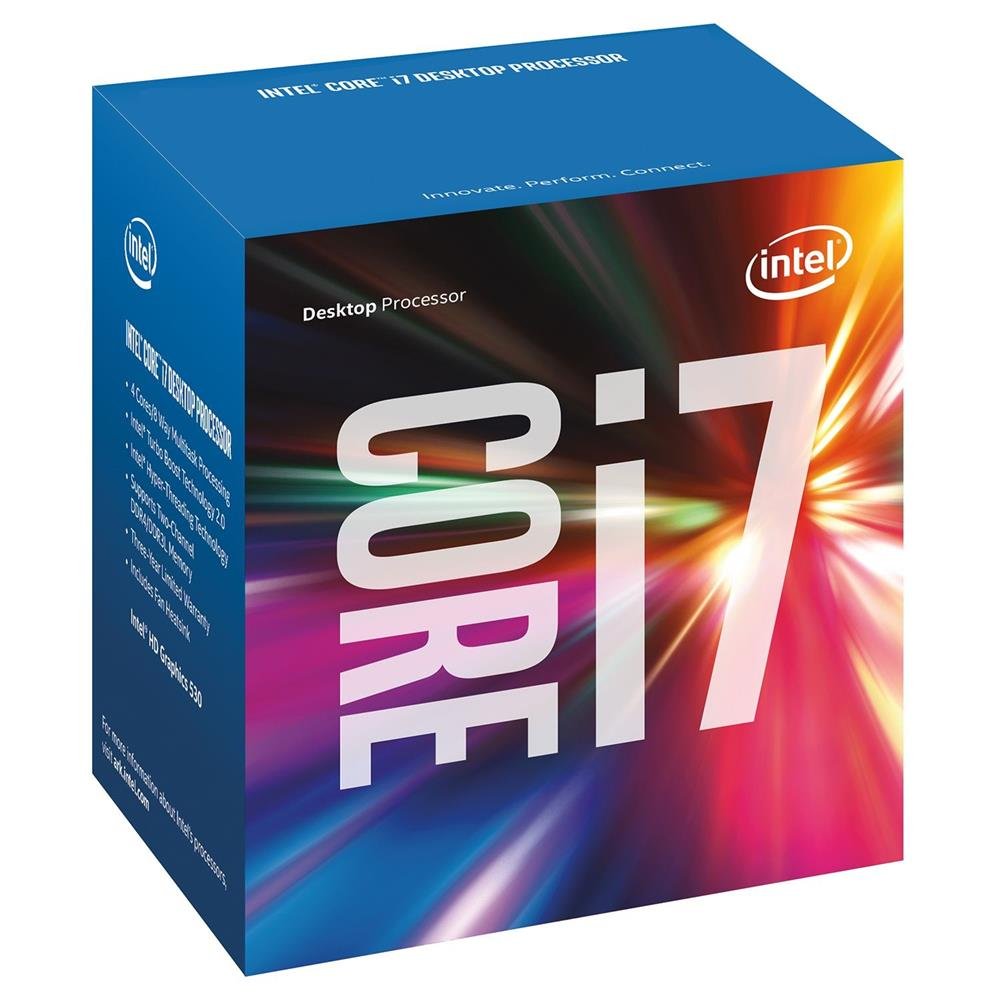
The i7-6700 is the Skylake quad-core with Hyper-Threading that defined the mid-range for years. Running a 3.4 GHz base clock with a 4.0 GHz turbo, its 8MB of L3 cache and 75W TDP kept it cool enough for passive or near-silent builds. Owners report idle temperatures around 28–30°C with a high-end air cooler and load temperatures staying under 40°C for music production workloads.
This chip only makes sense if you already own a Z170 or Z270 motherboard. It is a significant step up from an i3-6100 or Pentium G4560 on the same platform, and the integrated HD 530 graphics are good enough for a basic office or HTPC build without a GPU. The 200MHz slower turbo versus the i7-7700 is not noticeable in real use.
The catch is price inflation — sellers often ask for – for a 2015 processor, which is hard to justify when a modern i3-12100F costs similar money and offers nearly double the IPC. Only buy this if you are stuck with an LGA 1151 board and cannot afford a platform reset.
Why it’s great
- Very cool running with low TDP, ideal for quiet builds.
- Integrated HD 530 graphics work without a GPU.
- Excellent upgrade for existing LGA 1151 owners.
Good to know
- Outdated Skylake IPC — modern i3-12100F beats it in every task.
- Stock cooler is loud under all-core loads.
7. Intel Core i3-12100F

The i3-12100F is the cheapest way to get on the LGA 1700 platform. Four Golden Cove cores running at up to 4.3 GHz with 12MB of L3 cache give it genuine gaming chops — it runs Fallout, VR titles, and even modern shooters adequately when paired with a budget GPU. The power draw is low enough that you can cool it passively in a compact case.
Owner reviews note that the included stock cooler is “absolutely terrible” both thermally and acoustically. This is not a surprise at this price point, but it means you will probably want to spend on a Thermalright Assassin X to keep fan noise tolerable. The chip itself is a fantastic performer for the entry-level slot.
Platform support spans both DDR4 and DDR5, although with this chip you will almost certainly pair it with cheap DDR4 to keep the total build under budget. If you are building the absolute cheapest system possible that still runs Windows 11 and modern games at 60 FPS, this is the starting point.
Why it’s great
- Cheapest entry point to the LGA 1700 platform with modern IPC.
- Low power draw works well in compact and budget builds.
- Supports both DDR4 and DDR5 memory for future upgrades.
Good to know
- Stock cooler is poor — budget for an aftermarket cooler.
- F-series means no integrated graphics.
FAQ
Can a budget CPU bottleneck a high-end GPU?
Should I buy an older i7 or a newer i3 for gaming?
Is it worth paying extra for an unlocked K-series CPU on a budget build?
Final Thoughts: The Verdict
For most users, the best budget cpu winner is the Intel Core i5-14400F because its hybrid 10-core architecture delivers genuine performance headroom without demanding a premium motherboard or DDR5 memory. If you want the highest possible single-core speed for competitive gaming, grab the AMD Ryzen 5 7600X. And for the absolute cheapest path to a modern gaming PC, the Intel Core i3-14100F offers unbeatable value for entry-level builds.