
Your phone’s camera is a compromise. The lens is tiny, the sensor is cramped, and true optical zoom is a fantasy.
I’m Min — the co-founder and writer behind Gadgets Feed. Sorting through the sensor sizes, zoom ranges, and stabilization systems to find the true value leaders among today’s point-and-shoot cameras is what this deep research session is built for.
Whether you need pocketable zoom for a trip, a vlogging companion with gimbal-stabilized video, or a capable first camera for a budding photographer, this guide cuts through the noise to find the absolute best affordable point and shoot digital camera that fits your specific scenario and budget.
How To Choose The Best Affordable Point And Shoot Digital Camera
Not every pocket cam is built the same. The secret to getting real value lies in understanding the sensor, the zoom, and the stabilization tech — everything else is window dressing. Here’s what actually matters.
Sensor Size: The Light-Gathering Truth
The physical size of the imaging sensor determines how much light each pixel can capture. A 1-inch sensor (like the one inside the Sony RX100 VII) collects significantly more light than the 1/2.3-inch sensors found in most budget travel zooms. This translates directly to cleaner, less noisy shots indoors, at dusk, or in any dimly lit venue. Check the sensor type — 1-inch is premium, BSI CMOS is the modern standard for compact zooms, and older CCD sensors are best avoided.
Optical Zoom vs. Digital Zoom: The Real Reach
Optical zoom uses physical glass elements to magnify the scene, retaining full image resolution at any focal length. Digital zoom simply crops and enlarges the center pixels, destroying detail. When you see “30x” or “50x” on a compact camera, verify it’s optical zoom. The Panasonic ZS99’s 30x Leica lens is a true optical zoom, delivering sharp frames from wide landscapes to distant stage shots. Ignore digital zoom numbers entirely — they are marketing noise.
Stabilization: The Handheld Confidence Factor
At full optical zoom, handheld camera shake is magnified proportionally. Optical Image Stabilization (OIS) physically shifts lens elements to counteract motion, while 3-axis mechanical gimbals (like the DJI Osmo Pocket 3) physically float the sensor. These are the only two methods that produce genuinely smooth footage and sharp telephoto stills. Software-based EIS (electronic image stabilization) crops into the frame and introduces a wobble effect — adequate for social clips but not for serious photography or vlogging.
Quick Comparison
On smaller screens, swipe sideways to see the full table.
| Model | Category | Best For | Key Spec | Amazon |
|---|---|---|---|---|
| Panasonic LUMIX ZS99 | Compact Superzoom | Travel & Concerts | 30x Optical Leica Zoom | Amazon |
| Canon EOS R100 Kit | Mirrorless Interchangeable | Learning Photography | 24.1MP APS-C Sensor | Amazon |
| Canon EOS Rebel T7 Kit (32GB) | DSLR Kit | Beginner All-In-One | 24.1MP APS-C + Bag | Amazon |
| Canon EOS Rebel T7 Lens Kit | DSLR Starter | Interchangeable Lenses | 24.1MP APS-C Sensor | Amazon |
| DJI Osmo Pocket 3 Combo | Gimbal Vlog Camera | Vlogging & Video | 1″ Sensor, 3-Axis Gimbal | Amazon |
| KODAK PIXPRO FZ55 | Entry Point-and-Shoot | Casual Snapshots | 5x Optical Zoom | Amazon |
| Minolta MND23-BL | Entry Point-and-Shoot | Selfies & Social Media | Rear Selfie Lens, 48MP | Amazon |
| 8K Digital Camera (Aboobu) | Budget Vlog Camera | Kitchen Sink Value | WiFi, 64GB Card, 2 Batteries | Amazon |
| Sony RX100 VII | Premium Compact | Maximum Pocket Image Quality | 1″ Stacked Sensor, 24-200mm | Amazon |
In‑Depth Reviews
1. Panasonic LUMIX TZ/ZS99 Point and Shoot Camera

The Panasonic ZS99 brings the rare combination of a 24-720mm Leica zoom lens and genuine pocketability into a single body. This is the camera you slip into a jeans pocket before heading to a daytime parade, a night concert, or a cross-country flight — and the 30x optical reach means you frame the details, not the crowd. The 1,840k-dot tiltable touchscreen is sharp enough for precise composition even under harsh sunlight.
The 20.3MP BSI CMOS sensor handles daylight with accurate color reproduction and minimal noise up to ISO 1600. 4K video at 30fps is solid for casual clips, and the dedicated “Send Image” button paired with Bluetooth 5.0 makes offloading shots to your phone truly frictionless. The stepped zoom function and Lens Position Resume are thoughtful touches that let you recall a specific focal length without hunting through the zoom ring.
Low-light performance is the trade-off at this price point — images past ISO 3200 show noticeable grain, and the autofocus can hunt in dim venues. The menu system is deep, so expect a learning curve for manual settings. If you value optical reach and portability over ultimate image fidelity, this is the most versatile travel companion in the list.
Why it’s great
- 30x Leica optical zoom is the class leader for pocket zooms
- Compact body fits in a standard pants pocket
- Tiltable touchscreen and Bluetooth 5.0 for easy sharing
Good to know
- Image quality degrades noticeably above ISO 1600
- Autofocus struggles in very low light conditions
- Deep menu system requires time to learn
2. Canon EOS R100 Mirrorless Camera RF-S18-45mm Kit

The EOS R100 is the gateway into the Canon RF mirrorless system, pairing a 24.1MP APS-C sensor with the DIGIC 8 processor for excellent image quality in a body that weighs just 356 grams with the kit lens attached. This is the smallest and lightest EOS R-series body, making it a true take-anywhere camera for beginners who want interchangeable lenses without the bulk of a DSLR.
The Dual Pixel CMOS AF covers 143 zones with human face and eye detection, delivering reliable autofocus for portraits and vlogging. Continuous shooting at 6.5 fps in One-Shot AF is fast enough for capturing candid moments and pets in motion. 4K video at 24fps is available, and the 120fps HD slow-motion mode adds creative flexibility for social content. The kit RF-S18-45mm lens is a compact starter, and the system accepts all Canon RF lenses for future upgrades.
You get a single UHS-I SD slot and no in-body image stabilization — you rely on the lens’s optical IS for steady shots. Battery life is approximately 290 shots per charge using the viewfinder, which is typical for entry mirrorless cameras. For a beginner serious about learning photography with a system that offers a clear upgrade path, this is the smartest entry point.
Why it’s great
- Large APS-C sensor delivers superior low-light performance over 1/2.3″ compacts
- Dual Pixel CMOS AF with eye/face detection is fast and reliable
- Lightest EOS R body at 356g — genuinely portable
Good to know
- No in-body image stabilization
- Single SD slot; battery life is modest at ~290 shots
- Kit lens range (18-45mm) is limited for distant subjects
3. Canon EOS Rebel T7 DSLR Camera Kit with 64GB Card & Bag
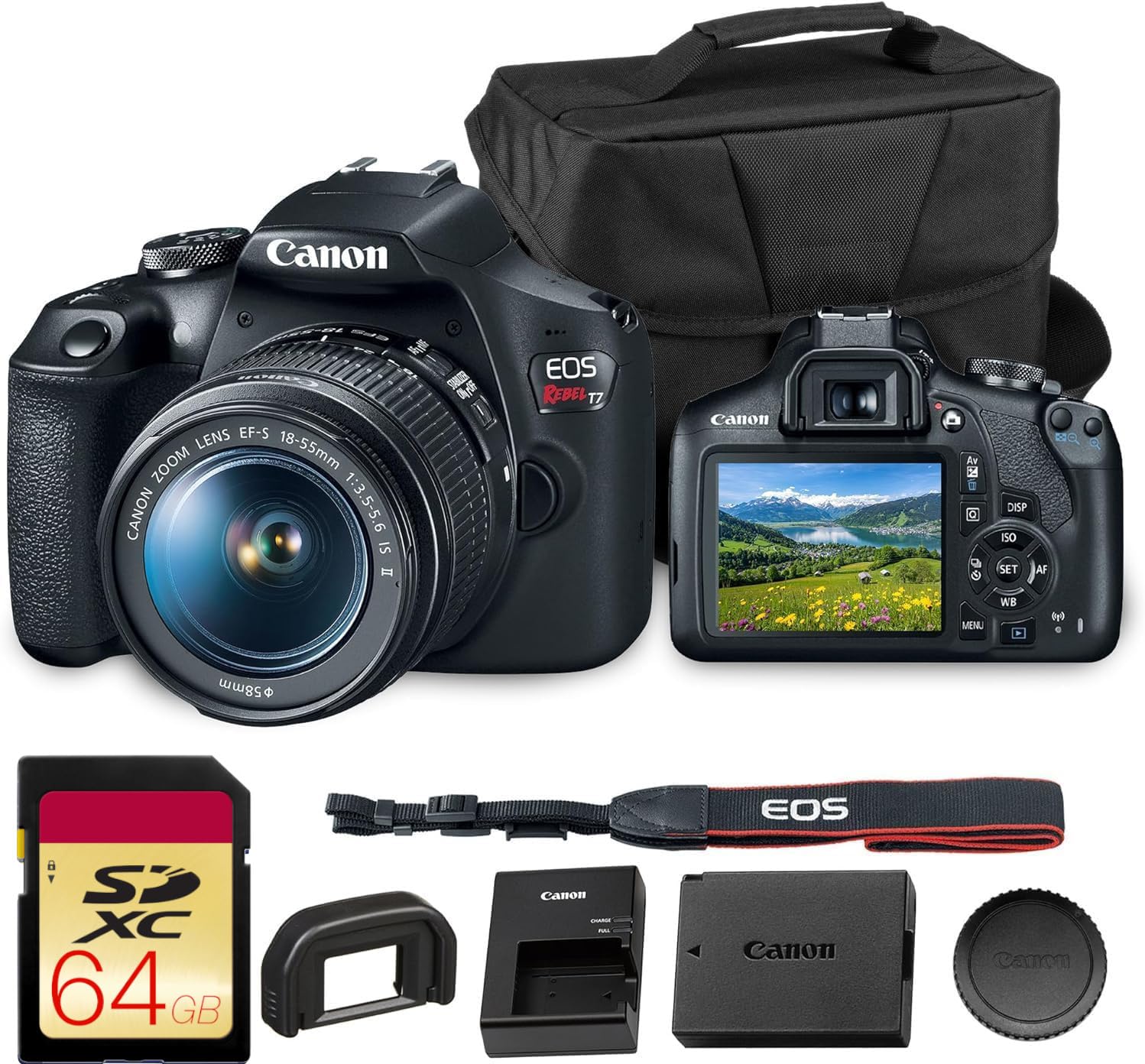
This kit bundles the Canon EOS Rebel T7 with an 18-55mm lens, a 64GB SD card, a shoulder bag, and all necessary accessories, making it a true out-of-the-box solution for the beginner DSLR photographer. The 24.1MP APS-C CMOS sensor paired with the DIGIC 4+ image processor delivers the same sensor size found in cameras costing twice as much, providing genuine shallow depth-of-field capabilities that no compact point-and-shoot can match.
The optical viewfinder offers 95% frame coverage with no lag, a feature that helps new photographers learn composition without relying on a screen. Built-in WiFi and NFC let you transfer jpegs to your phone for social sharing. The 9-point AF system is dated but sufficient for stationary and slow-moving subjects. Battery life is excellent — approximately 500 shots per charge, which means you can shoot all day without carrying a spare.
The DIGIC 4+ processor shows its age in video mode (no 4K, only 1080p at 30fps) and continuous shooting tops out at 3 fps. The kit lens is soft at the edges and suffers from chromatic aberration in high-contrast scenes. If you prioritize still image quality and want a full educational DSLR experience without spending more, this kit delivers exceptional per-dollar value.
Why it’s great
- Full DSLR kit with bag, 64GB card, and lens — ready to shoot immediately
- 24.1MP APS-C sensor offers pro-level depth of field control
- Excellent battery life of ~500 shots per charge
Good to know
- No 4K video; 1080p at 30fps only
- 3 fps continuous shooting is slow for action
- 9-point AF system feels basic compared to modern mirrorless
4. Canon EOS Rebel T7 DSLR Camera EF-S 18-55mm Lens Kit

The standard Canon Rebel T7 body-and-lens kit is the classic entry-point into DSLR photography, offering a 24.1MP APS-C sensor with native ISO up to 6400 (expandable to 12800). The EF-S 18-55mm f/3.5-5.6 IS II lens includes optical image stabilization, which helps keep handheld shots sharp at lower shutter speeds — a genuine advantage over the bundled kit-lens-only versions sold without stabilization.
The 9-point AF system with AI Servo AF is capable of tracking moving subjects for casual sports and pet photography. The optical viewfinder provides 95% coverage with zero latency, a tactile advantage for learning exposure fundamentals. WiFi and NFC are built in, allowing image transfer to the Canon Camera Connect app. The camera also works as a high-quality webcam via Canon’s EOS Utility Webcam Beta Software, adding home office utility.
Video is capped at 1080p at 30fps, and the DIGIC 4+ processor produces visible noise above ISO 3200. The camera body is bulkier than mirrorless alternatives, and you will need to purchase an SD card separately as one is not included. For budget-conscious learners who want a proven, well-supported DSLR platform, this is the reliable standard.
Why it’s great
- Established Canon DSLR ecosystem with vast EF/EF-S lens support
- Kit lens includes optical image stabilization for sharper handheld shots
- Functions as a high-quality webcam for streaming and video calls
Good to know
- No 4K video recording
- DIGIC 4+ processor shows noise above ISO 3200
- SD card not included in the package
5. DJI Osmo Pocket 3 Creator Combo
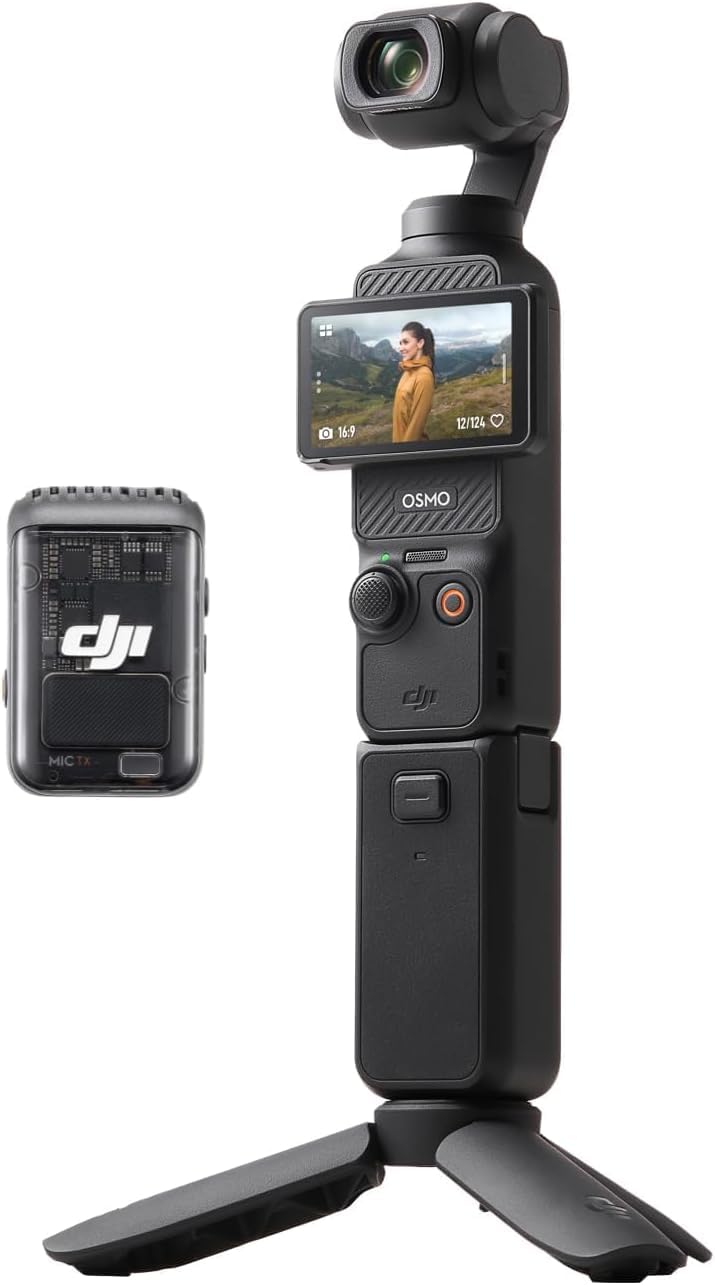
The DJI Osmo Pocket 3 redefines what a pocket camera can achieve, packing a 1-inch CMOS sensor and a 3-axis mechanical gimbal into a body that weighs only 179 grams. This is the only camera on this list that produces genuinely cinematic, shake-free video while walking, running, or panning. The 2-inch rotatable touchscreen switches between horizontal and vertical framing instantly — a killer feature for cross-platform content creation.
4K video at 120fps allows silky smooth slow-motion playback, and the 10-bit D-Log M color profile captures over one billion colors for professional-grade color grading in post. ActiveTrack 6.0 locks onto faces or objects and keeps them center-frame as you move, effectively turning the camera into an automated tracking rig. The Creator Combo adds a DJI Mic 2 transmitter, a battery handle (extending run time to ~166 minutes), a wide-angle lens, and a mini tripod.
The 1-inch sensor delivers excellent low-light performance compared to 1/2.3-inch sensors, but image quality still trails APS-C cameras for still photography. The gimbal mechanism feels delicate and requires care during transport. The price point is higher than most entry-level kits, but for video-first creators who prioritize stabilization and portability, the Osmo Pocket 3 is the definitive tool.
Why it’s great
- 3-axis mechanical gimbal delivers unmatched handheld video stability
- 1-inch CMOS sensor produces clean, detailed 4K footage in low light
- 2-inch rotatable touchscreen with instant horizontal/vertical switching
Good to know
- Gimbal is relatively fragile and not drop-resistant
- Still image quality is good but not competitive with APS-C cameras
- Premium price point and accessory cost add up quickly
6. KODAK PIXPRO FZ55 16MP Digital Point & Shoot Camera
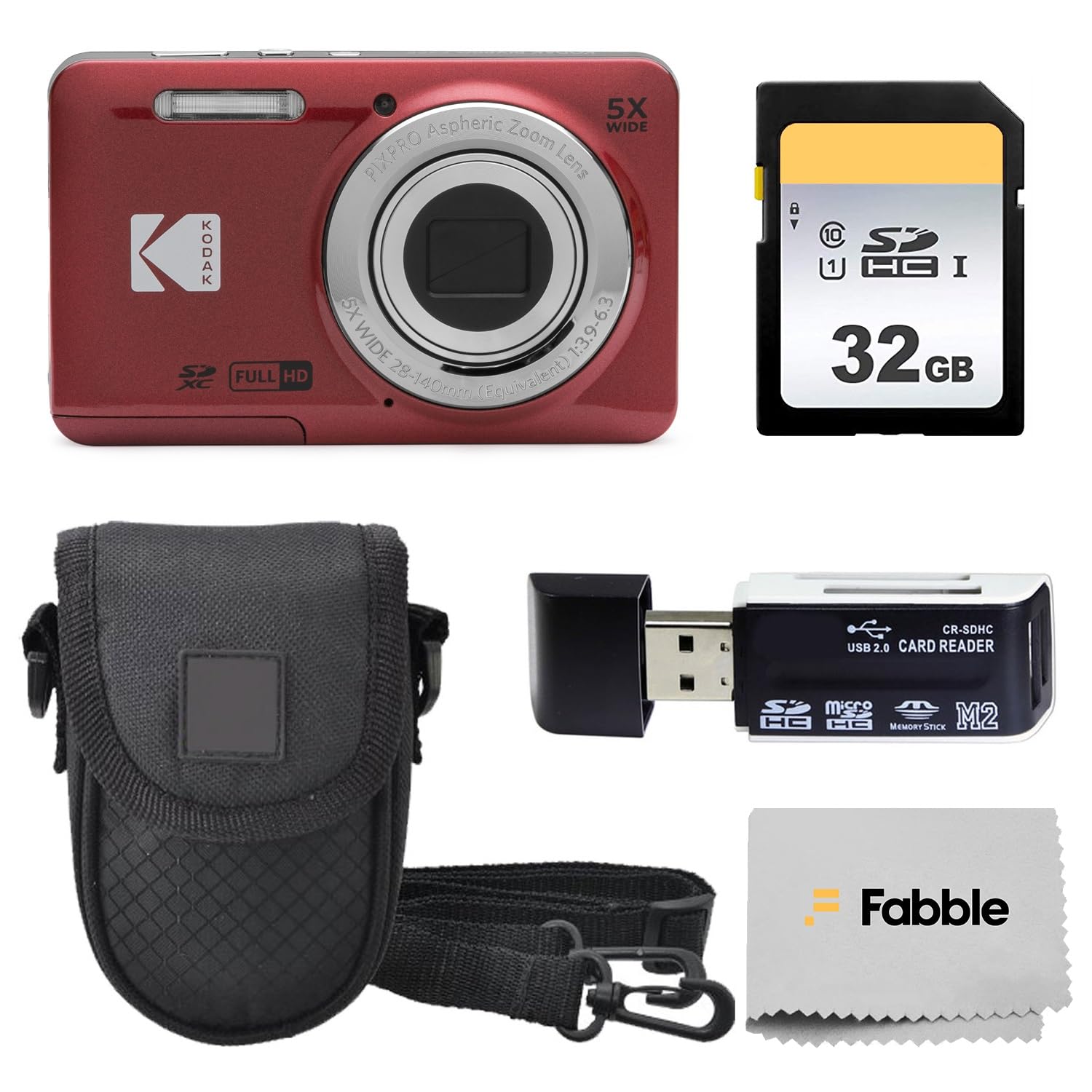
The KODAK PIXPRO FZ55 is the purest point-and-shoot experience on this list — no interchangeable lenses, no complex menus, just a 16MP CMOS sensor, a 5x optical zoom (28-140mm equivalent), and a 2.7-inch LCD screen. This is the camera you hand to a child, a grandparent, or anyone who wants better photos than their phone without learning aperture priority. The bundled 32GB SD card, protective case, and card reader mean zero extra purchases.
1080p Full HD video at 30fps is sufficient for family memories and basic vlogging. The 28mm wide-angle lens fits group shots and landscapes, while the 5x optical zoom is decent for stage photos from a mid-range seat. Image stabilization is both digital and optical, which helps reduce blur in handheld shots at full zoom. The camera runs on two standard AA batteries or a rechargeable lithium-ion pack, giving you flexibility when traveling.
Image quality is limited by the small 1/2.3-inch sensor — expect significant noise in indoor lighting and reduced dynamic range in high-contrast scenes. The 2.7-inch screen has a modest 230k-dot resolution, making accurate focus confirmation difficult. This is a no-fuss camera for casual outdoor snapshots, not for serious photography or low-light work.
Why it’s great
- Complete bundle with SD card, case, and reader — ready to shoot out of box
- Simple, intuitive operation ideal for children and beginners
- AA battery compatible allows easy power replacement on the go
Good to know
- Small 1/2.3″ sensor struggles in low-light conditions
- Low-resolution 230k-dot LCD screen
- No 4K video; limited to 1080p at 30fps
7. Minolta 48MP Digital Camera with Rear Selfie Lens

The Minolta MND23-BL is built around a unique rear selfie lens that lets you frame self-portraits using the main camera sensor rather than a low-resolution front-facing lens. This is a clever ergonomic solution for vloggers and social media creators who want higher-quality selfie shots. The 48MP interpolated sensor (native resolution is lower) captures 4K UHD video and includes phase detection autofocus for sharp subject tracking.
The 2.8-inch LCD screen is bright enough for outdoor framing, and the built-in creative modes — 9 scene modes, color filters, slow motion, and time lapse — make it easy to experiment without editing software. The 16x digital zoom is mostly marketing (optical zoom is absent), but the f/2.2 aperture lens allows decent light gathering for its class. The package includes a 32GB memory card, rechargeable battery, and carrying pouch.
Image quality is pedestrian compared to established brands like Canon or Panasonic — expect soft details and compression artifacts, especially in 48MP mode. Battery life is limited to approximately 140 highest-quality shots with the flash off, per user reports. This is a novelty camera best suited for teens and casual social media users who prioritize the selfie lens gimmick over absolute image fidelity.
Why it’s great
- Rear selfie lens enables high-quality self-portraits with the main sensor
- Built-in creative filters and slow-motion mode for social content
- Complete kit includes memory card, battery, and pouch
Good to know
- 48MP resolution is interpolated; native sharpness is lower
- Digital zoom only — no optical zoom means quality loss at distance
- Battery life is limited; expect around 140 shots per charge
8. 8K Digital Camera (Aboobu) with WiFi, 64GB Card, 2 Batteries
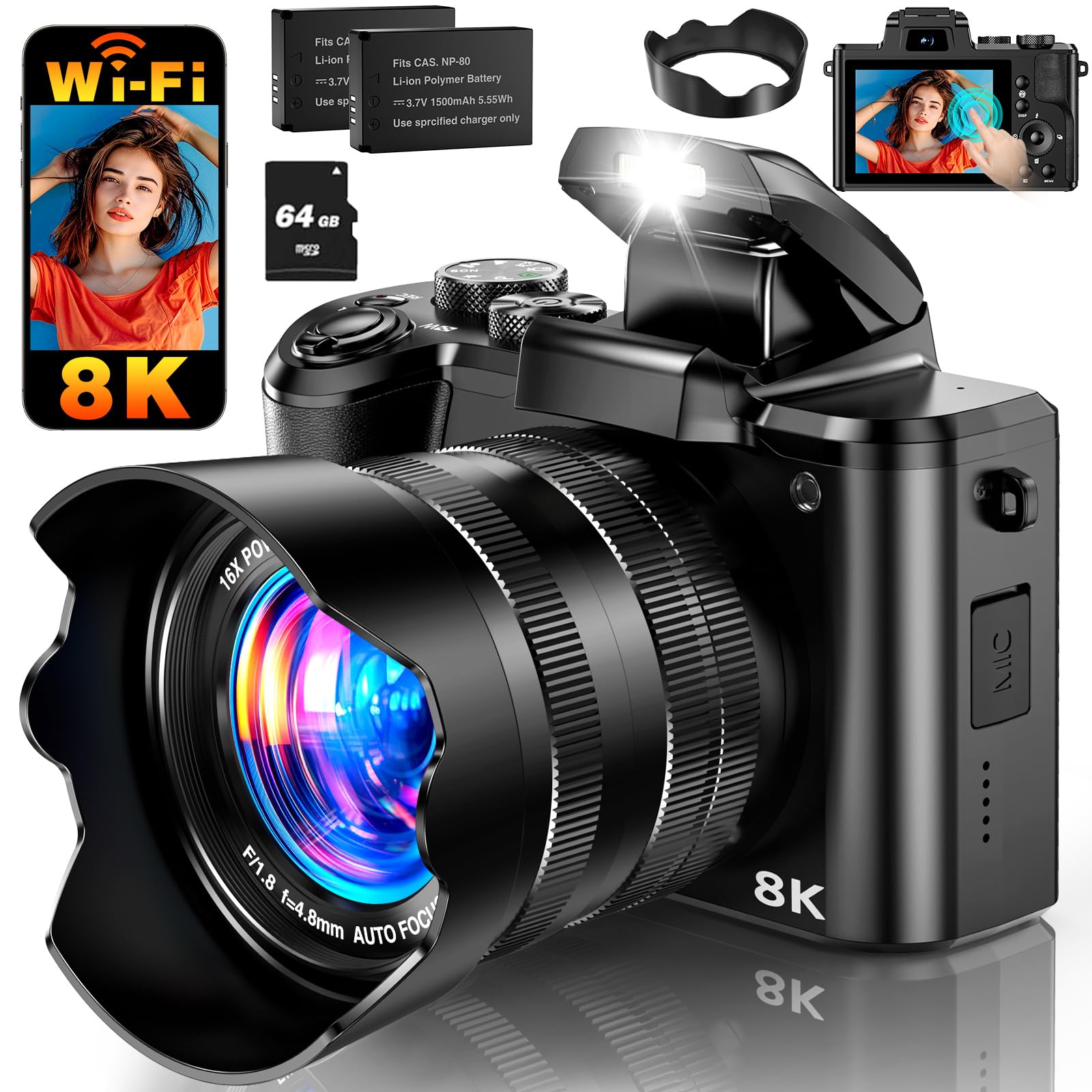
The Aboobu 8K Digital Camera targets the absolute entry-level market with an aggressive feature list: claimed 88MP stills, 8K UHD video, a 3.2-inch IPS touchscreen, 16x digital zoom, and a front-and-rear dual-lens setup. The package is the most generous in this roundup — two batteries, a 64GB card, a lens hood, a camera bag, and a cleaning cloth are all included, making it a true grab-and-go kit.
Built-in WiFi connects to the “iSmart DV2” app for wireless image transfer, and the 360° rotary dial offers quick switching between time-lapse, slow motion, and filter modes. The camera is designed for absolute beginners, teens, or as a gift for someone who wants a dedicated camera for social media sharing. The compact form factor (5 x 2.8 x 3.4 inches) is genuinely portable.
Image quality is the major caveat — the 88MP and 8K claims are heavily interpolated and do not deliver the detail or dynamic range of a proper 12MP smartphone camera, let alone a dedicated compact. User reviews report grain, low contrast, and saturation issues in real-world use. This camera is best viewed as a toy or a very first camera for a young child, not as a serious photographic tool.
Why it’s great
- Incredible value kit with two batteries, 64GB card, bag, and cleaning cloth
- Built-in WiFi for instant photo transfer to smartphone
- 360° rotary dial and dual lenses simplify creative shooting
Good to know
- 88MP and 8K specs are heavily interpolated, not true resolution
- Image quality is significantly worse than a modern smartphone camera
- Best suited as a toy or first camera for young children
9. Sony RX100 VII Premium Compact Camera
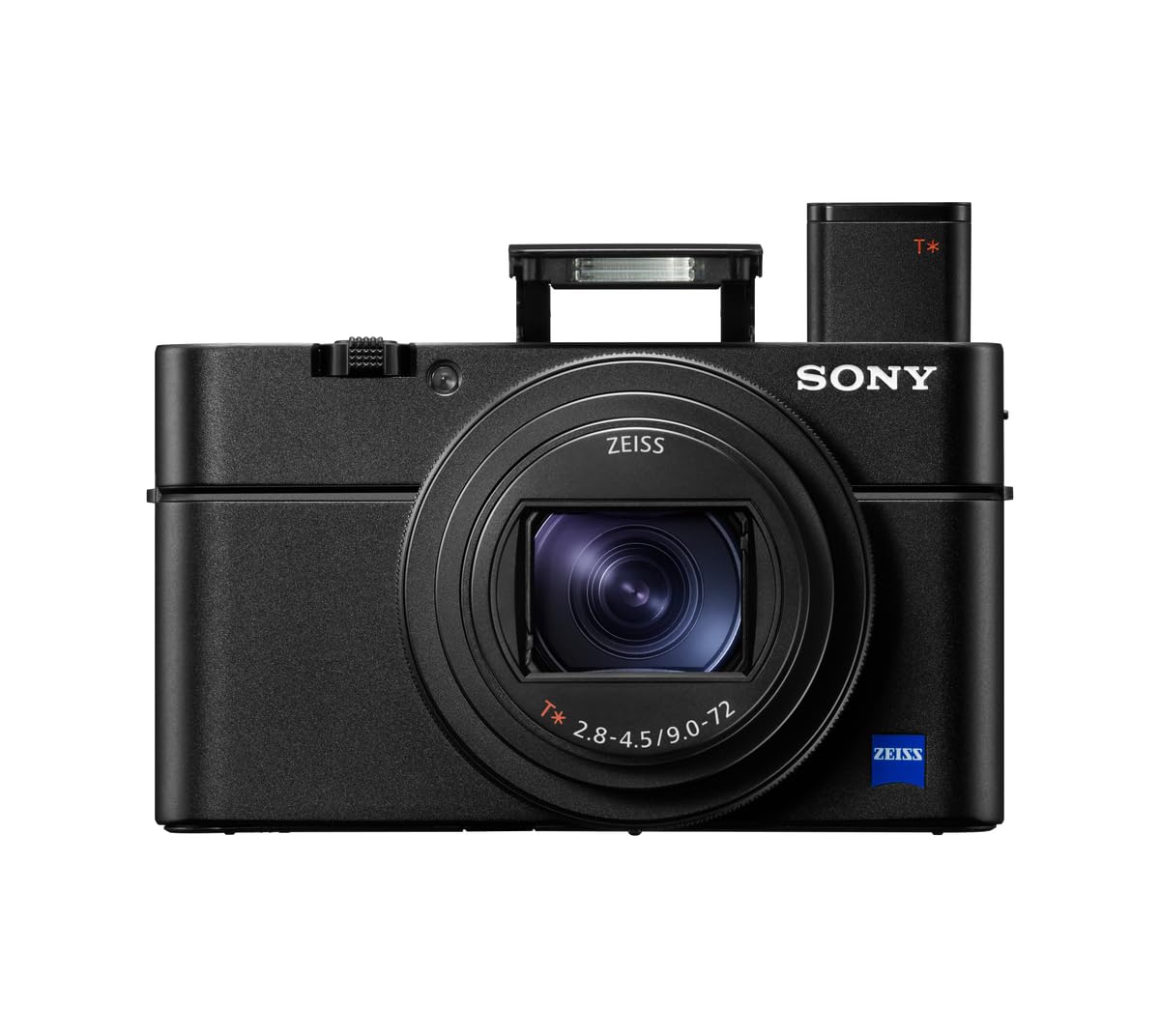
The Sony RX100 VII is the small-sensor king, packing a 20.1MP 1-inch stacked CMOS sensor into a body that slides into any jacket pocket. The Zeiss Vario-Sonnar T* 24-200mm f/2.8-4.5 lens provides an 8.3x optical zoom range that covers true wide-angle through telephoto, all while maintaining a bright aperture at the wide end for decent low-light performance. The 0.02-second autofocus speed is among the fastest in any compact camera.
The 357-point phase-detection AF array covers 68% of the sensor, supported by 425 contrast-detection points. Real-time Eye AF works for humans (stills and video) and animals (stills), ensuring portraits are critically sharp. 4K video includes S-Log3 for color grading, active mode image stabilization, and a microphone jack. The pop-up electronic viewfinder (EVF) is a genuine asset for shooting in bright sunlight where rear LCDs wash out.
The price is the barrier — this camera costs more than many interchangeable-lens kits. The 1-inch sensor, while excellent, cannot match the dynamic range or low-light performance of APS-C or full-frame sensors. Battery life is around 260 shots per charge, and the small body can feel slippery without an aftermarket grip. For users who demand the best possible image quality in a truly pocketable form factor, the RX100 VII remains the undisputed champion.
Why it’s great
- 1-inch stacked CMOS sensor delivers excellent image quality in a pocket body
- 24-200mm Zeiss lens with f/2.8-4.5 aperture is the most versatile pocket zoom
- Real-time Eye AF and 0.02-second autofocus are class-leading for compacts
Good to know
- Premium price point exceeds many interchangeable-lens camera kits
- 1-inch sensor still trails APS-C for dynamic range and high-ISO noise
- Battery life is moderate; no in-box battery charger
FAQ
Is a 1-inch sensor camera worth the price premium over a 1/2.3-inch sensor camera?
What optical zoom range do I need for concert photography?
Should I buy a dedicated point-and-shoot or just use my smartphone?
Final Thoughts: The Verdict
For most users, the affordable point and shoot digital camera winner is the Panasonic LUMIX ZS99 because it delivers a true 30x Leica optical zoom in a genuinely pocketable body, offering the best balance of reach, portability, and image quality for travel and events. If you are a video-first creator who needs gimbal-smooth footage, grab the DJI Osmo Pocket 3 — its 3-axis stabilization and 1-inch sensor are in a class of their own for handheld vlogging. And for a beginner who wants to learn real photography with interchangeable lenses and a large APS-C sensor, nothing beats the value of the Canon EOS Rebel T7 Kit for the price.