
Spending hours on the water without knowing what’s beneath the hull is the fastest way to turn a promising fishing trip into a frustrating drift. An affordable fish finder changes that equation by putting real-time sonar data in your hands, whether you’re casting from the bank, paddling a kayak, or running a small boat. The challenge isn’t finding a fish finder — it’s finding one that delivers reliable depth readings, clear target separation, and a readable screen without draining your tackle budget.
I’m Min — the co-founder and writer behind Gadgets Feed. I’ve spent hundreds of hours cross-referencing sonar specifications, screen resolutions, transducer beam angles, and battery performance data to isolate the models that actually perform under real fishing conditions rather than just looking good on a spec sheet.
This guide breaks down nine of the most compelling affordable fish finder options currently available, covering portable castable units, permanent boat-mounted displays, and dual-purpose ice fishing models.
How To Choose The Best Affordable Fish Finder
The most important decision isn’t screen size — it’s how the transducer interacts with the water column. A 200 kHz narrow beam gives you high-detail returns directly under the boat, while an 83 kHz wide beam covers more area with less detail. Many modern budget-friendly units switch between frequencies or blend them, but the key spec to check is the cone angle measured in degrees. A 20-degree cone at 20 feet of water covers roughly a 7-foot circle; a 60-degree cone covers more than 23 feet. Know your typical fishing depth before you pick a beam pattern.
Portability vs. Permanent Installation
Castable sonar pucks like the Garmin Striker Cast or Deeper PRO+ 2 eliminate wiring entirely — they pair with your phone via Wi-Fi and can be thrown from shore, trolled behind a kayak, or dropped through an ice hole. The trade-off is battery life limited to one fishing session (usually 5–10 hours) and reliance on your phone’s screen brightness outdoors. Permanent mount units with a dedicated display, such as the Garmin Striker 4 or Humminbird PiranhaMAX 4, require 12V power and a transducer bracket but offer always-on operation, sunlight-readable screens, and physical buttons that work with wet or gloved hands.
GPS and Mapping Capabilities
If you fish the same lake regularly, a unit with built-in GPS and waypoint marking saves hours of searching. Models like the Garmin Striker Vivid 4cv and Lowrance HOOK Reveal 5 allow you to mark brush piles, drop-offs, and submerged structure, then return to those exact coordinates trip after trip. The Garmin Quickdraw Contours feature lets you build custom depth maps in real time — a capability once reserved for + units. For strictly budget use, a non-GPS sonar-only unit still provides depth, temperature, and fish arch data.
Display Readability in Direct Sunlight
Screen resolution measured in pixels (480×320 vs. 640×480) affects how clearly you see fish arches and bottom contours, but brightness measured in nits determines whether you can actually read the display at noon. Color TFT and SolarMAX screens in the premium tier (Lowrance HOOK Reveal 5, Humminbird Helix 5) remain legible even with glare. Smaller monochrome or basic color LCD screens in the most budget-friendly models may require you to shade the display with your hand. If you fish open water under direct sun, allocate your budget toward a brighter screen rather than extra sonar features.
Quick Comparison
On smaller screens, swipe sideways to see the full table.
| Model | Category | Best For | Key Spec | Amazon |
|---|---|---|---|---|
| Garmin Striker Vivid 4cv | Premium | Boat/kayak with GPS mapping | 4-inch color LCD / CHIRP + ClearVü | Amazon |
| Lowrance HOOK Reveal 5 | Premium | Inland lake mapping + FishReveal | 5-inch SolarMAX / preloaded C-MAP | Amazon |
| Humminbird Helix 5 Sonar G2 | Premium | SwitchFire sonar tuning | 5-inch widescreen / Dual Beam PLUS | Amazon |
| Deeper PRO+ 2 | Mid-Range | Castable GPS bathymetric mapping | Wi-Fi range 330 ft / 3-beam sonar | Amazon |
| Garmin Striker 4 | Mid-Range | Entry-level boat mount with GPS | 1600 ft depth / CHIRP sonar | Amazon |
| Humminbird PiranhaMAX 4 | Mid-Range | Down Imaging in sunny conditions | 4.3-inch color TFT / Down Imaging | Amazon |
| Garmin Striker Cast | Mid-Range | Shore/kayak/ice castable sonar | 200 ft wireless range / 10-hr battery | Amazon |
| HawkEye Fishtrax 1C | Budget | Backcountry/canoe portability | 240 ft depth / 3 AAA batteries | Amazon |
| Yoocylii XF-08 Wireless | Budget | Entry-level wireless casting | 164 ft depth / 3.5-inch color LCD | Amazon |
In‑Depth Reviews
1. Garmin Striker Vivid 4cv

The Garmin Striker Vivid 4cv delivers the most complete feature set for the money, pairing a 4-inch color LCD with built-in CHIRP traditional sonar, CHIRP ClearVü scanning sonar, and high-sensitivity GPS. The vivid color palettes — seven total — make a real difference when you’re scanning for fish arches against a cluttered bottom. The GT20 transducer bundled in the box handles both standard 2D sonar and the higher-frequency ClearVü downscan, so you get detailed structure imaging without buying an extra transducer.
Built-in Quickdraw Contours mapping lets you create 1-foot contour maps of any lake you fish, storing them directly on the unit. The tilt/swivel bailmount bracket makes installation straightforward on a kayak deck or small boat console, and the IPX7 water rating handles rain and splash without concern. Battery draw sits at a reasonable level — a 7Ah 12V battery runs this unit for a full day without recharging.
The 4-inch screen is compact enough for a kayak but still large enough to read at a glance. Daylight visibility is strong thanks to the bright backlight, though you’ll want to avoid direct glare angles. The interface uses dedicated buttons rather than touch, which is a plus when your hands are wet or cold. This unit strikes the best balance between sonar quality, GPS utility, and price in the current market.
Why it’s great
- CHIRP ClearVü scanning reveals underwater timber and brush with near-photographic clarity
- Quickdraw Contours builds custom bathymetric maps in real time without a subscription
- High-sensitivity GPS allows waypoint marking and route creation for repeat fishing spots
Good to know
- Screen is 4-inch diagonal — smaller than the Lowrance HOOK Reveal 5
- Down Imaging resolution is lower than dedicated Side Imaging units from Humminbird
2. Lowrance HOOK Reveal 5 SplitShot

The Lowrance HOOK Reveal 5 stands out for its FishReveal technology, which overlays CHIRP sonar target returns onto DownScan Imaging. Fish that were previously just faint arches on standard 2D sonar appear as clear, bright targets against the structure — a major advantage when you’re trying to distinguish a school of crappie from submerged brush. The SplitShot transducer bundled in the package provides both wide-angle high CHIRP sonar (455/800 kHz) and DownScan Imaging in a single compact housing.
Preloaded C-MAP US Inland mapping covers nearly 4,000 lakes with high-detail contours, so you’re not starting from a blank screen. Genesis Live lets you create custom 1-foot contours over any existing map or GPS plotter, continuously updating as you move. The AutoTuning Sonar feature automatically adjusts sensitivity and range as conditions change — useful when transitioning from shallow flats to deeper channels without fiddling with menus.
The 5-inch SolarMAX display is the brightest and most readable in this comparison under direct noon sun. Anti-reflective glass and high pixel density mean you won’t be shading the unit with your hand. The flush-mount design integrates cleanly into a console, though the included bracket also supports tilt/swivel surface mounting. If you primarily fish inland lakes and want the clearest sonar image in this price bracket, this is the unit to beat.
Why it’s great
- FishReveal merges CHIRP fish arches with DownScan structure detail on a single split screen
- Preloaded C-MAP inland maps cover 4,000 US lakes with contour detail
- SolarMAX display remains readable in direct sunlight without glare washout
Good to know
- Requires 12V DC power — no internal battery for portable use
- Sonar may need to be manually enabled in settings after initial setup
3. Humminbird Helix 5 Sonar G2

Humminbird’s Helix 5 Sonar G2 is the unit to choose if you want the most flexible sonar customization in the affordable bracket. The SwitchFire Sonar system lets you toggle between Max Mode (shows every return, including thermoclines and suspended debris) and Clear Mode (reduces clutter to highlight fish arches and the bottom). This is exceptionally useful in stained water or when fishing around heavy timber where standard sonar can become noisy.
The Dual Beam PLUS Sonar provides a 20-degree narrow beam for high-detail returns of fish and structure directly under the boat, plus a 60-degree wide beam for covering a larger area. You can view them separately, side-by-side, or blended. The 5-inch widescreen display has excellent contrast and wide viewing angles, though it lacks the direct-sunlight brightness of the Lowrance SolarMAX. AIS and AutoPilot compatibility add future-proofing if you plan to integrate with a trolling motor network later.
This version is sonar-only — no GPS, no Down Imaging, no mapping. That keeps the price reasonable for anglers who primarily need accurate depth readings and fish detection without the complexity of waypoint management. The menu interface is intuitive with dedicated buttons for quick adjustments. Transducer mounting is straightforward, and the unit pairs well with third-party RAM mounts for better positioning on smaller boats.
Why it’s great
- SwitchFire Sonar gives real-time control over display clutter versus detail
- 5-inch widescreen provides a larger viewing area than most competitors at this level
- Dual Beam PLUS with blended view offers both coverage and high-accuracy returns
Good to know
- No built-in GPS, speed sensor, or Down Imaging — sonar only
- Small windshield on some boats may require a RAM mount for clear sight lines
4. Deeper PRO+ 2
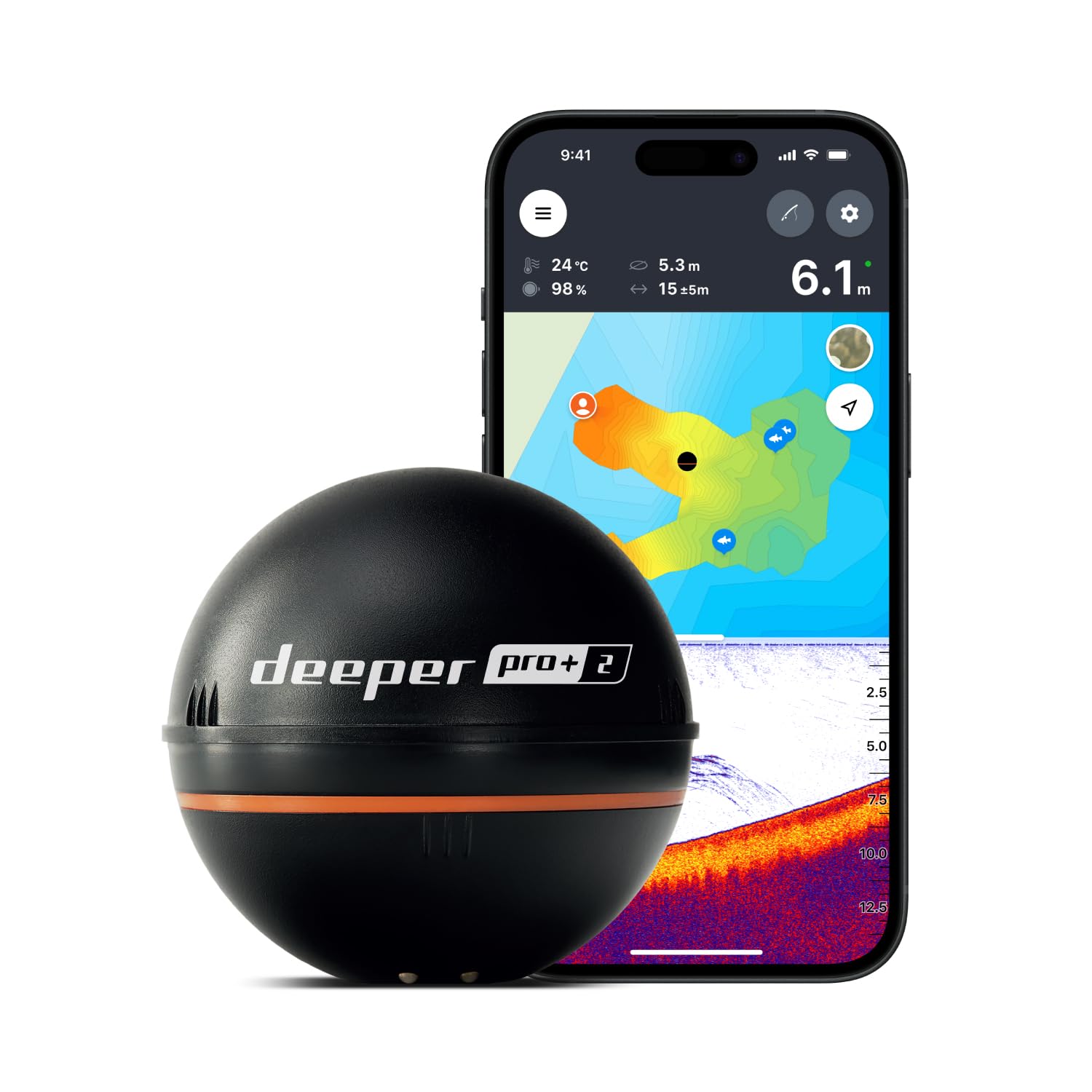
The Deeper PRO+ 2 is a castable Wi-Fi sonar puck that streams real-time data directly to your smartphone or tablet. Its triple-beam transducer delivers three selectable frequencies — narrow 7° (675 kHz), mid 20° (240 kHz), and wide 47° (100 kHz) — giving you precise control over coverage area and detail level depending on your target depth. Narrow beam at 0.4-inch target separation is sensitive enough to track a small jig during vertical ice fishing.
Built-in GPS allows you to create bathymetric maps from shore, a dock, or a kayak, saving every scan to the Fish Deeper app. The community library of shared lake maps is substantial, and you can overlay your own scans on top. Battery life sits around 5 to 7 hours of continuous use, and the internal USB-rechargeable battery eliminates disposable cells. The clever power-on feature — the sensor activates when it contacts water and shuts off when removed — prevents accidental drain in your tackle box.
The major consideration here is that you must use a smartphone as the display. Screen brightness, battery, and water resistance of your phone become limiting factors. You also need a dedicated rod with 20-50lb braided line to cast the 3.2-ounce puck effectively. The stability of the Wi-Fi connection at the advertised 330-foot range depends on line-of-sight conditions and interference from other sonar units in the area.
Why it’s great
- Triple-beam sonar with selectable frequencies covers everything from shallow flats to 100m depths
- GPS-powered bathymetric mapping works from shore, kayak, or ice without any wiring
- Auto power-on when wet eliminates battery drain from forgetting to turn it off
Good to know
- Requires a stout rod with 20-50lb braid — not suitable for ultralight spinning gear
- Wi-Fi range and stability can degrade in areas with multiple sonar units operating nearby
5. Garmin Striker 4

The Garmin Striker 4 is arguably the most popular entry-point fish finder on the market, and for good reason. Despite its compact 3.5-inch display, it packs CHIRP sonar with a 200/77 kHz dual-beam transducer, a built-in GPS with waypoint map, and a flasher mode for ice fishing or vertical jigging. The maximum depth rating of 1,600 feet in freshwater (750 feet in saltwater) far exceeds what most anglers need, but it ensures confidence in deep reservoirs.
The keyed interface with dedicated buttons is refreshingly simple — no touchscreen, no submenus buried in settings. You can mark a brush pile in two button presses. The tilt/swivel mount and transom-mount transducer included in the box make installation a 20-minute job on most aluminum boats and kayaks. Current draw at 0.23 Amperes at 12V means a small 7Ah battery runs it for over 24 hours continuous, which makes it viable for multi-day backcountry setups.
What you don’t get is Down Imaging or any scanning sonar — this is purely traditional 2D CHIRP. The 3.5-inch screen diagonal (1.9 x 2.9 inches viewable area) is small enough that you’ll want to mount it within arm’s reach. The grayscale-like color LCD is readable in most conditions but struggles in direct glare compared to the Vivid 4cv version. Still, for pure sonar accuracy and GPS utility at this price point, the Striker 4 remains the benchmark.
Why it’s great
- CHIRP sonar delivers crisp fish arches and bottom detail at depths up to 1,600 feet
- Built-in GPS with waypoint map allows marking and navigating to specific structures
- Very low power draw — runs for multiple days on a small 12V battery
Good to know
- No Down Imaging or ClearVü scanning sonar — traditional 2D only
- Screen is small and can be difficult to read from a distance or in glare
6. Humminbird PiranhaMAX 4 DI

The Humminbird PiranhaMAX 4 DI brings Down Imaging to the affordable segment with a 4.3-inch color TFT display that punches above its price class. Down Imaging uses a high-frequency 455 kHz beam to create a detailed, photograph-like view of the bottom structure — timber, bridge pilings, rock piles — making it much easier to identify holding areas for bass and walleye. The XNT 9 DI T transducer included in the box handles both the Down Imaging and the standard Dual Beam sonar (200/83 kHz).
The interface is redesigned from earlier PiranhaMAX models and genuinely easier to use, with a dedicated menu button and four-way cursor control. Fish ID+ automatically assigns fish icons with depth readings, which is helpful when you’re still learning to interpret sonar returns. Alarms for fish detection, shallow depth, and deep depth are configurable and audible through the unit’s built-in speaker — useful if you’re watching your rod tip rather than the screen.
The biggest limitation is the transducer cable length, which at roughly 5 feet is too short for larger boats — you may need to purchase an extension cable. The 4.3-inch display is bright and surprisingly readable in full sun, though not quite at the level of the Lowrance SolarMAX. If you fish around heavy submerged cover and want to see the structure rather than just guess at it, the PiranhaMAX 4 DI delivers that capability at a very accessible price.
Why it’s great
- Down Imaging provides detailed structure views of timber, rocks, and brush piles below the boat
- 4.3-inch color TFT display is significantly larger than most budget fish finders
- Fish ID+ with audible alarms helps beginner anglers identify targets confidently
Good to know
- Transducer cable is short — boats over 18 feet may require a extension cable
- No GPS, no mapping, no waypoint marking — sonar only
7. Garmin Striker Cast
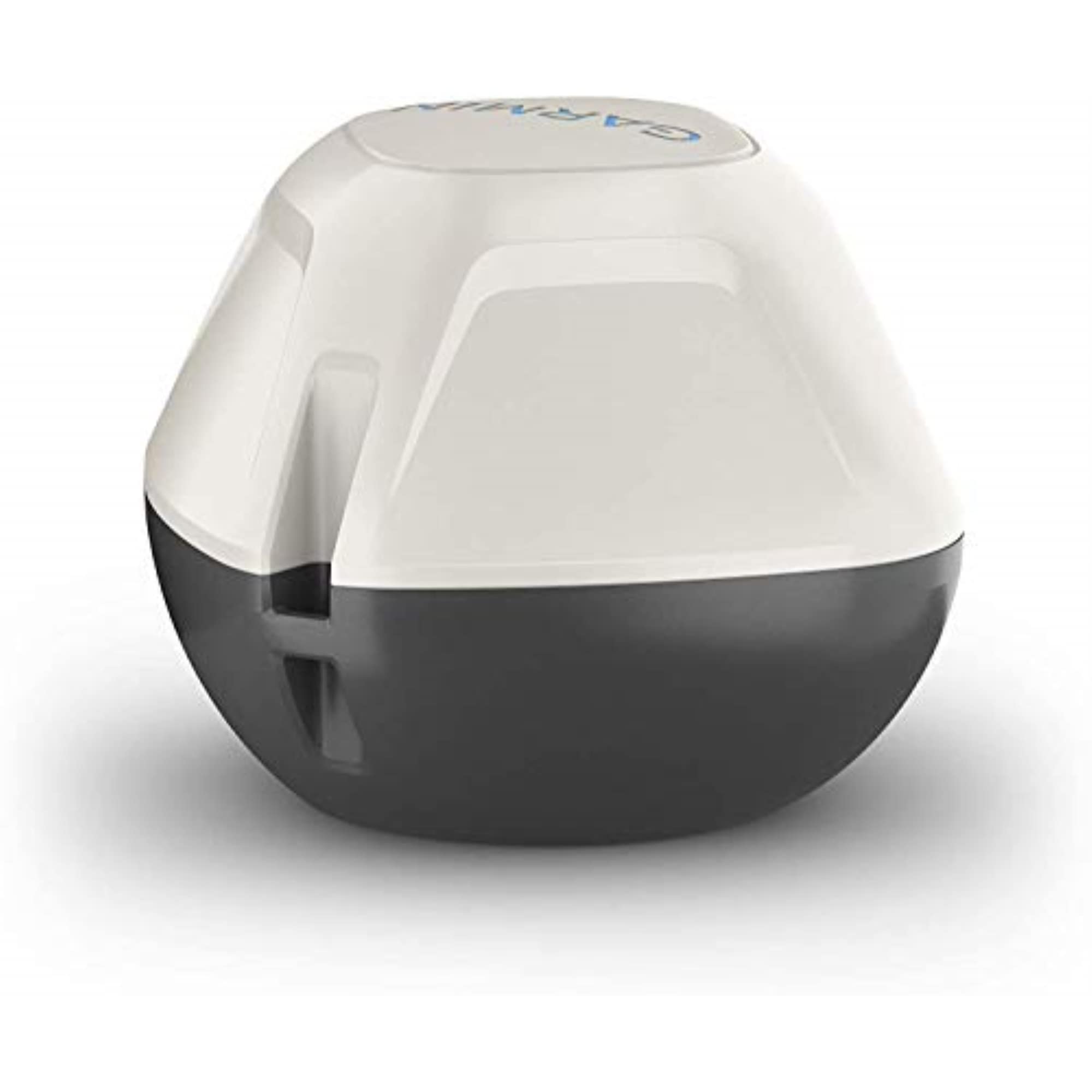
The Garmin Striker Cast is the simplest entry into sonar fishing — a rugged, castable puck that streams traditional 2D sonar and ice fishing flasher modes to the free STRIKER Cast app on your smartphone or tablet. Setup takes under five minutes: download the app, pair via Bluetooth, activate the puck in water, and you’re seeing depth, water temperature, and fish arches. The built-in USB-rechargeable battery delivers over 10 hours of runtime, and the auto on/off water sensor ensures you start each session with a full charge.
The transducer performs reliably in both shallow water (less than 5 feet) and deeper basins, though the fish icons are basic compared to what you get from a dedicated display unit. The ice fishing flasher mode is a genuine help for vertical jigging through the ice, showing lure and fish movement in real time. The 200-foot wireless range is adequate for shore casting and kayak trolling, though heavy interference from nearby sonar units can cause dropouts at longer distances.
You need a dedicated rod with heavy braid (30-50lb) and a swivel to cast the 75-gram puck effectively — this isn’t something you tie onto your ultralight trout rod. The app interface is clean and intuitive, but you’re draining your phone battery while fishing, so a portable power bank is recommended. For bank anglers, kayak fishermen who don’t want permanent wiring, or ice anglers who want a second sonar view, the Striker Cast is the most convenient option available.
Why it’s great
- Wireless and portable — no mounting, no wiring, no 12V battery required
- 10+ hour USB-rechargeable battery with auto on/off water sensor saves power
- Ice flasher mode provides real-time jig and fish tracking through the ice
Good to know
- Requires a dedicated rod with 30-50lb braid — not suitable for light spinning gear
- Wireless range in real-world conditions is often less than the advertised 200 feet
8. HawkEye Fishtrax 1C

The HawkEye Fishtrax 1C is purpose-built for the angler who needs to pack everything into a backpack or dry bag for a canoe trip. At 9.44 ounces with a compact 3 x 2 x 6-inch form factor, it runs on three AAA batteries rather than requiring a 12V lead-acid battery. Powering it with lithium AAA cells yields 10-12 hours of continuous operation, and you can carry spare sets that weigh practically nothing. The 240-foot maximum depth rating covers most freshwater scenarios without issue.
The HD color Virtuview display is small at 2 x 1.6 inches, but the resolution and brightness are impressive for a battery-powered unit. It includes a standard 2D sonar view and an ice flasher mode — the flasher mode takes some menu tinkering to dial in sensitivity, but once configured, it reliably shows your jig and fish movement. The transducer works through a kayak hull or hung over the side, and the included transom mount allows quick attachment to a canoe gunwale.
Build quality is noticeably better than other AAA-powered fish finders, with captured battery screws that won’t strip out and a metal threaded mount insert. The unit struggles in water shallower than 3 feet, where the sonar cone is too narrow to produce useful returns. Customer support from HawkEye is responsive, which matters for a niche product category. For extended backcountry trips where every ounce counts, the Fishtrax 1C is the most practical sonar solution available.
Why it’s great
- Ultra-lightweight design runs on 3 AAA batteries — no 12V battery or wiring needed
- Durable build with captured screws and metal mount insert resists trail abuse
- Flasher mode is functional for ice fishing and vertical jigging after proper setup
Good to know
- Small display can be difficult to read in direct sunlight without shading
- Sonar returns are unreliable in water depths under 3 feet
9. Yoocylii XF-08 Wireless
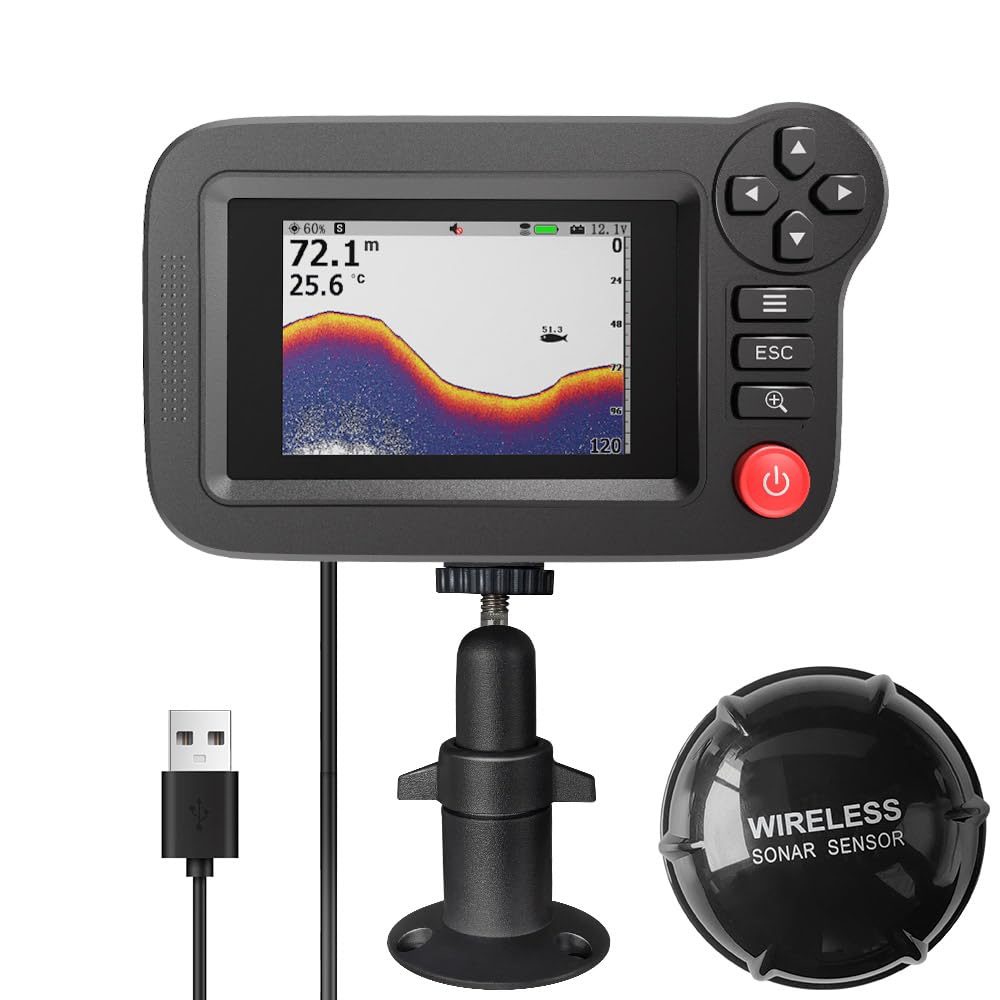
The Yoocylii XF-08 is the most budget-conscious way to get a wireless sonar system with a dedicated color display. The package includes a 3.5-inch color LCD monitor and a wireless sonar probe that communicates via 125 KHz sonar and claims a range of 328-656 feet. The probe is IP67 waterproof, activates automatically when it contacts water, and runs on an internal rechargeable battery that charges via USB or 12V adapter in about 2 hours.
The 480×320 resolution screen is perfectly adequate for showing depth, water temperature, bottom contours, and fish icons at three size levels (small, medium, large). The interface allows switching between metric and imperial units, adjusting brightness, and setting alarms for shallow depth, deep depth, and fish detection. For a quick look at your pond, a dock area, or a calm lake from shore, this unit provides functional sonar data at a fraction of the cost of Garmin or Deeper alternatives.
Durability is the main concern — several user reports mention the locking nut stripping and the antenna joint being fragile. The unit also consumes AAA batteries for the monitor fairly quickly, so rechargeable cells are strongly recommended. The sonar data lacks the bottom contour resolution you’d get from a CHIRP transducer, and the fish icons are generic rather than arch-based. For occasional use on small waters where you just want to confirm depth and see if fish are present, the XF-08 delivers acceptable performance at the lowest entry price available.
Why it’s great
- Complete wireless sonar system with color display at the lowest price point
- IP67 waterproof probe with auto power-on when wet prevents accidental drain
- Easy setup — drop the probe in water and start reading depth and temperature immediately
Good to know
- Build quality concerns with locking nut and antenna durability reported by users
- Sonar data is basic — lacks CHIRP detail and precise bottom contour resolution
FAQ
What is the minimum depth an affordable fish finder can reliably read?
Can I use a castable fish finder while ice fishing?
Do I need a GPS fish finder or is sonar-only enough?
How do I mount a transducer on a kayak without drilling holes?
Final Thoughts: The Verdict
For most users, the affordable fish finder winner is the Garmin Striker Vivid 4cv because it combines CHIRP ClearVü scanning sonar, built-in GPS with Quickdraw Contours mapping, and a bright 4-inch color display in a package that works equally well on a kayak, small boat, or ice rig. If you want the clearest DownScan Imaging with preloaded lake maps, grab the Lowrance HOOK Reveal 5. And for the most portable zero-wiring solution that works from shore, kayak, or ice hole, nothing beats the Garmin Striker Cast.