
That cheap, digitized poster of “The Great Wave” you picked up for a few bucks? It’s missing the texture of hand-pressed washi paper, the subtle grain of the pigment, and the very soul of the 1200-year-old craft it was ripped from. Authentic antique Japanese woodblock prints, or ukiyo-e, aren’t just decorative images; they are physical artifacts of a meticulous process involving a carver, a printer, and a publisher working in concert. The difference between a mass-produced giclée and a genuine reproduction—or a print from a long-established Kyoto workshop—is the difference between seeing a photograph of a meal and actually tasting it.
I’m Min — the co-founder and writer behind Gadgets Feed. I’ve spent countless hours analyzing the technical specifications, print methodologies, and publisher provenance behind the woodblock prints currently available, from museum-quality facsimile books to hand-pressed reproductions and large-format canvas wall art, to find the pieces that respect the original Edo-period techniques.
This guide cuts through the clutter to identify the best options for building a real collection. Whether you are looking for a definitive reference book on Hokusai or a genuine hand-printed piece to frame, the goal is to help you find the best antique japanese woodblock prints for your budget and space without settling for a pale imitation.
How To Choose The Best Antique Japanese Woodblock Prints
Navigating this market means distinguishing between three distinct product types: a high-end art book with color-accurate facsimile plates, a stretched canvas wall decor print, and a genuine hand-printed woodblock. Your choice depends entirely on whether you want a reference library, a stylish wall statement, or an authentic collectible artifact.
Print Method: Facsimile vs. Giclée vs. Hand-Printed
The first decision is authenticity of process. Facsimile books (like the Taschen or Abbeville Press editions) use modern offset lithography to reproduce the image. They offer excellent color accuracy and detail at a fraction of the cost of an original print, making them the best resource for study. Giclée prints on canvas are digital reproductions stretched over a frame; they are for decoration, not collection. Genuine hand-printed woodblock prints are made using traditional baren (bamboo leaf disc) pressure on washi paper, one color per block, by a craftsman who inherited techniques from the Edo period. These have physical texture, embossing, and pigment depth that no digital process can replicate.
Paper Stock and Texture (Washi vs. Canvas)
The substrate defines the sensory experience. Washi paper is fibrous, soft, and slightly translucent. It absorbs pigment differently than Western paper, creating a matte finish with subtle grain. A hand-printed print on washi will have a visible “kento” (registration mark) or a slight embossing where the block was pressed. Gallery-wrapped canvas is a sturdy, textured polyester or cotton fabric stretched over a wooden frame. It is durable, easy to hang, and best for large wall art, but it lacks the tactile authenticity of washi. For a connoisseur, washi is non-negotiable; for a decorator, canvas is practical.
Edition, Publisher, and Provenance
For true antique-quality work, the publisher is the stamp of trust. A print from a long-established workshop like Takenaka Woodblock Print (founded in the Meiji era) guarantees the use of original carving techniques and archival pigments. For modern facsimile books, look for publishers like Taschen or Abbeville Press, who are known for high-resolution scanning and color-managed printing. Check for a numbered edition or a colophon page that lists the printer, paper type, and copyright date. A reputable publisher details the production process; a generic wall decor brand will not.
Quick Comparison
On smaller screens, swipe sideways to see the full table.
| Model | Category | Best For | Key Spec | Amazon |
|---|---|---|---|---|
| Japan Museum Hokusai Hand-Printed Print | Genuine Print | Authentic collection | Hand-printed on 390mm x 260mm washi paper | Amazon |
| Taschen: Thirty-six Views of Mount Fuji | Facsimile Book | Study & coffee table display | 224 pages, 17.32″ tall, fold-out plates | Amazon |
| Yoshitoshi: One Hundred Aspects of the Moon | Facsimile Book | Learning & historical context | 256 pages, 6.65 lb folio, facsimile edition | Amazon |
| Yoshida Hiroshi Complete Woodblock Prints | Reference Book | Comprehensive artist study | 203 pages, 259 prints, bilingual text | Amazon |
| MUDECOR Pine Tree Framed Print | Framed Wall Art | Decor with Japanese aesthetic | 26″ x 26″ x 2″, polystyrene & MDF frame | Amazon |
| wall26 Hokusai Kajikazawa Canvas | Canvas Wall Art | Large-scale wall statement | 48″ x 32″, gallery-wrapped on 1.5″ bars | Amazon |
| artprints1stop Koson Iris Canvas | Canvas Wall Art | Botanical Japanese decor | 48″ x 32″, framed wood, moisture-proof coating | Amazon |
In‑Depth Reviews
1. Japan Museum Hokusai Red Fuji Hand-Printed Woodblock Print
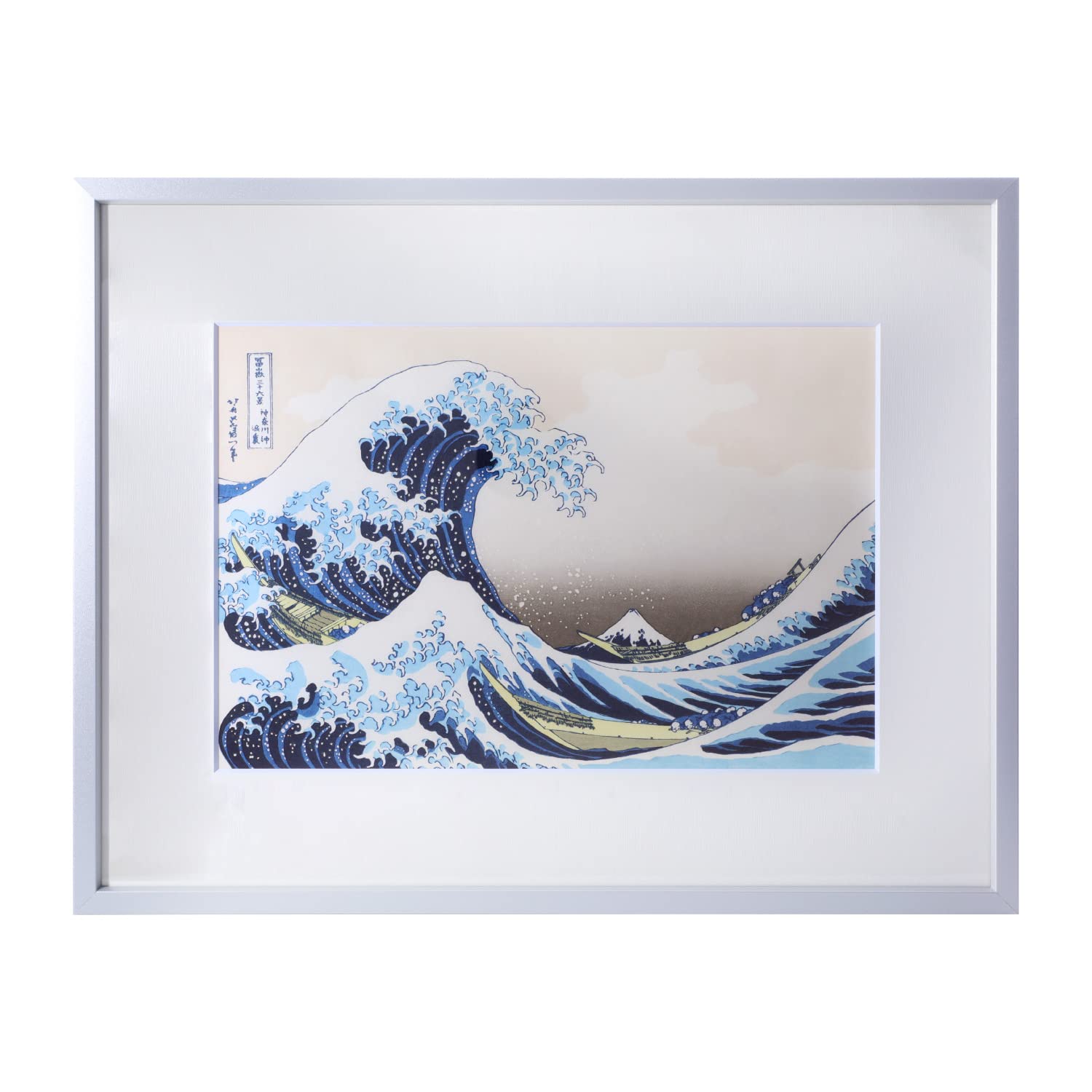
This is the real thing. Produced by Takenaka Woodblock Print, a Kyoto workshop founded in the Meiji era, this is a genuine hand-printed reproduction of Hokusai’s “Fine Wind, Clear Morning” (Red Fuji). Each color is applied one block at a time using a bamboo leaf baren on high-quality Japanese Washi paper, giving the image a tactile depth and pigment vibrancy that digital prints cannot touch. The 390mm x 260mm size is slightly larger than a standard A4 sheet, making it ideal for framing.
The craftsmanship is immediately apparent. The bokashi (gradation) in the sky and the crisp edge of Mount Fuji show the printer’s mastery. The package includes an English and Japanese commentary booklet explaining the process, and the silver frame option includes a 45-degree mat cut that gives it a gallery-quality presentation. Buyers consistently note that it is “stunning in person” and far exceeds expectations for the price point.
This is for the collector who wants a direct connection to the Edo period tradition without spending thousands on an antique original. It is not a digital copy—it is a woodblock print made by a craftsman using the same techniques as the 1800s. If you value authenticity and texture over convenience, this is the single best piece of art in this guide.
Why it’s great
- Genuine hand-printed woodblock from a Meiji-era Kyoto workshop, not a digital giclée.
- True washi paper texture and bokashi (color gradation) visible in person.
- Comes with informative bilingual commentary and professional framing option.
Good to know
- The highest price point in this guide, reflecting genuine craft labor.
- Unframed option requires you to source a frame that accommodates the washi thickness.
2. Taschen: Thirty-six Views of Mount Fuji
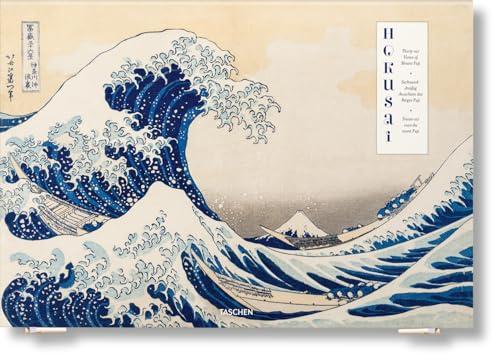
Taschen’s deluxe edition of Hokusai’s magnum opus is the definitive reference for anyone serious about ukiyo-e. The book measures a massive 11.81 x 17.32 inches, allowing each plate to be reproduced at a scale that reveals the intricate line work and bokashi gradation of the original prints. The pages are loop-bound with blank interleaving to prevent ink bleed, and the protective cover opens to reveal a 38×17.5-inch fold-out print of Mount Fuji.
The color reproduction is superb, with examples showing the variation between different editions of the same print. The multilingual text includes detailed commentary on each of the 46 plates (the original 36 plus the supplementary 10). Buyers describe it as a “once in a lifetime book” and praise the “decadent” quality that only Taschen delivers at this scale. It requires a sturdy table; this is not a lap-friendly book.
This is the gold standard for a facsimile. It does not claim to be a hand-printed original, but it provides the next-best experience for study and display. If you want to examine the finest details of Hokusai’s technique without handling a fragile original, this is the obvious choice. It also happens to be one of the most impressive coffee table books ever produced.
Why it’s great
- XL format with huge plates that reveal print details not visible in smaller books.
- Includes protective sleeve and fold-out print; loop binding with interleaving prevents ink bleed.
- Color variation examples show differences between print editions, valuable for study.
Good to know
- Book is heavy (3.67 lb) and oversized; not suitable for standard bookshelves.
- Requires a table or flat surface to read; cannot be held comfortably in lap.
3. Yoshitoshi: One Hundred Aspects of the Moon (Facsimile Edition)
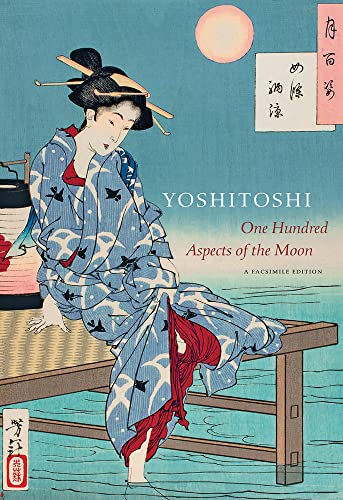
Yoshitoshi’s “One Hundred Aspects of the Moon” is one of the most celebrated ukiyo-e series, and this Abbeville Press facsimile edition does it justice. At 11 x 15.3 inches, the folio-sized pages present each print in full color with a numbered edition stamp. The series is known for its dramatic use of moonlight, shadow, and narrative scenes drawn from Japanese and Chinese history, folklore, and literature—often featuring violence, ghosts, and real-life events that give it a darker, more cinematic feel than Hokusai’s landscapes.
The book includes detailed text plate-by-plate, explaining the cultural and historical context of each image, along with insights into Yoshitoshi’s tumultuous life. The color plates are crisp and well-saturated, with accurate registration that shows the line work clearly. Buyers note that it complements a digital version well, allowing for close-up study without the backlit screen glare.
This is the best pick for someone who wants to explore ukiyo-e beyond the typical Mount Fuji imagery. Yoshitoshi’s work is narrative and psychological, and this facsimile preserves the mood of the original prints better than any other reproduction. For collectors interested in Meiji-era woodblock art and its storytelling traditions, this book is invaluable.
Why it’s great
- Numbered facsimile edition with full-color plates of all 100 moon prints.
- Large folio size (15.3″ tall) allows detailed examination of line work and registration.
- Deep cultural and historical context for each print, rare in art books.
Good to know
- Heavy book (6.65 lb) with a large footprint; requires dedicated shelf space.
- Some buyers noted a price drop after purchase, which may feel like a missed deal.
4. The Complete Woodblock Prints of Yoshida Hiroshi

Yoshida Hiroshi bridged Japanese tradition with Western watercolor techniques, and this book is the definitive catalog of his woodblock output. It reproduces 259 prints plus 20 other works, covering his travels, mountaineering scenes, and depictions of traditional Japanese life. The color reproduction is widely praised as “superb,” with many images taking up full pages to showcase the delicate bokashi and atmospheric perspective that defined his style.
The bilingual text (English and Japanese) includes a chronology, biography, personal memoirs, and even a step-by-step explanation of the woodblock printing process with photos. Appendices include a catalogue, bibliography, and travel photos. Fans of shin-hanga (new print) movement will find this an essential resource. Buyers consistently call it “appealing and authoritative” and note that it is “worth the expense” for the depth of content.
This is not a large-format coffee table book like the Taschen edition; it is a comprehensive study reference. If you want to understand the full arc of Yoshida’s career from his early sketches to his mature prints, this is the only book you need. The only criticism is that some prints are shown 2-4 per page rather than full-page, which is a minor concession given the sheer volume of content.
Why it’s great
- Complete catalog of 259 woodblock prints plus 20 other works by Yoshida Hiroshi.
- Bilingual text with extensive biographical and technical appendices.
- Includes a detailed step-by-step of the printing process with photos.
Good to know
- Published in 1996; may not have the color calibration of more recent editions.
- Some prints are shown 2-4 per page; not all images are full-page.
5. MUDECOR Premium Framed Wall Art – Japanese Pine Tree
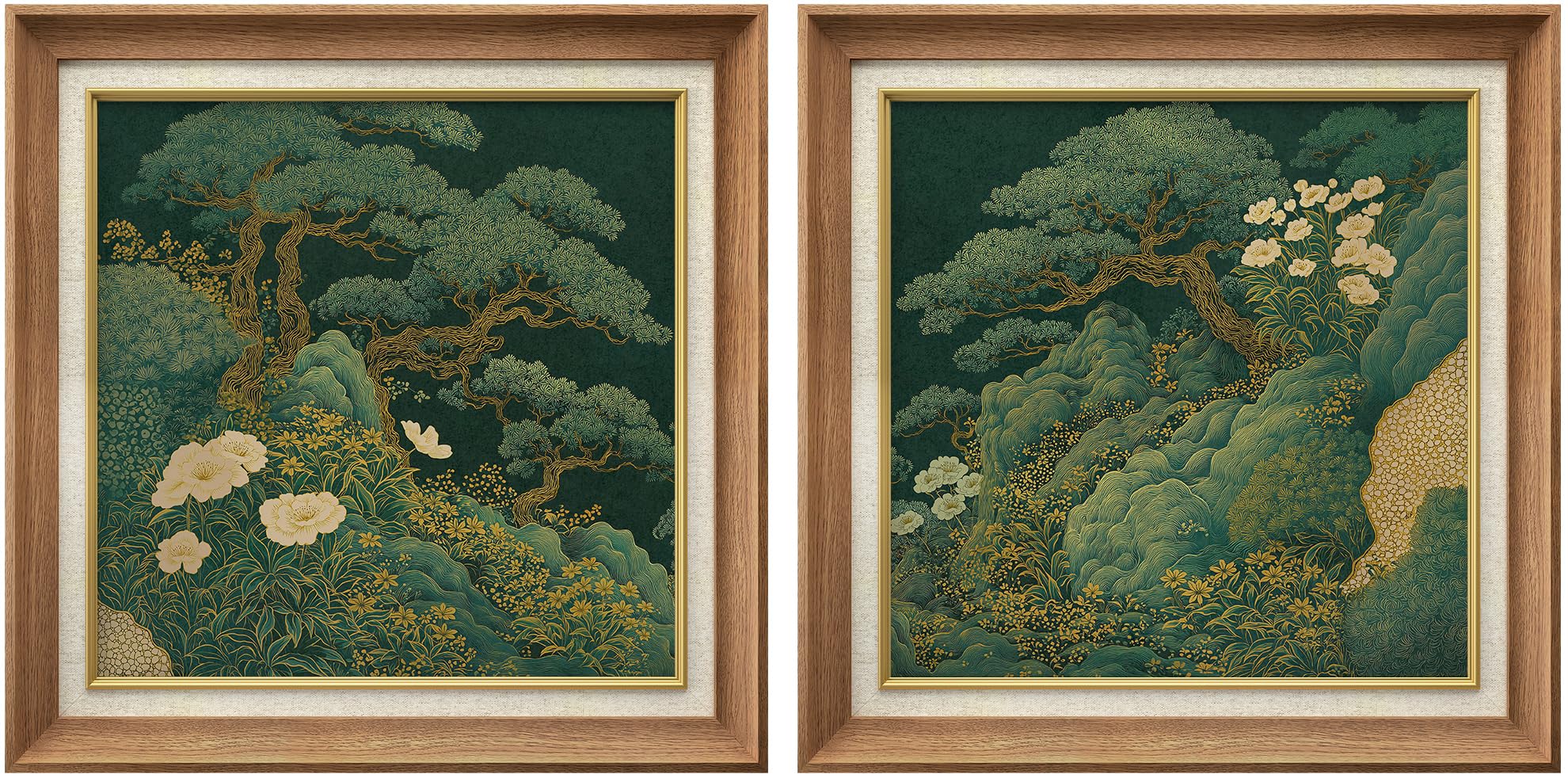
MUDECOR’s pine tree print aims for a Ralph Lauren aesthetic rather than pure ukiyo-e authenticity. The print itself is a digital reproduction of a traditional Japanese botanical illustration, set in a polystyrene and textile blend frame with a MDF wood backboard. At 26×26 inches square, it is designed to fit into alcoves, above fireplaces, or in groupings for a cohesive wall display.
The build quality is decent for the price point. The frame is lightweight (no glass, just a clear plastic cover), which makes it easy to hang with command strips. Buyers with a trained eye note that it looks “a little cheap up close” due to the lack of texture, but from a distance—especially with picture lights—it achieves a convincing “gorgeously framed” look. The packaging is robust, and it arrives well-protected.
This is a pure decor play. It is not a woodblock print, not a facsimile, and not on washi paper. But if your priority is filling a wall space with a Japanese-inspired aesthetic without the cost of a hand-printed piece, this framed print delivers a strong visual impact for the money. It works best when you are curating a mood, not building a collection.
Why it’s great
- Ready-to-hang framed design with a substantial, gallery-style profile.
- Lightweight construction makes it easy to mount with adhesive strips.
- Botanical Japanese aesthetic works well in traditional or modern interiors.
Good to know
- Digital print with no texture; glossy surface looks cheap under direct light.
- Frame is polystyrene plastic with MDF backboard, not solid wood.
6. wall26 Canvas Wall Art – Hokusai Kajikazawa in Kai Province

This stretched canvas print from wall26 features “Kajikazawa in Kai Province,” one of the less commercialized but equally striking prints from Hokusai’s Thirty-six Views of Mount Fuji. The canvas is wrapped around 1.5-inch wooden stretcher bars, giving it a gallery-style profile that floats away from the wall. The image wraps around the sides, eliminating the awkward white border that cheapens many canvas prints.
The print quality is high-resolution and color-accurate, with vibrant blues and earthy browns that capture the original’s mood. Buyers praise the “sturdy canvas” and “great quality and price,” with many commenting that it garners compliments. One buyer noted the frame was slightly out of square, but this was a minor issue that did not affect the overall display. The hanging toolkit is included.
This is the best option for someone who wants a large, wall-filling piece of Hokusai art without the cost or weight of a framed hand-printed piece. It is a mass-produced giclée, not an original, but at 48 x 32 inches, the scale alone makes an impact. The Kajikazawa composition—a fisherman on a rocky outcrop—is visually dynamic and less cliché than The Great Wave.
Why it’s great
- Large 48×32 inch format makes a bold wall statement for Hokusai fans.
- Gallery-wrapped on 1.5″ bars with image-wrapped sides, no white borders.
- Excellent color vibrancy and high-resolution print quality for a canvas giclée.
Good to know
- Digital print, not a genuine woodblock; no paper texture or pigment depth.
- Stretcher bars can occasionally be slightly out of square (minor quality control issue).
7. artprints1stop Canvas Print – Ohara Koson Blue Iris Flowers
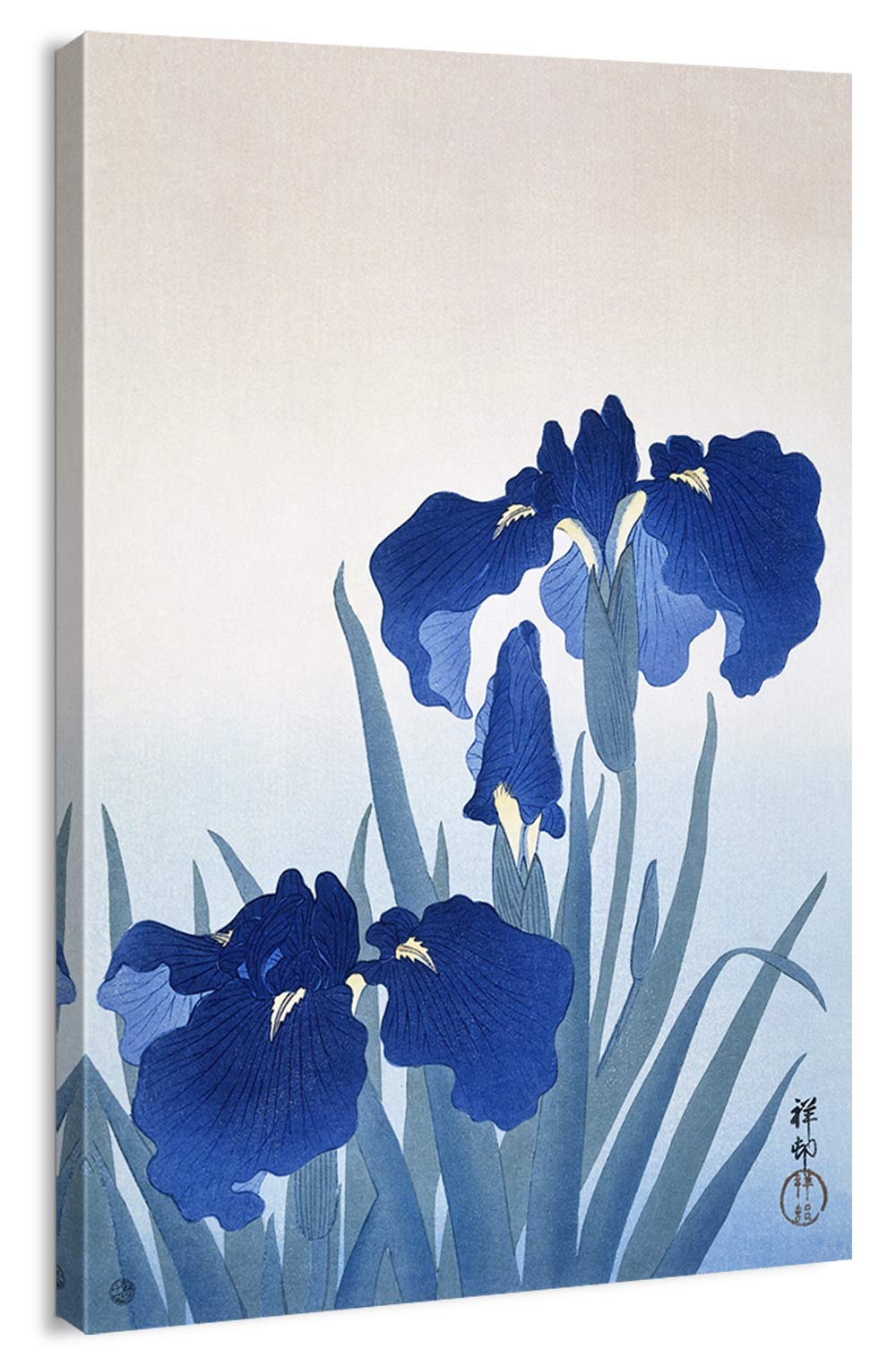
Ohara Koson was a master of kachō-e (bird-and-flower prints), and this canvas reproduction captures the delicate composition of his Blue Iris Flowers with crisp detail and vibrant color. The print is mounted on a solid wood frame and covered with a moisture-proof coating, making it suitable for humid environments like bathrooms or kitchens. The canvas is textured, mimicking the surface of a painted artwork rather than a glossy poster.
The professional framing and included hanging accessories earn high marks from buyers, who describe the print as “great quality” and “beautiful.” The image wraps around the sides of the frame, avoiding the visual break that occurs with white-bordered prints. At 48 x 32 inches in portrait orientation, it commands vertical wall space effectively, ideal for narrow wall sections or between windows.
This is a high-value decor piece for someone who appreciates Koson’s work and wants a large, durable print that feels substantial. It is not an archival facsimile or a hand-printed block, but for the price, the combination of size, framing, and print quality is hard to beat. The moisture-proof coating is a practical bonus that many canvas prints lack.
Why it’s great
- Moisture-proof coating and framed construction for durability in various rooms.
- High-resolution print with vibrant color reproduction of Koson’s iris composition.
- Image wraps around the frame edges, eliminating white borders from side angles.
Good to know
- Digital giclée print on canvas; lacks the texture of hand-printed washi.
- Framed print is heavy; may require sturdy wall anchors for secure mounting.
FAQ
What is the difference between a genuine hand-printed woodblock and a facsimile?
Which is more valuable, a print from Takenaka Woodblock or a modern facsimile book?
How should I display a genuine washi woodblock print to avoid damage?
Final Thoughts: The Verdict
For most users, the best antique japanese woodblock prints winner is the Japan Museum Hokusai Hand-Printed Woodblock Print because it is a genuine hand-pressed artifact on washi paper from a historically significant Kyoto workshop, offering the closest experience to owning an original Edo-period print without paying auction prices. If you want a definitive reference library for study and display, grab the Taschen: Thirty-six Views of Mount Fuji. And for a large, affordable wall statement that captures the Hokusai aesthetic, nothing beats the wall26 Kajikazawa Canvas.