
Finding a machine that targets both your abdominal wall and your lower back in a single, stable frame is the holy grail of home core training. Most equipment forces you to choose between isolating your six-pack or strengthening your posterior chain, leaving your trunk imbalanced and vulnerable to injury.
I’m Min — the co-founder and writer behind Gadgets Feed. I’ve spent countless hours cross-referencing user testing data, build material specifications, and weight capacities to separate the durable, biomechanically sound machines from the wobbly ones that collect dust.
Whether you’re a beginner seeking a gentle entry or an athlete craving progressive overload, the goal is to identify the best ab and back machine that delivers measurable results without dominating your living room.
How To Choose The Best Ab and Back Machine
A machine built for both flexion (crunches) and extension (back raises) demands a frame that supports reverse force without tipping. The wrong choice leaves your spine unsupported or your knees bruised. Focus on the three pillars below to filter out the contenders.
Adjustability for Body Mechanics
The machine must accommodate your torso length. Look for a seat that adjusts vertically and a foot roller that slides forward or backward. If the chest pad or shoulder brace is fixed, taller users will feel compression in the lower spine while shorter users will struggle to engage their abs. A range of at least 4-5 inches in seat height is ideal.
Resistance Type and Load Path
Bodyweight-only machines rely on gravity through a curved track. Plate-loaded units let you stack iron for linear progressive overload. Weight-stack machines offer quick pin changes but cap the top end. If your goal is pure hypertrophy, a plate-loaded or stack-based system with a minimum working load of 100-150 pounds gives room to grow without buying a second machine later.
Frame Rigidity and Base Width
During a back extension, the force vector pulls the machine forward. A narrow base or thin-gauge steel will wobble. Look for 12-gauge or 14-gauge alloy steel frames with a footprint wider than 24 inches across the stabilizers. A weight capacity rating above 300 pounds usually indicates sufficient structural meat to handle daily, aggressive use.
Quick Comparison
On smaller screens, swipe sideways to see the full table.
| Model | Category | Best For | Key Spec | Amazon |
|---|---|---|---|---|
| GMWD AB/Back Machine | Weight Stack | 2-in-1 crunch/extension | 27 adjustment holes, 180° range | Amazon |
| Valor Fitness Ab Crunch | Plate-Loaded | 28-position chest pad | 295° Sun Dial rotation | Amazon |
| Finer Form Sit Up Bench | Decline Bench | Tilted sit-ups & reverse crunches | 1100 lb capacity, 57″ backboard | Amazon |
| Wonder Core Pro Max | 4-in-1 | Versatility in small spaces | 4 modes: glider, row, leg press | Amazon |
| GMWD Chest Press Machine | Upper Body Press | Combined chest/ab workouts | 200 lb per arm, folds 50% | Amazon |
| WINBOX Ab Coaster | Sliding Track | Controlled ab isolation | 440 lb capacity, 4 height levels | Amazon |
| MERACH Split-Track | Dual Track | Alternating mountain climber | 110° curved track, 50% longer | Amazon |
| EPHESPORT 6-in-1 | Multi-Function | Entry-level full body | 330 lb capacity, folds flat | Amazon |
| DMoose Ab Roller | Elbow Support Roller | Compact core isolation | Stainless steel, 360° movement | Amazon |
In‑Depth Reviews
1. GMWD AB/Back Machine

The GMWD AB/Back Machine is a dedicated 2-in-1 unit that lets you switch between seated abdominal crunches and back extensions using a simple pop-pin mechanism. The rotary flywheel and 27 selectable holes grant over 180 degrees of adjustment, enabling you to fine-tune the starting angle for either movement without disassembling anything.
Its 2-inch thick leatherette cushion and five-position adjustable seat (20.8 to 24.7 inches) accommodate a wide range of torso lengths. The foot restraints slide between 31.4 and 36.3 inches, anchoring your hips securely so the load stays on your core rather than your hip flexors. At 70 pounds, the frame is heavy enough to resist lift-off during maximal back extensions.
The built-in weight stack is absent (this is a resistance-band or plate-loaded variant), but the design works smoothly with 12-inch bands for those avoiding iron. The 350-pound maximum weight recommendation covers most home users, and the compact footprint saves significant floor space compared to separate crunch and extension machines. For a balanced, progressive core routine, this is the most complete offering.
Why it’s great
- Seamless transition between ab crunch and back extension modes
- 27 adjustment holes provide micro-angle customization
- 5-position seat height supports users from 5’0″ to 6’2″
Good to know
- Weight stack not included; bands required for resistance
- Plastic weight holders felt fragile during assembly for some users
- Not for daily heavy use without reinforcing welds
2. Valor Fitness Ab Crunch and Back Machine
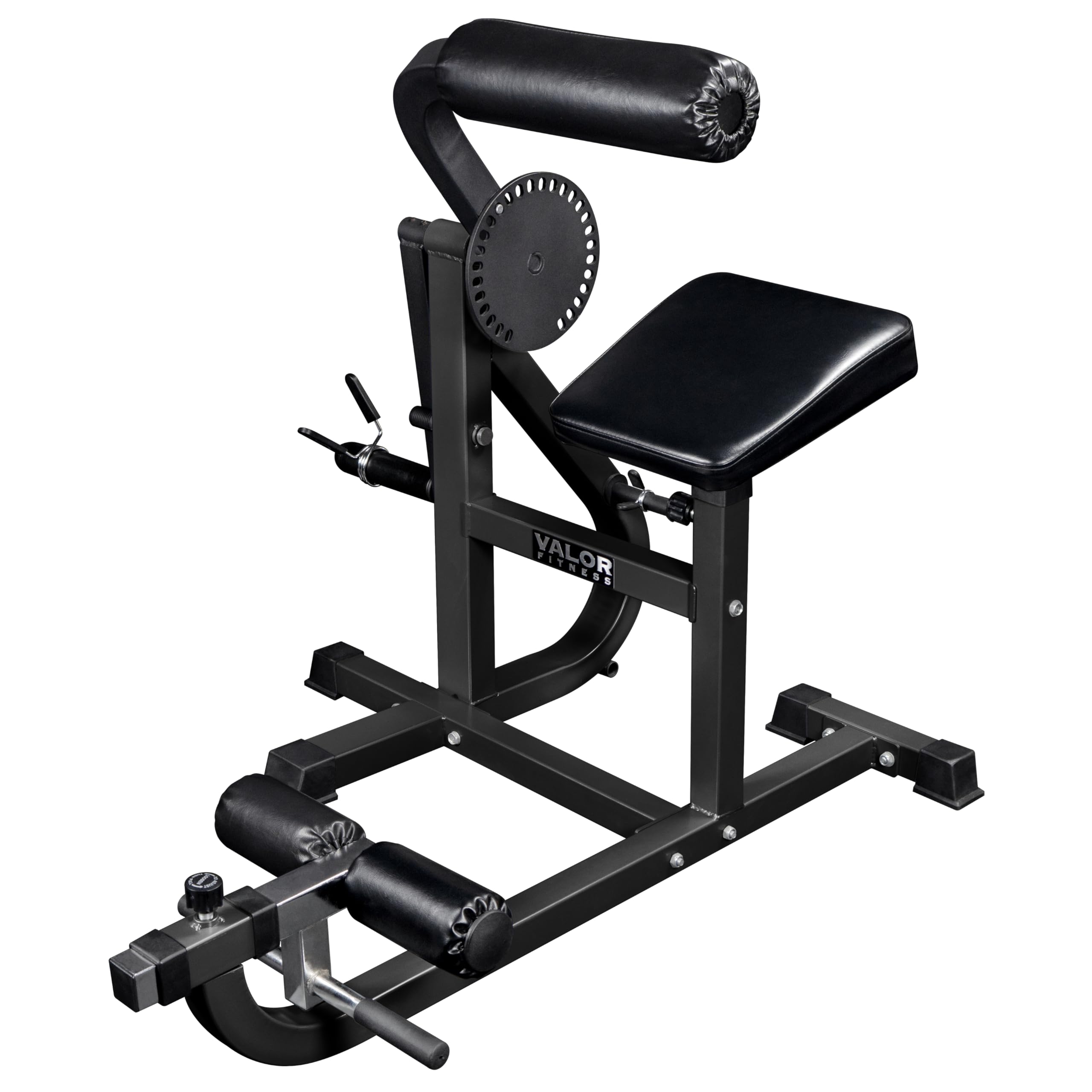
The Valor Fitness machine uses a plate-loaded system (200 lb max) with a 28-position Sun Dial chest pad that rotates through 295 degrees. This unique design lets you target your obliques, upper and lower abs, and lower back from multiple angles without repositioning your entire body — just twist the dial to shift the resistance plane.
The frame is built from 12-gauge steel tubing (3″x2″ and 2″x2″), making it one of the most rigid options in the home core category. High-density dual-layer padding covers the seat, chest support, and foot rollers, reducing pressure points during high-rep sets. The compact footprint fits garage gyms without dominating the floor.
Assembly takes about 80 minutes with a YouTube guide, and the included adapter accommodates different weight-plate hole sizes. Shorter users under 5’6″ report an excellent fit, while taller lifters over 5’10” may find the chest pad height limited by the seat-only adjustment. For pure, plate-loaded progressive overload on both flexion and extension, this is a premium contender.
Why it’s great
- 28-position rotating chest pad for multi-angle core work
- 12-gauge steel frame is rock-solid under heavy loads
- Plate-loaded system allows true progressive overload
Good to know
- Chest pad height cannot be adjusted independently of the seat
- Taller users over 5’10” may feel cramped
- Requires separate weight plates (not included)
3. Finer Form Adjustable Sit Up Ab Bench
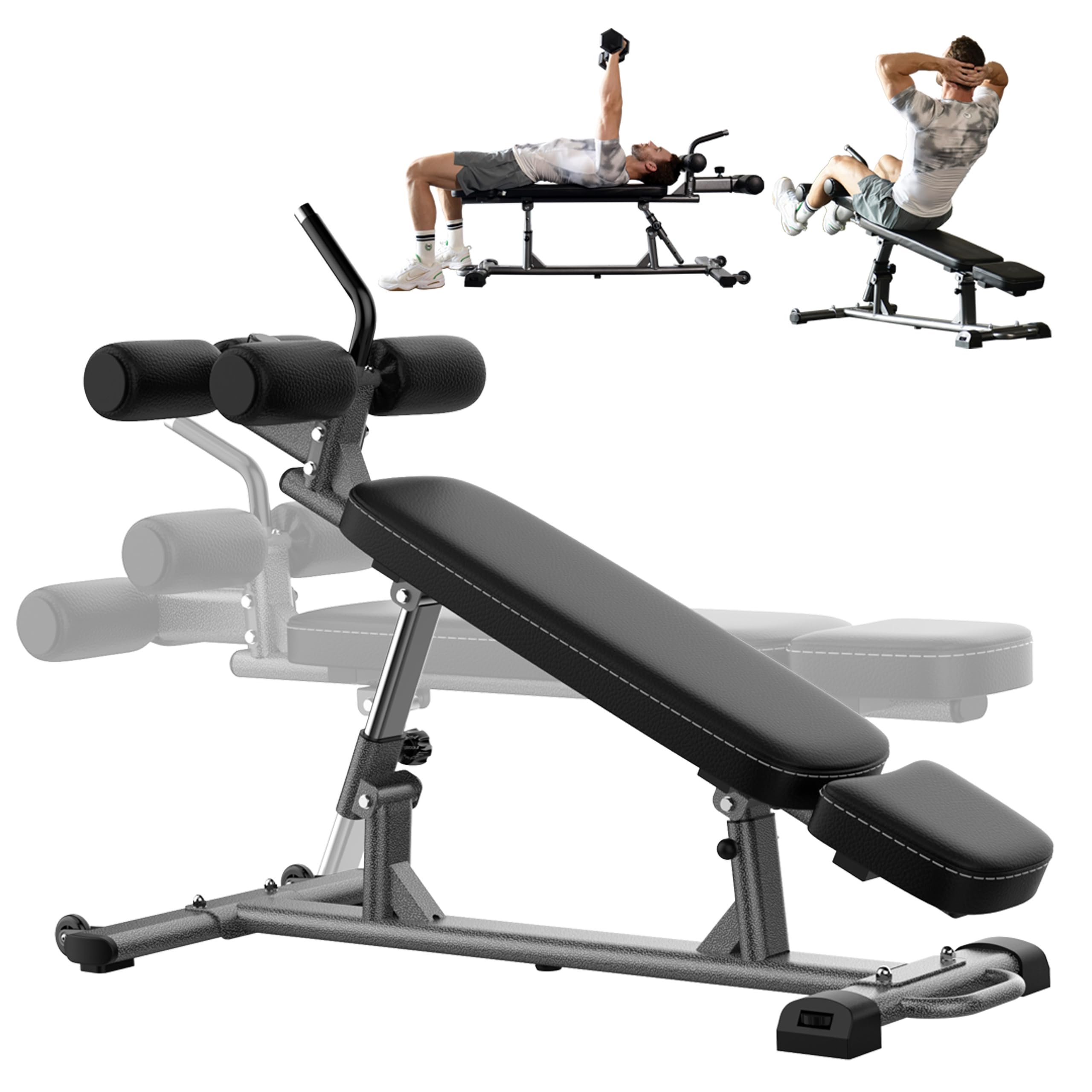
The Finer Form bench is a semi-commercial decline/flat bench with a 57.5-inch extended backboard and a reverse crunch handle welded into the frame. It serves dual duty as a flat bench for dumbbell presses and a decline platform for weighted sit-ups and leg lifts, making it a space-efficient addition for lifters who want upper body pressing alongside core work.
The 1100-pound weight capacity is overkill for a core bench, but that margin translates into zero wobble during explosive decline sit-ups. The adjustable foot roller slides to accommodate different leg lengths, and the built-in wheels let you tilt the bench upright for storage. The thick padding supports your spine even during extended sets.
Assembly is straightforward with all parts included — one reviewer completed it solo in under an hour. The main limitation is that this bench only provides decline/flexion movement; you’ll need a separate hyperextension station or back extension bench to target the posterior chain directly. For a strong ab-focused platform that doubles as a pressing bench, this is a robust choice.
Why it’s great
- 1100 lb capacity with zero wobble during decline sit-ups
- Extra-long backboard supports taller users comfortably
- Reverse crunch handle enables advanced ab exercises
Good to know
- Does not directly target lower back extensions
- Assembly instructions can be vague
- Bench feels slightly wobbly if not fully tightened
4. Wonder Core Pro Max
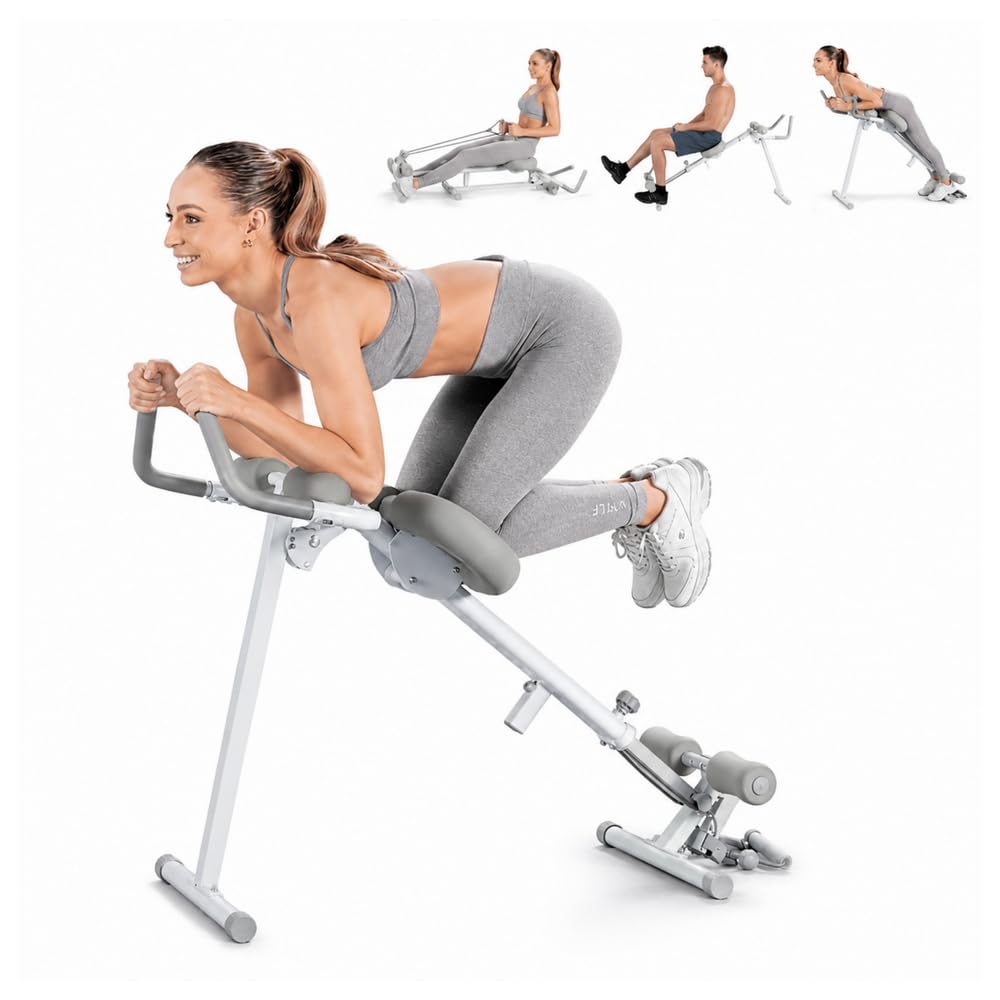
The Wonder Core Pro Max packs four machines into one folding frame: an ab glider for crunching, a Roman chair for back extensions, a leg press for lower body, and a rowing machine for posterior chain work. Mode changes take seconds — shift the sliding seat and reposition the resistance bands to switch from core to lower body to back.
The alloy steel frame weighs 28.66 pounds, making it portable enough to move between rooms. The foldable design collapses to 45.86″ x 22.44″ x 12.6″, fitting under most beds. An LCD monitor tracks reps, time, and calories, while the accompanying app provides guided tutorials for all four modes.
The 242-pound maximum weight recommendation is lower than heavier machines, so larger athletes should double-check the spec. Resistance comes from body weight plus optional dumbbells or kettlebells, not a stack, limiting fixed progressive overload. For apartment dwellers who want one machine that covers abs, back, arms, and legs without a permanent footprint, this is the most versatile option.
Why it’s great
- Four distinct exercise modes in a compact, foldable frame
- Light enough to carry between rooms (28.66 lbs)
- LCD monitor and companion app provide workout guidance
Good to know
- Maximum user weight limited to 242 lbs
- Resistance limited to body weight plus added dumbbells
- Front angle adjustment requires pulling a peg, not a quick dial
5. GMWD Chest Press Machine
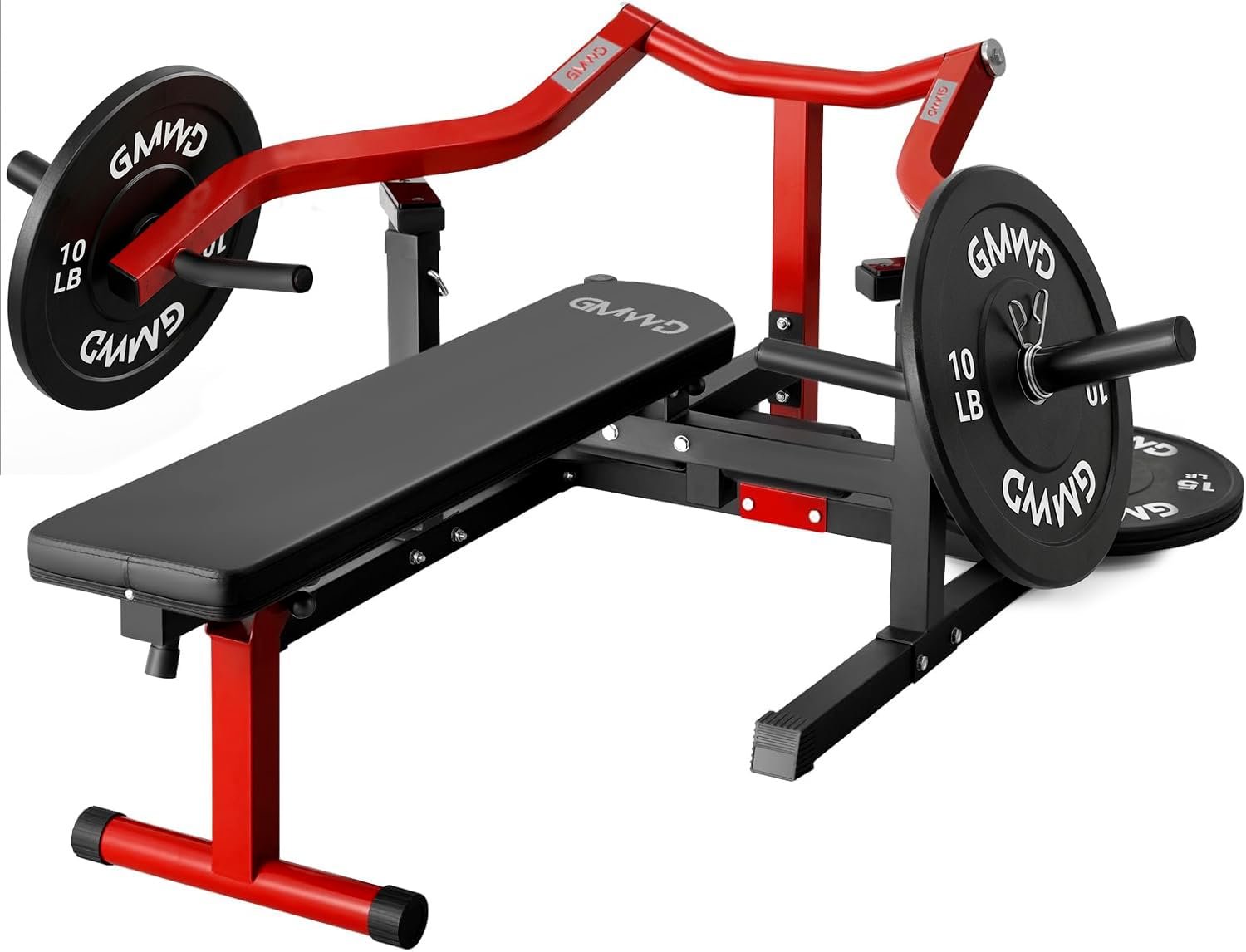
The GMWD Chest Press Machine combines an adjustable flat/incline bench with independent converging arms for unilateral chest work, plus a leg attachment that doubles as an ab crunch platform. The 11-position leverage arms correct strength imbalances by letting each side move independently, while the 3-position bench (upright, incline, flat) supports decline sit-ups and leg raises.
The 14-gauge steel frame supports 200 pounds per arm, and the folding design reduces floor space by over 50% — the footprint collapses to 35.4″ x 30.5″ x 54″. The precision bearings ensure smooth motion, and the detachable weight spindles accept both 1″ and 2″ plates. This is not a dedicated ab machine, but the bench and leg attachment provide solid ground for sit-ups and leg lifts.
Assembly takes about two hours solo, and some users report stiff pop pins initially. The rear weight spindles can be inconvenient to load during pressing sets. If you want a single machine that handles chest, shoulders, triceps, and core — and folds away — this is a strong multi-purpose pick, though it lacks a dedicated back extension function.
Why it’s great
- Independent converging arms correct strength imbalances
- Folds to save over 50% floor space
- 3-position bench supports incline, flat, and decline core moves
Good to know
- Designed primarily for chest pressing, not dedicated back extension
- Rear weight spindles are inconvenient to load
- Some assembly difficulty with stiff pop pins
6. WINBOX Ab Machine

The WINBOX Ab Machine uses a curved sliding track with 4 height levels to control resistance intensity. As you incline the machine further, the glide path steepens, forcing your abs to work harder against gravity. The independent sliding handles allow for unilateral or bilateral movement, mimicking a crunch while reducing neck strain common with floor sit-ups.
The thickened steel frame supports up to 440 pounds, and the foam cushion and padded handgrips provide comfort during extended sessions. An LCD display tracks calories, time, and reps (battery not included). The foldable design collapses for storage under a bed or in a closet.
Some users note that the sliding resistance starts quite low, making it more suitable for beginners and volume-focused toning than for heavy progressive overload. The track slides do not offer incremental weight addition — intensity only increases through steeper angles. For controlled, joint-friendly ab isolation that folds flat, this is a practical mid-range choice.
Why it’s great
- 4 adjustable height levels provide scalable resistance
- 440 lb max capacity with stable steel frame
- Foldable design stores easily in tight spaces
Good to know
- Resistance is body-weight-only; no plate loading available
- Some users report minor hip or knee pad discomfort
- LCD display requires a separate battery
7. MERACH Ab Machine
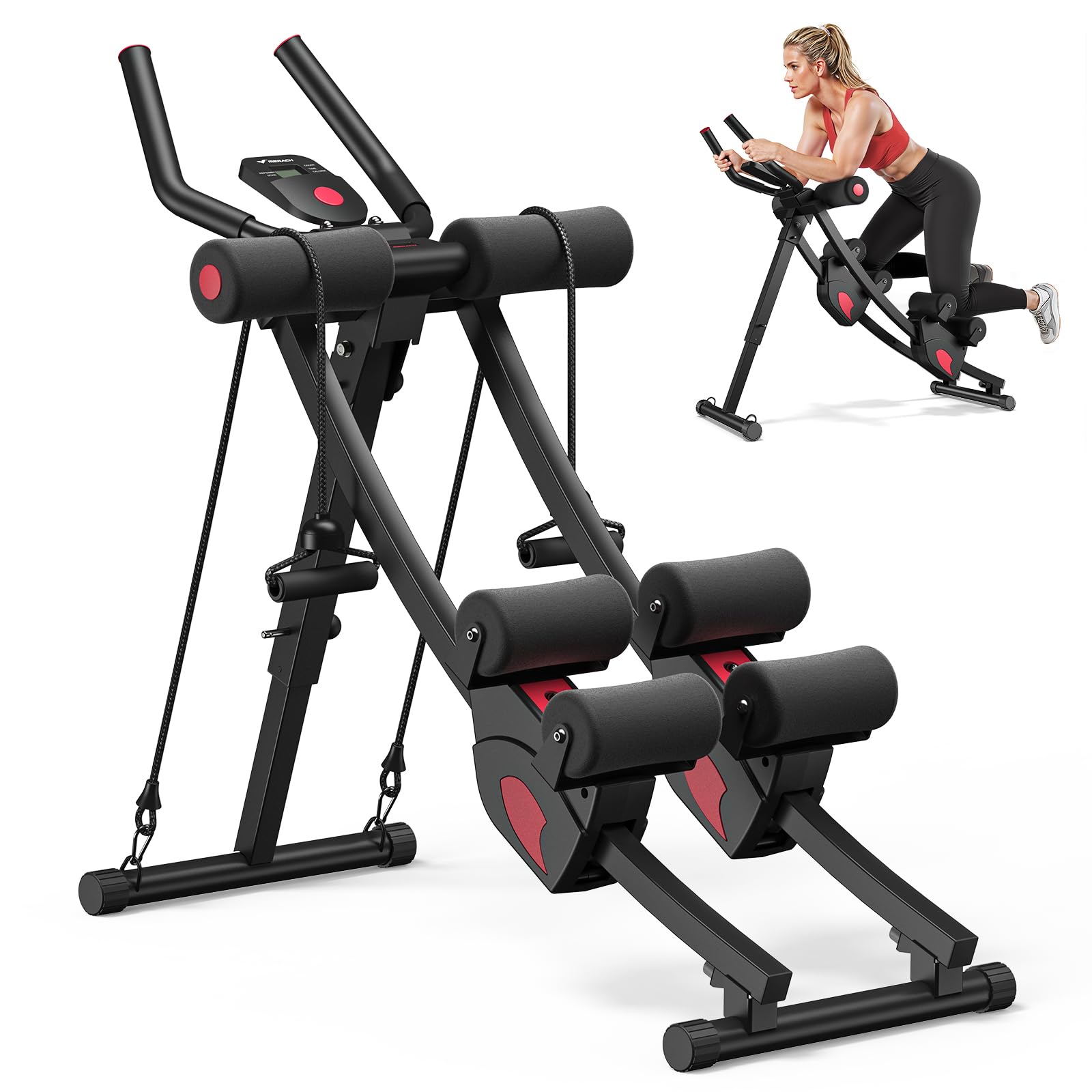
The MERACH Ab Machine features an upgraded split-track system that lets each side glide independently, enabling alternating mountain climber motions alongside traditional crunches. The 110° curved track aligns with natural spinal movement, and the 50% longer stroke allows for a fuller range of motion compared to shorter glide machines.
Four height adjustments tailor difficulty from gentle to intense, and the thick foam padding on the knee and elbow rests reduces discomfort during high-rep sessions. The LCD screen displays reps, time, and calories in real time. The steel frame supports up to 440 pounds and weighs 24 pounds, making it easy to move and fold for storage.
The dual-track design truly activates obliques and transverse abs when you alternate sides — a significant advantage over single-track units. The resistance is body-weight based, so advanced users may eventually outgrow the intensity ceiling. For a dynamic, oblique-focused ab machine that folds away neatly, this is a smart mid-range investment.
Why it’s great
- Split-track design enables alternating mountain climber movements
- 110° curved track provides natural spinal alignment
- 440 lb capacity with sturdy alloy steel frame
Good to know
- Body-weight resistance only; no way to add plates
- Some users may find the sliding surface too fast initially
- Battery for LCD required but not included
8. EPHESPORT Multifunctional Ab Machine
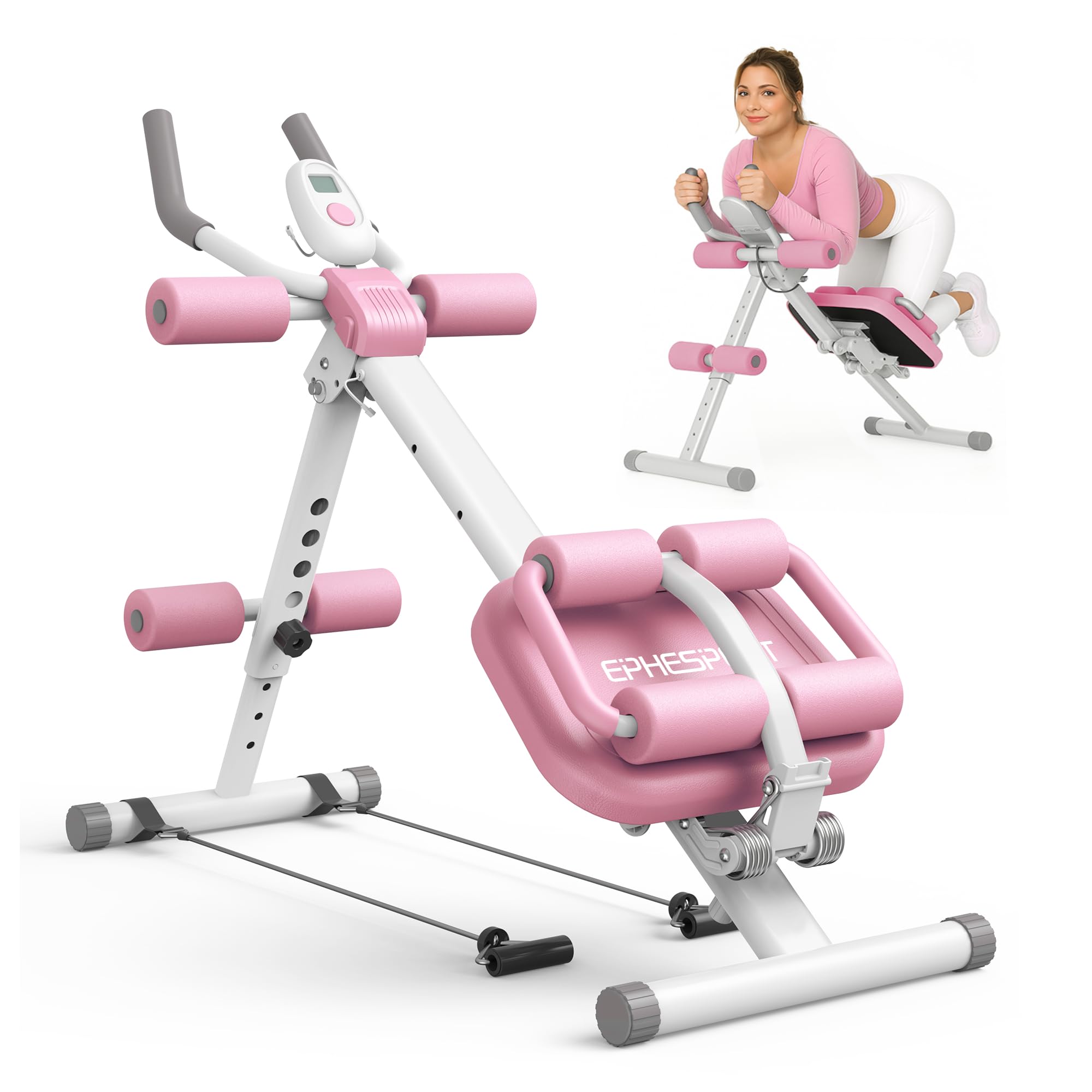
The EPHESPORT machine packs six workout modes into a foldable frame that weighs 22 pounds and supports 330 pounds. The adjustable height setting increases resistance by steepening the glide angle, and the included resistance bands add pulling motions for arm and back engagement. The foam cushion and padded handles reduce knee and lower back pressure during crunches and glute presses.
The LCD display tracks calories, time, and reps, though some users note the angle adjustment requires some trial and error to find the optimal setting for their height. The four-wheel base provides stable rolling without floor damage, and the machine folds flat for storage against a wall or under a bed.
Build quality is solid for the price point, but one reviewer reported a crooked weld and loose hardware, indicating occasional quality control variance. For beginners on a tight budget who want a flexible core station that can also stretch into arm and glute work, the EPHESPORT offers the most functions per square foot at a minimal outlay.
Why it’s great
- 6 workout modes including crunches, presses, and stretches
- Foldable design for apartment-friendly storage
- Padded knee and back support enhances comfort
Good to know
- Occasional quality control issues with welds and hardware
- Angle adjustment requires trial and error for proper fit
- Resistance bands offer limited tension for advanced users
9. DMoose Fitness Ab Roller with Elbow Support

The DMoose Ab Roller is not a seated machine — it is a wheel with padded elbow rests and two knee pads — but it delivers one of the most effective core contractions available for a minimal footprint. The 4-inch rubber-coated wide wheel rolls silently on any surface, and the stainless steel frame supports up to 330 pounds without flexing.
The high-density foam elbow rests and ergonomic handles shift the load from your wrists and shoulders to your core, allowing fuller wheel extensions than a standard roller. The two included knee pads stay put during dynamic slides and protect hard floors. No assembly is required — the unit comes fully assembled in the box.
This tool targets the entire anterior chain, including deep transverse abs and lower rectus, more effectively than many motorized machines. The trade-off is that it offers no back extension function — you’ll need a separate hyperextension bench or Roman chair for posterior chain work. For raw ab strength and portability, the DMoose delivers gym-quality intensity in a shoebox-sized package.
Why it’s great
- Padded elbow rests enable deeper wheel extensions without wrist strain
- Stainless steel frame provides exceptional durability
- Zero assembly required; ready to use out of the box
Good to know
- Does not target the lower back directly
- Higher price point compared to standard ab wheels
- Requires floor space for full extensions
FAQ
Can a single ab machine effectively train both upper abs and lower back?
How much weight capacity do I really need in an ab and back machine?
Will a curved-track ab glide machine build enough resistance for intermediate lifters?
Final Thoughts: The Verdict
For most users, the best ab and back machine winner is the GMWD AB/Back Machine because it offers true 2-in-1 functionality with 27 adjustment holes and a pop-pin mode switch, enabling balanced core training in a compact footprint. If you want plate-loaded progressive overload with multi-angle chest rotation, grab the Valor Fitness Ab Crunch. And for apartment dwellers who need four machines in one folding unit, nothing beats the Wonder Core Pro Max.