
Finding a television that delivers genuine performance without demanding a second mortgage requires cutting through the noise of marketing claims and focusing on the hardware that actually affects your daily viewing. The real trick lies in identifying which panel technology, refresh rate, and processing engine give you the most lasting satisfaction for your spend.
I’m Min — the co-founder and writer behind Gadgets Feed. I’ve spent countless hours cross-referencing panel specifications, local dimming zones, processor architectures, and real-world contrast measurements to determine which TVs truly punch above their weight class.
The quest for the ultimate screen is about maximizing the specs that matter — panel brightness, color volume, motion handling, and smart platform responsiveness — without paying for gimmicks you’ll never use. This guide cuts through the clutter to reveal the best bang for your buck tv options available right now.
How To Choose The Best Bang For Your Buck TV
Earning the label requires balancing upfront cost against the longevity of key components. The panel, processor, and HDR capabilities determine how satisfying your screen remains five years down the road.
Panel Quality and Backlight Architecture
The biggest visual leap comes from how the backlight is controlled. Standard direct-lit panels treat the entire screen as a single zone, producing grayish blacks when dark content appears beside bright content. Full Array Local Dimming partitions the backlight into dozens or hundreds of zones, allowing deeper blacks and higher contrast. Mini-LED technology shrinks the individual LEDs, enabling hundreds of zones without increasing the TV’s depth. This is the single most important hardware feature for extracting punchy HDR performance from a mid-range budget.
Refresh Rate and Motion Processing
A native 60Hz panel handles most movies and standard TV shows without issue, but gamers and sports fans benefit from a native 120Hz or 144Hz panel. Higher refresh rates reduce motion blur and improve responsiveness. Watch for “Motion Rate” marketing that claims an effective refresh rate far above the native spec — this is an artificial estimate using backlight scanning and frame insertion. Always check the native panel refresh rate in the technical specifications, not the branded marketing number.
HDR Ecosystem Support
HDR compatibility determines how much detail you see in bright highlights and dark shadows. Dolby Vision is the most widely used premium HDR format across streaming services and Ultra HD Blu-rays. HDR10+ offers similar dynamic metadata benefits but is less broadly adopted. A television that supports both Dolby Vision and HDR10+ gives you the widest compatibility without forcing you to check formats for every title. HLG support is important for live broadcast HDR content from sports networks.
Quick Comparison
On smaller screens, swipe sideways to see the full table.
| Model | Category | Best For | Key Spec | Amazon |
|---|---|---|---|---|
| Hisense 50E7SF | Premium | Versatile Performance | Native 144Hz, Hi-QLED Mini-LED | Amazon |
| TCL 55T7 | Premium | High-End Value | 120Hz, QLED, Dolby Vision | Amazon |
| TCL 65QM64L | Premium | Large Screen Value | 144Hz, QD-Mini LED, Local Dimming | Amazon |
| Samsung 55QN80F | Premium | AI Upscaling | 144Hz, Neo QLED Mini LED | Amazon |
| Sony K-55S20M2 | Mid-Range | PS5 Gaming | 4K HDR Processor X1 | Amazon |
| Roku 55R8A5R | Mid-Range | Streaming Enthusiast | Mini-LED, QLED, Dolby Vision | Amazon |
| Samsung 43M70H | Mid-Range | Compact Mini-LED | Mini LED, 120Hz, Pure Color | Amazon |
| Samsung 50U8000H | Entry | Budget Streaming | 60Hz, Crystal UHD, HDR10+ | Amazon |
| VIZIO V4K50M-0810 | Entry | Low-Cost Gaming | 60Hz, Dolby Vision, VRR | Amazon |
In‑Depth Reviews
1. Hisense 50″ E7 Cinema Series Hi-QLED Mini-LED 4K UHD Smart Fire TV
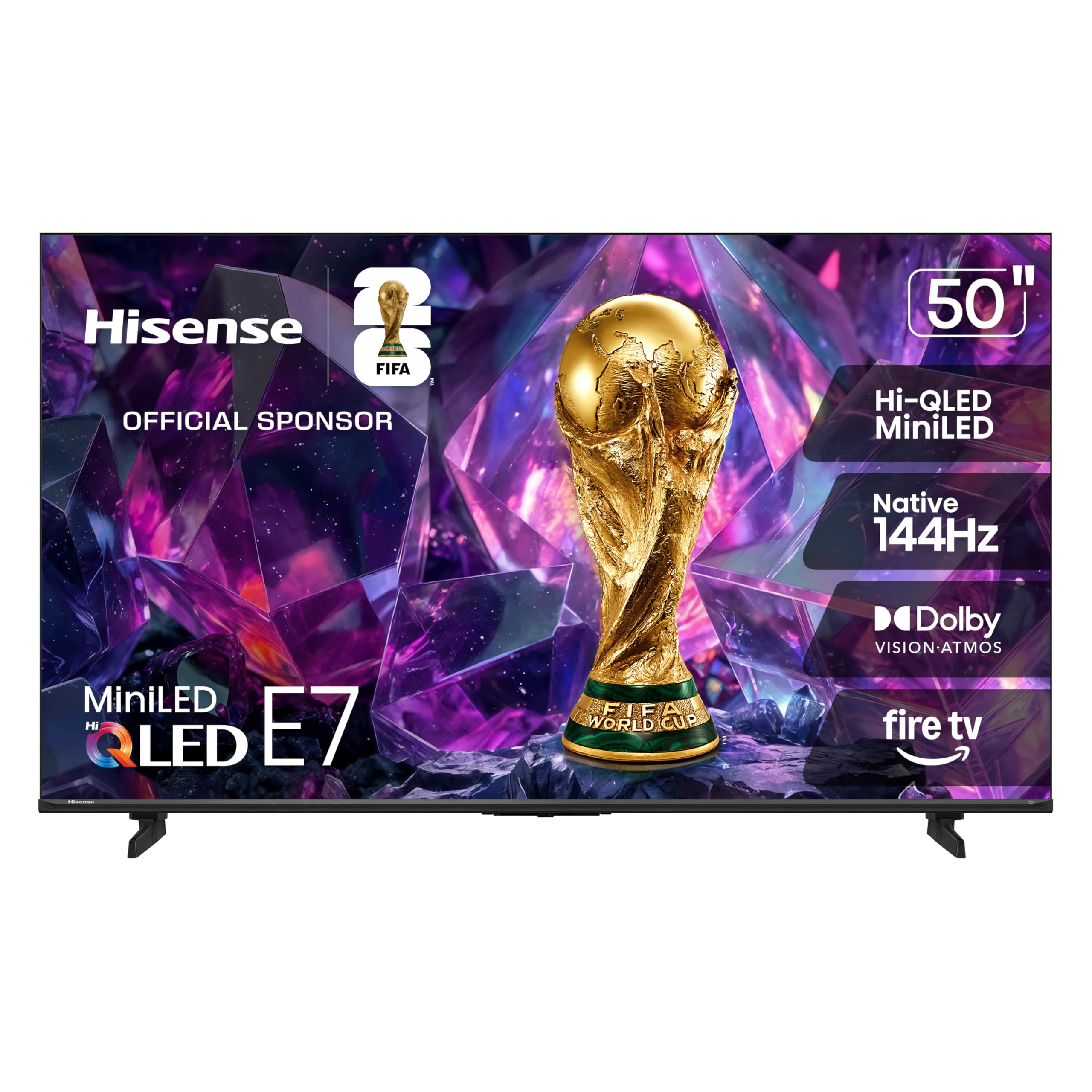
The Hisense E7 Cinema Series delivers a rare combination: a Mini-LED Full Array Local Dimming backlight driving a native 144Hz panel at a price point where most competitors offer either standard direct-lit construction or capped refresh rates. This Hi-QLED implementation uses quantum dot color to cover a wide color gamut, and the local dimming zones produce meaningful contrast separation between bright highlights and shadow detail — you see the difference immediately in letterbox bars during movies.
Motion handling benefits from both the high native refresh rate and MEMC frame interpolation, making it excellent for fast-paced sports and competitive gaming. The AI Picture engine analyzes scene content and adjusts brightness and color in real time, which reduces the need for manual calibration. Dolby Vision IQ and HDR10+ Adaptive support ensure dynamic tone mapping adjusts to ambient room lighting as well as content metadata.
Fire TV is built directly into the platform, providing Alexa voice control and access to the full app ecosystem without a separate streaming device. The included remote pairs reliably and the interface feels snappy. Some users report occasional Wi-Fi stability issues that may require a router restart, but the core picture quality and processing power set a benchmark that few alternatives at this level can match.
Why it’s great
- Native 144Hz panel with MEMC for ultra-smooth motion
- Mini-LED FALD delivers deep blacks and high peak brightness
- Full HDR support including Dolby Vision IQ and HDR10+ Adaptive
Good to know
- Plastic stand feels less substantial than the picture quality suggests
- Occasional Wi-Fi connectivity drops reported by some users
2. TCL 55″ T7 Series 4K QLED HDR Smart Google TV

TCL’s T7 Series strikes an aggressive balance with a native 120Hz panel combined with QLED quantum dot color reproduction that covers nearly the full DCI-P3 color space. The AIPQ Pro processor handles upscaling and motion estimation competently, delivering clean 4K upscaling from 1080p sources and maintaining smooth frame transitions during action sequences.
HDR performance is strong thanks to Dolby Vision, HDR10+, and HLG support working in concert with the Direct LED backlight. While this model does not use Mini-LED, the Motion Rate 480 with MEMC frame insertion keeps motion looking crisp. The four HDMI inputs, including one with eARC, provide generous connectivity for consoles, soundbars, and streaming devices.
Google TV serves as the operating system, offering personalized recommendations, Chromecast built-in, and Apple AirPlay 2 support. The interface is clean and responsive, though first-time setup requires an internet connection and Google account sign-in. For console gamers, the 120Hz panel with VRR makes this a compelling option that keeps input lag low while maintaining strong color accuracy out of the box.
Why it’s great
- Native 120Hz refresh with VRR for console gaming
- Wide QLED color gamut and Dolby Vision support
- Four HDMI inputs with eARC for flexible setups
Good to know
- Direct LED backlight without local dimming zones
- Google TV setup requires account and internet
3. TCL 65″ QM64L Series Mini LED QLED 4K Smart Fire TV
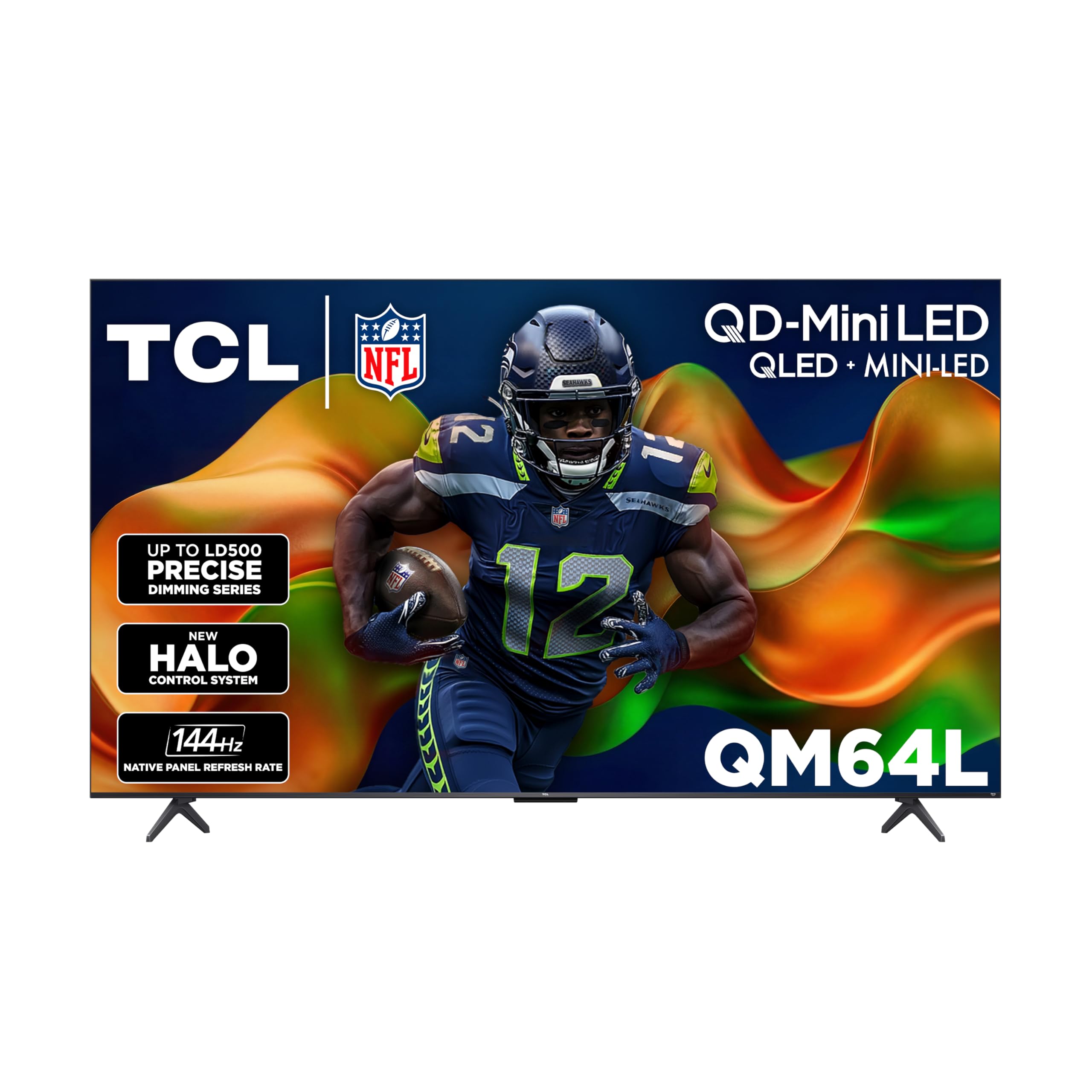
The 65-inch QM64L brings TCL’s QD-Mini LED technology to a larger screen size with the Halo Control System managing thousands of mini LEDs for “halo-free” imaging. Local Dimming Pro dynamically adjusts hundreds of individual zones, producing black depth that rivals much more expensive OLED competitors in moderately lit rooms. High Brightness Pro ensures the picture stays vivid even with ambient light streaming through windows.
Fire TV integration feels seamless, with Alexa voice control built into the remote and fast app loading times. The 144Hz native refresh rate and High Contrast HVA Panel make motion exceptionally clear, whether you are watching live sports or playing fast-paced shooters. Enhanced QLED quantum crystals provide 100,000 hours of rated viewing life, so the color volume should remain consistent for years.
One limitation worth noting: native screen mirroring is restricted to Apple AirPlay, so Android users may need a workaround. The slim bezel-less design looks modern on a wall or stand, and the included remote is functional if not luxurious. For buyers prioritizing screen size without sacrificing panel technology, this model delivers Mini-LED quality at a mainstream price.
Why it’s great
- QD-Mini LED with hundreds of local dimming zones
- Native 144Hz panel with High Contrast HVA
- 65-inch size at a price well below the competition
Good to know
- No native Android screen mirroring
- Stand is sturdy but not height-adjustable
4. Samsung 55″ Neo QLED 4K QN80F Smart TV

Samsung’s QN80F sits at the top of the value spectrum, combining Neo QLED Mini-LED backlighting with the NQ4 AI Gen2 processor that uses 20 neural networks to upscale content and optimize picture quality in real time. The concentrated Mini-LED zones deliver impressive contrast separation, while Object Tracking Sound Lite with Dolby Atmos creates a surprisingly wide soundstage for built-in speakers.
Gaming performance benefits from a native 144Hz panel with VRR support, and the exclusive Motion Xcelerator ensures smooth frame delivery during fast content. The AI upscaling handles lower-resolution streaming sources with conviction, recovering texture detail that lesser processors would smear or ignore. SDR content is intelligently tone-mapped to HDR-like quality, making the entire library of older shows feel more dynamic.
The Tizen smart platform is responsive and includes Alexa built-in, though the minimalist remote with limited buttons takes adjustment. Some users report that the setup process requires patience, and the glossy screen finish may produce noticeable reflections in bright rooms with direct light sources. For buyers who want Samsung’s image processing pipeline and Mini-LED contrast without stepping into the flagship price tier, this is the target.
Why it’s great
- NQ4 AI processor with 20 neural network upscaling
- Native 144Hz with VRR for tear-free gaming
- Object Tracking Sound Lite with Dolby Atmos
Good to know
- Glossy screen finish may cause reflections
- Sparse remote control takes time to learn
5. Sony BRAVIA 2 II 55″ 4K HDR LED Smart TV

Sony’s BRAVIA 2 II prioritizes image processing and console integration over raw panel specifications. The 4K Processor X1 handles color reproduction and motion estimation with Sony’s characteristic naturalism — skin tones look accurate, and upscaled content retains fine texture without artificial sharpening. Motionflow XR keeps sports and action movies blur-free despite the standard 60Hz panel.
The exclusive PlayStation 5 features are the real differentiator: Auto HDR Tone Mapping and Auto Genre Picture Mode automatically detect PS5 content and optimize the TV’s settings for gaming or streaming without manual menus. The Game Menu consolidates gaming picture settings and assist features in one overlay. For PS5 owners, this integration reduces friction significantly compared to generic gaming modes on other brands.
Google TV provides access to the full streaming ecosystem with Apple AirPlay 2 and Google Cast support. Sony Pictures Core includes free movies with the TV. The build quality is solid, with a metal stand and clean cable management. The trade-off is a simpler backlight system without local dimming, meaning black levels are standard for an LED panel rather than exceptional. Buyers who value processor intelligence and PS5 synergy over peak contrast will find this a focused choice.
Why it’s great
- Seamless PS5 integration with Auto HDR Tone Mapping
- Excellent 4K processor for natural color and upscaling
- Google TV with Apple AirPlay 2 and free Sony Pictures Core movies
Good to know
- Standard LED backlight without local dimming
- Limited to 60Hz native refresh rate
6. Roku 55″ Plus Series Mini-LED QLED 4K Smart TV
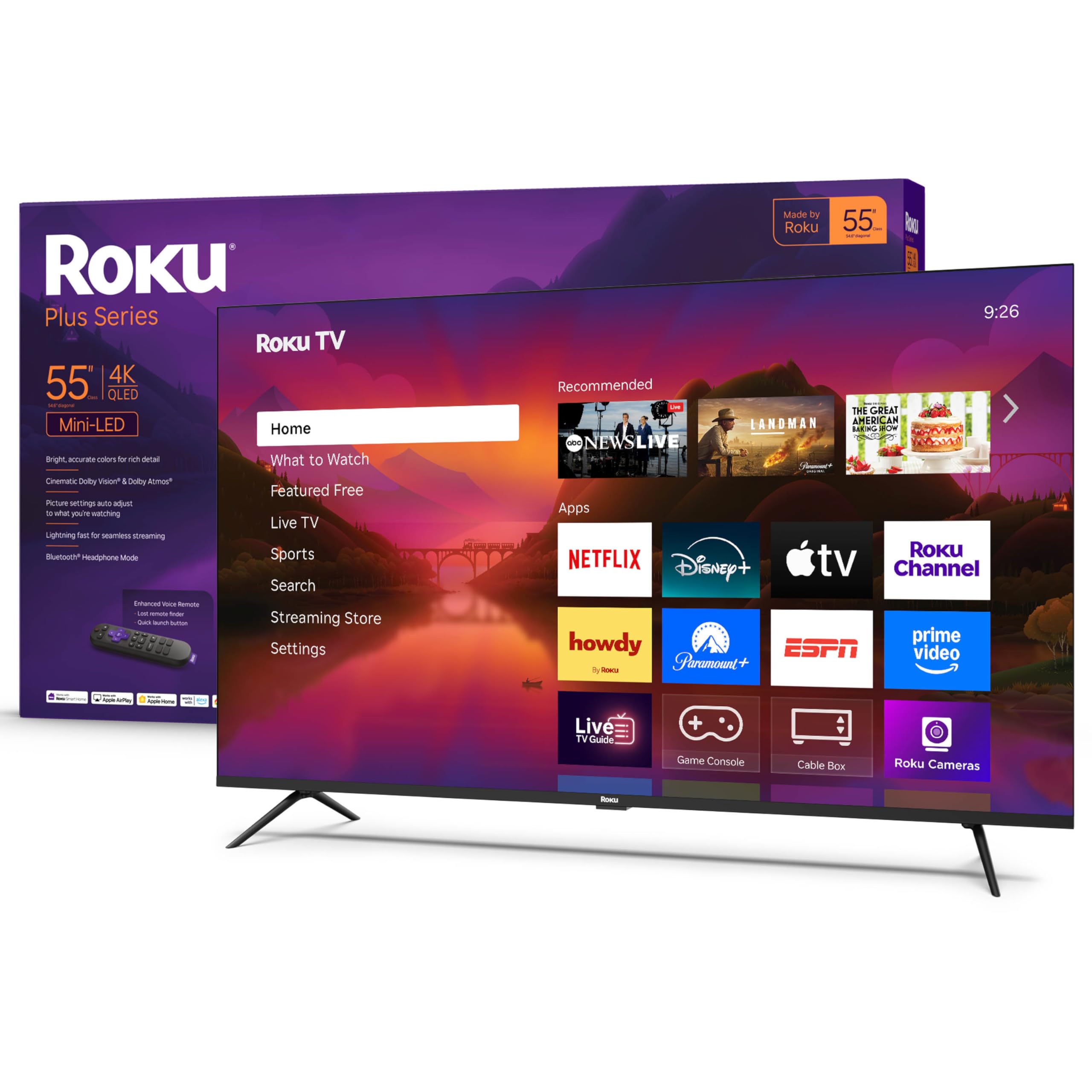
Roku’s Plus Series combines Mini-LED backlighting with a QLED panel and Dolby Vision support, wrapped in the company’s famously clean operating system. The Roku OS is the star here — no bloatware, no promotional tiles on the home screen, and automatic software updates that keep the interface fast. AI-powered Smart Picture Max cleans up incoming signals and optimizes for scene content without requiring manual tweaking.
The built-in audio system includes a subwoofer producing stronger bass than typical TV speakers, with Dolby Atmos processing for spatial sound. Bluetooth Headphone Mode lets you listen privately without disturbing others — a genuinely useful feature for late-night viewing. The Enhanced Voice Remote includes a lost remote finder that triggers a tone from the remote itself, solving a common household pain point.
Connectivity covers Bluetooth, Ethernet, USB-C, and dual-band Wi-Fi. The metal feet give the TV a more premium look than its price suggests. The primary limitation is the standard 60Hz panel, which means gaming enthusiasts may prefer a higher refresh rate alternative. For pure streaming performance with the least friction and genuinely helpful audio features, this Roku is hard to beat.
Why it’s great
- Roku OS is the fastest, least cluttered smart platform
- Mini-LED backlight with QLED and Dolby Vision
- Built-in subwoofer and Bluetooth Headphone Mode
Good to know
- 60Hz panel limits gaming motion clarity
- No USB-A port, only USB-C
7. Samsung 43″ Mini LED M70H Series Smart TV
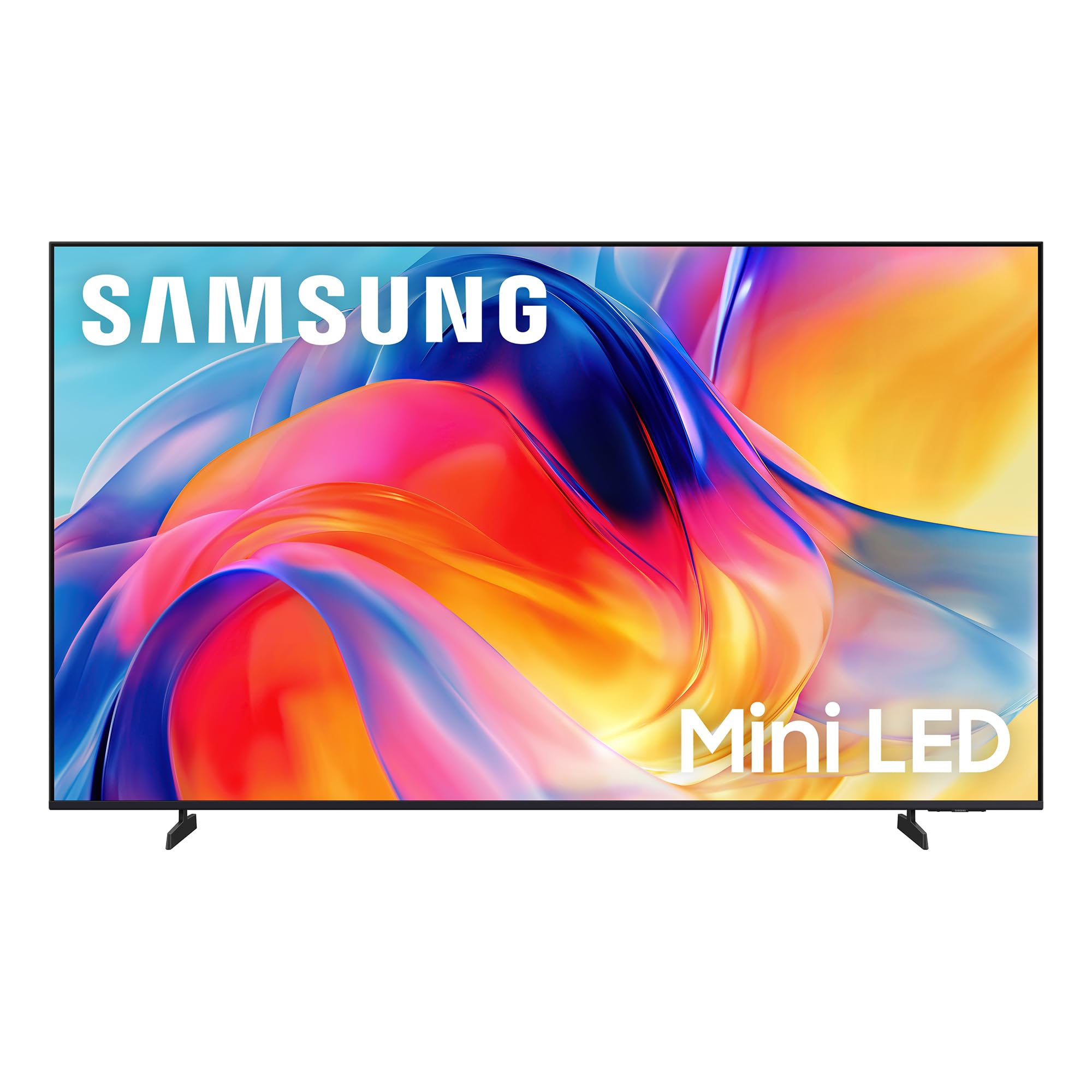
The Samsung M70H brings Mini-LED technology to a compact 43-inch form factor, ideal for bedrooms, small living rooms, or gaming desks where space is tight. The Mini LED Processor 4K and Pure Spectrum Color technology produce one billion color shades with brighter highlights and deeper blacks than standard edge-lit LED panels in this screen category. Supreme Mini LED Dimming adjusts contrast dynamically across the display.
Motion Xcelerator with DLG 120Hz uses dynamic local dimming to effectively double the perceived refresh rate for compatible content, keeping sports and action games smooth. The Gaming Hub aggregates cloud gaming services and console inputs into a single menu. Soccer Mode optimizes motion clarity and green saturation automatically when it detects football content, delivering 40 percent clearer motion and 30 percent more vibrant grass tones.
Some buyers report that the remote control is frustratingly minimalist, lacking direct input switching buttons and forcing reliance on the on-screen interface. The setup process requires internet and a Samsung account, which may complicate use for OTA-only viewers. For those who want Mini-LED contrast in a smaller chassis and can adapt to Samsung’s smart interface quirks, this is a uniquely positioned option.
Why it’s great
- Mini-LED backlight in a compact 43-inch size
- DLG 120Hz and Motion Xcelerator for smooth action
- Gaming Hub and Soccer Mode for specialized viewing
Good to know
- Minimalist remote lacks HDMI input buttons
- Setup requires internet and Samsung account
8. Samsung 50″ Crystal UHD U8000H Series Smart TV
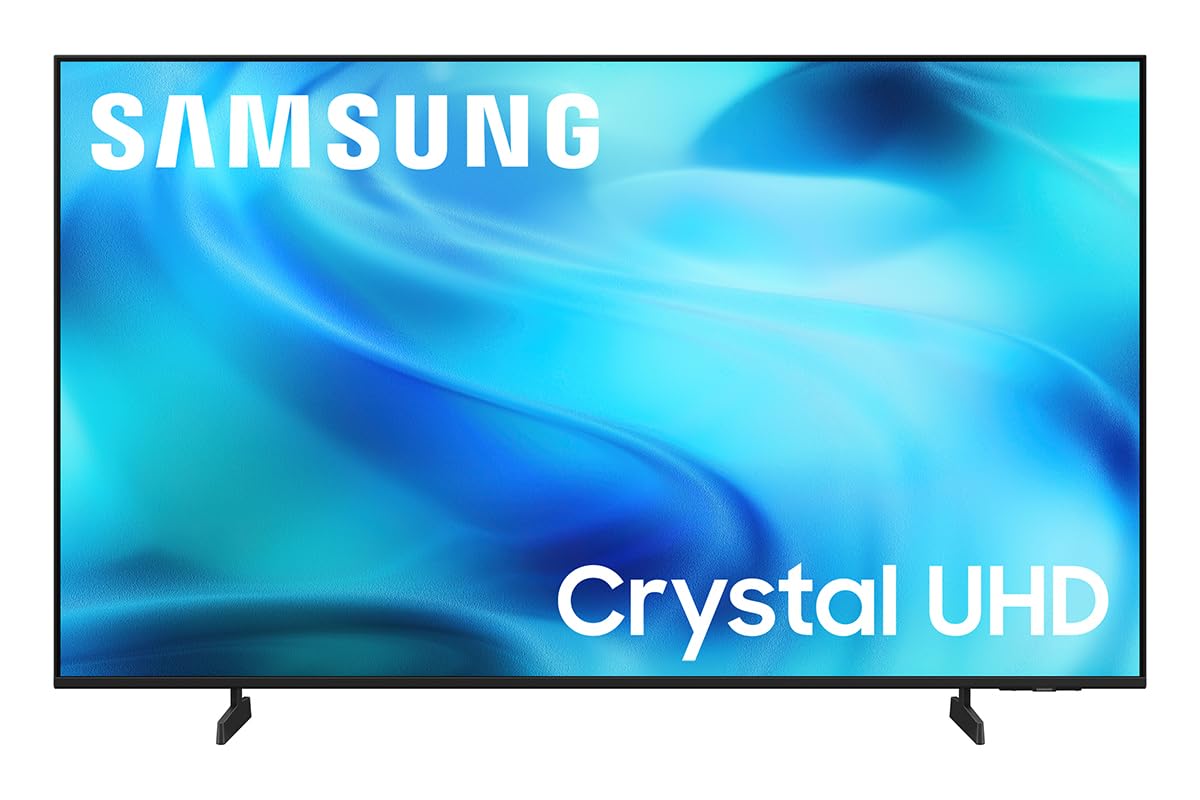
Samsung’s U8000H represents the entry-level gateway to the brand’s 4K ecosystem, powered by the Crystal Processor 4K that handles upscaling and color enhancement reasonably well for the category. The Color Booster technology pushes saturation on reds and blues to make content pop, and Motion Xcelerator delivers smooth 60Hz performance sufficient for casual gaming and sports viewing. HDR10+ support provides basic dynamic metadata handling.
The Samsung TV Plus platform offers over 2,700 free streaming channels without requiring any subscription, making this a strong pick for cord-cutters who want a broad free content library. Setup is straightforward, and the Tizen interface is more responsive than earlier Samsung generations. The included remote is simple and functional, though the menu structure takes a few sessions to navigate efficiently.
Picture quality is good for the entry tier but lacks the contrast depth of Mini-LED or FALD alternatives — black levels appear grayish in dark room viewing. The 60Hz native refresh and standard LED backlight mean this is not a gaming TV, but for everyday streaming, live TV, and casual use, it delivers a clean 4K image at a price that leaves room for a soundbar upgrade.
Why it’s great
- 2,700+ free channels via Samsung TV Plus
- Crystal Processor 4K does solid upscaling for the price
- Color Booster makes standard content look punchier
Good to know
- Standard LED backlight limits black depth
- 60Hz panel not ideal for competitive gaming
9. VIZIO 50″ V Series 4K UHD LED Smart TV
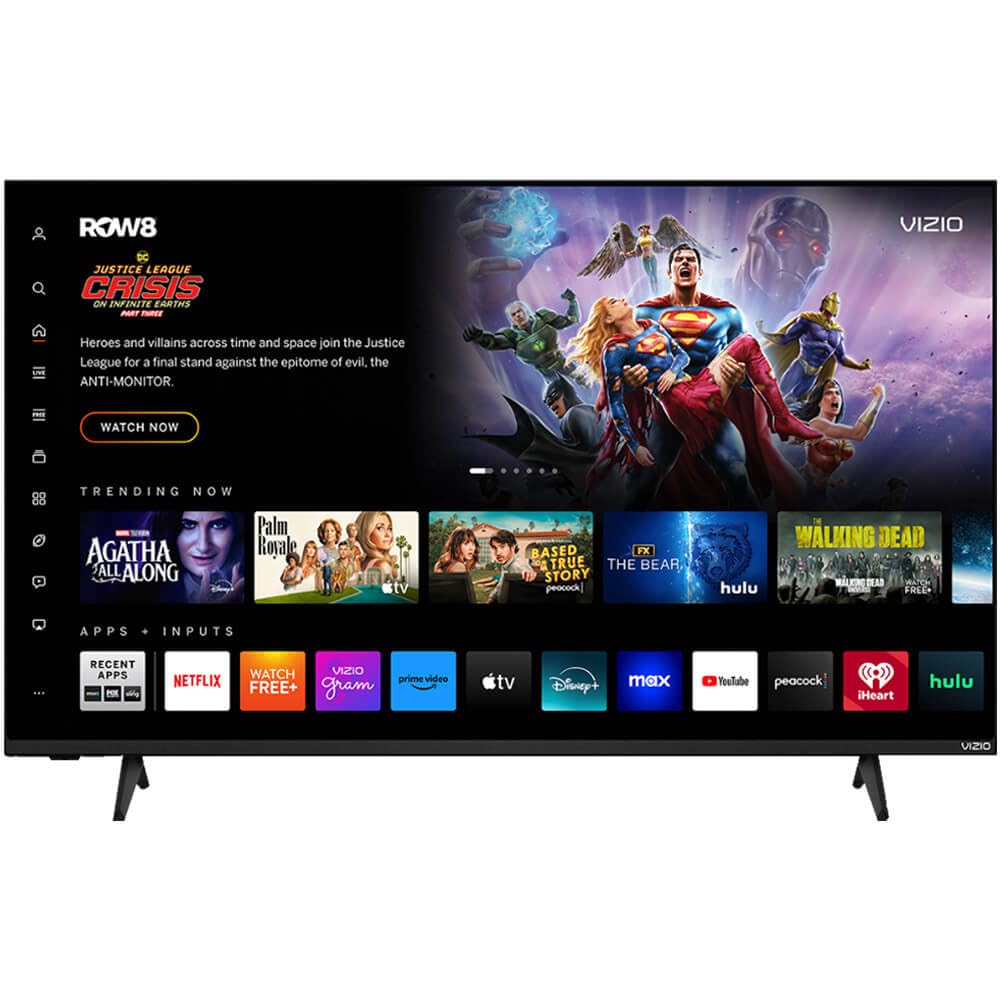
VIZIO’s V Series brings Dolby Vision HDR and HDR10+ support to the lowest price tier, along with modern connectivity including WiFi 6 dual-band for more reliable streaming performance. The Direct LED backlight delivers uniform brightness across the panel, and the 3000:1 contrast ratio provides serviceable black levels for casual viewing environments. HDMI VRR and Auto Low Latency Mode reduce input lag for basic gaming needs.
DTS Virtual X processing creates a wider soundstage from the internal speakers than typical budget TVs, making dialogue clearer without requiring an immediate soundbar purchase. Bluetooth compatibility lets you pair wireless headphones or speakers easily. The VIZIO smart platform provides access to major streaming apps, though the interface includes ad tiles on the home screen that some users find intrusive.
Build quality is functional rather than impressive, and the remote is basic. A small number of users report unit defects or shipping damage, so inspecting the package promptly is wise. The value proposition is straightforward: this is the cheapest way to get Dolby Vision and WiFi 6 in a 50-inch 4K package, and the VRR support adds flexibility for console gaming on a tight budget.
Why it’s great
- Dolby Vision and HDR10+ support at the lowest price
- WiFi 6 for stable streaming connections
- HDMI VRR and ALLM for gaming responsiveness
Good to know
- Smart platform shows ad tiles on home screen
- Limited local dimming, black levels are basic
FAQ
Is Mini-LED worth the premium over standard LED for a value TV?
Do I need a 120Hz panel for watching movies and TV shows?
How important is Dolby Vision versus HDR10 in this price range?
Final Thoughts: The Verdict
For most users, the bang for your buck tv winner is the Hisense 50″ E7 Cinema Series because its Mini-LED FALD backlight, native 144Hz panel, and full Dolby Vision IQ/HDR10+ Adaptive support deliver premium picture performance at a mid-range price. If you want deeper AI upscaling and a larger 65-inch screen, grab the TCL 65″ QM64L. And for pure streaming simplicity with a genuinely intuitive operating system and the most useful audio features, nothing beats the Roku 55″ Plus Series.