
The difference between a product photo that converts and one that kills a sale often comes down to sensor size, color depth, and lens sharpness—not the size of your light box or the complexity of your backdrop. For e-commerce sellers, small business owners, and serious hobbyists, the camera you choose determines whether your product’s texture, material, and finish translate faithfully to a screen.
I’m Min — the co-founder and writer behind Gadgets Feed. I’ve analyzed hundreds of raw camera spec sheets, cross-referenced lab tests for dynamic range and color accuracy, and spent hours comparing low-light noise performance across the leading mirrorless and DSLR options that fit a product photography budget.
This roundup pulls together the models that deliver the detail, stabilization, and autofocus precision needed for consistent tabletop work. Whether you shoot jewelry, electronics, or packaged goods, finding the right affordable camera for product photography means prioritizing features that actually matter under studio or close-range conditions.
How To Choose The Best Affordable Camera For Product Photography
Product photography demands sharp detail, accurate color reproduction, and forgiving dynamic range — specs that aren’t always obvious in marketing copy. Before you commit, focus on the variables that directly influence your final image quality.
Sensor Size and Resolution
APS-C sensors still dominate the affordable landscape, but the jump to full-frame unlocks noticeably less noise at higher ISOs and better separation between your product and the background. A 24MP sensor is plenty for e-commerce images; anything above 30MP becomes valuable if you plan to crop tightly or print large catalogs.
Autofocus System for Tabletop Work
Phase-detection autofocus with eye or face detection is overkill for static objects, but crucial for lifestyle shots that include hands or models. For pure tabletop work, a reliable single-point AF system with good low-light sensitivity makes a bigger difference than the number of AF points listed on the box.
Image Stabilization and Lens Ecosystem
In-body image stabilization (IBIS) lets you shoot at slower shutter speeds without a tripod — useful for quick overhead flat lays. Equally important is the lens mount’s affordable prime lens selection. A fast 50mm or 60mm macro lens can make or break your detail shots, and a deep lens ecosystem lowers the cost of upgrading later.
Quick Comparison
On smaller screens, swipe sideways to see the full table.
| Model | Category | Best For | Key Spec | Amazon |
|---|---|---|---|---|
| Panasonic LUMIX G85 | Mirrorless | Stabilized handheld shots | 5-Axis IBIS + 12-60mm OIS lens | Amazon |
| OM System E-M10 Mark IV | Mirrorless | Compact everyday product shoots | 20MP with 4.5-stop IBIS | Amazon |
| Canon EOS R100 | Mirrorless | Entry-level RF mount start | 24.1MP APS-C + Dual Pixel CMOS AF | Amazon |
| Canon EOS Rebel T7 Kit | DSLR | Budget telephoto + macro bundle | 24.1MP APS-C + 500mm preset lens | Amazon |
| Canon EOS 2000D (Renewed) | DSLR | Two-lens starter kit for versatility | 24.1MP + 18-55mm + 75-300mm lenses | Amazon |
| Nikon D7500 | DSLR | Fast-paced lifestyle detail shots | 20.9MP APS-C + 51-point AF system | Amazon |
| Fujifilm X-T30 III | Mirrorless | Color-accurate out-of-camera JPEG | 26.1MP APS-C + 20 Film Simulations | Amazon |
| Sony a6400 Bundle | Mirrorless | Real-time tracking for moving subjects | 24.2MP APS-C + 425 phase-detect points | Amazon |
| Sony a7 III | Mirrorless | Full-frame depth for premium catalogs | 24.2MP Full-Frame + 693 AF points | Amazon |
| Sony Alpha 7 IV | Mirrorless | High-res stills and video hybrid | 33MP Full-Frame + BIONZ XR processor | Amazon |
| Fujifilm X-T5 Kit | Mirrorless | Extreme resolution for large prints | 40.2MP APS-C + 7.0-stop IBIS | Amazon |
In‑Depth Reviews
1. Panasonic LUMIX G85

The Panasonic G85 remains one of the most balanced mirrorless options for product work because it pairs class-leading in-body stabilization with a sealed magnesium-alloy body. Its 16-megapixel Micro Four Thirds sensor skips the low-pass filter, giving you sharper fine detail on textured surfaces like fabric, leather, or paper packaging.
Dual image stabilization combines the 5-axis IBIS with the 12-60mm Power O.I.S. kit lens, so you can shoot handheld flat lays at shutter speeds that would blur on unstabilized bodies. The 49-point autofocus system uses contrast detection but remains reliable in moderate light, and the 4K Photo mode lets you extract high-resolution frames after you shoot.
The G85’s video features are a bonus if you also shoot quick product demos or unboxing clips. It captures 4K at 30 fps with continuous autofocus, and the tilt-and-touch LCD makes overhead angles easy. Battery life hovers around 300 shots per charge — plan for a spare if you shoot in bulk.
Why it’s great
- Excellent IBIS for handheld tabletop work
- Weather-sealed durable build
- Compact and lightweight with versatile kit lens
Good to know
- No headphone jack for video monitoring
- Autofocus can hunt in very low contrast scenes
2. OM System Olympus E-M10 Mark IV

The E-M10 Mark IV brings a 20-megapixel Micro Four Thirds sensor and a 5-axis in-body stabilization system rated for 4.5 stops of compensation — enough to shoot sharp detail at 1/8th of a second handheld. That’s a real advantage when you’re stacking several products for a flat lay without dragging out a tripod.
The body is remarkably small, especially paired with the collapsing 14-42mm EZ pancake lens. It fits into a small drawer or bag compartment, making it practical for sellers who shoot on the go. The flip-down touchscreen is also useful for overhead shots aimed at a table from a standing position.
Image quality benefits from Olympus’s color science and built-in Art Filters, which can give you a consistent look without editing. The 121-point contrast-detect autofocus is accurate for static products but not ideal for fast-moving lifestyle subjects. Keep in mind that the E-M10 Mark IV charges via micro-USB rather than USB-C, and no external charger is included.
Why it’s great
- Extremely compact and portable body
- Effective IBIS for low-light handheld work
- Good image quality straight out of camera
Good to know
- No external battery charger included
- WiFi app experience is slow
3. Canon EOS R100

The Canon EOS R100 is the lightest and smallest body in the EOS R series, making it the most affordable gateway into Canon’s RF lens system. Its 24.1-megapixel APS-C sensor paired with the DIGIC 8 processor delivers clean, detailed JPEGs that need minimal editing for e-commerce use.
Dual Pixel CMOS AF covers 143 zones with subject detection for humans, animals, and vehicles. For product photography this means reliable lock-on when shooting lifestyle shots or including a model’s hands. The continuous burst of 6.5 fps is enough to capture the perfect moment in dynamic scenes.
The kit lens is the RF-S 18-45mm F4.5-6.3 IS STM, which includes optical image stabilization rated at up to 4 stops. It’s a practical starting point, though you’ll want to upgrade to a dedicated macro lens for smaller products. No charger is included — the camera charges via USB, so budget for a separate LP-E17 charger if you plan to shoot for extended sessions.
Why it’s great
- Smallest and lightest R-series body
- Dual Pixel CMOS AF performs well in good light
- Great image quality for the price
Good to know
- No included external battery charger
- 4K video limited to 24 fps
4. Canon EOS Rebel T7 Bundle
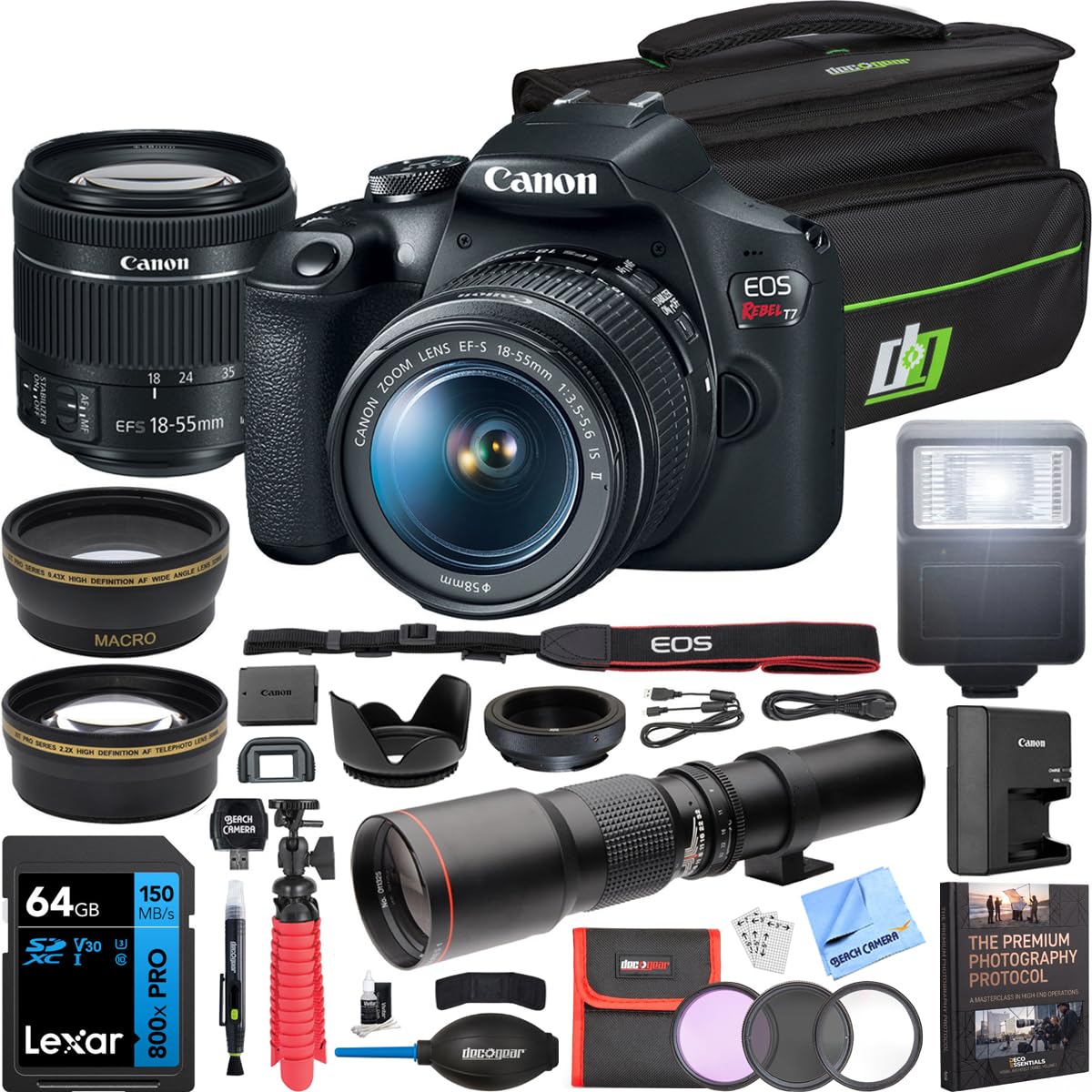
The Rebel T7 is a proven entry-level DSLR with a 24.1-megapixel APS-C sensor and Canon’s DIGIC 4+ processor. This bundle includes the standard 18-55mm zoom plus a 500mm preset telephoto, a 0.43x wide-angle adapter, and a full accessory kit including bag, tripod, and filters.
The 9-point AF system with AI Servo tracking is basic by modern standards but perfectly functional for static product setups. The optical viewfinder shows 95% coverage, which is accurate enough for framing tabletop compositions. Built-in WiFi and NFC let you transfer images directly to your phone for quick uploads.
Bundle accessories like the macro lenses and filters add experimental options right out of the box. However, the included 500mm preset lens has fixed f/8 aperture and lacks autofocus, so it’s more of a fun addition than a daily driver for product work. Make sure the 64GB SD card and bag meet your actual workflow needs before relying on the bundle value.
Why it’s great
- Affordable all-in-one bundle with many accessories
- Classic DSLR battery lasts for hundreds of shots
- Decent image quality for the price
Good to know
- 9-point AF system is very basic
- Battery reported to drain fast by some users
5. Canon EOS 2000D / Rebel T7 Renewed

This renewed Canon EOS 2000D (essentially the Rebel T7) comes with two lenses: the standard EF-S 18-55mm f/3.5-5.6 III zoom and the EF 75-300mm f/4-5.6 III telephoto. The 75-300mm lens provides a 35mm-equivalent reach of 120-480mm on the APS-C body, useful for shooting product detail from further away without perspective distortion.
The 1-point autofocus system is archaic and will feel limiting for anything except stationary subjects in good light. For product photography, this camera forces you to rely on manual focus and a tripod, which is actually a valid approach for consistent results. The DIGIC 4+ processor and 24.1MP sensor still produce sharp, color-accurate images when paired with a sharp lens.
The renewed condition means the camera has been inspected and may show minor cosmetic wear, but the bundle price is hard to beat if your budget is tight. The included 32GB memory card and basic accessories get you started immediately. Plan to invest in a dedicated macro prime like the Canon EF-S 60mm f/2.8 later for better close-up sharpness.
Why it’s great
- Two-lens kit for versatile shooting
- Good entry point for learning manual controls
- Renewed condition saves on budget
Good to know
- Only 1 autofocus point — very basic
- Renewed body may have light wear
6. Nikon D7500

The Nikon D7500 inherits its 20.9-megapixel sensor and autofocus system from the pro-grade D500, giving you a 51-point phase-detection array with 15 cross-type sensors. For product photography, this means fast and accurate focus lock even in dim studio lighting, with the ability to track subjects moving through the frame for lifestyle shots.
The 18-140mm VR kit lens covers a wide 27-210mm equivalent range, letting you frame both broad table scenes and tight detail shots without changing glass. The tilting 3.2-inch touchscreen is useful for low-angle compositions, and the optical viewfinder remains a preference for precise manual focus in macro work. Burst shooting reaches 8 fps, which is useful for capturing the exact moment in liquid splash shots or product drops.
4K Ultra HD video comes with stereo sound, power aperture control, and auto ISO. That makes it a capable hybrid if your product listings include video. Battery life is excellent — around 950 shots per charge — so you can shoot through a full product catalog without swapping packs.
Why it’s great
- Fast, accurate 51-point AF system
- Excellent battery life for long shoots
- Weather-resistant body
Good to know
- Heavier and bulkier than mirrorless options
- 20.9MP is lower than some competitors at this level
7. Fujifilm X-T30 III
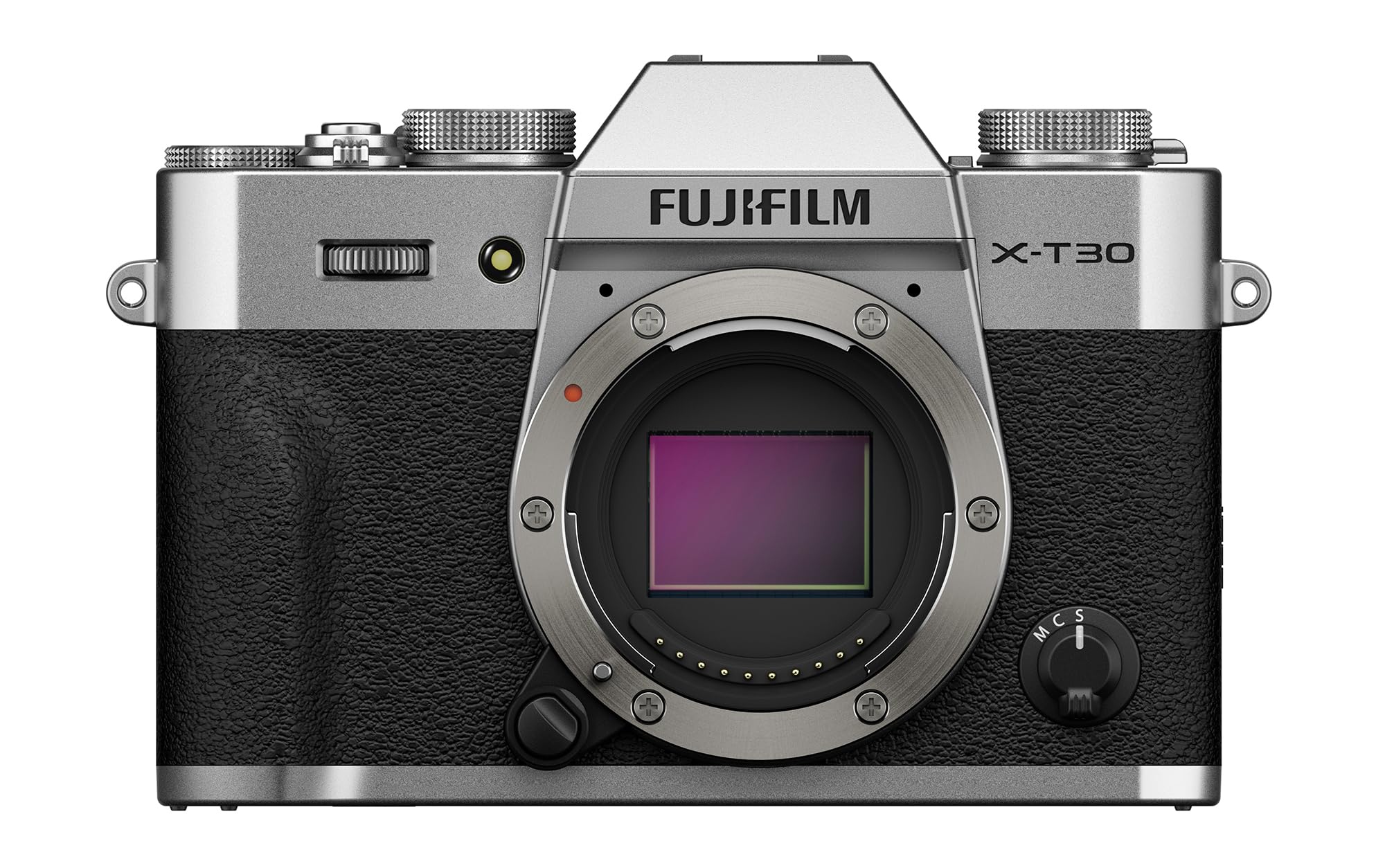
The Fujifilm X-T30 III combines a 26.1-megapixel X-Trans CMOS sensor with 20 built-in Film Simulations that produce distinctive, accurate color profiles right out of camera. For product photography, this drastically reduces editing time — you can dial in a consistent look across your entire catalog without touching an editing suite.
The hybrid autofocus system with AI-powered subject detection covers 179 points and works excellently for both static products and human subjects. The compact, retro-styled body fits easily into tight shooting nooks, and the 3-inch touchscreen tilts for comfortable high-angle framing. The kit lens is the XC 15-45mm f/3.5-5.6 OIS, which covers a useful wide to short-tele range.
Battery life is rated around 380 shots per charge, which is typical for this class. The lack of in-body image stabilization means you’ll rely on the lens’s OIS or a tripod for sharp handheld shots. That’s a fair trade for the X-T30 III’s unique color science, which gives your product images a distinct visual identity that stands out in crowded marketplaces.
Why it’s great
- Excellent out-of-camera color and JPEG quality
- Film Simulations produce unique, consistent looks
- Compact and stylish design
Good to know
- No in-body image stabilization
- No built-in flash
8. Sony a6400 Bundle

The Sony a6400 is built around a 24.2-megapixel APS-C sensor and a BIONZ X processor that enables Real-Time Eye AF and Real-Time Tracking. That autofocus system — covering 425 phase-detection points — locks onto and follows a subject instantly, which is ideal for lifestyle product shots where hands, faces, or movement are involved.
The 180-degree tilting touchscreen flips up for self-framing or overhead product angles. The XGA OLED Tru-Finder with 2.36 million dots provides a clear, bright viewfinder for manual focusing. This bundle includes the 16-50mm power zoom lens, a SanDisk 64GB Extreme PRO SD card, a tripod, filters, a spare battery and charger, and photo editing software.
4K video recording uses full pixel readout without pixel binning, delivering sharp footage. The included accessories like the wide-angle and macro adapter lenses are fun to experiment with, but keep expectations realistic — they can introduce vignetting. The a6400 body itself performs far beyond its price point, especially for autofocus speed.
Why it’s great
- Industry-leading Real-Time Eye AF and Tracking
- 180-degree flip screen for overhead shots
- Extensive bundle with spare battery and memory
Good to know
- Third-party accessories in bundle vary in quality
- Software license keys may be outdated
9. Sony a7 III

The Sony a7 III is the entry-level full-frame benchmark that transformed the affordable camera market. Its 24.2-megapixel back-illuminated sensor delivers 15 stops of dynamic range, meaning you can recover extreme highlights and shadows in product shots without introducing noise — essential for shooting glossy packaging or reflective metal objects.
With 693 phase-detection and 425 contrast-detection points covering 93% of the frame, the autofocus system is fast and sticky. The 28-70mm kit lens is decent for starting, but the real value of this camera unlocks when you pair it with native Sony primes or a macro lens. Battery life is exceptional, rated at 710 shots per CIPA standards, and the dual card slots offer backup security for paid client work.
Silent shooting at up to 10 fps gives you flexibility for capturing fleeting moments in product setups. The a7 III’s low-light performance means you can use natural window light or dim studio lighting with confidence. The menu system is dense but highly customizable, and third-party adapters let you mount Canon EF glass, which expands your lens options without breaking the budget.
Why it’s great
- 15-stop dynamic range for recovering highlights and shadows
- Fast, accurate autofocus with 693 points
- Outstanding battery life for all-day shoots
Good to know
- Kit lens is usable but not optically exceptional
- Menu system is complex for beginners
10. Sony Alpha 7 IV

The Sony Alpha 7 IV pushes into higher-resolution territory with a 33-megapixel back-illuminated full-frame sensor. For product photography, those extra megapixels give you cropping headroom for catalog detail shots and allow printing at larger sizes without interpolation. The BIONZ XR processor also enables 7K oversampled 4K 30p video with 10-bit 4:2:2 color.
The 693-point phase-detect AF system covers nearly the entire frame, with Real-Time Eye AF for both humans and animals. The advanced S-Cinetone color profile makes video match Sony’s cinema cameras, giving your product clips a filmic look. The weather-sealed body is comfortable to hold during long studio sessions, and the dual card slots (CFexpress Type A and SD) let you separate backups.
Battery life is strong, and the improved menu system from the a7 III redesign makes navigation more intuitive. The Alpha 7 IV represents the point where affordable crosses into serious professional territory — you get full-frame depth and resolution without paying flagship prices. Just note that 60fps video mode uses a Super 35 crop, reducing the field of view.
Why it’s great
- 33MP sensor gives excellent cropping flexibility
- 10-bit 4:2:2 video with S-Cinetone profile
- Fast, reliable autofocus with Real-Time Eye AF
Good to know
- Body-only — lens purchased separately
- 4K 60fps mode crops the sensor
11. Fujifilm X-T5 Kit
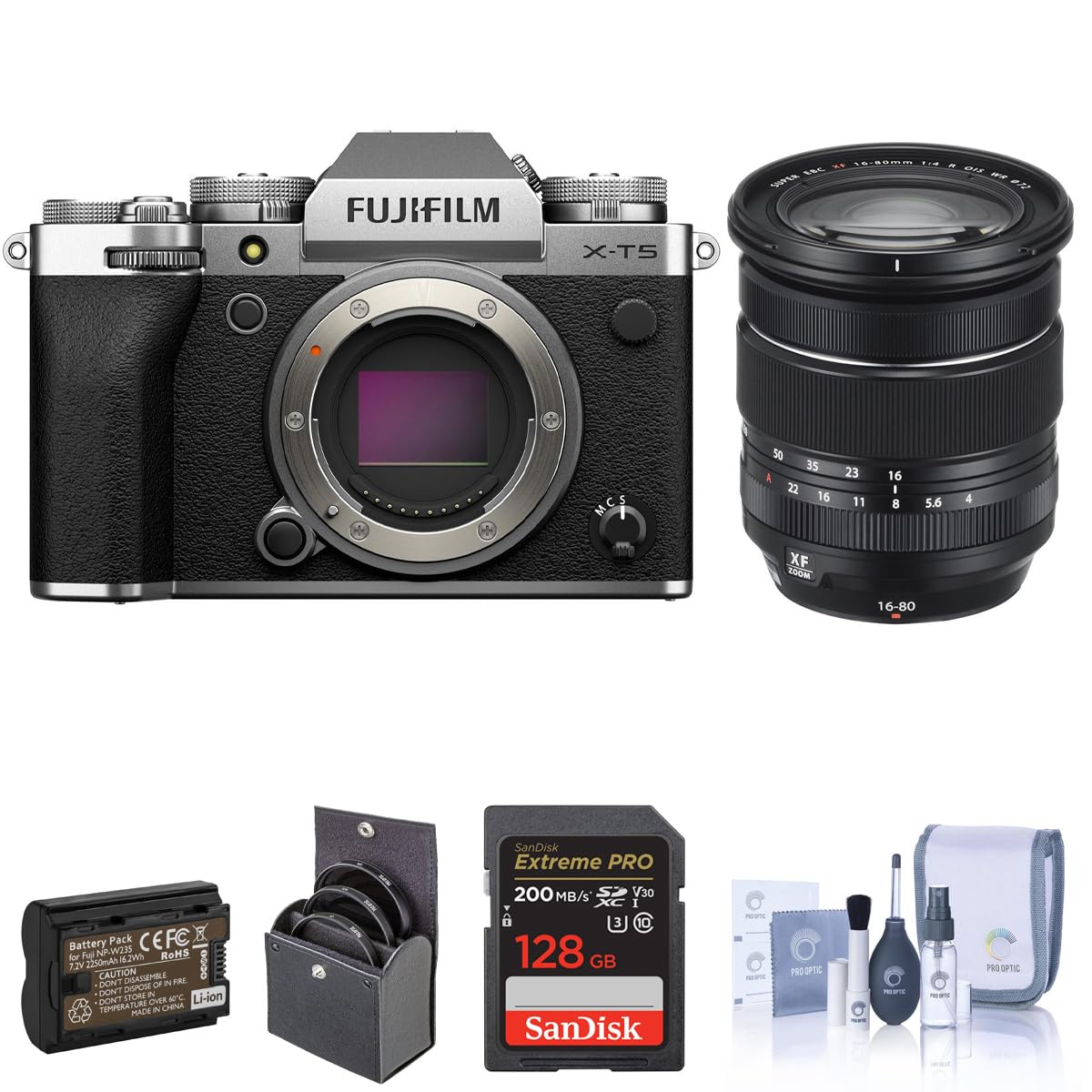
The X-T5 offers the highest-resolution APS-C sensor on this list at 40.2 megapixels. That translates to exceptional detail capture for product photography — fabric weaves, metal grain, and subtle gradient transitions in packaging are rendered with near- medium-format clarity. The X-Trans CMOS 5 HR sensor also enables 160MP Pixel Shift Multi-Shot for archival-quality reproduction.
Five-axis in-body stabilization rated for 7.0 stops lets you shoot handheld detail shots at shutter speeds that would be impossible without a tripod. The XF 16-80mm f/4 R OIS WR kit lens provides a versatile focal range with constant f/4 aperture and optical stabilization, giving you a sharp, all-in-one solution. The three-way tilting touchscreen makes overhead flat lays easy without contorting your position.
This kit bundles a 128GB SD card, an extra battery, a 72mm filter kit, and a cleaning kit — providing value beyond the camera alone. The X-T5’s physical dials for ISO and shutter speed make it a tactile experience that speeds up workflow, though the learning curve is steeper than a camera with PASM dials. One reviewer noted overheating during extended video recording, so prioritize this for still photography first.
Why it’s great
- 40.2MP sensor with incredible resolving power
- 7-stop IBIS for ultra-steady handheld shots
- Comprehensive kit with extra battery and filters
Good to know
- Physical dials require dedicated learning time
- Overheating reported during extended video use
FAQ
What sensor size is best for product photography on a budget?
Do I need a macro lens to photograph small products?
How many megapixels do I really need for e-commerce product photos?
Final Thoughts: The Verdict
For most users, the affordable camera for product photography winner is the Panasonic LUMIX G85 because its five-axis IBIS, weather-sealed build, and versatile kit lens deliver reliable sharpness without needing a tripod. If you want maximum detail for large prints or tight catalog crops, grab the Fujifilm X-T5 Kit. And for full-frame depth of field and real studio-grade dynamic range on a budget, nothing beats the Sony a7 III.