
The weight of a 20-pound sledge hammer changes how you approach demolition. It is not a tool for finesse; it is pure, brute force delivered through a 36-inch lever. Breaking concrete, driving massive stakes, or splitting boulders — every swing translates your energy directly into impact, and the tool’s integrity determines whether that energy lands cleanly or rattles your wrists into numbness.
I’m Min — the co-founder and writer behind Gadgets Feed. I have spent countless hours analyzing the metallurgy, handle materials, head geometry, and balance points of heavy demolition tools to separate the truly capable from the dangerously flawed.
A well-constructed 20 pound sledge hammer must deliver repeatable, controlled strikes without its head loosening or handle splintering under the highest forces a human can generate.
How To Choose The Best 20 Pound Sledge Hammer
A 20-pound sledge hammer is not something you buy casually — it is a specialized tool for heavy demolition, breaking rock, driving massive stakes, and splitting large timber. The wrong choice leads to premature tool failure or increased user fatigue. Focus on four critical factors before purchasing.
Handle Material and Construction
The handle is the most failure-prone component on a sledge of this weight class. Hickory provides excellent natural shock absorption and a traditional feel, but it must be kiln-dried and free of cracks to survive repeated overstrikes. Fiberglass handles are lighter, resist moisture, and incorporate vibration-damping collars but can splinter if the outer shell is compromised. Steel-core handles like those found on premium models offer the highest durability, with a forged steel spine that prevents breakage even during wild misses. Each material trades weight, vibration dampening, and long-term reliability differently.
Head Metallurgy and Face Hardness
The head must be drop-forged from high-carbon steel and heat-treated to a specific Rockwell C (HRC) hardness range. A face too soft will deform and mushroom after a few hundred strikes, creating dangerous flakes of flying metal. A face too hard risks chipping or shattering on impact with concrete or stone. Look for heads in the 45-60 HRC range — hard enough to resist deformation but tough enough to absorb repeated shock. The face geometry also matters: a machined conical crown with a slight bevel helps divert stress away from the edges, reducing mushrooming over time.
Head-to-Handle Attachment
When swinging 20 pounds of steel, a loose head is both dangerous and destroys efficiency. The most secure attachments use dual-wedge assemblies (a metal wedge driven into the handle top, plus a side wedge) or a safety plate that bolts the head directly to the handle. On wood-handled sledges, check whether the eye of the head is tapered and whether the wedges are properly driven. On fiberglass models, look for a solid epoxy bond and an overstrike guard that protects the handle where it meets the head. A loose head on day one signals a fundamentally flawed tool.
Total Length and Balance Point
The standard handle length for a 20-pound sledge is 36 inches. This provides the leverage needed to generate maximum kinetic energy with a two-hand swing, but it also shifts the balance point significantly toward the head. A well-balanced sledge will have its center of gravity about 4-6 inches in front of the handle grip, allowing you to control the arc without fighting the weight. Too much weight in the head makes the tool unwieldy; too much in the handle reduces impact force. Test the balance by holding the hammer horizontally at the grip — it should feel heavy but not uncontrollable.
Quick Comparison
On smaller screens, swipe sideways to see the full table.
| Model | Category | Best For | Key Spec | Amazon |
|---|---|---|---|---|
| Wilton B.A.S.H 36″ | Premium | Industrial continuous use | Unbreakable steel core handle | Amazon |
| Seymour 41835 | Premium | Professional jobsite durability | Spiral anti-slip grip with overstrike guard | Amazon |
| Truper 30923 | Mid-Range | Demolition and concrete breaking | Octagonal forged steel head, dual-wedge | Amazon |
| Truper MD20HC | Mid-Range | Budget-conscious heavy striking | 1045 steel face HRC 52, hickory handle | Amazon |
| Zeluga 25-353 | Value | Fiberglass durability for less | Drop-forged head, 5G fiberglass handle | Amazon |
| WEDO Brass | Specialty | Spark-free environments | Brass head, non-sparking, non-marring | Amazon |
| Toolzeen H-B-8LB | Entry-Level | Light demolition and DIY | 8 lb head, 35″ fiberglass handle | Amazon |
In‑Depth Reviews
1. Wilton B.A.S.H 36″ Sledge Hammer, 20 Lb Head (22036)

The Wilton B.A.S.H is built for the highest abuse level a 20-pound sledge will ever face. Its patented drop-forged head is heat-treated to 46 HRC — tough enough to resist deformation on steel and concrete, yet ductile enough to avoid chipping. The handle is the defining feature: a forged steel core wrapped in vulcanized rubber, making it effectively unbreakable during overstrikes. The thick, tapered anti-vibe neck reduces the vibration that normally travels up the handle, cutting down on user fatigue during extended sessions.
The ergonomic rubber grip is shaped and thickened to fill the hand comfortably, providing a secure hold even when your palms are sweaty from exertion. A safety plate secures the head to the handle with mechanical fasteners, eliminating the risk of the head flying off during a strike — a legitimate concern with poorly attached 20-pound heads. The lanyard hole adds an extra layer of safety for elevated work. Every component of this tool is engineered for the long haul, not weekend use.
This sledge hammer earns its premium status through design details that matter when you swing it hundreds of times per day. The balance is tuned so the head leads the arc naturally, and the rubber overmold absorbs the stinging rebound that plagues fiberglass handles. Users report consistent performance splitting hardwood and breaking concrete without handle failure or head loosening even after years of use. It is the benchmark for professional demolition tools in this weight class.
Why it’s great
- Steel core handle cannot fracture or splinter under any overstrike condition
- Anti-vibe neck dramatically reduces hand and arm fatigue
- Safety plate and vulcanized rubber grip create a indestructible head-to-handle connection
- Lifetime warranty supports its professional-grade pricing
Good to know
- Premium price reflects industrial build quality
- Vulcanized rubber grip adds slight diameter, may feel bulky for smaller hands
2. Seymour 41835 20 lb Sledge Hammer

Seymour brings contractor-grade engineering to a 20-pound fiberglass sledge that prioritizes grip security and handle survival. The spiral anti-slip grip is molded directly into the fiberglass shaft, creating a textured surface that becomes more tacky under sweat or moisture — exactly when you need it most. The overstrike protection extends below the head to shield the exposed fiberglass from glancing blows, addressing the most common failure point on fiberglass demolition tools.
The head is forged from alloy steel and mounted on a 36-inch fiberglass core that is lighter than hickory yet extremely impact-resistant. The fiberglass material resists moisture, rot, and temperature swings that can degrade wooden handles over time. Users consistently note that the grip remains secure during heavy swings, and the weight distribution feels balanced enough to deliver controlled strikes without excessive arm fatigue. This tool is designed for contractors, handymen, and landscapers who need reliable daily performance.
While the fiberglass handle provides excellent corrosion resistance and weight savings, it lacks the extreme overstrike durability of a steel core. A direct miss on a hard edge at full speed could damage the fiberglass sheath. For most demolition and breaking tasks, however, this sledge delivers professional power at a more accessible price than steel-core alternatives. The combination of grip innovation and handle protection makes it a standout in the fiberglass category.
Why it’s great
- Spiral molded grip provides exceptional tackiness when wet
- Overstrike guard protects the handle at the most vulnerable junction
- Fiberglass handle is lighter and impervious to moisture
Good to know
- Fiberglass can splinter if struck directly against a sharp edge
- Not as vibration-dampening as hickory or rubber-overmold handles
3. Truper 30923 20-Pound Sledge Hammer, Hickory Handle, 36-Inch

The Truper 30923 is the mid-range sledge that gets the fundamentals right without over-engineering. Its 20-pound head is forged from high-carbon steel, induction hardened and tempered for consistent impact performance. The octagonal face design is precision-machined to deliver balanced strikes — the eight-sided geometry helps distribute stress evenly, reducing the risk of face chipping or mushrooming compared to simpler round faces. This is a sledge built for concrete demolition and heavy construction work.
The 36-inch handle is made from kiln-dried North American hickory, polished and finished for a smooth natural grip. Hickory is the traditional handle material for good reason: it absorbs vibration better than untreated fiberglass and provides a comfortable flex that reduces shock transmission to the wrists. The head is secured with a high-strength dual-wedge assembly that tightly locks the head to the handle shoulder. When properly seated, this connection can withstand the repeated shock of 20-pound impacts without loosening.
Some buyers have reported minor quality control issues, including small cracks in the handle finish or slightly irregular head crown machining. These are cosmetic concerns on an otherwise solid tool. The hickory handle, while excellent for shock absorption, does require care — it should be stored in a dry environment to prevent swelling and cracking. For users who prefer traditional materials and need a reliable sledge for frequent demolition work, the Truper 30923 offers the best balance of performance and value.
Why it’s great
- Octagonal face design reduces edge mushrooming
- Dual-wedge head assembly provides secure attachment
- Kiln-dried hickory handle offers natural shock absorption
Good to know
- Hickory handle requires dry storage to maintain integrity
- Occasional minor cosmetic imperfections reported
4. Truper Herramientas MD20HC 20LB Sledge Hammer

The Truper MD20HC proves that a budget-priced 20-pound sledge can still deliver professional-grade metallurgy. The head is forged from 1045 high-carbon steel with a face hardness rated at Rockwell C 52 — this is the sweet spot for demolition tools, providing enough hardness to resist mushrooming while retaining the toughness needed to survive impacts on concrete and stone. The machined conical crown with a bevel edge is specifically designed to reduce mushrooming, and the circular grooves on the face help channel debris away during striking.
The 36-inch handle is made from hickory wood with a polyurethane finish. While the finish adds weather resistance, the handle itself is a standard profile that some users find slightly thin for a 20-pound head. The dual-wedge system secures the head, but a few buyers have reported that the handle failed at the eye after extended use, particularly when striking very hard materials like asphalt. The head design itself is excellent for the price point, and replacing the handle with a thicker hickory shaft is a straightforward fix.
For the price, this sledge offers a forged steel head with proper heat treatment — a feature often missing from similarly priced tools. The metal quality is the standout here, not the handle. If you are comfortable with the possibility of upgrading the handle over time, or if you use the tool sparingly, the MD20HC delivers heavy-hitting power at a budget-friendly investment. The 1045 steel and HRC 52 face make it a capable choice for breaking concrete, driving stakes, and general demolition.
Why it’s great
- Forged 1045 steel head with proper HRC 52 heat treatment
- Conical crown and bevel design reduces mushrooming
- Excellent value for a 20-pound forged head
Good to know
- Handle is standard profile and may require replacement for heavy use
- Minor cosmetic imperfections on head are common at this price tier
5. Zeluga 25-353 36in. 16 Lbs Pro Sledge and Club Hammer

The Zeluga 25-353 is a 16-pound sledge packaged in a 36-inch fiberglass handle, offering a slightly lighter swing weight than the full 20-pound models while retaining the same leverage length. This makes it an excellent choice for users who need the reach of a full-size sledge but find 20 pounds too fatiguing for extended sessions. The drop-forged alloy steel head is highly polished and induction hardened, ensuring consistent face hardness and a clean striking surface that resists deformation.
The reinforced 5G fiberglass handle is corrosion-resistant, impact-resistant, and significantly lighter than a hickory shaft of the same length. The ergonomic textured grip provides solid purchase even with sweaty hands. The fiberglass construction also offers good shock absorption, reducing the vibration transfer to your hands compared to cheaper solid fiberglass handles. This sledge is well-suited for splitting firewood, driving stakes, and lighter demolition work where the extra four pounds of head weight are not critical.
The 16-pound head weight, while easier to control, does mean less kinetic energy per swing compared to a full 20-pound model. For breaking thick concrete or large boulders, the missing four pounds will be noticeable. However, for tasks like splitting wood with a log splitter tool or driving large field stakes, the reduced mass allows for faster, more accurate swings that translate to better overall productivity. The Zeluga occupies a smart niche for users who prioritize swing endurance over absolute maximum impact force.
Why it’s great
- 16-pound head with 36-inch leverage reduces swing fatigue
- Drop-forged induction hardened head for consistent face durability
- 5G fiberglass handle resists corrosion and weather damage
Good to know
- Lighter head means less impact force per swing than 20-pound models
- Fiberglass handle cannot be repaired if damaged
6. WEDO Brass Sledge Hammer with Wooden Handle, 20lb

The WEDO Brass Sledge Hammer is not a general demolition tool — it serves a very specific purpose in environments where sparks are catastrophic. The brass head is non-sparking and non-marring, making it the required tool for oil refineries, chemical plants, paint factories, mining operations, and any gas-exposed environment. The precision casting process delivers a dense, high-hardness brass alloy that can deliver significant impact force without creating friction-generated sparks or leaving ferrous contamination on soft surfaces.
The 900mm (35.5-inch) wooden handle is crafted from a hard wood species, varnished for a smooth finish. The head-to-handle connection is a traditional wedge-fit, appropriate for the head’s mass. The brass material conducts heat well, absorbing and dissipating the thermal energy generated during friction, which further reduces spark risk. This sledge is also suitable for assembling heavy machinery where a steel hammer could damage precision components or cause martensite formation on sensitive steel parts.
There are important trade-offs for the safety features. Brass is significantly softer than hardened steel, so the head faces will deform and mushroom more quickly than a steel sledge head. Users who need a non-sparking tool for regular heavy striking should expect to dress the face edges periodically. The wooden handle also requires the same climate-controlled storage as any hickory-handled tool. For its intended use in hazardous locations, however, this sledge performs its safety-critical role admirably.
Why it’s great
- Non-sparking brass head ensures safety in explosive environments
- Precision cast for consistent density and impact delivery
- Good thermal conductivity dissipates friction heat safely
Good to know
- Brass head wears faster and mushrooms more easily than steel
- Wooden handle requires dry storage and has no overstrike protection
- Premium price reflects specialty non-sparking certification
7. Toolzeen H-B-8LB Sledge and Club Hammer
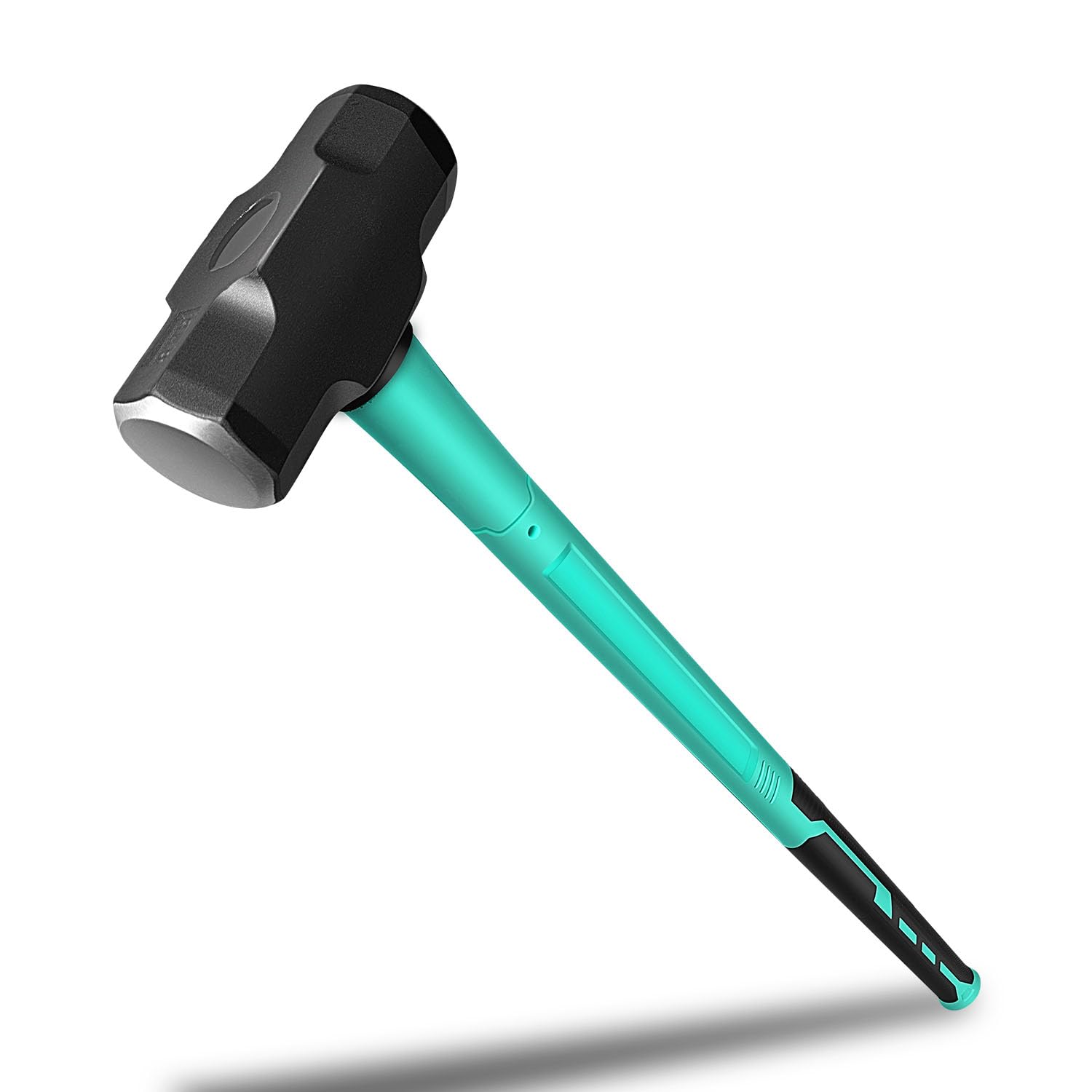
The Toolzeen 8-pound sledge hammer is an entry-point tool for light demolition and DIY work, not a full 20-pound brute. It uses a 1045 high-strength steel head heat-treated to 45-60 HRC — the same metallurgical standard as heavier sledges, but sized for one-handed or light two-handed use. The 35-inch fiberglass handle with an H-Grip overmold provides a non-slip surface that becomes tacky when wet, offering reliable purchase during sweaty work.
The particulate-filled fiberglass core and shock-absorbing collar work together to reduce vibration transfer, making this an accessible choice for users who are new to sledge hammer work. The total tool weight is just over 10 pounds, which is manageable for longer sessions without arm fatigue. It is suitable for driving fence posts, breaking thin concrete slabs (3-4 inches), and general yard work. The head is double-faced and flat, suitable for both striking and light driving tasks.
This is not a substitute for a true 20-pound sledge. The 8-pound head simply does not deliver the kinetic energy needed for heavy demolition, thick concrete removal, or splitting large boulders. Users who need a sledge for serious construction or demolition work should look at the heavier options above. However, for homeowners, gardeners, and DIYers who need a manageable, affordable tool for occasional medium-impact tasks, the Toolzeen provides good build quality and a secure grip at an entry-level investment.
Why it’s great
- Proper 1045 steel head with 45-60 HRC face hardness
- H-Grip handle becomes tacky when wet for secure hold
- Light total weight reduces fatigue during extended use
Good to know
- 8-pound head is insufficient for heavy demolition work
- Fiberglass handle can splinter on severe overstrikes
FAQ
Can I use a brass sledge hammer for standard demolition work?
Why does the handle matter so much on a 20-pound sledge?
What is mushrooming and why should I care about it?
How do I maintain a hickory handle sledge hammer?
Is a 36-inch handle long enough for a 20-pound head?
Final Thoughts: The Verdict
For most users, the 20 pound sledge hammer winner is the Wilton B.A.S.H 36″ because its unbreakable steel core handle and anti-vibe neck deliver unmatched durability and user comfort for professional demolition. If you want a premium fiberglass alternative with superior grip security, grab the Seymour 41835. And for budget-conscious buyers who need a forged steel head with proper heat treatment, nothing beats the Truper MD20HC.