
A 2-cycle engine that sputters, stalls, or refuses to start often has one culprit: a gummed-up carburetor. Ethanol-blended fuel leaves a sticky varnish behind that clogs tiny jets and passages, starving the engine of the precise air-fuel mix it needs. The right cleaning chemistry can dissolve that crust in seconds and restore a crisp idle without pulling the carb body apart.
I’m Min — the co-founder and writer behind Gadgets Feed. For this guide I pored over customer reports and spec sheets for seven top-selling aerosol and liquid treatments, weighing solvent strength, nozzle design, and VOC compliance against price to find the most effective cans for real-world small-engine rescue.
A powerful solvent that cuts carbon and varnish on contact matters most when your trimmer, chainsaw, or outboard won’t fire. This guide clears the noise to help you find the best 2-cycle carb cleaner for your exact repair.
How To Choose The Best 2-Cycle Carb Cleaner
Not all carb cleaners are equal when it comes to the tight passages of a 2-cycle carburetor. The wrong choice can leave residue behind, damage gaskets, or cost you more than a simple can of spray. Focus on these three factors to zero in on the right can.
Solvent Strength vs. Component Safety
A cleaner that melts through baked-on carbon and varnish is essential, but it must also be safe for oxygen sensors and catalytic converters if your equipment has them. Aggressive chlorinated solvents can ruin those parts. The best 2-cycle formulas balance deep-cleaning power with a non-chlorinated, low-VOC profile that leaves no harmful residue on throttle plates or fuel injectors.
Nozzle Precision and Spray Volume
Carburetor passages are narrow, and a wide, uncontrolled blast wastes solvent and misses the clog. A tube-style nozzle that reaches the idle jet and emulsion tube makes the difference between a quick fix and a full disassembly. Look for cans that offer a focused stream, not just a fan spray, so you can direct the solvent exactly where the gum is hiding.
Aerosol vs. Fuel Additive Format
Direct-contact aerosol sprays are the go-to for cleaning a carb that is already off the engine or accessible. Fuel-additive treatments, by contrast, work over time as the engine runs, dissolving deposits in the entire fuel system, including the carb bowl and jets. Choose an aerosol for immediate results on a non-running engine; choose an additive for maintenance that prevents future buildup.
Quick Comparison
On smaller screens, swipe sideways to see the full table.
| Model | Category | Best For | Key Spec | Amazon |
|---|---|---|---|---|
| CRC Carb & Choke Cleaner 03077 | Aerosol | Immediate small-engine start-up | 12 wt. oz low-VOC aerosol | Amazon |
| Berryman B-12 0120C | Aerosol | Deep carbon removal | 20 oz non-chlorinated formula | Amazon |
| Cyclo C5-EACH | Aerosol | High-pressure directed spray | 19 oz solvent spray | Amazon |
| Berkebile Oil B101 Gum Cutter | Aerosol | Melting nylon-hardened varnish | 13 oz fast-acting formula | Amazon |
| STA-BIL Marine Tune-Up 22313 | Fuel Additive | Preventative marine & lawn care | 8 oz treats 20 gallons | Amazon |
| Quicksilver Quickleen 8M0047921 | Fuel Additive | Outboard fuel system restoration | 12 oz treats 60 gallons | Amazon |
| Gumout 800002231 | Aerosol (6-Pack) | Multi-use bulk value | 14 oz 50-state VOC compliant | Amazon |
In‑Depth Reviews
1. CRC Carb & Choke Cleaner 03077

The CRC 03077 is the aerosol that small-engine owners reach for when a mower or generator won’t fire. Its low-VOC formula dissolves sludge, gum, and varnish without the harshness of chlorinated alternatives, and the straw-style nozzle lets you direct solvent precisely into the idle jet and choke passages. In real-world use, a single spray has been enough to bring a non-starting generator back to life, a testament to its fast-acting chemistry.
The can holds 12 wt. oz, which is smaller than some competitors, but the concentrated solvent power means you use less per job. It works on carburetor components, EGR valves, and intake parts, making it versatile beyond 2-cycle engines. The dime-sized nozzle hole delivers a penetrating stream that reaches the tiny orifices where varnish hides.
Wear gloves when using this — the solvent dries skin aggressively, as many users note. It is not a fuel additive; it is a direct-contact spray for when you need immediate results on a stuck carb. The quick action on automatic chokes and crankcase breathers makes it a solid top-shelf choice for the DIY mechanic.
Why it’s great
- Fast-acting solvent restarts non-running engines instantly.
- Low-VOC formula is safe for modern emissions components.
- Precise straw nozzle reaches tight carb passages.
Good to know
- Smaller 12 oz can may require multiple sprays for heavy buildup.
- Aggressive solvent dries skin; gloves are essential.
2. Berryman B-12 Carburetor, Choke and Throttle Body Cleaner 0120C

Berryman’s B-12 has a century of reputation behind it, and the 0120C can holds 20 oz of non-chlorinated solvent that cuts gum, varnish, and carbon without damaging oxygen sensors or catalytic converters. The formulation is fast-drying and leaves no sticky residue, which is critical for throttle plates and choke mechanisms that need to move freely after cleaning.
Users report noticeable improvements in cold starts and acceleration after treating a gummed carb, and some even saw a mild mileage bump. The spray pattern is broad enough to blast large carb throats yet manageable for directed cleaning when the included straw is used. It works as a direct spray or as a fuel additive — pour about a pint into a nearly empty tank for a full-system clean.
The can is large, so it lasts through multiple jobs, and the non-chlorinated formula means it is safe for modern engines. The fast-evaporating nature demands you work quickly, but the payoff is a carb that functions like new. This is the choice for anyone who wants an all-in-one aerosol that works both as a spray and a pour-in cleaner.
Why it’s great
- Large 20 oz can provides excellent value per ounce.
- Safe for O2 sensors and catalytic converters.
- Dual-use as spray or fuel additive.
Good to know
- Fast-evaporating formula requires quick application.
- Strong fumes need adequate ventilation.
3. Cyclo C5-EACH Carb Clean 19 Ounce
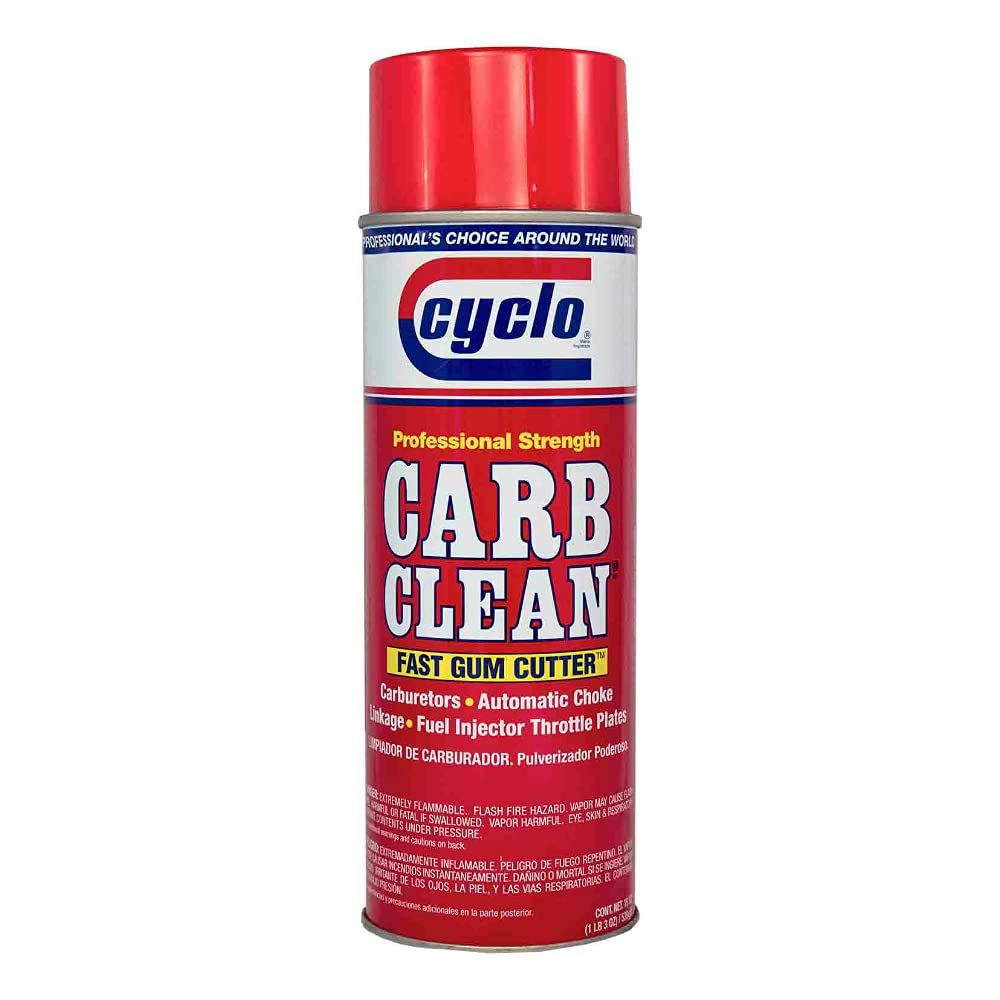
The Cyclo C5-EACH delivers a powerful solvent spray in a 19 oz can that users describe as having real force behind the stream. This pressure is a distinct advantage when blasting through heavy carbon deposits and baked-on varnish in 2-cycle carburetors. You can modulate the spray with your finger pressure, giving you control from a light mist to a full-pressure jet.
It is safe for oxygen sensors and fuel injector throttle plates, and it meets VOC requirements for OTC states, making it a compliant choice across most regions. Customers note it cuts through buildup “super fast” and is an impressive cleaner despite the large can size. The product dimensions are 3 x 3 x 9 inches, and it weighs 1.45 pounds, so it feels substantial in hand.
The only downside is that its strength means it can be used up quickly if you are heavy-handed with the trigger. For tough jobs where you need physical scrubbing action from the spray itself, this is the one to grab. It is a straightforward solvent that does not overcomplicate the formula — it just works.
Why it’s great
- High-pressure stream physically blasts away thick carbon.
- Large 19 oz can for extended use.
- Regulatable nozzle for precision or wide spray.
Good to know
- Strong spray pressure can be difficult to control at full blast.
- Flammable — keep away from sparks and hot surfaces.
4. Berkebile Oil B101 Instant Gum Cutter

The B101 Instant Gum Cutter from Berkebile Oil 2+2 lives up to its name with a solvent aggressive enough to melt a nylon brush. That gives you a clear measure of its power against the hardened varnish that plagues 2-cycle carbs. It removes gum and carbon deposits instantly, and its oxygen-sensor-safe formula means you can use it on modern equipment without worry.
At 13 oz, it is a compact can, but the concentrated chemistry is designed so you use less than most brands. Users report it works fantastically on direct-injection heads and printed circuit boards, leaving no residue behind. The fast-acting nature is ideal for parts that have been sitting with old ethanol fuel for months.
This is not a fuel additive; it is strictly a direct-contact aerosol. The can is not California-approved, which for many users signals that it lacks the dilution that weaker formulas require. Strong stuff demands caution: safety glasses and gloves are mandatory. For the toughest gum and varnish jobs, this is the chemical equivalent of a sledgehammer.
Why it’s great
- Extreme solvent power melts even the hardest varnish.
- Oxygen-sensor safe despite aggressive chemistry.
- Leaves no sticky residue behind.
Good to know
- Not VOC compliant for California users.
- Very strong fumes require excellent ventilation.
5. STA-BIL Marine Tune-Up Fuel Treatment 22313

STA-BIL Marine Tune-Up is a fuel additive designed to clean carburetors and injectors while the engine runs, making it ideal for preventive maintenance rather than emergency rescue. The 8 oz bottle treats up to 20 gallons of fuel, and the formula addresses rough running caused by ethanol deposits. It also eliminates water from the fuel system, a common issue in marine applications.
Users running bass boats, Harley-Davidsons, and lawn equipment all report smoother operation after treatment. In a 12-year-old Mercruiser 3.0L, it improved combustion with old gas. The additive works over time, so it is less effective on a completely clogged carb that cannot run, but excellent for keeping a running engine clean.
The price per treatment is good, especially since a single 8 oz bottle handles multiple fill-ups. It is not a solvent spray, so keep a dedicated aerosol on hand for parts cleaning. This is a reliable product from a trusted brand that specializes in fuel stabilizers, and it belongs in any shed where engines sit for months between uses.
Why it’s great
- Excellent preventive treatment for ethanol-prone engines.
- Treats 20 gallons per 8 oz bottle, excellent value.
- Eliminates water from fuel system.
Good to know
- Not a direct-contact cleaner for non-running engines.
- Results are gradual, not instant.
6. Quicksilver Quickleen Engine and Fuel System Cleaner 8M0047921

Quicksilver Quickleen is a fuel system cleaner formulated for marine use, particularly outboards from Mercury and other brands. It removes carbon deposits from carburetors, injectors, intake valves, spark plugs, piston crowns, and cylinder heads. The 12 oz bottle treats up to 60 gallons (1 oz per 5 gallons), making it an economical choice for larger fuel tanks.
Users report dramatic results on outboards that sat for a year or more — restoring smooth power and eliminating intermittent misfires. One user used a 3 oz per gallon shock treatment on a 75 hp outboard with excellent results. The formula also prevents engine knocking and piston seize-up, which is critical for 2-cycle outboards under load.
It is a pure fuel additive, not an aerosol, so it should be paired with a spray cleaner for direct carb cleaning. The lack of fuel stabilizer means it is not a storage treatment, but a running cleaner. For anyone maintaining a boat or other marine equipment, this is a targeted solution that works as advertised.
Why it’s great
- Specifically formulated for marine outboard carbon deposits.
- Very economical treat rate: 1 oz per 5 gallons.
- Restores power and eliminates misfires after long storage.
Good to know
- Not a storage stabilizer; lacks fuel stabilizing additives.
- Results may vary on heavily gummed carbs needing physical spray cleaning.
7. Gumout 800002231 Carb/Choke Cleaner (6-Pack)

The Gumout 800002231 comes as a 6-pack of 14 oz aerosol cans, offering the best per-can cost for those who work on multiple engines. It is 50-state VOC compliant, so it ships everywhere without restriction. The formula tackles hard starting, rough idling, stalling, and high exhaust emissions by dissolving gum, varnish, and dirt from the carb and choke systems.
Users praise its versatility beyond carb cleaning — it works for lubricant removal, electrical contact cleaning, brake parts, metal degreasing, bicycle chains, and even gun cleaning. The precise spray nozzle is a strong point, allowing focused delivery to tight carb passages. For small engines like mowers, chainsaws, and generators, it cleans the carb and choke system effectively.
The main trade-off is that the 14 oz can is smaller than the premium single cans, and the solvent is not as aggressive as the B101 or Cyclo offerings. However, for general maintenance and mild to moderate gum buildup, this 6-pack is hard to beat. The acetone-based formula can damage some plastics and dyes, so test on a hidden area first.
Why it’s great
- Best per-can value with 6-pack packaging.
- 50-state VOC compliant for universal shipping.
- Versatile formula works on many cleaning tasks beyond carbs.
Good to know
- Solvent strength is moderate, not ideal for heavy carbon.
- Acetone-based chemistry can damage plastics and dyes.
FAQ
Can I use a 4-cycle carb cleaner on a 2-cycle engine?
How long does a carb cleaner take to dissolve varnish?
Will a fuel additive clean a completely clogged carburetor?
Final Thoughts: The Verdict
For most users, the best 2-cycle carb cleaner winner is the CRC Carb & Choke Cleaner 03077 because it combines fast-acting low-VOC solvent with a precise nozzle that reaches deep into carb passages. If you need maximum brute-force cleaning for heavy carbon and varnish, grab the Berkebile Oil B101 Instant Gum Cutter. And for preventive maintenance on marine or stored equipment, nothing beats the STA-BIL Marine Tune-Up 22313.