
A kitchen knife that won’t hold an edge isn’t a tool — it’s a hazard. Dull blades slip, crush delicate herbs instead of slicing them, and turn prep work into a frustrating chore. The best sharpest kitchen knives maintain their initial razor geometry through hundreds of meals, balancing high-carbon steel composition with precise edge angles that cut cleanly through tomatoes, peppers, and proteins without resistance.
I’m Min — the co-founder and writer behind Gadgets Feed. Analyzing Rockwell hardness ratings, edge retention lab tests, and real-user durability reports across hundreds of blade models is how I determine which forged and stamped knives actually deliver on their sharpness claims.
This guide isolates the steel types, construction methods, and geometry details that separate a truly keen edge from marketing hype, helping you identify the best sharpest kitchen knives that justify the investment with every precise cut.
How To Choose The Best Sharpest Kitchen Knives
Selecting a knife based on brand alone is a mistake. The sharpness you experience on day one depends on three interconnected factors: the steel’s alloy composition and hardness, the method used to forge or stamp the blade, and the geometry of the cutting edge. Misunderstanding any one of these leads to disappointment within weeks.
Steel Hardness and Edge Retention
Rockwell hardness (HRC) is the single most predictive metric for how long a knife stays sharp. Knives rated 56–58 HRC, common in entry-level German steel, are softer and easier to realign with a honing rod but dull faster during heavy use. Japanese VG10 and powder steels hitting 60–62 HRC hold a razor edge significantly longer but require diamond or ceramic sharpeners to restore. A blade at 60+ HRC will out-cut a 56 HRC blade by a ratio of roughly 3:1 before needing a full sharpening session.
Blade Construction: Forged vs. Stamped
Forged blades start as a single billet of steel that is heated and hammered into shape, creating a denser grain structure that improves edge stability and adds heft for balanced chopping. Stamped blades are cut from a rolled sheet of steel using a laser or press, making them lighter and more affordable but slightly less durable at the edge over years of use. For sharpness-focused buyers, a well-forged blade at 60 HRC will outperform a stamped blade at the same hardness in edge consistency along the entire cutting length.
Edge Angle and Geometry
Standard German knives use a 20-degree edge angle per side, prioritizing durability for heavy chopping tasks like breaking down squash or bones. Japanese-style knives typically sharpen to 15 degrees or even 12–15 degrees, producing a more aggressive edge that slices through produce with less downward force. The tradeoff is fragility: thinner edges chip more easily on hard cutting boards or frozen ingredients. The best sharp kitchen knives match their edge angle to the user’s cutting habits, not to marketing trends.
Quick Comparison
On smaller screens, swipe sideways to see the full table.
| Model | Category | Best For | Key Spec | Amazon |
|---|---|---|---|---|
| ZWILLING Professional S | Forged German | All-purpose durability | 57 HRC, 15° edge per side | Amazon |
| WÜSTHOF Classic Chef | Forged German | Professional workhorse | 58 HRC, PEtec edge | Amazon |
| Yoshihiro VG10 Gyuto | Forged Japanese | Precision vegetable work | 60 HRC, 16-layer Damascus | Amazon |
| Dalstrong Crixus Hybrid | Forged Hybrid | Heavy slicing & portioning | 60+ HRC, 8–12° edge | Amazon |
| Wüsthof Gourmet 4-Piece | Stamped German | Complete starter set | Laser-cut stamped blades | Amazon |
| SYOKAMI 7-Piece Set | Forged Japanese | Family safety & storage | 56+ HRC, 15° edge | Amazon |
| KAWAHIRO VG10 Gyuto | Forged Japanese | Budget VG10 performance | 62+ HRC, 3-layer composite | Amazon |
In‑Depth Reviews
1. ZWILLING Professional S 8-inch Chef’s Knife

The ZWILLING Professional S is forged from a single piece of special-formula high-carbon no-stain steel in the company’s own German factory, then ice-hardened using the FRIODUR process to reach a balanced 57 Rockwell hardness. The 15-degree edge angle per side produces noticeably sharper out-of-box performance than standard 20-degree German knives, while the full-tang ergonomic polymer handle provides secure control during heavy chopping.
Users consistently report that this knife maintains its factory edge for several months of daily use before needing a honing rod. The laser-controlled edge angle ensures consistent geometry along the entire 8-inch blade, eliminating the uneven sharpening spots common on cheaper forged knives. At 277 grams, the weight sits squarely in the middle of the hand for fatigue-free prep sessions.
The blade is dishwasher-safe according to the manufacturer, though hand washing preserves the edge longer. The 57 HRC rating means it’s easier to sharpen at home compared to harder Japanese steels, and the 15-degree geometry provides a genuine performance upgrade over typical German chef knives without sacrificing edge durability for bone or hard squash work.
Why it’s great
- Ice-hardened FRIODUR blade retains sharpness significantly longer than standard German steel
- 15-degree edge angle delivers precise slicing without fragility
- Ergonomic polymer handle bonded to full tang provides excellent balance
Good to know
- Dishwasher safe but hand washing extends edge life considerably
- 57 HRC requires more frequent honing than 60+ HRC Japanese blades
2. WÜSTHOF Classic 8″ Chef’s Knife

The WÜSTHOF Classic is forged from a single block of high-carbon stainless steel and tempered to 58 HRC, then sharpened using Precision Edge Technology (PEtec) which yields a blade 20% sharper than previous WÜSTHOF generations. The full bolster and finger guard provide a secure grip during rock chopping, and the 8.5-ounce weight gives it substantial heft for slicing through dense vegetables and proteins without wobble.
Real-world performance reports highlight the knife’s ability to cut through carrots and onions with minimal downward force straight from the box. The PEtec edge retention means the blade stays noticeably sharper for approximately twice as long as older WÜSTHOF Classic models, reducing the frequency of honing sessions. The triple-riveted synthetic handle resists fading and discoloration even after years of commercial kitchen use.
The 58 HRC rating strikes a practical middle ground: hard enough to hold a refined edge for weeks, but soft enough to be sharpened with a standard steel or ceramic rod rather than requiring diamond stones. Owners frequently report passing this knife down through decades of service with regular honing and occasional professional sharpening. The blade is not dishwasher safe, but the synthetic handle cleans easily with hot water.
Why it’s great
- PEtec technology delivers 20% sharper edge with double the retention of previous generations
- Full bolster and finger guard improve safety during rock-chopping
- 58 HRC offers excellent balance of edge retention and easy resharpening
Good to know
- Heavier than many Japanese counterparts at 8.5 ounces
- Hand wash only to protect the PEtec edge geometry
3. KAWAHIRO VG10 8-Inch Gyuto
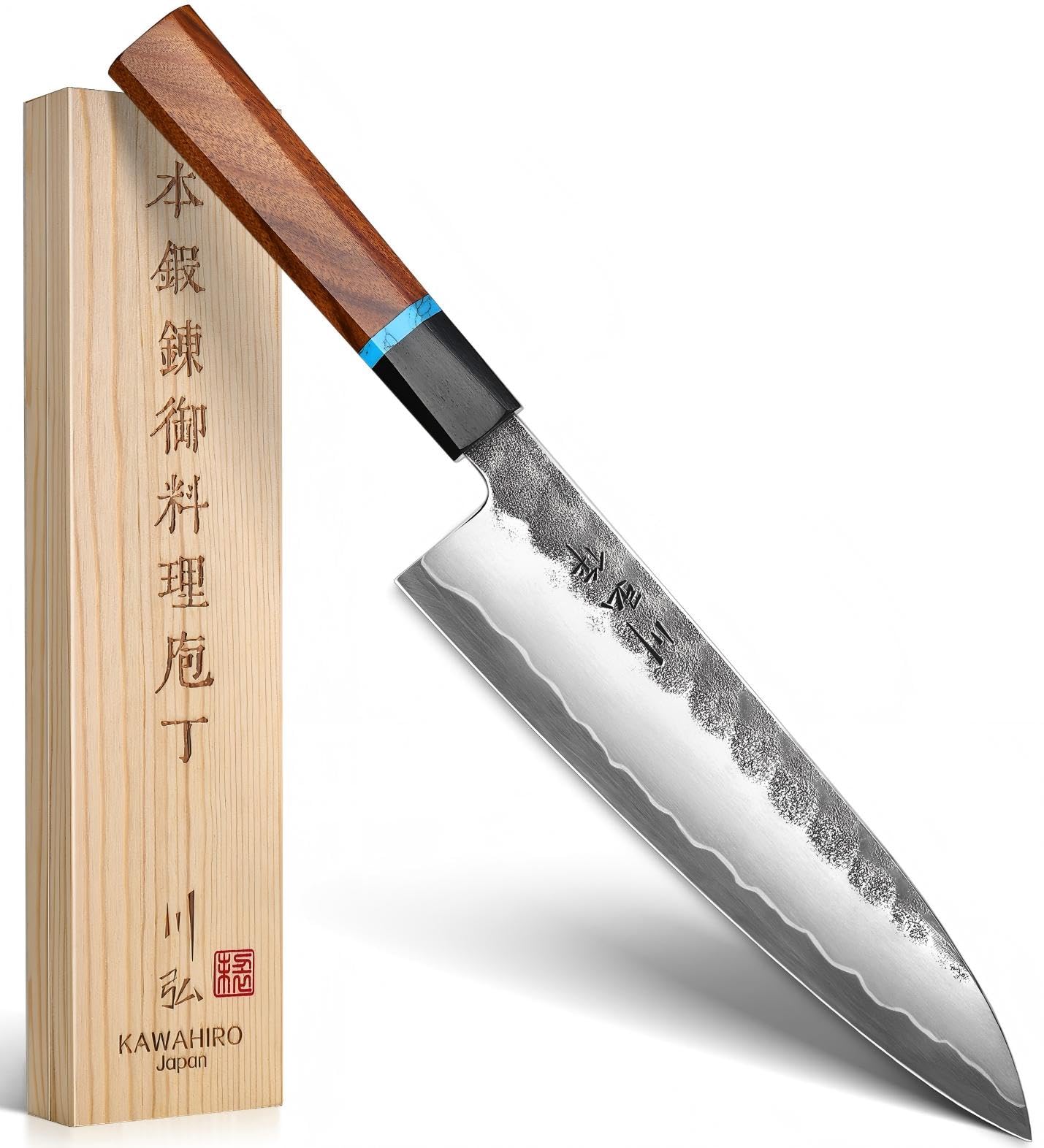
The KAWAHIRO Gyuto is forged from a 3-layer composite of Japanese VG10 stainless steel, with a core hardness estimated at 62+ HRC that rivals knives costing twice as much. The hand-forged black finish and natural layered pattern produced by the three-steel construction make each blade unique, while the octagonal handle composed of ebony, turquoise, and ruby wood provides ergonomic comfort for extended prep sessions.
User reports consistently describe the out-of-box sharpness as exceptional, with the 8.24-inch blade gliding through tomatoes, bell peppers, and boneless proteins with minimal resistance. The VG10 core at 62+ HRC holds its edge significantly longer than German steel alternatives, though some users note minor micro-chipping after six months of daily use on hard plastic boards. These chips are easily remedied with a 5000-grit water stone.
The handle’s octagonal wa-style design naturally guides the hand into a pinch grip, improving control during intricate cuts. The included wooden storage case and certificate of authenticity add value for gifting, though the blade requires immediate hand drying after contact with acidic ingredients to prevent discoloration of the carbon-rich core layer.
Why it’s great
- VG10 core at 62+ HRC delivers edge retention far exceeding the price point
- Octagonal wa-handle in ebony, turquoise, and ruby wood provides superior ergonomics
- 3-layer composite construction with unique hand-forged pattern on every blade
Good to know
- Susceptible to micro-chipping on hard boards without careful technique
- Requires water stones for sharpening; standard rods won’t restore the edge
4. Yoshihiro VG10 Hammered Damascus Gyuto
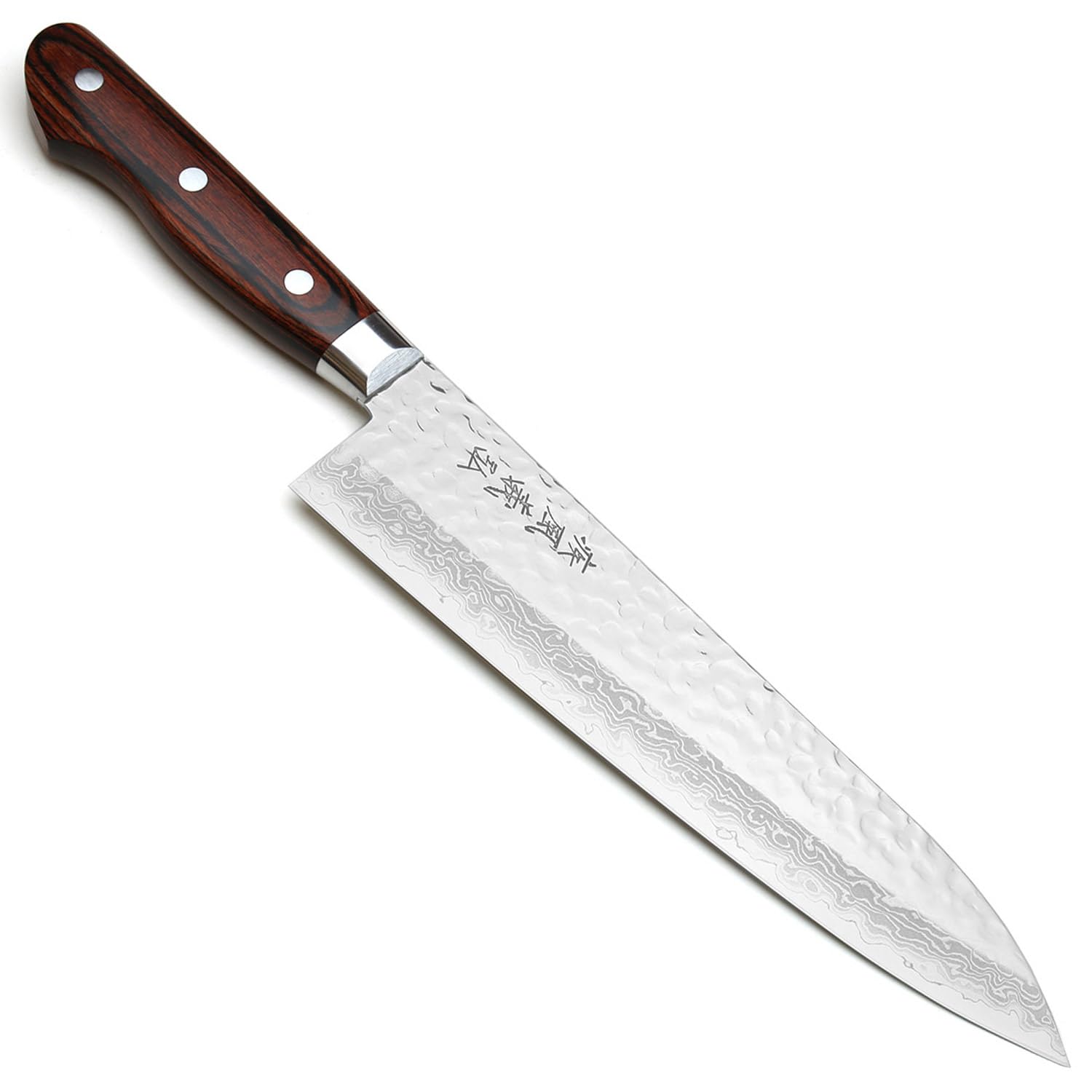
The Yoshihiro Gyuto is handcrafted in Japan by master artisans, with 16 layers of Damascus steel forge-welded around a VG10 stainless steel core before being hammered for the distinctive tsuchime finish. The hammered texture reduces food adhesion during slicing, while the VG10 core at 60 HRC provides lasting sharpness that users describe as “scary sharp” out of the box, capable of shaving arm hair and slicing tomatoes to paper-thin transparency.
The mahogany western-style handle extends to the full tang and is ergonomically shaped to weld to the hand during extended prep work. The 210mm (8.25-inch) blade geometry favors a push-cutting motion rather than the rock chop typical of German knives, making it ideal for precise vegetable work, sushi preparation, and boneless meat slicing. Users report that the edge holds for weeks of daily use before needing a light touch-up on a 6000-grit water stone.
Seasoned Japanese knife users note that the Yoshihiro requires a gentler cutting motion than Western knives — forcing the blade through hard ingredients like squash or bones risks chipping the thin edge. The knife is not dishwasher safe and must be hand washed and dried immediately, especially after cutting acidic ingredients like citrus or tomatoes. The blade does not include a saya cover, so storage in a knife block or blade guard is recommended.
Why it’s great
- 16-layer Damascus with VG10 core provides exceptional edge retention and corrosion resistance
- Hammered tsuchime finish reduces food sticking during slicing
- Mahogany full-tang western handle offers premium ergonomics and balance
Good to know
- Thin edge geometry requires careful technique to avoid chipping on hard foods
- No saya sheath included; requires manual oiling of the handle monthly
5. Dalstrong Crixus Chef & Cleaver Hybrid
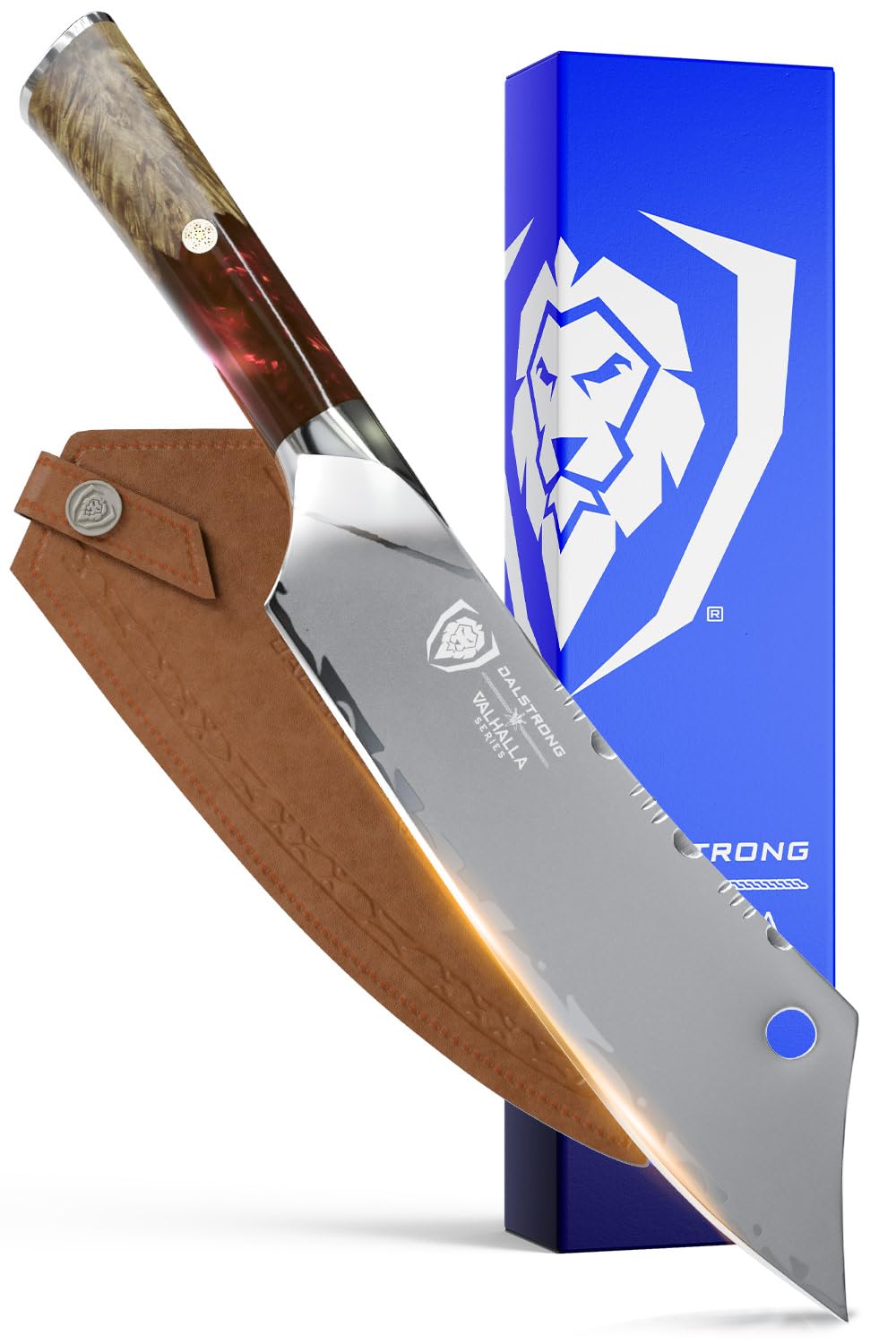
The Dalstrong Crixus combines chef knife precision with cleaver power in a single 8-inch blade forged from 9CR18MOV high-carbon steel hardened to 60+ HRC. The aggressive 8–12 degree hand-sharpened edge is among the most acute angles found on a production kitchen knife, enabling effortless slicing through dense proteins and thick-skinned produce while the wide, weighted front section excels at breaking down chicken sections and portioning meats.
User feedback emphasizes the blade’s surprising lightness despite its cleaver-like profile, with excellent weight distribution from the stainless steel bolster to the red resin and stabilized wood handle. The sandblasted grey finish reduces glare during prep work, and the included Valhalla-embossed leather sheath provides safe storage without taking up drawer space. At 60+ HRC, the 9CR18MOV steel holds its aggressive edge for extended periods between sharpenings.
The partial tang construction with a single rivet is atypical for knives at this price tier, but users report the handle remains securely bonded with proper hand washing and occasional mineral oil treatment. The blade geometry is not suitable for cleaving through bone or frozen ingredients despite the hybrid name — it’s designed for heavy slicing and portioning, not impact chopping. The knife comes in premium gift-ready packaging.
Why it’s great
- 8–12 degree edge angle provides exceptional sharpness for precise slicing
- Hybrid chef-cleaver profile handles both delicate and heavy prep tasks
- 9CR18MOV steel at 60+ HRC delivers strong edge retention
Good to know
- Partial tang with single rivet may concern buyers expecting full-tang durability
- Not suitable for bone or frozen food chopping despite cleaver appearance
6. Wüsthof Gourmet 4-Piece Chef’s Knife Set

The Wüsthof Gourmet set provides four essential tools — an 8-inch chef’s knife, a 4.5-inch utility knife, a 2.75-inch paring knife, and a honing steel — in laser-cut stamped construction that maintains the brand’s German quality standards at an accessible price. The high-carbon stainless steel blades are precision-cut and sharpened using the latest technology, delivering a factory edge that users consistently describe as extremely sharp and ready for immediate use.
The synthetic polypropylene handles resist fading, discoloration, heat, and impact, making this set suitable for busy kitchens where knives are used heavily and cleaned frequently. The stamped blades are lighter than forged alternatives, which some users prefer for extended prep sessions where wrist fatigue is a concern. The honing steel allows quick edge realignment between sharpenings, extending the time between full sharpening sessions significantly.
Users upgrading from budget supermarket knives notice the difference immediately: the Gourmet chef’s knife cuts through onions and root vegetables with clean, precise slices rather than crushing the cell walls. The set lacks a bread knife or santoku, but the included utility knife handles most intermediate tasks effectively. These knives are hand wash only, and the stamped construction means they won’t hold an edge as long as forged Wüsthof Classic blades at twice the price.
Why it’s great
- Complete 4-piece set with honing steel for edge maintenance
- Laser-cut stamped blades deliver consistent sharpness across all four knives
- Polypropylene handles resist fading, heat, and impact for long service life
Good to know
- Stamped construction won’t match forged blade edge retention over years of use
- No bread knife or santoku included in the 4-piece configuration
7. SYOKAMI 7-Piece Japanese Knife Set
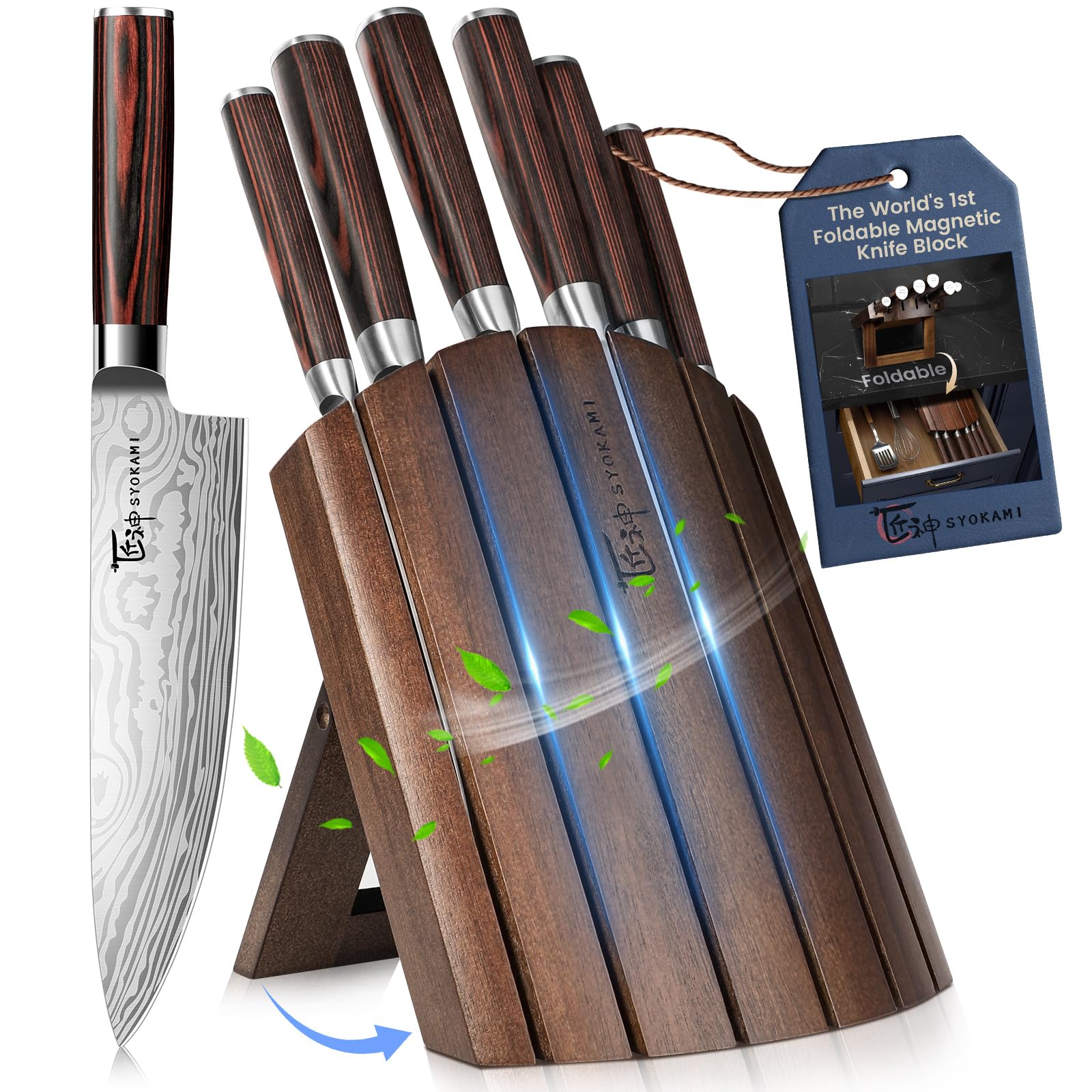
The SYOKAMI set includes seven pieces: an 8-inch chef’s knife, a 7-inch santoku, an 8-inch slicing knife, an 8-inch bread knife, a 6-inch utility knife, a 3.8-inch paring knife, and a foldable magnetic acacia wood block. The high-carbon stainless steel blades are hand-sanded to a 15-degree edge with a 56+ Rockwell hardness, providing sharp out-of-box performance that users describe as “sharp beyond belief” for everyday home cooking tasks.
The foldable stand is the standout feature for families with children or pets — the block collapses for drawer storage where the knives are held magnetically and completely out of reach. When deployed on the counter, the acacia wood easel displays the knives elegantly, though some users note that the magnets could be stronger to prevent the heavier chef’s knife from shifting when the block is bumped. The FSC-certified wood construction resists moisture and corrosion.
The santoku and chef’s knife handle the majority of prep work with comfortable ergonomic grips and reserved finger positions for safe movement. The set includes a bread knife with a serrated edge that is uncommon in budget-friendly sets, adding genuine utility. Users recommend cleaning the magnetic slots with a brush periodically to prevent debris buildup, and the wood block should be oiled occasionally to maintain its appearance and moisture resistance.
Why it’s great
- Foldable magnetic block stores flat in a drawer for child and pet safety
- Seven-piece set covers all essential kitchen tasks including bread slicing
- FSC-certified acacia wood block resists moisture and corrosion
Good to know
- Magnets in the foldable block could be stronger for heavier blades
- Wood block requires periodic oiling to prevent drying and cracking
FAQ
Why does my new knife feel dull after a few weeks if it’s made from hard steel?
Can I sharpen a 62 HRC Japanese knife with a standard kitchen sharpener?
What is the practical difference between forged and stamped blades for everyday use?
Final Thoughts: The Verdict
For most users, the best sharpest kitchen knives winner is the ZWILLING Professional S because its 15-degree edge angle, ice-hardened FRIODUR blade, and 57 HRC balance provide genuine out-of-box sharpness with German durability that handles daily prep without requiring specialized sharpening equipment. If you want a knife that cuts through produce with laser-like precision and exceptional edge retention, grab the KAWAHIRO VG10 Gyuto at 62+ HRC for a fraction of what premium Japanese steel typically costs. And for a complete family-friendly solution with safe drawer storage and seven versatile blades, nothing beats the SYOKAMI 7-Piece Set with its foldable magnetic acacia wood block.