
A backsplash is the focal point of any kitchen or bath renovation, but the illusion shatters when the tile edges meet the wall in a jagged, unfinished line. The gap collects grime, the sharp corners chip, and the whole project screams “DIY amateur hour” instead of the polished custom installation you paid for. That single transition — raw tile to drywall — is where most builds betray themselves.
I’m Min — the co-founder and writer behind Gadgets Feed. I’ve spent hundreds of hours cross-referencing material densities, adhesive shear strengths, and real-world installation feedback to find the trims that actually bridge the gap between tile and wall without looking like an afterthought.
Whether you are sealing a subway-pattern kitchen wall or framing a mirror with a decorative edge, understanding the difference between PVC caulk strips, aluminum L-channels, and wood-composite corner guards is the only way to find the best backsplash tile trim for a job that stays tight and looks intentional for years.
How To Choose The Best Backsplash Tile Trim
The wide world of tile edge finishing breaks down into three primary families: rigid L-shaped channels that cap the tile face and edge, flexible caulk-style strips that fill the transition gap, and corner protectors that guard the drywall edge itself. Your choice depends on whether you need a decorative border on the tile face, a gap-filler between tile and counter, or a protective shell around the corner of the wall.
Material and environment match
PVC and aluminum are the two main contenders. PVC is lightweight, easy to cut with scissors or a utility knife, and naturally water-resistant — but it can warp under sustained heat near a rangetop. Aluminum (especially aviation-grade) is rigid, rust-resistant, and holds paint better, but requires a miter saw or metal snips for cutting. WPC (wood plastic composite) offers a faux-wood grain that resists moisture better than real wood, though it cracks if bent without heat.
Adhesion method and surface prep
Peel-and-stick trims rely on the surface being perfectly dust-free, dry, and flat. Any texture or residue compromises the acrylic tape’s grab. For wonky walls or tile edges with slight lippage, construction adhesive (PL Premium or Gorilla Glue) provides a much stronger mechanical bond. Mechanical fasteners — screws with pre-drilled metal bits — are the only reliable method for stainless steel strips that sit exposed to heavy use or gap a range hood.
Quick Comparison
On smaller screens, swipe sideways to see the full table.
| Model | Category | Best For | Key Spec | Amazon |
|---|---|---|---|---|
| FCSOTSPS Aluminum Edge Trim | Aluminum L-Channel | Professional tile finishing | 10 pcs x 39″ x 0.4″ | Amazon |
| Art3d Flexible Caulk Strip | PVC Caulk Strip | Gaps & corners | 17 ft x 0.7″ | Amazon |
| YLL Walnut Corner Protector | WPC Corner Guard | Decorative wall edge protection | 6 x 45″ L-shaped | Amazon |
| YLL Black Wood Grain Edge Strip | WPC L-Trim | Mirror & door framing | 3 x 45″ x 1″ | Amazon |
| Amylove Stainless Steel Strip | Metal Gap Filler | Gap behind stove/range hood | 4″ x 30″ 304 SS | Amazon |
| Tilingview Peel & Stick Trim | PVC Pencil Edging | Budget-friendly tile edging | 10 x 12″ x 0.5″ | Amazon |
| DICOFUN Brushed Silver PVC Tile | Peel & Stick Subway | Full backsplash coverage | 10 sheets 12″x12″x0.12″ | Amazon |
In‑Depth Reviews
1. FCSOTSPS Aluminum Edge Trim
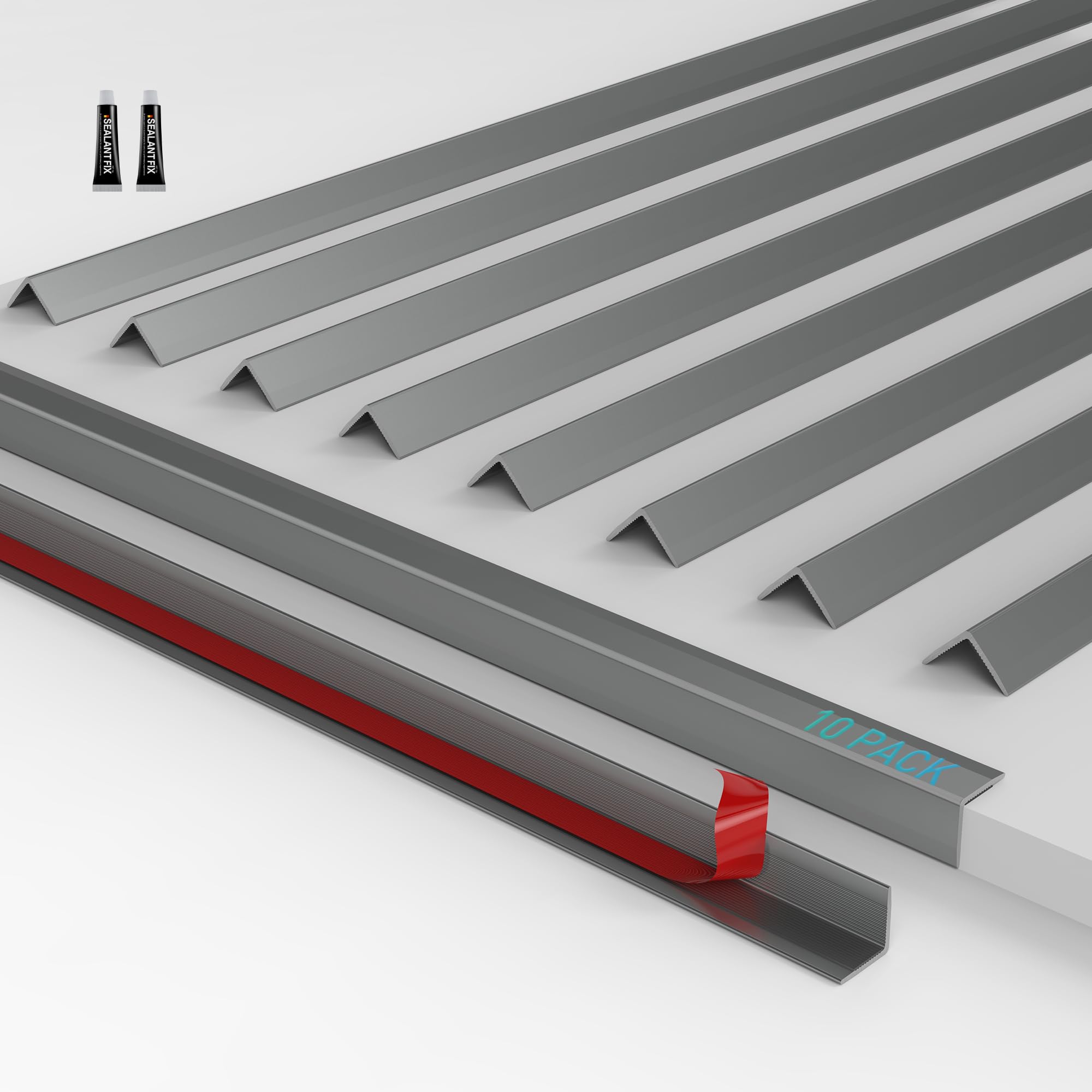
This 10-pack of 39-inch matte gray aluminum strips delivers the most professional-looking finish for glass, ceramic, or porcelain tile edges. The aviation-grade metal is rust-proof and resists paint peeling, while the grooved L-channel design seats directly over the tile edge to hide chipped cuts and lippage. Each strip measures 0.4 x 0.4 inches — a slim profile that works on backsplashes, shower niches, and stair noses without looking bulky.
Installation is genuinely drill-free: peel the protective backing and press into place on the tile edge. For high-moisture zones or curved surfaces, users recommend supplementing with construction adhesive to lock the bond. Cutting requires spring scissors, a jigsaw, or a miter saw — standard PVC scissors won’t bite through the metal. The adhesive layer is aggressive; once it touches the tile, repositioning is difficult.
The matte gray finish hides dust and fingerprints better than high-gloss trims, and the square-edge profile creates a crisp modern line. A few reviewers noted that uneven or natural stone tiles with surface texture prevent the groove from sitting flush — this trim demands a flat, straight tile face for best results. For anyone who wants a painted-coat durable edge that looks factory-installed, this is the set to beat.
Why it’s great
- Rust-resistant aluminum holds up to steam and kitchen grease.
- Grooved L-channel wraps the tile edge for a seamless transition.
Good to know
- Requires metal-cutting tools — not scissors-friendly.
- Adhesive is permanent; misalignment is hard to correct.
2. Art3d Flexible Caulk Strip

The Art3d strip functions less like a rigid channel and more like a pre-formed caulk bead that bridges the gap between tile and wall. At 17 feet long and 0.7 inches wide, it coils into corners with a simple bend — no miter cuts needed. The flexible PVC formulation resists heat and water, making it appropriate for bathrooms and smaller kitchen runs where a sharp 90-degree L-channel would look too industrial.
The acrylic tape backing claims residue-free removal, but real-world adhesion is the common complaint. Several users reported that the strip’s memory from being coiled in the box causes it to lift unless you stretch it out flat overnight or heat it with a hair dryer before pressing. Over corners, the flexibility helps; on long flat runs, the tape can fail if the wall surface isn’t perfectly smooth and dust-free.
When it works — on a dry, clean transition with a bit of extra weight or contact cement — the result is a seamless painted line that mimics a professional grout or caulk bead. The material takes paint well if you spray it after installation. It is a clever solution for renters or cosmetic fixes, but not a permanent substitute for a rigid trim on high-traffic or grease-prone areas.
Why it’s great
- Bends around inside and outside corners without cutting.
- Heat- and water-resistant PVC suits steamy bathrooms.
Good to know
- Needs pre-stretching or heat to overcome coil memory.
- Adhesive can fail on textured or dusty surfaces.
3. YLL Walnut Corner Protector (6-Pack)

This six-pack of 45-inch L-shaped corner guards brings a warm walnut wood-grain finish to the edges of a backsplash, door frame, or mirror border. The WPC (wood plastic composite) material is denser than PVC — it resists moisture intrusion and won’t warp like real wood in a steamy bathroom. Each leg measures 1 inch wide with a 0.13-inch thickness, giving it a substantial look without overwhelming a 4-inch backsplash tile.
Installation is screw-free: double-sided tape or a minimal bead of construction adhesive holds each piece firmly. The material cuts cleanly with a fine-tooth saw, and users report that a hair dryer on high heat allows gentle bending around curved walls. However, pushing the bend too fast without heat causes hairline cracks along the WPC grain. Pre-drilling holes for adhesive injection helps adhesion on uneven drywall.
The 6-strip count covers up to 22.5 linear feet of corner — enough for a standard kitchen backsplash perimeter plus a window frame. Color matching is the main variable: the walnut grain varies slightly between production batches, so ordering for a single project in one purchase is essential. The matte wood texture repels smudges better than glossy trims, and it cleans easily with a damp cloth.
Why it’s great
- Walnut wood-grain WPC resists moisture better than real wood.
- Heat-formable around gentle curves for custom shapes.
Good to know
- Rigid material cracks if bent without heat assistance.
- Inconsistent grain tone across separate orders.
4. YLL Black Wood Grain Edge Strip (3-Pack)
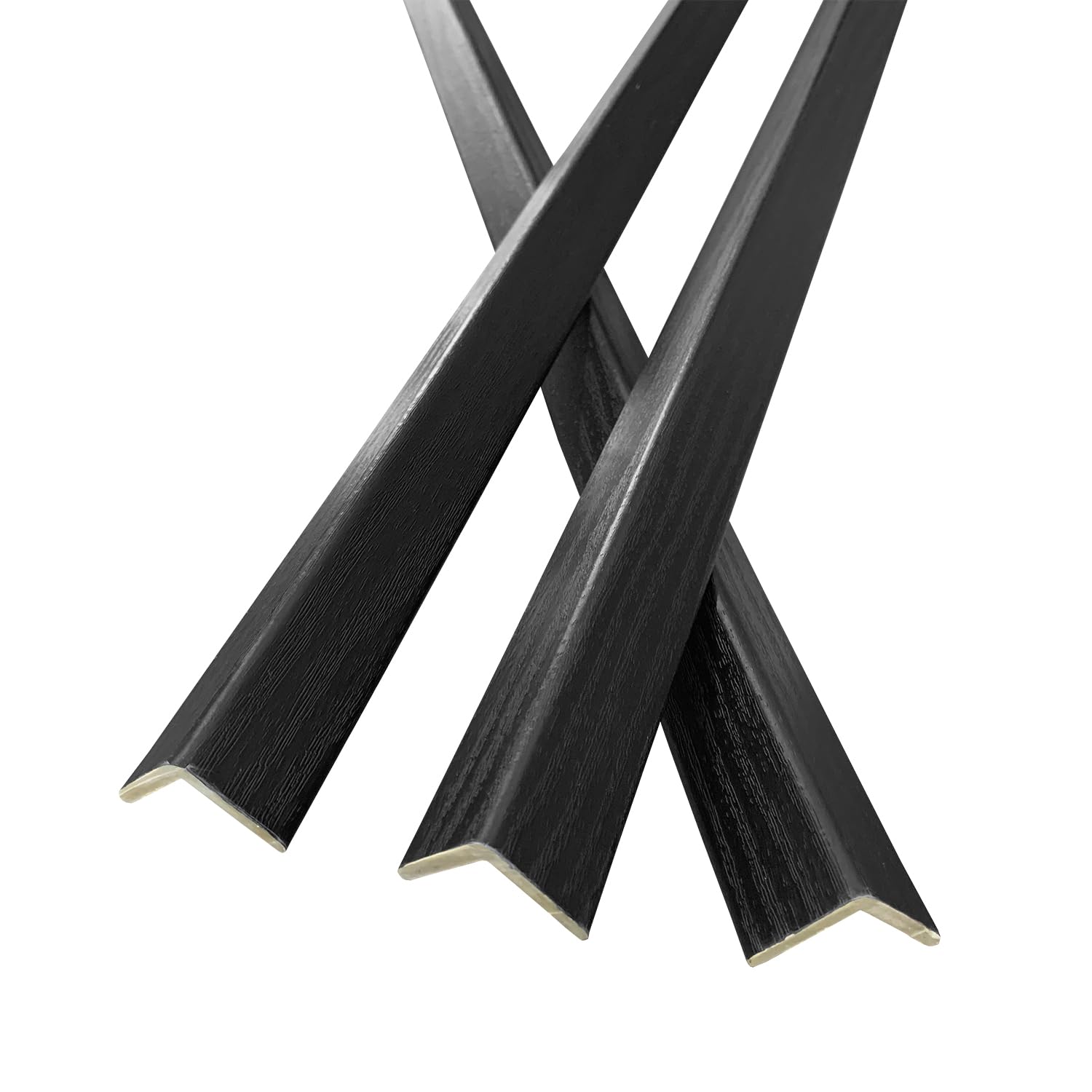
The black wood-grain variant of the YLL corner guard delivers the same 45-inch L-profile and 1-inch leg width as the walnut sibling, but in a darker ebony tone that works with black appliances or dark tile grout. The WPC material provides the same fire-retardant, waterproof performance as the walnut version — useful for backsplash edges that receive direct grease splatter or steam exposure.
Installation mirrors the walnut version: minimal adhesive or strong double-sided tape holds each 0.13-inch-thick strip flush against the wall corner. Users have successfully bent the profile around archways by warming it with a hair dryer, though the black surface absorbs heat faster, so the bend forms quicker than with lighter colors. The three-strip count covers 11.25 linear feet — adequate for a single wall or small bathroom niche.
Some buyers noted that the corners of the strip are slightly sharp out of the box and recommend sanding with fine-grit paper before mounting to avoid snagging clothing. For a budget-friendly way to add a dark accent border around a white subway tile backsplash, this trim blends protection with a mod look.
Why it’s great
- Dark ebony finish complements black fixtures and grout.
- WPC construction resists fire and moisture in kitchen zones.
Good to know
- Only 3 strips per pack — needs multiple packs for large rooms.
- Raw edges may require light sanding before installation.
5. Amylove Stainless Steel Gap Filler Strip
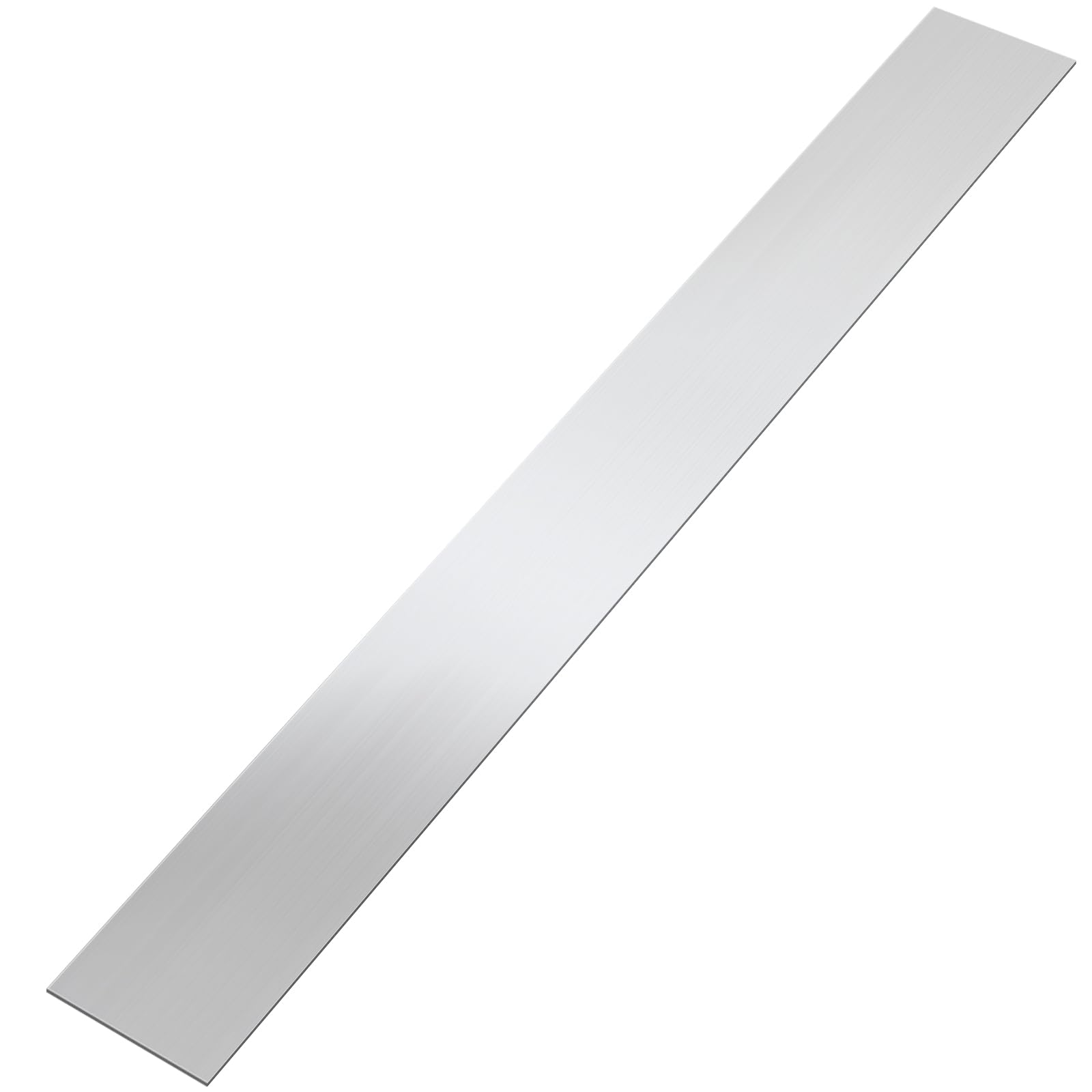
This 4-by-30-inch sheet of 304-grade brushed stainless steel is not your typical trim — it is a flat filler plate designed to bridge large gaps behind a slide-in range, under a granite countertop, or between a short range hood and the tile backsplash. The 1.4-pound sheet is rigid enough to span a 30-inch opening without sagging when supported by three L-brackets, as multiple buyers have verified.
The steel is non-magnetic and requires drilling with dedicated metal drill bits — standard wood bits will skate. For installation, users either screw L-brackets to the cabinets and lay the sheet flat on top, or use high-strength construction adhesive to glue it to the wall or counter edge. Cutting requires tin snips or a metal cutoff wheel; the brushed finish hides scratches but the sheet can dent if struck hard.
This is not a decorative tile edge molding — it is a utilitarian gap cover that happens to look professional when installed. The polished side is scratch-prone if you wipe it with an abrasive sponge, but the brushed surface hides mild scuffs. For any renovation that leaves a 1-to-4-inch gap between appliances and tile, this strip delivers a seamless flush transition that caulk cannot match.
Why it’s great
- 304 stainless steel is durable and heat-resistant for range gaps.
- Large 30-inch length covers full appliance openings.
Good to know
- Requires metal drill bits and tin snips — not scissors.
- Polished surface scratches easily if scrubbed aggressively.
6. Tilingview Peel & Stick Trim (10-Pack)
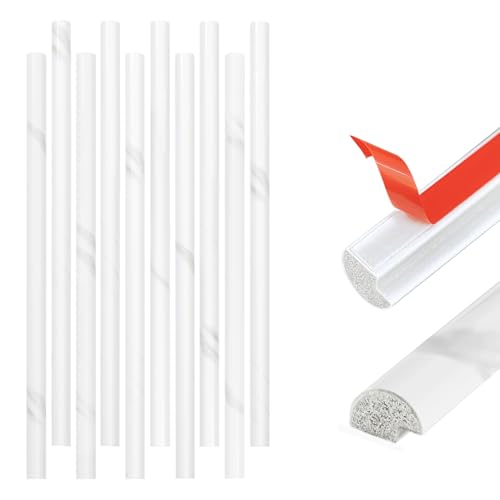
The Tilingview trim pack provides ten 12-inch PVC pencil rails with a white stone finish that mimics light marble — subtle gray veins on a white background. Each strip measures 0.5 inches wide and 0.33 inches thick, with a groove that sits over the tile edge. The self-adhesive backing is intended for peel-and-stick tiles and flat, dust-free surfaces, making this a fast way to finish a weekend backsplash project without cutting metal.
Several reviewers noted that the adhesive is adequate for light-duty vertical application, but the plastic is rigid and does not conform to wavy walls. Cutting requires a hacksaw or a cutting machine — utility knives struggle with the 0.33-inch thickness. A common workaround is to supplement the peel-and-stick tape with a bead of construction adhesive for a permanent hold, especially on tiles exposed to steam or cooking splatter.
The white stone color works best with white or light-gray subway tiles, where the subtle veining disappears into the grout line. For darker tiles, the stark white edge stands out more than intended. The 10-strip count covers 10 linear feet — enough for a small 4-by-5-foot backsplash section. It is an entry-level trim that gets the job done for a minimal budget, if you are willing to upgrade the adhesive.
Why it’s great
- White stone finish blends well with light subway tiles.
- Grooved design sits flush on flat tile edges.
Good to know
- Rigid PVC does not conform to uneven tile edges.
- Stock adhesive may need supplemental glue for permanence.
7. DICOFUN Brushed Silver PVC Subway Tile
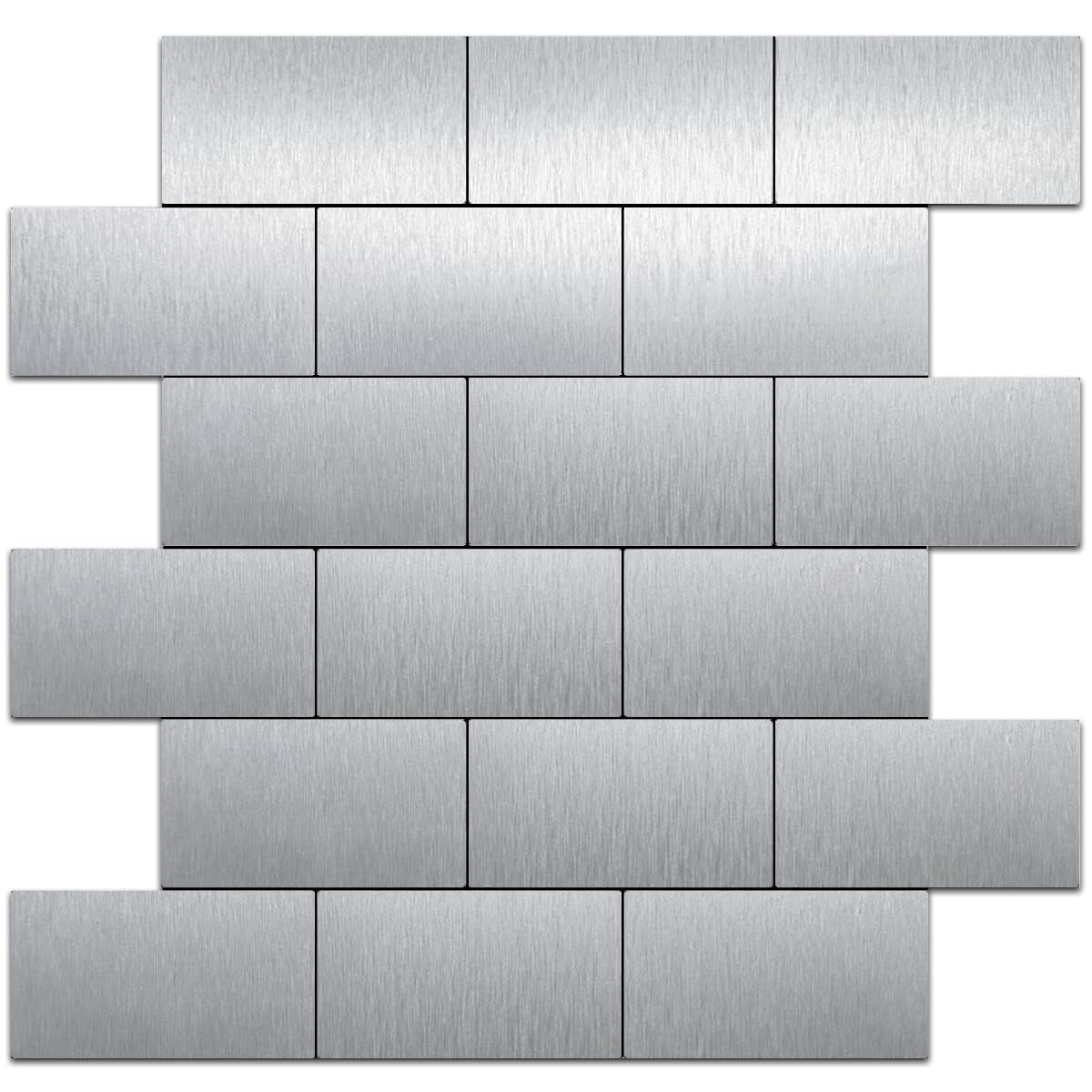
The DICOFUN set is a full peel-and-stick backsplash tile system, not just a trim strip — ten 12×12-inch sheets of brushed silver PVC laminate that cover 8.3 square feet. Each sheet is 0.12 inches thick with a rigid foam backing tape that creates a high-end metal look without the weight or cost of real aluminum. The square-edge subway pattern aligns neatly for a continuous brushed-metal wall.
Installation goes quickly with a utility knife to cut sheets to size, but the adhesive backing paper is notoriously stubborn — buyers report that pulling the paper often brings black adhesive residue off with it, requiring a razor blade to separate the layers. The foam backer does not buckle if you leave a 1/16-inch expansion gap between sheets, but tight butting causes the laminate to lift. Several users reported the top decorative layer peeling off within months, especially in high-humidity environments.
The brushed silver finish reflects light beautifully and wipes clean of grease, but durability is the primary concern. For a low-traffic rental refresh or a temporary vanity wall, the visual payoff is strong. For a permanent kitchen backsplash behind a stove, the peeling reports suggest this product works best with an extra application of contact cement behind each sheet before pressing into place.
Why it’s great
- Brushed-metal PVC finish looks high-end at a low material cost.
- Lightweight sheets cut easily with a utility knife.
Good to know
- Adhesive backing can delaminate from the foam in humid conditions.
- Backing paper removal is frustrating and may tear adhesive.
FAQ
Can I install aluminum tile trim over existing caulk or grout?
How do I cut WPC corner guards without cracking them?
Final Thoughts: The Verdict
For most users, the best backsplash tile trim winner is the FCSOTSPS Aluminum Edge Trim because it delivers rust-proof aviation aluminum paired with a grooved L-channel that hides uneven tile cuts and resists kitchen heat. If you want a flexible caulk-style strip that snakes around irregular corners, grab the Art3d Flexible Caulk Strip. And for filling a wide appliance gap behind a range or hood, nothing beats the Amylove Stainless Steel Strip.