
A grainy, poorly-lit 1080p stream can kill a channel, turning eager viewers away within seconds. Real 4K streaming isn’t just about more pixels—it’s about a professional look that holds an audience, demands serious attention, and works reliably through a setup that doesn’t overheat or choke mid-broadcast.
I’m Min — the co-founder and writer behind Gadgets Feed. I’ve poured dozens of hours into comparing sensor sizes, autofocus systems, low-light performance, and connectivity options to separate the cameras that deliver polished, stable 4K video from those that just advertise the resolution.
This guide cuts through the marketing noise to recommend the best real-world options in the space. Whether you’re a church tech director, a live streamer, or a content creator, this article will help you pick the right best 4k camera for streaming that reliably produces professional-grade broadcast quality for your audience.
How To Choose The Best 4K Camera For Streaming
A great streaming camera delivers high-resolution video, reliable autofocus, and stable connectivity without overheating. Here are the key factors to weigh before making your investment.
Sensor Size and Low-Light Performance
A larger physical sensor, like a Micro Four Thirds, APS-C, or Full-Frame sensor, captures more light. This directly translates to cleaner, less noisy video in dimly lit rooms. For streaming, a camera with a wider aperture lens (f/1.8 or similar) paired with a good sensor makes a huge difference compared to a standard webcam.
Clean HDMI Output and Connectivity
You need a camera that can output a clean, uncompressed 4K video feed over HDMI or USB (UVC) to your computer or switcher. Look for “clean HDMI output” in the specs. For multi-camera setups, cameras with built-in NDI or SDI are often preferred, as they transmit video, audio, and control over a single network cable.
Autofocus and Tracking
Phase-detection autofocus or reliable AI-based subject tracking is a non-negotiable feature for a one-person stream. It keeps you in sharp focus if you move around the frame. PTZ cameras with auto-tracking are fantastic for solo streamers or speakers who move naturally on stage.
Quick Comparison
On smaller screens, swipe sideways to see the full table.
| Model | Category | Best For | Key Spec | Amazon |
|---|---|---|---|---|
| Blackmagic Pocket Cinema Camera 4K | Premium | Cinematic quality | 13 stops dynamic range / Dual Native ISO | Amazon |
| Canon EOS R8 | Premium | Full-frame quality | 6K oversampled 4K 60fps / C-Log 3 | Amazon |
| Panasonic LUMIX GH5M2 | Mid-Range | Unlimited hybrid recording | C4K 60p 4:2:2 10-bit / Live Streaming | Amazon |
| Sony Alpha 6400 | Mid-Range | Fastest autofocus | 0.02 sec AF / Real-Time Eye AF | Amazon |
| Prisual TEM-4K20N PRO | Premium | Professional PTZ with NDI | 20x Optical Zoom / Official NDI | Amazon |
| OBSBOT Tail Air | Mid-Range | Portable AI tracking | 320° rotation / NDI (license extra) | Amazon |
| Sony Alpha ZV-E10 | Mid-Range | Vlogging / Beginner streamers | 6K oversampled 4K / Product Showcase | Amazon |
| Hollyland VenusLiv Air | Mid-Range | Dedicated 24/7 streaming | F1.05 Lens / AI Tuning / Green Screen | Amazon |
| Panasonic LUMIX G85 | Mid-Range | Budget-aware hybrid work | Dual I.S. 2 / Weather sealed body | Amazon |
| Canon EOS R100 | Mid-Range | Entry-level streaming and stills | 24.1MP APS-C / DIGIC 8 | Amazon |
| OBSBOT Tiny 3 | Mid-Range | AI tracking webcam | 1/1.28″ Sensor / 1080p 120fps | Amazon |
In‑Depth Reviews
1. Blackmagic Design Pocket Cinema Camera 4K

The Blackmagic Pocket Cinema Camera 4K is a legendary choice for streamers who prioritize image quality above all else. Its 4/3″ sensor offers an incredible 13 stops of dynamic range, bringing cinematic depth and rich shadow detail that makes standard webcams look flat. The Dual Native ISO up to 25,600 means you can stream in challenging lighting with minimal noise.
Built for professional workflows, it records directly to Blackmagic RAW or Apple ProRes, and the included DaVinci Resolve Studio key gives you Hollywood-grade color grading. The 5-inch touchscreen eliminates the need for an external monitor, keeping the setup compact. The locking power connector is a welcome safety feature for live productions.
Be prepared for its unique quirks: there is no continuous autofocus, so manual focus or a separate follow-focus system is a must. The battery life is extremely short, requiring a dummy battery or power via USB-C. It also lacks in-body image stabilization, so a tripod or gimbal is almost mandatory for stationary streaming.
Why it’s great
- 13 stops of dynamic range
- Records Blackmagic RAW natively
- Large, bright 5″ LCD screen
Good to know
- No continuous autofocus
- Poor battery life from LP-E6 pack
- No in-body stabilization
2. Canon EOS R8

The Canon EOS R8 brings the powerful internals of the R6 Mark II into a remarkably lightweight, affordable full-frame body. Its uncropped 4K 60p video is oversampled from a 6K readout, delivering incredibly sharp and detailed footage. The inclusion of Canon Log 3 is a serious bonus for color grading, giving you flexibility in post-production.
Dual Pixel CMOS AF II is a standout feature for streaming, offering fast, intelligent, and reliable tracking for people, animals, and even vehicles. The vari-angle touchscreen is perfect for solo creators who need to monitor themselves. Its UVC/UAC support makes it a simple plug-and-play option for streaming directly to a computer.
The main limitations are its single SD card slot and the relatively small LP-E17 battery, which can drain quickly during video streaming. It lacks in-body image stabilization (IBIS), so you’ll want a solid tripod. The 4K 60p mode can also trigger overheating after about 30 minutes in warmer environments.
Why it’s great
- Excellent full-frame image quality
- Fast and accurate Dual Pixel AF II
- Compact and lightweight body
Good to know
- Single card slot
- Poor battery life for video
- No IBIS
3. Panasonic LUMIX GH5M2

The Panasonic GH5M2 is built for the hybrid creator who needs unlimited recording reliability. It can record C4K 60p 4:2:0 10-bit internally and output 4K 60p over HDMI simultaneously without a recording time limit. This is critical for long streaming sessions, podcasts, or church services where a hard stop would be disastrous.
Its 5-axis in-body stabilization is legendary, allowing for smooth static shots without a gimbal. The camera supports wired and wireless live streaming, and the V-Log L profile provides a fantastic starting point for color grading. The weather-sealed magnesium alloy body is robust enough for travel or permanent installation.
The autofocus uses contrast detection, which is much slower and less reliable than the phase-detect systems found in Sony and Canon rivals. For a stationary streaming setup this is less of a problem, but for dynamic movement, it can hunt for focus. The menu system can also feel overwhelming for beginners.
Why it’s great
- Unlimited recording time
- Industry-leading IBIS
- Professional V-Log L gamma
Good to know
- Slower contrast-detect AF
- Limited low-light performance vs. full-frame
- Complex menu system
4. Sony Alpha 6400

The Sony Alpha 6400 is the gold standard for autofocus performance in its price range. Its 0.02-second Real-Time Eye AF and Real-Time Tracking are incredibly sticky, making it an excellent choice for interview-style streams where you move around the frame. The 425 phase-detection points cover 84% of the sensor.
For streaming, the 180-degree flip screen is a major plus for self-monitoring. The camera supports clean HDMI output, allowing you to feed a 4K signal to a capture card or switcher. Its compact size makes it easy to position on a desk mount. The 24.2MP sensor delivers vibrant, sharp 4K footage.
The 4K video exhibits significant rolling shutter, making it less ideal if you pan quickly. It also has no in-body image stabilization. The battery life is modest, and the lack of a headphone jack is a nuisance for live monitoring. The touchscreen is also quite limited, used only for focus point selection.
Why it’s great
- Lightning-fast autofocus
- 180° flip screen for self-monitoring
- Sharp 4K from 24.2MP sensor
Good to know
- Bad rolling shutter in 4K
- Poor battery life
- No headphone jack
5. Prisual TEM-4K20N PRO
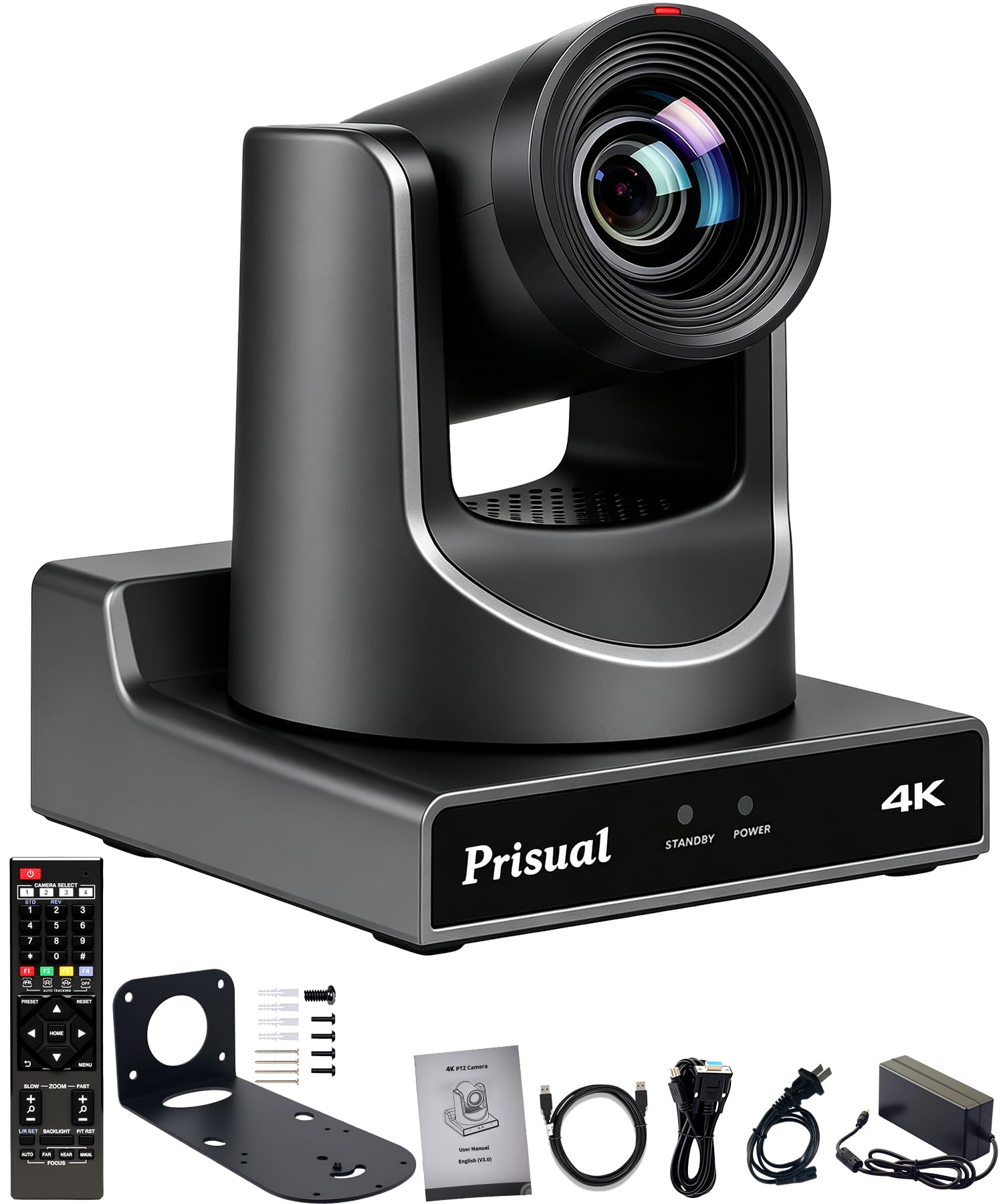
The Prisual TEM-4K20N PRO is a true professional-grade PTZ camera that brings official NDI certification at a disruptive price. With a 1/1.8″ UHD CMOS sensor, it delivers 4K 60fps video, and the 20x optical zoom provides incredible range for capturing speakers, pastors, or performers from across a large venue.
Its Gen5 AI tracking is remarkably smart, automatically tracking presenters and allowing you to switch between different zones and people. The official NDI support means you can send video, audio, and control signals over a single Ethernet cable using PoE. Setup is plug-and-play, and the silent belt-drive mechanism is perfect for quiet worship services.
The embedded software can be a bit glitchy, and the built-in web interface isn’t the most refined. Tech support is China-based, which means a 12-hour time difference can slow down issue resolution. Despite these quirks, the build quality, video quality, and feature set offer tremendous value for multi-camera live production systems.
Why it’s great
- Official NDI certification
- Excellent 20x optical zoom
- Silent, smooth PTZ operation
Good to know
- Software interface can be glitchy
- Tech support time zone issues
- No battery power
6. OBSBOT Tail Air

The OBSBOT Tail Air is the ultimate portable streaming PTZ camera. It is smaller than a soda can but includes gesture control, AI tracking for people, animals, and objects, and a massive 320° horizontal rotation range. This makes it incredibly versatile for a single creator who needs camera movement without a human operator.
Its connectivity options are superb: Micro HDMI, USB-C, Ethernet, and wireless control via the Obsbot Start app. With the optional NDI license, it becomes a full network camera, perfect for streamlined multi-camera productions. The 2.5-hour built-in battery is another rare bonus for a PTZ camera, allowing for untethered operation.
A critical design flaw: the camera will not power on without a working battery, and the battery is not user-replaceable. Reports indicate the battery can degrade and die after 12-14 months, rendering the camera a brick. There have also been some reliability issues with units failing after just a few weeks of use.
Why it’s great
- Extremely compact and portable
- Gesture and AI tracking control
- Multi-connectivity (HDMI/USB/NDI)
Good to know
- Non-replaceable battery is a critical flaw
- NDI license is an extra purchase
- Some reliability concerns reported
7. Sony Alpha ZV-E10
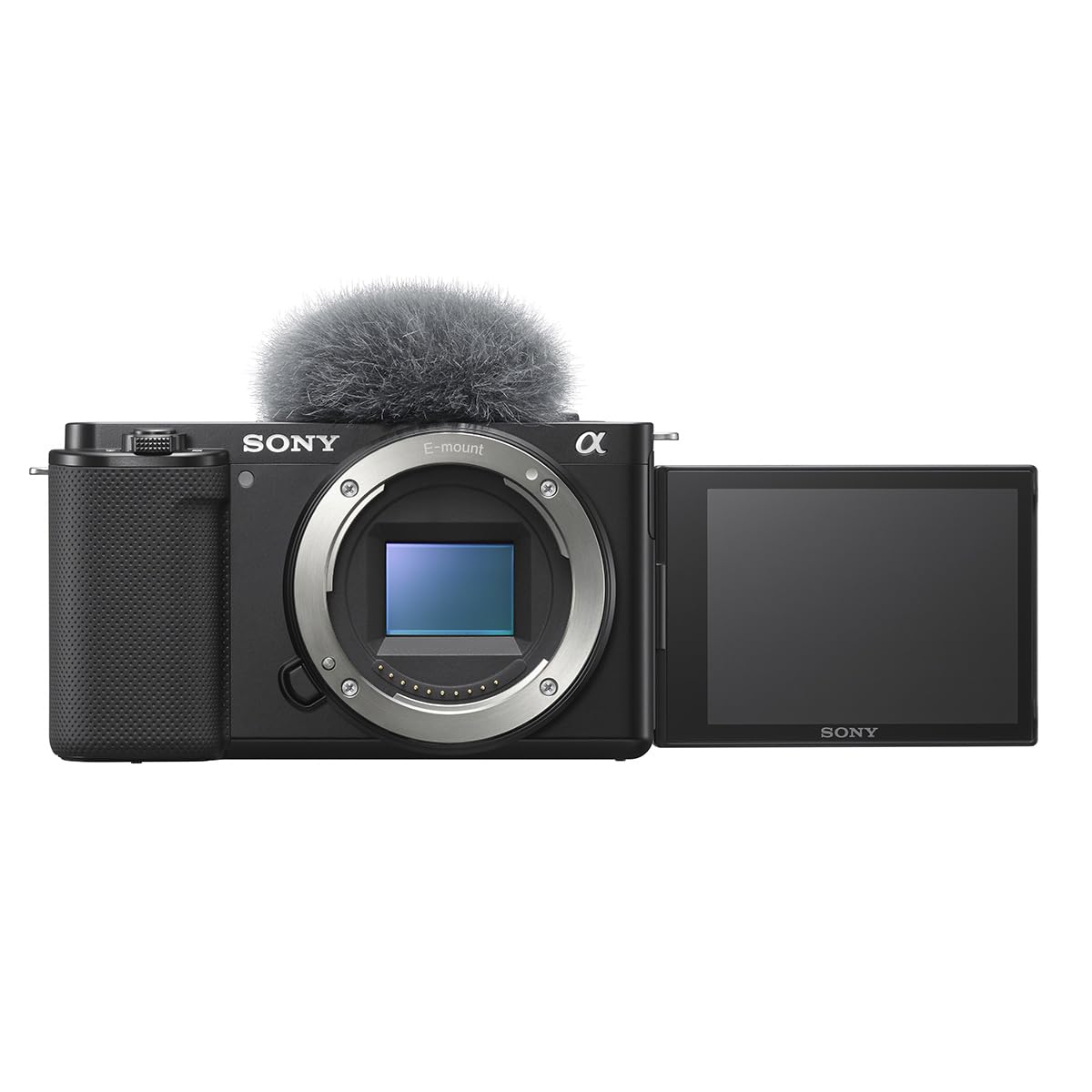
The Sony ZV-E10 was purpose-built for content creators and is a fantastic entry point into serious streaming. Its 24.2MP APS-C sensor oversamples 4K from 6K, creating super sharp video. The “Product Showcase Setting” automatically transitions focus from your face to an object you hold up—perfect for review or unboxing streams.
The Background Defocus button gives instant control over depth of field, and the built-in directional 3-capsule mic is decent for raw audio. For streaming, a simple USB connection is all you need to go live. The flip-out vari-angle screen is excellent for monitoring yourself.
The ZV-E10 lacks in-body image stabilization, so smooth footage requires a tripod. The 4K 30p mode introduces a heavy crop and disables face/eye AF, which is a major oversight for the target audience. It also has a significant rolling shutter in 4K, and the battery life is poor, often lasting less than 30 minutes of 4K recording.
Why it’s great
- Excellent 4K image quality for the price
- Product Showcase Mode
- Easy USB streaming
Good to know
- No IBIS
- Terrible rolling shutter in 4K
- Poor battery life
8. Hollyland VenusLiv Air
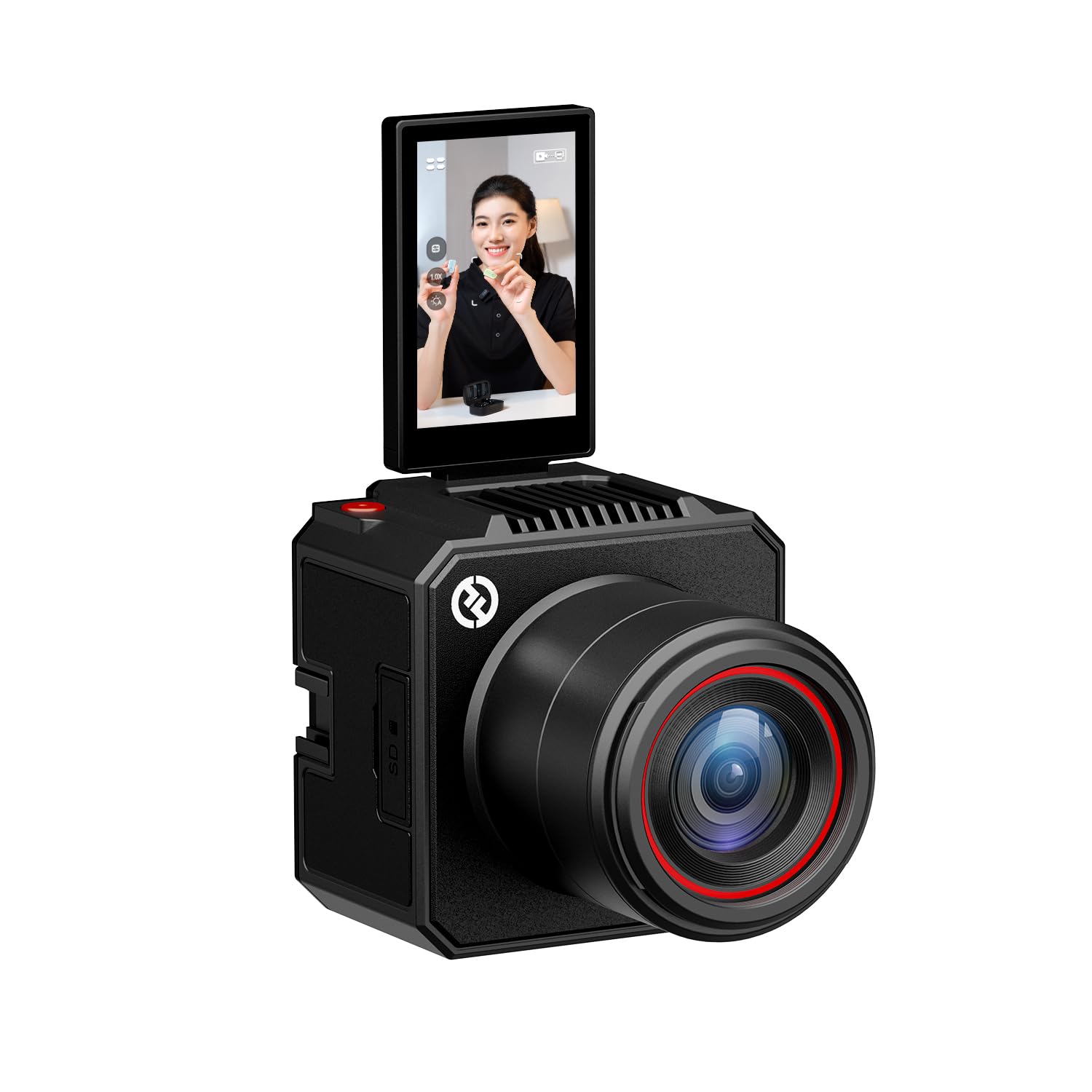
The Hollyland VenusLiv Air is a dedicated live streaming camera designed from the ground up for 24/7 use. Its large F1.05 aperture lens combined with a 1/1.3″ CMOS sensor delivers excellent low-light performance, producing clean, noise-free video even in darker rooms. The integrated AI Tuning system automatically adjusts exposure and white balance.
A huge advantage is its air-cooling system, preventing the overheating that plagues DSLR/Mirrorless cameras during long streams. The HollyStudio PC software includes powerful features like a built-in green screen keyer, skin beauty filters, and image overlay. It outputs 4K 30p over UVC (plug-and-play) and HDMI, and is controllable via a mobile app.
The build quality feels less premium than other options in its price range, and the software ecosystem is still maturing. Some users have reported spotty connectivity via USB-C. It must be plugged in for power.
Why it’s great
- Excellent low-light F1.05 lens
- Built-in green screen and beauty features
- 24/7 operation with active cooling
Good to know
- Build quality feels budget-oriented
- Immature software ecosystem
- Requires constant power source
9. Panasonic LUMIX G85

The Panasonic G85 is an older model that remains a fantastic budget-friendly entry into 4K streaming with interchangeable lenses. Its 16MP Micro Four Thirds sensor may lack pixel count, but the lack of a low-pass filter gives it excellent fine-detail resolving power. The 5-axis in-body image stabilization is fantastic for smooth static shots.
The camera is weather-sealed with a magnesium alloy front frame, giving it a professional feel. The included 12-60mm Power O.I.S. lens is a very capable all-around kit lens. For streaming, it offers clean HDMI output and 4K photo/post-focus features for pulling stills from video.
Its autofocus is contrast-detect and can be sluggish and hunt for focus in low-light 4K video. Battery life is mediocre, and there is no headphone jack for audio monitoring. It is also noticeably heavier than its predecessor, the G7, which may be a consideration for a minimalist desk setup.
Why it’s great
- Excellent IBIS for the price
- Weather-sealed magnesium alloy body
- Decent kit lens included
Good to know
- Slow contrast-detect AF in 4K video
- No headphone jack
- Heavier than predecessor G7
10. Canon EOS R100

The Canon EOS R100 is the most affordable entry point into the Canon RF mirrorless system, making it a decent starting camera for streaming on a tight budget. Its 24.1MP APS-C sensor paired with the DIGIC 8 processor delivers solid still image quality and 4K video recording. The camera is incredibly lightweight and compact.
Its Dual Pixel CMOS AF covers 143 zones with human and face detection, providing better autofocus than many budget options. It can output 4K video over HDMI, making it a viable webcam replacement. The included RF-S18-45mm lens is a good starter lens for a standard desk setup.
The EOS R100’s 4K video is heavily cropped and limited to 24fps, which looks less smooth than 30fps or 60fps. The 4K footage also has a significant rolling shutter. The camera lacks a flip screen, making self-framing a chore. The interface, while simple, can feel limiting for anyone wanting manual control while streaming.
Why it’s great
- Very affordable entry to 4K streaming
- Good Dual Pixel CMOS AF
- Compact and lightweight body
Good to know
- 4K is limited to 24fps with heavy crop
- No flip screen for self-monitoring
- Significant rolling shutter in 4K
11. OBSBOT Tiny 3
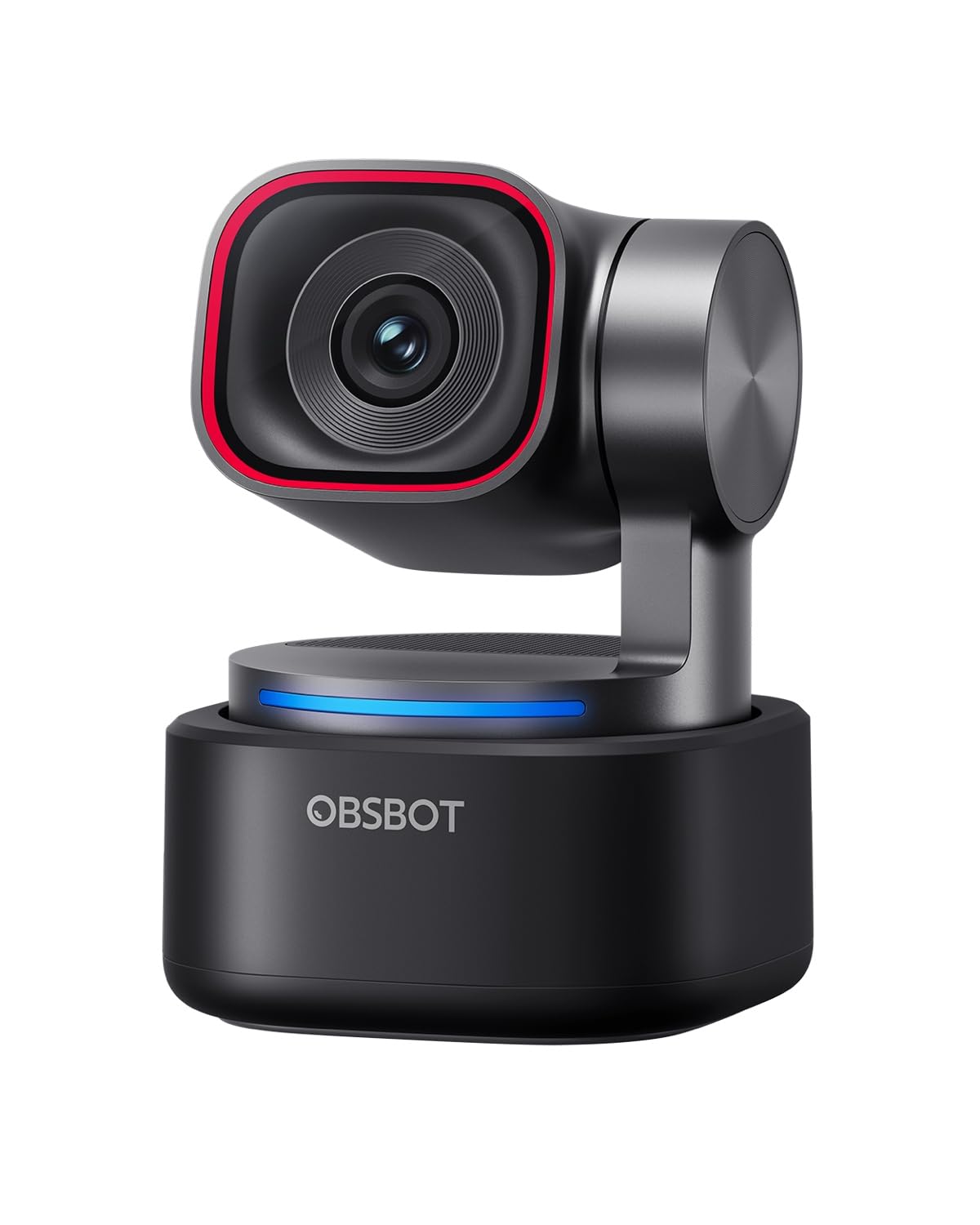
The OBSBOT Tiny 3 is not a traditional camera but a dedicated AI-powered 4K webcam that is ideal for solo streamers who want automated camera work without a second person. Its upgraded 1/1.28″ CMOS sensor provides excellent image quality, with a wide ISO domain (0-12800) and DCG HDR for balanced low-light results.
The AI Tracking 2.0 is incredibly capable, tracking not just people but also objects and animals. The PTZ gimbal is whisper-quiet and smooth, with dual All-Pixel PDAF to keep focus tack-sharp. The tri-mic array with spatial audio is a huge upgrade for built-in audio quality. Gesture and voice control let you control the camera without touching it.
Being a webcam, it is tethered to a computer and cannot be used as a standalone camera. The mounting system is a bit small for wider monitors, and some users note the camera gets noticeably warm during long use. It lacks the flexibility of an interchangeable lens system, limiting creative depth-of-field control.
Why it’s great
- Large sensor for a webcam (1/1.28″)
- Excellent AI tracking and gesture control
- Professional spatial audio from tri-mics
Good to know
- Desk-mounted only (not standalone)
- Gets warm during extended use
- Non-interchangeable lens
FAQ
Can I use a DSLR or mirrorless camera for streaming without a capture card?
What is the advantage of a dedicated PTZ streaming camera?
How important is the refresh rate (60fps vs 30fps) for streaming?
Final Thoughts: The Verdict
For most users, the best 4k camera for streaming winner is the Canon EOS R8 because it delivers incredible full-frame image quality, a fast and reliable autofocus system, and a lightweight body at a competitive price point. If you want professional NDI PTZ capabilities for a multi-camera setup, grab the Prisual TEM-4K20N PRO. And for the purest cinematic image quality and maximum grading flexibility in a stream, nothing beats the Blackmagic Design Pocket Cinema Camera 4K.