
The line between a great day on two wheels and a long, miserable push home is often drawn by the rubber you chose. Adventure touring tires live in a brutal middle-ground: they must grip loose gravel and wet pavement, survive highway heat cycles, and still bite when the asphalt ends. Picking wrong means compromised cornering confidence or a shredded carcass halfway through a remote fire road.
I’m Min — the co-founder and writer behind Gadgets Feed. I’ve spent hundreds of hours analyzing tread compounds, carcass ply counts, load indexes, and real-world mileage reports from riders pushing these tires across everything from the Continental Divide to daily commutes.
This guide breaks down the top contenders across budget, mid-range, and premium tiers — each evaluated on wet grip, dry stability, off-road bite, and actual tread life. Whether you ride a heavy BMW GS or a nimble KLR 650, you’ll find the right set of adventure touring tires for your machine and your terrain.
How To Choose The Best Adventure Touring Tires
Adventure touring tires are a compromise by design. The key is deciding which compromise is right for your riding. Start by honestly assessing your mix: do you see more interstate miles or single-track trails? That ratio dictates everything from tread depth to compound hardness.
Tread Pattern & Terrain Balance
The tread pattern defines the tire’s personality. A 50/50 tire (half on-road, half off-road) uses tall, spaced knobs for digging into dirt and gravel, but those same knobs create noise and vibration on pavement. An 80/20 tire uses a tighter, more continuous center rib for quiet highway cruising and longer tread life, sacrificing deep mud performance. Look at the void ratio (space between tread blocks): higher void ratios mean better off-road self-cleaning but faster road wear and more noise.
Construction: Bias-Ply vs Radial
Construction method determines how the tire handles heat and load. Bias-ply tires have multiple overlapping layers of fabric, making the sidewall stiff and durable — ideal for heavy loads and aggressive off-road riding where puncture resistance matters most. Radial tires use a single steel belt wrapped around a flexible carcass, which runs cooler at sustained highway speeds and provides a smoother ride on pavement. Heavy ADV bikes like the BMW R 1250 GS or Africa Twin benefit from radial tires for long-distance touring, while lighter dual-sports like the KLR 650 or DRZ 400 thrive on bias-ply.
Load Index & Ply Rating
Every tire has a load index number that corresponds to a maximum weight capacity. An overloaded tire overheats, wears unevenly, and can delaminate. Ply rating (or load range) — marked as 4-Ply, 6-Ply, 10-Ply, etc. — indicates the carcass strength. Higher ply ratings mean more puncture resistance and load capacity but a harsher ride. If you carry panniers, a top case, and a passenger, look for a tire with at least a 6-Ply rating. For solo day rides, 4-Ply offers better compliance and lighter handling.
Quick Comparison
On smaller screens, swipe sideways to see the full table.
| Model | Category | Best For | Key Spec | Amazon |
|---|---|---|---|---|
| Dunlop Trailmax Mission | 50/50 Tire | Mid to Big ADV Bikes | Staggered Step tread blocks | Amazon |
| Continental TKC70 | 80/20 Tire | Heavy ADV Touring | Radial construction | Amazon |
| MICHELIN Road 6 | Sport Touring | Wet Pavement Grip | 10% longer tread life | Amazon |
| Continental TKC 80 | 50/50 Tire | Off-Road Dominance | M+S rated, tubeless | Amazon |
| Bridgestone AX41 | 50/50 Tire | Mixed Terrain Handling | 12-Ply reinforced carcass | Amazon |
| Tusk 2Track | 50/50 Tire | Aggressive Off-Road | Reinforced knob bases | Amazon |
| Tusk Dsport Adventure | 50/50 Tire | Budget Off-Road Performance | 10-Ply rated carcass | Amazon |
| Shinko 705 | 50/50 Tire | Budget All-Rounder | 639 lb load capacity | Amazon |
| MICHELIN Road 5 | Sport Touring | All-Weather Touring | XST Evo siping technology | Amazon |
In‑Depth Reviews
1. Dunlop Trailmax Mission Front Tire

The Dunlop Trailmax Mission delivers what it promises: a true 50/50 tire that doesn’t punish you on the interstate. The staggered step tread block design provides distinct rigidity in the contact patch, giving you planted cornering feel on pavement while those wrap-around lugs on the tire’s edge protect against sharp rocks off-road. On a mid-weight ADV like the Tenere 700 or a heavy Harley Pan America, the Mission inspires trust at highway speeds and on loose gravel.
Riders report outstanding tread life — one user clocked over 10,000 miles on a 90/90-21 front mounted to an XL1200C, with the tire still showing strong performance. The 4-Ply bias construction keeps the carcass light enough for agile steering, but the wrap-around lugs add an extra layer of abrasion resistance. Noise and vibration are notably low for an aggressive tread, making long days in the saddle more comfortable.
Where the Mission falls short is deep mud and soft sand — the tread spacing isn’t aggressive enough to self-clean in those conditions. The 150/70×18 rear also has a thick wear bar that can reduce off-road bite as the tire wears. If your route avoids mud bogs, this is the most versatile single tire in the category.
Why it’s great
- Exceptional highway stability and low noise for a knobby tire
- Wrap-around lugs add significant off-road sidewall protection
- Consistent wear pattern with reports of 10k+ mile front tire life
Good to know
- Not suitable for deep mud or soft sand
- Rear tire’s thick wear bar reduces off-road performance mid-life
- Requires careful air pressure tuning for optimal handling
2. Continental TKC70 Dual-Sport Front Tire

The Continental TKC70 is built for riders who spend more time on pavement than dirt but refuse to be stranded when the road ends. The radial construction is a standout feature at this price tier — it runs cooler at sustained highway speeds and delivers a noticeably smoother ride compared to bias-ply competitors. The MultiGrip compound uses a harder center tread for mileage and softer shoulder rubber for cornering grip, a clever dual-compound approach that extends the tire’s useful life.
BMW GS 1200 owners in particular praise the TKC70 for its stability and quiet ride, noting that the unique tread block pattern produces far less drone than traditional knobbies. The 4-Ply radial carcass with a load range LL handles the weight of a fully loaded ADV bike without feeling soggy in corners. Wet weather traction is confidence-inspiring, and braking feel is linear and predictable.
The trade-off is clear: this is an 80/20 tire at heart. Deep mud and loose sand will overwhelm the tread quickly. The 19-inch front fitment also limits compatibility to adventure bikes with that specific rim diameter. For pavement-heavy touring with occasional gravel access roads, the TKC70 is hard to beat.
Why it’s great
- Radial construction provides superior heat dissipation and ride comfort
- MultiGrip dual-compound extends center tread life without sacrificing corner grip
- Exceptionally quiet and stable on pavement for a rugged-looking tire
Good to know
- Limited off-road performance in mud and sand
- Only available in select sizes, primarily 19-inch front fitments
- Premium pricing that may not justify for pavement-only riders
3. MICHELIN Road 6 Front Tire
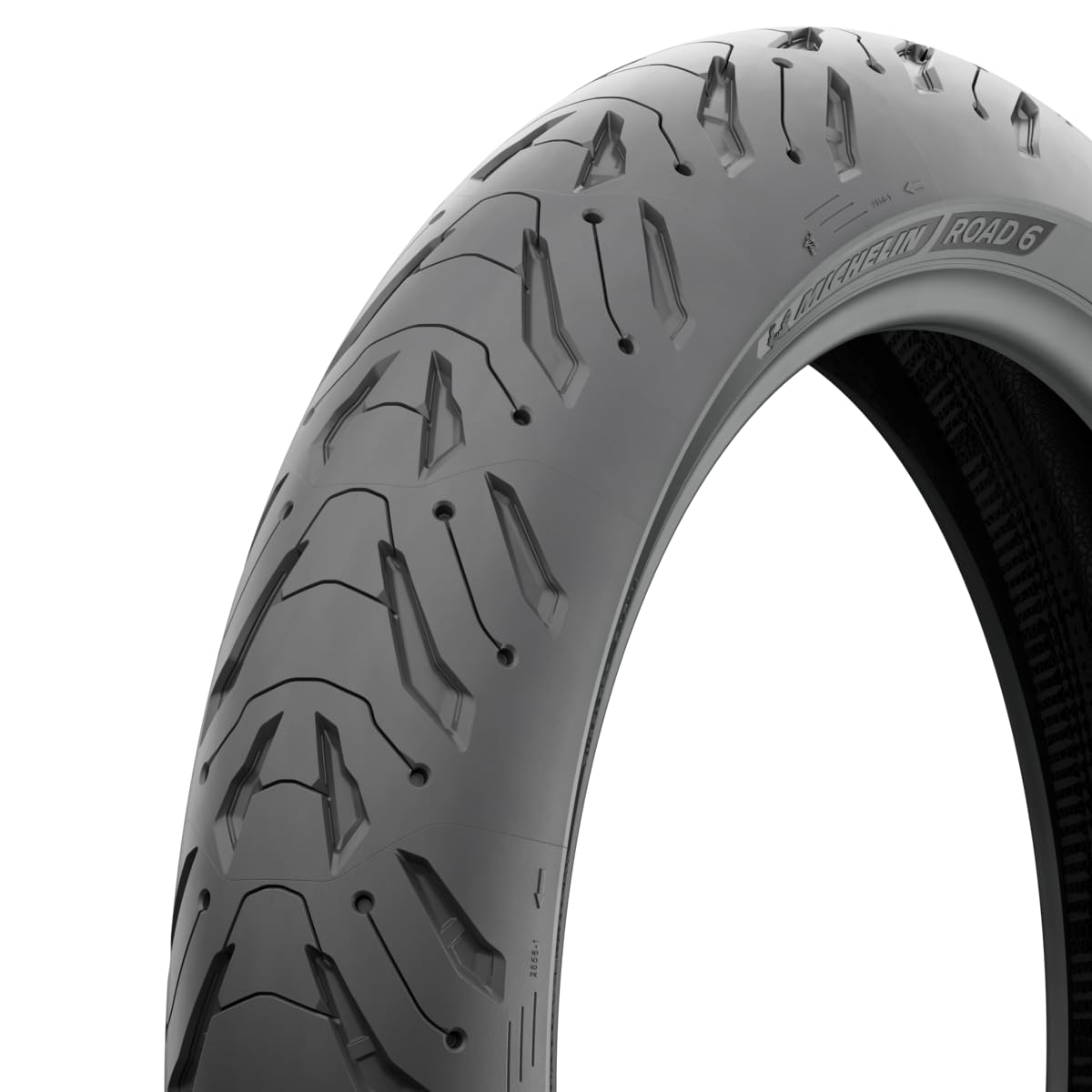
The Michelin Road 6 is the tire that laughs at rain. With a 17-inch radial construction and a W-rated speed index (168 mph), this is a serious piece of rubber for sport-touring and adventure bikes that see more pavement than dirt. Michelin claims a 10% increase in tread life over the Road 5, and early reports from riders confirm that the compound holds up exceptionally well. One user put over 4,000 miles on a CBR600RR and 2,000 on a Ninja 650 with barely visible flattening.
Warm-up is almost instantaneous — the silica-rich compound provides grip from the first turn, even in cold conditions. The 2CT+ technology uses a harder base layer under the tread to prevent deformation at high speeds, while the softer cap maintains wet weather bite. Predictable slides at the track suggest the tire has a progressive breakaway characteristic that inspires confidence. Weight is a light 10.9 pounds, which helps with unsprung mass and steering response.
This is not a tire for fire roads or gravel. The tread pattern is purely road-oriented, and the soft shoulder compound will chunk prematurely on loose surfaces. It also commands a premium price. For riders who encounter relentless rain or prioritize cornering grip above all else, the Road 6 delivers performance that justifies the investment.
Why it’s great
- Best-in-class wet pavement grip with minimal warm-up needed
- Durable compound delivers exceptional mileage for a sport-oriented tire
- Light weight improves steering feel and reduces unsprung mass
Good to know
- Purely a road tire — no off-road capability
- Premium price point
- Soft shoulder compound can wear quickly with improper pressure
4. Continental TKC 80 Twinduro M+S
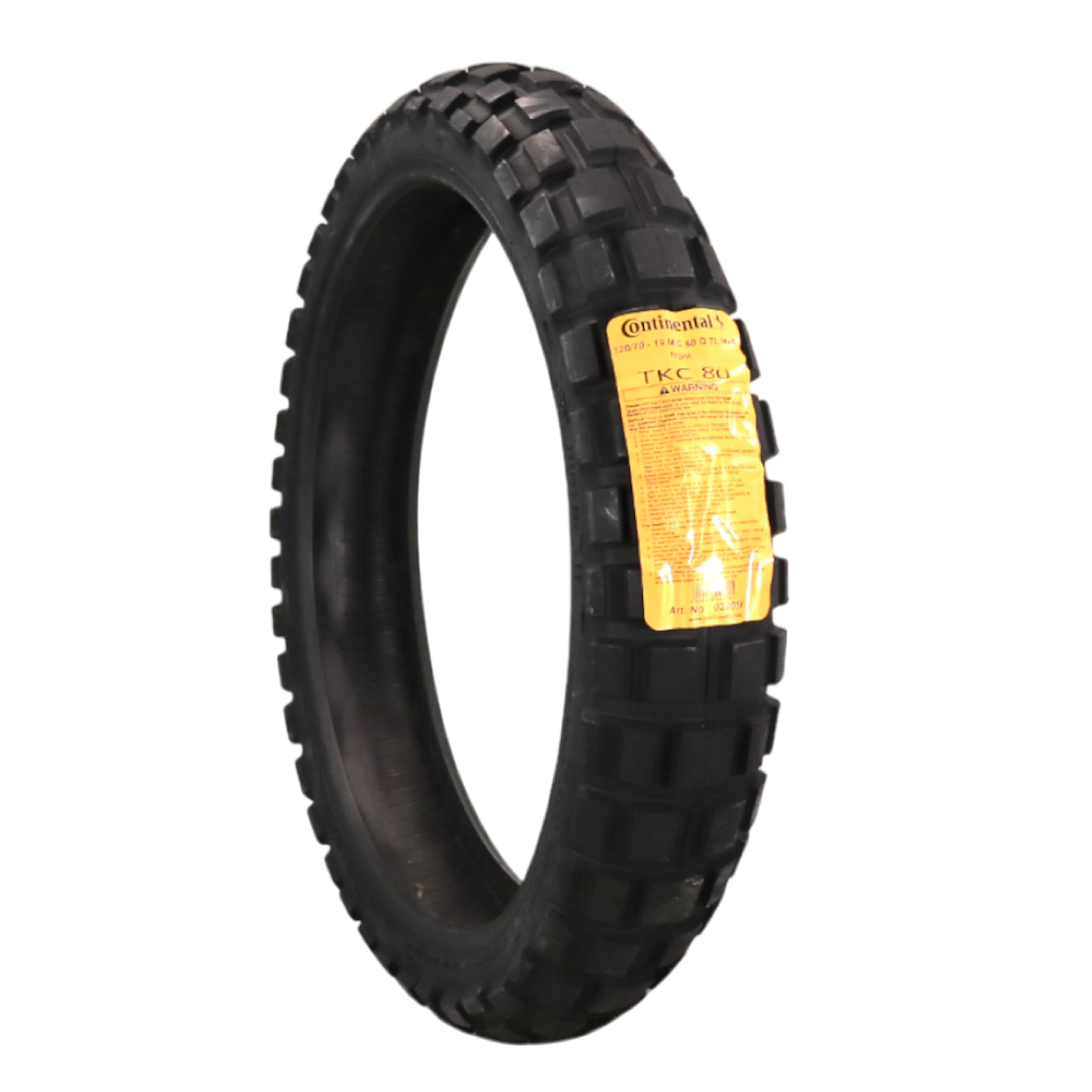
The Continental TKC 80 is a legendary name in adventure touring, and for good reason — it delivers knobby-level off-road bite while remaining DOT-legal for the street. The block-style tread design uses deep, wide-spaced lugs that self-clean in mud and gravel, providing consistent traction on loose terrain. The M+S (Mud and Snow) certification means the rubber compound stays pliable in colder conditions, a real advantage for early-season or high-altitude riding.
On-road behavior is surprisingly civil for such an aggressive tread. Riders on a Harley Davidson Pan America Special reported low road noise and stable handling after 1,000 miles, with no cracking or chunking. The tubeless (TL) design simplifies puncture repair and reduces rotational weight compared to tube-type alternatives. Bias construction gives the TKC 80 a stiff carcass that resists pinch flats when aired down for technical trails.
The Achilles’ heel is tread life. On a heavy bike like the KTM 1090, the rear can be worn out in as little as 2,000 miles due to the soft compound. Even on lighter machines, 3,000 miles is a realistic expectation before replacement. The 551-pound load capacity is adequate for most solo ADV setups but may be marginal for heavily loaded two-up touring. If off-road grip is your priority and mileage is secondary, this is the tire to buy.
Why it’s great
- Exceptional off-road traction in mud, gravel, and loose rock
- M+S certified for cold weather and snow performance
- Tubeless design reduces puncture risk and simplifies repairs
Good to know
- Short tread life — expect 2,000-3,000 miles on heavy bikes
- Soft compound can feel vague on fast highway corners
- Higher road noise than 80/20 tires
5. Bridgestone Battlax Adventurecross AX41
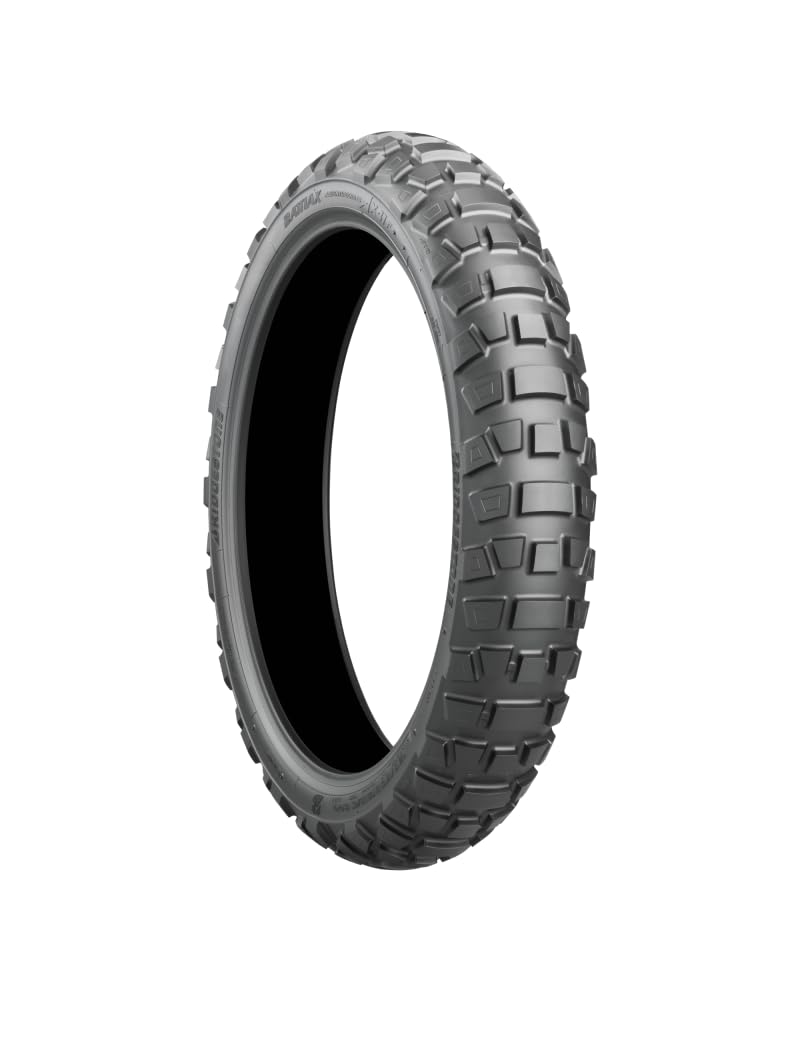
The Bridgestone AX41 is a no-compromise 50/50 tire designed for riders who genuinely split their time between pavement and dirt. The 12-Ply rating is unusually high for a tire in this category, translating to exceptional puncture resistance and the ability to run lower pressures without risking a pinch flat. The block wall angle optimization reduces step wear, a common failure mode where the rear edge of each tread block shears off under hard braking.
Off-road, the AX41 shines on hardpack and gravel, with the tall knobs digging in confidently. On-road, the tire is predictable and stable, though one user noted a slight snappy feeling on a front one size under stock — correct sizing is important. The 400-pound load capacity is moderate, so this tire is better suited to lighter ADV bikes like a scrambler or a mid-weight dual-sport rather than a fully loaded big GS.
Tread life is the biggest concern. Several reviews report the rear wearing out around 3,000 miles on heavier bikes, making the cost per mile relatively high. The tire also produces noticeable vibration at highway speeds due to the aggressive block pattern. If you ride a lighter bike and prioritize off-road bite over mileage, the AX41’s 12-Ply carcass offers a level of durability few competitors match.
Why it’s great
- 12-Ply carcass provides outstanding puncture and pinch flat resistance
- Reduced step wear design extends usable tread life
- Excellent grip on hardpack and gravel terrain
Good to know
- Shorter tread life — around 3,000 miles on heavier bikes
- Moderate load capacity limits heavy touring setups
- Highway vibration is noticeable compared to less aggressive treads
6. Tusk 2Track Adventure Motorcycle Tire Set

The Tusk 2Track is a purpose-built ADV tire set that punches well above its price point. The reinforced knob bases are a standout feature — each tread block is structurally tied to its neighbors, reducing flex and chunking when you’re hammering through rocky sections. The deep, directional knobby tread provides impressive bite in loose dirt and gravel, and the DOT compliance means you can ride straight from the trail to the highway without a swap.
Real-world reviews from KLR 650 riders praise the 2Track for stable highway manners after a short break-in period, with minimal noise compared to typical dual-sport knobbies. The stiff 4-Ply carcass does make mounting a challenge — several users report needing three people or a dedicated tire machine. Once mounted and balanced, the tire runs true with no wobble up to 80 mph. Off-road traction is exceptional, with riders noting no lug shearing even on sharp rocks.
The stiffness that aids off-road durability also has drawbacks. At lower speeds (25-29 mph), some riders notice a vibration from the tread pattern. Fuel economy may dip slightly compared to less aggressive tires due to increased rolling resistance. For riders who prioritize off-road performance and want a set that lasts around 5,000 miles on a 50/50 mix, the Tusk 2Track delivers tremendous value in a single package.
Why it’s great
- Reinforced knob bases prevent chunking in rocky terrain
- Excellent off-road bite with stable highway manners
- Good value for a matched front and rear set
Good to know
- Stiff carcass makes mounting difficult without specialized tools
- Noticeable low-speed vibration from the aggressive tread pattern
- Slightly lower fuel economy than less aggressive tires
7. MICHELIN Road 5 Touring Radial

The Michelin Road 5 set the benchmark for wet weather performance when it launched, and it remains a top-tier choice for adventure touring riders who prioritize rain confidence. The patented XST Evo siping technology creates microscopic biting edges that cut through water film, allowing the tire to maintain contact even in standing water. Michelin’s own testing showed the Road 5 stops as short at 3,500 miles as a new Pilot Road 4 — a testament to the durability of the compound evolution.
Riders report instant grip even in cold rain, with no warm-up required. The ACT+ casing technology provides a larger, more consistent contact patch under lean, which translates to confident cornering on wet pavement. The 73W load rating (890 pounds) makes this tire suitable for heavy touring bikes, and real-world mileage reports from BMW R1100RT riders show 13,000 miles from a set — outstanding for a sport-oriented radial.
The Road 5 is strictly a road tire. There is no off-road capability, and the soft edge compound will chunk immediately on gravel. The 17-inch diameter and wide profile limit fitment to bikes with sportier wheel sizes. For the adventure rider who sticks to pavement but wants the absolute best wet grip on the market, the Road 5 remains a compelling choice even against newer competitors.
Why it’s great
- Benchmark wet grip with XST Evo siping technology
- Exceptional tread life — up to 13,000 miles reported
- Large contact patch provides stable cornering in all conditions
Good to know
- Zero off-road capability — pavement only
- Premium price point
- Only available in 17-inch sizes with wide profiles
8. Tusk Dsport Adventure Motorcycle Tire Set

The Tusk Dsport Adventure tire set offers surprisingly aggressive off-road capability at a price that undercuts most competitors by a significant margin. The 10-Ply carcass is overbuilt for the category, providing a level of puncture resistance typically found on heavier dual-sport machines. The tall knobbies are spaced for self-cleaning in mud and dirt, and the DOT rating ensures the tire is legal for highway use.
Reviews from riders who tackled rocky climbs and loose dirt report excellent traction with no chunking after thousands of miles. The stiff 10-Ply construction does create a harsh ride on pavement — one reviewer noted a “slight wiggle” when new that smoothed out after break-in. Highway stability is acceptable up to 70-80 mph, though balancing may require multiple weights due to the heavy carcass. The 992-pound load capacity is massive, easily supporting a fully loaded ADV bike and passenger.
The trade-offs are real. Ride quality on pavement is less refined than premium options, and the tire’s weight is noticeable during low-speed maneuvering. Install requires patience — the stiff sidewalls are difficult to mount with standard tire spoons. For riders who prioritize off-road toughness and budget, the Tusk Dsport is an unbeatable value that punches far above its price class.
Why it’s great
- 10-Ply carcass provides exceptional puncture resistance
- Aggressive knob pattern delivers genuine off-road bite
- Highest load capacity in the test at 992 pounds
Good to know
- Harsh ride quality on pavement compared to premium tires
- Difficult to mount due to stiff carcass
- May require significant wheel weights for proper balance
9. Shinko Dual Sport 705 Series Tire

The Shinko 705 is the tire that proves you don’t need to spend a fortune to get reliable adventure touring performance. The aggressive tread pattern — more aggressive than stock IRCs on many entry-level ADV bikes — provides solid adhesion on both wet and dry pavement while offering genuine capability on loose dirt and gravel. The bias-ply construction with a 41 PSI max pressure gives you a wide inflation range to tune for different loads and terrain.
Real-world durability is impressive. One KTM ADV 250 rider reported 30,000 km (roughly 18,600 miles) on a set, with no chunking or air loss despite hard pothole impacts. Another Shinko veteran noted that a previous 804/805 set lasted 15,000 miles. The compound resists tearing off-road, and the 639-pound load capacity handles a weekend’s worth of camping gear without complaint. At 14 pounds, it’s on the heavier side, but the rotating mass is acceptable for the price.
The ride quality is where the Shinko 705 shows its budget roots. One reviewer who had used multiple Shinko sets noted that this model has a “less than spectacular ride quality” compared to previous versions, with a harsher feel on pavement. Off-road performance in mud is poor — the tread spacing isn’t aggressive enough for deep muck. For the budget-conscious rider who rides mostly pavement and fire roads, the Shinko 705 delivers exceptional value per mile.
Why it’s great
- Exceptional value with reported mileage over 15,000 miles
- Good wet and dry pavement grip for an aggressive tread
- Resists tearing and chunking during light off-road use
Good to know
- Ride quality is noticeably harsher than premium competitors
- Poor performance in mud and deep soft terrain
- Heavier than similar-sized tires from premium brands
FAQ
How do I know if I need a 50/50 or 80/20 adventure tire?
Can I run different tire types on the front and rear?
What air pressure should I run for adventure riding?
Final Thoughts: The Verdict
For most riders, the adventure touring tires winner is the Dunlop Trailmax Mission because it strikes the best balance of on-road stability, off-road bite, and tread life across a wide range of bike sizes and riding styles. If your priority is wet pavement confidence and you’re staying on the road, grab the MICHELIN Road 6. And for aggressive off-road riding on a budget, nothing beats the Tusk 2Track set.