
When a piece of food or a small object locks the airway, every second compresses into a brutal countdown. Standard back blows and abdominal thrusts remain the first line of defense, but when those fail, a dedicated suction device becomes the mechanical backup that can clear the obstruction without relying on chest compression force. These devices use a one-way valve system or a powered pump to create negative pressure, pulling the blockage out of the trachea in a single, controlled motion. The right unit delivers reliable suction exactly when panic is highest, and choosing the wrong one means risking unreliable performance at the worst possible moment.
I’m Min — the co-founder and writer behind Gadgets Feed. I’ve spent many hours researching the physics of airway clearance, analyzing the one-way valve resistance ratings, negative pressure specs, and mask seal tolerances across home-use and professional-grade models to build this guide.
Whether you need a backup in your kitchen, a portable unit for your car, or a high-capacity machine for post-surgical care at home, the best anti-choke suction device must deliver consistent negative pressure with fail-safe simplicity when every second counts.
How To Choose The Best Anti-Choke Suction Device
The difference between a device that saves a life and one that fails in the moment comes down to four core factors: valve integrity, mask seal geometry, portability, and pressure consistency. Manual devices rely entirely on your pull strength and a one-way valve that must not leak; electric units depend on a motor-pump system that must sustain negative pressure without overheating. Every choice trades off between immediate readiness and continuous-suction capability.
One-Way Valve Design and Cross-Contamination
The valve is the single most critical component in any manual anti-choke suction device. A high-efficiency, low-resistance valve allows air to flow out but instantly blocks reverse airflow, preventing any expelled material from reaching the rescuer. Models that include a disposable filter or a replaceable valve cartridge provide a higher standard of hygiene. Look for valves rated for single-patient use — reusing a valve can introduce moisture degradation that compromises the seal during a future emergency. The best designs let you visually confirm the valve flap is seated correctly before applying suction.
Mask Seal and Anatomical Fit
An air leak around the mask destroys the negative pressure you need to extract an obstruction. Soft, air-cushioned edges conform better to facial contours, especially on children or elderly individuals with reduced muscle tone. Adult masks typically have a wider sealing cuff designed to cover both nose and mouth, while pediatric masks use a smaller diameter to fit a child’s face. Some kits include a convertible mask that can be rotated — narrow end over the nose for adults or over the chin for small children. A mask that includes an elastic head strap reduces the need for constant hand pressure, freeing both hands to stabilize the patient’s head or operate a secondary device.
Power Source and Continuous Operation
Manual suction devices like the LifeVac require no batteries or electricity — they are always ready and never fail due to a dead battery. This makes them ideal for kitchen drawers, glove compartments, and diaper bags. Electric units, such as veterinary or portable suction machines, provide continuous suction that can clear ongoing secretions, phlegm, or saliva in post-surgical or bedridden patients, but they require a wall outlet and have duty cycles — typically 30 minutes of use followed by a cooldown period. Electric models are heavier and louder but deliver measurable negative pressure (measured in MPa or PSI) that you can adjust with a control knob. For pure choking emergencies, manual is simpler and more reliable; for ongoing airway maintenance, electric wins.
Kit Completeness and Storage
A complete anti-choke kit should include the mask, a one-way valve, a hard storage case, and optionally gloves and antiseptic wipes. Hard cases protect the mask from deformation that can compromise the seal, especially if stored inside a backpack or vehicle compartment. Belt clips and wall mounts add convenience for workplaces, daycares, or kitchens where quick access matters. Multi-pack options allow you to station a device in every room or vehicle without worrying about locating a single unit during a crisis. Confirm that replacement valves and masks are available for purchase separately — some proprietary designs lock you into the manufacturer’s supply chain.
Quick Comparison
On smaller screens, swipe sideways to see the full table.
| Model | Category | Best For | Key Spec | Amazon |
|---|---|---|---|---|
| LifeVac Home Kit | Suction Rescue | Battery-free emergency backup | One-way non-rebreathing valve | Amazon |
| NOVAMEDIC CPR Mask Kit | CPR Pocket Mask | Adult, child, and infant coverage | Dual-mask adult + child/infant sizes | Amazon |
| Primacare RS-6845-5 Pack | Multi-Pack CPR | Stocking multiple locations | 5 single-valve masks with red cases | Amazon |
| WNL Products 5-Pack | Training + Rescue | Daycare and classroom readiness | Belt-clip hard case, duck-bill valve | Amazon |
| GROWNSY Electric Nasal Aspirator | Pediatric Nasal | Infant and toddler congestion | 9 adjustable suction levels | Amazon |
| Portable Veterinary Suction 1000ml | Electric Suction | Post-surgery or high-volume phlegm | 0.07 MPa negative pressure, 1L tank | Amazon |
| WAn2SHI0SY22 Suction Machine | Home Electric | TMJ recovery or tracheostomy care | 1L detachable container, speed dial | Amazon |
In‑Depth Reviews
1. LifeVac Home Kit
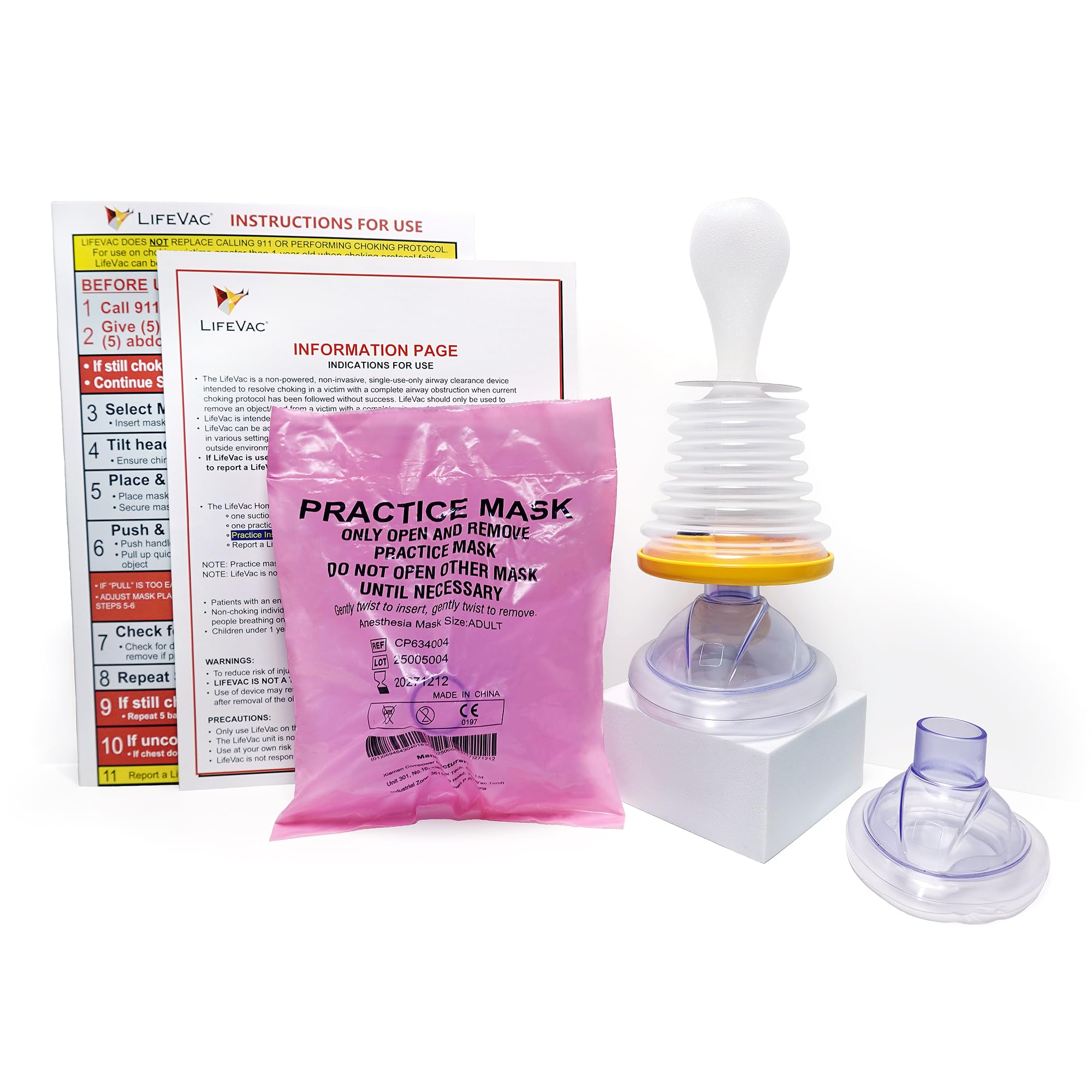
The LifeVac is the category-defining manual suction rescue device, trusted by families and medical professionals worldwide and credited with thousands of documented saves. Its core mechanism is elegantly simple: you place the mask over the nose and mouth, push down to create a seal, and pull back — the one-way non-rebreathing valve prevents air from returning, generating a vacuum that pulls the obstruction out. No batteries, no motors, no charging — it sits on the shelf for years and works instantly when you need it.
The kit includes two mask sizes: one for adults and one for children ages one year and older. The valve design incorporates a filter to protect the rescuer from cross-contamination, and the whole unit weighs just 6.7 ounces, making it easy to keep in a kitchen drawer, glove compartment, or diaper bag. The manufacturer strongly recommends watching the training video before an emergency occurs, but the physical operation is intuitive enough that a calm caregiver can follow the printed instructions under pressure.
No other device in this category balances zero-maintenance readiness, proven real-world effectiveness, and dual-age coverage as cleanly as the LifeVac. The only reason to look elsewhere is if you need continuous electric suction for ongoing secretion management, which this manual device cannot provide. For pure choking emergencies, this is the benchmark.
Why it’s great
- Always ready with no batteries or electricity
- Proven track record with thousands of documented saves
- Includes both adult and pediatric masks in one compact kit
Good to know
- Higher initial cost compared to basic CPR mask kits
- Replacement masks and valves must be purchased separately over time
2. NOVAMEDIC First Aid CPR Mask Kit

The NOVAMEDIC kit delivers exceptional value by including two distinct masks — one adult and one designed for child/infant use — in a single compact kit, giving you more anatomical coverage than most single-mask packs at this level. The adult mask features a soft air-cushion edge for leak-free performance, and the detachable single one-way valve is replaceable, extending the kit’s usable life far beyond disposable alternatives.
The hard case measures 8.3 by 5 by 3.1 inches and includes a wall mount on the top, allowing you to hang it inside a cabinet, near a dining table, or in a daycare classroom. A pair of vinyl gloves is included in the case, reinforcing the infection-control intent of the kit. The elastic head strap keeps the mask securely positioned on the patient’s face, which is particularly useful during transport or when the rescuer needs both hands for other tasks.
Reviewers consistently note the kit meets health code compliance standards, making it a strong choice for facilities that require documented first-aid equipment. The trade-off is that the valve is not a dedicated suction-rescue mechanism like the LifeVac — it is designed primarily for rescue breathing during CPR, not for actively pulling a solid obstruction out of the airway. In a pure choking emergency, you would use it as a barrier mask after the airway is cleared, not as a primary extraction tool.
Why it’s great
- Includes separate adult and child/infant masks for full age coverage
- Hard case with wall mount stores neatly in any room
- Replaceable one-way valve extends the kit’s useful life
Good to know
- Designed as a CPR barrier mask, not a dedicated suction extraction device
- No pediatric-specific suction feature for infant choking
3. Primacare RS-6845-5 Pack

The Primacare 5-pack solves the logistics problem of having only one rescue device when you own multiple vehicles or have several rooms that need coverage. Each of the five units includes a red hard case, a single-valve CPR mask with air-cushioned edges, and an elastic strap. The per-unit cost drops significantly compared to buying individual masks, making this the most efficient way to stock a large household, a small office, or a motorcycle riding group.
The mask itself uses a low-resistance one-way valve designed to prevent cross-contamination during rescue breathing. The air-cushioned edges provide a decent seal on adult faces, but the mask is primarily a CPR barrier rather than a suction extraction device. The hard cases are compact enough — 6.5 by 4.8 by 1.6 inches — to fit inside a glove compartment, a saddlebag, or a desk drawer without taking up much space. The elastic strap is latex-free, which matters for allergy safety during emergency use.
Buyers who purchased this pack for vehicle distribution or motorcycle kits report satisfaction with the compact form factor and the confidence of having a barrier mask within arm’s reach. The limitation is clear: this is a CPR mask kit, not a dedicated anti-choke suction device. If your primary goal is a tool to physically pull a lodged object from the trachea, you would want a device with a more aggressive vacuum mechanism. But if you need a reliable, affordable, and widely distributed set of barrier masks for rescue breathing, the value here is unmatched.
Why it’s great
- Five complete kits in one package for multi-location coverage
- Compact hard case fits in glove compartments and saddlebags
- Latex-free air-cushioned edges improve seal comfort
Good to know
- Valve is designed for rescue breathing, not active suction extraction
- Case size may be too large for a standard pants pocket
4. WNL Products 5-Pack
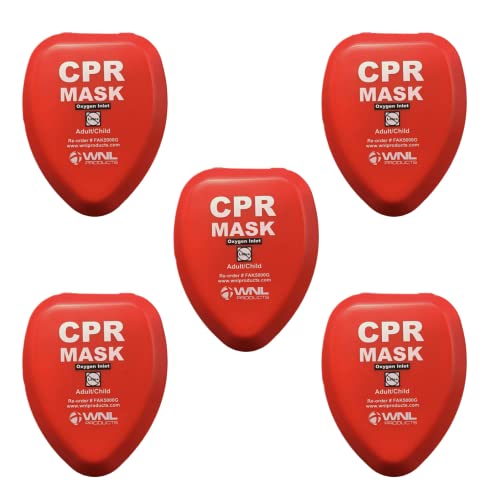
WNL Products brings a training-rooted perspective to its 5-pack CPR mask kit — the company is a leading supplier of CPR training equipment, so the masks are designed to work with manikins during practice as well as on real patients during emergencies. Each kit includes the mask, a one-way disposable valve with a filter, a pair of nitrile gloves, an antiseptic wipe, and an instruction sheet, all packed inside a hard red case with a belt clip.
The duck-bill valve shape is a distinct design choice — it provides a positive seal when placed correctly, and the instruction sheet explicitly explains how to rotate the mask for adult versus child use: narrow end over the nose for adults, narrow end over the chin for small children. The elastic head strap is latex-free and attached directly to the mask. Cleaning the mask involves a 10-minute soak in a 64:1 water-to-bleach solution, and the valve must never be reused after a real patient contact — it must be discarded and replaced.
This kit shines in group settings like daycares, schools, or gyms where multiple staff members need to be equipped simultaneously. The belt clip makes it easy for a lifeguard or safety officer to carry the mask during a shift. The primary drawback is that the sealing cuff could be more inflated — several users noted that the air cushion is less pronounced than on premium kits, which may require a firmer hand press to achieve a leak-free seal on certain facial anatomies.
Why it’s great
- Belt-clip hard case for on-person carry during shifts
- Duck-bill valve design works for both adult and child positioning
- Can be used for manikin training in addition to real emergencies
Good to know
- Sealing cuff is less inflated than premium alternatives
- Valve must be discarded after single patient use
5. GROWNSY Electric Nasal Aspirator

The GROWNSY aspirator is a hospital-grade electric nasal suction device designed specifically for clearing mucus and nasal congestion in infants and toddlers. While it is not a choking rescue device in the traditional sense — it cannot extract a solid food obstruction from the lower airway — it excels at managing the thick nasal secretions that often accompany respiratory illnesses like RSV, where suctioning the nose can dramatically improve breathing, feeding, and sleeping for a congested baby.
The device features nine adjustable suction levels, allowing you to start at the gentlest setting and increase only as needed. Two ultra-soft silicone tips in different sizes are included to fit varying nostril sizes. The built-in night light and soothing lullabies help calm a fussy baby during the process, which is a thoughtful addition for middle-of-the-night congestion relief. The suction chamber and tips are fully detachable for easy cleaning with soap and water, and the unit charges via USB-C.
Parents who have used both manual bulb syringes and the GROWNSY report that the electric pump clears congestion in seconds versus the frustratingly slow and messy process of manual suction. The suction is strong enough that levels above five may startle a sensitive child, but the range of adjustment means you can find the baby’s comfort threshold. The lack of a dedicated storage compartment for the extra silicone tips is a minor inconvenience. For infant nasal congestion management, this is a premium tool that outperforms every manual alternative.
Why it’s great
- Nine adjustable suction levels for fine-tuned comfort
- Night light and lullabies soothe baby during use
- USB-C charging and fully washable chamber
Good to know
- Designed for nasal mucus, not solid airway obstructions
- No storage compartment for extra silicone tips
6. Portable Veterinary Suction Machine 1000ml
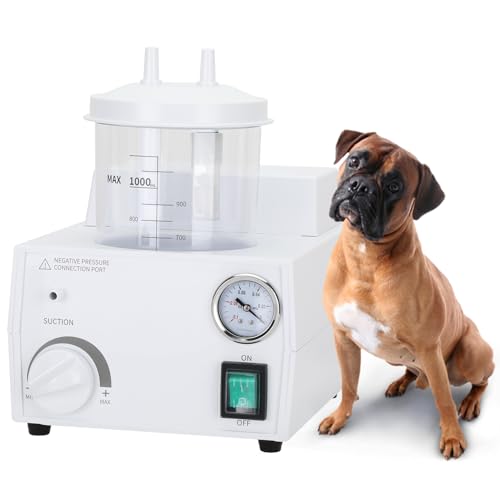
This electric suction machine delivers a rated negative pressure of 0.07 MPa from a 110V power source, making it a legitimate continuous-suction option for home use — not just for pets, but also for human patients who need regular airway clearance due to neurological conditions, post-surgical recovery, or excessive secretions. The 1-liter detachable collection container is large enough for multiple suction sessions before needing emptying, and the transparent construction allows you to monitor the volume and consistency of the material being removed.
The one-key operation simplifies startup, and a pressure adjustment knob lets you dial in the suction strength. The motor is loud — reviewers describe it as “really loud” — which is expected from a machine at this price point with a pump capable of moving 11 liters per minute. The unit measures roughly 9.6 by 7.7 by 9.25 inches and weighs nearly 9 pounds, so it is portable only in the sense that you can carry it from room to room, not in a pocket or backpack. The manufacturer specifies a 30-minute to 1-hour continuous runtime before a cooldown period is required.
For caregivers managing a patient with a tracheostomy or a brain injury that causes excessive drooling or phlegm production, this machine provides mechanical relief that manual suction cannot match. The main risk is reliability inconsistency — a small number of units have arrived with weak suction or have failed after a few uses. Customer support is responsive according to reviews, but the variance means you should test the unit immediately upon arrival and within the return window. If it works, the suction power is genuinely impressive for the price.
Why it’s great
- Strong 0.07 MPa negative pressure for effective clearance
- Large 1L detachable container for high-volume use
- Adjustable pressure dial for fine control
Good to know
- Loud operation may disturb patient or bystanders
- Requires 30-minute cooldown after extended use
7. WAn2SHI0SY22 Suction Machine 1000ml

This white electric suction machine is nearly identical in spec to the previous veterinary unit — same 0.07 MPa negative pressure, same 1-liter detachable container, same 110V requirement — but with a slightly different body design and a speed control knob that reviewers found intuitive for dialing in suction strength. The unit is constructed from ABS and alloy steel, giving it a sturdier feel than the all-plastic alternatives, and the inlet connection is a standard 0.25-inch size, making it compatible with various suction catheter types.
Patients recovering from TMJ surgery, where excessive drooling is a temporary but intense problem, have found this machine invaluable for reducing tissue waste. One reviewer used it with a 2000ml collection cup upgrade from a medical supply company, which worked seamlessly. The device is not smart-home compatible and has no advanced features — it is a straightforward pump, container, tube, and power cord setup. The instructions note a half-hour to one-hour runtime before switching off to let the machine cool, which is consistent with diaphragm pump limitations at this price.
Reliability is the primary question mark. Several buyers reported that the unit stopped working after a few weeks or overheated after 15 minutes during initial testing. The return window is your safeguard — you should run a 20-minute continuous test immediately after unboxing. For pet owners managing a dog or cat with a tracheostomy, this machine provides an accessible at-home solution that a veterinary clinic would normally provide. It works well when it works, but the quality control is inconsistent, making it a budget-friendly gamble rather than a guaranteed performer.
Why it’s great
- ABS/alloy steel construction feels more durable than plastic-only units
- Speed dial knob for easy suction adjustment
- Compatible with standard 0.25-inch suction tubing
Good to know
- Some units overheat or fail within weeks of purchase
- Loud motor operation during continuous use
FAQ
Can a CPR mask kit like the NOVAMEDIC or Primacare be used to suction a solid choking obstruction?
How does the LifeVac differ from the Dechoker or other suction devices?
Are electric veterinary suction machines safe for human use in a choking emergency?
What is the correct cleaning protocol for an anti-choke suction device after use?
At what age can I use a LifeVac on my child?
Final Thoughts: The Verdict
For most users, the best anti-choke suction device winner is the LifeVac Home Kit because it offers battery-free reliability, dual adult/child masks, and a proven real-world track record of thousands of saved lives in pure choking emergencies. If you want continuous electric suction for managing post-surgical or neurological secretions, grab the Portable Veterinary Suction Machine. And for stocking multiple vehicles, rooms, or a daycare center with affordable barrier masks, nothing beats the WNL Products 5-Pack.