
There is nothing worse than dropping into a steep chute only to have your world turn into a milky white blur because your goggles have fogged up. That moment of forced stop, peeling layers off your face, wiping a damp lens with your glove—it breaks the rhythm of a perfect run. Fogging is the single most frustrating and dangerous issue in snow sports, because when you can’t see the terrain, you can’t react. Whether you’re carving groomers, chasing powder in the trees, or lapping the park, a reliable anti-fog system isn’t a luxury; it’s a fundamental safety requirement.
I’m Min — the co-founder and writer behind Gadgets Feed. I’ve spent countless hours analyzing lens coatings, ventilation channel designs, and frame architecture to find which models actually deliver on their no-fog promises across varying temperatures and exertion levels.
After combing through technical specs, customer experiences, and real on-mountain performance data, I’ve narrowed the field to the absolute best performers. Here is my definitive guide to the best anti-fog snowboard goggles for clear vision in every condition.
How To Choose The Best Anti-Fog Snowboard Goggles
Not all “anti-fog” claims are equal. A cheap coating wears off after a few wipes, leaving you stranded in a cloud. The real determinant of fog resistance is the lens construction and the ventilation architecture of the frame. Before you click buy, focus on these three critical factors.
Lens Construction: Spherical vs Cylindrical
A spherical lens curves both horizontally and vertically, creating an air gap that mimics a double-pane window. That sealed air space acts as a thermal barrier, preventing the inner lens from reaching the dew point. Cylindrical lenses curve only horizontally and have less internal volume, making them more prone to condensation. For serious anti-fog performance, always prioritize a spherical dual-pane lens.
Ventilation and Frame Design
Passive ventilation channels integrated into the frame allow moist, warm air to escape upward without letting snow or wind blast directly onto your eyes. Look for goggles with foam venting along the top edge of the frame and a sealed thermal layer against the face. Some premium models use a silicone-lined strap that also channels airflow over the lens.
OTG (Over-the-Glasses) Compatibility
If you wear prescription glasses, the internal volume of the goggle becomes even more critical. An OTG-compatible frame must have extra depth to avoid pushing the glasses into your nose and additional clearance to prevent the glasses from touching the inner lens. Increased air volume inside OTG goggles also reduces temperature differential, directly lowering fog risk for spectacle wearers.
Quick Comparison
On smaller screens, swipe sideways to see the full table.
| Model | Category | Best For | Key Spec | Amazon |
|---|---|---|---|---|
| OutdoorMaster Falcon | Premium | Maximum optical clarity | ZEISS spherical dual-pane lens | Amazon |
| Oakley Flight Deck L | Premium | Low-light performance | Prizm lens technology | Amazon |
| Wildhorn Pipeline | Mid-Range | Large heads & OTG fit | Ultra-wide spherical lens | Amazon |
| SMITH Squad ChromaPop | Mid-Range | Color contrast enhancement | ChromaPop cylindrical lens | Amazon |
| Wildhorn Roca Pro | Mid-Range | Wide 185° FOV | Magnetic swap spherical lens | Amazon |
| Spy Optics Crusher Elite | Budget-Friendly | Light use & value | RISE ventilation system | Amazon |
| Giro Cruz | Budget-Friendly | OTG on a budget | EXV cylindrical lens | Amazon |
In‑Depth Reviews
1. OutdoorMaster Falcon Ski Goggles Lens by ZEISS
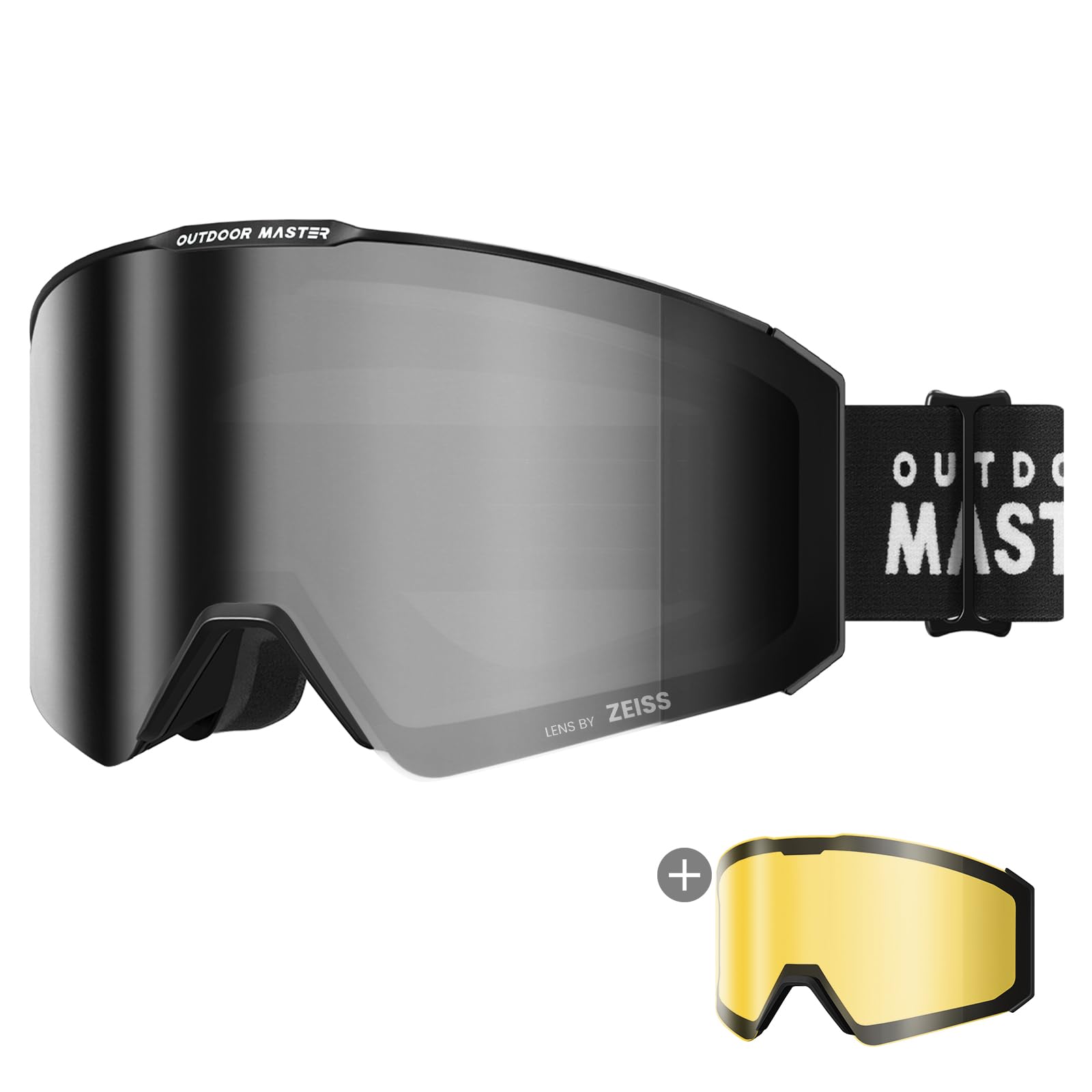
The OutdoorMaster Falcon sits at the top of this list because it combines a genuine ZEISS spherical dual-pane lens with a magnetic interchangeable system at a price that undercuts the legacy ski-goggle brands. The ZEISS lens delivers exceptional optical clarity — edge-to-edge sharpness with zero distortion — and the dual-pane construction creates a thermal barrier that effectively prevents the internal lens from reaching the condensation point. Reviewers who ski 75 days per year report zero fogging across multiple seasons.
The frame uses strong neodymium magnets for lens swaps, letting you switch from a low-VLT mirrored lens for bright sun to a high-VLT clear lens for flat light or night riding in under five seconds. The OTG-compatible frame fits comfortably over prescription glasses without pressure on the nose bridge, and the silicone-lined strap keeps everything planted even during high-speed carving. The extra lens included in the package makes this a true all-conditions solution.
A handful of reviewers noted that the lens can trap moisture between the dual panes in extreme humidity or when transitioning rapidly from cold to a warm lodge, requiring a brief airflow pause to clear. The strap color is more vivid than the product images suggest, which may not appeal to everyone who prefers a stealth look. Still, for the combination of ZEISS optics, true anti-fog performance, and magnetic convenience, this is the most well-rounded package you can buy.
Why it’s great
- ZEISS spherical dual-pane lens eliminates fogging for high-exertion days
- Magnetic lens swap is fast and secure with strong magnets
- Included second lens covers bright and low-light conditions
Good to know
- Lens can trap internal moisture in extreme humidity transitions
- Strap color is brighter than online photos suggest
- Additional ZEISS replacement lenses are hard to find separately
2. Oakley Flight Deck L Snow Goggle
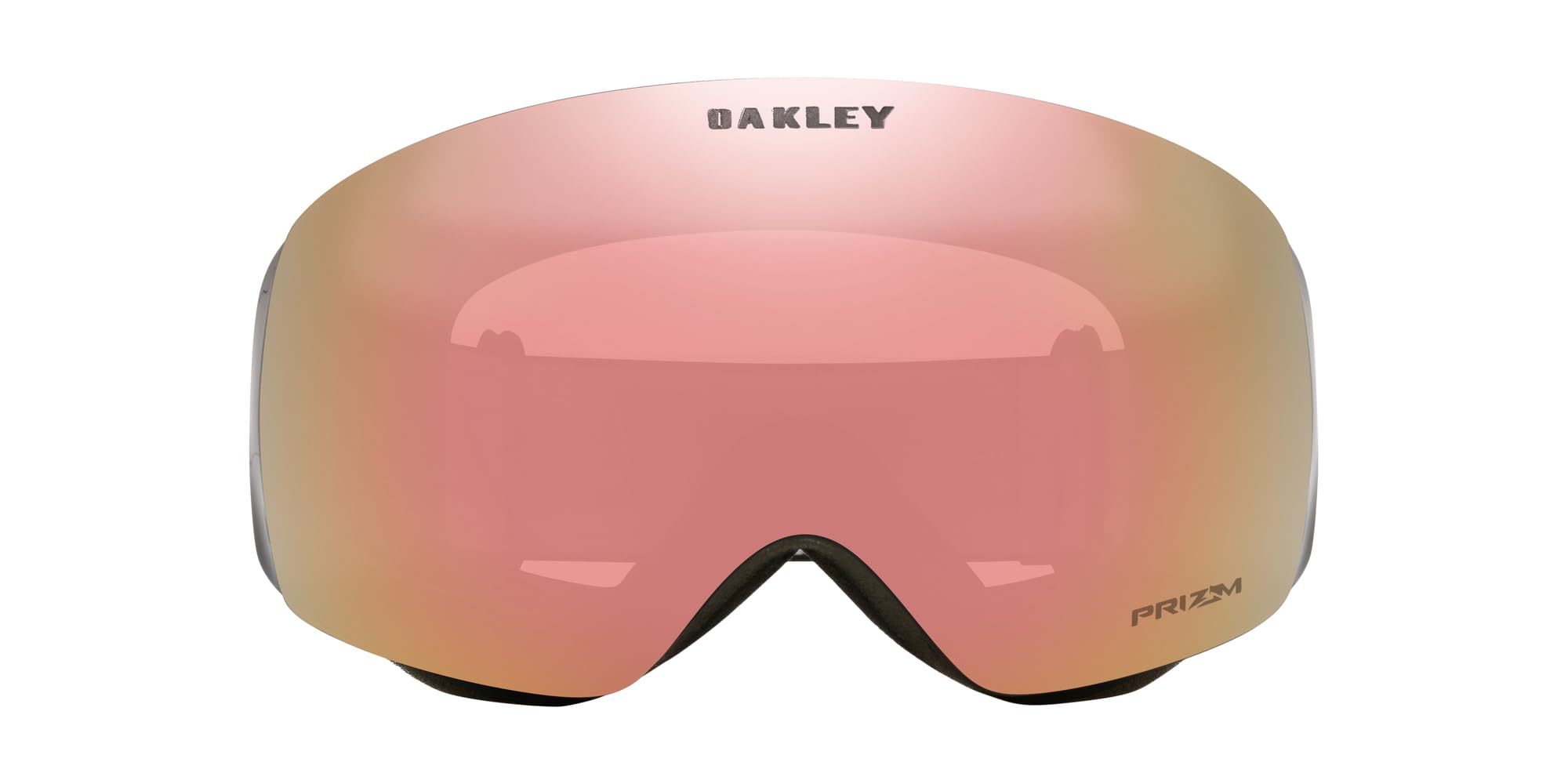
The Oakley Flight Deck L is the gold standard for low-light performance thanks to the proprietary Prizm lens technology, which fine-tunes color contrast to make snow texture, moguls, and subtle terrain features pop in flat, overcast light. The large spherical lens provides an enormous field of view with minimal frame intrusion, and the dual-vented lens design channels moist air upward through the top foam while blocking wind entry. Owners consistently call it “truly fog-free” even while wearing a face mask that directs warm breath upward.
The frame is specifically designed for OTG users, with extra internal volume that accommodates most prescription frames without pushing them into the face. The strap features a wide silicone strip that grips helmet shells securely, and the overall build quality — from the flex of the frame to the rigidity of the hinge — feels premium in hand. The Prizm Black Iridium lens handles bright sun and overcast conditions equally well, though the lens is extremely expensive to replace if scratched.
While the anti-fog performance is exceptional for most users, a small number of high-intensity skiers report occasional internal condensation after sustained exertion in very cold temperatures. The replacement lens cost is steep, making these goggles a larger long-term investment if you frequently swap tints or are prone to drops. Despite the price premium, the optical clarity and fog-free reliability make this the choice for riders who demand the absolute best visual experience.
Why it’s great
- Prizm lens technology dramatically enhances terrain definition in flat light
- Large internal volume fits prescription glasses comfortably
- Excellent scratch resistance survives rough use and gravel contact
Good to know
- Replacement Prizm lenses are very expensive
- Some users get slight fog during very high-intensity runs
- Frame is large; may not fit smaller face shapes well
3. Wildhorn Pipeline Ski Goggles
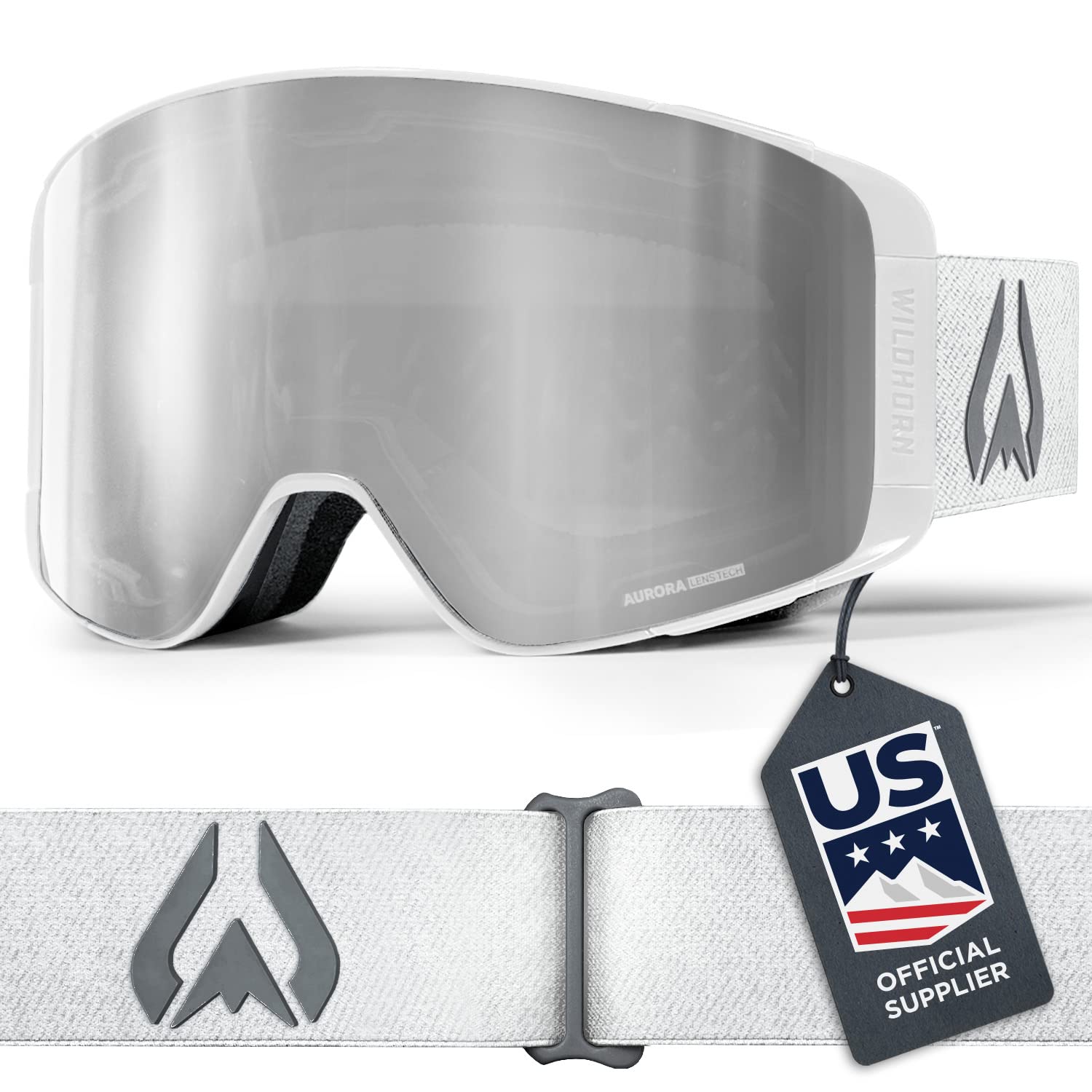
The Wildhorn Pipeline is designed from the ground up for riders with larger head shapes or those who want maximum peripheral awareness. The ultra-wide spherical lens delivers a field of view that extends well into your peripheral vision, reducing the need to turn your head to scan the terrain. The dual-pane thermal construction is paired with a ventilated frame that channels moisture out effectively, and the included magnetic/snap hybrid lens retention system is both quick and reassuringly secure.
OTG compatibility is built into the oversized frame, providing ample clearance for bulky prescription frames without pressing on the nose. The adjustable strap features a wide silicone strip and fits comfortably over helmets from brands other than Wildhorn. The package includes a protective carrying bag and an eco-friendly box, and the lens swap mechanism uses strong magnets that prevent accidental drops even when swapping with frozen fingers.
The oversized nature of the frame is a double-edged sword: riders with average or smaller face shapes report that the goggles feel large and push slightly on the nose. A few users also mention that the frame can press against the bridge of the nose when worn over glasses, requiring careful positioning. For larger heads, however, the Pipeline is one of the most comfortable and fog-free options available at its tier.
Why it’s great
- Ultra-wide spherical lens offers best-in-class peripheral vision
- Magnetic/snap hybrid lens swap is secure and fast
- Excellent for large head shapes and over-helmet fit
Good to know
- Oversized frame may feel bulky on average or smaller faces
- Can press against the nose when worn over glasses
- Facemask accessory sold separately
4. SMITH Squad Goggles with ChromaPop Lens

SMITH’s ChromaPop lens technology is the standout feature of the Squad, filtering specific wavelengths of light to increase color contrast and definition without distorting natural hues. Snow texture, ice patches, and subtle rolls in the terrain become noticeably more visible compared to standard tinted lenses, especially in overcast or flat-light conditions. The Squad uses a cylindrical dual-pane lens, which provides excellent fog resistance through a sealed thermal barrier and a responsive airflow vent system.
The fit is a medium-sized frame that works well for normal head shapes, and the adjustable strap with a silicone strip ensures the goggle stays locked to the helmet. Lens interchangeability is straightforward, and the package includes a second low-light lens for dim days. Reviewers consistently praise the panoramic field of view and the complete absence of blind spots, as well as the reliable anti-fog performance across a wide range of temperatures.
Being a cylindrical lens rather than a spherical one, the internal air volume is slightly smaller, which means in extreme humidity or during very high-exertion runs, some users experience minor condensation that takes a moment to vent. The included low-light lens is less effective than dedicated storm lenses from premium brands. For the rider who prioritizes color and terrain definition over maximum peripheral view, the Squad is a top-tier choice.
Why it’s great
- ChromaPop lens dramatically improves snow texture and contrast
- Panoramic field of view with no blind spots
- Includes a second low-light lens for varying conditions
Good to know
- Cylindrical lens has smaller internal volume than spherical designs
- Minor condensation possible during very high exertion
- Low-light lens performance is adequate but not top-tier
5. Wildhorn Roca Pro Ski Goggles
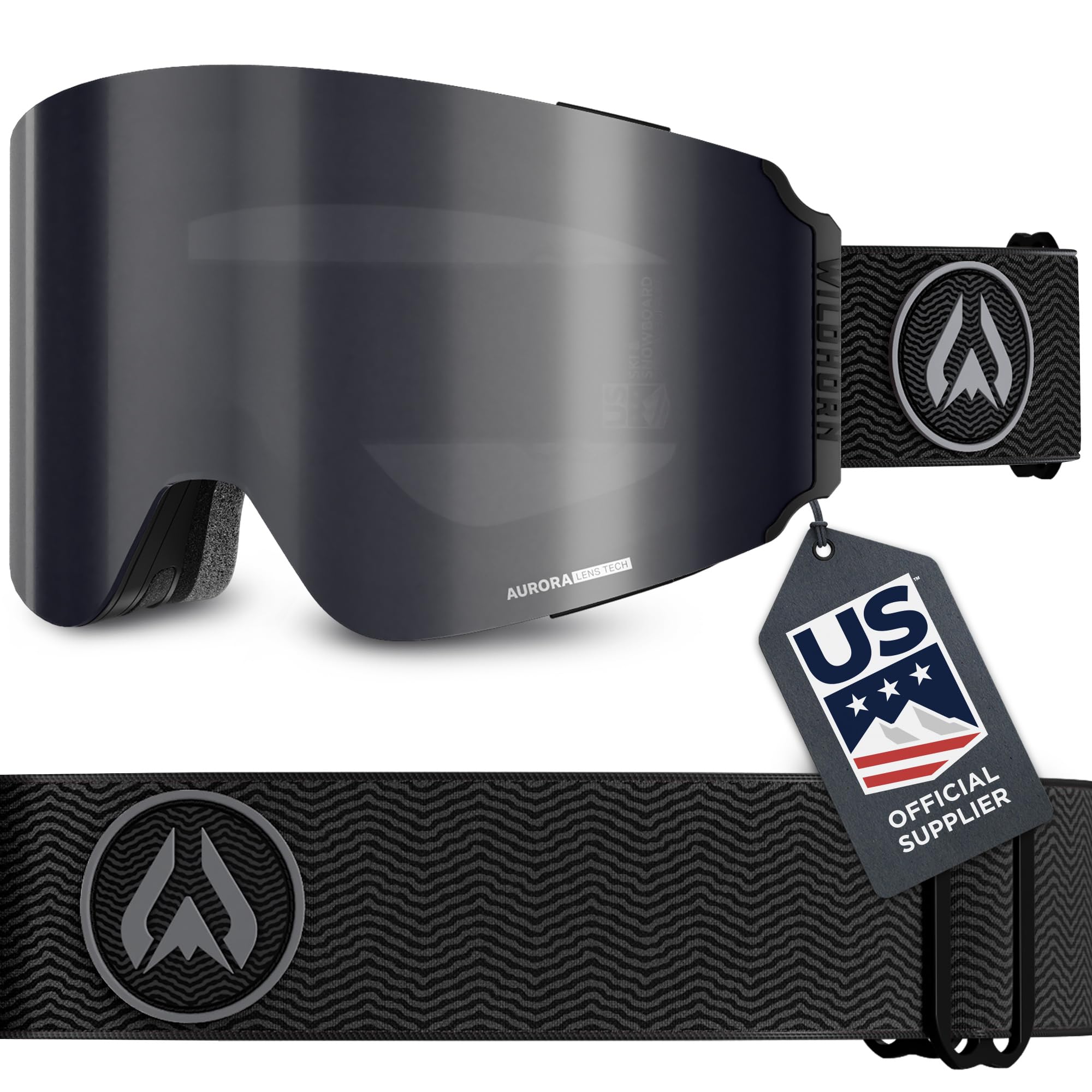
The Wildhorn Roca Pro pushes the boundaries of peripheral vision with a 185-degree field of view, achieved through a frameless design that minimizes obstruction at the edges of the spherical lens. This massive coverage lets you spot riders merging from the side or read the terrain on the periphery without constant head-turning. The spherical dual-pane lens is treated with an anti-fog coating that integrates with the frame’s passive ventilation channels, and early reviews from the 2025 season report zero fogging even during high-output runs.
The magnetic lens lock system is snappy and secure, with strong magnets that hold the lens in place through impacts and rough handling. The lens replacement process is genuinely easy — a quarter-turn of the frame tabs and a light pull releases the old lens. The included mirrored lens performs well in bright conditions, and a second lens for overcast days is expected to be available within the Wildhorn ecosystem. The comfortable triple-layer foam with microfleece facing sits well against the skin and resists moisture absorption.
As a relatively new release, the Roca Pro lacks the long-term durability data of established models. Some users experienced slower shipping times and initial color confusion (received a different tint than ordered, though Amazon rectified it). The availability of spare lenses is currently limited to the manufacturer’s store. Still, for riders who want the widest possible view without crossing into premium pricing territory, the Roca Pro delivers exceptional value.
Why it’s great
- 185° frameless design gives the widest peripheral view in this guide
- Magnetic lens lock is fast and stays secure during impact
- Spherical dual-pane construction prevents fogging effectively
Good to know
- Long-term durability is unproven due to recent release
- Spare lens ecosystem is not yet fully developed
- Some orders may experience shipping delays or tint errors
6. Spy Optics Crusher Elite Snow Goggle

The Spy Optics Crusher Elite brings a solid anti-fog foundation to the entry-level tier without sacrificing critical features. The frame is built from lightweight polyurethane with a medium/large fit that accommodates most adult head shapes, and it features the proprietary RISE ventilation system — a series of top-ported channels designed to exhaust warm, moist air before it can condense on the lens. The cylindrical lens includes an anti-fog and anti-scratch coating, and the silicone-lined adjustable strap provides a secure connection to any helmet.
At this price point, the Crusher Elite offers 100 percent UV protection and a mirrored finish that reduces glare effectively on sunny days. The face foam is ergonomically shaped and comfortable for extended wear, and the overall weight is low enough that you won’t feel them pulling on your face after a full day on the mountain. For the casual rider who hits the slopes a few times a season, these goggles provide adequate fog resistance and decent optical clarity.
The limitation is that the anti-fog system is less robust than dual-pane spherical designs. Several reviewers noted that condensation collects on the inner lens after two to three hours of continuous use, particularly during high-exertion runs or when transitioning from cold outdoors to a warm lodge. A small number of units also arrived with scuffs on the lens, indicating quality control inconsistencies. For light use and fair-weather riding, the Crusher Elite is a budget-friendly entry point, but serious riders will want to invest in a tier above.
Why it’s great
- RISE ventilation system helps manage moisture at a budget price
- Lightweight PU frame with comfortable ergonomic face foam
- 100% UV protection with mirrored finish for glare reduction
Good to know
- Inner lens can fog after a few hours of high-exertion use
- Quality control issues with lens scuffs reported occasionally
- Cylindrical lens offers less thermal isolation than spherical
7. Giro Cruz Ski Goggles

The Giro Cruz is engineered with a specific focus on spectacle wearers, using an OTG-friendly frame that provides extra internal volume to accommodate prescription glasses without pushing them uncomfortably into the nose. The increased air volume within the goggle serves a dual purpose: it reduces the temperature differential that causes fogging, and it creates space for glasses frames to sit naturally. The lens features Giro’s anti-fog coating applied to a cylindrical thermoformed lens, and the EXV (Expansion View) technology minimizes the frame rim to maximize peripheral sightlines.
The double-layer face foam with microfleece facing is soft against the skin and resists moisture buildup, while the silicone bead on the inside of the strap prevents the goggle from sliding around on a helmet or beanie. Multiple reviewers confirm that the Cruz fits seamlessly with Giro helmets and provides a no-fog experience across a full day of riding in varied conditions. The clear lens option is particularly useful for night skiing or low-light days, and the build quality punches above the price point.
The frame uses a cylindrical lens rather than a spherical one, which limits the internal air gap and makes it slightly more susceptible to fogging in very humid conditions or during high-intensity runs. The included single lens means you’ll need to purchase additional lenses separately if you want to cover bright sun and flat light. For the budget-conscious rider who wears glasses, however, the Cruz is the most targeted and effective OTG solution at this price level.
Why it’s great
- OTG-designed frame with extra volume for prescription glasses
- Increased internal air volume directly reduces fog risk
- Excellent compatibility with Giro helmets and soft foam comfort
Good to know
- Cylindrical lens has smaller thermal air gap than spherical
- Only one lens included; additional lenses sold separately
- May fog in very humid conditions during high exertion
FAQ
Do spherical lenses really fog less than cylindrical lenses?
What does OTG mean on snowboard goggles?
How often should I replace the anti-fog coating?
Final Thoughts: The Verdict
For most riders, the best anti-fog snowboard goggles winner is the OutdoorMaster Falcon because it pairs a ZEISS spherical dual-pane lens with a magnetic interchange system at a mid-range price point that outperforms its cost. If you want exceptional low-light terrain definition and are willing to invest in premium optics, grab the Oakley Flight Deck L. And for riders with larger head shapes or those who need a wide field of view on a budget, nothing beats the Wildhorn Pipeline.