
Sleep apnea strips away restful sleep, leaving you fatigued, foggy, and at higher risk for cardiovascular strain. A clinical sleep study is the gold standard, but the wait times, cost, and unfamiliar bed make it a barrier for many. At-home testing puts the diagnostic power in your bedroom, using medical-grade or high-precision sensors to track breathing disruptions, oxygen desaturation, and sleep architecture without a lab referral.
I’m Min — the co-founder and writer behind Gadgets Feed. My analysis of this market focuses on the critical specs that separate a useful wellness tool from a clinically actionable monitor: sensor type (FDA-cleared vs. consumer-grade), Apnea-Hypopnea Index (AHI) tracking capability, blood oxygen (SpO2) sampling frequency, and data-reporting interoperability with physicians.
Whether you need a device to confirm suspected obstructive sleep apnea or want continuous overnight monitoring to gauge treatment efficacy, this guide dissects the top contenders. Use these insights to pick the best at home sleep apnea test for your unique sleep health needs.
How To Choose The Best At Home Sleep Apnea Test
Selecting a home sleep apnea test involves more than just reading star ratings. You need to match the sensor technology to your sleep environment, understand the clinical validity of the data it produces, and decide whether you want a single-night snapshot or continuous trend tracking. Here are the key factors to weigh before you buy.
Sensor Type and Clinical Validation
The sensor is the heart of any sleep apnea test. FDA-cleared devices use validated algorithms to detect apneic events and oxygen desaturations, producing data a sleep specialist can use for diagnosis. Consumer-grade options like wrist oximeters or smart rings provide wellness-level insights that can flag potential issues but are not a substitute for a formal sleep study. If you need a result your insurance will reimburse or your doctor will act on, prioritize an FDA-cleared or contactless monitor with published accuracy studies.
AHI, SpO2, and Data Reporting
The Apnea-Hypopnea Index (AHI) measures the number of apnea and hypopnea events per hour of sleep — it is the universal metric for scoring sleep apnea severity. A good home test must report AHI alongside minimum and average blood oxygen saturation (SpO2). The sampling rate of the pulse oximeter matters: a 4 Hz sampling frequency captures desaturation drops more reliably than slower 1 Hz sensors. Look for devices that export raw data or PDF reports that your clinician can interpret, not just a mobile app summary.
Wearable vs. Contactless vs. Ring Form Factors
Wearable options (finger pulse oximeters, smart rings) offer high accuracy but can be uncomfortable for side sleepers or those sensitive to tactile feedback during sleep. Contactless monitors (under-mattress pads, millimeter-wave radar units) eliminate physical interference but require stable Wi-Fi and correct positioning to function reliably. Smart rings like the RingConn Gen 2 balance portability with continuous monitoring but rely on a rechargeable battery and may not capture full-night data if the ring is too loose or tight. Choose the form factor you can tolerate wearing or setting up every night.
Quick Comparison
On smaller screens, swipe sideways to see the full table.
| Model | Category | Best For | Key Spec | Amazon |
|---|---|---|---|---|
| SkyPad | Contactless Pad | FDA-cleared monitoring with emergency alert | FDA-cleared, AHI + seizure detection | Amazon |
| RingConn Gen 2 | Smart Ring | Sleep apnea tracking with no subscription | AHI + SpO2, 12-day battery | Amazon |
| Wellue Wrist Oximeter | Wearable | Continuous SpO2 and heart rate tracking | 72-hour battery, 4 Hz SpO2 sampling | Amazon |
| Withings Sleep | Under-Mattress Pad | Non-wearable sleep cycle and snore analysis | Pneumatic sensor, HRV tracking | Amazon |
| SOMNDEEP Sleep Monitor | Radar Sensor | Contactless millimeter-wave sleep analysis | mmWave radar, sleep stage tracking | Amazon |
| Pulsetto FIT (V2) | Wellness Wearable | Relaxation and sleep support via vagus nerve | VNS therapy, 4-10 min sessions | Amazon |
| Everlywell Food Sensitivity | Blood Test Kit | Identifying dietary triggers of sleep-disrupting symptoms | 96-food IgG antibody panel | Amazon |
In‑Depth Reviews
1. SkyPad FDA-Cleared Contact-Free Monitor
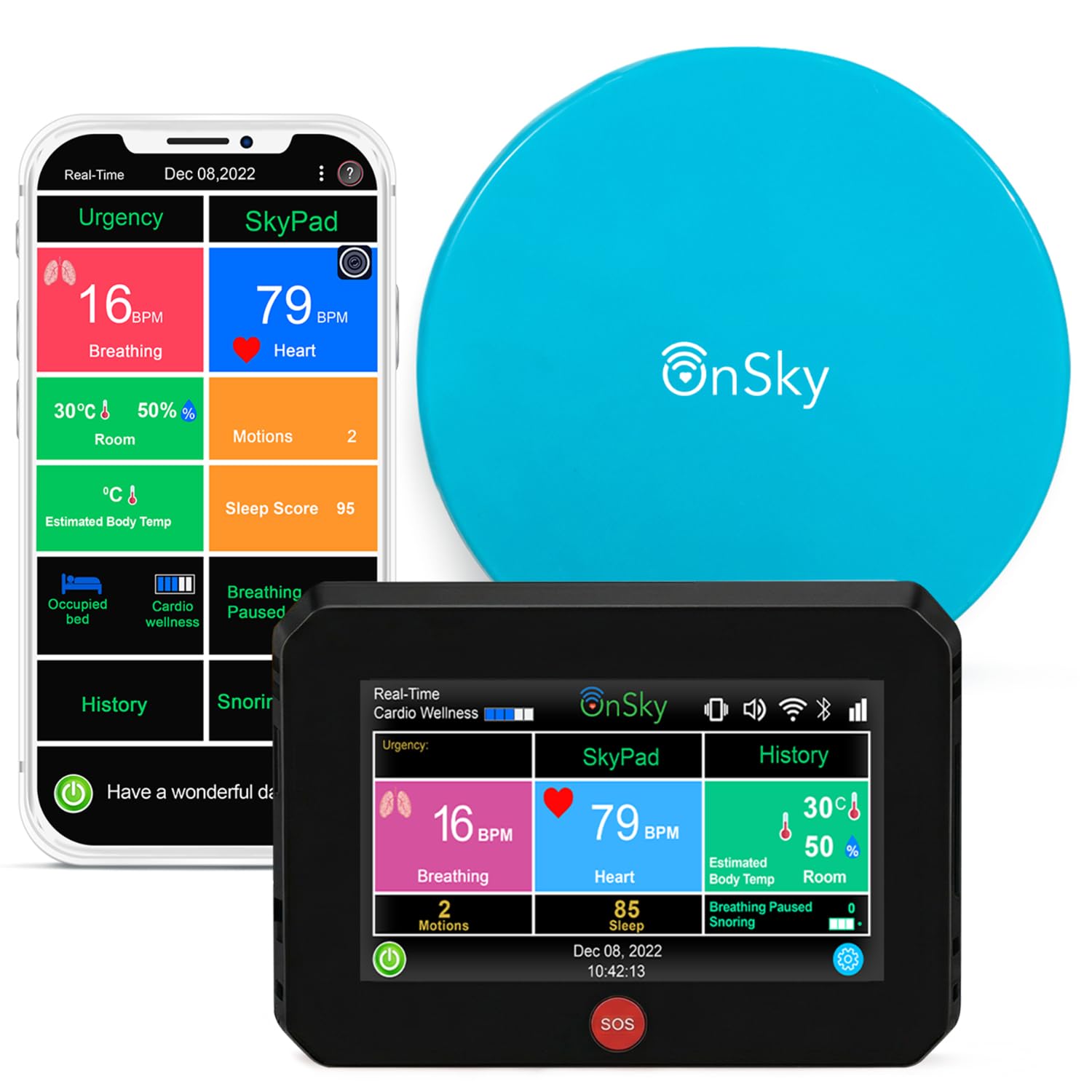
The SkyPad stands apart because it holds actual FDA clearance as a health sensor system — not a wellness gadget with disclaimers. Its sensor pad slides under your pillow and uses a contactless pneumatic sensor to track heart rate, breathing rate, sleep apnea events (including AHI), and even convulsive movements. The included hub has a 5-inch touchscreen and an SOS button that calls up to three contacts in an emergency, making this a serious solution for home health care, not just sleep tracking.
Data syncs to the OnSky Health app, where you can view real-time and trend reports on heart rate, breathing patterns, and sleep quality. Reviewers consistently report that heart rate readings match their smartwatch after a short calibration period. The system also monitors room temperature and humidity, adding environmental context to your sleep data that can help identify external factors disrupting your breathing. Setup takes under 15 minutes according to user feedback, though some note the interface could be more intuitive for custom configuration.
This monitor is overkill if you just want a general sleep score, but if you need a device a doctor will take seriously — especially for an elderly relative or a child with suspected nocturnal seizures — the SkyPad is the most clinically defensible option on this list. The subscription concerns some reviewers raise about advanced features are worth checking before purchase, but the core apnea and emergency alert functions work without ongoing fees.
Why it’s great
- FDA-cleared for sleep apnea and seizure detection, giving data medical weight
- No wearable or skin contact needed — works under the pillow
- Hub with SOS button calls emergency contacts automatically
Good to know
- Some advanced data features may require a subscription after initial period
- Setup can be fussy for users wanting granular control over alerts
2. RingConn Gen 2 Smart Ring

The RingConn Gen 2 is the first smart ring on the market to offer dedicated sleep apnea monitoring with real-time AHI data and blood oxygen tracking — and it does so with zero subscription fees. Weighing just 2 to 3 grams depending on size, the titanium-ring houses a 22 mAh battery that delivers 10 to 12 days of life (around 7 days with continuous apnea monitoring active). The companion app shows overnight SpO2 curves, AHI scores, heart rate variability, and sleep stages in a single dashboard developed in collaboration with university sleep researchers.
User reviews confirm the ring accurately flagged severe oxygen desaturation events that led to a formal CPAP prescription. The step counting and activity tracking are a bonus, but the primary value is the overnight respiratory data. Because the ring uses photoplethysmography (PPG) sensors pressed against the finger, it is sensitive to fit — the included sizing kit is essential. Some users report the black finish scratches easily during manual work, and battery endurance can drop to 3-4 days after six months of nightly use.
This ring transforms overnight data into something you can actually show your doctor without needing a sleep lab referral. If you value a discreet, wearable form factor that tracks everything from SpO2 to sleep stages and won’t lock features behind a subscription paywall, the RingConn Gen 2 is the most versatile premium pick for home sleep apnea screening.
Why it’s great
- True AHI and SpO2 sleep apnea monitoring in a wearable ring format
- No subscription fees — all health insights are included for life
- Ultra-light titanium design that is comfortable overnight
Good to know
- Continuous apnea monitoring reduces battery from 12 to ~7 days
- Black finish is prone to scratching with heavy hand use
3. Wellue Wrist Pulse Oximeter with Audio Reminder
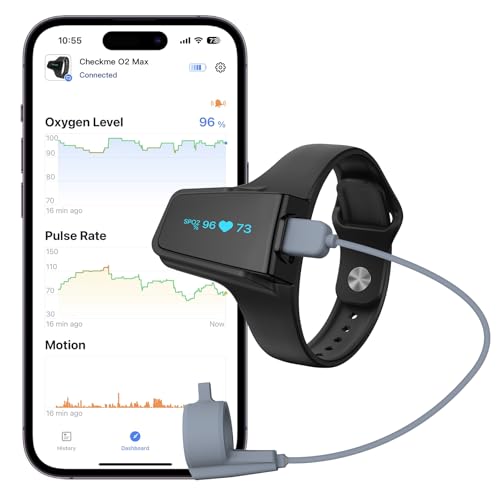
The Wellue Wrist Oximeter is built for the person who needs continuous, multi-night oxygen saturation data without worrying about charging every day. Its ring-style silicone sensor clips onto your finger and connects to a wrist display unit, capturing SpO2 and heart rate at high resolution for up to 72 hours on a single charge. The built-in memory holds four separate recordings of up to 10 hours each, so you can accumulate several nights before syncing to the Vihealth app for PDF and CSV report exports.
Users with chronic obstructive pulmonary disease (COPD) and poor perfusion report that the Wellue matches ICU monitor readings closely. The vibration and audible alarm can be set to trigger if oxygen or pulse rate falls below your custom threshold — crucial for identifying nocturnal desaturation events. The soft silicone ring sensor is more comfortable than hard plastic clip-on oximeters, and the strap-based wrist unit stays secure during restless sleep. On the downside, the proprietary charging cable is fragile, and the app does not keep running reliably in the background on some phones, which disables the alarm feature.
While not a formal sleep apnea test (the manufacturer explicitly disclaims medical use), this device is an invaluable tool for capturing raw SpO2 and pulse rate data over multiple nights. If you need high-resolution oxygen trend reporting to share with your pulmonologist or sleep specialist — and you want to avoid frequent charging — the Wellue’s 72-hour battery and comfortable ring sensor make it the most practical continuous oximeter in this roundup.
Why it’s great
- 72-hour battery life supports multi-night continuous monitoring
- Comfortable soft silicone ring sensor that stays on all night
- Adjustable vibration and audible alarms for low SpO2 or heart rate
Good to know
- Not a medical device — use for screening and trend tracking only
- Proprietary charging cable can be fragile and expensive to replace
4. Withings Sleep Tracking Pad

The Withings Sleep pad pioneered the under-mattress sleep monitor category, using a pneumatic sensor that detects your heartbeat, breathing rate, and body movements through the mattress. It automatically identifies sleep stages (light, deep, REM) and provides a Sleep Score each morning, along with snore duration and intensity logs. Because there is nothing to wear, charge, or remember, it is ideal for users who cannot tolerate any wearable during sleep.
Placement is critical — the pad must sit under the mattress at sternum level, 6 to 10 inches from the edge. Once installed correctly, it syncs data to the Withings Health Mate app via Wi-Fi, and it integrates seamlessly with other Withings devices like the Body+ scale and BPM Core. The US version does not include the sleep apnea detection feature that is available in some international markets (pending regulatory clearance), which limits its diagnostic depth. Some users report that sleep stage detection can feel “fabricated” if the pad isn’t positioned perfectly, and the unit requires Wi-Fi to function — it does not store data locally.
The Withings Sleep is a top-tier sleep tracker for trend analysis, but it falls short as a definitive apnea test. Its real strength is providing consistent nightly data on sleep architecture, snoring patterns, and heart rate variability, which can alert you to changes that might warrant a clinical sleep study. For the user already invested in the Withings ecosystem, it is a seamless addition; for standalone apnea diagnosis, pair it with an oximeter for SpO2 data.
Why it’s great
- Zero wearable — just slide the pad under your mattress
- Tracks sleep stages, heart rate, snoring, and HRV automatically
- Integrates with the entire Withings health ecosystem and Apple Health
Good to know
- US version lacks FDA-cleared sleep apnea detection
- Requires precise placement and stable Wi-Fi to function reliably
5. SOMNDEEP Contactless Smart Sleep Monitor
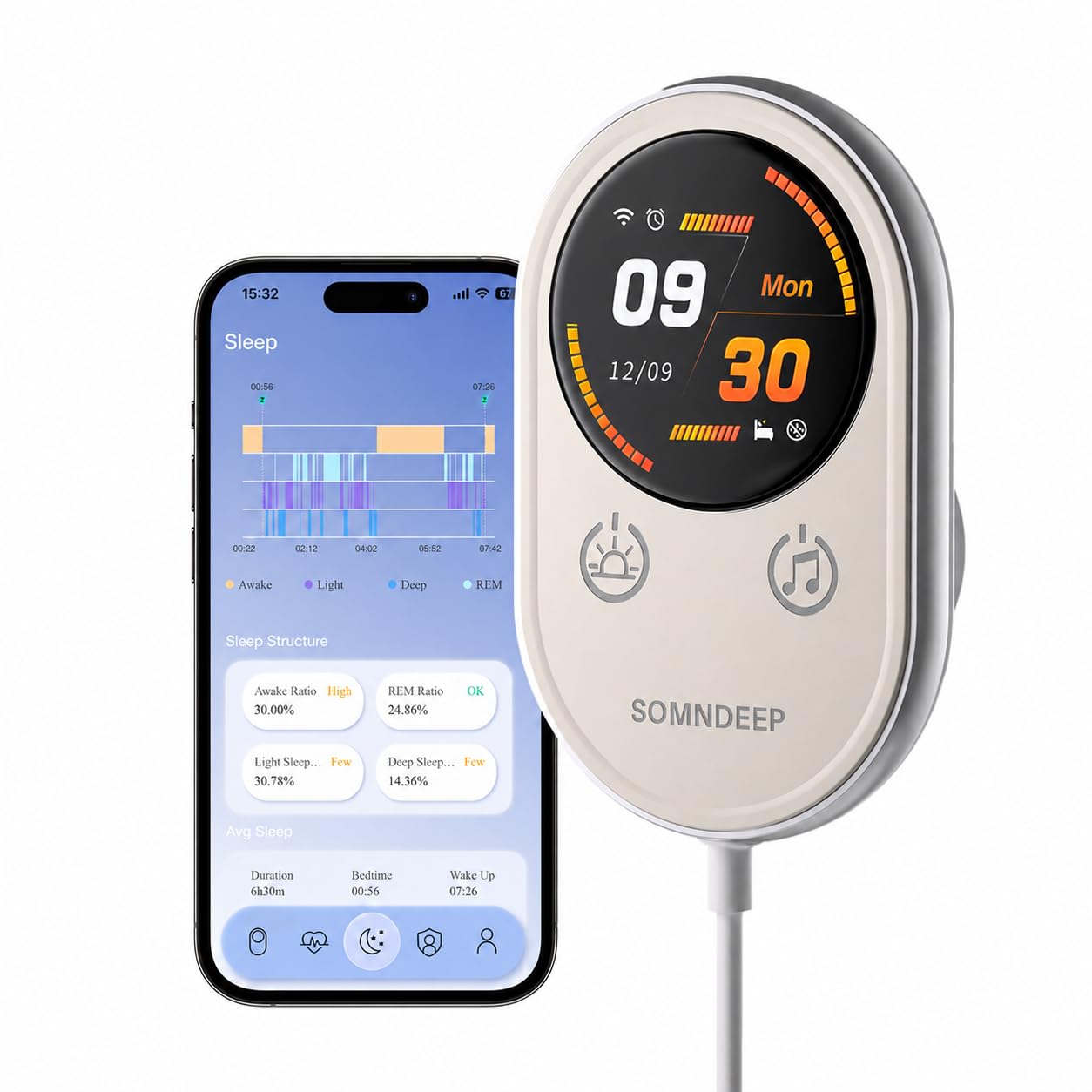
The SOMNDEEP monitor is the only device in this list using millimeter-wave radar — the same technology found in advanced automotive sensors — to detect breathing rate, heart rate, body movement, and sleep stages without any physical contact or camera. It mounts on your headboard or nightstand using magnetic plates and adhesive pads, and it tracks bed-in and bed-out times, making it especially useful for monitoring an elderly family member who lives alone. The app can send alerts if no movement is detected for a specified period, adding a layer of safety beyond sleep analysis.
Setup is straightforward: plug the 1.57-inch display unit into power, download the app, and position the sensor according to the guide. The radar beam penetrates bedding and clothing, so it works even if the user is fully covered. Sleep reports break down light, deep, and REM stage percentages, alongside breathing rate variability and movement frequency. However, the device is strictly a wellness monitor — it is not FDA-cleared and cannot generate an AHI score. Some users report that the app requires location permissions and that the Android version is difficult to find in verified app stores.
For solo sleepers who want a non-wearable, non-camera solution that also provides peace of mind for remote caregiving, the SOMNDEEP is a strong contender. Its radar-based detection is less sensitive to mattress type than under-mattress pads, and the real-time alerts for unusual inactivity are a genuine safety feature. Just be prepared for app privacy that may feel intrusive, and do not expect clinical-grade apnea metrics.
Why it’s great
- Millimeter-wave radar tracks HR and breathing through blankets with no contact
- Remote monitoring and inactivity alerts for elderly or at-risk family members
- Compact magnetic mount design takes up minimal bedside space
Good to know
- Wellness-grade only — no AHI reporting or FDA clearance
- Android app availability is inconsistent; requires app permissions
6. Pulsetto FIT (V2) Wellness Wearable
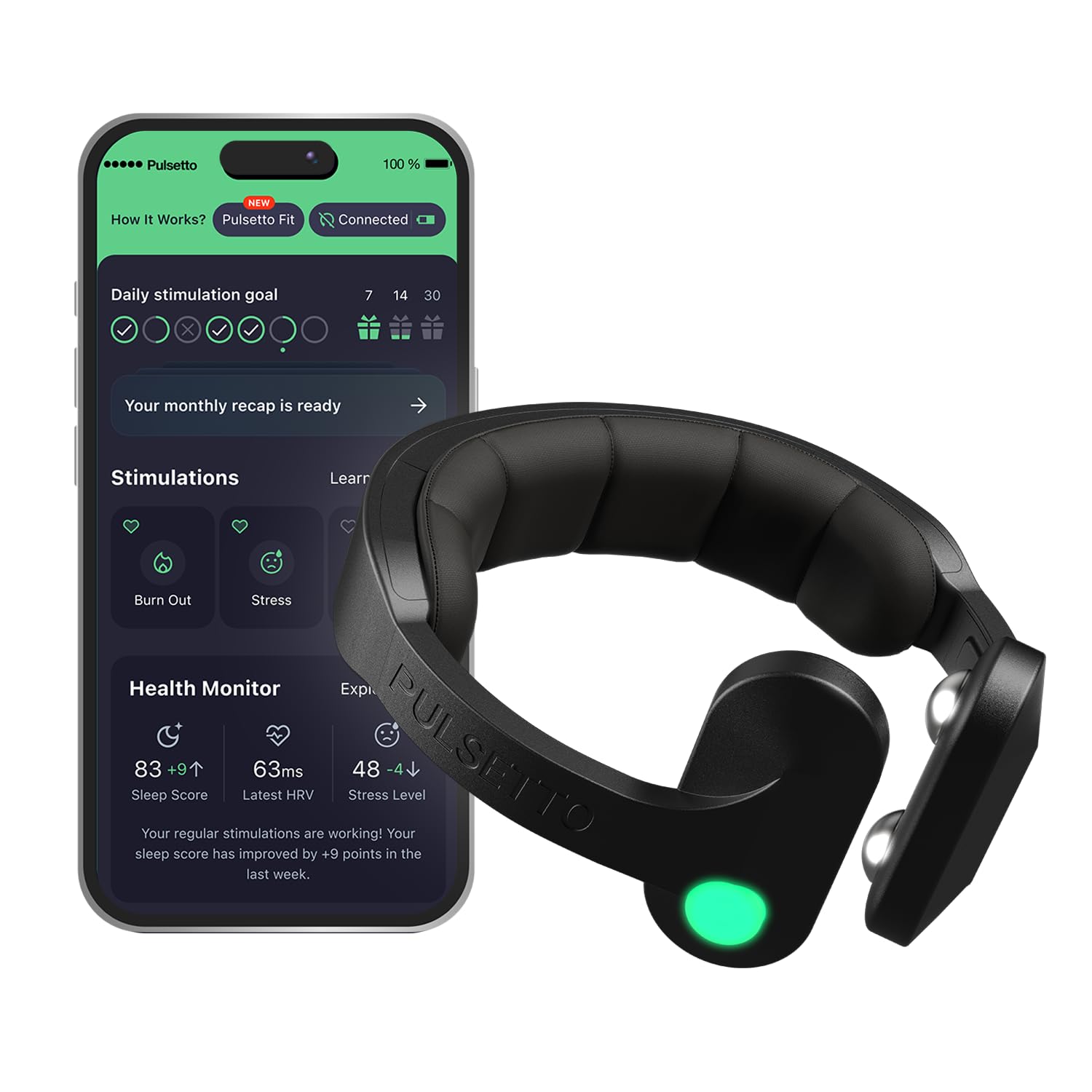
The Pulsetto FIT takes a completely different approach to sleep apnea support: instead of measuring breathing disruptions, it uses transcutaneous vagus nerve stimulation (tVNS) to calm the nervous system and improve sleep onset and quality. You wear the lightweight ergonomic collar around your neck for 4 to 10 minute sessions before bed, and gentle electrical pulses encourage a parasympathetic state that can reduce stress-induced nighttime awakenings. It does not diagnose or track apnea events — its role is complementary relaxation.
User reviews are divided. Those who understand the physiology of vagus nerve stimulation report tangible reductions in racing thoughts and faster sleep onset, with some noting that consistent use improved their “morning restedness” and daytime energy levels. Conversely, critics point out that the device is not FDA-approved for any medical condition, and that the app requires a separate subscription after a brief trial. The need for conductive gel to avoid skin stinging is a minor inconvenience, and the replacement gel pads add to the long-term cost.
If your sleep apnea is primarily driven by stress, anxiety, or an overactive sympathetic nervous system, the Pulsetto FIT may help improve sleep quality alongside a proper diagnostic device. It is not a substitute for an at-home sleep apnea test, but it is a reasonably priced complementary tool for relaxation and sleep preparation. Just factor in the recurring gel cost and the app subscription when evaluating total ownership.
Why it’s great
- Non-invasive vagus nerve stimulation helps calm racing thoughts before bed
- Lightweight, ergonomic collar design for comfortable daily sessions
- Adjustable intensity levels allow you to fine-tune the sensation
Good to know
- Not a diagnostic or tracking device — purely a relaxation aid
- Requires conductive gel and has an ongoing app subscription cost
7. Everlywell Food Sensitivity Test
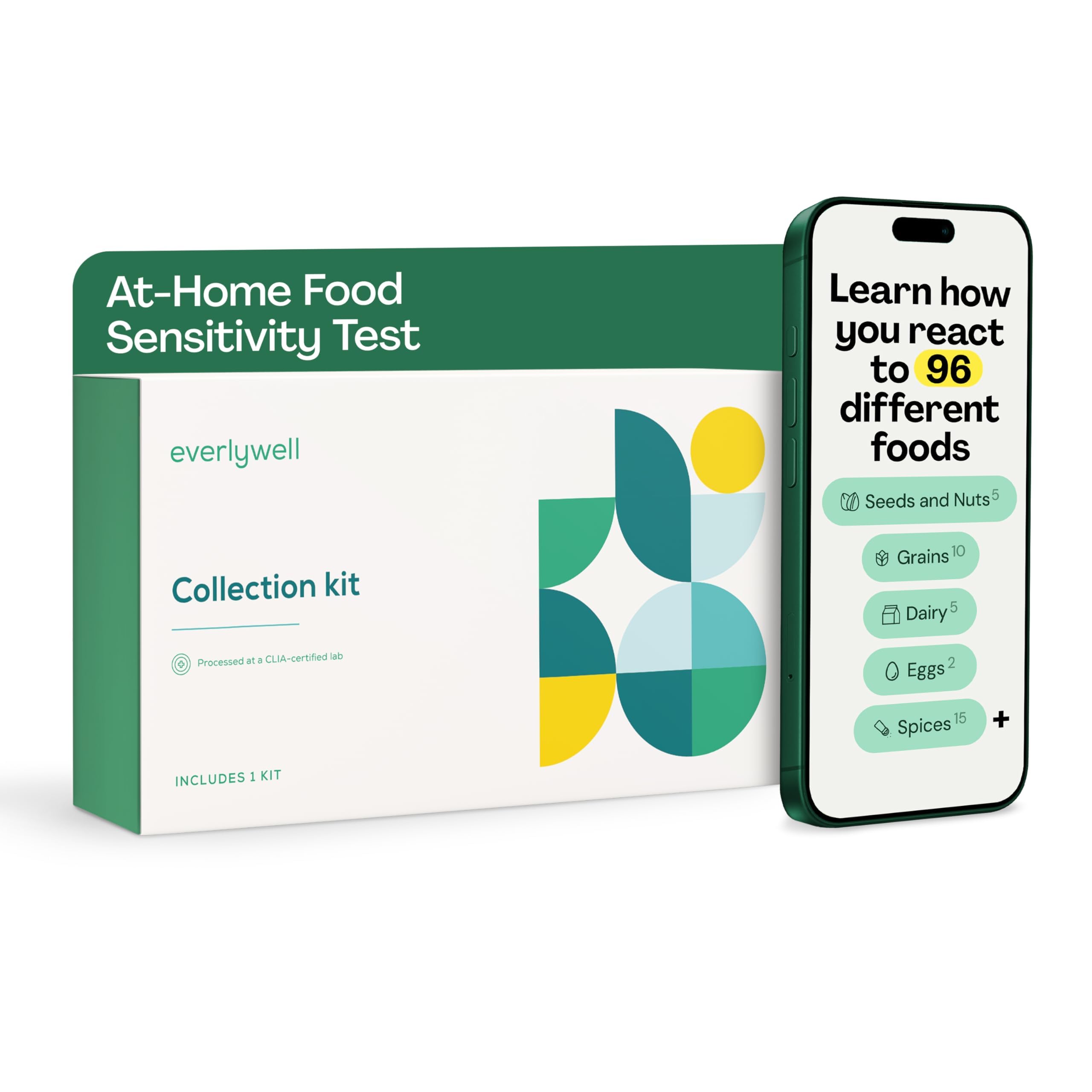
You might wonder what a food sensitivity test is doing in a sleep apnea guide. The link is indirect but real: food intolerances (especially to gluten, dairy, and yeast) can cause chronic inflammation, sinus congestion, and digestive discomfort that disrupts sleep and exacerbates breathing resistance. The Everlywell kit measures IgG antibody reactivity to 96 different foods from a simple finger-prick blood sample, which you mail to a CLIA-certified lab. Results arrive in an easy-to-read dashboard within 3-5 business days.
Numerous verified reviewers report that eliminating foods flagged as high-reactivity (wheat, eggs, yeast) dramatically reduced migraines, bloating, and skin issues, and for some, improved sleep quality significantly. However, the test does not detect celiac disease or lactose intolerance, and IgG reactivity only indicates exposure, not necessarily clinical allergy or intolerance. An elimination diet is required to confirm whether the flagged foods actually cause symptoms. A small minority of users had their sample rejected or found the results inconsistent with known sensitivities.
If you have unexplained sleep disruptions, morning congestion, or digestive issues that may be contributing to poor sleep quality, the Everlywell test can help you identify dietary triggers that a sleep apnea monitor alone would miss. Pair it with an oximeter or contactless tracker to correlate dietary changes with improvements in overnight oxygen saturation and sleep architecture. It is an indirect but valuable tool for a holistic approach to sleep health.
Why it’s great
- Screens 96 foods for IgG reactivity to guide elimination diets
- CLIA-certified lab analysis with board-certified physician review
- Digital results in 3-5 days with shareable reports for your doctor
Good to know
- IgG antibodies indicate exposure, not clinical allergy — elimination diet required
- Not available in New York; sample rejection can occur with insufficient blood
FAQ
Can an at-home sleep apnea test replace a polysomnography lab study?
Why does my at-home sleep test show different AHI numbers than my partner’s device?
How many nights of data do I need for an accurate home sleep apnea assessment?
Is a smart ring accurate enough to diagnose sleep apnea?
Will my insurance cover the cost of an at-home sleep apnea test device?
Final Thoughts: The Verdict
For most users, the best at home sleep apnea test winner is the SkyPad because its FDA clearance, contactless under-pillow sensor, and integrated emergency alert system provide the most clinically defensible data for both diagnosis and remote caregiving. If you want continuous AHI and SpO2 tracking with no subscription and a discreet wearable form factor, grab the RingConn Gen 2 Smart Ring. And for multi-night raw oxygen saturation recording with the longest battery life, nothing beats the Wellue Wrist Pulse Oximeter.