
A clear mountain stream looks pure, but within seconds of contact, the wrong mouthful can introduce Giardia, Cryptosporidium, or E. coli to your gut — bacteria and protozoa that cause days of misery on the trail. A backpacking water bottle filter solves this by physically straining out these pathogens at the sub-micron level, turning any river, lake, or questionable tap into a safe hydration source without boiling or chemical tablets.
I’m Min — the co-founder and writer behind Gadgets Feed. Over the past several weeks, I’ve combed through hundreds of hours of field tests, lab protocols, and real-world user accounts to isolate which filter designs actually survive a multi-day trek without clogging, leaking, or failing when you need them most.
After digging deep into flow rates, filter lifespans, weight trade-offs, and compatibility with common water bottles, these models represent the top contenders for your next adventure. This guide breaks down the best backpacking water bottle filter options available right now.
How To Choose The Best Backpacking Water Bottle Filter
Selecting a backcountry filter isn’t about brand loyalty — it’s about matching the correct pore size, flow mechanism, and bottle compatibility to your specific trip length and water source conditions. The wrong choice adds weight, slows you down, or fails to remove the threats you’re most likely to encounter.
Pore Size: The Line Between Safe and Sorry
The critical spec is micron rating. A 0.2-micron filter stops bacteria and protozoa, but a 0.1-micron filter offers a much wider safety margin and also traps smaller microplastics. If your destinations include questionable tap water abroad or glacial runoff with silt, the tighter pore is non-negotiable. Filters that also claim virus removal require either a chemical stage or an electrostatic charge, which pushes them into purifier territory.
Flow Rate and Cleaning Cadence
A filter that slows to a trickle after two liters has failed its primary job — keeping you hydrated without frustration. Look for a rated flow over 1.5 liters per minute when squeezed, and check whether the design supports a simple backflush or shake-to-clean method. Filters that require tool disassembly in the field lose points for convenience. The best designs let you restore flow in under 30 seconds without losing a drop of your clean water supply.
Quick Comparison
On smaller screens, swipe sideways to see the full table.
| Model | Category | Best For | Key Spec | Amazon |
|---|---|---|---|---|
| Sawyer Squeeze | Squeeze System | Thru-hikes & durability | 0.1 micron / 100,000 gal lifespan | Amazon |
| Platypus Quickdraw | Squeeze System | Ultralight & speed | 3 L/min flow / 69 grams | Amazon |
| GRAYL UltraPress | Press Purifier | Virus protection & travel | 10-second press / 16.9 oz capacity | Amazon |
| Katadyn BeFree 3L | Gravity System | Group trips & hands-free | 2 L/min gravity / 3L bag | Amazon |
| LifeStraw Go SS | Filter Bottle | All-in-one insulated bottle | 0.2 micron / 24 oz / vacuum insulated | Amazon |
| MSR TrailShot | Squeeze Filter | On-trail direct drinking | 1 L/min squeeze / 5 oz | Amazon |
| Sawyer Mini | Inline Squeeze | Ultra-compact & budget | 0.1 micron / 2 oz weight | Amazon |
In‑Depth Reviews
1. Sawyer Squeeze Water Filtration System

The Sawyer Squeeze is the benchmark that nearly every other backpacking filter is measured against. Its 0.1-micron hollow fiber membrane stops 99.99999% of bacteria and 99.9999% of protozoa, and it removes 100% of microplastics. The included CNOC 2L TPU bladder is a major upgrade from the older stiff pouches — it fills from a wide mouth, rolls up when empty, and couples directly to the filter without an adapter.
At a rated 100,000-gallon lifespan, this is the filter you buy once and never replace. The backflush syringe allows you to restore flow in the field, and the filter threads onto standard 28mm soda bottles, Smartwater bottles, or hydration pack hoses. Weighing under 6 ounces with the bladder, it balances durability and portability better than any other full-size system.
Real users on the Appalachian Trail report no failures over three-week stretches, and the charity program Sawyer runs — donating filters to communities without clean water — makes the purchase feel meaningful. The only friction is flow rate; it’s slower than the Platypus Quickdraw out of the box, but consistent backflushing keeps it moving.
Why it’s great
- Industry-leading 0.1 micron absolute filtration
- 100,000 gallon lifespan — effectively permanent for most hikers
- Directly threads onto Smartwater and standard 28mm bottles
Good to know
- Initial flow rate is slower than the Quickdraw
- Requires regular backflushing to maintain speed
2. Platypus Quickdraw Ultralight Backpacking Water Filter
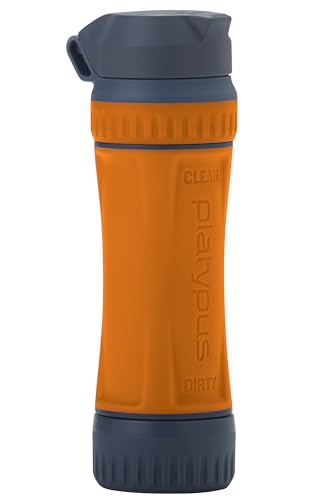
The Platypus Quickdraw shatters the flow-rate ceiling for squeeze filters, delivering 3 liters per minute when squeezed and 1.75 liters per minute in a gravity setup. That speed translates directly to less time hunched over a dirty bag and more time moving. At just 69 grams, it’s one of the lightest full-capability filters on the market, and the soft-touch rubberized housing stays grippy in wet conditions.
Compatibility is the Quickdraw’s second superpower. The ConnectCap and the dirty-side thread design work seamlessly with Smartwater bottles, CNOC bags, and standard soda bottles. Cleaning is tool-free: a simple shake-to-clean action or a field backflush restores flow without a syringe. The attached DrinkCap doubles as a secure seal and a direct-drinking nozzle, which eliminates the need for extra parts.
Thru-hikers on the Continental Divide Trail report that the Quickdraw maintained its integrity over a full season. The filter meets NSF & EPA P231 protocol, removing 99.9999% of bacteria and 99.9% of protozoa. The one caveat is that the flow slows faster than the Sawyer Squeeze between cleanings, so you’ll want to backflush it slightly more frequently to keep it running at peak speed.
Why it’s great
- Unmatched 3 L/min squeeze flow rate
- Ultralight 69g — one of the lightest full-size filters
- Tool-free shake-to-clean maintenance
Good to know
- Flow degrades faster than Sawyer between backflushes
- Soft housing can pick up dirt from the ground if dropped
3. GRAYL UltraPress 16.9 oz Water Purifier & Filter Bottle
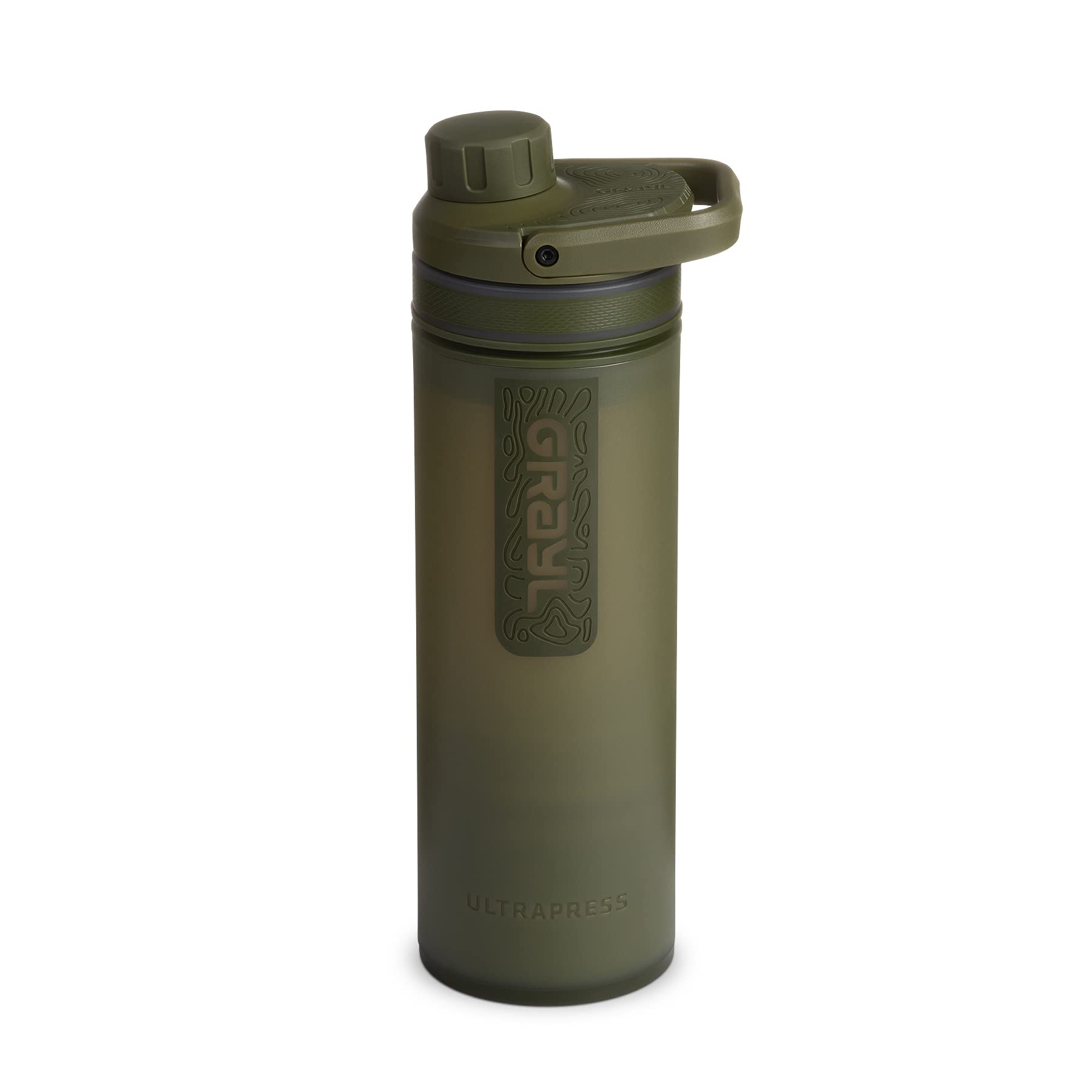
The GRAYL UltraPress is the only unit in this roundup that qualifies as a true purifier. Its OnePress mechanism forces water through a multi-stage cartridge that removes 99.9% of viruses (rotavirus, norovirus, hepatitis A), 99.9999% of bacteria, and 99.9% of protozoan cysts. It also adsorbs PFAS, VOCs, heavy metals, and sediment — making it the single best choice for international travel where water quality is completely unknown.
The operation is dead simple: fill the outer cup from any source, press the inner chamber down onto a flat surface, and drink. No pumps, no hoses, no gravity hang. A full 16.9 oz (500ml) batch is ready in about 10 seconds. The included one-way drink mix valve means you can also filter electrolyte drinks without clogging the cartridge, which is a thoughtful touch for hot-weather treks.
At 12.5 ounces and 9.75 inches tall, it’s the heaviest and tallest option here, and it won’t fit a standard car cup holder. The drinking cap is not tethered, so it’s easy to lose in camp. But for anyone heading into regions with untreated municipal water or suspect hygiene, the virus protection and press speed make this the most capable personal protection device on the list.
Why it’s great
- Only true purifier here — removes viruses
- Fast 10-second press cycle
- Filters PFAS, heavy metals, and VOCs
Good to know
- Heaviest and tallest option at 12.5 oz
- Untethered cap is easy to misplace
4. Katadyn BeFree Gravity Water Filter 3L

The Katadyn BeFree 3L is the only true gravity system in this lineup. Fill the 3-liter collapsible TPU bag, hang it from a branch, and let gravity push water through the 0.1-micron EZ-Clean hollow fiber filter at up to 2 liters per minute. No squeezing, no pumping, no hands required. It’s the ideal setup for base camps, group trips, or solo hikers who want to filter a full day’s water in one go.
The EZ-Clean membrane is the standout feature here: when flow slows, simply shake or swish the filter in clean water for a few seconds, and the flow is restored. No backflush syringe, no disassembly. The filter lasts up to 1,000 liters before replacement, and the entire system weighs just 6.4 ounces — lighter than some single-person squeeze setups.
Users on Sierra Nevada trips report filling a Nalgene in under 20 seconds. The bag packs flat when empty, but multiple reviewers note that the TPU material is prone to punctures if stored near sharp gear. The filling process is also slightly inconvenient because you can only fill through the cap. For group trips where hands-free operation is the priority, the BeFree 3L is the clear leader.
Why it’s great
- True hands-free gravity filtration
- Easy shake-to-clean maintenance
- Lightweight for a 3L system at 6.4 oz
Good to know
- TPU bag can puncture if stored carelessly
- Filling the bag is awkward — only through the cap
5. LifeStraw Go Stainless Steel Water Filter Bottle, 24oz

The LifeStraw Go Stainless Steel is the most all-in-one option: a double-wall vacuum-insulated bottle, a 0.2-micron membrane microfilter, and an activated carbon stage all combined into a single 24-ounce package. The insulation keeps cold water cold for hours — a genuine luxury on a hot trail — and the carbon filter improves taste by removing chlorine, organic chemicals, and odors that straight hollow-fiber filters can’t touch.
The membrane filter lasts up to 1,000 gallons, and the replaceable carbon cartridge lasts about 26 gallons. The integrated straw design means you sip directly through the filter, so every swallow is freshly filtered. For international travel and day hikes where you fill from uncertain taps, the LifeStraw Go delivers peace of mind and decent taste in one cylinder.
The clear drawback is the weight. At 17 ounces empty and over two pounds full, it’s the heaviest option here by a wide margin, and the 9.65-inch height means it won’t fit most backpack side pockets or car cup holders. Some users also report that the first-generation cap can leak if the bottle tips over. For short trips and base-camp use where insulation matters more than ultralight efficiency, this bottle is outstanding.
Why it’s great
- Vacuum insulation keeps water cold for hours
- Activated carbon improves taste significantly
- All-in-one design — no separate bags or hoses
Good to know
- Heavy at 17 oz empty — not for ultralight trips
- Cap may leak when tipped over
6. MSR TrailShot Ultralight Backpacking and Camping Squeeze Water Filter

The MSR TrailShot is designed for the hiker who doesn’t want to carry a dirty bag or bladder. Its unique design lets you drink directly from the source by submersing the intake hose and squeezing the body, or you can use it to fill a clean bottle at 1 liter per minute. At just 5 ounces with a 6-inch body, it stashes easily in a hip pocket or the side of a pack.
The hollow fiber technology traps bacteria and protozoa (99.9999% and 99.9% respectively) and filters up to 2,000 liters without chemicals. The field-cleaning process is straightforward: shake it in water or use the included backflush syringe. Because there’s no dirty bag, there’s less gear to pack and no chance of a bag rupture spilling unfiltered water into your pack.
The trade-off is hand fatigue during steady use. Squeezing the body repeatedly to fill a large bottle can tire your hand over several minutes. The rubber intake hose is also relatively fragile — a few users report tearing it if snagged on branches. For trail runners and day hikers who want to stop briefly at a stream and drink directly, the TrailShot is the lightest and most convenient option.
Why it’s great
- Drink directly from the source — no bag needed
- Ultralight at just 5 ounces
- Compact enough for a hip belt pocket
Good to know
- Hand fatigue from squeezing to fill larger bottles
- Rubber intake hose can tear if caught on branches
7. Sawyer Products Mini Water Filtration System

The Sawyer Mini is the pocket-sized legend of the water filter world. At just 2 ounces and roughly 4 inches tall, it’s small enough to fit inside a cook kit, a first-aid pouch, or the palm of your hand. The 0.1-micron absolute filter removes the same bacteria, protozoa, and microplastics as the full-size Squeeze — proven by three individual tests per unit at the factory. The 100,000-gallon rating means it’s effectively a lifetime filter.
It functions in three modes: as an inline filter attached to a hydration pack, as a squeeze filter using the included 16-ounce pouch, or as a straw for direct drinking from a source. The standard 28mm thread fits most disposable water bottles, so you can pair it with a Smartwater bottle and skip the included pouch entirely — a common hack among experienced backpackers.
The included 16-ounce pouch is functional but small, and the cleaning plunger is essential for maintaining flow speed. The filter’s tiny size also makes it easy to misplace in a pack. It’s slower than the full-size Squeeze, especially as it begins to load with sediment. For the ounce-conscious hiker who wants emergency capability and daily backup in one package, the Mini remains the benchmark entry-level choice.
Why it’s great
- Incredibly compact at just 2 oz
- Full 0.1 micron bacterial and protozoan protection
- Versatile — inline, squeeze, or straw mode
Good to know
- Included 16 oz pouch is too small for serious trips
- Flow rate slows noticeably as filter loads
FAQ
Can I use a backpacking water filter with a Smartwater bottle?
How often should I backflush my squeeze filter in the field?
Does a backpacking water filter remove viruses?
Final Thoughts: The Verdict
For most users, the backpacking water bottle filter winner is the Sawyer Squeeze because it combines bulletproof 0.1-micron filtration, an industry-leading 100,000-gallon lifespan, and universal thread compatibility in a package that’s tough enough for multi-week thru-hikes. If you want the fastest water on the trail with the lightest weight, grab the Platypus Quickdraw. And for international travel where viruses are a real threat, nothing beats the GRAYL UltraPress for speed and comprehensive protection.