
Your backyard gets plenty of sun, but the real question is whether you are capturing it efficiently. A fixed panel tilted at 30° only performs at its peak for a few hours a day, wasting the morning and afternoon light that could be feeding your batteries.
I’m Min — the co-founder and writer behind Gadgets Feed. I’ve spent hundreds of hours analyzing conversion efficiency data, temperature coefficients, and shading tolerance metrics to separate genuine value from marketing fluff in this increasingly crowded category.
After cross-referencing real-world output claims against manufacturer specs across dozens of models, I’ve narrowed down the field to the absolute best options. Here is my definitive analysis of the best backyard solar panels for every budget and setup.
How To Choose The Best Backyard Solar Panels
Backyard solar panels live in a unique middle ground — they are not permanently roof-mounted, yet they sit outside long enough to face the same weather exposure. The choices you make about cell technology, mounting, and panel voltage directly determine how many watt-hours you bank daily.
Cell Architecture: P-Type vs N-Type
Traditional P-Type monocrystalline cells suffer from Light Induced Degradation (LID) that can shave 2-3% off their efficiency in the first few weeks of use. N-Type cells do not have this problem, maintain higher bifacial gain, and typically carry a temperature coefficient around -0.30%/°C — meaning you lose less power in summer heat. For a backyard array that sees direct sun from late spring through early fall, N-Type’s heat tolerance alone justifies the premium.
Tracking vs Fixed: The 30% Question
A single-axis ground tracker can boost daily energy harvest by 30% or more compared to a fixed rack, but it requires a solid base and a reliable controller. If your yard has clear southern exposure with no obstructions, a fixed south-facing tilt at your latitude is simpler and cheaper. If trees or fences cast shadows across your panels for part of the day, a tracker or anti-shading panels like the Renogy ShadowFlux become the smarter investment.
Bifacial Gain and Ground Reflection
Bifacial panels with transparent backsheets can capture reflected light from the ground, adding 15-30% yield depending on surface albedo. Concrete, gravel, or light-colored soil gives a meaningful boost; dark grass or mulch does almost nothing. If your backyard has a bright surface, bifacial modules like the Callsun 400W or JJN 400W pay for themselves faster than you’d expect.
Quick Comparison
On smaller screens, swipe sideways to see the full table.
| Model | Category | Best For | Key Spec | Amazon |
|---|---|---|---|---|
| Renogy ShadowFlux 200W 2-Pack | Premium | Partial shade yards | 28 bypass diodes per panel | Amazon |
| ZOUPW 450W Portable | Premium | Portable backup & 40-60V stations | 29.5 lbs, 45.9V Voc | Amazon |
| DOKIO 800W (2×400W) | Premium | High-capacity fixed arrays | 800W total, 31V panels | Amazon |
| JJN Bifacial 2×400W | Premium | Large off-grid home systems | 94.6 lbs total, bifacial | Amazon |
| Callsun 400W Bifacial 2-Pack | Mid-Range | Compact vans & small arrays | 25% eff., TwinCell anti-shade | Amazon |
| ECO-WORTHY Single Axis Tracker | Mid-Range | Maximum daily kWh per panel | 270° rotation, 30% boost | Amazon |
| ECO-WORTHY 2×195W N-Type | Mid-Range | 12V/24V campers & sheds | 25% eff., 18 busbars | Amazon |
| Renogy 200W Kit with Controller | Mid-Range | First-time off-grid setup | 800Wh/day, PWM controller | Amazon |
| EF ECOFLOW 2×100W | Budget | EcoFlow ecosystem pairing | 23% eff., 13.6 lbs each | Amazon |
In‑Depth Reviews
1. Renogy ShadowFlux Solar Panels, N-Type Anti-Shading 200W 2-Pack

The Renogy ShadowFlux is the most intelligent panel for the backyard environment. Its 28 bypass diodes per panel ensure that when a tree branch or gutter casts a shadow across one section, the rest of the panel keeps pushing current — a massive advantage over standard 3-diode designs that lose power globally. Real-world testing shows a hat-covered corner drops output to 142W versus 70W on a conventional N-Type panel.
Built with N-Type 16BB cells and a 25% efficiency rating, the ShadowFlux also undercuts PERC panels in physical footprint, being 7% smaller and 10% lighter. This matters when you are fitting four panels on a shed roof or a ground-mount frame over a concrete patio. The 5-year materials warranty paired with a 25-year linear output guarantee gives long-term confidence for a backyard installation that stays up for years.
Owners report consistent 183-202W per panel across seasons, and one van-lifer on a Toyota Sienna roof charges a Bluetti AC180 daily for over 10 months without a generator. The only weakness is the included cable durability — a user noted a cable break after several months of roof flex — but the panel output and shade tolerance are unmatched at this level.
Why it’s great
- Unmatched partial-shade performance from high diode count
- 25% N-Type efficiency with reduced hot-spot risk
- Compact frame fits tight RV and shed roof spaces
Good to know
- Included cable durability could be better for long-term flex installations
- Premium tier requires a larger upfront investment
2. ZOUPW 450W Portable Solar Panel, N-Type 16BB
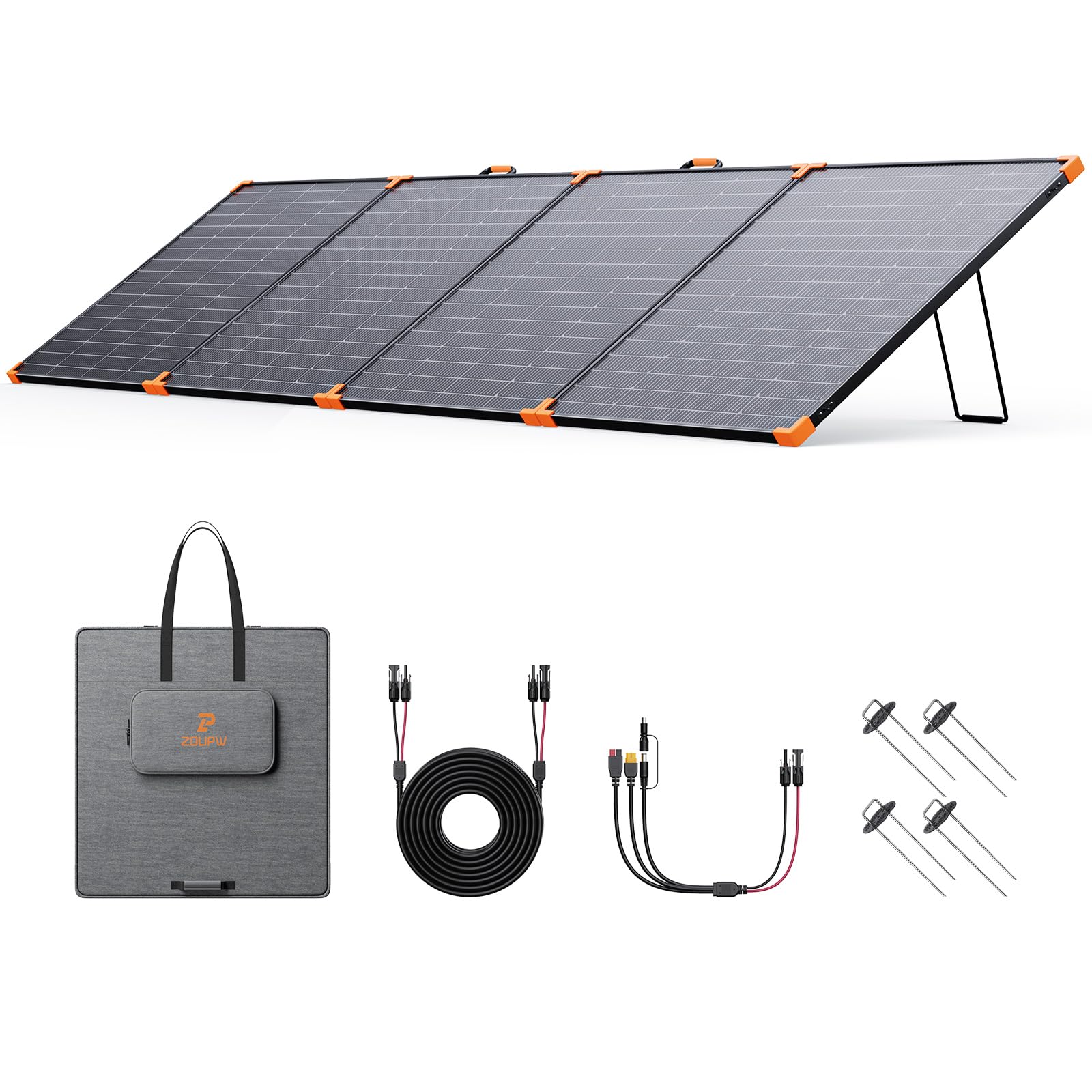
Portability rarely coexists with high wattage, but the ZOUPW 450W folds this capability into a 29.5-pound package using aerospace-grade fiberglass. Its 45.9V open-circuit voltage makes it purpose-built for large power stations like the EcoFlow Delta series and Anker C1000 Gen2 — but it will damage 12V units under 30V input, so verify your station’s voltage window before buying.
The integrated kickstands adjust to 45° and 4 ground stakes keep it planted in wind. In real conditions, users measure 51.2V and 12.48A even on cold December days, and peak output often exceeds 450W, hitting 500W on one owner’s test. The ETFE coating and IP68-rated lamination shrug off rain and dust, but the bypass diodes still cause output to drop more than 50% with even tiny shadows — this is a full-sun deployable, not a permanent yard fixture.
The 4-in-1 adapter cable (XT60, Anderson, DC7909, DC8020) covers most modern high-capacity stations out of the box. Owners love the rapid 15-second setup and padded carry bag, but note the included ground stakes could be longer for softer soil. For emergency backup or off-grid trips where you need 450W+ in a carryable form, this is the best portable option.
Why it’s great
- Ultralight for its class with genuine above-rated output
- High 45.9V Voc matches premium 40-60V power stations
- Deploys in seconds with adjustable kickstands
Good to know
- Not compatible with any 12V or sub-30V solar generator
- Output suffers severely under even minimal shade
3. DOKIO 800W (2×400W) Monocrystalline Solar Panel
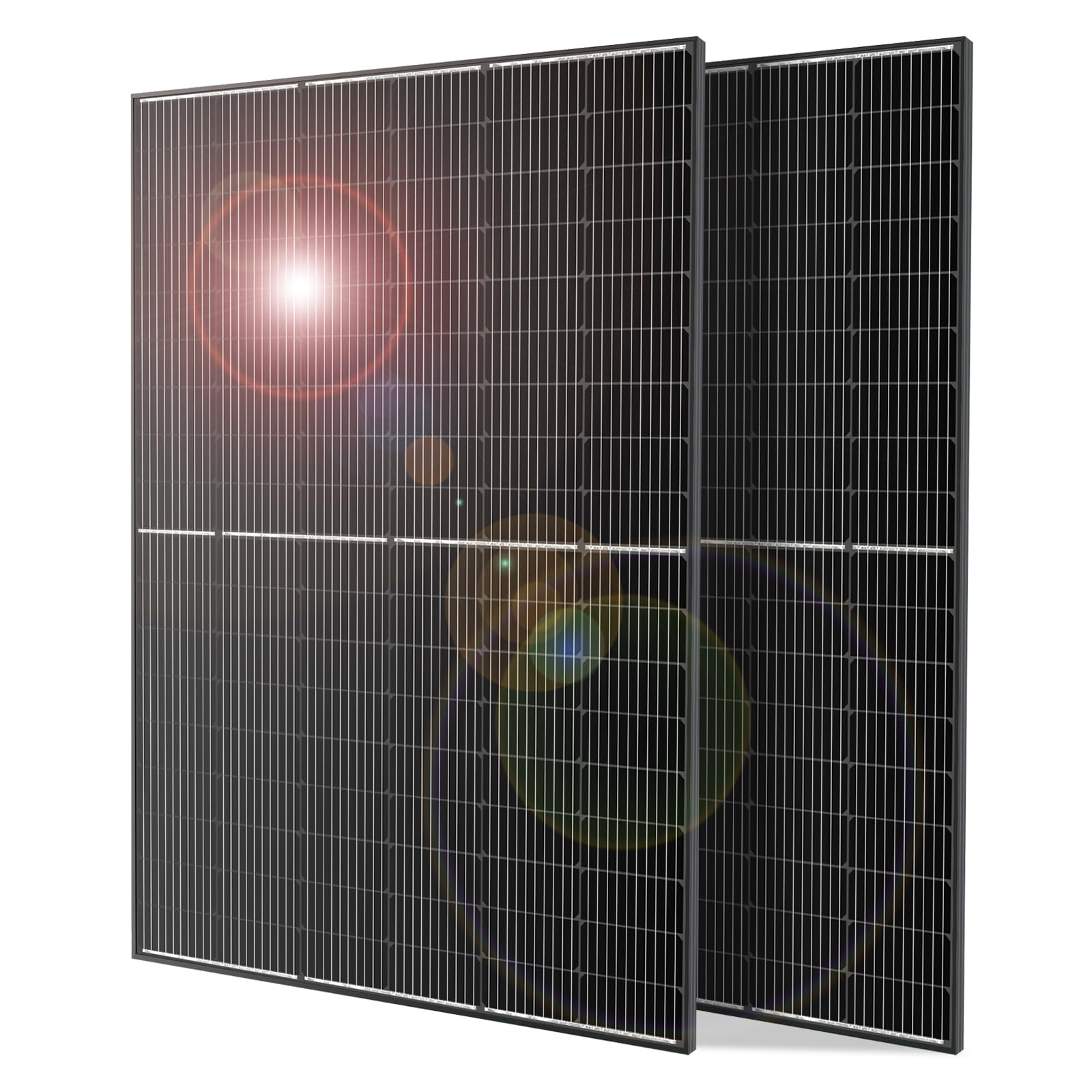
For backyard arrays where you need serious daily watt-hours without going to a full rack of eight 100W panels, the DOKIO 800W kit simplifies the build massively. Two 400W panels at 31V each deliver 800W STC, and the 3m MC4 leads give you enough reach to route cables to a controller without needing immediate extensions. The aluminum frame is lighter than some premium competitors, yet holds up well to year-round exposure.
Real-world output from owners lands around 600-700W under partly cloudy conditions and over 700W in full sun, which aligns with the expected 70-80% of STC in heat. One ham radio operator built two portable 400W arrays by hinging four of these together and praised the absence of radio-frequency interference from the panels themselves. The parallel-first recommendation for 12V systems means you keep charging steady without overvoltage risk.
Tempered glass and sealed junction boxes handle rain and snow, though the panels do not carry bifacial or advanced anti-shading features. Owners on EcoFlow Delta 3 systems report seamless integration, and one golf cart enthusiast mounted a single panel as a roof charger. For a straightforward fixed ground array with no exotic trace or shading complications, this delivers high capacity at a favorable cost per watt.
Why it’s great
- High total output reduces panel count and installation complexity
- Long 3m leads simplify cable routing to controller
- Lightweight frame compared to traditional 400W panels
Good to know
- No bifacial or anti-shade technology
- Performance drops to 70-80% in high heat
4. JJN Bifacial 2PCS 400 Watt Solar Panel, N-Type 16BB
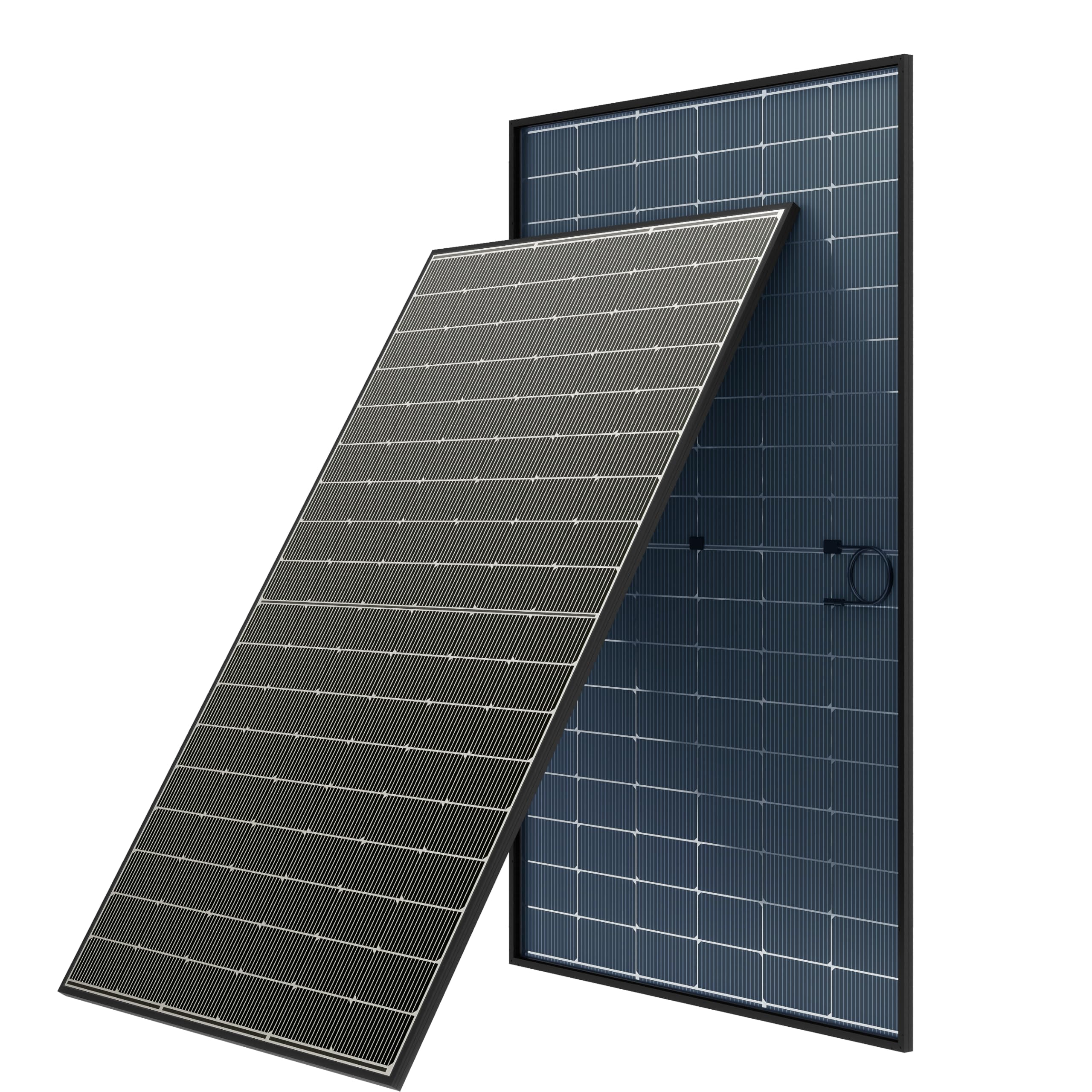
The JJN bifacial panels represent a long-term investment in your home’s energy independence. Their transparent backsheet design captures reflected light from the ground, boosting total output by up to 25% over conventional panels. Owners report 380+W per panel on mobile ground mounts, and two sets in parallel produce 1200-1500W in peak sun, covering a house baseline load. On cloudy days, the bifacial gain keeps output above 100W per panel.
The 16BB N-Type cells reduce the impact of partial shading and micro-cracks compared to older 9BB and 10BB designs. The front side uses black corrosion-resistant aluminum that withstands 2400Pa wind and 5400Pa snow loads, while the IP65 junction box and IP68 connectors ensure weatherproof integrity. The real standout is the 30-year transferable power output warranty — one of the longest in this category — which matters when panels sit in a yard for decades.
Weight is a consideration: each panel is roughly 47 lbs, and two together total 94.6 lbs, so the mounting frame needs to be sturdy. A few owners noticed small cosmetic dots on the cells that did not affect output, but the overall build quality is high. For a backyard array on bright gravel or concrete, these panels will outproduce standard modules over their lifespan.
Why it’s great
- 30-year transferable warranty backs long-term performance
- True bifacial gain adds 25% output on reflective surfaces
- Robust N-Type 16BB design with excellent weather resistance
Good to know
- Heavy panels require a solid ground-mount frame
- Some units have minor cosmetic imperfections on cells
5. Callsun N-Type 16BB 400W Bifacial Solar Panel (2-Pack)
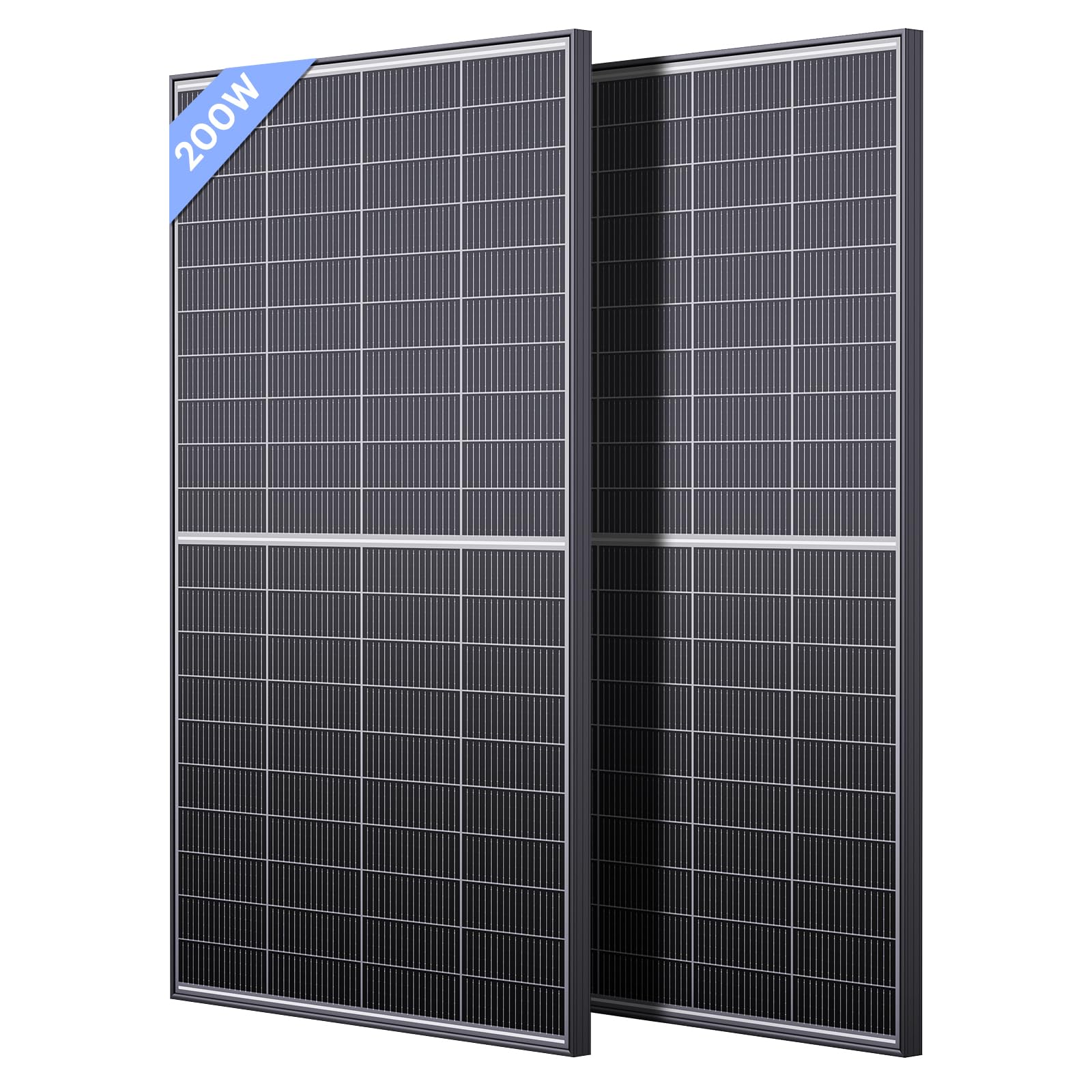
The Callsun 400W bifacial pack brings N-Type 16BB efficiency and TwinCell anti-shade technology into a mid-range price bracket that usually omits both. The dual-module parallel design splits each panel into two independent halves: if one side gets shaded by a tree or building, the other half continues generating at full capacity. This boosts shading tolerance by up to 50% compared to conventional series-cell panels, a critical feature for backyards with partial obstructions.
Measured output consistently exceeds the 400W rating, with owners recording peaks of 420W thanks to bifacial ground reflection. The low temperature coefficient of -0.3%/K means it holds output better in summer heat than most panels in this range. At 23.8 lbs per panel (2-panel pack total 47.6 lbs) and a compact 51.3 by 30.3 inch footprint, these fit easily on Class B van roofs or small ground frames where space is tight.
The tough 3.8mm tempered glass and IP68 waterproofing support a claimed 30-year lifespan — 5 years longer than typical panels. The 10-year support and 25-year performance guarantee add peace of mind. Owners with 7 panels in an array average 275-300W per panel and note flawless packaging that eliminated shipping damage. The only complaint is occasional lower-than-rated current in very hot Texas conditions, but the consensus is excellent value for N-Type bifacial.
Why it’s great
- TwinCell anti-shade design halves the impact of partial shading
- Low temperature coefficient maintains output in summer heat
- Compact and lightweight for easy ground or roof mounting
Good to know
- Current output may drop below rating in extreme temperatures
- Bifacial benefit is minimal on dark grass or mulch
6. ECO-WORTHY Solar Panel Single Axis Tracking System
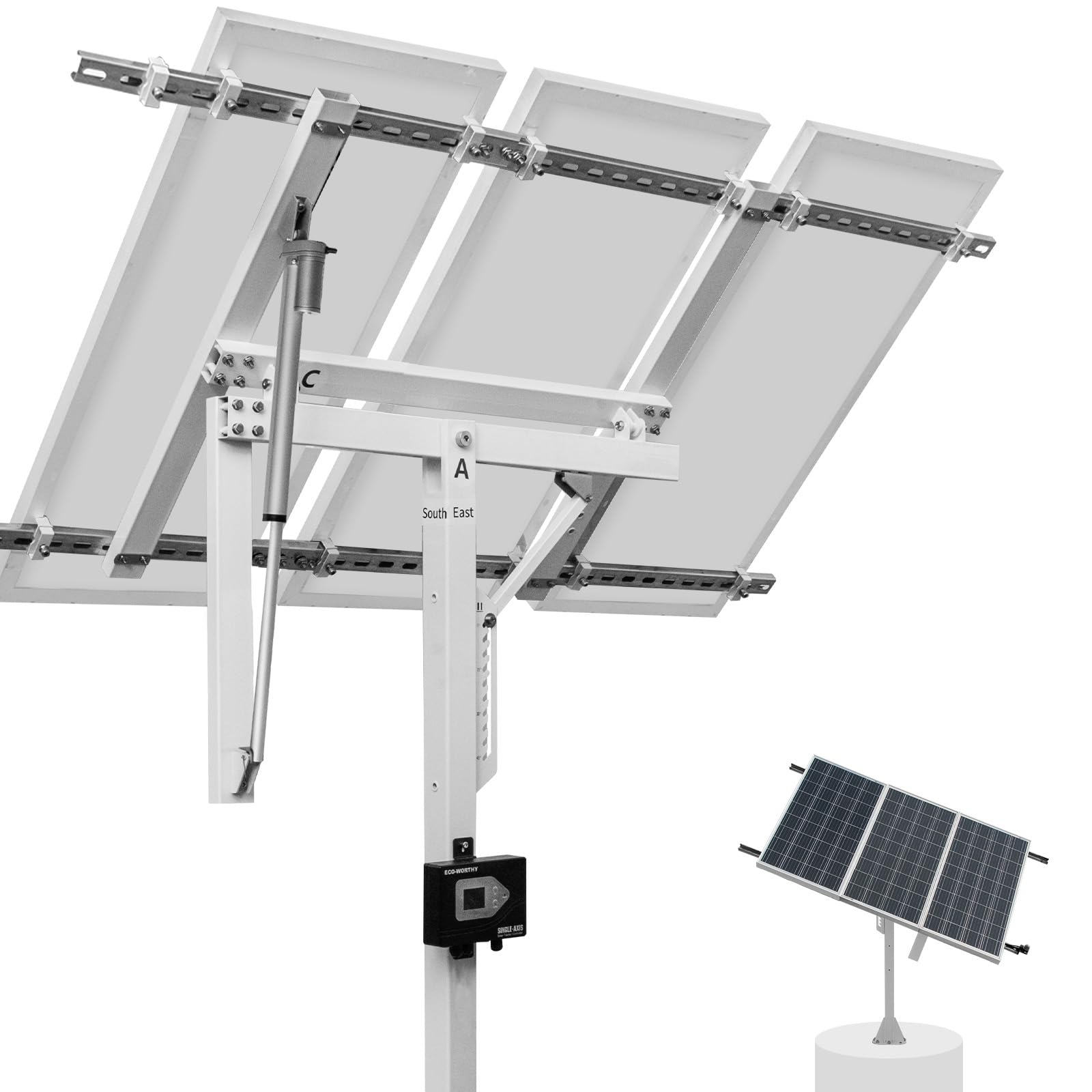
If you have the yard space and want the absolute most energy from a small panel count, the ECO-WORTHY single-axis tracker is a serious upgrade. The system sweeps panels through 270° of rotation, following the sun from north-southeast to north-west, boosting daily generation by at least 30% over fixed mounts. It accommodates up to four panels under 22 inches wide, or three under 29.5 inches, giving flexibility for various panel sizes.
The controller uses light sensors to drive the actuator rod automatically, and the frame is rated for wind resistance above L8 and snow loads of 5400Pa, though ECO-WORTHY recommends removing panels if winds exceed 38.5 mph. Owners on off-grid properties report the tracking mechanism works well through the seasons, with one user deploying 10 units successfully. The build quality is described as heavy-duty and well-machined for the price point.
That said, the electronics can be the weak link. Several owners report the controller failing after a season in Texas heat, or the tracker failing to return to the park position at night due to voltage drop. The controller mounting screws may be the wrong size (one owner used zip ties), and the tracker requires a substantial concrete base — around 500 lbs — to stay stable. For best results, pair this with an external 12V power source and over-spec the controller cooling.
Why it’s great
- 30%+ daily yield increase over fixed mounts
- 270° range tracks sun from dawn through late afternoon
- Heavy-duty frame handles 5400Pa snow loads
Good to know
- Controller electronics can fail in extreme heat
- Requires ~500 lbs concrete base for stability
7. ECO-WORTHY Solar Panels 2PCS 195 Watt 18 Volt N-Type

ECO-WORTHY’s 195W N-Type panels are a straightforward, high-efficiency option for 12V and 24V battery systems. With 25% conversion efficiency and 18 busbars for improved current transfer, the N-type cells resist LID and hold performance better than older P-Type designs. At 21.34 lbs each and measuring 58.86 by 26.18 inches, they are manageable for a single person to mount on a ground frame or RV roof.
In series, two panels produce around 350W of usable power in sunny conditions, and owners note they get exact voltages on clear days. The corrosion-resistant aluminum frame and pre-drilled mounting holes simplify installation, and the 2.95 ft pre-attached cables reach the junction box without immediate extensions. The bypass diodes in the junction box provide basic shading protection, though not at the level of the premium anti-shade panels.
The main limitation is the realistic output — in sunny Tucson, one reviewer measured only about half the advertised wattage, though this is common with all solar panels when not at optimal angle and temperature. Several RV owners confirm solid performance on camp trailers and ground mounts. For a budget-friendly entry into N-Type efficiency without extra features like bifacial or shading optimization, these deliver reliable daily power.
Why it’s great
- Affordable entry into N-Type 25% efficiency
- 18-busbar design improves current transfer and reduces micro-cracks
- Lightweight and easy to handle for DIY installations
Good to know
- Real-world output often lower than laboratory rating
- Basic shading protection only from bypass diodes
8. Renogy 200 Watts 12 Volts RV Solar Panel Kit with Adventurer 30A Controller

Renogy’s 200W kit is the ideal entry point for anyone building their first backyard or RV solar system. The bundle includes two 100W mono panels, the Adventurer-Li 30A PWM charge controller, 30 feet of 10AWG adapter kit, 16 feet of tray cable, branch connectors, a BT-1 Bluetooth module, and cable entry housing — everything except the battery. The 22% cell efficiency and 800Wh daily output (based on 4 sun hours) are honest numbers for a 12V system.
The 30A PWM controller supports lithium, lead-acid, and gel batteries, with protection against overcharging, overload, short-circuit, and reverse polarity. The Bluetooth module lets you monitor charging status from a phone, though some owners report the Renogy DC Home app has connectivity issues — a few switched to a Victron MPPT controller for more reliable monitoring. The panels themselves are well-built with corrosion-resistant aluminum frames rated for 2400Pa wind and 5400Pa snow loads.
In practice, the system keeps a 55qt fridge and exhaust fan running continuously, and the app shows 100% battery in peak sun. Owners with zero prior solar knowledge find the setup fairly straightforward thanks to pre-drilled holes and Plug&Play cables. The 5-year warranty and 24/7 technical support are reassuring for first-timers. If you want a turnkey kit to get power flowing the day it arrives, this is the safest bet.
Why it’s great
- Complete kit includes all components except the battery
- PWM controller works with lithium, AGM, and gel batteries
- Bluetooth monitoring for easy status checks from your phone
Good to know
- PWM controller loses some efficiency compared to MPPT
- Renogy DC Home app can have connectivity issues
9. EF ECOFLOW 2PCS 100W 12V Solar Panels

The EF ECOFLOW 100W panels are purpose-built for the EcoFlow power ecosystem — Delta 2, River 3, and Power Kits — and their pre-drilled holes and MC4 connectors integrate seamlessly. The 23% conversion efficiency from high-quality mono cells beats many budget panels, and the IP68 waterproofing means they survive continuous outdoor exposure to rain, snow, and dust. At 38.6 by 23 by 1.2 inches and 13.6 lbs each, they are compact enough for small ground frames or RV roof mounting.
In series, two panels produce 190-210W at 3PM under partly cloudy skies, and owners consistently report meeting or exceeding the rated watts. The panels are rigid (not flexible) and lack a carry case, so they are best suited for semi-permanent mounting. Several users combine four panels to get 285W total, and note the average daily yield of 400-500 Wh per panel aligns with EcoFlow’s estimates.
The main trade-off is price per watt against other budget panels — you pay a slight premium for the EcoFlow branding and guaranteed compatibility. The panels also ship without mounting accessories or cables (only the MC4 leads are included), so budget for Z-brackets or rails separately. For an existing EcoFlow owner, these eliminate compatibility guesswork and deliver solid real-world performance that matches the manufacturer’s claims.
Why it’s great
- Guaranteed seamless compatibility with EcoFlow power stations
- IP68 rating provides complete weatherproofing for outdoor use
- Consistently delivers near-rated watts in real-world conditions
Good to know
- Premium over generic panels for the ecosystem compatibility
- No mounting accessories or cables included in the box
FAQ
Can I leave backyard solar panels outside in rain and snow?
Do I need a charge controller for backyard solar panels?
What is the difference between series and parallel wiring for backyard panels?
Final Thoughts: The Verdict
For most users, the best backyard solar panels winner is the Renogy ShadowFlux 200W 2-Pack because its 28 bypass diodes per panel handle partial shade better than any competitor, giving you consistent daily output even in less-than-ideal backyard conditions. If you want portable high wattage for emergency backup or power station recharging, grab the ZOUPW 450W Portable. And for a fixed backyard array where you need maximum energy per square foot, nothing beats the JJN Bifacial 2×400W with its 30-year warranty and genuine bifacial gain on reflective surfaces.