
Mounting a camera to your bike helmet transforms every commute, trail ride, and century into shareable first-person cinema — but only if the rig stays locked on, the footage stays smooth, and the battery doesn’t give out halfway through the descent. A subpar choice means blurry captures, wobbling mounts, and files that are more frustrating than fun to edit.
I’m Min — the co-founder and writer behind Gadgets Feed. Every camera here has been benchmarked against the real demands of helmet-mounted use: weight limits that affect neck fatigue, battery endurance for long rides, stabilization that conquers trail chatter, and mounting systems that refuse to budge over potholes.
After sifting through hundreds of spec sheets and real-world ride reports, I’ve zeroed in on the models that truly earn a spot on your dome. This is your definitive guide to finding the best camera for bike helmet that delivers stable, clear, hands-free footage every time you roll.
How To Choose The Best Camera For Bike Helmet
Choosing the right helmet camera isn’t about grabbing the cheapest thumb-sized box. You need to balance three factors that directly affect your footage and your comfort: weight, stabilization, and battery endurance. Ignore any one of these, and you’ll end up with either a sore neck, seasick video, or a dead camera before you hit the final climb.
Weight and Mounting Security
A camera sitting on your helmet becomes a lever arm. Every gram above 100g noticeably increases neck strain on long rides and introduces vibration at speed. Look for models in the 50g–80g range and verify the included mount uses either adhesive pads rated for impact or a magnetic quick-release that doesn’t loosen over rough terrain. A camera that shifts mid-ride ruins the shot and can be a safety hazard.
Stabilization: EIS vs. Gyroscopic
Helmet-mounted cameras amplify every head movement. Electronic Image Stabilization (EIS) crops the sensor to smooth out micro-jitters, while advanced gyroscopic stabilization (like RockSteady or HorizonSteady) uses dedicated chips to lock the horizon. For biking, you want a camera with at least effective EIS rated for “running” or “biking” — basic stabilization made for walking won’t cut it on rocky descents.
Battery Life and Recording Loops
Budget-friendly mini cameras often advertise “up to 90 minutes” but split footage into 3-minute (or 9-minute max) loops. This is fine for commuting, but for endurance rides lasting 3-4 hours you’ll need a camera that can either run continuously (like the DJI Action 6’s 4-hour rating) or supports hot-swapping batteries. Also check if the camera can record while charging via USB-C for truly unlimited range.
Quick Comparison
On smaller screens, swipe sideways to see the full table.
| Model | Category | Best For | Key Spec | Amazon |
|---|---|---|---|---|
| DJI Osmo Action 6 | Premium | All-weather endurance rides | 4‑hour battery, 1/1.1″ sensor | Amazon |
| Insta360 Ace Pro 2 | Premium | Low‑light and night rides | 8K, Leica lens, Dual AI Chip | Amazon |
| AKASO 360 | Mid-Range | 360‑degree immersive capture | 5.7K 360°, 48MP dual sensors | Amazon |
| Xtra Atto | Mid-Range | Ultra‑light 54g wearable | 54g, 4K/60fps, 220‑min with dock | Amazon |
| Xtra Edge 4K | Mid-Range | Budget‑conscious cinema quality | 1/1.3″ sensor, 3‑hour battery | Amazon |
| Intepoll TO S3 | Budget | Ultra‑compact starter kit | Thumb‑size, IPX7, 128GB included | Amazon |
| dahocamgo 4K Mini | Budget | Entry‑level waterproof POV | 64GB built‑in, 30m waterproof | Amazon |
In‑Depth Reviews
1. DJI Osmo Action 6 Essential Combo
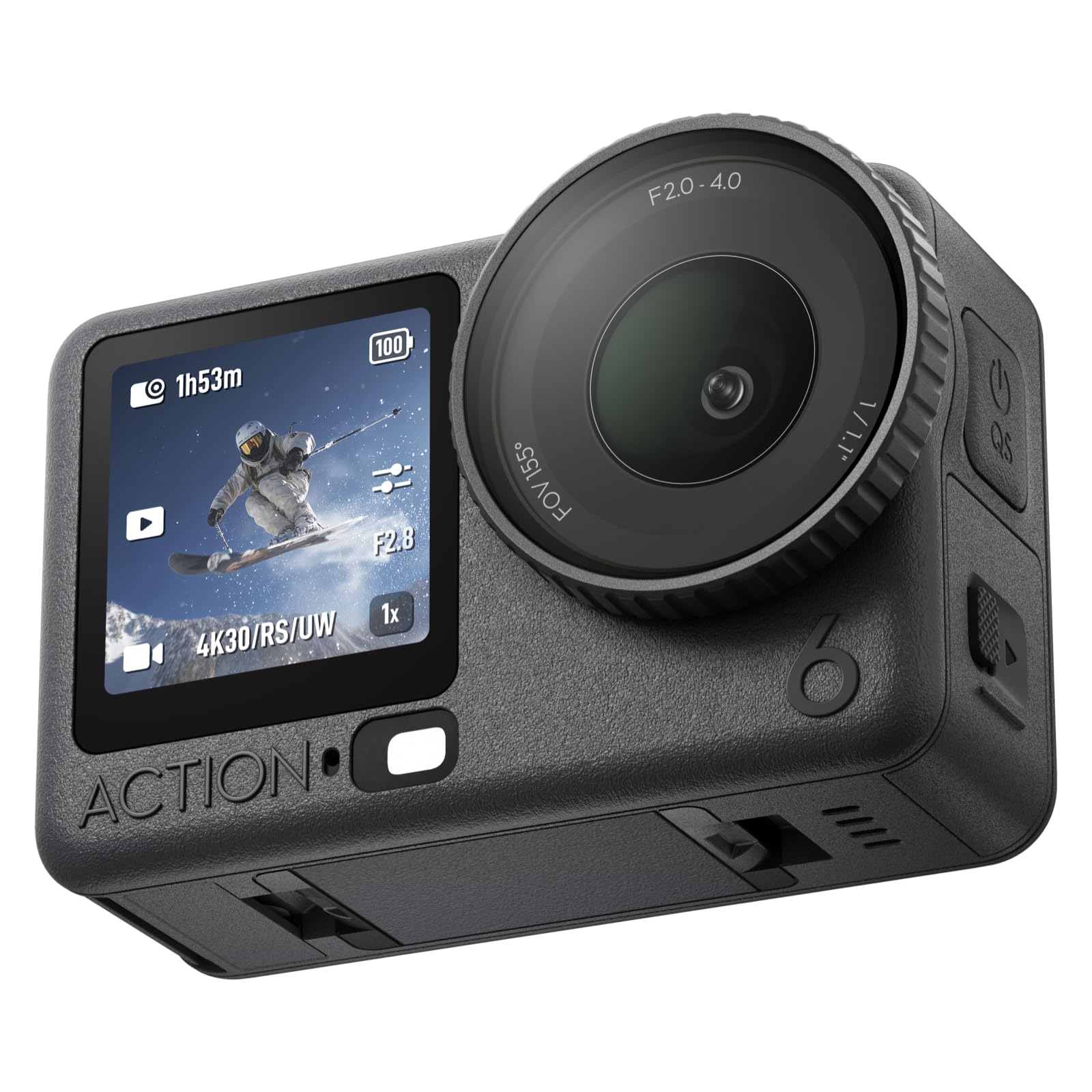
The DJI Osmo Action 6 is the undisputed king of endurance for helmet-mounted riding. Its 1/1.1-inch square sensor captures 8K video with a variable aperture (f/2.0–f/4.0) that adapts instantly as you move from sunlit roads into shaded forest tunnels, delivering consistent exposure without manual fiddling. The 4‑hour cold-resistant battery means you can finish a century ride without a recharge, and the 50GB of built-in storage serves as a reliable fallback when your microSD fills up mid-route.
RockSteady 3.0 and 360° HorizonSteady represent the most advanced stabilization you’ll find on a helmet mount. It completely eliminates the bobbing common with head-mounted cameras and keeps the horizon locked even when you’re cranking your neck to check traffic. The dual‑person audio feature via direct DJI microphone connection is a nicety for vloggers who want rider‑passenger dialogue without a receiver cluttering the helmet.
At this premium tier, the value is clear: you’re paying for reliability, battery endurance, and stabilization that turns every ride into cinematic footage. The Essential Combo strips out extra mounts to keep the package lean, but the core camera is built to withstand 20m of water without a housing — meaning rain, river crossings, and wash-downs are non-issues. It’s the set‑and‑forget helmet camera for riders who prioritize runtime and rock‑steady video above all else.
Why it’s great
- Variable aperture handles bright sun to deep shade without exposure shifts
- 4‑hour battery covers even the longest endurance rides
- HorizonSteady locks the horizon at 4K/60fps, eliminating head‑bob
- 50GB built-in storage plus fast UHS-II card slot
Good to know
- Higher sticker price than any other camera here
- No GPS or accelerometer for speed/route overlays
- Essential Combo lacks the curved adhesive mount found in standard kit
2. Insta360 Ace Pro 2 Dual Battery Bundle
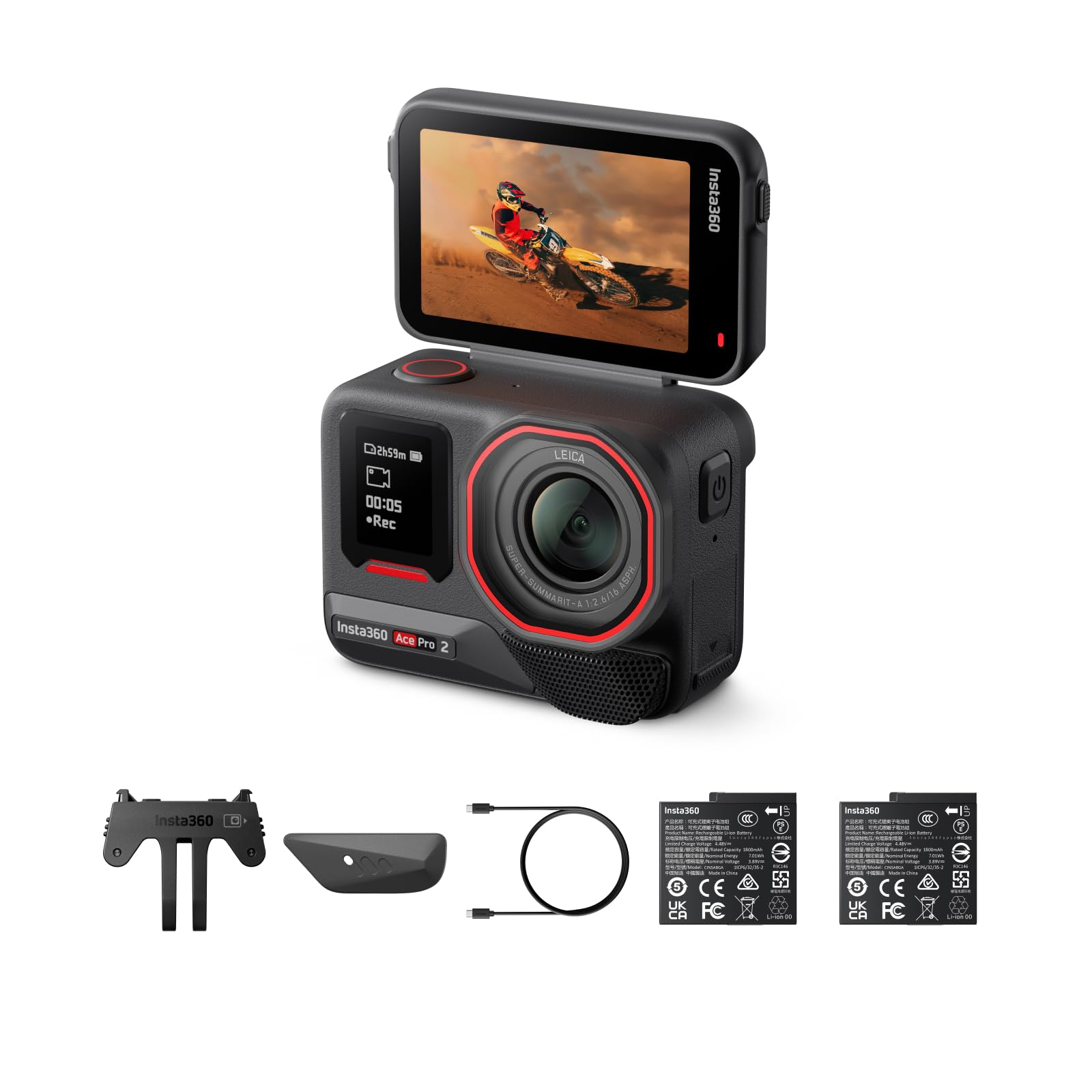
The Insta360 Ace Pro 2 is the specialist for after-dark commutes and dusk trail runs. Its co-engineered Leica 8K lens paired with a dedicated Pro Imaging Chip and a separate 5nm AI Chip delivers 13.5 stops of dynamic range — enough to pull usable detail from street-lit pavement without blowing out car headlights. The PureVideo mode now supports 4K60fps with AI-driven noise reduction, meaning night footage looks clean rather than grainy.
FlowState Stabilization keeps the frame smooth even when you’re bouncing over speed bumps, and the 157° wide-angle lens (with MegaView FOV) captures a broad field of view essential for safety‑minded cyclists who want to record lane‑change contexts. The 2.5-inch flip touchscreen is durable and bright enough to compose shots under direct sun, and the magnetic mounting system clicks into place securely — no wobble over cobblestones.
The Dual Battery Bundle doubles your runtime (each battery lasts roughly 90–100 minutes of 8K recording), but real-world endurance with 4K Active HDR is closer to 2 hours per battery. The Wind Guard accessory is a smart addition: it dramatically cuts wind roar at cycling speeds without requiring a dead‑cat windscreen. If you ride often in mixed‑light conditions (dawn, dusk, tunnels) and demand the best image quality from a helmet-mounted package, this is your pick.
Why it’s great
- Low‑light 4K60fps PureVideo with AI noise reduction is class‑leading
- Leica color science produces rich, natural hues straight out of camera
- Wind Guard kills helmet‑roar without muffling important audio
- Durable flip touchscreen works well in bright daylight
Good to know
- Battery life is closer to 1.5–2 hours at 4K HDR, not 8K runtime
- Larger and heavier than ultra‑compact options like the Xtra Atto
- High premium price point, but justified by Leica optics and dual‑chip processing
3. AKASO 360 Action Camera Cycling Combo
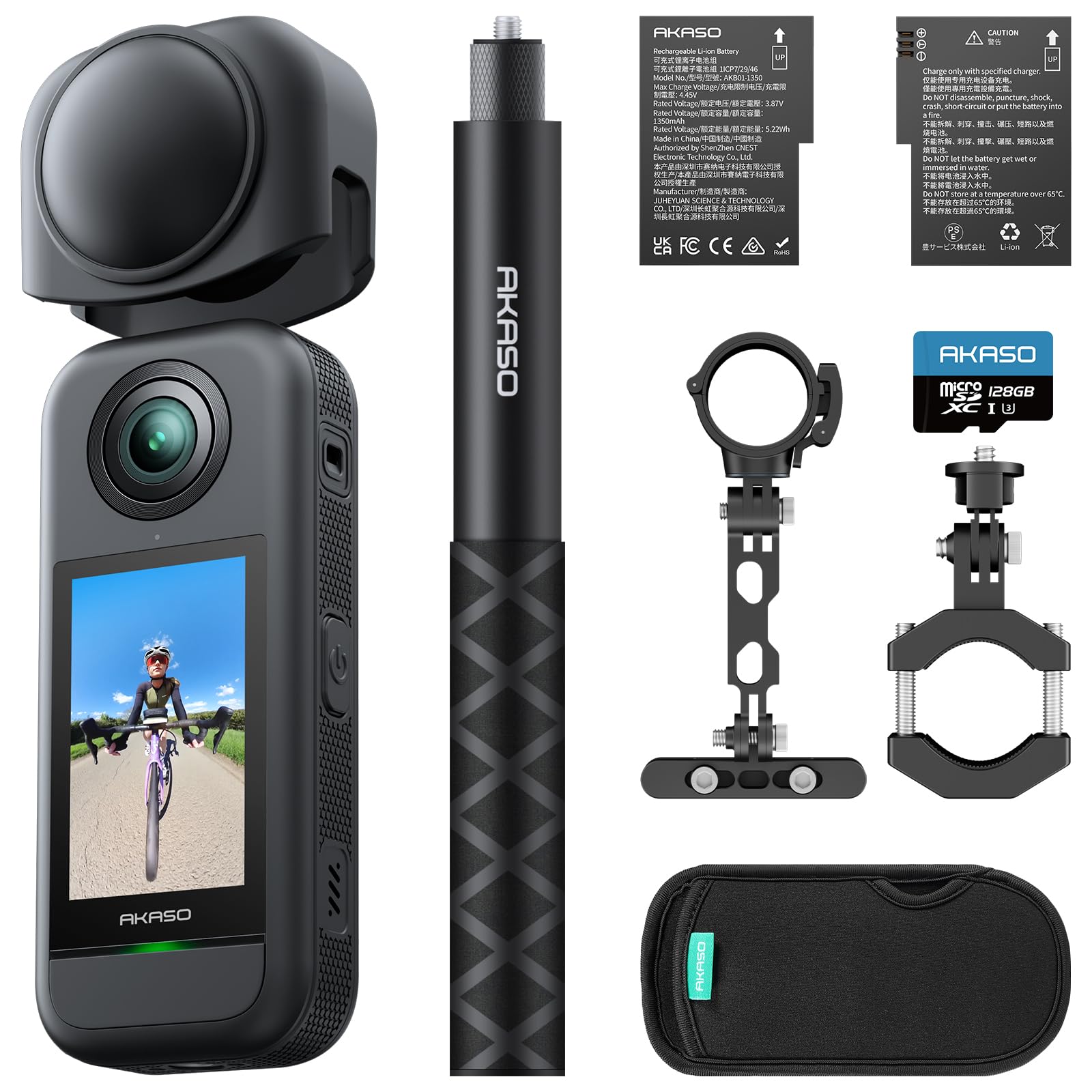
The AKASO 360 flips the script on traditional helmet cams by capturing everything around you in 5.7K 360° video. Instead of aiming the lens forward, you mount it on top of your helmet (or use the included handlebar mount) and reframe the shot later using the AKASO 360 Studio app — perfect for cyclists who want both forward road view and rear traffic awareness in a single recording. The dual 1/2-inch 48MP sensors stitch a seamless spherical image with invisible selfie‑stick removal for third‑person effects.
360° Supersmooth stabilization and 360° Horizon Lock keep footage level even when you lean hard into corners or spin your head to check behind. The AI Subject Tracking is particularly useful for group rides: it can lock onto a fellow rider and keep them centered in the reframed export, effectively acting as an automated cameraman. The included 128GB microSD card is a welcome inclusion, though you’ll want a V60 card for reliable 5.7K recording.
Battery life is the main compromise — expect around 50–60 minutes of continuous 360° recording, which means longer rides require an external power bank. The camera can record and charge via USB-C, so a top‑tube battery pack solves this. At a mid-range price point well below Insta360 X-series equivalents, the AKASO 360 delivers 90% of the 360‑camera experience at a fraction of the cost, making it an excellent choice for riders who love experimenting with creative POV.
Why it’s great
- 360° capture eliminates aiming — reframe any angle after the ride
- Horizon Lock keeps the world level even during aggressive head movement
- Included 128GB card and full accessory kit for helmet mounting
- Price significantly undercuts major 360‑camera competitors
Good to know
- Battery life (~54 min) demands a power bank for long rides
- Requires an invisible selfie stick for true third‑person effect (not included)
- Low‑light quality is noticeably weaker than the DJI or Insta360 premium options
4. Xtra Atto Wearable 4K Action Camera (128GB)
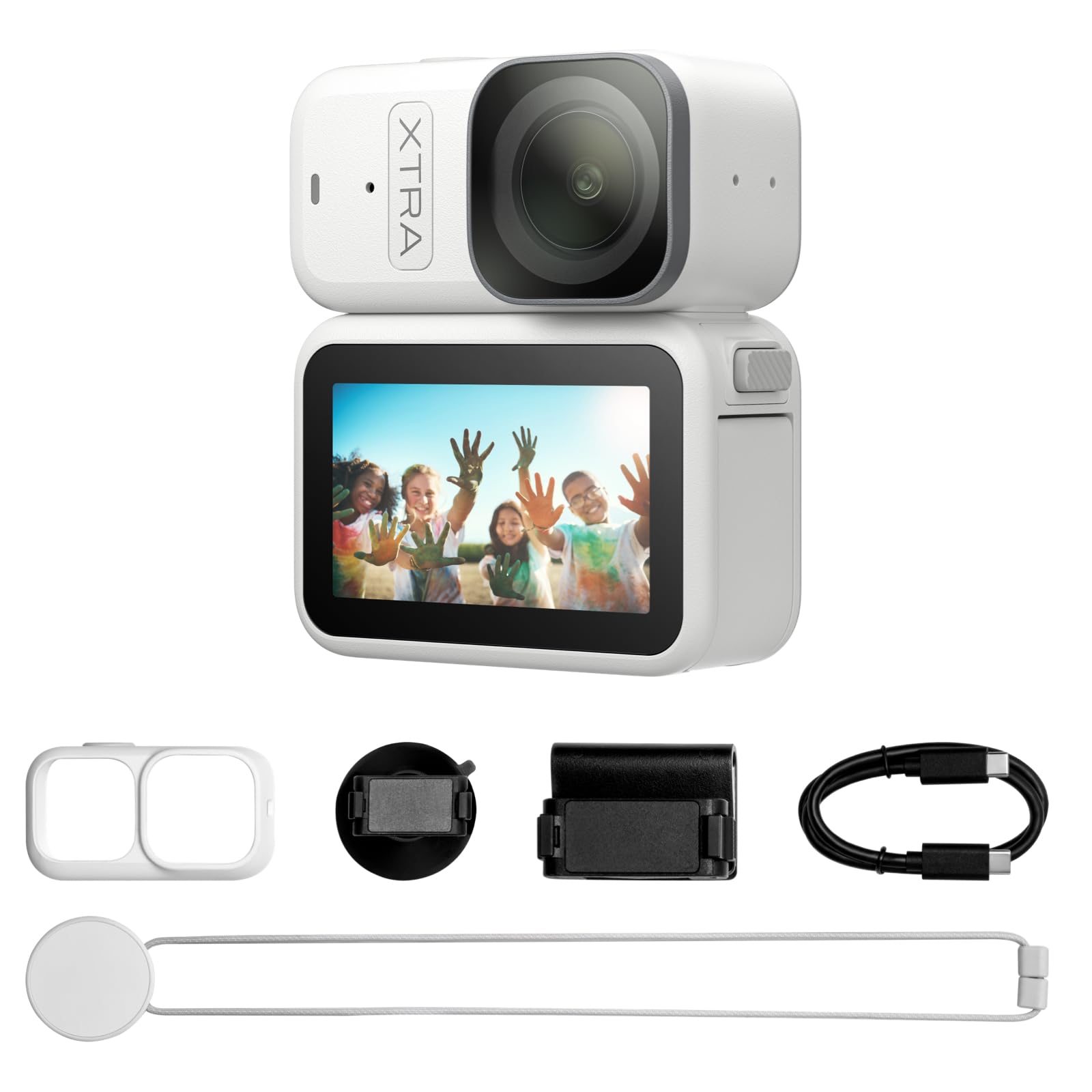
At just 54 grams, the Xtra Atto practically disappears on your helmet — you’ll forget it’s even there. That weight savings doesn’t come at the cost of quality: its 1/1.3‑inch sensor captures 4K/60fps video with 10‑bit color depth, delivering vibrant, smooth footage that holds up well in daylight conditions. The magnetic hat clip and lanyard system make it incredibly easy to attach and remove without wrestling with adhesive mounts.
The bundled Vision Dock extends total runtime to 220 minutes by charging the camera between recording sessions, and the 600MB/s transfer speed via dock lets you dump 1GB of 4K footage in about 3 seconds — a massive time saver for content creators. The 5‑minute pre‑recording buffer ensures you never miss a sudden moment, like a deer crossing the trail or a crash ahead of you. Built-in 128GB storage is generous and covers long rides without needing an SD card.
The included Dual-Direction Magnetic Ball-Joint Adapter Mount offers 360° articulation for dialing in your exact helmet angle, and the magnetic body can snap directly onto metal surfaces like steel bridge railings for unique stationary shots. Lack of a removable lens cover means you can’t add ND filters, and the fixed wide‑angle lens shows barrel distortion at the edges. For riders prioritizing low weight and convenience over absolute image quality or stabilization, the Atto is a brilliant everyday companion.
Why it’s great
- 54g is the lightest in this roundup — no neck strain on long descents
- Vision Dock extends practical runtime to over 3.5 hours
- 600MB/s dock transfer saves massive editing time
- 5‑minute pre‑recording buffer captures moments before you press record
Good to know
- Non‑removable lens cover prevents use of ND filters and risks scratches
- Stabilization is good but not class‑leading — some micro‑jitter remains on rough trails
- Wind noise is noticeable at cycling speeds; no advanced wind‑deadening accessory included
5. Xtra Edge 4K Action Camera
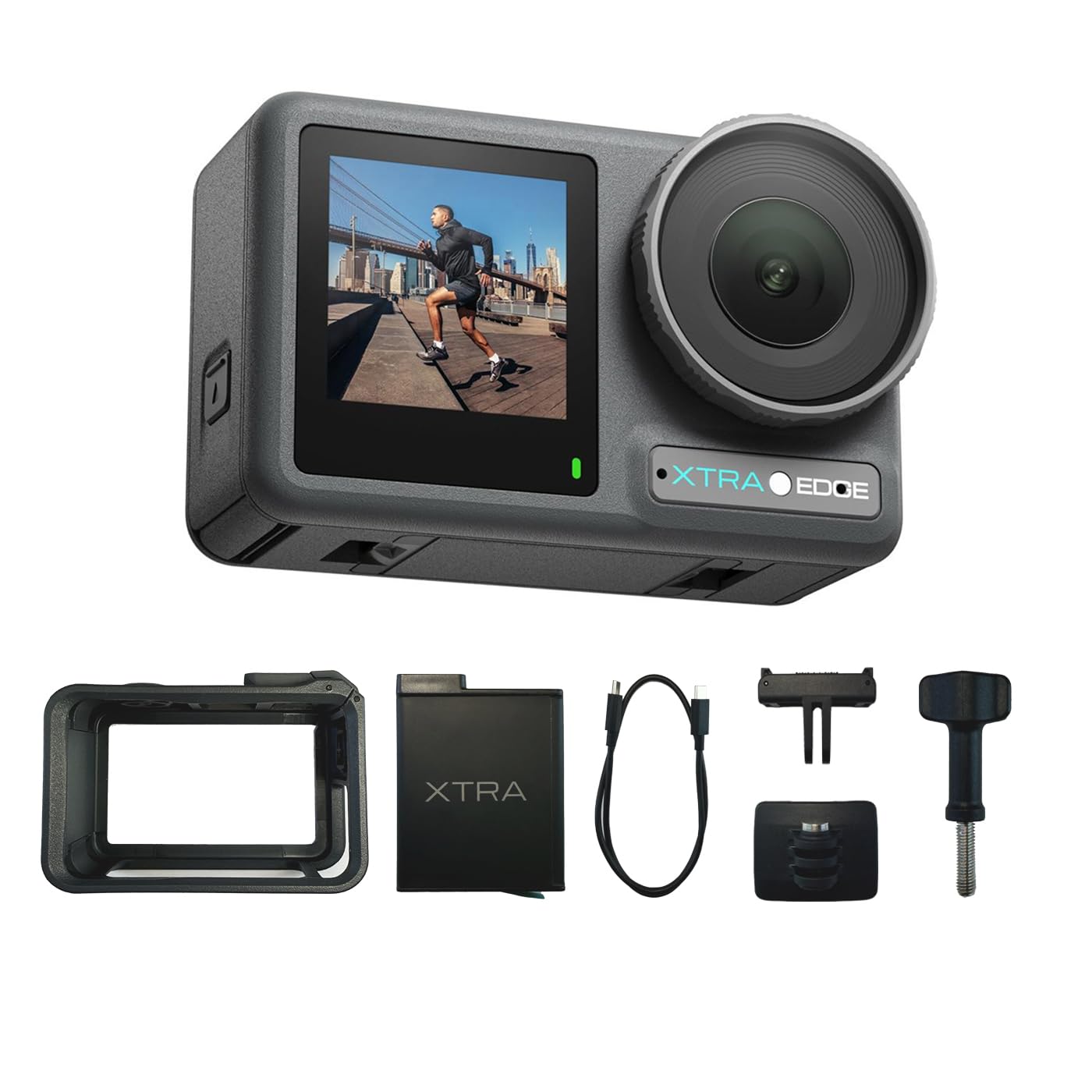
The Xtra Edge 4K delivers the best image‑quality‑to‑price ratio in this guide. Its 1/1.3‑inch sensor is the same physical size found in cameras costing twice as much, and it shows in the footage: vibrant, true‑to‑life color with good dynamic range that handles both bright sky and shaded trail simultaneously. Hyper Stabilization smooths walking and moderate biking effectively, though aggressive downhill chatter can introduce slight wobble.
Waterproofing to 52 feet without a housing means you can ride through monsoon rain without worrying, and the Universal Quick Mount with magnetic lock snaps the camera on and off in one second — ideal for riders who remove the camera at every stop. The bundle includes a cold‑resistant battery and dual‑orientation protective frame, reducing the need for aftermarket accessories. The 3‑hour battery life covers most recreational rides without topping up.
The touchscreen interface is responsive and intuitive, making it easy to switch between 4K, 2.7K, and 1080p modes on the fly. Low‑light performance is the main compromise: night footage is usable but noticeably dimmer and softer than the premium tier. For the mid‑range price, the Xtra Edge 4K is the smart pick for budget‑conscious riders who want tangible image‑quality improvements over the mini‑body cameras without stepping up to the flagship pricing.
Why it’s great
- Large 1/1.3″ sensor captures vivid, detailed 4K with minimal distortion
- 3‑hour battery easily covers a full morning ride
- Magnetic quick‑mount with lock feels secure and allows rapid detach
- Waterproof to 52ft without additional housing
Good to know
- Stabilization struggles with high‑impact mountain bike descents
- Low‑light footage is dim and soft compared to premium models
- Recharging is slow via USB‑C; no fast‑charging support
6. Intepoll TO S3 4K Mini WiFi Action Camera
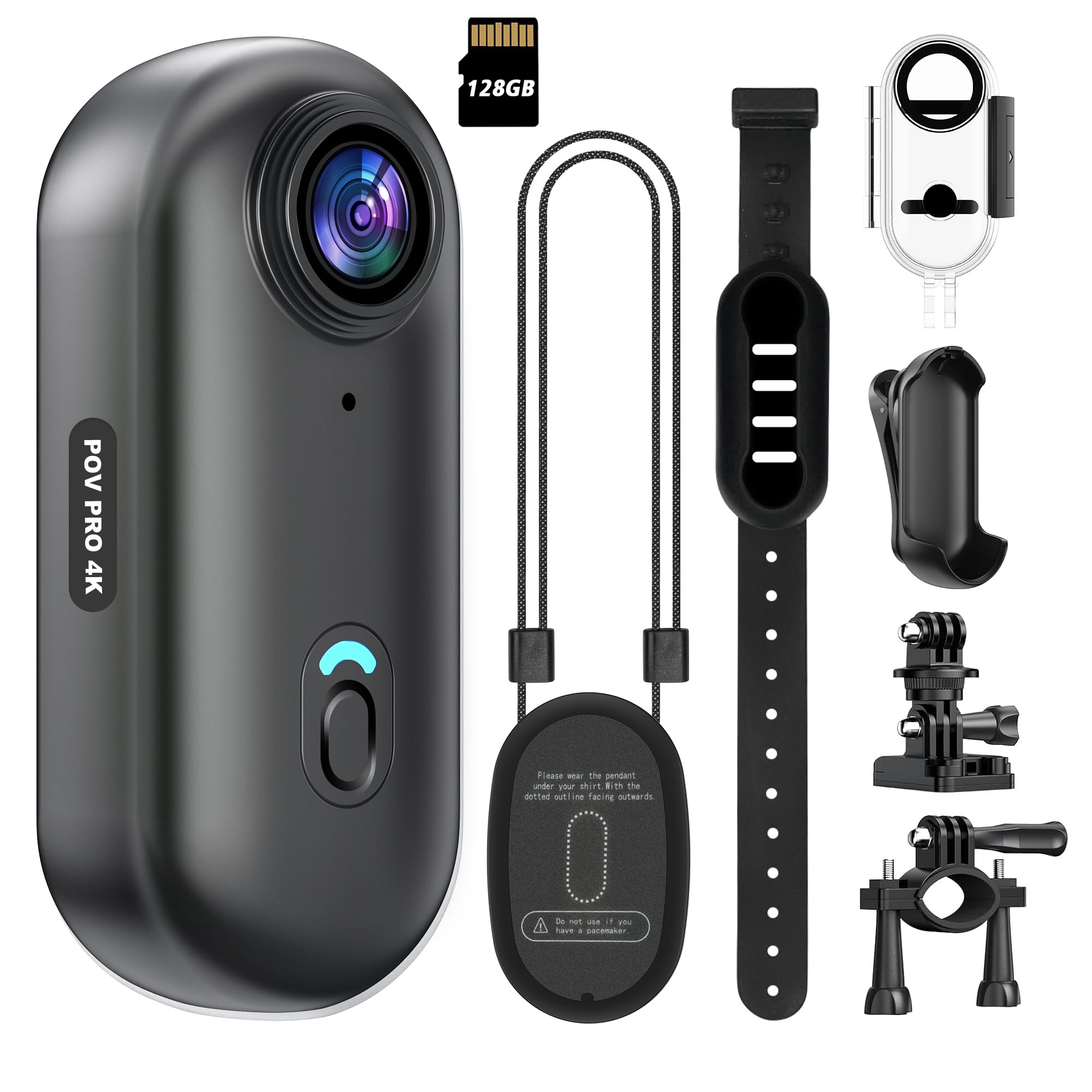
The Intepoll TO S3 is the definition of a budget entry point that doesn’t feel cheap in the hand. At 1.1 x 0.7 x 2.5 inches and 1.27 ounces, it’s barely larger than a thumb drive, making it the most discreet helmet camera you can buy. It records genuine 4K/30fps video (not interpolated) and includes a 128GB microSD card right out of the box — enough for roughly 4 hours of footage.
The magnetic body design with multiple mounts (helmet bracket, back clip, magnetic pendant) gives you enormous mounting flexibility. The IPX7 waterproof case extends to 100 feet, making this camera equally at home on a kayak or in a downpour. Single‑button operation means you can start recording with a gloved hand without fumbling through menus — a crucial feature for cyclists who don’t want to stop to operate the camera.
Stabilization is essentially absent — this is a straight POV capture device, not a smoothing machine. Footage will have head‑bob and vibration on rough roads. The Wi‑Fi app connection can be finicky (multiple reviews mention difficulty pairing), and the maximum loop recording is 9 minutes (not a continuous 90‑minute take). For the budget price and included large storage, the TO S3 works best as a cheap “set and forget” dash cam for your helmet, providing evidence‑grade footage at the cost of cinematic polish.
Why it’s great
- Incredibly small and light — almost invisible on the helmet
- Includes 128GB storage card, saving immediate additional cost
- IPX7 waterproof to 100ft with included housing
- Single‑button record works well with cycling gloves
Good to know
- No image stabilization — footage shows every bump and head turn
- Wi‑Fi app connection is unreliable according to user reports
- 3‑minute loop limit (max 9 minutes) requires attention to file management
- Poor microphone audio with significant wind noise
7. dahocamgo 4K Mini Body Camera
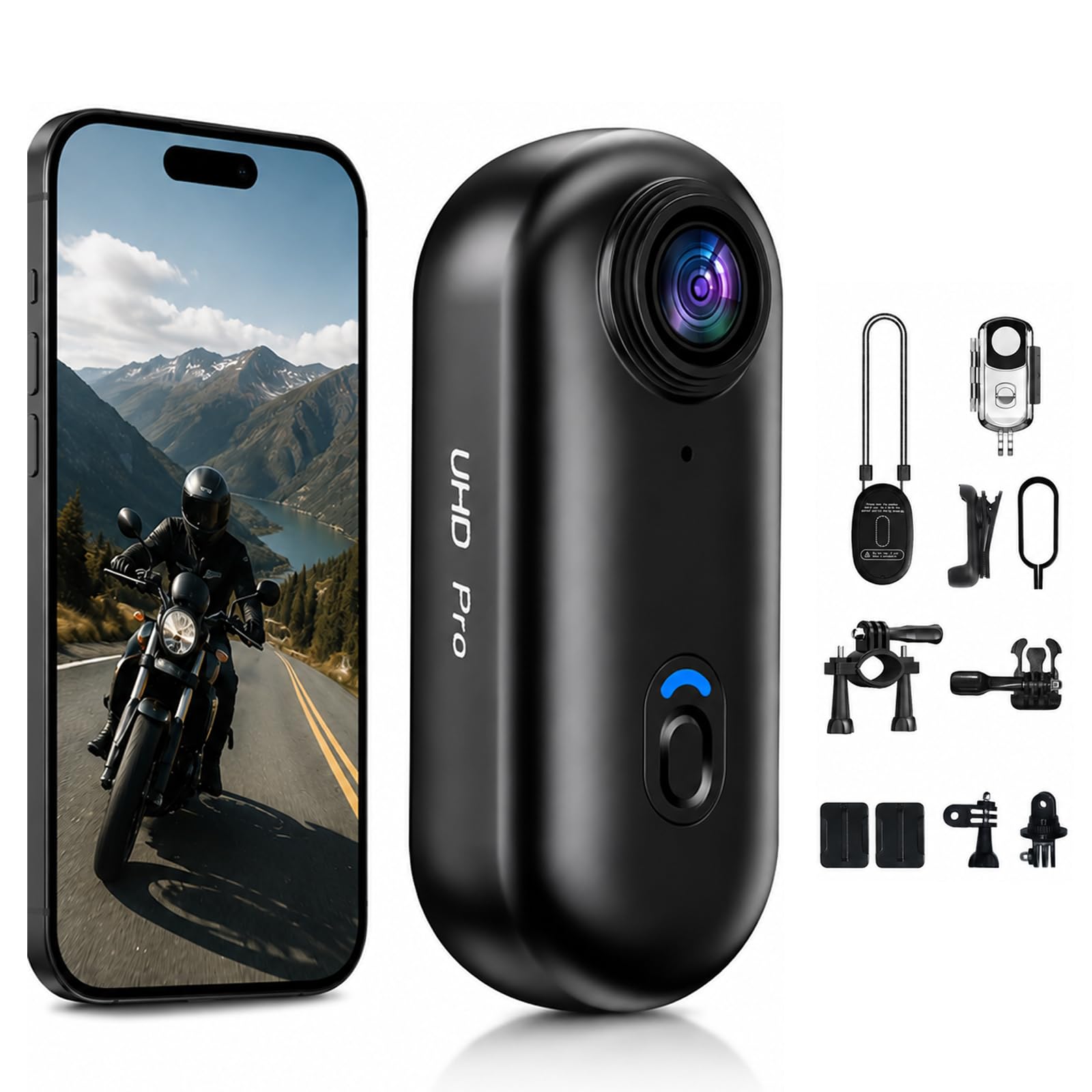
The dahocamgo 4K Mini is the cheapest way to get a dedicated helmet‑mountable camera with built‑in storage. Its 64GB internal memory (expandable to 256GB via microSD) means you don’t need to buy a card separately — just charge, mount, and ride. The 120° wide‑angle glass lens with 4K resolution captures decent daytime detail, though dynamic range is limited: bright skies often blow out while shadows crush.
The 800mAh battery delivers a genuine 90 minutes of recording, which is adequate for short commutes and lunch‑hour loops. The full waterproof rating to 30 meters (with casing) makes it a dual‑use option for cyclists who also swim or kayak. The 360° swivel clip and magnetic lanyard offer multiple mounting positions, and the magnetic mount is strong enough to hold through a shirt — useful if you want to attach it to a jacket chest pocket instead of the helmet.
The 3‑minute automatic video segmentation (loop files) keeps files manageable but means you have to stitch clips together in post for longer rides. The Wi‑Fi app has mixed reliability — some users connect easily for preview, others report QR code login failures. With no stabilization and limited low‑light performance, this camera is best viewed as an affordable entry ticket to helmet POV recording. It’s perfectly adequate for capturing ride evidence and casual memories, but not for cinema‑grade edits.
Why it’s great
- Built‑in 64GB storage eliminates immediate accessory purchases
- 30‑meter waterproof case for dual use in water sports
- Strong magnetic mount holds securely through clothing
- Lowest entry price in the guide
Good to know
- No image stabilization produces shaky POV footage on rough terrain
- 3‑minute loop limit requires post‑ride file merging
- Wi‑Fi app setup is inconsistent across users
- Poor dynamic range with blown highlights in bright conditions
FAQ
What is the ideal weight for a helmet-mounted action camera?
How long should the battery last for a typical bike ride?
Do I need image stabilization for a helmet camera?
Final Thoughts: The Verdict
For most riders, the camera for bike helmet winner is the DJI Osmo Action 6 because its 4‑hour battery and HorizonSteady stabilization deliver reliable, smooth footage from dawn to dusk without compromise. If you want best-in-class low light performance for night rides, grab the Insta360 Ace Pro 2. And for an ultra-light, barely-there helmet companion, nothing beats the Xtra Atto at 54 grams.