
Bass in in-ear monitors is a delicate art. Too much muddies the midrange and ruins the texture; too little leaves kick drums sounding hollow and anemic. The best bass IEMs deliver that visceral, physical slam—the kind that makes you feel the double bass pedal through your jaw—without sacrificing the clarity of the vocals or the shimmer of the cymbals. Finding that precise balance is the core challenge of this category.
I’m Min — the co-founder and writer behind Gadgets Feed. I spent hundreds of hours analyzing frequency response graphs, driver configurations, and community feedback to separate the true subwoofer-like performers from the one-note boomy distortions.
This guide focuses specifically on the best bass iems engineered to reproduce every layer of the low end with authority and precision.
How To Choose The Best Bass IEMs
Not all IEMs that advertise “powerful bass” actually deliver clean low-end extension. Many boost the mid-bass region (around 100-200 Hz) to create a fake sense of punch that quickly becomes fatiguing. The true measure of a bass-focused IEM lies in its sub-bass extension (below 40 Hz), its driver technology, and how well the low frequencies integrate with the mids and highs.
Understand Your Driver Architecture
Dynamic drivers (DDs) are traditionally superior for bass because they physically move more air. Look for larger diaphragms (10mm or bigger) and materials like diamond-like carbon (DLC), titanium-coated PET, or bamboo fiber, which offer a stiffness-to-weight advantage for faster transient response and less distortion at high volumes.
Look at the Tuning, Not Just the Headline Spec
A 4BA+1DD hybrid can sound bass-light if the crossover is poorly designed. The best IEMs use a dedicated bass vent (like KARS 2.0 or S.TURBO) to channel the low-frequency pressure effectively. Pay close attention to reviews that mention “physical slam” or “textured bass” rather than just “lots of bass.”
Quick Comparison
On smaller screens, swipe sideways to see the full table.
| Model | Category | Best For | Key Spec | Amazon |
|---|---|---|---|---|
| FIIO FH7S | Premium Hybrid | Audiophile reference with deep sub-bass | 13.6mm DLC + 4 Knowles BA | Amazon |
| BASN Bmaster5 | Premium Hybrid | Stage monitoring and studio use | 10mm DLC + 4BA, Pentaconn connector | Amazon |
| Sennheiser IE 200 | Mid-Range Single DD | Neutral sound with tunable bass | 7mm TrueResponse transducer | Amazon |
| Tipsy M1 | Mid-Range Single DD | Warm vocals and punchy mid-bass | Bamboo fiber diaphragm, -36dB isolation | Amazon |
| KZ ZS10 PRO 2 | Value Hybrid | Versatile tuning with physical switches | 10mm DD + 4BA, 4-level tuning | Amazon |
| KZ ZS12 PRO 2 | Value Hybrid | High-resolution clarity with precise sound imaging | 10mm DD + 5BA, electronic crossover | Amazon |
| Kiwi Ears Cadenza II | Budget Single DD | Budget benchmark for neutral bass clarity | 10mm Ti-coated PET driver, KARS 2.0 | Amazon |
In‑Depth Reviews
1. FIIO FH7S

The FIIO FH7S sits at the premium end of this list for a very concrete reason: its 13.6mm DLC (diamond-like carbon) diaphragm is the largest dynamic driver here, and it is backed by a custom four-driver Knowles balanced armature array for the mids and highs. The patented S.TURBO acoustic design uses a turbine-shaped tube to amplify the bass waves without sacrificing texture, so you get deep, articulate sub-bass that doesn’t bleed into the midrange.
This IEM is semi-open, which reduces the air resistance on the drivers and yields a spacious soundstage that feels wider than most closed-back competitors. The heavy, all-metal build adds a premium heft that matches its price tier. Users consistently report that the FH7S’s bass is punchy and well-separated, with excellent detail retrieval across the entire frequency range, making it a strong candidate for critical listening across EDM, rock, and orchestral tracks.
Good to know: The FH7S is quite efficient and doesn’t require a powerful amplifier, but pairing it with a good DAC reveals even finer micro-details. Some users with smaller ears may find the rounded but bulky shell less comfortable over extended sessions. The included filters and ear tips offer customization, but finding the perfect seal is essential to unlock the full sub-bass potential.
Why it’s great
- Massive, textured sub-bass with no bloat
- Wide, airy semi-open soundstage
- Outstanding build quality with metal shell
Good to know
- Shell size may cause discomfort for smaller ears
- Filters make subtle, not dramatic, changes
2. BASN Bmaster5

The BASN Bmaster5 is purpose-built for drummers and musicians who rely on live stage monitoring. Its 1DD+4BA hybrid design uses a 10mm DLC diaphragm to deliver a fast, transient-rich bass response. Unlike many budget IEMs that exaggerate the mid-bass (100-200 Hz) to sound punchy, the Bmaster5 keeps the low-end relatively flat and controlled, making it ideal for bassists who need to hear the fundamental pitch clearly without masking the kick drum.
The key differentiating hardware feature here is the Pentaconn connector. It replaces the standard 0.78mm 2-pin or MMCX with a more robust, lower-resistance connection that ensures consistent signal transfer on loud stages. The package includes both a 4-core OFC audio cable for pure monitoring and a separate mic cable for everyday calls. The hard aluminum case adds a layer of protection that traveling musicians will appreciate.
Good to know: The neutral-bass tuning might be a dealbreaker for listeners seeking a thumping, consumer-oriented bass boost. Some user feedback notes the ear pieces are on the larger side, which can be uncomfortable for smaller ear conchas. The Pentaconn connectors, while high-quality, are proprietary and limit aftermarket cable swapping compared to standard 2-pin or MMCX.
Why it’s great
- Clean, accurate bass response ideal for monitoring
- Robust Pentaconn connector for stage reliability
- Comes with both audio and mic cables
Good to know
- Bass is flat, not punchy for fun listening
- Large shells may not fit small ears well
3. Sennheiser IE 200

Known for its neutral, audiophile-grade sound signature, the Sennheiser IE 200 fits a unique niche among bass-focused IEMs. It uses a single 7mm TrueResponse dynamic driver—the same transducer tech found in Sennheiser’s more expensive IE series. A small 7mm driver is not typically associated with deep bass, but the IE 200 compensates with its dual-position ear tip mounting. By pushing the ear tips further onto the nozzle, you create a tighter seal that increases perceived bass by around 4-6 dB, offering a tunable low-end response from controlled to full-bodied.
This design philosophy prioritizes accuracy over raw power. The bass that does come through is tight, punchy, and never boomy. This makes the IE 200 a brilliant choice for listeners who want a single-driver coherence across all frequencies but occasionally need more presence in the low end for certain genres. The MMCX connector is a standard, upgradeable interface, and the braided cable is low-noise and durable.
Good to know: The stock cable is often described as flimsy by users, and the MMCX connector, while standard, has been noted to be slightly recessed, limiting some third-party cable compatibility. Without the dual-position tip trick, the IE 200 is quite bass-light, so achieving the desired seal is critical. It also benefits noticeably from a dedicated DAC to resolve its full frequency detail.
Why it’s great
- Highly tunable bass via ear tip position
- Coherent, neutral single-driver sound
- Extremely comfortable and lightweight
Good to know
- Stock cable feels low quality
- Requires specific seal to get bass response
4. Tipsy M1
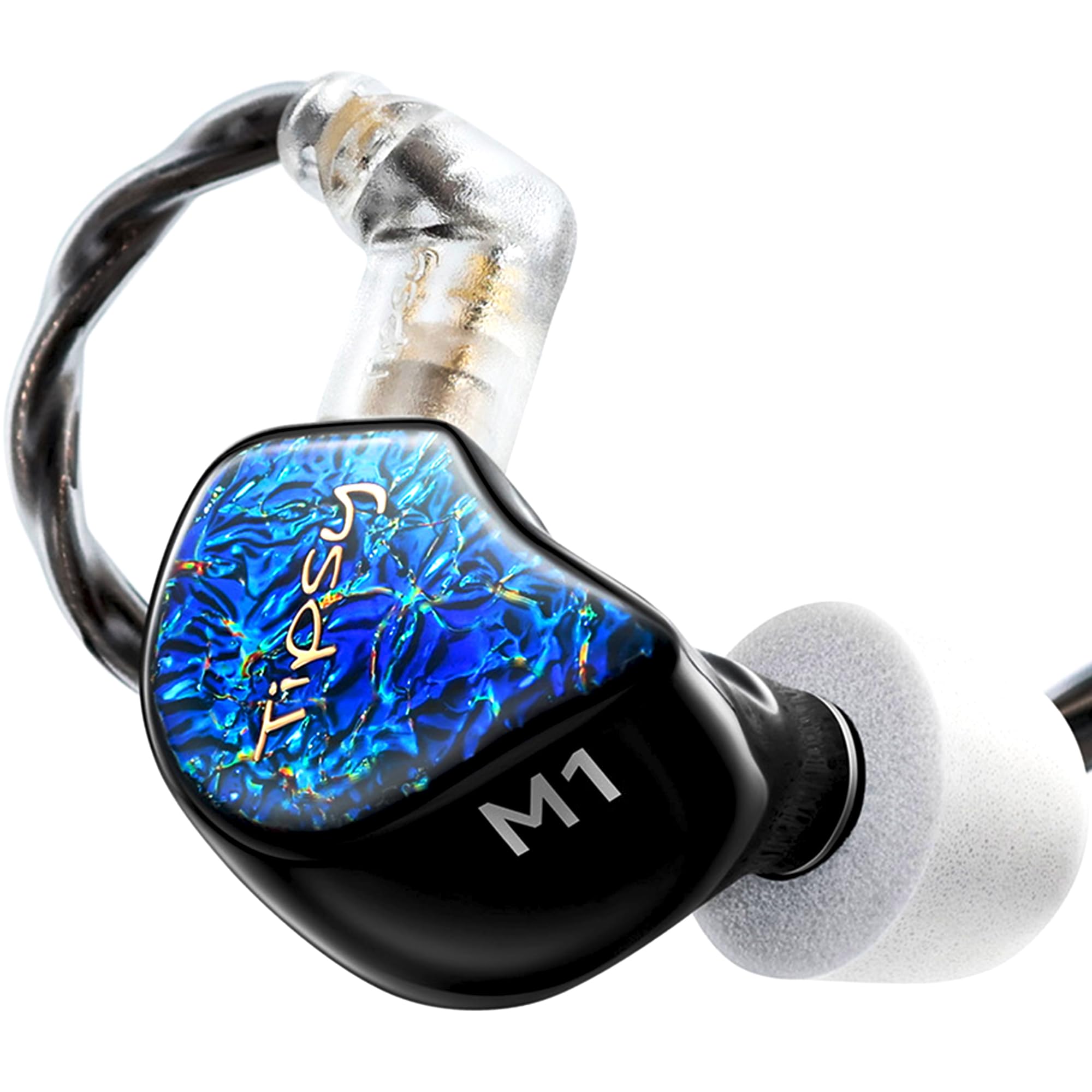
The Tipsy M1 is a refreshingly artistic entry into the bass IEM space. It uses a world-first bamboo fiber diaphragm that provides a unique stiffness-to-weight ratio. This material choice translates to a warm, lively sound signature where the lower midrange is slightly boosted to bring vocals and bass instruments forward. The bass region is punchy and full-bodied without being overpowering, making the M1 a great choice for pop, R&B, hip-hop, and rock where vocal warmth and kick drum impact are essential.
Tuned with a “less is more” philosophy, the M1 is a single dynamic driver with no crossover to worry about. The dual-chamber airflow technology maximizes the efficiency of the 10mm driver, producing up to -36 dB of passive noise isolation. This is exceptional for its class and makes the M1 ideal for commuting or casual gaming. The hand-crafted resin shells, inspired by Van Gogh’s paintings, are visually stunning and lightweight for long-term wear.
Good to know: The cable is a standard 0.78mm 2-pin but is noticeably short (around 1.2m), which is fine for desk use but limiting for portable players worn in a pocket. Some users report that the fit is quite deep, which not everyone may prefer. The focus on mid-bass warmth means sub-bass extension and rumble are moderate, not class-leading.
Why it’s great
- Warm, musical tuning with engaging bass
- Excellent passive noise isolation (-36 dB)
- Stunning, unique hand-crafted design
Good to know
- Cable is shorter than ideal for portable use
- Sub-bass extension is moderate, not deep
5. KZ ZS10 PRO 2

The ZS10 PRO 2 is the successor to KZ’s legendary ZS10 Pro, and it retains the key feature that made the series a favorite: a 4-level tuning switch. This allows you to physically adjust the frequency response on the fly. By toggling switches on the faceplate, you can shift the bass from “polite” to “punchy” and the treble from relaxed to forward, giving you four distinct sound signatures in one device. This hardware-level customization is rare at this mid-range price point.
The driver configuration pairs a 10mm super-linear magnetic dynamic driver with four custom 31736 balanced armature drivers. The dynamics handle the low frequencies with adequate punch, while the BA drivers manage the mids and highs with the clarity expected from a multi-driver setup. The electronic three-way crossover ensures smooth transitions between the drivers, avoiding the disjointed sound that plagues poorly tuned hybrids.
Good to know: The stock ear tips are widely criticized for being uncomfortable and having an unpleasant smell; most users recommend replacing them immediately with memory foam tips. With the tuning switches set flat, the bass can feel underwhelming, so you’ll want to experiment with the switch positions. The shell is also relatively bulky and may not sit well in smaller ears.
Why it’s great
- Four hardware tuning switches for custom sound
- Good clarity and separation for the price
- Detachable, upgradeable silver-plated cable
Good to know
- Stock ear tips are poor quality; budget for replacements
- Shell is bulky for smaller ears
6. KZ ZS12 PRO 2
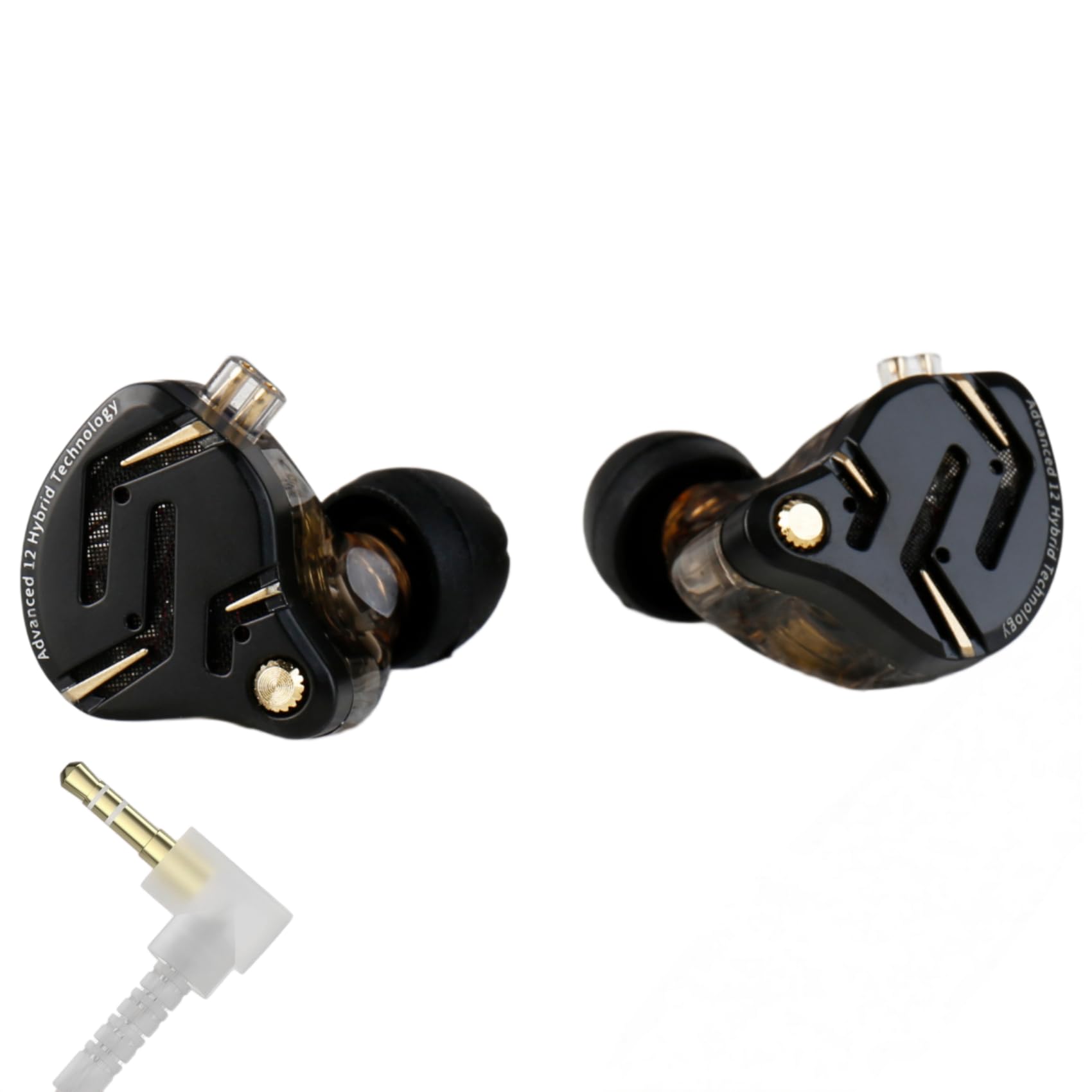
The KZ ZS12 PRO 2 is a 1DD+5BA hybrid that pushes driver count higher while maintaining a reasonable asking price. The key here is the electronic crossover board, which acts as the “sound commander” to divide frequencies between the dynamic driver and the five balanced armature units. This results in a remarkably clean layer of separation. The 10mm ultra-low frequency dynamic driver provides the bass depth, while the 4×31736 and 1×30019 BA drivers handle the mid-high and ultra-high frequencies with precision.
What sets the ZS12 PRO 2 apart is its explicit orientation toward gaming. The precise sound imaging and fast transient response are tuned to help you locate opponents in first-person shooters. The bass, while powerful, is kept tight enough to avoid masking footsteps. The ergonomic over-ear design and lightweight metal faceplate with resin shell make it comfortable for long gaming sessions.
Good to know: The cable tangles extremely easily, according to multiple users. While the build quality is solid, the brand (YINYOO on Amazon) is less established than Linsoul or KZ direct, so warranty support may vary. Some listeners find the treble a touch forward, which can cause fatigue on certain tracks over extended listening.
Why it’s great
- Excellent sound imaging for competitive gaming
- High driver count (6 drivers) with clean crossover
- Punchy, well-defined bass response
Good to know
- Cable tangles very easily
- Treble may be too bright for some listeners
7. Kiwi Ears Cadenza II
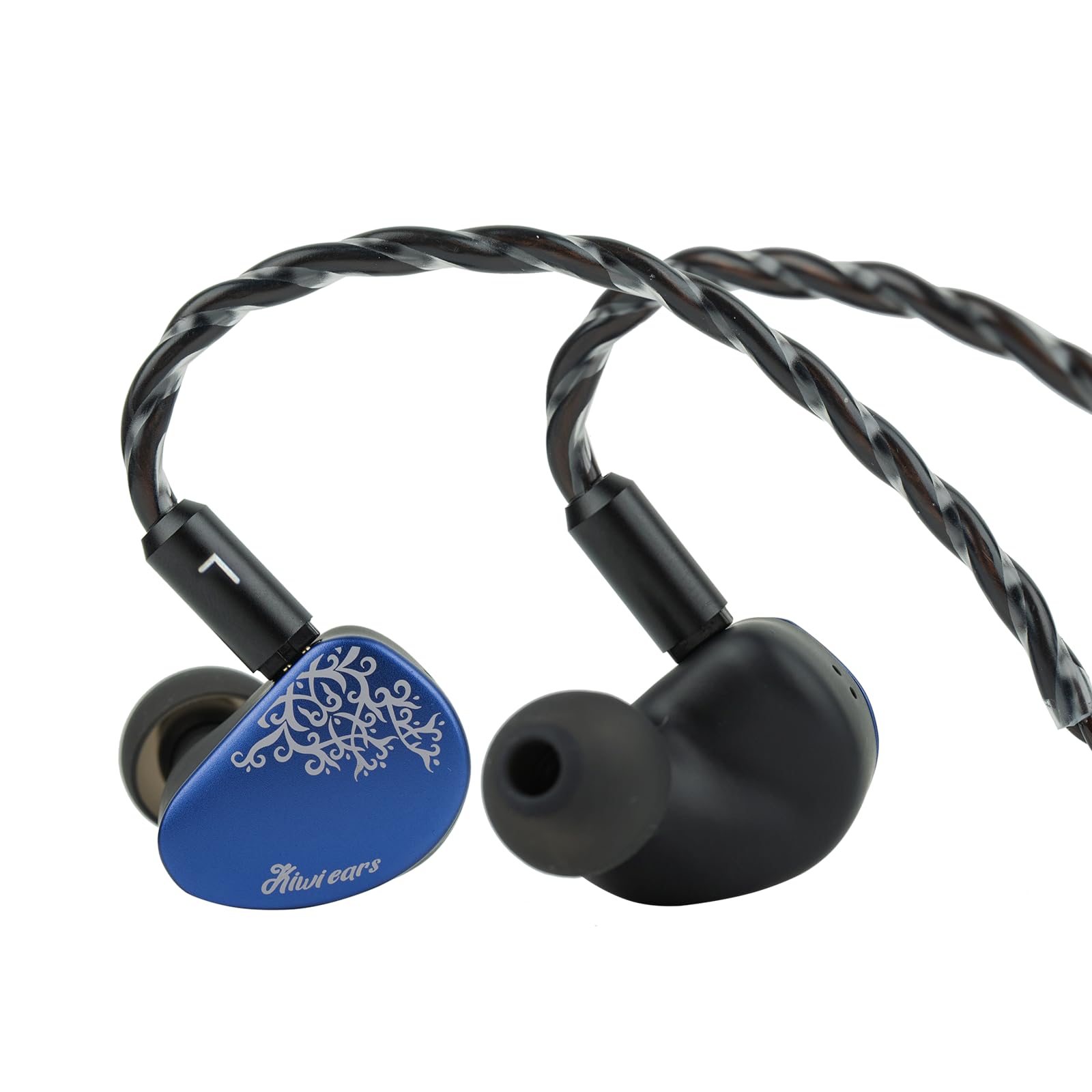
The Cadenza II redefines what a budget single dynamic driver IEM can achieve. Its 10mm titanium-coated PET diaphragm is a proper hybrid material — the titanium adds stiffness for fast attack, while the PET core provides the compliance needed for deep extension. The proprietary Kiwi Acoustic Resonance System (KARS 2.0) is a vented acoustic chamber that focuses the driver’s energy into a precise 8 dB sub-bass shelf that cuts off cleanly at 200Hz. This means you get the satisfying rumble of a subwoofer without the bleed into the lower midrange that muddies vocals.
The CNC-machined aerospace aluminum faceplate gives it a feel far above its price tier. The cable is single-crystal oxygen-free copper with a standard 0.78mm 2-pin connector, which is easy to upgrade. Reviews consistently praise this IEM for its “near-perfect neutral tuning” with “satisfying thump” — a rare combination in the budget space. It is an ideal entry point for anyone who wants to understand what well-tuned bass sounds like.
Good to know: The earpieces lack clear L/R markings, which makes the initial setup fiddly. The ear tips are not pre-installed, and some users find them difficult to seat properly until they figure out the correct technique. Once you get past the setup quirks, the sound quality is widely considered one of the best in its class.
Why it’s great
- Exceptional sub-bass extension for the price
- Clean, well-tuned crossover point at 200Hz
- Premium aluminum faceplate and build
Good to know
- No L/R markings on the earpieces; setup is fiddly
- Ear tips are not pre-attached
FAQ
Do I need a dedicated DAC or amplifier for bass IEMs?
How does passive noise isolation relate to bass perception?
Final Thoughts: The Verdict
For most users, the best bass iems winner is the FIIO FH7S because it delivers deep, textured sub-bass without losing its composure across the rest of the frequency spectrum. If you want the tunability of a single-driver design with an option to lift the bass, grab the Sennheiser IE 200. And for the best value that nails the fundamentals of controlled bass extension and clear mids, nothing beats the Kiwi Ears Cadenza II.