
Choosing the wrong 10W-40 can turn crisp gear changes into a notchy, grinding mess and leave your wet clutch begging for mercy. The viscosity grade alone isn’t enough — the JASO MA2 certification and the base oil technology determine whether your engine and transmission live in harmony or suffer premature wear.
I’m Min — the co-founder and writer behind Gadgets Feed. I’ve spent countless hours cross-referencing technical data sheets, analyzing flash point figures, and examining real user feedback across hundreds of miles of varied riding conditions to separate the oils that merely meet the spec from those that truly protect.
Whether you ride a heavy cruiser, a high-revving sportbike, or a dual-sport that sees everything from asphalt to dirt, this guide breaks down the seven best contenders for your machine. Here is my analysis of the best 10w40 motorcycle oil on the market today.
How To Choose The Best 10W40 Motorcycle Oil
Selecting the right 10W40 isn’t just about matching the viscosity number on the bottle. Your bike’s wet clutch, integrated gearbox, and high-revving engine demand specific friction modifiers and thermal stability that car oils simply cannot provide.
JASO MA2 Certification — Non-Negotiable for Wet Clutches
Oils bearing the JASO MA2 rating are formulated with a controlled friction coefficient that prevents clutch slippage under hard acceleration. An oil lacking this certification — even if it’s the correct viscosity — can cause your clutch to chatter, slip, or grab unpredictably, reducing both performance and component life. Always verify the certification before pouring.
Base Oil Type: Mineral, Semi-Synthetic, or Full Synthetic
Mineral oils are budget-friendly and adequate for low-stress engines with frequent change intervals. Semi-synthetic blends like the Castrol Actevo X-tra offer a middle ground of improved thermal protection without the premium cost. Full synthetic oils, particularly those using ester technology such as the Motul 7100, provide superior shear resistance, lower volatility, and a higher flash point — critical for air-cooled engines or high-performance builds that run hot.
Flash Point and Shear Stability
Flash point indicates the temperature at which oil vapors can ignite — a higher number (above 200°C is good, above 230°C is excellent) means less oil consumption and reduced varnish formation at high temperatures. Shear stability describes how well the oil maintains its viscosity grade under the mechanical stress of transmission gears. A 10W-40 that shears down to a 30-grade offers dramatically less protection when you need it most.
Quick Comparison
On smaller screens, swipe sideways to see the full table.
| Model | Category | Best For | Key Spec | Amazon |
|---|---|---|---|---|
| Motul 7100 4T 10W-40 | Full Synthetic Ester | High-Performance / Sportbikes | 100% Ester Technology, Flash Point 230°C | Amazon |
| Liqui Moly 4T 10W-40 Street | Synthetic Technology | Ultra-Smooth Shifting | Flash Point 230°C, JASO MA2 | Amazon |
| Royal Purple Max Cycle 10W-40 | Full Synthetic | Air-Cooled Engine Temp Reduction | Synerlec Additive, Flash Point 204°C | Amazon |
| Castrol Actevo X-tra 10W-40 | Part Synthetic | Best Value / Daily Riders | Heat Protection Molecules, JASO MA2 | Amazon |
| Valvoline 4-Stroke 10W-40 | Conventional | Reliable Multi-Bike Fleet | Anti-Shudder Protection, 6 Qt Case | Amazon |
| Pack of 6 Kawasaki K-Tech 10W-40 | Mineral | OEM Replacement / Mule & ATV | Genuine Kawasaki Formulation, 6 Qt | Amazon |
| Kawasaki 4-Stroke 10W-40 (Single Qt) | Mineral | Top-Off / Single Change | Official OEM Formulation, 1 Qt | Amazon |
In‑Depth Reviews
1. Motul 7100 4T 10W-40 Full Synthetic Motorcycle Oil

The Motul 7100 utilizes 100% ester-based synthetic technology, which provides a naturally high polarity that clings to metal surfaces even when the engine is off — ensuring instant lubrication on cold starts. With a flash point of 230°C and robust shear resistance, it maintains its 10W-40 viscosity under extreme gearbox stress without shearing down to a lighter grade.
Real-world owners of high-revving Kawasaki Z900s and Honda VFR800s report consistently smooth shifting and zero clutch slip even after extended track sessions or spirited canyon riding. The ester formulation also acts as a natural cleaner, helping to dissolve sludge and varnish left behind by lower-tier oils over time.
This oil is the pick for riders who demand the absolute best thermal margin and film strength. While the upfront cost is higher per liter, the extended drain intervals and reduced engine wear make it a cost-effective choice for premium machinery.
Why it’s great
- 100% Ester base provides unmatched film strength and high-temp protection
- Excellent gearbox feel with smooth, predictable clutch engagement
- JASO MA2 certified for wet clutch compatibility
Good to know
- Premium price point may be overkill for low-stress commuter bikes
- Not recommended for engines requiring a lower ash content (non-cat models fine)
2. Liqui Moly 4T 10W-40 Street 4-Liter

Liqui Moly’s 4T Street uses a high-performance synthetic technology base oil that delivers a noticeably quieter valvetrain and silky-smooth gear changes right from the first mile. The flash point of 230°C matches the Motul’s thermal ceiling, but the additive package is tuned specifically for street riding — optimizing friction for predictable clutch feel at low RPMs.
Owners swapping from Valvoline or OEM conventional oils on Kawasaki Vulcan 650s and Honda VFRs consistently report a reduction in gearbox notchiness and a quieter, more refined engine note. The thoughtful pour spout design also makes mess-free top-offs easier, a small detail that frequent changers appreciate.
This is the go-to oil for riders who value shift quality above all else and want German engineering at a mid-range price point. It works brilliantly across water-cooled and air-cooled engines alike without the premium cost of full ester oils.
Why it’s great
- Noticeably quieter engine and smoother gear changes than conventional oils
- High 230°C flash point for reduced oil consumption
- Excellent pour spout design for clean refills
Good to know
- Not a full synthetic; sits between mineral and premium ester
- 4-liter jug is a large volume — ensure compatibility with your bike’s capacity
3. Royal Purple Max Cycle 10W-40 High Performance Synthetic

The Royal Purple Max Cycle is engineered with proprietary Synerlec additive technology that creates a durable lubricating film, drastically reducing friction and operating temperatures. Users riding modified air-cooled XR650Ls in Arizona desert heat documented oil temperature drops from over 300°F down to the 210–225°F range, directly translating to extended rebuild intervals and the elimination of cam galling.
Owners of Can Am Spyders and 2000s-era Honda CBRs report dramatically improved clutch feel and the elimination of rough warm-up shifts after switching from Rotella T6 or conventional oils. The 204°C flash point is slightly lower than the ester options, but the friction-reduction chemistry compensates by lowering the thermal load in the first place.
If you ride an air-cooled bike in hot climates or push your engine hard, Royal Purple’s ability to reduce peak oil temperature makes it a compelling choice. It’s also a strong option for riders who want full synthetic protection without paying ester-level prices.
Why it’s great
- Proven oil temperature reduction of 75°F+ in air-cooled engines
- Eliminates cam and lifter galling in high-performance builds
- Smoothens clutch engagement and cleans up shifting feel
Good to know
- Flash point of 204°C is adequate but not class-leading
- Some users report the oil darkens quickly due to its cleaning action
4. Castrol Actevo X-tra 4T 10W-40 Motorcycle Oil

Castrol’s Actevo X-tra is a part-synthetic blend formulated with Heat Protection Molecules that combat high-temperature deposits and oxidation. It meets the JASO MA2 standard, making it safe for wet clutches, and is recommended as a factory fill by Triumph for models like the Thruxton and Bonneville. Riders report clean drains after 3,500 miles with no oil consumption or shifting issues.
The 1-gallon jug provides excellent per-quart value for owners of multiple bikes or those who perform frequent changes. Suzuki M109R riders noted that switching to this oil resolved shifting problems that had persisted for thousands of miles with the OEM conventional oil.
This is the smart buy for practical riders who want proven JASO MA2 protection and solid thermal performance without moving to a full synthetic. It handles the demands of daily commuting, weekend touring, and light off-road duty with dependable consistency.
Why it’s great
- Factory-recommended for multiple European and Japanese models
- JASO MA2 certified with proven clutch compatibility
- Best per-quart value in the mid-range category
Good to know
- Not a full synthetic — shorter change intervals than premium oils
- Gallon jug lacks a pour spout; use a clean funnel
5. Valvoline 4-Stroke Motorcycle SAE 10W-40 Motor Oil (Case of 6)
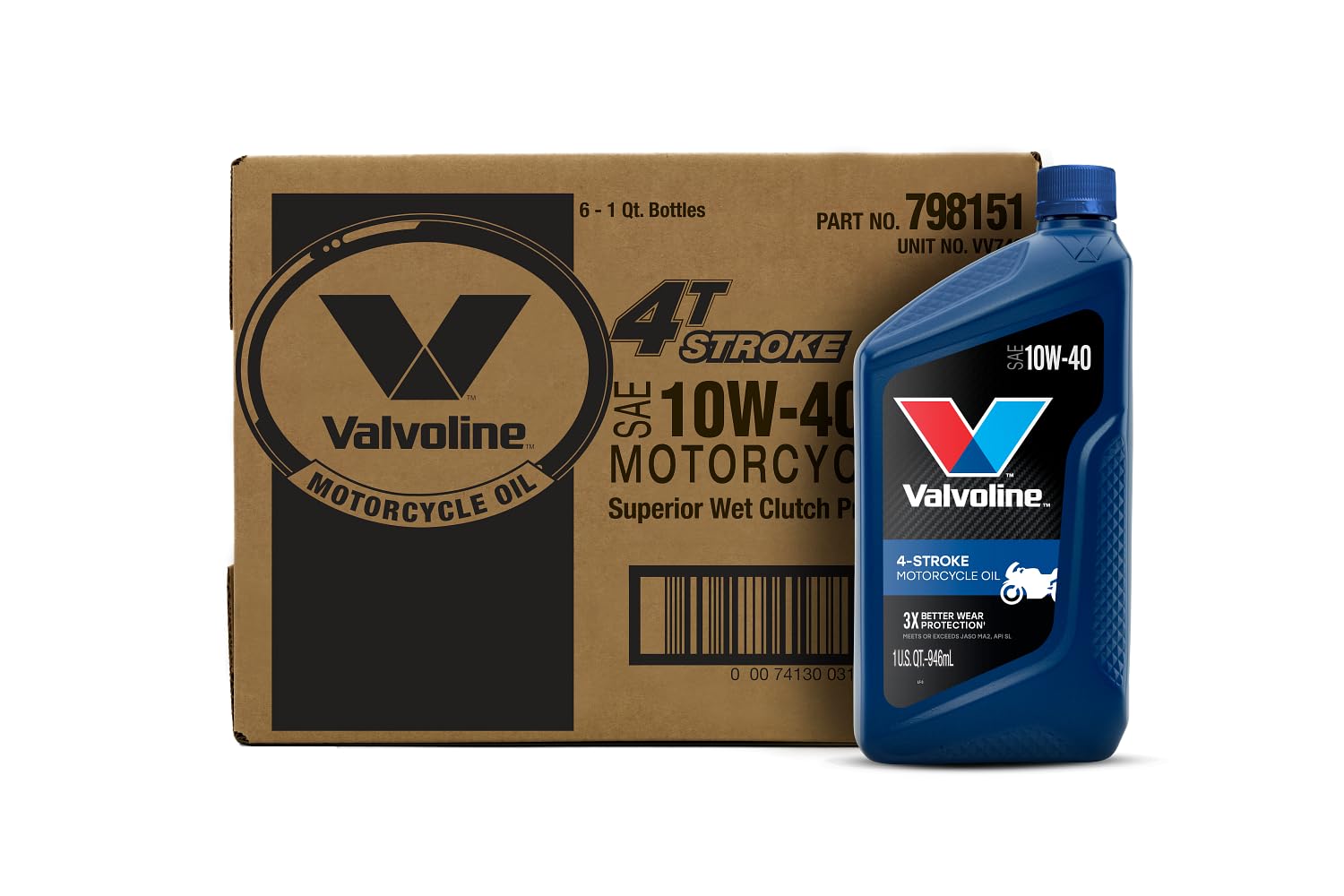
Valvoline’s 4-Stroke Motorcycle Oil is a conventional formula with enhanced anti-shudder protection designed to maximize power transfer through the clutch and improve transmission durability. The 6-quart case is a practical solution for owners of multiple ATVs, UTVs, and motorcycles who need consistent stock across their fleet.
Yamaha Rhino 660 and Honda 4-wheeler owners report reliable performance with no clutch issues, and the oil flows well at low temperatures for easier cold starts. While the flash point of 394°F (201°C) isn’t as high as synthetic competitors, it is adequate for standard commuting and recreational use at regular change intervals.
This case is best for budget-conscious riders who need a dependable, JASO MA2-certified conventional oil for low-to-moderate stress applications. It gets the job done without fuss but lacks the thermal and shear stability required for extreme use or extended drain intervals.
Why it’s great
- 6-quart case offers great value for multi-vehicle owners
- Anti-shudder technology improves clutch feel and power transfer
- JASO MA2 certified for wet clutch safety
Good to know
- Conventional base oil requires more frequent changes than synthetics
- Moderate flash point limits high-temperature performance
6. Pack of 6 Kawasaki 99969-6296 Genuine OEM K-Tech SAE 10W-40
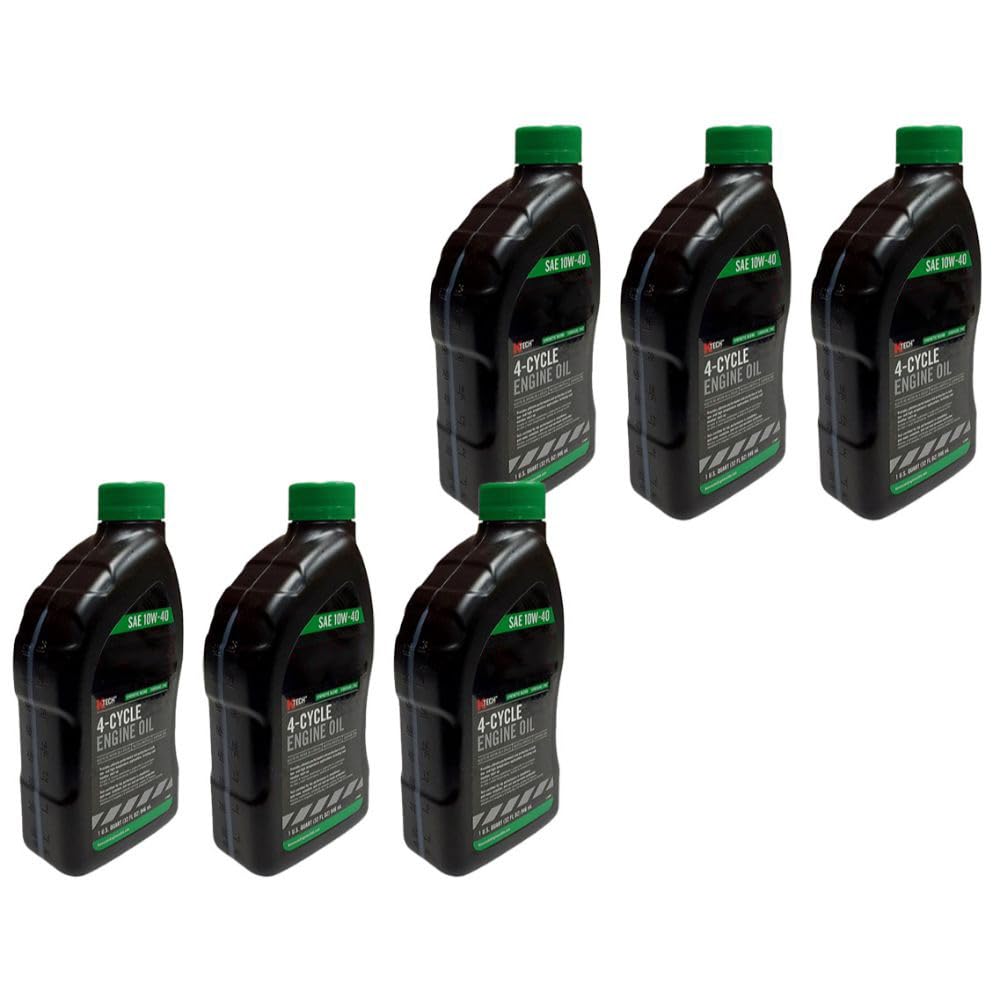
This six-pack of Kawasaki’s Genuine OEM K-Tech 10W-40 is a mineral-based oil engineered specifically for Kawasaki’s 4-cycle engines found in Mule utility vehicles and various ATVs. Users running Kawasaki Mules report confidence knowing they are using the exact formulation the engineers specified, ensuring warranty compliance and peace of mind.
The per-quart cost when bundled in a six-pack is competitive, making it a practical top-up solution for seasonal maintenance on Kawasaki equipment. Reviews note the oil performs exactly as expected with no surprises — consistent, predictable, and reliable for light to moderate use.
This option is ideal for Kawasaki owners who prefer OEM-specific formulations and want the convenience of a multi-pack. It will work in any 10W-40 application, but the mineral base means more frequent changes compared to semi or full synthetic alternatives.
Why it’s great
- Genuine OEM formulation for Kawasaki engines
- 6-quart pack provides convenient stock for multiple changes
- Excellent price per quart in the mineral category
Good to know
- Mineral base — not suitable for extended drain intervals
- Lacks advanced additive packages found in premium synthetics
7. Kawasaki 4-Stroke Motorcycle Engine Oil 10W40 1 Quart K61021-202A

The single-quart Kawasaki OEM 10W-40 is the official factory fill for a wide range of Kawasaki motorcycles, ATVs, and utility vehicles. Its formulation emphasizes engine cleanliness and bearing wear protection, and it fits a universal range including street, off-road, and touring models.
Owners of the Versys 650 report that consistent use of this oil keeps the engine running like new even after many miles, with no clutch slip or shifting issues. It is the baseline reference oil that Kawasaki engineers designed around, which makes it a safe bet for warranty preservation and predictable performance.
Best used for a single oil change, top-off, or for riders who insist on staying strictly OEM. For the same or less money, the gallon-sized Castrol or Valvoline options offer better value if you plan to perform multiple changes.
Why it’s great
- Official Kawasaki product designed specifically for their engines
- Excellent for warranty compliance and peace of mind
- Works across a huge range of Kawasaki vehicles
Good to know
- Often overpriced per quart compared to multi-pack options
- Mineral-based — requires more frequent changes than synthetics
FAQ
Can I use car engine oil in my motorcycle?
What is the difference between 10W-40 and 10W-50 for my bike?
How often should I change 10W-40 motorcycle oil?
Final Thoughts: The Verdict
For most riders, the best 10w40 motorcycle oil winner is the Motul 7100 4T 10W-40 because its 100% ester base delivers unmatched thermal stability, shear resistance, and clutch feel across the widest range of riding conditions. If you want the smoothest possible shifting at a slightly lower price point, grab the Liqui Moly 4T Street 10W-40. And for air-cooled motorcycles that need a serious temperature reduction under desert heat, nothing beats the Royal Purple Max Cycle 10W-40.