
A 26 kW generator represents a serious commitment to whole-home backup power — it’s the threshold where you stop running extension cords and start running your entire house, including central air conditioning, well pumps, and electric water heaters, as if the grid never went down. The difference between a generator that delivers this level of power reliably and one that leaves you in the dark comes down to engine displacement, transfer switch integration, and fuel management.
I’m Min — the co-founder and writer behind Gadgets Feed. I’ve spent many hours comparing engine specs, fuel consumption rates, and real-world customer durability reports to help you navigate the high-stakes decision of choosing a generator at this power tier where a mistake can cost thousands in damaged appliances or lost runtime during a critical outage.
This guide breaks down the top contenders for the best 26 kw generator by analyzing their actual performance under load, fuel flexibility, and long-term reliability data from hundreds of verified owner experiences.
How To Choose The Best 26 kW Generator
At this power class, the decision is less about whether a generator can power your home and more about how reliably it delivers that power, how much fuel it consumes per kilowatt-hour, and whether the form factor — portable or standby — matches your property’s electrical infrastructure.
Running Watts vs. Starting Surge
A 26 kW generator’s peak wattage handling capacity is critical for starting large inductive loads like air conditioner compressors and well pumps, which can draw two to three times their running wattage for a few seconds. Look at the engine displacement and the generator’s surge rating — a 999 cc V-twin engine typically handles a heavier starting surge than smaller blocks, which directly impacts whether your 4-ton AC unit cycles on without tripping the breaker.
Fuel Source and Runtime
Gasoline offers the highest peak power output but requires careful storage and has a shelf life that limits emergency readiness. Propane and natural gas burn cleaner, extending engine life and reducing maintenance, but deliver slightly lower running watts — a tri-fuel generator that can switch between sources provides the best flexibility for long-duration outages when fuel availability becomes unpredictable. The fuel tank capacity and consumption rate at 25-50% load determine whether you get 10 or 16 hours before needing a refill.
Transfer Switch and Installation
For permanent whole-home backup, an automatic transfer switch with a 200-amp rating is the standard, but not all 26 kW generators include one in the package. Portable units at this power level typically require a manual interlock kit or a separate transfer switch installed by a licensed electrician to safely backfeed your panel. The copper windings and THD rating determine whether the generator’s output is clean enough for sensitive electronics like computers and variable-speed HVAC systems.
Quick Comparison
On smaller screens, swipe sideways to see the full table.
| Model | Category | Best For | Key Spec | Amazon |
|---|---|---|---|---|
| Generac 26kW Guardian | Standby | Automatic whole-home backup | 26,000W running / 999cc G-Force | Amazon |
| Westinghouse 28kW Tri-Fuel | Portable | Fuel-flexible whole-home backup | 28,000W peak / 999cc V-Twin | Amazon |
| Westinghouse 28kW Gas | Portable | Pure gasoline max output | 28,000W peak / 999cc V-Twin | Amazon |
| Honda EU7000iS | Inverter | Ultra-quiet clean power | 7,000W running / 52-58 dB | Amazon |
| DuroMax XP16000iH | Inverter | Clean power with dual fuel | 16,000W peak / inverter tech | Amazon |
| Generac GP17500E | Portable | High surge capacity | 17,500W running / 992cc OHVI | Amazon |
| Honda EM6500S | Portable | Entry-level reliable backup | 6,500W running / 418cc Honda | Amazon |
In‑Depth Reviews
1. Generac Guardian 26kW Home Standby Generator with 200 Amp Transfer Switch
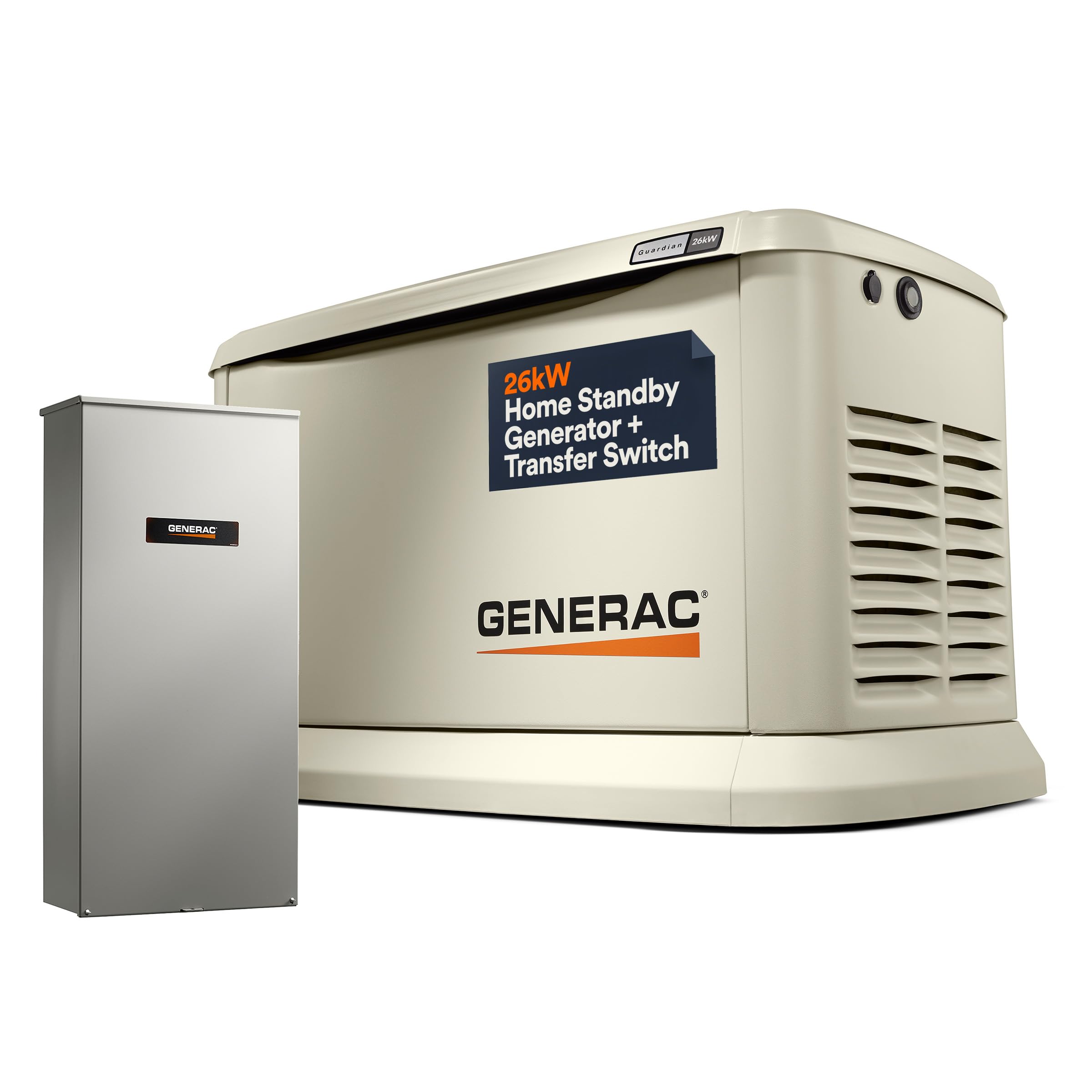
The Generac Guardian 26kW is the definitive whole-home standby solution, pairing a 999 cc G-Force 1000 Series engine with a built-in 200-amp automatic transfer switch that eliminates any need for manual intervention during an outage. True Power Technology keeps harmonic distortion under 5%, ensuring your sensitive electronics and variable-speed HVAC systems receive stable, utility-grade power without the flicker or frequency drift common in lesser portable units.
Mobile Link Wi-Fi connectivity lets you monitor generator status, view maintenance alerts, and schedule weekly exercise cycles from the Generac app — a practical feature if you own a secondary property or travel frequently. Owners report that the unit activates automatically within seconds of a grid failure, powers 4-ton AC systems alongside well pumps and electric ranges, and runs quietly enough that neighbors rarely notice the bisque-colored enclosure.
The 5-year limited warranty reflects Generac’s confidence in this platform, though installation must be performed by a licensed electrician to ensure proper load balancing and gas line sizing. The primary complaint from buyers centers on delivery logistics rather than generator performance — the unit is heavy at 518 pounds, and some Amazon shipments arrived with cosmetic damage or delayed delivery windows that required patience to resolve.
Why it’s great
- Includes 200-amp transfer switch, simplifying installation and cost
- Wi-Fi monitoring enables remote status checks and exercise scheduling
- 5-year warranty provides long-term ownership confidence
Good to know
- Requires professional installation by a licensed electrician
- Natural gas and propane only — no gasoline option
- Delivery can be inconsistent; inspect the unit immediately upon arrival
2. Westinghouse 28000 Peak Watt Tri-Fuel Home Backup Portable Generator
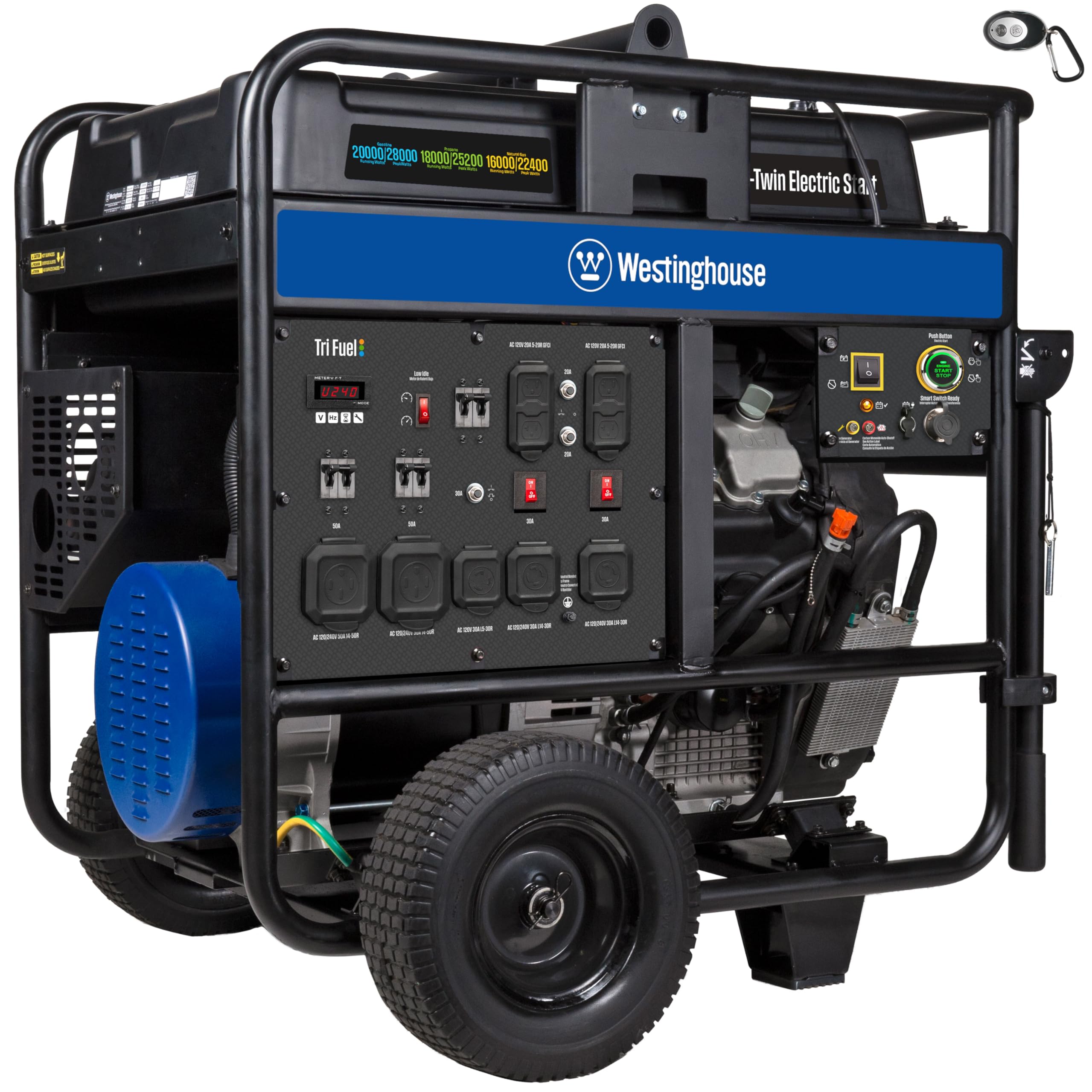
The Westinghouse 28kW Tri-Fuel offers the most fuel flexibility in this class, running on gasoline (28,000 peak/20,000 running watts), propane (25,200/18,000), or natural gas (22,400/16,000). The 999 cc V-Twin OHV engine with cast-iron sleeve delivers the torque needed to start heavy loads, and the 17.2-gallon fuel tank provides up to 15 hours of runtime at 25% load — long enough to get through most overnight outages without a refill.
A 125-amp AC terminal block allows a licensed electrician to hardwire the generator directly to your home’s panel, bypassing the limitations of cord-and-plug connections for maximum power delivery. The remote start key fob and push-button electric start mean you can fire up this 557-pound unit from inside the garage during dangerous weather, and the low THD output protects computers, phones, and smart home hubs from voltage spikes.
Real-world owners confirm that this generator powers 2,100-square-foot homes including central AC with ease, but note that the unit is extremely heavy and requires a tractor or multiple helpers to unload. The noise level is around 85 dB at 10 feet — typical for an open-frame generator this size — and some users needed to install a soft start kit on their heat pump to prevent the 70-amp startup surge from tripping the 50-amp breaker during initial cycling.
Why it’s great
- Tri-fuel capability provides fuel security during extended outages
- 125A hardwire terminal block for full whole-home power delivery
- Remote start and low THD for convenience and sensitive electronics
Good to know
- Extremely heavy at 557 pounds; needs help to unload and move
- Gasoline running watts drop significantly on propane and natural gas
- Some units arrive with minor cosmetic assembly issues
3. Westinghouse 28000 Peak Watt Home Backup Portable Generator

The gasoline-only version of Westinghouse’s 28kW platform delivers the same 999 cc V-Twin engine and 28,000 peak watts as its tri-fuel sibling at a lower entry point, making it a straightforward choice if you prefer the simplicity of a single fuel source with maximum peak output. The 17-gallon fuel tank and automatic idle control help stretch runtime to around 15 hours at 25% load, and the CO sensor with automatic shutdown adds an important safety layer for garage or outdoor placement.
Outlet selection is generous for a portable generator at this power level: two 50-amp 14-50R outlets for direct RV or transfer switch connections, two 30-amp L14-30R outlets, plus four GFCI-protected 20-amp household outlets. The digital readout shows lifetime run hours, voltage, and frequency in real time, which helps during load testing and maintenance tracking. Owners report that the unit runs an entire home including central AC and workshop equipment without issue, and the remote start key fob is especially appreciated during heavy rain or snow.
The primary drawbacks are weight — 541 pounds requires a dolly and at least two people to position — and noise level, which is noticeable at full load but described as lower than many competitors. A small number of owners experienced reliability issues after 1-2 years of use, with the warranty covering parts but not labor, which can be a significant cost for a generator of this size given the complexity of engine service.
Why it’s great
- Highest peak wattage in this portable class at 28,000 watts
- CO sensor and automatic low-oil shutdown for safety and engine protection
- Remote start with key fob adds convenience during severe weather
Good to know
- Gasoline-only fuel limits runtime during long outages without refueling
- Heavy and loud; needs a flat, ventilated outdoor location
- Warranty covers parts only, not labor for repairs
4. Honda EU7000iS 7000 Watt Inverter Generator
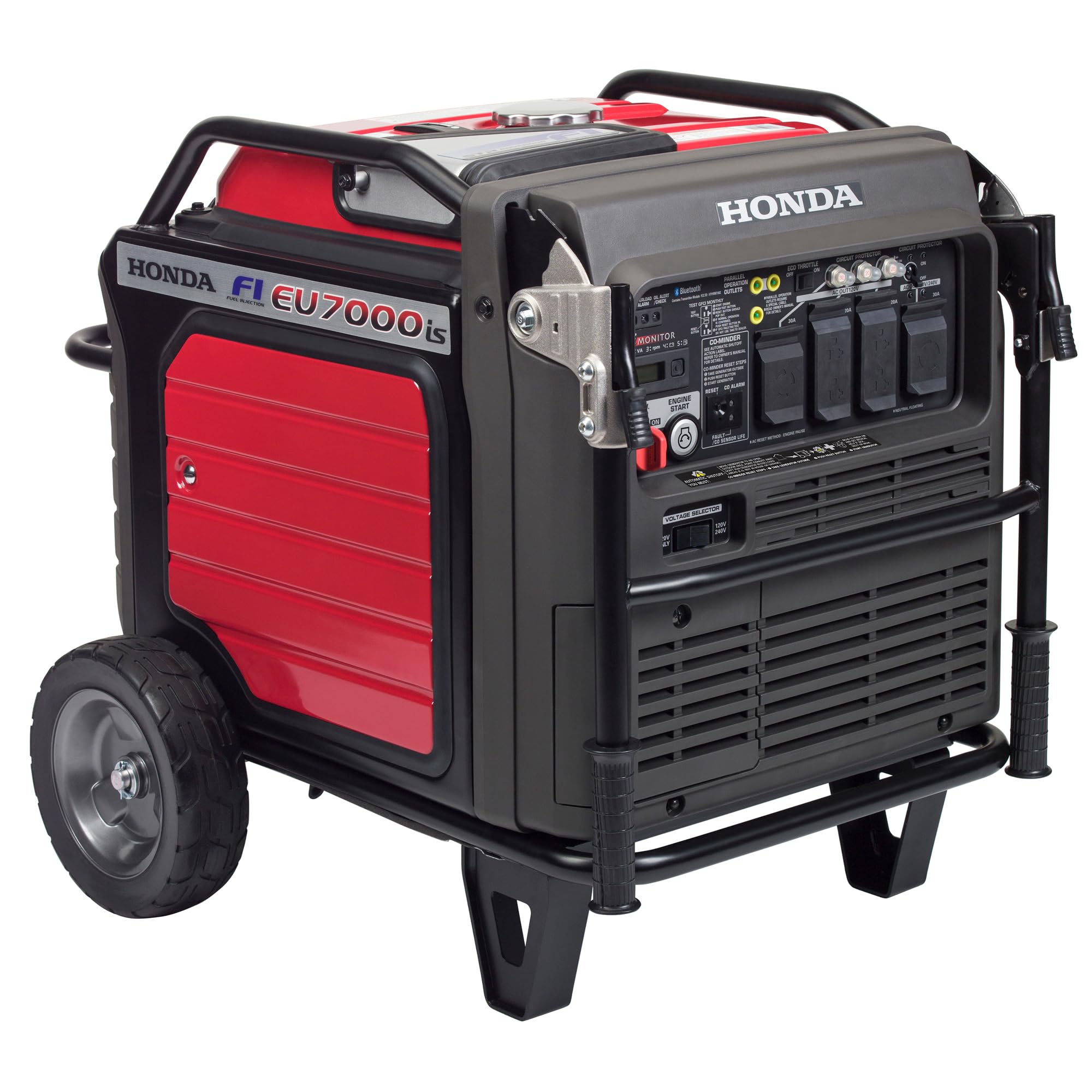
Honda’s EU7000iS is the gold standard for quiet, clean inverter power at a higher price point, operating at just 52 to 58 dB — quieter than a normal conversation — while delivering 7,000 watts of pure sine wave output through a 389 cc GX engine. The Eco Throttle system automatically adjusts engine speed to match the load, achieving 6.4 to 16 hours of runtime on a single 5.1-gallon tank, which is remarkably efficient compared to open-frame generators that burn fuel at a constant high speed regardless of load.
The My Generator smartphone app provides Bluetooth-based remote monitoring and control, including wireless stop, service reminders, and real-time power output tracking. The CO-MINDER system continuously monitors carbon monoxide levels and shuts down the generator before they become dangerous, making it one of the safest portable options for outdoor use near living spaces. Owners consistently report that this generator starts instantly on the first push, runs a 3-ton AC unit plus a water heater with breaker management, and produces steady 122/244VAC output that sensitive electronics appreciate.
The trade-off is price — you pay a premium for the Honda badge, inverter technology, and quiet operation, and the 263-pound weight still requires two people for safe transport despite integrated wheels. At 7,000 running watts, this unit won’t power a whole 3,000-square-foot home with multiple ACs running simultaneously, but for selective circuit backup, RV use, or as a companion to a larger generator for critical loads, its reliability and low noise are unmatched in this class.
Why it’s great
- Exceptionally quiet operation at 52-58 dB for neighborhood-friendly backup
- Bluetooth app enables remote monitoring and control from anywhere
- CO-MINDER safety system automatically shuts down before dangerous CO levels
Good to know
- Higher price per watt compared to open-frame competitors
- 7,000 watts may not cover an entire large home simultaneously
- Not available for sale in California; check local model restrictions
5. DuroMax XP16000iH 16,000-Watt Dual Fuel Portable Digital Inverter Generator
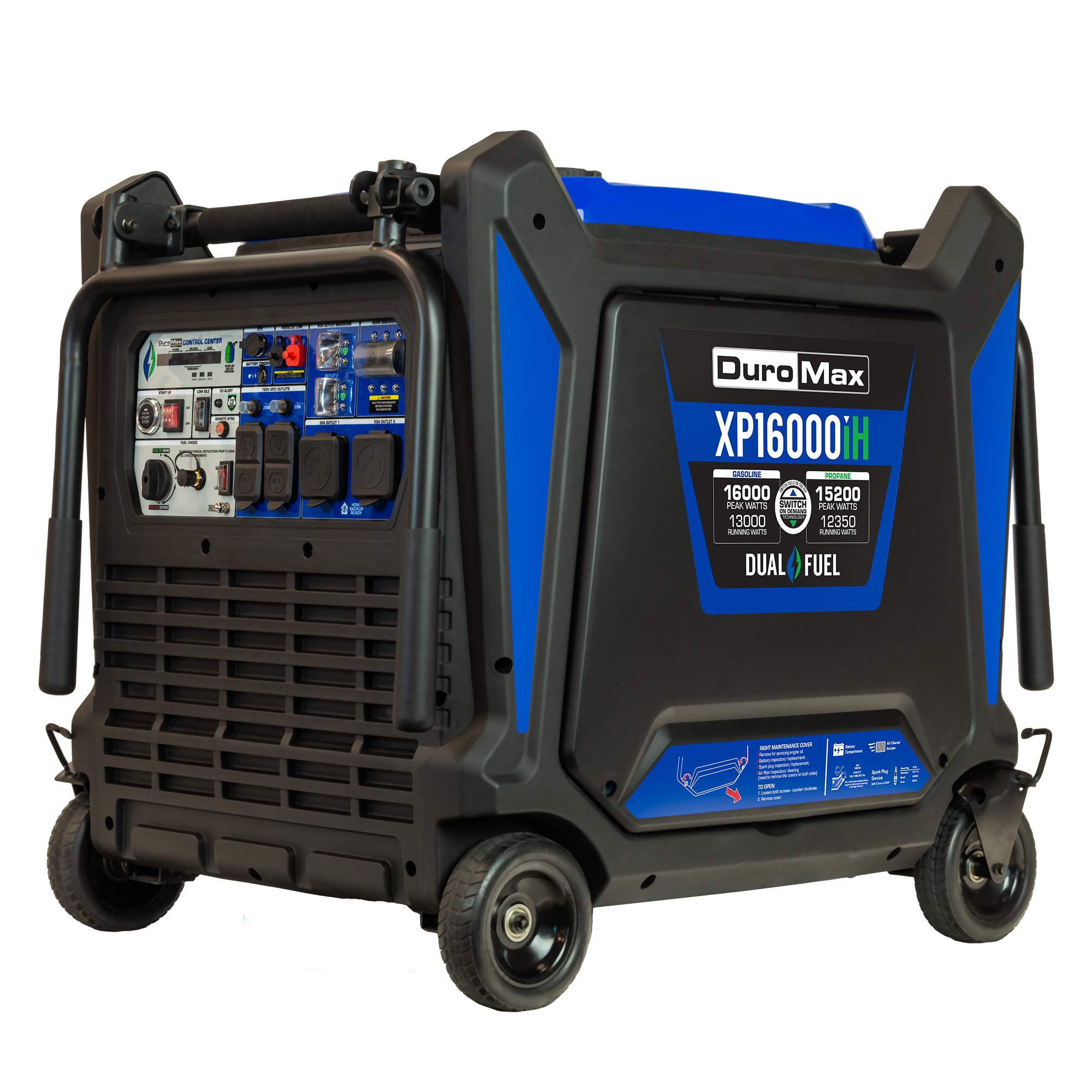
The DuroMax XP16000iH brings inverter technology to the high-power portable segment, delivering 16,000 peak watts and 13,000 running watts with the clean, stable power typically reserved for smaller inverter units. The dual-fuel design runs on gasoline or propane, giving you flexibility during fuel shortages, and the remote electric start lets you fire up the 368-pound generator from a distance. The Digital Control Center displays run hours, voltage output, and load level on an easy-to-read LCD screen.
Owners using this generator for commercial applications — like powering a mobile sports bar for 8 to 12 hours continuously — praise its steady performance and low maintenance demands. The included battery tender keeps the starter battery topped off between uses, and the low-oil shutoff protects the engine from accidental damage during extended runs. For a 16kW inverter generator, the noise level is noticeably lower than comparably sized open-frame models, and the built-in CO sensor adds an important safety layer.
The reliability data is split: while many owners report flawless operation for years, a concerning subset experienced catastrophic failures within the first few hours, including a fire between the alternator and exhaust, a starter motor dying under 50 hours, and excessive metal shavings found during the break-in oil change. These incidents appear to be quality-control issues rather than design flaws, but the inconsistency means buyer diligence — including an immediate break-in period with oil changes and warranty registration — is essential before relying on this generator for critical home backup.
Why it’s great
- Inverter technology provides clean power for sensitive electronics at this wattage
- Dual-fuel flexibility with gasoline and propane options
- Remote start and digital display for convenience and monitoring
Good to know
- Quality control is inconsistent; some units fail dramatically within first hours
- Warranty support and Amazon A-to-Z claims can be difficult to resolve
- Heavier than open-frame competitors at similar wattage due to inverter components
6. Generac 5735 GP17500E 17500-Watt Gas-Powered Portable Generator

The Generac GP17500E is built around a 992 cc OHVI engine that delivers 17,500 running watts with a massive 26,250-watt surge capacity — enough to start a 4-ton central AC unit without breaking a sweat. The full pressure lubrication system with an automotive-style spin-on oil filter extends engine life significantly compared to splash-lubricated competitors, and the 1.25-inch steel-tube cradle provides a rugged foundation that survives jobsite abuse and repeated transport.
A 50-amp 14-50R outlet lets you connect directly to a transfer switch or interlock kit for whole-home backup, and the built-in hour meter tracks maintenance intervals. Owners report that this generator ran flawlessly through a 20-hour Hurricane Sandy outage and multiple subsequent storms, handling well pumps, electric water heaters, and refrigerators without issue. The spin-on oil filter and rubber drain line make oil changes significantly less messy than generators with traditional drain plugs, which encourages more frequent maintenance.
The biggest challenge is fuel consumption — at 50% load, the GP17500E burns through about 16 gallons of gasoline in 10 hours, meaning you’ll need a substantial fuel reserve for multi-day outages. The engine and fan noise is noticeable at full load, though the exhaust note itself is relatively quiet; some owners added a secondary muffler and placed the unit in a shed for additional sound dampening. A small number of owners experienced crank-no-start failures after the 3-year warranty expired, leaving them with a heavy, non-functional unit that is expensive to repair given its 450-pound weight and complex engine architecture.
Why it’s great
- 26,250-watt surge easily starts large AC units and well pumps
- OHVI engine with full pressure lubrication and spin-on oil filter for longevity
- Rugged steel frame and heavy-duty wheels for mobility
Good to know
- High fuel consumption at 1.6 gallons per hour at 50% load
- Loud engine and fan noise at full load; may need sound mitigation
- Some failure reports after warranty expires; repair cost is high
7. Honda EM6500S Generator w/ Electric Start
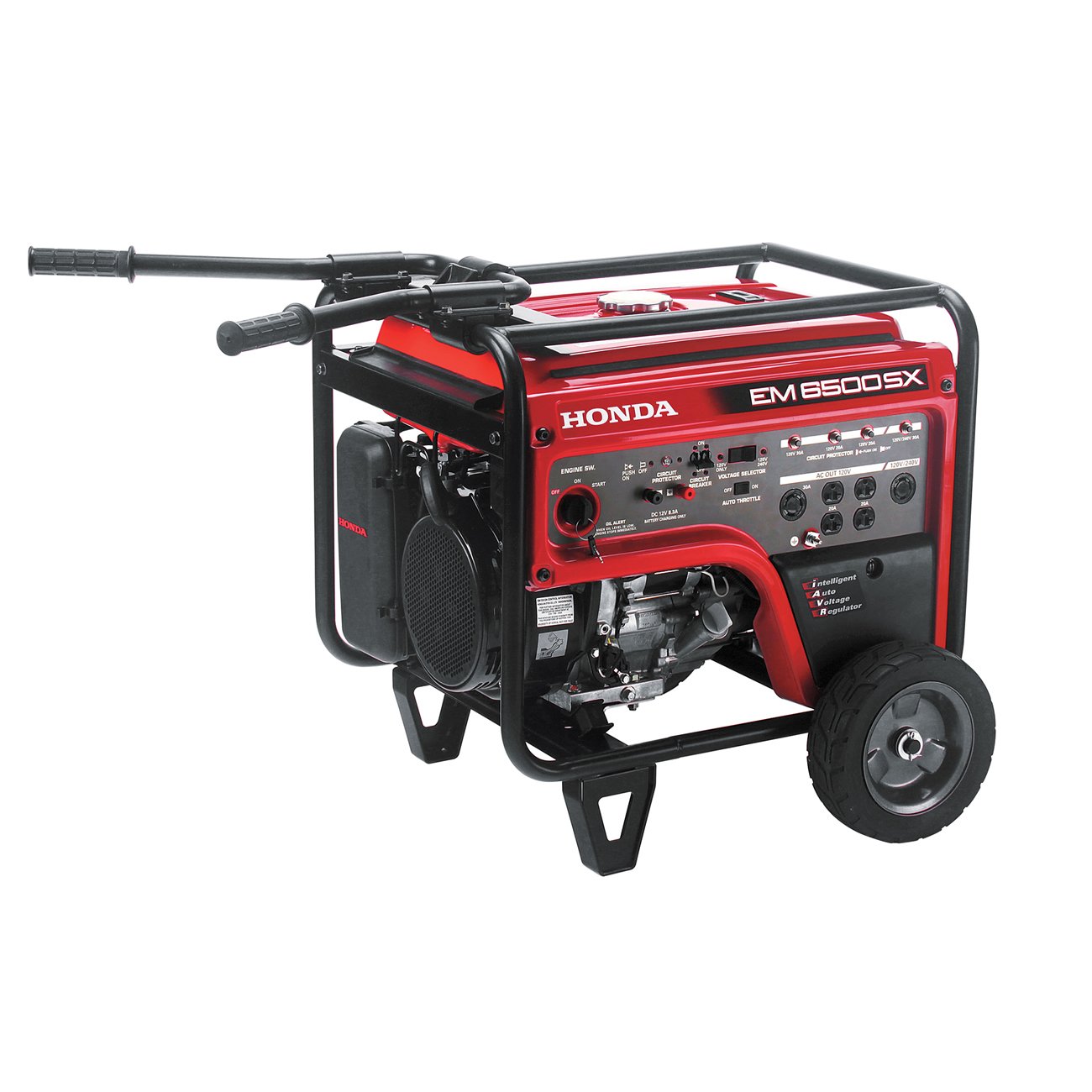
The Honda EM6500S is a smaller, more portable entry point into the high-power backup space, using Honda’s legendary 418 cc GX-series engine to deliver 6,500 watts of reliable power through electric start and a wheel kit that makes it manageable for one person to position. While it doesn’t reach the 26 kW threshold of the other units in this guide, it represents the budget-friendly approach to whole-home backup — running a 2,800-square-foot home’s essential circuits including a single AC unit and refrigerator for extended outages.
Owners who survived Hurricane Helene and Sandy reported running this generator continuously for days with 30-minute breaks every 8 hours, changing oil three times during the outage without any performance degradation. The Honda engine starts on the first or second pull even after months of storage, and the electric start eliminates the struggle of pull-starting a cold engine in wet conditions. The 6.5-gallon fuel tank provides around 8-10 hours of runtime at 50% load, which is adequate for overnight operation but requires morning and evening refueling during multi-day outages.
The EM6500S lacks inverter technology, so total harmonic distortion is higher than dedicated inverter models — sensitive electronics like computers and variable-speed refrigerators may benefit from an inline surge protector or separate UPS. At 234 pounds, it’s one of the lighter options in this roundup, but the steel and aluminum construction feels tank-like compared to cheaper plastic-bodied competitors. The primary limitation is power: it won’t run multiple large AC units, an electric water heater, and a well pump simultaneously, so load management is required for whole-home backup.
Why it’s great
- Honda GX engine provides unmatched long-term reliability and parts availability
- Electric start with wheel kit makes setup and operation easy
- Proven performance during major hurricane outages with proper maintenance
Good to know
- 6,500 watts is well below 26 kW; requires strict load management
- No inverter technology; higher THD may affect sensitive electronics
- Fuel tank does not include oil; must purchase separately before first use
FAQ
What size transfer switch do I need for a 26 kW generator?
Can a 26 kW generator run my entire house including central air conditioning?
Is natural gas or propane better for a 26 kW standby generator?
Final Thoughts: The Verdict
For most users, the best 26 kw generator winner is the Generac Guardian 26kW because it combines automatic whole-home backup with a built-in 200-amp transfer switch, Wi-Fi monitoring, and a 5-year warranty that takes the guesswork out of emergency preparedness. If you want fuel flexibility and the ability to move your generator between locations, grab the Westinghouse 28kW Tri-Fuel for its gasoline, propane, and natural gas compatibility. And for whisper-quiet clean power that protects sensitive electronics and keeps neighbors happy, nothing beats the Honda EU7000iS.