
An all-mesh office chair promises one thing a padded chair cannot: airflow that circulates from your shoulders to your thighs, preventing the heat buildup that turns long workdays into an endurance test. The problem is that many mesh chairs substitute breathability for support, leaving you with a sagging seat that chafes at the edges and zero lumbar structure by month three. Finding a model that maintains fabric tension over years while delivering adjustable ergonomic contact points is the real challenge — and it separates the office essentials from the returns.
I’m Min — the co-founder and writer behind Gadgets Feed. My analysis of this category focuses on mesh tension durability, seat-depth adjustability, lumbar support range, and the structural frame materials that keep these chairs working through thousands of sitting cycles.
Every model included here was selected by cross-referencing real-world back-support range, mesh elasticity ratings, and tilt-mechanism lock counts to determine the best all-mesh office chair for different body types and budgets.
How To Choose The Best All-Mesh Office Chair
Mesh chairs eliminate the foam insulation that traps body heat, but the trade-off is that the entire support structure comes down to frame engineering and fabric tension. Three factors separate a chair that lasts five years from one that develops a hammock-shaped seat dip within months.
Seat Depth Adjustment Range
A fixed seat pan forces your knees into a 90-degree angle that may cut off circulation if the pan is too long or leave your thighs unsupported if it is too short. Look for a sliding seat mechanism with at least 5 cm (2 inches) of total travel. This single feature lets a chair accommodate both a 5-foot-4 user and a 6-foot user without either one feeling the leading edge of the frame against their hamstrings.
Lumbar Support Axes
Basic lumbar pads that only move up and down are common, but the most comfortable chairs also allow forward/backward depth adjustment. A support that pushes into your lower back by up to 1.6 inches fills the natural curve of your spine without forcing you to slouch forward. Chairs with vertical-plus-horizontal lumbar tracks score higher in long-term wear studies because users can dial the pressure precisely rather than accepting a one-size-fits-most hump.
Mesh Tension and Frame Material
The elasticity of the seat mesh determines whether the fabric sags after a year or holds its tension. Higher-end chairs use a tightly woven polyester or nylon mesh with a high tensile modulus that resists permanent deformation. Pair that with a metal or reinforced nylon frame — nylon alone without fiberglass reinforcement tends to creak under users above 250 pounds. A Class 4 gas lift and a solid five-star base (aluminum or steel-reinforced) are non-negotiable for daily office use.
Quick Comparison
On smaller screens, swipe sideways to see the full table.
| Model | Category | Best For | Key Spec | Amazon |
|---|---|---|---|---|
| SIHOO Doro S300 | Premium | Dynamic lumbar and 6D armrests | 6D coordinated armrests | Amazon |
| FLEXISPOT ErgoX-PRO | Premium | Maximum adjustability and 551-lb capacity | 5D lumbar / 7D armrests | Amazon |
| WorkPro Quantum 9000 | Mid-Range | 8-hour professional use with seat-depth slide | Ratchet back-height / seat slide | Amazon |
| Ergohuman Eurotech ME7ERG | Premium | Lifetime warranty and 10-year durability | Synchro tilt / 8 adjustments | Amazon |
| ProtoArc EC200 | Mid-Range | Budget-friendly with seat-depth slide | 1.97″ seat slider / 55D foam | Amazon |
| ELABEST T96 | Mid-Range | Full-mesh seat and 350-lb capacity | 20″ W seat / 350-lb capacity | Amazon |
| ELABEST T23 | Mid-Range | Dual-lumbar adjustability and AirMesh | Dual-Move lumbar / 3″ vertical | Amazon |
| TRALT Ergonomic Chair | Premium | Wide seat and flip-up arms for small spaces | 20″ W seat / 3.5″ sponge cushion | Amazon |
| CLATINA Heavy Duty | Budget-Friendly | Big and tall users (400-lb capacity) | 400-lb cap / PU casters | Amazon |
In‑Depth Reviews
1. SIHOO Doro S300 Ergonomic Office Chair
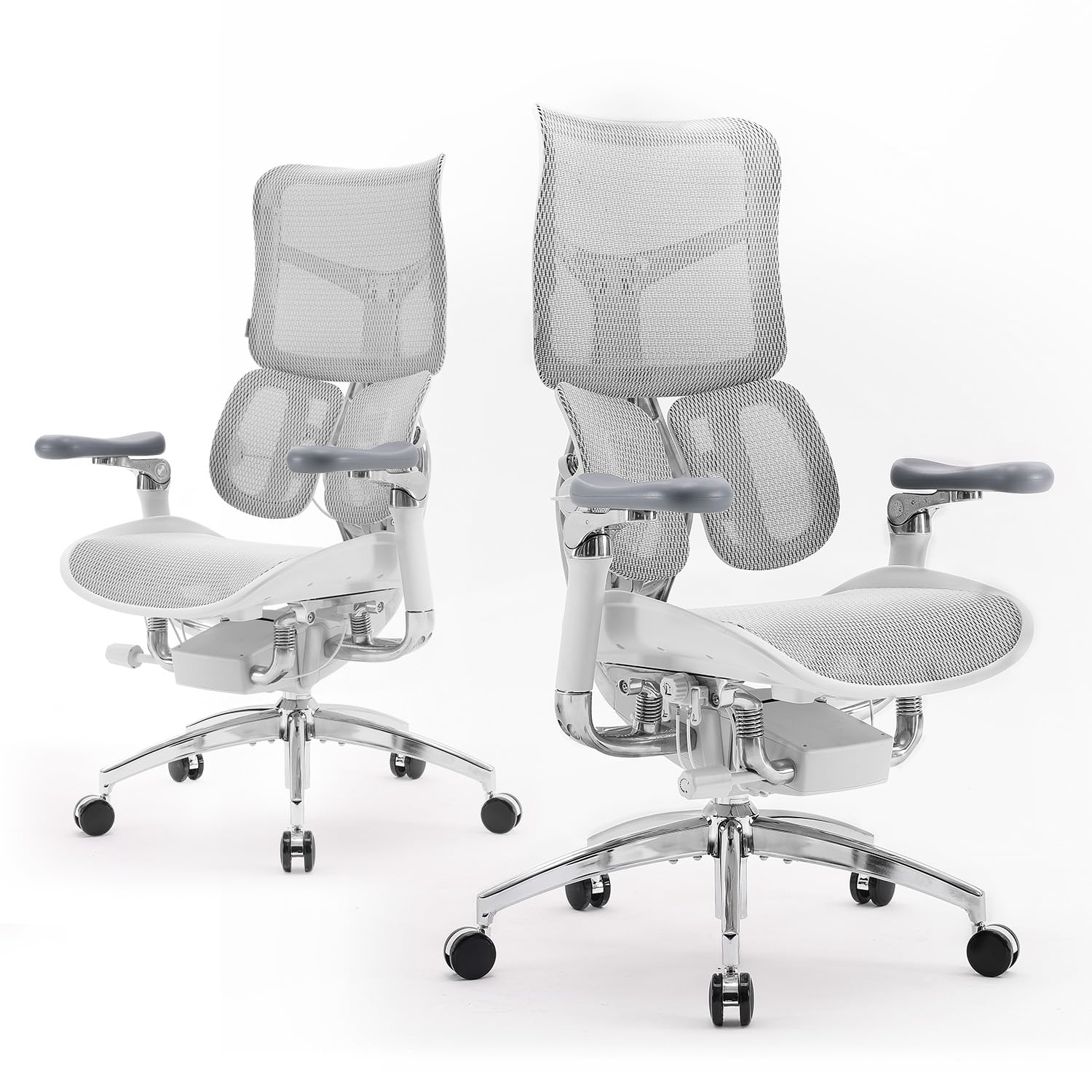
The SIHOO Doro S300 uses a four-axis linkage system that coordinates the seat and backrest movement during recline, distributing pressure evenly across the hips and lower back. Its dual dynamic lumbar support adapts its curvature automatically — a rare feature that uses bionic springs rather than a fixed pad — and the 6D coordinated armrests provide height, width, angle, and depth adjustments that track your arms through any recline angle. The aerospace-grade elastic plates in the mechanism let you fine-tune the tension resistance without clunky levers.
Mesh tension on this model is high-weave Italian velvet mesh on the seat and back, offering 38% better airflow than standard nylon weaves according to SIHOO’s lab data. The aluminum frame and polished lacquer finish keep the weight at 36 pounds, and the seat depth accommodates users from 5-foot-6 to 6-foot-2 comfortably. The 17.7-inch backrest width provides good shoulder coverage without crowding the armrest pivot points.
Tilt lock offers three positions — 90° work, 115° reading, and 135° relaxation — all controlled by a single lever under the seat. The BIFMA and SGS certifications back the structural integrity, and the dynamic lumbar support eliminates the need for manual depth cranks. The armrests do lack a lock mechanism to prevent accidental sliding, but the overall ergonomic coordination is unmatched in this tier.
Why it’s great
- Dual dynamic lumbar adjusts automatically to spinal curve
- 6D armrests follow your body through any recline angle
- Aerospace-grade elastic plates for precise tension tuning
Good to know
- Armrests can be bumped out of position without a lock
- Lumbar support may feel stiff for users under 5-foot-7
2. FLEXISPOT ErgoX-PRO Ergonomic Office Chair
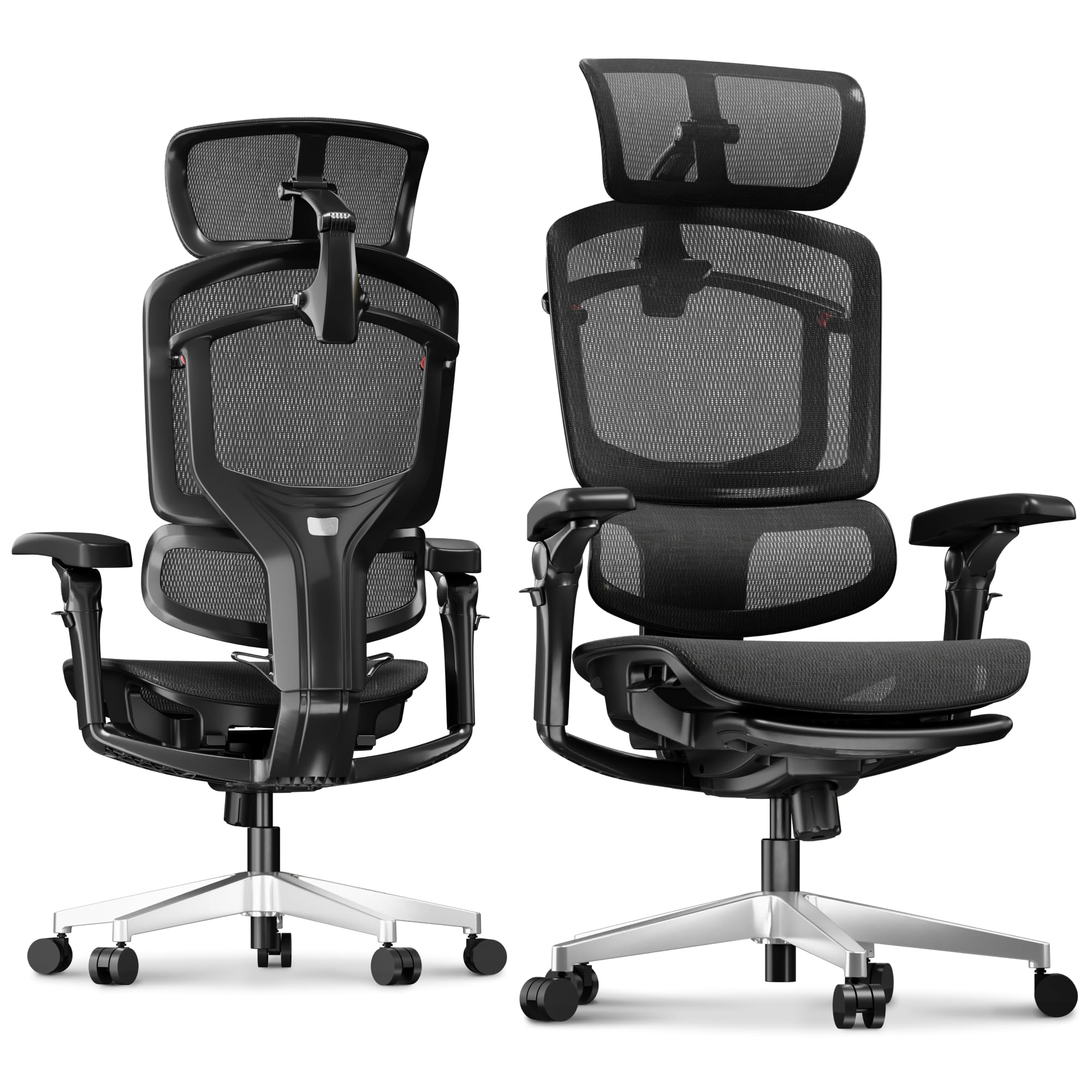
FLEXISPOT’s ErgoX-PRO brings a 5D lumbar mechanism that moves vertically, horizontally, and in depth, plus an independent 4D headrest that rotates 90° and flips 100° to serve either as a neck rest or a back cushion for compact setups. The AeroWeave 5.0 mesh seat delivers the highest airflow rating in this lineup, and the 7D linkage armrests track with your body through 12 levels of fine-tuned backrest recline — from 90° upright to 135° laid-back.
The frame uses reinforced nylon with fiberglass strands and a lightweight aluminum base rated to 551 pounds — the highest weight capacity on this list. The Class 4 gas lift and spring-cushioned recline ensure smooth transitions without jerking. An optional footrest attaches for break-time leg elevation, though at a 551-pound test standard, the base is overbuilt for most users. The seat depth slide offers about 6 cm of travel, accommodating both shorter and taller workers effectively.
Assembly takes roughly 30 minutes even for one person, and the spare fasteners included are a thoughtful touch. The headrest does shift during deep recline and may need re-adjustment for lounging positions, but the lumbar support range is generous enough to cover users from 5-foot-4 to 6-foot-1. The 7D armrests are the most extensive motion system in this price bracket.
Why it’s great
- 5D lumbar support with full depth and height adjustability
- 551-pound capacity with reinforced nylon-and-fiberglass frame
- 12-level fine-tuned recline with spring cushioning
Good to know
- Headrest needs readjusting when switching from upright to recline
- Some plastic components in the base finish may dent over time
3. WorkPro Quantum 9000 Series

The WorkPro Quantum 9000 has been a consistent performer for over six years in the mid-back mesh category, with a ratchet-style back-height adjustment that lets you raise or lower the lumbar support without detaching the backrest. The seat depth slides forward and back, and the synchro tilt mechanism locks in three positions. The 275-pound weight capacity is conservative compared to newer models, but the nylon mesh on both seat and back has proven durable in thousands of user reports spanning four to six years of daily use.
Assembly requires only eight bolts and takes about 15 minutes. The base is heavy and stable, rolling smoothly on hardwood without scuffing. The lumbar support is a curved plastic shell rather than a padded cushion — some users find it too firm initially, but it breaks in after a few weeks. The waterfall front edge on the seat reduces pressure on the back of the thighs, and the armrests are height-adjustable with soft padding that wears after four to five years.
The chair measures 37.5 to 43.75 inches tall with a 29.5-inch width, making it a good fit for desks with limited knee space. The tilt tension knob is easily accessible, and the back-angle lock is firm enough to prevent drifting during typing sessions. The limited lifetime warranty covers mechanical failures, which is rare in the mid-range tier.
Why it’s great
- Ratchet back-height adjustment for precise lumbar placement
- Seat-depth slide and synchro tilt with three-position lock
- Limited lifetime warranty — rare in mid-range chairs
Good to know
- Lumbar shell feels hard during the first three weeks of use
- Armrest padding wears after 4–5 years of daily use
4. Ergohuman Eurotech ME7ERG GEN2

The ME7ERG GEN2 is a high-back mesh chair that has earned a reputation for lasting over a decade in daily office use, with many user reports confirming ten years of 10–14 hour sessions without mesh sag or mechanism failure. It offers eight separate adjustments: seat height, seat depth, back height, synchro tilt with tension control, tilt lock, back angle, and arm height. The dynamic lumbar support flexes with your movement rather than pressing against a fixed surface.
The US-manufactured mesh backing is sturdier than most imported alternatives — tighter weave, higher tension retention, and 20.67 inches of backrest width that supports broader shoulders without the frame edge digging in. The polypropylene frame keeps the weight about 30 pounds, and the polished base adds a durable finish that resists scuffs. Assembly takes about 10 minutes with the included tools, and the limited lifetime warranty covers structural components and mechanisms.
Users above 6-foot-2 may find the seat depth insufficient — the slide runs about 6 cm, leaving a 4-inch gap from knee to edge for very long legs. The armrest foam lacks forward padding, which causes a hard edge when you lean on the front of the forearm pad. The casters are basic plastic that may not glide silently on all floors, but upgrades are inexpensive. The synchro tilt mechanism is smooth and resistant to wobble even after heavy use.
Why it’s great
- US-manufactured mesh with high tension retention over years
- Limited lifetime warranty covering mechanisms and frame
- Proven 10-year track record in daily office use
Good to know
- Seat depth may be short for users taller than 6-foot-2
- Armrest front edge lacks full padding for forward leaning
5. ProtoArc EC200 Ergonomic Office Chair
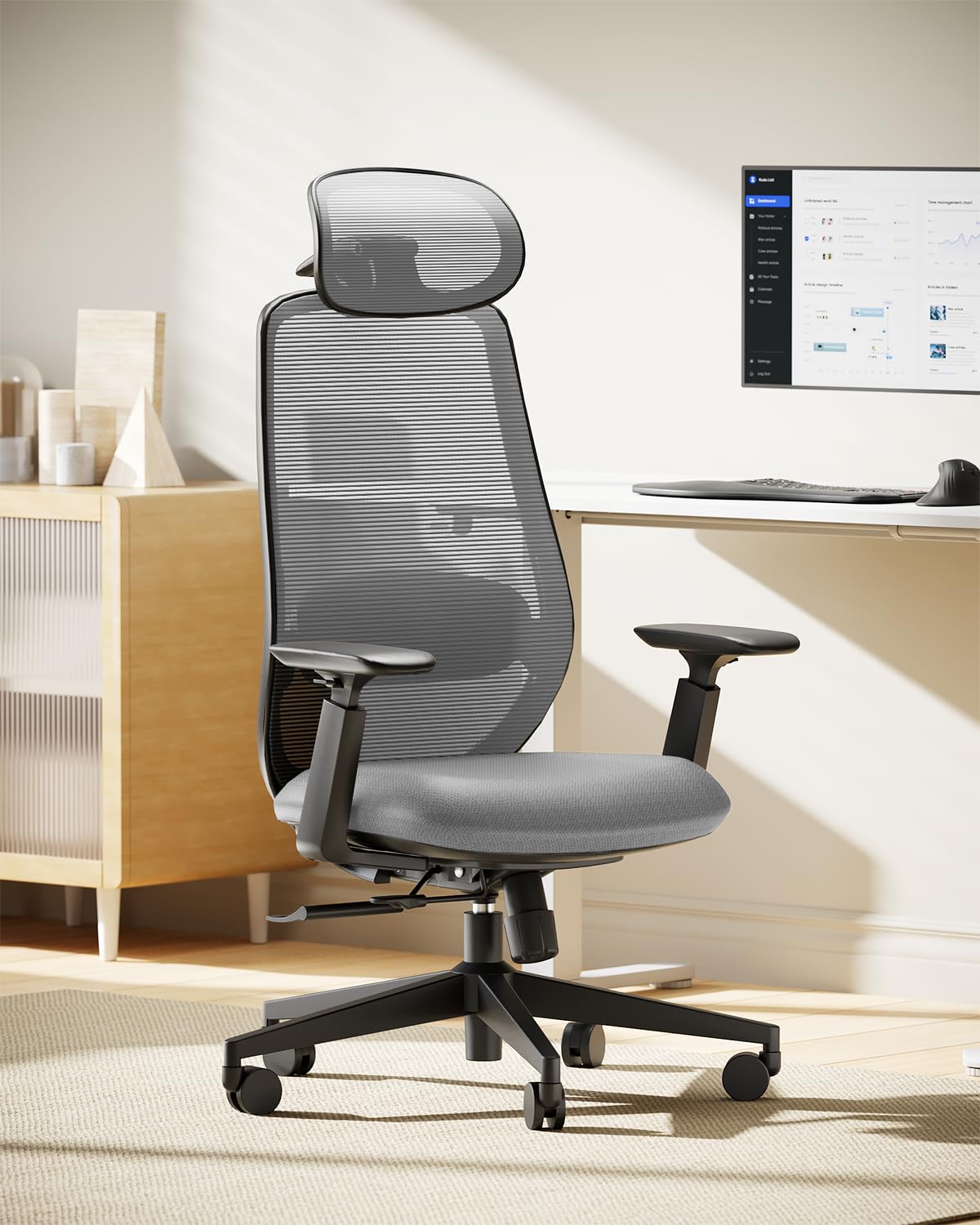
ProtoArc’s EC200 packs a 1.97-inch five-position seat-depth slider into a sub-premium price point — a feature typically reserved for chairs costing twice as much. The 55D high-density foam cushion resists the sinking that plagues softer foam alternatives, maintaining its shape after 8-hour stretches. The lumbar support adjusts 2.36 inches vertically and 0.8 inches horizontally, so you can dial in the curve depth rather than accepting a fixed hump.
The 3D headrest offers 3.94 inches of vertical travel, 2.76 inches of in-and-out depth, a 75-degree pivot, and 35 degrees of rotation — enough to cradle the cervical spine without forcing the head forward. The four-stage recline locks at 90°, 105°, 120°, and 130°, and the tilt tension knob adjusts the resistance to your body weight. Designed for users between 5-foot-4 and 6-foot-0 under 220 pounds, the chair uses a TÜV-tested Class 4 gas lift and meets BIFMA X5.1 standards.
Assembly takes about 20 minutes with labeled hardware and a visual guide. The nylon frame is lightweight but feels solid under shifting weight, and the casters roll smoothly on carpet and hardwood. The 2D armrests adjust in height only — no width or rotation here — which is the main compromise for the price. The seat foam density is firm enough that some users may want a break-in period of a few days.
Why it’s great
- Five-position seat-depth slider in a value-priced chair
- 55D high-density foam resists sagging over long sessions
- Headrest offers four degrees of motion for precise neck positioning
Good to know
- Armrests limit adjustment to height only (2D)
- Rated to 220 pounds — not suitable for heavier users
6. ELABEST T96 Mesh Office Chair

ELABEST’s T96 is one of the few chairs in the mid-range tier that offers a full-mesh seat — not just a mesh back with a foam cushion. The bionic-curve mesh seat promotes airflow underneath the thighs while the fabric stretches to conform to your sit bones without bottoming out. The backrest uses a “Golden Triangle” structural design that stabilizes the shoulder blades and upper back, and the synchro-tilt mechanism provides three lock positions with adjustable tension.
Weight capacity is rated at 350 pounds, supported by a heavy-duty nylon base and smooth-rolling casters that protect hard floors. The 3D armrests adjust height, width, and angle, giving good elbow positioning for typing and reading. The seat measures 20 inches wide and 17.7 inches deep, with a height range of 19.6 to 23.6 inches — one of the higher seat ranges, suitable for taller users or standing-height desks. Users between 5-foot-5 and 5-foot-10 report the best fit.
Assembly is straightforward at around 20 minutes, with clear instructions and spare hardware included. The mesh elasticity holds well after months of use, and the lumbar support is firm but adjustable. The armrests are wide — some users with narrower frames find the resting surface presses into their ribs. The optional footrest and headrest accessories are worth adding for longer sessions.
Why it’s great
- Full-mesh seat for maximum airflow — no foam layer
- 350-pound weight capacity in a mid-range build
- 3D adjustable armrests for width, height, and angle
Good to know
- Armrests may be too wide for narrow-shouldered users
- Best suited for 5-foot-5 to 5-foot-10 range
7. ELABEST T23 Ergonomic Mesh Office Chair
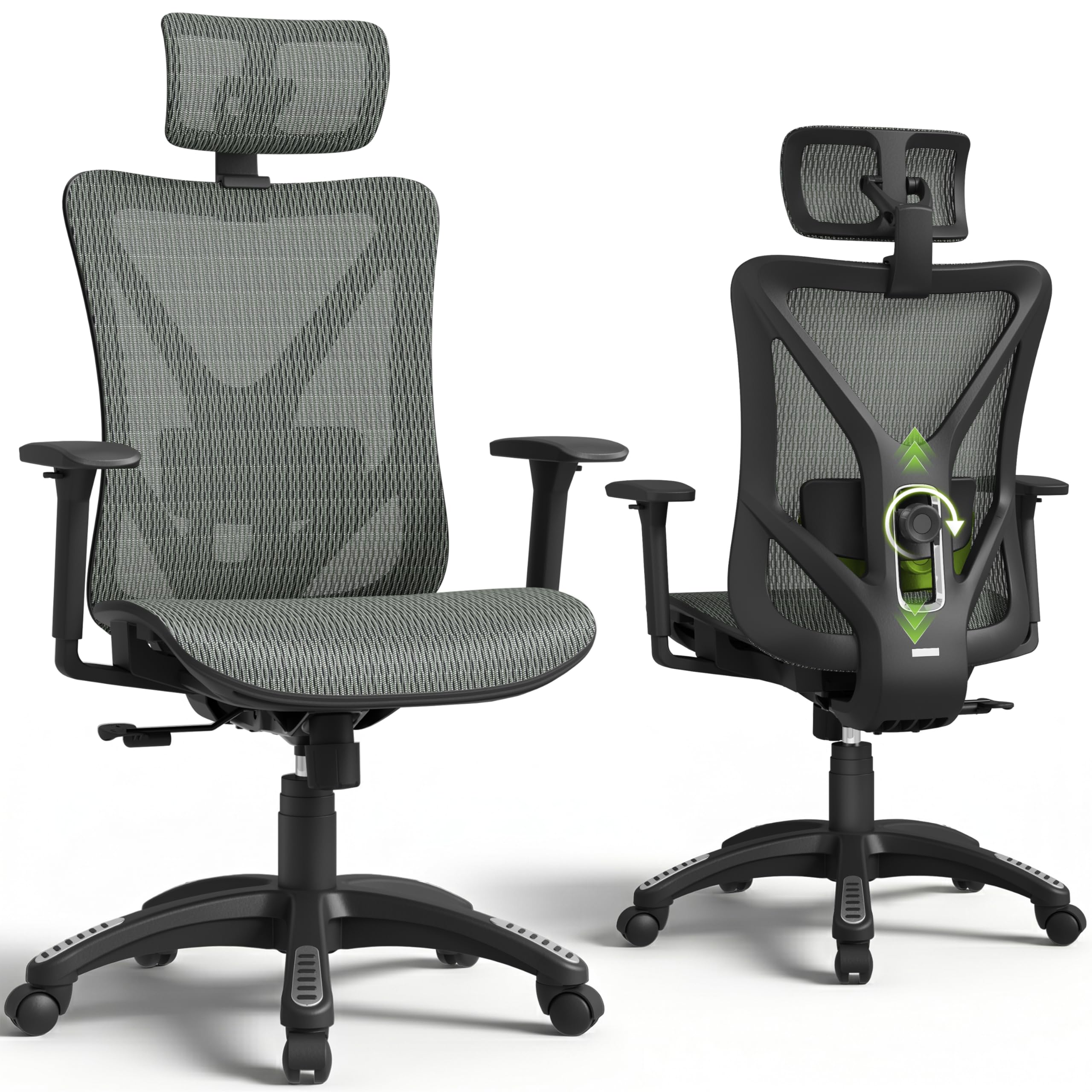
The T23 shares ELABEST’s build DNA but adds a Dual-Move lumbar support with 3 inches of vertical travel and 1.6 inches of forward/backward depth — the widest lumbar range in the mid-range price tier. The Dual-Stripe AirMesh technology claims 38% better airflow and 25% higher elasticity than standard mesh, which translates to a seat that conforms quickly without sagging. The 27.5-inch star base is extra-thick for stability at 300-pound capacity.
The 3D headrest offers 90° rotation, 100° flipping angle, and 2.5 inches of vertical travel — more range than most headrests at this level. The 3D armrests adjust for height, front-back, and panel rotation, though they lack width adjustment. The three-position tilt lock covers 90° work, 115° reading, and 130° relaxation, with a tension knob on the underside. The PU hooded casters are whisper-quiet on tile and hardwood, and the 36-pound weight makes it easy to move around the room.
Assembly takes one person roughly 20 minutes with the included instructions. Users between 5-foot-5 and 6-foot-1 report a natural fit, with the lumbar moving into the small-of-back curve easily. The foam-free mesh seat does lack the plushness of a padded cushion — users who prefer a softer sit should add a thin gel pad. The metal frame is mostly steel with a nylon base, and the gas lift is Class 3 rather than the premium Class 4 seen on higher-end models.
Why it’s great
- Dual-Move lumbar with 3-inch vertical and 1.6-inch depth range
- Dual-Stripe AirMesh for high airflow and shape retention
- Silent PU casters glide without scratching floors
Good to know
- Mesh seat is firm — no foam cushioning for softness
- Armrests lack width adjustment for broader frames
8. TRALT Ergonomic Office Chair
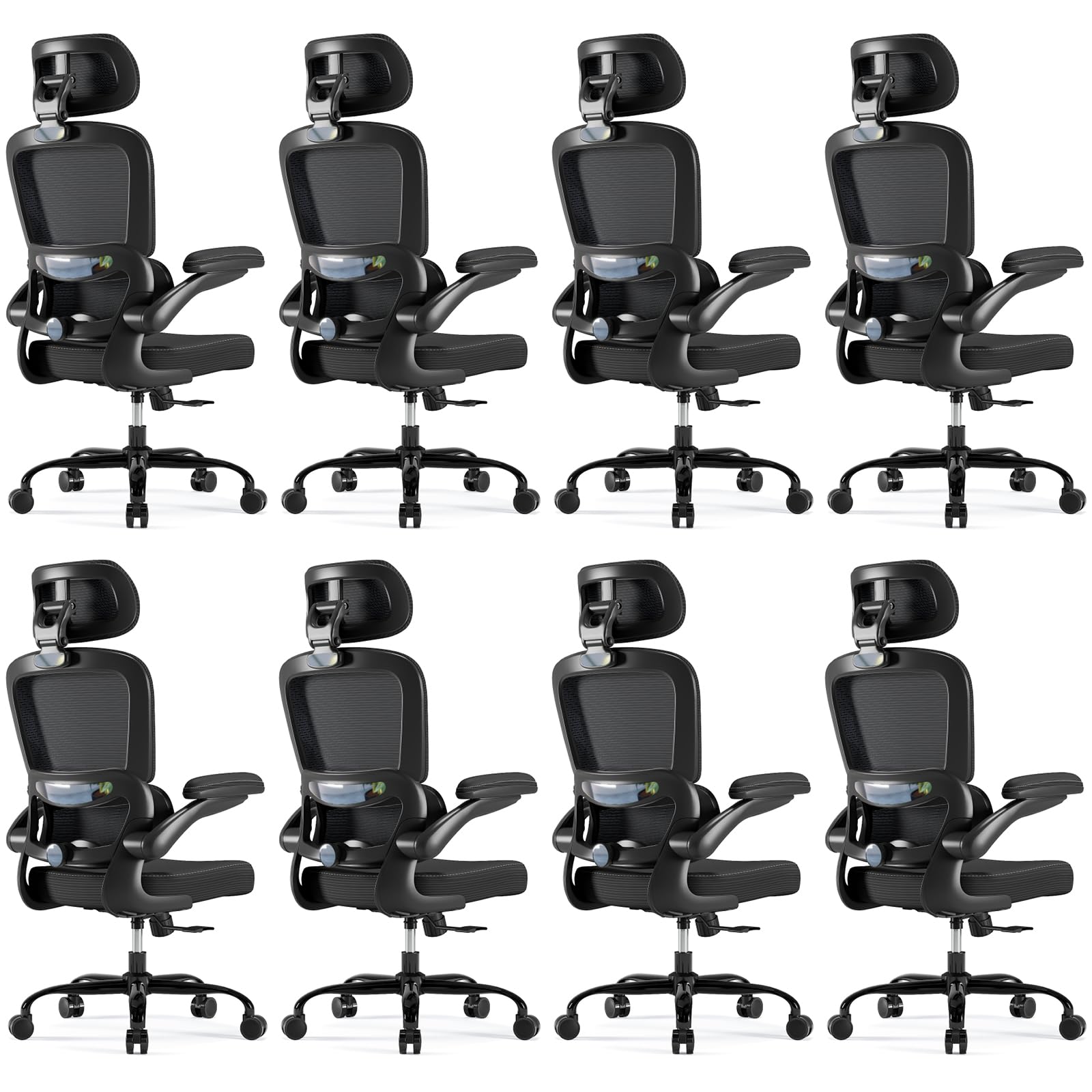
TRALT’s offering stands out in the premium tier for its flip-up armrests and 20-inch wide seat, designed for users who need to slide the chair under a desk or store it in tight corners. The 3.5-inch high-density sponge cushion sits on a metal frame, while the backrest uses breathable mesh fabric to keep the spine area ventilated. The headrest and lumbar support are both adjustable, though the lumbar range is limited to vertical height only without depth control.
Weight capacity is 330 pounds, supported by a Class 3 gas lift and a metal five-star base. The PU casters are quiet but do not lock, so the chair may drift on sloped floors. The mesh back is tensioned adequately for upright posture, but the recline mechanism is a basic tension adjustment rather than a multi-position lock — you must hold the resistance manually. The seat cushion uses leather on the sides for easy cleaning, with the center section in mesh for breathability.
Assembly takes about 25 minutes, and the included installation video clarifies the steps for first-time builders. Users under 5-foot-5 may find the headrest pushes the head forward due to the fixed back-skeleton angle — taller users above 5-foot-8 report a better neutral neck position. The flip-up arms fold to 90° for storage but lack the sturdiness of fixed arms when you lean heavily on them during recline.
Why it’s great
- Flip-up armrests reduce footprint for tight desk spaces
- Wide 20-inch seat distributes weight for larger users
- Easy-clean leather side panels on the cushion
Good to know
- Lumbar adjustment is vertical-only — no forward/back depth
- Flip-up arms feel less stable when bearing weight during reclines
9. CLATINA Heavy Duty Ergonomic Mesh Office Chair
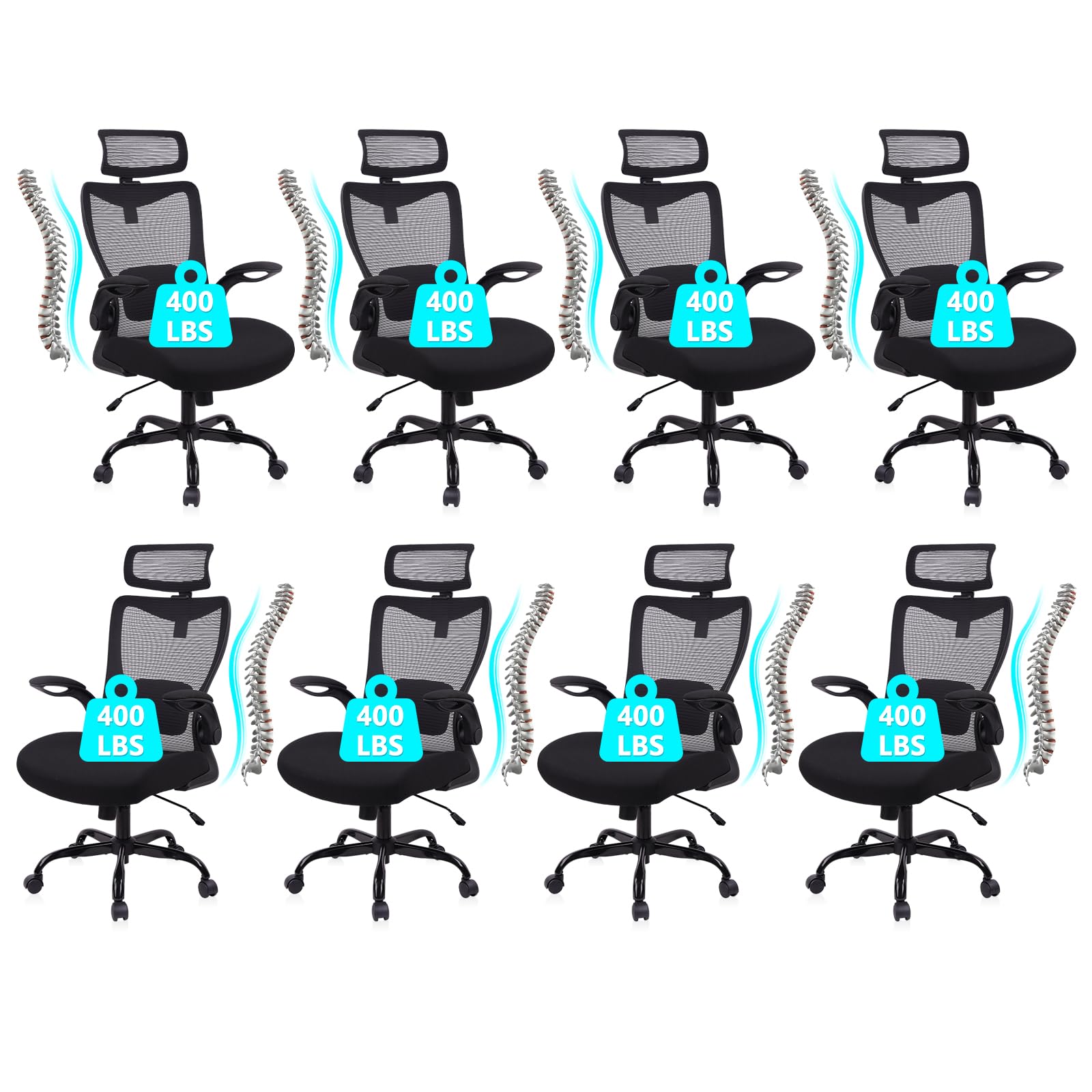
CLATINA targets the big-and-tall segment with a 400-pound weight capacity, a reinforced metal base, and a Class 4 gas lift — safety-critical specs for heavier users. The mesh backrest covers the entire upper area, while the seat uses a thick high-density sponge cushion with a mesh top layer rather than a full-mesh seat. The flip-up padded armrests fold upright to slide under most desks, and the 90° to 120° recline is controlled by a tilt-tension knob with three lock positions.
The lumbar support adjusts vertically via a lever on the back, and the wide curved foam headrest is designed to adapt to different body types. The PU casters roll silently on hardwood and carpet, and the waterfall-shaped seat front reduces thigh pressure. Assembly is advertised at 10 to 15 minutes — the fastest in this lineup — with clear instructions included. The FSC-certified wood used in the frame reflects a sustainability commitment rare in this price bracket.
Notable downsides include a plastic lumbar support piece that some users find pokes the spine — removal is straightforward but indicates a design compromise. The armrests feel hollow and wiggle during side-to-side movement, and the seat cushion foam is firm enough that a supplemental gel cushion improves comfort for full-day use. Reports of structural failure after two months exist, though they are outliers against a majority of positive assembly and initial-use feedback.
Why it’s great
- 400-pound capacity with Class 4 gas lift and metal base
- Flip-up arms for compact desk storage
- Fastest assembly among all models — 10 to 15 minutes
Good to know
- Plastic lumbar piece may need removal for comfortable lower-back fit
- Armrests feel hollow and wobble with lateral pressure
FAQ
Does a full-mesh seat hold up better than a foam cushion long-term?
How much lumbar adjustment range is actually necessary?
Can an all-mesh chair support 300 pounds safely?
Final Thoughts: The Verdict
For most users, the best all-mesh office chair winner is the SIHOO Doro S300 because its dual dynamic lumbar support and 6D coordinated armrests set a new ergonomic standard at a manageable price. If you want the highest number of adjustable contact points, grab the FLEXISPOT ErgoX-PRO. And for a budget-friendly option with a seat-depth slider that punches above its class, nothing beats the ProtoArc EC200.