
Choosing a fitness tracker watch for your Android phone isn’t about finding the cheapest band — it’s about picking the wearable that actually syncs, stores, and reports the metrics you care about without locking you into a different ecosystem. Between inaccurate GPS tracks, poor sleep staging, and miserable battery life, a bad choice wastes your workout time and your money.
I’m Min — the co-founder and writer behind Gadgets Feed. I’ve spent hundreds of hours dissecting spec sheets, cross-referencing real-world GPS accuracy tests, analyzing battery drain curves, and comparing sensor payloads to bring you only the Android-compatible trackers that deliver on their promises.
Every watch here was selected for strong Android compatibility, reliable heart-rate optical sensors, and meaningful battery performance. Whether you want basic step tracking or full mapping, this roundup of the best android fitness tracker watch models covers every serious option worth your time.
How To Choose The Best Android Fitness Tracker Watch
An Android fitness tracker watch must do more than pair — it needs seamless notification delivery, reliable third-party app syncing, and no hidden subscription gates for basic health data. Start here before you filter by price or color.
GPS Architecture and Satellite Lock
Dual-band multi-GNSS support (GPS + GLONASS + Galileo + BeiDou) is the baseline for accurate outdoor tracking. Single-band GPS drops lock under tree cover and between buildings, inflating your pace and distance. Look for SatIQ or similar adaptive multi-band switching for the cleanest track.
Sensor Payload and Health Metrics
Optical heart rate sensor generation matters more than brand name. Older green-LED arrays struggle during interval training. Modern trackers combine green, red, and infrared LEDs for motion-artifact rejection and SpO2 accuracy. HRV logging and recovery readiness scores turn raw data into actionable training advice.
Battery Chemistry and Charging Cadence
Battery life in this category ranges from 3 to 40+ days depending on display type (AMOLED vs MIP) and GPS usage. Magnetic pogo-pin charging is universal, but proprietary cables are a long-term failure point. A tracker that lasts 10+ days in smartwatch mode removes the daily charging anxiety that plagues smaller wearables.
Quick Comparison
On smaller screens, swipe sideways to see the full table.
| Model | Category | Best For | Key Spec | Amazon |
|---|---|---|---|---|
| Garmin Forerunner 570 | Premium Running Watch | Serious runners & triathletes | AMOLED display, 11-day battery, 18hr GPS | Amazon |
| Samsung Galaxy Watch Ultra | Premium Smartwatch | Deep Android ecosystem users | Titanium case, LTE, 590mAh, 60hr battery | Amazon |
| Amazfit T-Rex 3 Pro | Premium Rugged Watch | Adventurers & multi-sport athletes | Sapphire AMOLED, 700mAh, 25-day battery | Amazon |
| Garmin Instinct 3 Solar | Premium Outdoor Watch | Backpackers & off-grid explorers | Solar charging, MIP display, 40-day battery | Amazon |
| Amazfit Balance 2 | Mid-Range Hybrid Watch | Daily training & lifestyle tracking | Sapphire glass, 658mAh, 21-day battery | Amazon |
| Fitbit Versa 4 | Mid-Range Fitness Watch | All-day wellness & stress tracking | GPS, 40+ exercise modes, 6-day battery | Amazon |
| Fitbit Inspire 3 | Budget Activity Tracker | Entry-level step & sleep tracking | 10-day battery, SpO2, Stress Management Score | Amazon |
In‑Depth Reviews
1. Garmin Forerunner 570
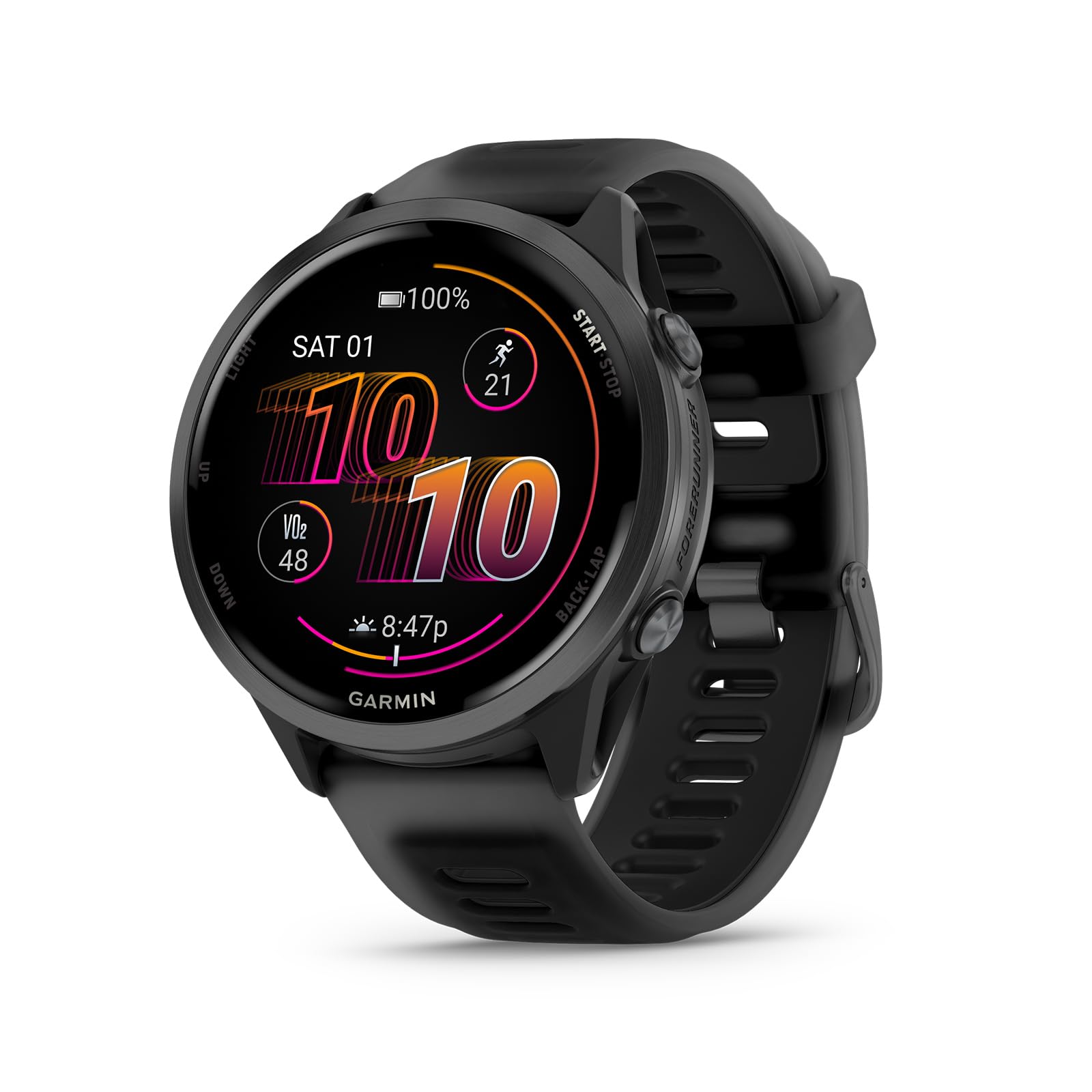
The Forerunner 570 is Garmin’s latest running-focused AMOLED watch with a 47mm aluminum bezel, button controls, and a touchscreen that works with wet fingers and gloves. The 300mAh battery delivers up to 11 days in smartwatch mode or 18 continuous hours in full GPS mode, which is enough for ultramarathon pacing without a power bank.
Garmin Coach training plans adapt to your HRV status, recovery time, and VO2 max estimates, making this watch a true running partner rather than a passive recorder. The built-in speaker and microphone enable on-wrist phone calls and voice assistant replies when paired with your Android phone — a rare convenience in a dedicated training watch.
Morning and evening reports give you sleep, recovery, and training outlook summaries without digging through menus. The 30+ activity profiles include track run, triathlon, and open-water swimming, and incident detection sends your live location to emergency contacts during outdoor activities. It is designed for runners who want deep metrics without sacrificing daily wearability.
Why it’s great
- Garmin Coach adaptive training plans
- Bright AMOLED with button backup
- 18-hour GPS battery for long events
Good to know
- Built-in music support is limited
- Silicone band collects dust
2. Samsung Galaxy Watch Ultra
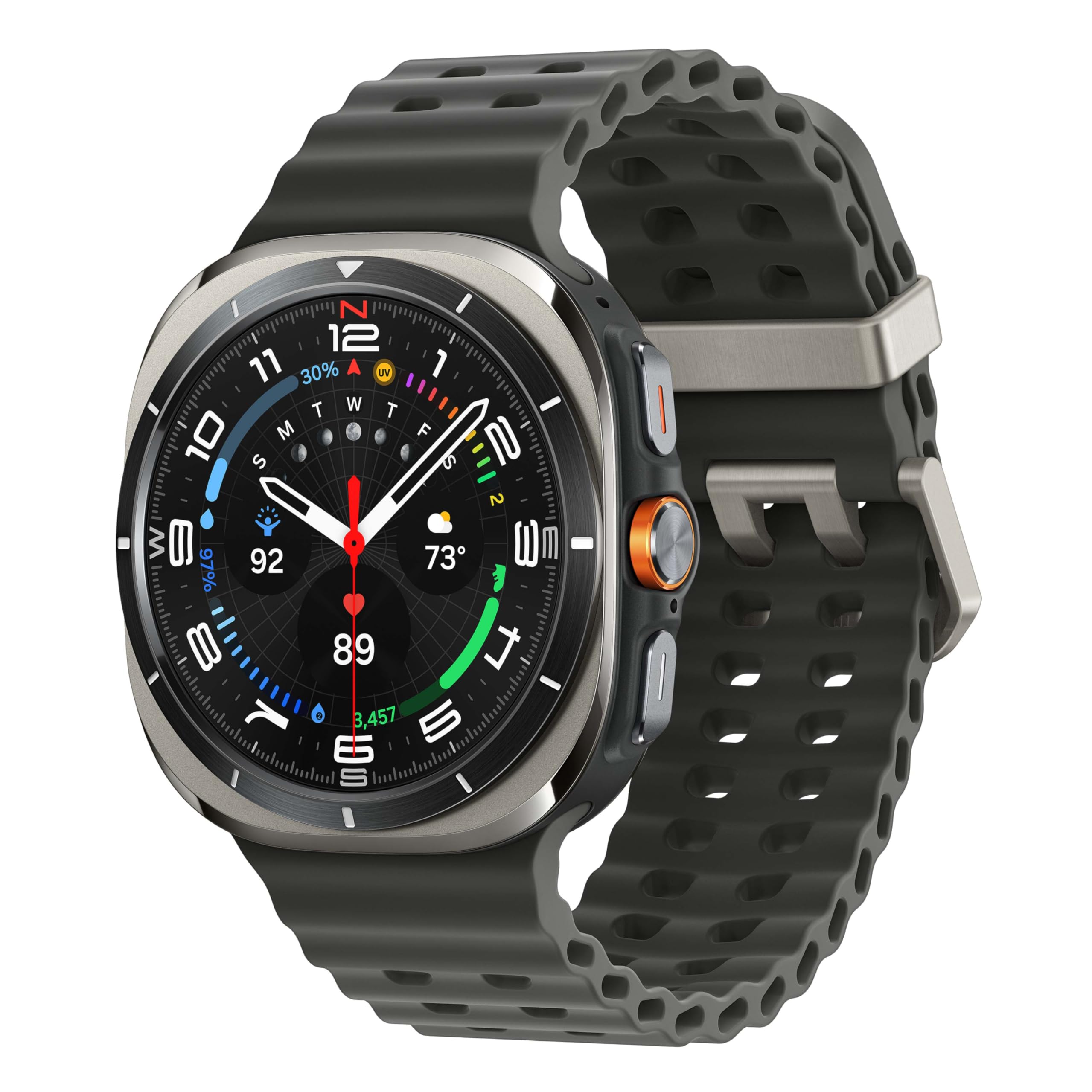
The Galaxy Watch Ultra is Samsung’s toughest wearable, featuring a titanium case and a 590mAh battery that delivers roughly 60 hours of mixed use — a dramatic improvement over standard Galaxy Watches. The LTE variant lets you leave your phone behind for calls, texts, GPS tracking, and streaming music, making it a true standalone device for Android users.
Galaxy AI powers the Energy Score and Wellness Tips, which synthesize sleep quality, heart rate variability, and step data into actionable daily suggestions. The heart rate sensor uses a new algorithm that filters out motion artifacts during high-intensity intervals, so your zone training data stays clean without a chest strap.
The 47mm Super AMOLED display hits 2,000 nits peak brightness for outdoor readability, and the programmable quick button can launch workouts, flashlights, or apps instantly. ECG, blood oxygen, and stress monitoring are built in, but the watch is bulky and leans harder into smartwatch features than dedicated athletic metrics.
Why it’s great
- Standalone LTE with full phone replacement
- Titanium case and 10 ATM water resistance
- Galaxy AI energy and wellness insights
Good to know
- Requires Samsung phone for some AI features
- Battery life shorter than dedicated fitness watches
3. Amazfit T-Rex 3 Pro
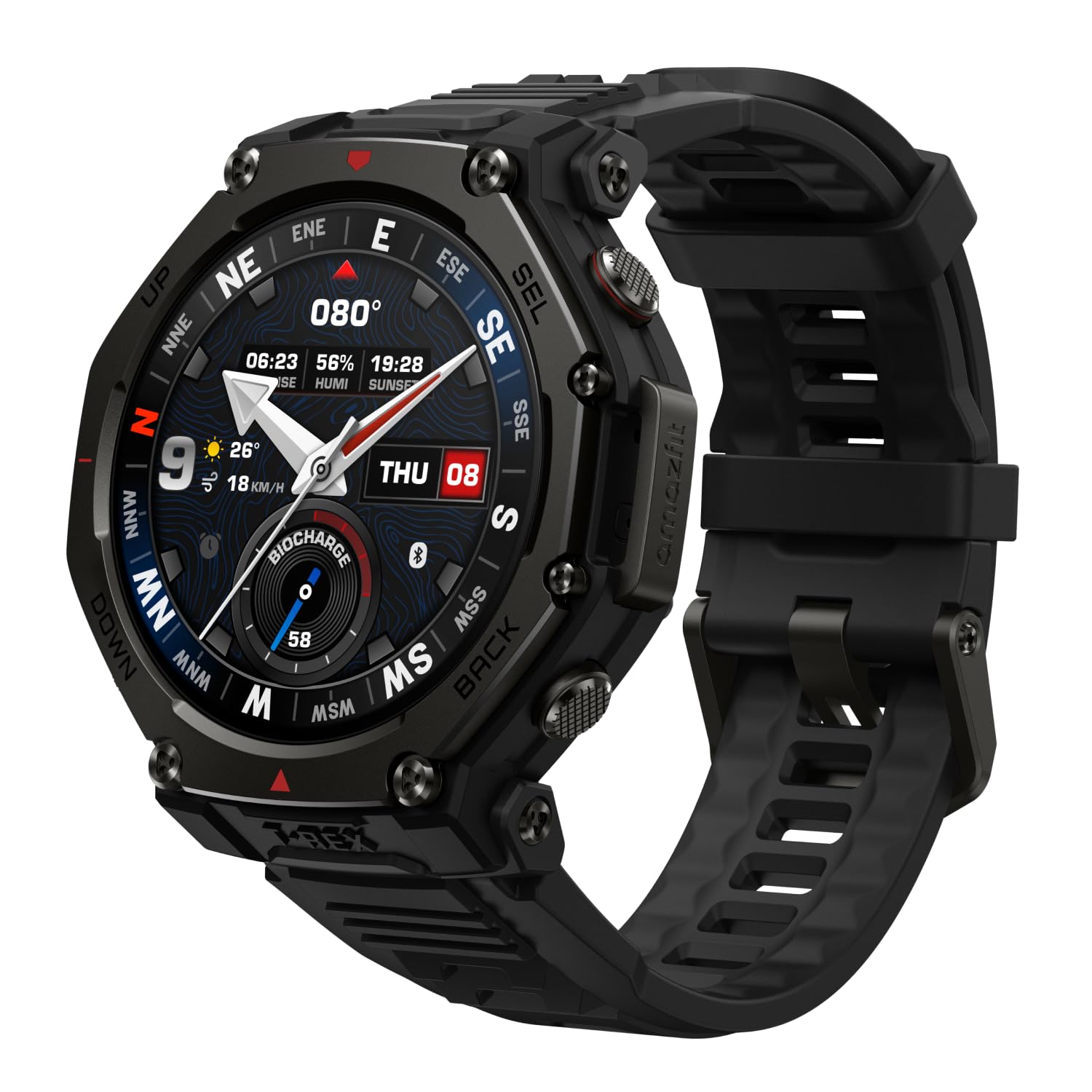
The T-Rex 3 Pro packs a 700mAh cell that delivers up to 25 days of typical use and around 27 days of light use, which is unmatched for a watch with a 3000-nit sapphire AMOLED display. The titanium alloy bezel and buttons resist scratches and impacts, and the 10 ATM rating with 45m dive certification means it survives open-water swimming and shallow scuba without hesitation.
Dual-band GPS with six satellite systems locks quickly even under dense canopy or between city skyscrapers. Offline maps with route planning, auto rerouting, and ski maps turn this into a serious backcountry tool. The built-in two-color flashlight — red for night vision, white for general use, and SOS strobe — is a practical feature you do not find on most watches at this weight class.
Zepp Flow voice assistant lets you start workouts, check stats, and reply to messages hands-free during a run. Heart rate accuracy via the BioTracker sensor is competitive with Garmin’s latest, and the Helio Strap accessory adds continuous recovery tracking. The software ecosystem is less polished than Garmin Connect, but the hardware value is exceptional.
Why it’s great
- Unrivaled 25-day battery with AMOLED
- Sapphire glass and titanium bezel
- Offline maps and dual-color flashlight
Good to know
- Route recalculation rarely works
- Zepp app less refined than Garmin Connect
4. Garmin Instinct 3 Solar

The Instinct 3 Solar uses a 1.1-inch MIP display with a solar charging lens that extends battery life indefinitely under typical outdoor conditions — 3 hours of 50,000 lux exposure per day offsets all drain in smartwatch mode. The fiber-reinforced polymer case with a metal-reinforced bezel meets MIL-STD-810 for thermal and shock resistance, and the 10 ATM rating handles pool, ocean, and surf.
Multi-band GPS with SatIQ technology automatically switches between GPS modes to optimize accuracy and battery drain, a feature previously reserved for Garmin’s Fenix line. The built-in LED flashlight with variable intensities and strobe modes is identical to the one found on the Fenix 8 — surprisingly bright for a 50mm watch and genuinely useful for night navigation and camp chores.
Health monitoring includes wrist-based heart rate, Pulse Ox, advanced sleep stages, and HRV status. The monochrome MIP display is always-on and readable in direct sunlight, unlike AMOLED panels that require brightness boosts. The learning curve for the button-driven OS is real, but the durability and solar autonomy make it the ultimate off-grid companion.
Why it’s great
- Infinite battery with solar charging
- MIL-STD-810 and 10 ATM toughness
- Multi-band GPS with SatIQ
Good to know
- No music storage or maps
- MIP display lacks color richness
5. Amazfit Balance 2

The Balance 2 delivers a 1.5-inch sapphire AMOLED display and a 658mAh battery that lasts up to 21 days on a single charge, making it one of the longest-lasting AMOLED fitness watches under premium pricing. The aluminum body and sapphire crystal glass give it a refined feel that punches above its price segment, while dual speakers provide clear audio cues during workouts.
Amazfit added official HYROX training and competition modes plus downloadable maps for 40,000 golf courses — niche but appreciated for specific athletes. Dual-band GPS with six satellite systems locks quickly and maintains accuracy through urban canyons. The Zepp Flow voice assistant works offline for basic controls and uses ChatGPT integration for more complex queries when connected.
Health tracking covers heart rate, sleep quality, blood oxygen, stress, and HRV recovery metrics. Military-grade endurance with 10 ATM water resistance and 45m diving certification means it survives water sessions without worry. The only real complaint from users is the lack of Qi wireless charging and the proprietary magnetic puck.
Why it’s great
- Premium sapphire AMOLED at a mid-tier price
- 21-day battery with dual-band GPS
- HYROX and golf course modes
Good to know
- Proprietary charging puck, no Qi
- Zepp app integration is limited
6. Fitbit Versa 4

The Versa 4 is Fitbit’s mid-range GPS fitness watch with a focus on daily readiness and stress management rather than raw athletic metrics. The Daily Readiness Score combines your sleep, heart rate variability, and recent activity to tell you whether to push hard or rest. The six-day battery life (with always-on display off) is comfortable for a full work week without charging.
Built-in GPS tracks outdoor runs without a phone, and the 40+ exercise modes include automatic detection for walking, running, cycling, and swimming. The Stress Management Score uses heart rate variability and activity data to provide a daily stress reading, paired with guided breathing sessions and mindfulness content. SpO2 monitoring, menstrual health tracking, and skin temperature sensing round out the health suite.
The watch supports on-wrist Bluetooth calls, texts, and phone notifications plus Amazon Alexa and Google Wallet. The 50-meter water resistance makes it pool-safe. Some users report GPS drifting on tight city routes and the proprietary charging cable is a long-term fragility concern, but the Versa 4 remains a solid choice for lifestyle-first users who want guided recovery as much as activity tracking.
Why it’s great
- Daily Readiness and Stress Management Scores
- Built-in GPS with automatic exercise detection
- Google Wallet and Alexa integration
Good to know
- GPS accuracy can drift on tight routes
- Proprietary charger, no USB-C
7. Fitbit Inspire 3

The Inspire 3 is a slim, lightweight activity tracker that prioritizes simplicity and battery life over on-wrist smart features. Its 10-day battery life means two to three charges per month, and the compact resin case with a silicone band is comfortable for 24/7 wear — including sleep. The grayscale OLED touchscreen is basic but readable in most light conditions.
Health tracking covers 24/7 heart rate, SpO2, sleep stages, a daily Stress Management Score, and guided breathing sessions. The Daily Readiness Score requires a Fitbit Premium subscription, which is a notable gate for this entry-level price point. Automatic exercise recognition covers walking, running, cycling, and swimming, but there is no built-in GPS — the Inspire 3 uses your phone’s GPS for outdoor route tracking.
Step counting and heart rate accuracy are consistent with other Fitbit models, though O2 saturation readings may be off from clinical reference values. The proprietary charging cable is fragile, and users have reported strap hinge failures after several months. If you want a no-frills tracker that lasts a long time between charges, the Inspire 3 delivers exactly that at a budget-friendly price.
Why it’s great
- 10-day battery between charges
- Lightweight and comfortable for 24/7 wear
- Stress Management and sleep tracking
Good to know
- No built-in GPS
- Proprietary charger and fragile strap hinge
FAQ
Will any Android fitness tracker watch work with my Samsung or Pixel phone?
Can I leave my phone at home and still track GPS runs?
Which watch has the most accurate heart rate sensor for interval training?
How important is battery life for a fitness tracker watch?
Do I need a subscription to access all health features?
Final Thoughts: The Verdict
For most users, the best android fitness tracker watch winner is the Garmin Forerunner 570 because it combines a sharp AMOLED display, adaptive Garmin Coach training, 11-day battery, and no subscription fees for advanced recovery metrics. If you want a rugged watch with incredible battery life for off-grid adventures, grab the Garmin Instinct 3 Solar. And for the best pure value with premium materials and a 25-day battery, nothing beats the Amazfit T-Rex 3 Pro.