
Getting that cinema-style audio bubble where helicopters sound like they’re circling overhead and bass rumbles through your chest has always felt like a luxury that requires a dedicated AV receiver and bank-breaking speakers. The market has shifted dramatically, and you no longer have to compromise your living room’s floor plan or your bank account to get a taste of that three-dimensional soundstage. The secret lies in finding a system that pairs virtual height processing with a dedicated low-frequency driver, and the options today deliver that with surprising authority.
I’m Min — the co-founder and writer behind Gadgets Feed. I’ve spent dozens of hours cross-referencing channel configurations, driver sizes, and audio codec support to separate the real performers from the marketing fluff in this specific price tier.
This guide walks through nine systems that deliver a genuine upgrade over standard TV audio, helping you find the best budget dolby atmos soundbar with subwoofer for your space, whether you’re upgrading a bedroom setup or filling a modest living room.
How To Choose The Best Budget Dolby Atmos Soundbar With Subwoofer
This category is defined by a careful balance between channel count, driver quality, and processing power. The budget constraint means you will not get a full 7.1.4 array, so understanding which compromises are acceptable is the key to a satisfying purchase.
Channel Configuration and Up-Firing Drivers
A 3.1.2-channel system includes a dedicated center channel for dialogue plus two up-firing drivers for overhead effects. This is the sweet spot for true Atmos immersion on a budget. A standard 3.1 configuration relies on virtual processing to simulate height, which works well in rooms with standard 8-foot ceilings but loses effectiveness in spaces with high or angled ceilings.
Wireless Subwoofer Connectivity and Bass Extension
The subwoofer’s wireless range and driver size directly affect the visceral impact. A 6.5-inch driver with a rear-facing port can produce clean bass down to around 40Hz, while smaller 5.25-inch units may roll off earlier. Look for systems that use a dedicated wireless protocol rather than standard Bluetooth to avoid audio lag and dropouts during peak bass moments.
HDMI eARC and Audio Codec Support
HDMI eARC (enhanced Audio Return Channel) is non-negotiable for lossless Dolby Atmos TrueHD passthrough from Blu-ray players or game consoles. Optical cables compress the signal to Dolby Digital Plus, which degrades the spatial imaging. Verify the soundbar has a dedicated eARC port and supports both Dolby Atmos and DTS:X for maximum compatibility.
Quick Comparison
On smaller screens, swipe sideways to see the full table.
| Model | Category | Best For | Key Spec | Amazon |
|---|---|---|---|---|
| Hisense AX3120Q | Premium | True Atmos Height Effects | 3.1.2 ch with up-firing drivers | Amazon |
| ULTIMEA Skywave X40 | Premium | Full Wireless Surround Setup | 530W peak, 5.1.2 ch | Amazon |
| LG S70TY | Mid-Range | TV Matching & Dialogue Clarity | Up-firing center channel | Amazon |
| Samsung S60D | Mid-Range | Compact All-in-One with Samsung TV | 5.0 ch built-in subwoofer | Amazon |
| Amazon Fire TV Soundbar Plus | Premium | Fire TV Ecosystem Integration | 3.1 ch dedicated center channel | Amazon |
| YAMAHA SR-B40A | Mid-Range | Clear Voice & Bass Extension | 6.5-inch wireless subwoofer | Amazon |
| Hisense AX3100Q | Mid-Range | Balanced Value with EQ Options | 3.1 ch Dolby Atmos & DTS:X | Amazon |
| LG S40TR | Mid-Range | Included Rear Surround Speakers | 4.1 ch with wireless rears | Amazon |
| Samsung HW-B550F | Budget | Entry-Level DTS Virtual:X | 2.1 ch DTS Virtual:X | Amazon |
In‑Depth Reviews
1. Hisense AX3120Q 3.1.2ch Soundbar
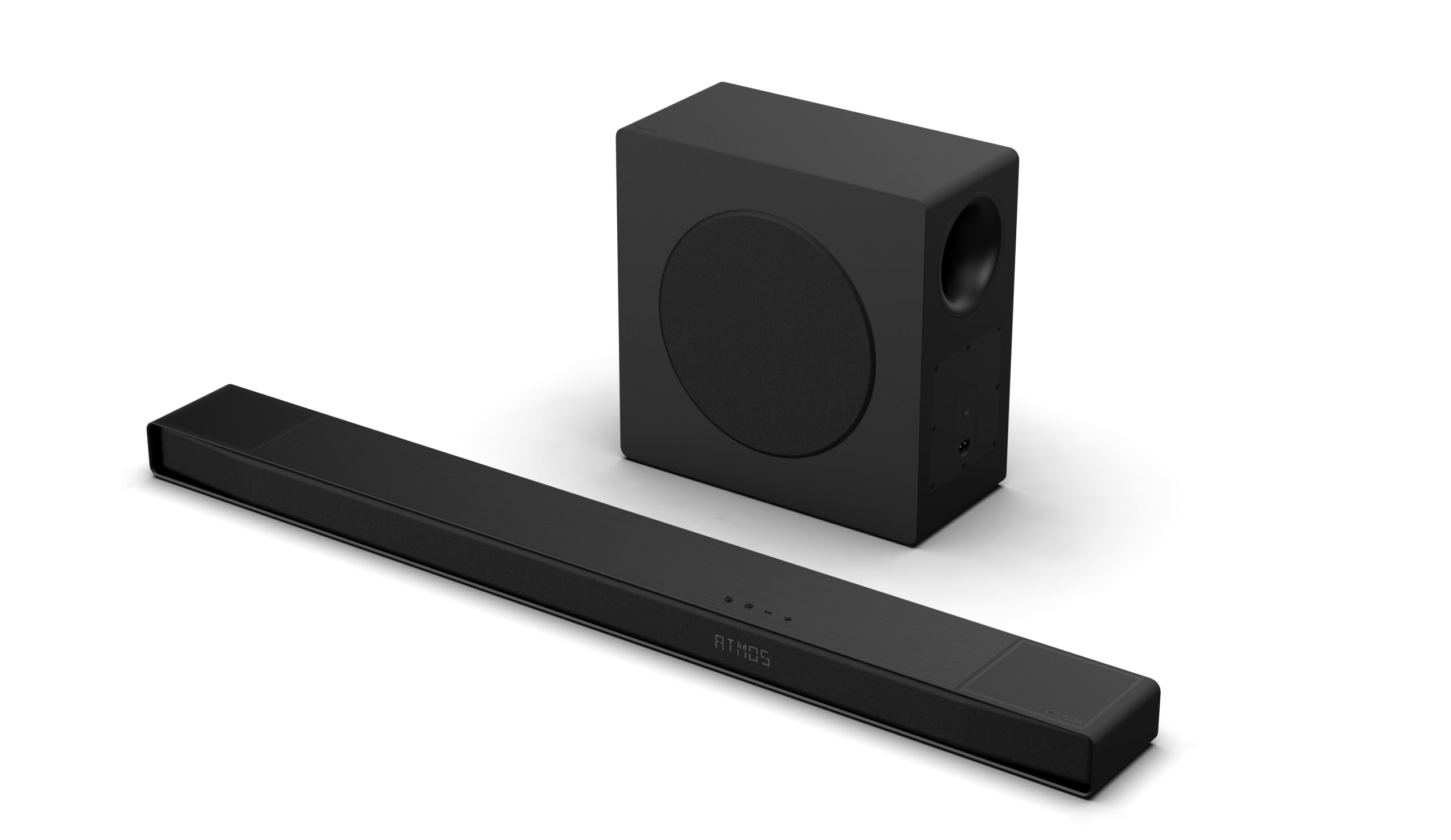
The Hisense AX3120Q is the only system in this roundup with two dedicated up-firing drivers that bounce sound off your ceiling to create genuine overhead effects. This 3.1.2-channel configuration pairs those height channels with a front left, right, and center array plus a 6.5-inch wireless subwoofer, delivering the most authentic Dolby Atmos experience available in the budget tier. The subwoofer thumps with authority down to around 40Hz, providing the tactile bass rumble essential for action sequences without dominating the midrange.
Setup is remarkably straightforward thanks to automatic pairing between the soundbar and subwoofer, and the HDMI eARC port supports lossless Atmos passthrough from game consoles and streaming devices. Bluetooth 5.3 ensures stable wireless audio from your phone, and the seven EQ presets let you switch between Music, Movie, and Night modes without digging into menus. The Hi-Concerto feature allows the soundbar to sync with compatible Hisense TVs to use both the TV speakers and the soundbar simultaneously for a wider soundstage.
Room calibration through the app helps compensate for irregular wall surfaces and furniture placement, which is critical for Atmos systems where ceiling reflection angles play a major role. The upward-firing drivers produce a noticeable height layer in content encoded with Dolby Atmos metadata, creating the sensation of rain falling from above or aircraft passing overhead. For a living room that seats three to five people, this system delivers the most spatially convincing performance without emptying your wallet.
Why it’s great
- True up-firing drivers produce genuine overhead effects rather than virtual simulation
- 7 EQ presets plus room calibration optimize sound for different content and room shapes
- HDMI eARC supports lossless Dolby Atmos TrueHD passthrough
Good to know
- Rear speakers are slightly underpowered in larger rooms exceeding 400 square feet
- The 40-inch width may overhang smaller 43-inch TV stands
2. ULTIMEA Skywave X40 5.1.2ch Soundbar
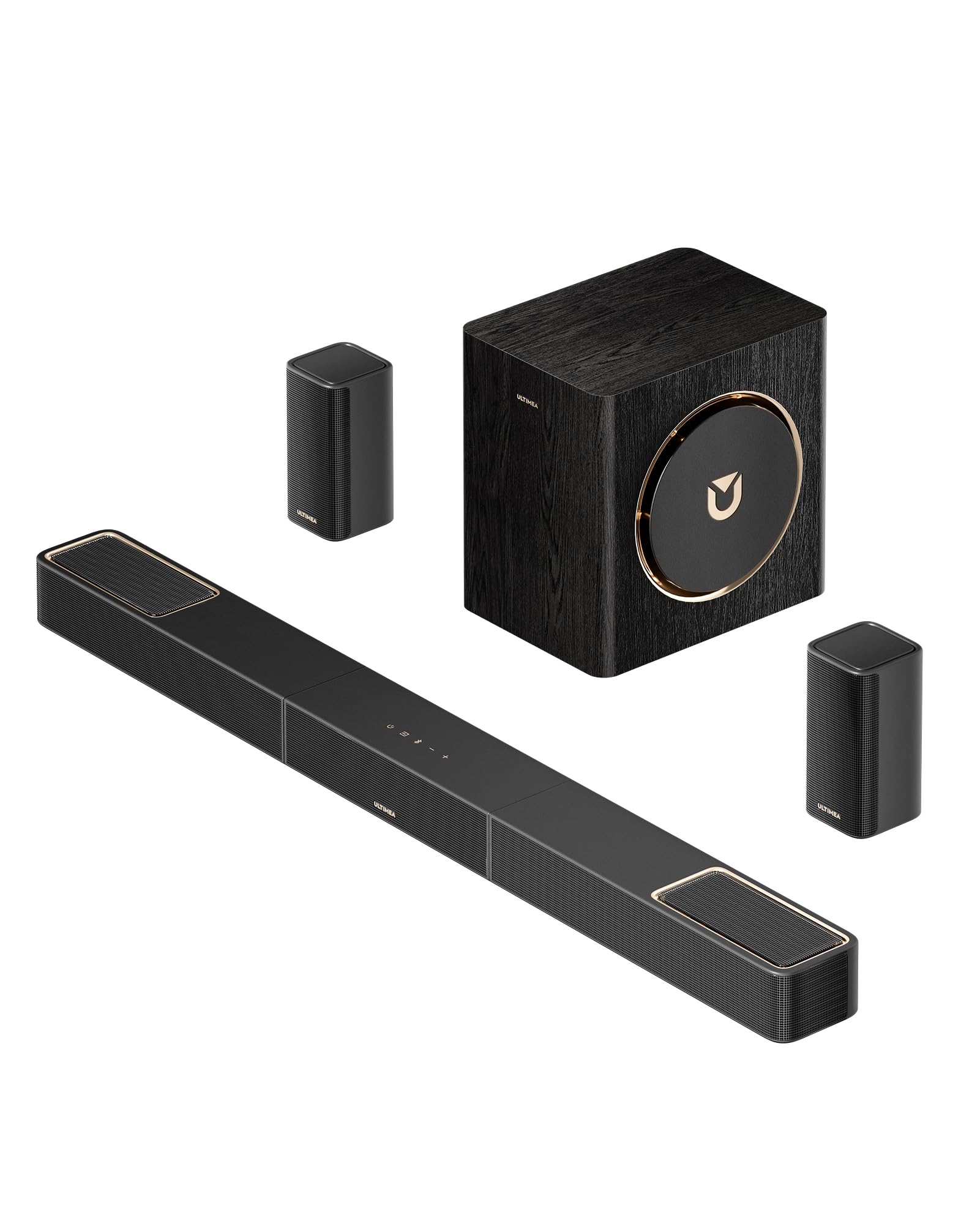
The ULTIMEA Skywave X40 breaks the budget mold by including wireless rear surround speakers in the box, creating a true 5.1.2-channel system without requiring extra purchases or messy cable runs. The 530-watt peak power is driven by a Gallium Nitride amplifier, which runs cooler and responds faster than traditional silicon-based Class-D amps, translating to cleaner transients during explosive movie scenes. The 6.5-inch subwoofer uses a wood-crafted enclosure and a waveguide system to push bass down to 35Hz, delivering subwoofer rumble that you can physically feel in your seating position.
Setup is genuinely plug-and-play: the subwoofer and rear speakers pair automatically with the soundbar over a dedicated 5GHz wireless protocol, avoiding the interference and latency issues common with Bluetooth-based surround setups. The NEURACORE audio engine processes up to 17 channels using a triple-core DSP, ensuring that the Dolby Atmos metadata is decoded with less than 0.5% total harmonic distortion. HDMI eARC support allows 4K HDR passthrough at 60Hz, so video quality remains uncompromised when routing through the soundbar.
The sleek metal grille and rose gold accents give it a premium visual profile that blends with modern TV furniture, while the wood subwoofer enclosure adds a touch of acoustic authenticity. Dialogue clarity is excellent across all modes, and the rear speakers handle the surround channel information with enough spatial precision to place sound effects accurately behind the listener. For buyers who want a complete surround sound ecosystem without paying for a separate AV receiver and satellite speakers, the Skywave X40 represents the most comprehensive package available at this price point.
Why it’s great
- Includes wireless rear surround speakers for true 5.1.2 immersion out of the box
- GaN amplifier delivers cleaner power delivery with less heat than conventional designs
- Subwoofer reaches 35Hz for deep, physical bass impact
Good to know
- Hidden display panel is difficult to read from a seating distance
- App connectivity occasionally drops and could benefit from more granular EQ customization
3. LG S70TY 3.1.1-Channel Soundbar
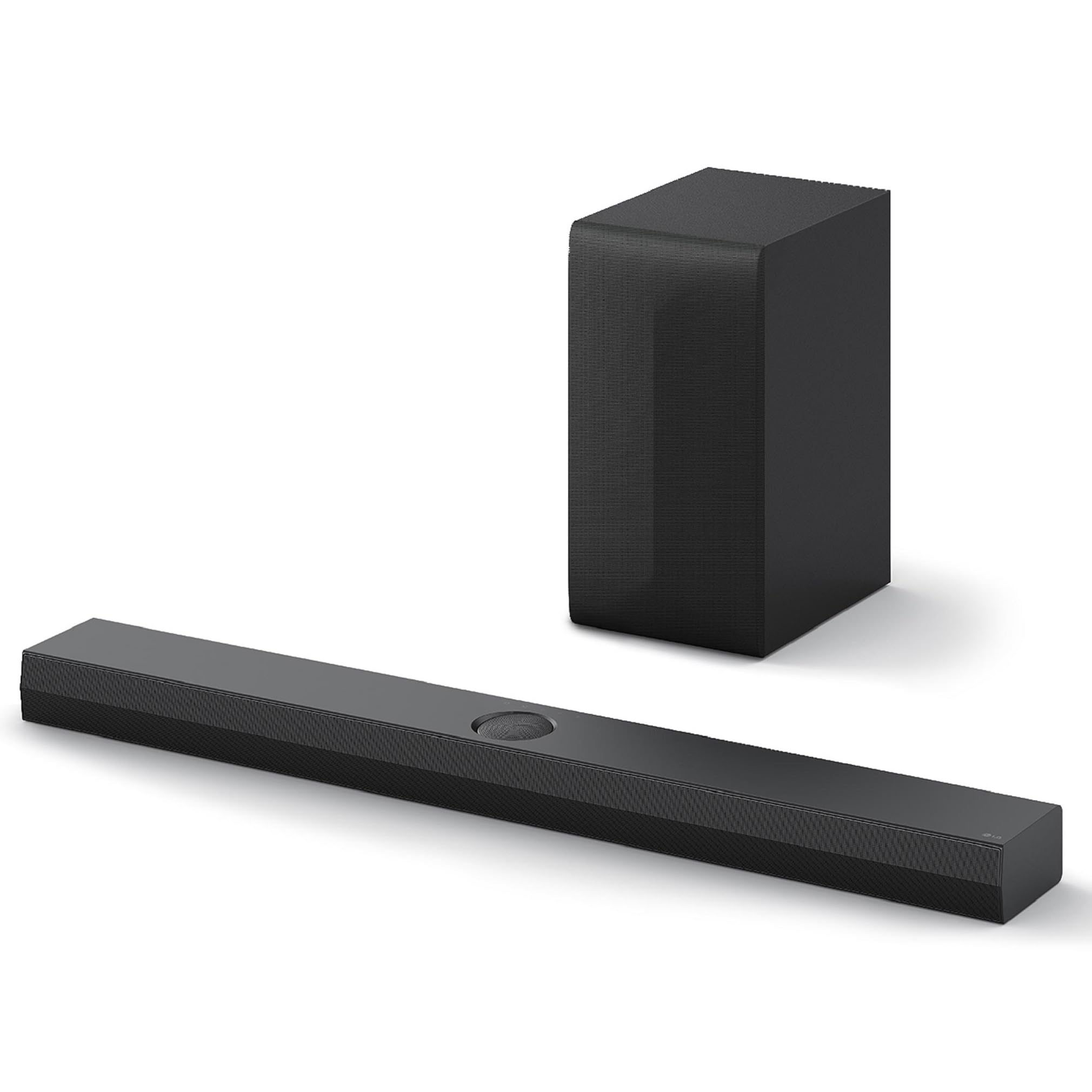
The LG S70TY takes a unique approach by placing an up-firing driver in the center channel rather than the left and right extremities, focusing its spatial processing on dialogue clarity first and overhead effects second. This 3.1.1-channel design ensures that voices remain crisp and intelligible even during complex sound mix passages, with the upward-firing center driver adding a sense of height to spoken word that anchors the actor’s voice to the screen. The wireless subwoofer reaches 95mm driver size and provides a balanced low-end foundation that enriches without overpowering the midrange dialogue frequencies.
Integration with LG QNED and OLED televisions is seamless through the WOW Orchestra feature, which synchronizes the TV’s built-in speakers with the soundbar to create a wider, more cohesive soundstage. The slim profile is specifically designed to nest under LG QNED TVs without blocking the bottom edge or requiring additional clearance, and the crest-design metal grille resists dust buildup while maintaining a polished aesthetic. HDMI eARC supports 4K 120Hz passthrough, making this system suitable for PlayStation 5 and Xbox Series X gamers who need low-latency audio and high refresh rates simultaneously.
The dedicated LG Soundbar App allows 3-band EQ adjustment for bass, treble, and mid-range frequencies, giving you fine-grained control over the tonal balance. The WOW Interface lets you control the soundbar directly from your LG TV remote, eliminating the need to juggle multiple remotes during a movie night. For LG TV owners who prioritize dialogue clarity and aesthetic symmetry, the S70TY delivers a cohesive ecosystem experience that outperforms generic third-party soundbars in voice reproduction.
Why it’s great
- Up-firing center channel prioritizes dialogue clarity while adding spatial height
- WOW Orchestra syncs seamlessly with LG TV speakers for a wider soundstage
- 4K 120Hz passthrough supports high-end gaming consoles
Good to know
- Optional rear speakers are currently difficult to find in the US market
- Lacks Wi-Fi or ethernet connectivity for network-based multi-room audio
4. Samsung S60D 5.0ch Soundbar

The Samsung S60D is an all-in-one 5.0-channel soundbar that eliminates the need for a separate subwoofer by integrating dual built-in woofers directly into the bar chassis, making it the most space-efficient option for compact living rooms, apartments, or bedroom setups. Despite the lack of an external subwoofer, the built-in drivers produce surprisingly punchy bass at low and moderate volumes, with enough projection to fill a 12-foot by 12-foot room without audible distortion. The 5-channel array uses acoustic beam technology to create a wide soundstage that extends beyond the physical width of the bar, simulating rear channel effects through psychoacoustic processing.
Wireless Dolby Atmos connectivity allows the soundbar to receive Atmos metadata over Wi-Fi rather than requiring a physical HDMI cable, simplifying the setup for Samsung TV owners who want to reduce cable clutter. Q-Symphony technology synchronizes the Samsung TV’s built-in speakers with the soundbar, routing dialogue to the TV’s dedicated speakers while the soundbar handles effects and bass, resulting in improved voice clarity at low volume levels. Adaptive Sound analyzes content in real-time and adjusts the frequency response to emphasize dialogue during quiet scenes and boost bass during action sequences.
Game Mode Pro automatically activates when it detects a connected game console, optimizing the frequency response for positional audio cues like footsteps and directional gunfire. The compact 26-inch width fits comfortably under 32-inch to 43-inch televisions, and the SmartThings app provides access to EQ presets, volume limiting, and night mode settings. For users who cannot accommodate a separate subwoofer box or want a minimalist aesthetic, the S60D delivers a compelling compromise between size and spatial audio performance.
Why it’s great
- Built-in woofers eliminate the need for a separate subwoofer, saving floor space
- Q-Symphony integrates seamlessly with Samsung TVs for enhanced dialogue clarity
- Game Mode Pro optimizes audio for competitive gaming with spatial accuracy
Good to know
- Low-frequency extension is limited compared to dedicated subwoofer-based systems
- No dedicated center channel driver compromises dialogue separation slightly
5. Amazon Fire TV Soundbar Plus
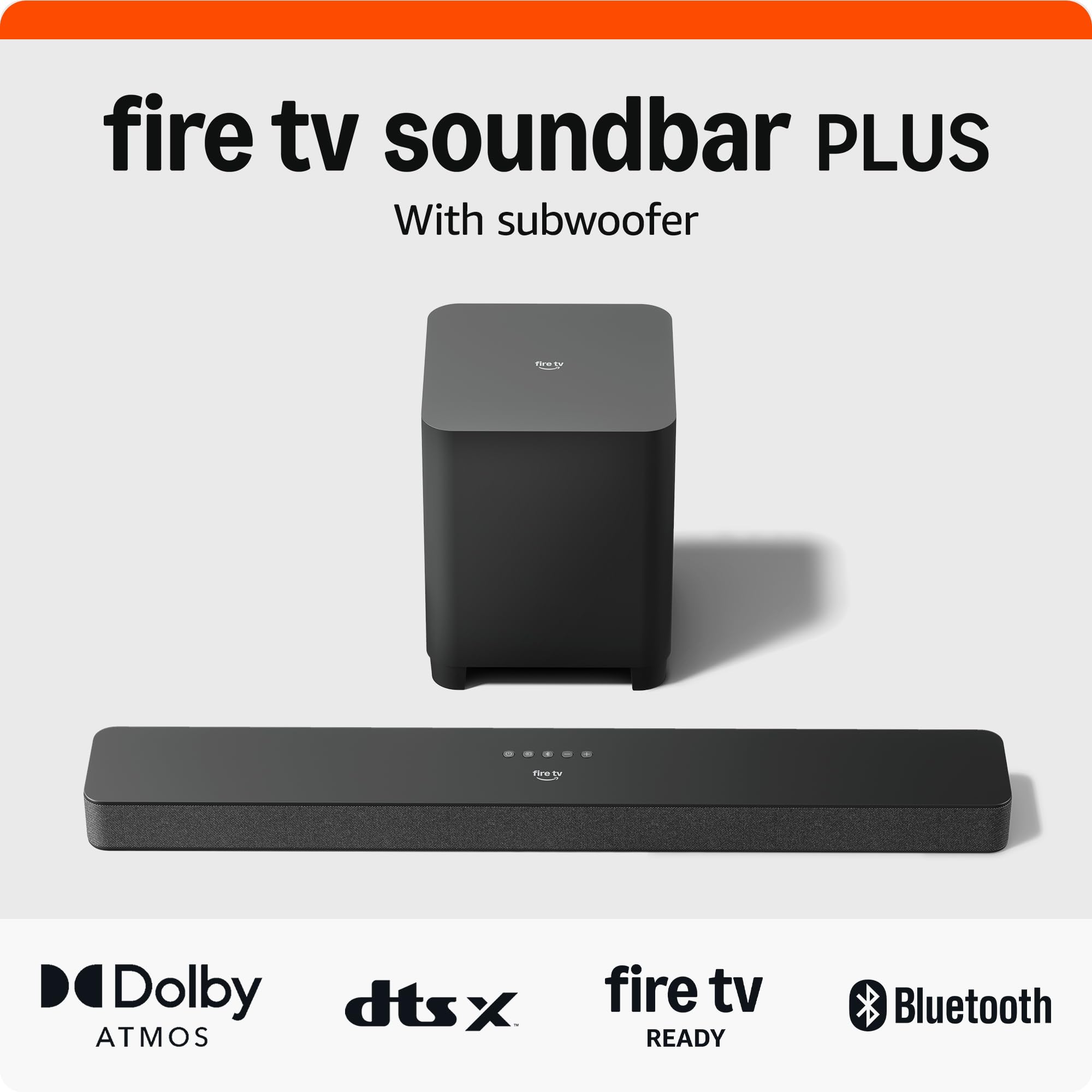
The Amazon Fire TV Soundbar Plus is a 3.1-channel system built with a dedicated center dialogue channel and a separate wireless subwoofer, designed to integrate into the Fire TV ecosystem with a level of convenience that third-party soundbars cannot match. The subwoofer connects automatically to the soundbar when both are plugged into power, and the entire setup pairs with your Fire TV device over HDMI eARC to enable unified control through the Fire TV remote or Alexa voice commands. The dedicated center channel uses a 2-way design with an oval midrange driver and a silk dome tweeter, which reproduces vocal frequencies with a level of detail and clarity that typically costs more in this category.
Dolby Atmos and DTS:X decoding are handled through virtual processing that simulates height effects using the three-channel array, creating a convincing dome of sound that extends above the TV plane. The subwoofer provides a solid low-end foundation without the bloated boominess that plagues cheaper subwoofers, maintaining tight control on kick drums and low-frequency sound effects. Four sound modes—Movie, Music, Sports, and Night—allow you to tailor the frequency response to specific content types, and the rear-firing surround drivers can be toggled on or off to suit room acoustics.
Bluetooth streaming from your phone or tablet is straightforward, and the Fire TV audio settings menu offers additional EQ customization options through the on-screen interface. The system works with any TV, but the deepest integration occurs when paired with a Fire TV Edition television or Fire TV Stick, where the soundbar becomes a seamless part of the smart TV experience. For households that already use Fire TV devices for streaming, the convenience of unified remote control and Alexa voice commands makes this the most user-friendly option on the list.
Why it’s great
- Plug-and-play setup with automatic subwoofer pairing and Fire TV remote integration
- 2-way center channel with dedicated tweeter delivers superior vocal clarity
- Rear-firing surround drivers add width to the soundstage without extra speakers
Good to know
- Virtual Atmos processing is less convincing than systems with physical up-firing drivers
- Subwoofer has limited EQ adjustment for fine-tuning bass response
6. YAMAHA SR-B40A Sound Bar
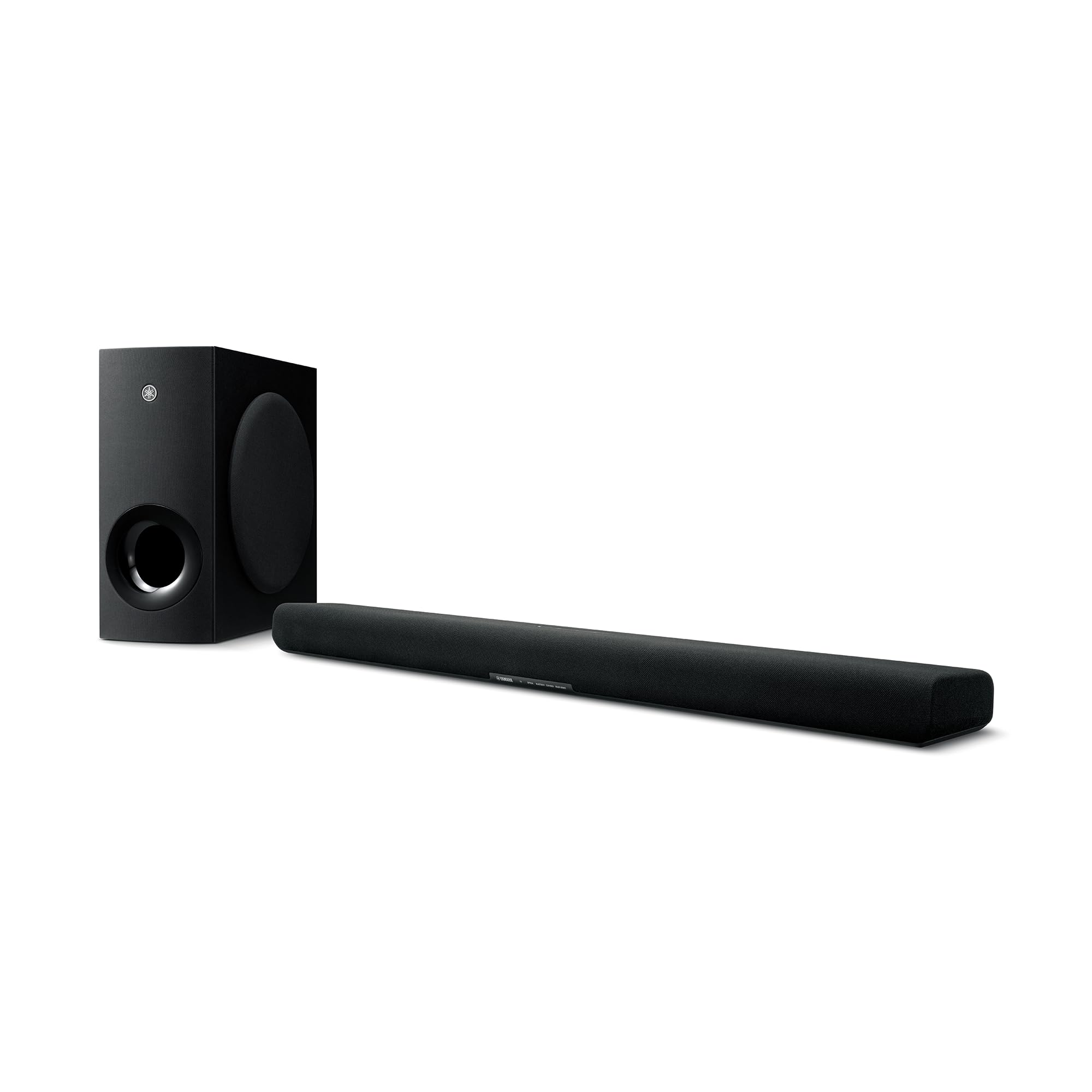
The YAMAHA SR-B40A brings Yamaha’s True Sound philosophy to the budget Dolby Atmos category, prioritizing balanced tonal accuracy and dialogue intelligibility over exaggerated bass effects. The 6.5-inch wireless subwoofer uses a bass-reflex ported design that produces a controlled, musical low-end that integrates naturally with the soundbar’s midrange and treble drivers rather than overwhelming them. The Clear Voice feature analyzes the audio signal to isolate and amplify vocal frequencies between 300Hz and 3kHz, making it the best option for viewers who struggle to understand dialogue in content with heavy background music or layered sound effects.
Dolby Atmos processing uses Yamaha’s proprietary virtualizer to create a 3D sound field from the 2.1-channel hardware, and while it cannot match the height precision of a system with physical up-firing drivers, it produces a convincing sense of vertical space when placed in a room with standard ceiling height. Bass Extension mode adds an extra 6dB of low-frequency output below 80Hz, which gives action movies and EDM music a noticeable physical punch without significant distortion. HDMI eARC support ensures compatibility with modern TVs, and Bluetooth Multipoint allows you to switch between two paired devices without re-pairing.
The slim profile measures just 2.4 inches in height, allowing it to slide under most TV screens without blocking the infrared receiver or the bottom edge. Built-in keyholes on the rear panel make wall mounting straightforward, and the included wall template ensures accurate placement. The four sound modes—Movie, Stereo, Standard, and Game—each present distinctly different frequency curves, with Movie mode adding a broad smiley-face curve that boosts both bass and treble for cinematic impact. For listeners who prioritize voice clarity and natural tonal balance over aggressive surround effects, the SR-B40A is a refined performer.
Why it’s great
- Clear Voice technology dramatically improves dialogue intelligibility in complex sound mixes
- Bass Extension mode adds tactile low-frequency impact without distortion
- Bluetooth Multipoint pairs with two devices simultaneously for convenient switching
Good to know
- Virtual surround sound is noticeably less immersive than physical multi-driver systems
- Music playback soundstage can feel narrow compared to dedicated stereo speakers
7. Hisense AX3100Q 3.1ch Soundbar
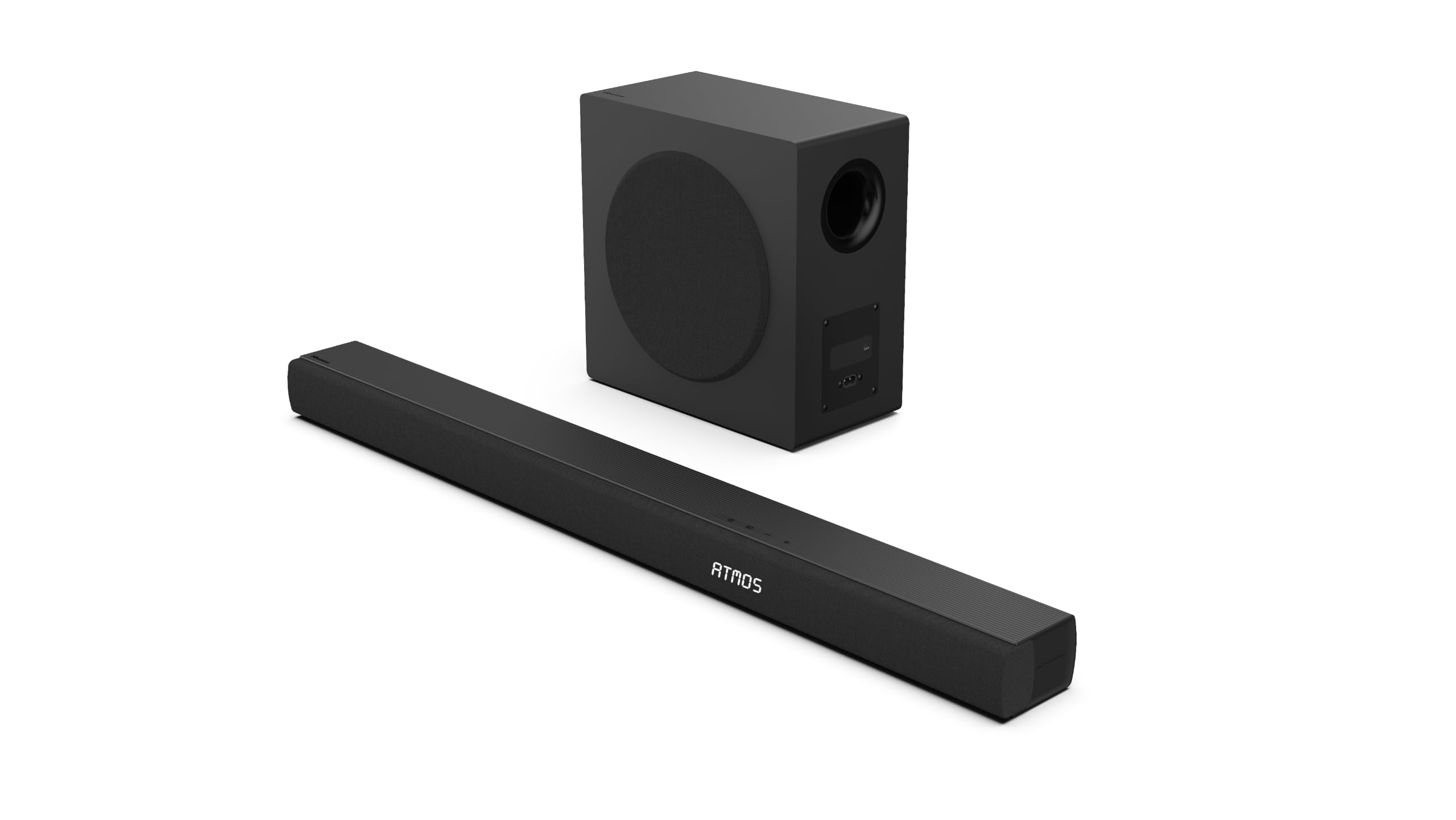
The Hisense AX3100Q occupies the entry-level Atmos sweet spot with a 3.1-channel configuration that includes a dedicated center channel and a 6.5-inch wireless subwoofer, delivering genuine spatial processing without the premium price tag of up-firing driver systems. The center channel ensures dialogue never gets swallowed by the subwoofer’s low-frequency output, maintaining vocal clarity even during heavy action sequences where bass levels peak. The 6.5-inch subwoofer produces deep bass extension that adds weight to explosions and musical basslines without crossing into muddy territory, and its wireless connection allows placement in corners or behind furniture without visible cabling.
Dolby Atmos and DTS:X decoding are handled through virtual processing that uses the three front channels to create a convincing surround effect, and the system supports HDMI eARC for lossless audio passthrough from supported sources. The EzPlay feature makes the soundbar’s settings menu appear directly on the TV screen when using a Roku TV, allowing you to adjust EQ, volume, and input settings without switching to a separate remote. Seven EQ modes—AI EQ, Music, Night, Game, Movie, News, and Sport—offer preset frequency curves that optimize the soundbar for specific content types, with AI EQ automatically adjusting based on the audio signal analysis.
Bluetooth 5.3 provides low-latency wireless audio for smartphone streaming, and the optical input ensures compatibility with older TVs that lack HDMI ARC ports. The 35.6-inch width is sized for medium to large televisions, and the low profile at 2.4 inches tall fits under most TV screens without visual obstruction. For buyers who want the core benefits of a 3.1-channel Atmos soundbar—clear dialogue, dedicated subwoofer, and virtual spatial audio—without spending extra for height-channel hardware, the AX3100Q delivers exceptional value.
Why it’s great
- 3.1-channel layout with dedicated center channel ensures dialogue clarity
- EzPlay feature integrates seamlessly with Roku TV for on-screen control
- 7 EQ modes including AI EQ automatically optimize for content type
Good to know
- Virtual Atmos processing is less effective in rooms with vaulted or non-standard ceilings
- No physical up-firing drivers limit the convincingness of height effects
8. LG S40TR 4.1ch Home Theater Soundbar

The LG S40TR takes a channel-count-first approach by including both a wireless subwoofer and wireless rear surround speakers in the package, creating a 4.1-channel system that delivers genuine surround sound without the need for a separate receiver or additional purchases. The rear speakers connect wirelessly to the soundbar, transmitting audio through a dedicated RF protocol rather than Bluetooth, which eliminates latency issues and ensures that the surround effects sync perfectly with the front channel content. The 4-channel front array processes Dolby Audio and DTS Digital Surround to create a cohesive sound field, with the rear speakers handling ambient effects and directional sound placement behind the listening position.
Clear Voice Plus analyzes the audio output in real-time to boost dialogue frequencies through the center channel processing, making it especially effective for streaming content where the vocal mix can be inconsistent between scenes. The Smart Up-Mixer converts standard 2-channel stereo content into a multi-channel experience, leveraging all four speakers to create a wider soundstage than the physical bar width would suggest. The LG Soundbar App allows 3-band EQ adjustment for bass, treble, and mid-range, giving you control over the system’s tonal balance from your smartphone.
WOW Orchestra compatibility allows the soundbar to synchronize with LG TV speakers for a larger soundstage, and the WOW Interface enables full control through the LG TV remote. The crest-design metal grill adds a touch of visual refinement while protecting the drivers from dust accumulation. For viewers who prioritize actual surround speaker placement over simulated rear effects, the S40TR delivers a tangible upgrade in spatial immersion, with the wireless rear channels pulling sound effects away from the TV screen and into the room’s physical space.
Why it’s great
- Includes wireless rear surround speakers for genuine surround sound immersion
- Dedicated RF wireless protocol eliminates latency and dropout issues
- Clear Voice Plus effectively enhances dialogue clarity in mixed content
Good to know
- Limited to Dolby Digital and DTS Digital, lacks Dolby Atmos and DTS:X support
- Rear speakers require AC power, limiting placement to areas near outlets
9. Samsung HW-B550F 2.1ch Soundbar

The Samsung HW-B550F is the entry point into this buying guide, using DTS Virtual:X processing to create a multi-directional spatial audio experience from a 2.1-channel hardware configuration. While it lacks dedicated center or up-firing drivers, the DTS Virtual:X algorithm analyzes the audio signal and applies psychoacoustic cues that trick the ear into perceiving sound coming from above and behind, working surprisingly well in rooms with standard ceiling heights and minimal acoustic treatment. The included wireless subwoofer delivers punchy bass via the Bass Boost mode, which adds a noticeable low-frequency emphasis to action scenes and music without causing the distortion that plagues ultra-budget subwoofers.
Voice Enhance Mode automatically amplifies dialogue frequencies, making it easier to follow conversations in movies and TV shows without cranking up the overall volume. Adaptive Sound analyzes the content being played in real-time and switches the audio settings to optimize for movies, music, or voice content automatically, reducing the need for manual mode switching. The soundbar supports Bluetooth audio streaming and connects to TVs via HDMI or optical cable, with the HDMI ARC connection allowing control through the TV remote for a cleaner user experience.
The 2.1-channel layout keeps the system physically compact, with the soundbar measuring approximately 35 inches wide, making it suitable for televisions from 43 inches to 55 inches. Optional rear speakers can be added later to expand the system to a full 4.1 configuration, providing a path for future upgrades without replacing the entire soundbar. For viewers on the tightest budget who still want the immersive spatial benefits that virtual processing can provide, the HW-B550F offers the most accessible path into the world of multi-dimensional audio.
Why it’s great
- DTS Virtual:X creates convincing spatial audio effects from a 2.1-channel foundation
- Voice Enhance Mode significantly improves dialogue audibility at low volumes
- Optional rear speaker upgrade path allows future expansion without replacing the soundbar
Good to know
- 2.1-channel hardware lacks dedicated center driver for optimal dialogue separation
- Bass Boost mode can cause the subwoofer to sound bloated with certain music genres
FAQ
What is the difference between virtual Dolby Atmos and true Atmos with up-firing speakers?
Can I use a budget Dolby Atmos soundbar with a non-smart TV?
Why does my new soundbar sound worse than my TV speakers for dialogue?
Is a 5.1.2 system worth the extra money over a 3.1 system in a living room?
Final Thoughts: The Verdict
For most users, the best budget dolby atmos soundbar with subwoofer winner is the Hisense AX3120Q because its physical up-firing drivers and 3.1.2-channel configuration deliver the most convincing overhead effects without forcing you to spend for a high-end system. If you want a complete surround sound setup with rear speakers right out of the box, grab the ULTIMEA Skywave X40. And for a compact, all-in-one solution that fits into tight spaces and pairs perfectly with a Samsung TV, nothing beats the Samsung S60D.