
For the home-shop welder or the weekend repair pro, the 6013 weld rod is the unsung hero of thin-gauge steel and tricky fit-up jobs. Designed to run smoothly on low-voltage AC machines and in all positions, this electrode prioritizes a soft arc and easy slag removal over deep penetration, making it the go-to for sheet metal, mild steel repairs, and pipe work where burning through is the real enemy.
I’m Min — the co-founder and writer behind Gadgets Feed. After spending countless hours cross-referencing technical specs, analyzing customer reports on arc stability and slag behavior, and comparing rod diameters and tensile strengths, this guide delivers a clear, data-backed look at the best 6013 rods on the market today.
Whether you are running a 120V buzz box in the garage or a commercial machine on the job site, finding the right balance of amperage range and flux coating is critical, which is why I built this focused guide to help you choose the best 6013 weld rod for your exact project needs.
How To Choose The Best 6013 Weld Rod
Selecting the right 6013 rod isn’t just about grabbing the cheapest pack. You need to match the rod’s diameter and tensile strength to your base metal thickness and machine output. A mismatched rod leads to poor arc starts, excessive spatter, or burn-through on thin stock.
Rod Diameter & Amperage Range
The diameter controls the amperage window. A 1/16″ rod runs at 20-40 amps — perfect for thin sheet metal and small hobby welders. The 3/32″ rod amperage range (40-80 amps) is the all-around sweet spot for typical home repairs on 1/8″ to 3/16″ steel. The 1/8″ rod requires 90-130 amps and is best for thicker structural work where deeper penetration is acceptable. Choosing a rod too large for your machine will result in a dragging arc and poor fusion.
Flux Coating & Slag Removal
E6013 electrodes use a rutile-based flux that produces a stable, soft arc with very low spatter. This flux creates a slag that is designed to self-peel on flat and vertical-down fillet welds, drastically reducing cleanup time. If you are doing out-of-position welding or working on rusty or painted surfaces, the forgiving nature of the 6013 flux helps bridge gaps and handle poor fit-up conditions that would trip up a 7018 or 6010.
Tensile Strength & Application
The “60” in 6013 means 60,000 PSI tensile strength. This is adequate for general fabrication, light structural repair, and non-critical sheet metal work. It lacks the impact toughness of low-hydrogen rods like 7018, so avoid using it for high-stress or cold-weather structural welds. For farm equipment repairs, gate frames, and auto body panels, the 6013 is excellent because its softer arc reduces the risk of burn-through on thin material.
Quick Comparison
On smaller screens, swipe sideways to see the full table.
| Model | Category | Best For | Key Spec | Amazon |
|---|---|---|---|---|
| Hobart 770469 | Premium | Thick steel / structural | 1/8″ diameter, 5lb | Amazon |
| Blue Demon 6013 5/64″ | Premium | Mid-range fabrication | 5/64″ diameter, 5lb | Amazon |
| TOOLIOM E6013 3/32″ | Mid-range | All-position / sheet metal | 3/32″ diameter, 5lb | Amazon |
| Hobart 770466 | Mid-range | General purpose / 5lb value | 3/32″ diameter, 5lb | Amazon |
| Hot Max 22075 | Mid-range | Low-amp / 120V machines | 1/16″ diameter, 1lb | Amazon |
| Blue Demon 6013 1/16″ | Budget-friendly | Thin sheet metal / hobby | 1/16″ diameter, 1lb | Amazon |
| Saker E6013 3/32″ | Budget-friendly | Beginner / small repairs | 3/32″ diameter, 1lb | Amazon |
In‑Depth Reviews
1. Hobart 770469 6013 Stick, 1/8-5 lbs.

The Hobart 770469 delivers a 60,000 PSI tensile strength rating paired with a 1/8″ diameter that is ideal for heavier fabrication on 1/4″ to 3/8″ mild steel plates. It runs smoothly on both AC and DCEP or DCEN polarities, and its medium-penetrating arc handles poor fit-up without excessive digging. Certified welders with decades of experience consistently report predictable slag removal and stable arc characteristics from this Hobart batch.
At 5 pounds per carton, this is a serious value proposition for shops that burn through rods daily. The 1/8″ size requires 90-130 amps, so make sure your machine can deliver that range — a Lincoln 225 or equivalent buzz box handles it perfectly. Users note that the flux coating is consistent and minimizes moisture absorption when stored properly.
Where this rod excels is in bridge-building and general structural repair where you need reliable mechanical properties without the low-hydrogen storage demands of 7018. The slag peels easily on flat fillet welds, and the arc restrike capability is notably better than generic commodity rods. For the working welder who needs dependability, this is a clear winner.
Why it’s great
- Consistent batch quality from Hobart
- Runs well on 120V buzz boxes at high amp settings
- Easy slag removal on fillet welds
Good to know
- Requires a stronger machine (90+ amps)
- Not ideal for thin sheet metal under 1/8″
2. Blue Demon 6013 X 5/64″ X 14″ X 5LB

The Blue Demon 5/64″ rod occupies a rare middle ground between the thin 1/16″ rods and the standard 3/32″ — it delivers a slightly hotter arc than the smallest diameter but still runs comfortably on low-amperage 120V machines around 70-90 amps. This makes it a superb choice for 1/8″ to 3/16″ steel where you need good wetting action without burning through. The rutile flux produces a soft, stable arc that is forgiving on slightly rusted or painted surfaces.
Each rod arrives in a durable plastic tube with a resealable cap, which is a major advantage for keeping the flux dry in humid garage environments. The 5-pound quantity is enough for multiple small projects without going stale before you use them up. Users specifically note that the slag behavior on vertical-up and overhead welds is superior to the 1/16″ Hobart rods they tested previously.
For a shop that transitions between thin sheet metal repairs and medium-gauge fabrication, this 5/64″ diameter is a versatile compromise. The arc starts cleanly on every strike, and the spatter level is low enough to avoid heavy grinding. Blue Demon’s reputation extends beyond just marketing — real-world consistency in batch chemistry is why many hobbyists and pros stick with this brand.
Why it’s great
- Versatile 5/64″ size handles many gauges
- Excellent slag self-peeling on vertical welds
- Protective plastic tube storage
Good to know
- Less common diameter — may not restock locally
- Not heavy enough for thick structural steel
3. TOOLIOM E6013 Welding Rod 3/32″ 5LB

The TOOLIOM E6013 in 3/32″ x 14″ is tuned for all-position welding with a recommended amperage window of 40-80 amps. That range covers nearly every lightweight repair scenario — from mending a garden gate to sealing seams on a trailer fender. The arc is soft enough to avoid burn-through on thin sheet metal but carries enough heat to fuse 1/4″ steel in a single pass if you push the amperage higher.
The 5-pound bundle offers a substantial quantity for the money, which is helpful for production runs or repeated repair jobs. The flux coating is smooth and consistent, and when the rod is stored dry, the slag practically falls off on flat and horizontal fillet welds — a huge time saver. Several users reported that none of their rods arrived cracked or damaged, which speaks to decent packaging during shipment.
For the garage welder who keeps a 120V machine and occasionally needs to weld outside position, this rod is a straightforward recommendation. It restrikes cleanly even after a brief pause, and the smoke/spatter output is noticeably lower than generic commodity store rods. If you are new to stick welding, the forgiving arc and easy-to-read puddle make this a great training rod.
Why it’s great
- Wide amperage range (40-80A)
- Low spatter and clean slag removal
- Excellent value for 5-pound quantity
Good to know
- Plastic container may break in rough shipping
- Occasional damaged rod ends reported
4. Hobart 770466 6013 Stick, 3/32-5lbs

The Hobart 770466 is arguably the most referenced 6013 rod in the home-shop community. At 3/32″ diameter, it hits the sweet spot for 1/8″ to 3/16″ mild steel repairs, and the 60,000 PSI tensile strength provides enough ductility to handle vibration on farm equipment without snapping. This rod runs equally well on AC, DCEP, or DCEN polarity, which gives you flexibility no matter what machine you own.
The 5-pound box is a practical size — enough for a weekend fabrication project but not so large that the rods go stale before you use them. The flux coating is dense and consistent, and users with decades of experience report predictable slag lifting on flat and horizontal fillet welds. It struggles slightly on very thin sheet metal (under 1/16″), but that is expected for a 3/32″ rod.
What sets this Hobart rod apart is its reliable chemistry batch after batch. Experienced welders frequently mention that they can trust these rods to behave the same way every time, which is critical for production work. If you need a general-purpose rod to stock your welding cart, the 770466 is a proven, low-drama choice that gets the job done without surprises.
Why it’s great
- Proven batch consistency from Hobart
- Works on AC and both DC polarities
- Great penetration for medium steel
Good to know
- Some rods arrived with chipped flux
- Not ideal for sub-1/16″ sheet metal
5. Hot Max 22075 1/16-Inch E6013 1# ARC Welding Electrodes

The Hot Max 22075 is purpose-built for the lowest amperage range in the 6013 family — just 20-40 amps. This makes it the perfect companion for 120V hobby welders that can barely push 40 amps. Despite the tiny diameter, the rod lays down clean beads on 1/8″ scrap steel and thinner, which is exactly the scenario small machines were designed for. The flux coating is thin but effective, producing a manageable slag that chips off easily.
At 1 pound per tube, it is an entry-level quantity suitable for practice, light repairs, or a single small project. The tube packaging is compact and seals well to keep rods dry between sessions. Users on Campbell Hausfeld and other low-end buzz boxes report excellent results on the high amp setting, with good arc stability and minimal spatter — something budget rods often fail to deliver.
For anyone learning to stick weld or needing to patch thin automotive body panels, this rod’s shallow penetration is a feature, not a flaw. It allows you to fuse thin materials without blowing holes through them. Restarting the arc is easy, and the rod burns consistently without excessive digging. It is a low-cost, low-risk way to get started with 6013 electrodes.
Why it’s great
- Runs well on low-amp 120V machines
- Shallow penetration prevents burn-through
- Clean beads with manageable slag
Good to know
- 1-pound quantity goes quickly
- Not usable for thicker steel over 3/16″
6. Blue Demon 6013 X 1/16″ X 14″ X 1LB Tube

The Blue Demon 1/16″ rod is a direct competitor in the thin-electrode space, designed specifically for poor fit-up joints and sheet metal work. It deposits metal smoothly at 20-40 amps and produces that medium-to-shallow penetration that 6013 is famous for. The rutile flux ensures the arc is soft and controllable, even on nasty, rusty steel that would trip a more aggressive electrode.
Packaged in a sealed foil tube, the rods arrive in dry condition — a critical detail since 1/16″ flux is thin and absorbs humidity quickly. Users note that this rod performs better than the Hobart 1/16″ alternative specifically on vertical and horizontal lap welds, with less slag entrapment. The arc length is easy to hold, and the puddle is clearly visible for new welders.
For the price, this is a solid entry point for anyone experimenting with 6013s. The 1-pound tube lets you test the rod before committing to a larger quantity. Just be aware that the 1/16″ size is very sensitive to machine settings — running it too hot will cause the flux to burn off prematurely. Follow the 20-40 amp guide and you will get clean, functional welds on light steel.
Why it’s great
- Excellent performance on rusty or poor-fit joints
- Easy arc start and low spatter
- Foil packaging keeps rods dry
Good to know
- 1/16″ size requires careful amperage control
- Only 1lb — not enough for larger jobs
7. Saker E6013 Welding Rod 3/32” 1-Pound
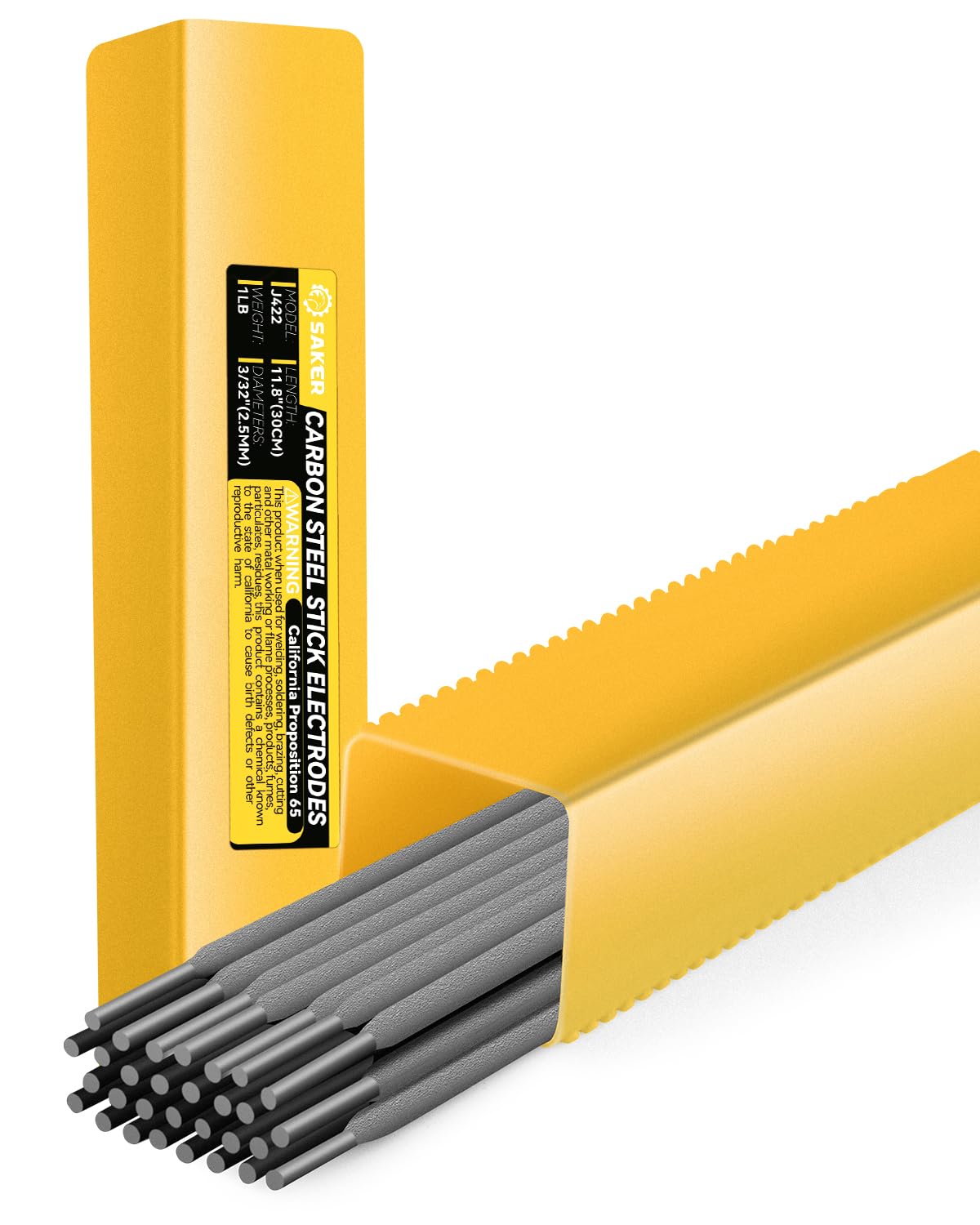
The Saker E6013 3/32″ rod is the most budget-conscious entry in this comparison, but it does not cut corners on the core chemistry. It is a low-carbon steel electrode designed for AC and DC use, and the rutile flux provides shallow penetration that suits thin materials and poor-fit-up conditions. The 1-pound weight is easy to handle and fits in a tool bag without taking up space.
Users consistently mention that the arc starts easily and the spatter is minimal — even on lower-voltage AC machines. The slag cleanup is straightforward, and vertical-down welds are nearly self-cleaning, which is a hallmark of a well-formulated 6013. For quick repairs on thin sheet metal, light fabrication, or pipe welding, this rod gets the job done without fuss.
The trade-off for the lower price is that the packaging is basic — a simple cardboard box rather than a resealable tube. If you store these rods in a damp environment, you will need to transfer them to a sealed container. However, for a casual welder who only burns rods occasionally, the Saker delivers perfectly functional performance at a very accessible cost.
Why it’s great
- Very affordable entry price
- Easy arc start and low spatter
- Good for thin metal and poor fit-up
Good to know
- Basic cardboard packaging, not resealable
- 1lb quantity limited for larger projects
FAQ
Can a 6013 rod be used for vertical-up welding?
What is the difference between a 6013 and a 7018 rod?
Can I run 3/32″ 6013 rods on a 120V inverter welder?
Final Thoughts: The Verdict
For most users, the best 6013 weld rod winner is the Hobart 770469 because it delivers proven batch consistency, a versatile 1/8″ diameter for structural work, and a predictable arc that experienced welders trust. If you want maximum flexibility across different material thicknesses, grab the Blue Demon 6013 5/64″. And for those running low-amp 120V machines who need a rod that won’t burn through thin sheet metal, nothing beats the Hot Max 22075 1/16″.