
Self-filming a hunt demands a camera that sees what you see, triggers before the shot happens, and never alerts wary game with a visible glow or mechanical noise. The wrong camera means blurry exit footage, dead batteries on day two, or a buck spooked by an infrared glow. This guide cuts through the marketing to find the rigs that actually deliver clean, usable footage from treestand to recovery.
I’m Min — the co-founder and writer behind Gadgets Feed. My research process involves comparing trigger speeds, sensor performance in real forest-floor light, battery drain rates at freezing temps, and the practical mounting needs of a hunter who is also the camera operator.
After analyzing dozens of models across trail cams, action cams, and vlogging cameras, these are the best options you can trust for a clean shot and reliable video. This is your definitive manual to choosing the best camera for self filming hunts.
How To Choose The Best Camera For Self Filming Hunts
Filming your own hunt means the camera must operate autonomously or with minimal interaction while you focus on the shot. The three biggest pitfalls are slow trigger speeds that miss the action, visible IR that spooks game, and poor battery life that leaves you with a dead lens at the critical moment. Here is what to look for.
Trigger Speed and Detection Range
A sub-0.5-second trigger is the baseline for capturing a buck entering the frame. The best hunting cameras offer burst modes (3-5 shots per trigger) and a wide PIR detection angle of at least 120 degrees so game moving fast does not slip past the sensor unnoticed. Pair this with a detection range of 60-100 feet to cover a shooting lane or feeder setup.
Night Vision Quality and Stealth
No-glow 940nm infrared is the gold standard for self-filming hunts. Low-glow 850nm IR emits a visible red cast that savvy older bucks may notice. Always check the effective night vision range — 80 feet is the practical minimum for an ethical hunting scenario. Higher-end models use Sony Starvis sensors that deliver detailed grayscale footage without washing out the target.
Power Management and Remote Access
Cellular trail cameras with auto-connect LTE (like AT&T and Verizon) let you view and download footage remotely without retrieving the SD card mid-hunt — a major advantage for keeping scent down. Non-cellular models conserve power better for months-long deployments, especially when paired with a solar panel. For active filming with an action camera or mirrorless cam, prioritize cold-resistant batteries (1950mAh or higher) and a battery case that supports hot-swaps.
Quick Comparison
On smaller screens, swipe sideways to see the full table.
| Model | Category | Best For | Key Spec | Amazon |
|---|---|---|---|---|
| Insta360 X5 | 360° Action Cam | Immersive POV hunts | 8K30fps 360° / Dual 1/1.28″ sensor | Amazon |
| DJI Osmo Action 6 | Premium Action Cam | High-framerate self-filming | 8K video / f/2.0-f/4.0 variable aperture | Amazon |
| Sony ZV-1F | Vlogging Compact | On-body vlog & commentary | 1″ sensor / 20mm ultra-wide lens | Amazon |
| Canon EOS R100 | Mirrorless Interchangeable | High-quality scouting video | 24.1MP APS-C / 4K 24fps | Amazon |
| Xtra Edge Pro | Budget Action Cam | Rugged POV recording | 4K/60fps / 1/1.3″ sensor | Amazon |
| MWIRB 8K Camcorder | Budget Vlogging Cam | Entry-level hunt filming | 8K 15fps / 18x digital zoom | Amazon |
| MURAUX 8K Camcorder | Budget Vlogging Cam | Low-light scouting clips | 8K 15fps / 18x digital zoom | Amazon |
| Tactacam Reveal X 3.0 | Cellular Trail Cam | Remote auto-filming | 4K photo / 1080p video / 4G LTE | Amazon |
| GardePro A3S 2-Pack | Non-Cellular Trail Cam | Budget multi-cam coverage | 64MP photo / 0.1s trigger | Amazon |
In‑Depth Reviews
1. Insta360 X5

The Insta360 X5 redefines self-filming hunts with dual 1/1.28-inch sensors capturing 8K30fps 360-degree video. The Invisible Selfie Stick effect lets you reframe the kill shot from any angle in post, meaning you never need to physically aim the camera — a huge advantage when both hands are on your bow or rifle. The triple AI chip design delivers exceptional low-light performance in the dim forest dawn and dusk lighting where most hunting action occurs.
Rugged and waterproof to 20 meters without a case, the X5 features fully replaceable lenses — a major durability win for cameras that get scraped against bark and dropped from treestands. The 3-hour battery life and built-in 4-mic array with advanced Wind Guard ensure your voice commentary and the sound of the shot come through clearly even in a breeze. The 360-degree Horizon Lock keeps video level regardless of how you mount or move.
At the premium end of the price spectrum, this is a serious investment that pays off in post-production flexibility. You capture every angle at once and never miss a split-second because the camera was pointing the wrong way. The steep learning curve of the Insta360 app is the only real friction — but once mastered, it is the most versatile hunting camera on this list.
Why it’s great
- Reframe any angle after the hunt — never miss the shot.
- Replaceable scratch-resistant lenses survive rough field use.
- Superior low-light performance from dual large sensors.
Good to know
- Requires app learning curve and fast Micro SD cards.
- File sizes are large, demanding a high-capacity card and a capable editing computer.
2. DJI Osmo Action 6 Enhanced Combo
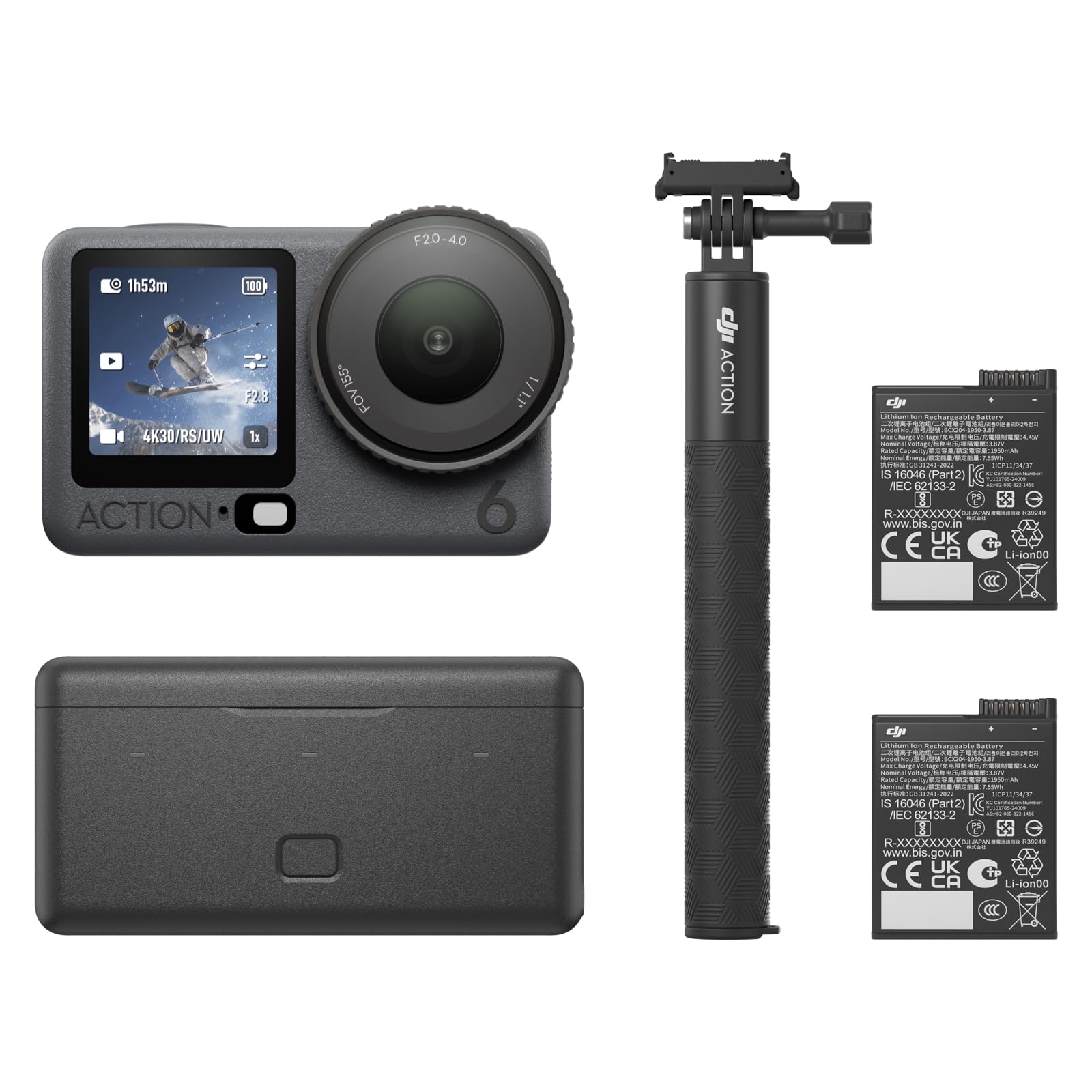
The DJI Osmo Action 6 brings a breakthrough variable aperture (f/2.0 to f/4.0) that adapts exposure instantly as you move from thick woods to open field — no fiddling with settings while game is in range. The 1/1.1-inch square sensor captures 8K video with vibrant color and sharp detail, and the 360-degree HorizonSteady keeps your horizon perfectly level even if you mount the camera sideways on a tree arm.
The Enhanced Combo includes two Extreme Batteries (1950mAh each) and a multifunctional battery case, giving you up to 4 hours of runtime in normal conditions and cold-resistant performance well below freezing. Gesture and voice controls let you start recording hands-free when you spot movement. The dual-f DJI Mic connectivity captures clear audio without a separate receiver — crucial for recording your post-shot commentary in the field.
Waterproof to 20 meters without a housing and backed by DJI’s RockSteady 3.0 stabilization, this action cam handles wet creek crossings and rough terrain without skipping a beat. The 50GB of built-in storage is a generous safety net if you forget your Micro SD card. A premium investment, but the variable aperture and stabilization are unmatched for mobile self-filming.
Why it’s great
- Variable aperture adapts exposure instantly between sun and shade.
- RockSteady 3.0 keeps footage smooth over rough terrain.
- Cold-resistant batteries deliver reliable runtimes in winter hunts.
Good to know
- Built-in microphone benefits from an external mic upgrade for best audio.
- Enhanced Combo is the balanced kit — not the absolute max battery option.
3. Sony ZV-1F Vlog Camera

The Sony ZV-1F is a dedicated vlogging compact built around a 1-inch sensor and a fixed 20mm ultra-wide f/2.0 lens. This combination gives you a very forgiving depth of field that captures both you and the surrounding landscape sharp, while offering defocus background when you want it. The Eye-AF and Product Showcase mode are perfect for switching focus between your face and a harvested animal or piece of gear.
The side-articulating touchscreen lets you frame yourself easily at arm’s length, and the 3-capsule directional microphone with the included windscreen delivers clear audio even on windy ridgetops. At under 300 grams, it is light enough to mount on a chest rig or hat brim without fatigue. The 4K video is sharp and the built-in stabilization — while digital — is serviceable for static or slow-walk filming.
The trade-offs are a fixed lens (no zoom for distant animals) and battery life that hovers around 45 minutes of continuous recording. This is a commentary and scouting companion camera, not a remote deploy-and-walk-away unit. For hunters who want on-body video diaries and gear reviews shot in the field, the ZV-1F delivers pro-level image quality in a pocketable package.
Why it’s great
- Large 1-inch sensor and fast f/2 lens deliver clean low-light footage.
- Eye-AF and Product Showcase mode automate focus for hunt content.
- Ultra-wide 20mm lens captures you and the scene in one frame.
Good to know
- No optical zoom means you cannot zoom in on distant game.
- Limited battery life — carry spares for a full-day hunt.
4. Canon EOS R100 with RF-S18-45mm Kit

The Canon EOS R100 paired with the RF-S18-45mm kit lens offers the image quality and lens interchangeability of a true mirrorless system at an entry-level price. The 24.1-megapixel APS-C sensor combined with the DIGIC 8 processor captures 4K video at up to 24fps and Full HD at 60fps with natural bokeh behind your subject. Dual Pixel CMOS AF with human, face, eye, animal, and vehicle detect is a powerful tool for tracking moving game through the viewfinder.
This camera is the lightest in the EOS R series at only about 356 grams for the body, making it easy to carry on a sling or clip to a pack strap. The 6.5fps continuous shooting rate is fast enough to capture a buck stepping into a clearing. Wi-Fi and Bluetooth let you transfer scouting clips to your phone in the field without pulling the SD card.
The kit lens zoom range (18-45mm) is versatile for medium-range scouting but limited for distance shots. This is an excellent choice if you want to shoot cinematic hunt recaps and scouting footage with interchangeable lens options later. The trade-off is that it is not weather-sealed, so a rain cover is necessary for wet hunts.
Why it’s great
- APS-C sensor produces high-quality stills and 4K video for scouting.
- Dual Pixel animal and vehicle AF tracks moving subjects reliably.
- Very lightweight body — easy to carry on a long hike to the stand.
Good to know
- Not weather-sealed — protect from rain and heavy dust.
- Kit lens limits reach for distant animal footage.
5. Xtra Edge Pro Dual Battery Bundle
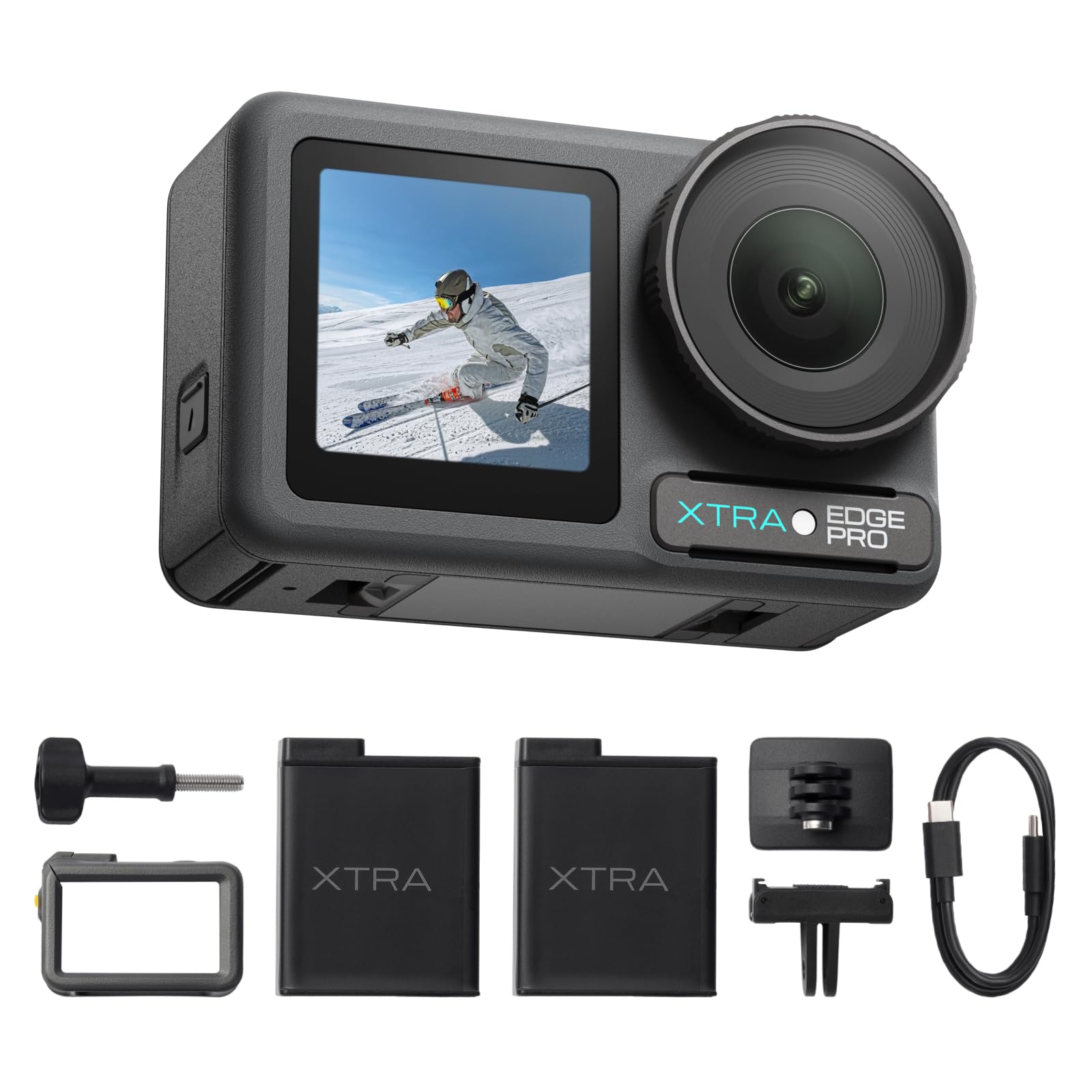
The Xtra Edge Pro Dual Battery Bundle packs a large 1/1.3-inch sensor into a rugged action camera chassis that shoots 4K at 60fps and is waterproof to 65 feet without a housing. The 360 Lock, TiltGuard, and MotionMaster stabilization trio keep your POV footage smooth whether you are walking to the stand or tracking a blood trail through tangled brush. The Night View Mode 3 noticeably improves low-light detail at dusk.
The bundle includes a cold-resistant battery alongside a standard one, providing approximately 240 minutes of total runtime — enough for a full morning sit. The Dual-Facing Mount Adapter allows simultaneous POV and rear-facing recording, ideal for capturing your reaction as game approaches. Weighing just 222 grams, it is easily mounted on a helmet, chest rig, or tree arm.
For the price, this is the strongest value in the action camera tier. The Xtra Edge Pro is compatible with DJI accessories, so you can leverage a wide ecosystem of mounts and cases. The weak spot is the mobile app, which is less polished than the DJI or Insta360 alternatives, but the camera hardware itself is rock-solid for a mid-range hunting rig.
Why it’s great
- Large sensor and effective stabilization for smooth POV hunting footage.
- 65-foot waterproof depth rating without an extra case.
- Generous bundled accessories at a mid-range price point.
Good to know
- Mobile app interface is not as smooth as top-tier options.
- Max 4K resolution — no 8K for extreme cropping in post.
6. MWIRB 8K Video Camera Camcorder
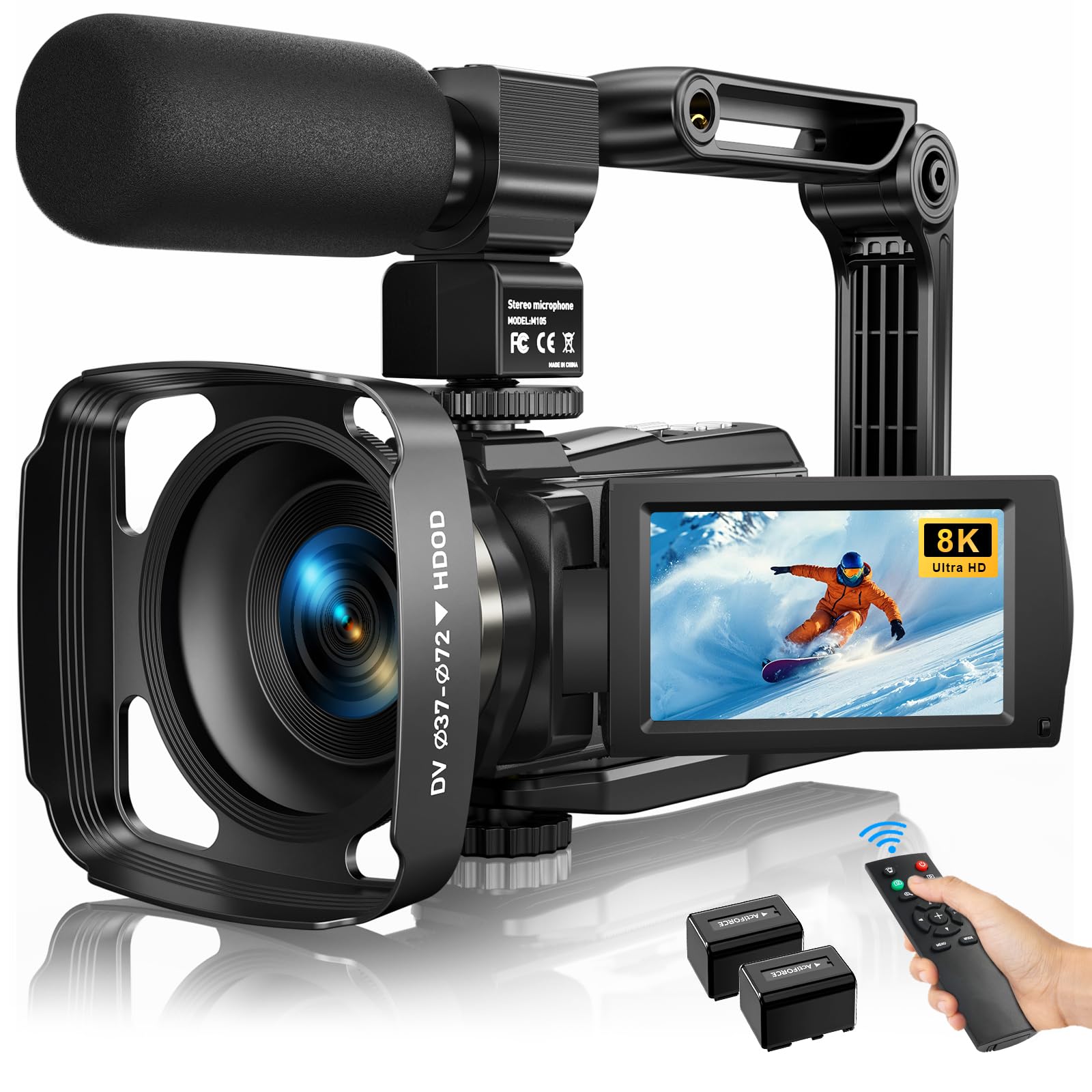
The MWIRB 8K camcorder brings an impressive specification list to the entry-level bracket: 88-megapixel stills, 8K video at 15fps, 18x digital zoom, and an included external X-Y stereo microphone for cleaner audio. The 6-axis anti-shake technology and 270-degree rotatable touch screen make it easy to frame yourself from a tripod or tree arm. Infrared night vision enables black-and-white capture in total darkness.
This bundle is generous — two rechargeable batteries, a handheld stabilizer, lens hood, remote control, and a carrying bag. The Wi-Fi connectivity via the “iSmart DV2” app lets you transfer clips to your phone for quick social sharing from the field. For a hunter on a tight budget who wants to record scouting walks, setup videos, and low-light camp scenes, this camcorder delivers more features than its price suggests.
The critical compromise is the 8K resolution at only 15 frames per second — it is not suitable for capturing fast animal movement. Stick to 1080p at 60fps for action shots. The digital zoom reduces image quality quickly, and the fixed focus (optimal beyond 4 meters) means close-up gear shots will be blurry. A functional budget tool for static or slow-motion hunting content.
Why it’s great
- Very affordable entry point with 8K resolution and night vision.
- Comprehensive bundle includes external mic, stabilizer, and batteries.
- Rotatable touchscreen simplifies self-framing from a fixed mount.
Good to know
- 8K at 15fps is unusable for fast-moving subjects.
- Digital zoom reduces clarity — rely on physical positioning instead.
7. MURAUX 8K Video Camera

The MURAUX 8K camcorder is a budget-friendly alternative for filming scouting trips and hunt camp life. It records 8K video at 15fps and captures 48-megapixel stills, with an 18x digital zoom and a built-in fill light that helps in low-light camp conditions. The 270-degree rotating 3-inch IPS touchscreen makes it easy to compose shots from awkward mounting angles.
Infrared night vision and a range of creative modes (time-lapse, slow motion, continuous shooting) give you flexibility without needing to carry multiple cameras. The Wi-Fi function allows wireless file transfer to a smartphone for immediate review. Weighing under 1 pound with a compact footprint, it tucks easily into a pack pocket alongside your calls and rangefinder.
The same limitations apply as with the MWIRB: 15fps at 8K is too slow for action, the fixed focus misses close-up gear details, and there is no Mac compatibility for file transfer. Several user reports mention file corruption on long clips (beyond 10 minutes). This is best suited for short, controlled shots of stand setup or camp activities rather than primary hunt footage.
Why it’s great
- Lightweight and compact — easy to add to a daypack.
- Built-in fill light and IR night vision for low-light camp filming.
- Wi-Fi transfer for quick preview on your phone in the field.
Good to know
- Fixed focus — optimal shooting distance is over 4 meters.
- Not compatible with Mac computers for file management.
8. Tactacam Reveal X 3.0 Cellular Trail Camera
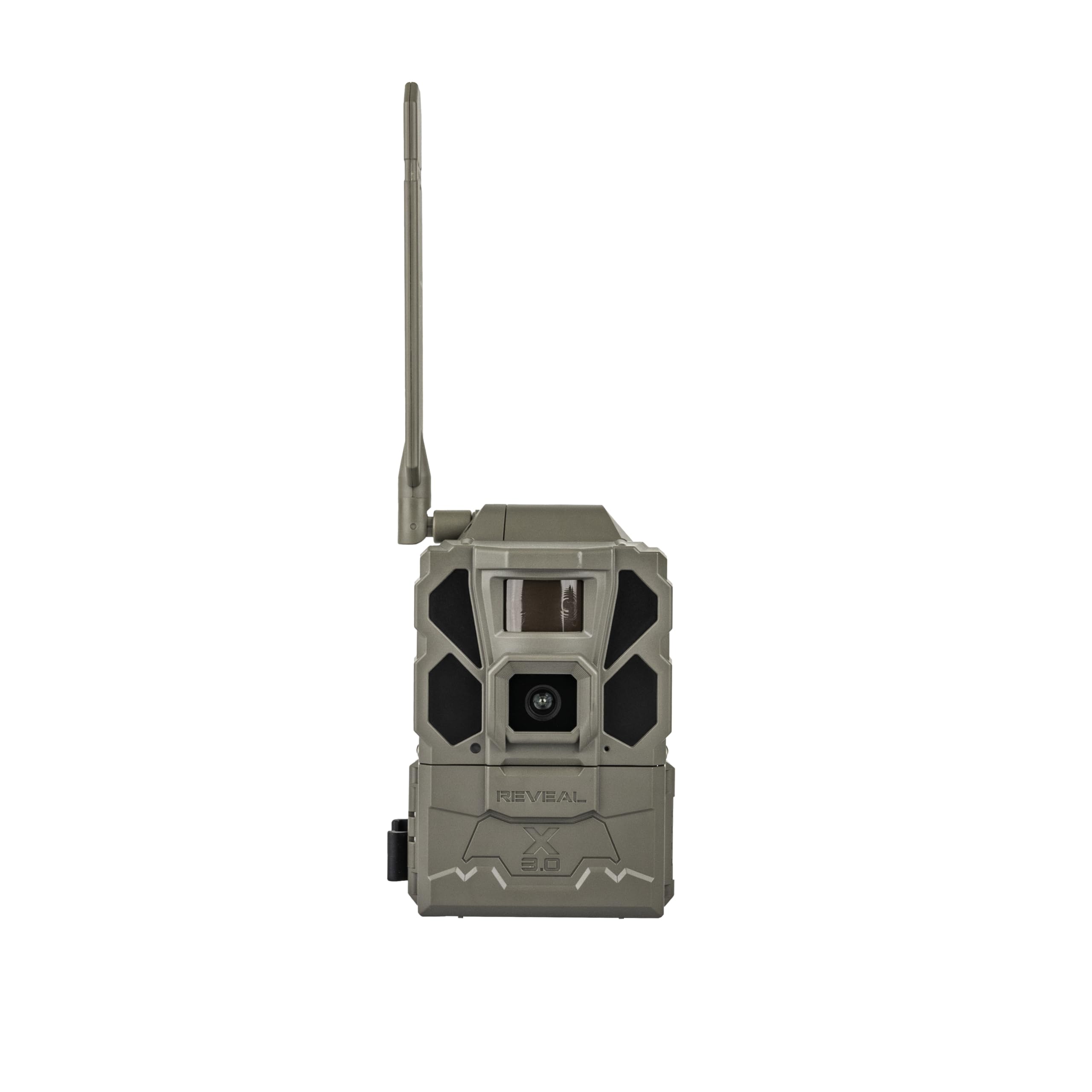
The Tactacam Reveal X 3.0 is the benchmark cellular trail camera for self-filming hunts where you cannot be present. The auto-connect multi-carrier LTE (AT&T and Verizon) locks onto the strongest signal in your area without manual SIM swapping. The sub-half-second trigger speed with a 3-shot burst mode ensures you capture the buck entering the frame — not an empty afterimage. Built-in GPS tracks the camera location in the REVEAL app so you never lose track of a deployed unit.
Battery life is best-in-class at up to 6 months, and the no-SD-card-required design sends 4K photos and 1080p video directly to your phone. Pair it with the lithium cartridge or solar panel for year-round hands-off deployment. The 60-degree field of view is narrower than some competitors, but the fast trigger and reliable signal make it the most hassle-free option for remote hunting properties.
The subscription fee for cellular data is the ongoing cost — but for hunters covering multiple stands or public land, the ability to scout from home and only walk in when a shooter appears is worth the monthly charge. The pre-installed antenna and SIM card make setup quick: download the app, scan the QR code, and start receiving photos within 10 minutes.
Why it’s great
- Auto-connect LTE delivers reliable signal without carrier lock-in.
- 6+ month battery life with solar or lithium power pack.
- No SD card needed — images go straight to your phone.
Good to know
- Requires a subscription for cellular data transmission.
- 60-degree field of view is narrower than some trail cameras.
9. GardePro A3S 2-Pack Trail Camera

The GardePro A3S 2-Pack offers exceptional value for the budget-conscious hunter who needs multi-point coverage. Each unit packs a Sony Starvis sensor for enhanced low-light performance, capturing 64MP photos and 1296p HD video with sound. The 0.1-second trigger speed with a 120-degree PIR detection angle and 5-shot burst mode is competitive with cameras costing twice as much. The 100-foot no-glow 940nm infrared night vision delivers clean images without alerting game.
Non-cellular and non-WiFi operation strips away complexity and keeps power consumption very low — 8 AA batteries (not included) can last over 3 months in moderate traffic. The GardePro also supports the SP350 solar panel for continuous remote power. The camera supports SD cards up to 512GB and offers motion detection, time-lapse, and hybrid recording modes. Many owners report it outperforms premium brands like Browning in image clarity.
The trade-off is the lack of remote access — you must physically retrieve the SD card to see footage. The mounting clips are small and may not accommodate larger cable locks, and the in-camera viewing screen is small. But for the price of a two-pack, this is the strongest entry-level trail camera system for covering two separate locations without breaking the bank.
Why it’s great
- Sony Starvis sensor delivers exceptional low-light clarity for the price.
- Two cameras in one purchase cover more ground immediately.
- 0.1s trigger speed rivals premium trail cameras.
Good to know
- No cellular or WiFi — requires physical SD card retrieval.
- Small mounting clips make cable lock setup tricky.
FAQ
Can I use a regular action camera for self-filming hunts?
What is the difference between a cellular and non-cellular trail camera?
How important is the resolution for a self-filming hunt camera?
Do I need a subscription for a cellular trail camera?
Final Thoughts: The Verdict
For most users, the best camera for self filming hunts winner is the Insta360 X5 because its 360-degree capture eliminates the risk of aiming wrong and the replaceable lenses survive rough field use. If you want a cellular trail camera for remote, hands-off filming, grab the Tactacam Reveal X 3.0 for its best-in-class battery life and auto-connect LTE. And for budget-friendly multi-point coverage, nothing beats the GardePro A3S 2-Pack with its Sony Starvis sensor and lightning-fast 0.1-second trigger.