
Nothing kills a weekend brake job faster than a line that kinks the second you put a bend in it, or a rust bloom that turns a four-year-old hard line into a pinhole leak. The 5/16-inch brake line sits in a frustrating middle zone — too large for most factory bends on modern cars, yet common enough for classic trucks, hot rods, fuel systems, and transmission cooler loops. Finding the right material and coating means the difference between a one-and-done repair and a return trip to the parts counter.
I’m Min — the co-founder and writer behind Gadgets Feed. I’ve spent hundreds of hours cross-referencing alloy compositions, wall-thickness specs, pressure ratings, and corrosion data to separate the tubing that lasts from the stuff that rots out after two Midwest winters.
Whether you are plumbing a restored Bronco, running a new fuel line on a Fairlane, or protecting exposed undercarriage runs, the 5/16 brake line you pick must resist road salt, bend without kinking, and flare cleanly with standard tools.
How To Choose The Best 5/16 Brake Line
The 5/16-inch (0.312″ OD) tubing category spans three material families — PVF-coated galvanized steel, copper-nickel alloy, and stainless steel. Each behaves differently under a flaring tool and in corrosive environments. Your choice hinges on three factors: where the vehicle lives, how tight your bends need to be, and whether you own a hydraulic flaring tool or rely on a manual screw-type.
Material Metallurgy — Corrosion Resistance vs Workability
PVF-coated steel offers thirty times the corrosion resistance of uncoated galvanized tubing, but any scratch or nick in the coating creates a corrosion starting point. Copper-nickel alloy (typically 90% copper, 10% nickel) resists rust entirely and bends so easily you can shape tight 90-degree curves by hand without a bender. Stainless steel delivers the best long-term rust protection and mechanical strength, but you will need a quality hand bender and a hydraulic flaring tool — stainless work-hardens quickly and cracks if you force a bend.
Wall Thickness — The Spec That Controls Everything
A 0.028-inch wall (common on PVF steel coils) bends easily by hand and flares with a basic tool, but the thinner wall reduces burst-pressure margin. A 0.065-inch wall (found on premium copper-nickel rolls) adds significant pressure capacity and resists vibration fatigue, yet still flares cleanly because the alloy is naturally soft. Stainless lines at 0.040-inch wall require more force to bend and more pressure to form a leak-free double flare.
Coating Integrity and Application Fit
PVF coating works well for fully enclosed runs inside the frame rail where the coating remains undisturbed. For exposed sections near suspension components or gravel-prone areas, stainless steel or a dedicated gravel-guard spring protector is the better choice. Copper-nickel lines, being naturally corrosion-proof, work in any location — the only trade-off is cosmetic patina over time.
Quick Comparison
On smaller screens, swipe sideways to see the full table.
| Model | Category | Best For | Key Spec | Amazon |
|---|---|---|---|---|
| 4LIFETIMELINES Copper-Nickel 25 ft | Copper-Nickel Coil | Long-term durability and easy flaring | 0.065″ wall thickness | Amazon |
| The Stop Shop Stainless Coil 16 ft | Stainless Tubing + Fittings | Exposed undercarriage runs with fittings | 0.040″ wall, 4 SAE fittings | Amazon |
| The Stop Shop Gravel Guard 16 ft | Protective Spring | Armoring exposed brake line sections | 0.035″ wall stainless spring | Amazon |
| 4LIFETIMELINES PVF Steel 25 ft | PVF Coated Steel Coil | Budget-friendly enclosed frame runs | 0.028″ wall, DOT-approved | Amazon |
| MuHize PVF Coated 25 ft | PVF Coated Steel Coil | Entry-level budget fuel/brake lines | 150 PSI max pressure | Amazon |
In‑Depth Reviews
1. 4LIFETIMELINES Copper-Nickel 5/16″ Brake Line Coil (25 ft)

This copper-nickel alloy (90/10 CuNi) coil represents the gold standard for 5/16 brake line work. The 0.065-inch nominal wall thickness provides nearly double the material of budget PVF steel lines, translating to superior burst resistance and fatigue life under vibration. Despite the thick wall, the alloy bends by hand with minimal effort — reviewers consistently note that tight 90-degree radius turns are achievable without a dedicated bender, provided you work slowly to avoid kinking.
Flaring performance is where CuNi truly separates itself from steel. The malleable material accepts both single and double flares using a manual screw-type flaring tool, eliminating the need for a hydraulic unit. This matters for DIY mechanics who do not own specialty tools. The 25-foot length covers most full chassis runs for classic trucks and muscle cars, and the anti-corrosion property means no coating to nick — exposed sections remain rust-free indefinitely.
Reviewers report using this line for brake systems on salt-belt daily drivers without any rust development after multiple seasons. A few note that extra care is needed on 90-degree bends to prevent ovalization, but the overwhelming consensus is that once you switch to CuNi, you never go back to steel. It costs more per foot than PVF-coated options, but the material eliminates corrosion as a failure mode entirely.
Why it’s great
- Total rust immunity — no coating to chip or scratch
- Bends and flares without special tools
- Thick 0.065″ wall for high pressure margin
Good to know
- Requires careful technique on sharp 90° bends to avoid kinking
- Premium price tier compared to PVF steel coils
2. The Stop Shop Stainless Fuel Line Coil 5/16 Inch (16 ft with Fittings)
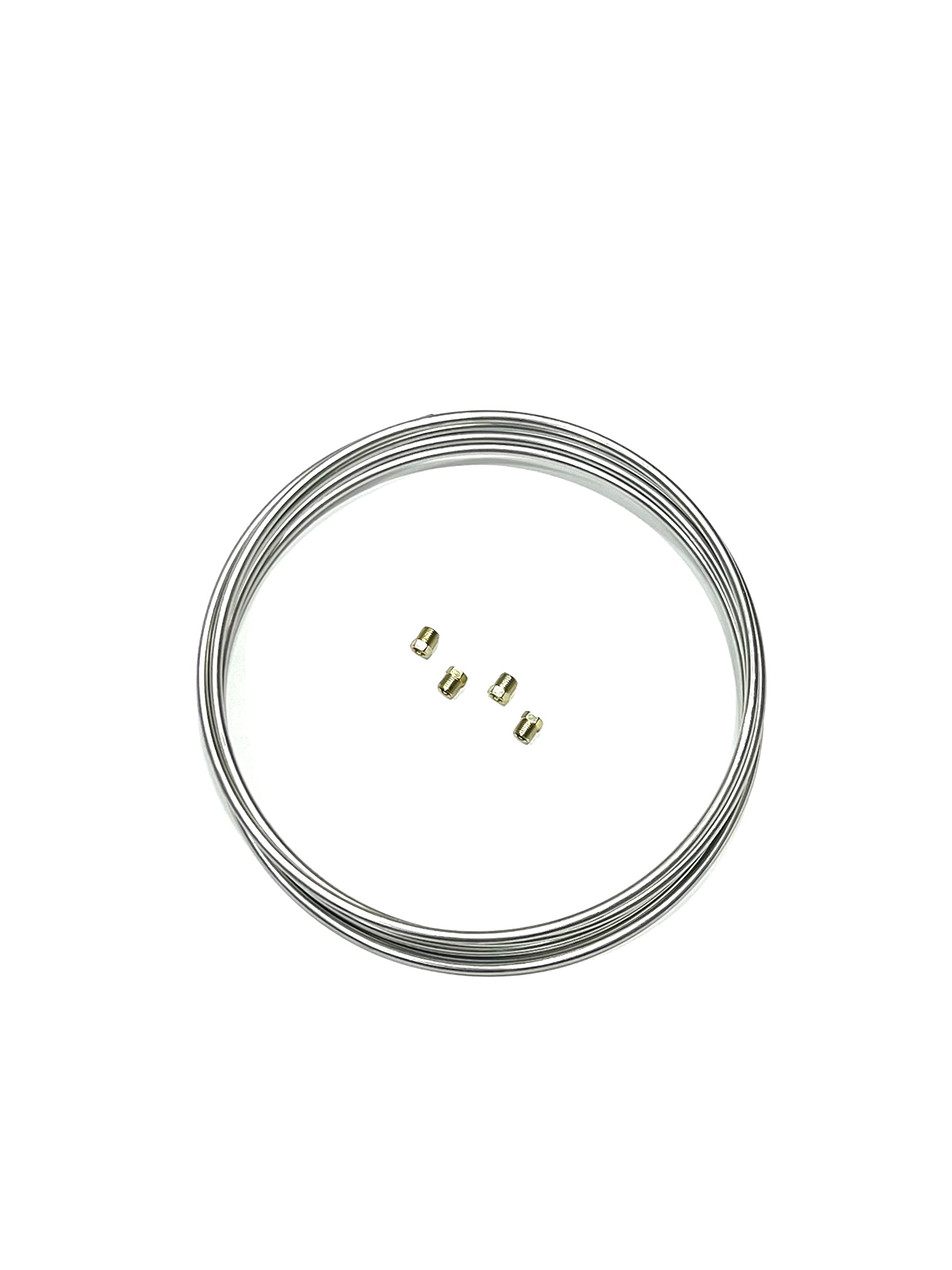
Stainless steel tubing at 5/16-inch OD solves the corrosion problem permanently — no coating, no plating, just solid 304 or 316 alloy that will never rust. The 0.040-inch wall thickness sits between the budget PVF steel and premium CuNi options, offering a good balance of pressure capacity and workability. However, “workability” is relative: stainless work-hardens rapidly, so hand-bending without a quality bender leads to kinked sections and micro-cracks that fail under pressure.
This kit includes four steel SAE fittings, which saves a separate trip to the hardware store. The 16-foot length is shorter than the 25-foot coils, making it ideal for targeted runs — transmission cooler loops, short fuel sections, or replacement of a single damaged brake line segment. The included fittings are standard 5/16-inch SAE inverted flare, compatible with most domestic automotive applications from the 1960s through early 2000s.
Reviewers consistently emphasize that you need a hydraulic flaring tool for this material. Manual screw-type flaring tools produce inconsistent results on stainless, leading to leaks. If you own a hydraulic unit and a good hand bender, this kit delivers a permanent, rust-proof installation. Without those tools, the CuNi option is far easier to work with. The stainless finish also looks clean on exposed chassis sections compared to black PVF coating.
Why it’s great
- Zero rust — stainless alloy never corrodes
- Comes with 4 steel SAE fittings ready to install
- Excellent for short exposed runs where appearance matters
Good to know
- Requires hydraulic flaring tool and hand bender
- 16 ft length may be too short for full chassis runs
3. The Stop Shop Stainless Gravel Guard Spring for 5/16″ Tube (16 ft)

This is not a brake line — it is a stainless steel spring protector that wraps around your existing 5/16-inch tubing to shield it from rock strikes, road debris, and abrasion. Off-road builds, lifted trucks, and vehicles with exposed undercarriage lines benefit enormously from this guard. The 0.035-inch wall stainless steel spring is tough enough to deflect gravel, and it will never rust or degrade from UV exposure.
The 16-foot length covers the most vulnerable sections — typically the stretch from the frame rail to the caliper, or the exposed fuel line along the chassis rail. The spring ID is designed specifically for 0.312-inch OD tubing, and it slides on before you flare the ends or install fittings. Reviewers note that once both ends are flared with nuts, the spring cannot be added, so plan your installation sequence accordingly.
The spring is remarkably flexible — it bends along with the tubing without pinching or binding, and it can be pushed back if you need access to the bare line. Cutting the stainless spring to length requires a rotary tool or a stiff hacksaw blade; reviewers describe it as “a bit hard to cut” but regard this as expected for stainless. For any build involving gravel roads, this guard is cheap insurance against a line failure miles from home.
Why it’s great
- Stainless steel — never rusts, never corrodes
- Fits 5/16″ OD tubing precisely without rattling
- Flexible enough to follow tight chassis bends
Good to know
- Must install before flaring the line ends
- Cutting stainless spring requires a rotary tool
4. 4LIFETIMELINES PVF-Coated Steel Brake Line 5/16 Inch (25 ft)

This PVF (polyvinyl fluoride) coated steel tubing is the most popular choice for budget-conscious restorations and daily-driver repairs. The 0.028-inch wall thickness makes it extremely easy to bend by hand — reviewers describe it bending “like butter” without kinking — and it flares cleanly with even the cheapest manual flaring tool. The PVF coating provides 30 times the corrosion resistance of standard galvanized steel, which is meaningful for vehicles in the rust belt.
The 25-foot length gives you plenty of slack for full-frame runs on full-size trucks and classic cars. This tubing conforms to SAE and ISO specifications, which matters for insurance and safety inspections. The copper-brazed double-wall construction means the inner wall maintains fluid integrity even if the outer layer is scratched slightly — though you still want to avoid nicking the coating, which creates a corrosion entry point.
The main trade-off is that PVF coating is only as good as its coverage. Any scratch from a wrench, a zip tie, or road debris becomes a localized rust initiation site. Reviewers living in snowy regions report that coated lines last significantly longer than bare steel but still develop pinhole leaks after five to seven years in heavy salt exposure. For enclosed frame-rail runs, this is a mid-range value that outperforms bare steel at a similar price.
Why it’s great
- Easy hand bending without kinking
- DOT-approved SAE/ISO compliant construction
- 25 ft coil covers full chassis runs
Good to know
- PVF coating scratches easily, creating rust entry points
- Thinner 0.028″ wall reduces pressure margin
5. MuHize 5/16″ PVF Coated Brake Line Tubing Kit (25 ft)

MuHize offers the most entry-level 5/16-inch brake line coil in this comparison. The PVF-coated steel construction mirrors the 4LIFETIMELINES PVF product but at a lower price point. The tubing bends easily by hand — reviewers restoring classic Fords and Broncos note they could shape it around frame rails without a bender, making it accessible for beginners. The 25-foot length matches the standard coil size for most restoration projects.
The maximum pressure rating of 150 PSI is worth noting. Brake systems typically operate at 800–1200 PSI under hard braking, so this line is realistically intended for fuel and transmission return lines rather than primary brake circuits. For fuel systems operating at 30–70 PSI (carbureted engines) or transmission cooler lines at 50–100 PSI, the 150 PSI rating provides adequate margin. Using it for a wheel cylinder circuit on a heavy vehicle would push the safety envelope.
Reviewers praise the price — many note it costs “half the price of the parts store” — and confirm it works well for fuel lines, transmission cooling coils, and non-critical applications. The PVF coating provides basic corrosion protection, but the same scratch-sensitivity caveat applies. For a budget build where cost is the primary constraint, this is a functional option. For primary brake circuits, step up to the CuNi or DOT-approved PVF steel with a thicker wall.
Why it’s great
- Most affordable 25 ft 5/16″ coil on the market
- Very easy hand bending for frame-rail routing
- Works well for fuel and transmission line applications
Good to know
- 150 PSI rating limits primary brake circuit use
- PVF coating susceptible to scratch-initiated rust
FAQ
Can I use 5/16 brake line for fuel systems?
What flaring tool do I need for 5/16 copper-nickel line?
How do I prevent kinking when bending 5/16 brake line?
Final Thoughts: The Verdict
For most users, the 5/16 brake line winner is the 4LIFETIMELINES Copper-Nickel 25 ft coil because it eliminates corrosion risk entirely, bends and flares with basic hand tools, and the thick 0.065″ wall provides a generous safety margin for both brake and fuel applications. If you need a pre-fitted kit with hardware for a targeted repair, grab the The Stop Shop Stainless Coil with fittings. And for protecting exposed undercarriage runs against gravel damage, nothing beats the The Stop Shop Gravel Guard spring.