
You have five people sitting around a table, hungry for a game night that works for everyone without leaving one person stuck watching. Finding a board game that plays perfectly with exactly five players eliminates the awkwardness of teaming up or rotating out. The wrong pick leaves one player sitting out or a game that drags with too many turns between yours, killing the energy before it starts.
I’m Min — the co-founder and writer behind Gadgets Feed. I’ve spent countless hours combing through technical specs, reading rulebooks, and analyzing playtime data to find the games that genuinely shine with a five-player group.
After deep research into mechanics, player counts, and real customer experiences, I’ve compiled a definitive guide to the best board games for 5 players that keep everyone engaged from setup to final score.
How To Choose The Best Board Games For 5 Players
Five is a tricky player count. Too many games top out at four, and others designed for six or more feel overcrowded or slow. The key is finding games that balance player interaction with manageable downtime. Look for mechanics like simultaneous action selection, real-time play, or cooperative goals that keep everyone involved even when it’s not their turn.
Playtime and Pace
With five players, a 60-minute game can feel like 20 minutes if the action is snappy. Games with real-time elements like 5-Minute Dungeon push a frantic pace that avoids lulls. Slower strategy games like Risk can stretch past two hours, so know your group’s attention span before committing to a longer session.
Replayability and Variety
A game that hits the table once and feels solved is a poor investment for a dedicated group. Games with variable setups, multiple scenarios, or asymmetrical player powers — like Black Orchestra’s unique conspiracies or Trekking the National Parks’ changing park cards — give you fresh decisions every play. Component quality also matters because fragile pieces wear out fast with regular five-player use.
Quick Comparison
On smaller screens, swipe sideways to see the full table.
| Model | Category | Best For | Key Spec | Amazon |
|---|---|---|---|---|
| Trekking The National Parks | Family Strategy | Educational family nights | Playtime 30–60 min | Amazon |
| Black Orchestra | Cooperative Strategy | Deep historical narrative play | Playtime 60–90 min | Amazon |
| Survive The Island | Competitive Survival | High player interaction chaos | Playtime 45 min | Amazon |
| Castle Panic | Cooperative Tower Defense | Teamwork against the game | Playtime 45 min | Amazon |
| 5-Minute Dungeon | Real-Time Card Game | High-energy quick sessions | Playtime 5 min per round | Amazon |
| Planted | Resource Management | Light strategy for plant lovers | Playtime 20–30 min | Amazon |
| Risk 1980’s Edition | Classic War Strategy | Nostalgic long-form conquest | Playtime 120+ min | Amazon |
In‑Depth Reviews
1. Trekking The National Parks

Trekking The National Parks earns the top spot because it handles five players without any downtime drag. The 3rd Edition features upgraded artwork and a new Solo Mode, but the real magic is the card drafting and piece movement system that keeps every player engaged between turns. With over 500,000 copies sold, this game blends educational geography content with genuine strategic depth — players collect park cards, visit landmarks, and earn points through area control that feels fresh every time. The wooden pieces and detailed board map hold up well to repeated play, and the rulebook is clean enough that new players grasp the flow within one round.
Playtime clocks in at 45 minutes on average, which makes it easy to fit two rounds into a game night without fatigue. The educational objective covers geography and national parks, making it a rare game that satisfies both casual and competitive groups. Reviewers consistently note high replay value thanks to multiple viable strategies — you can focus on collecting complete park sets or spread out for bonus movement points. Parents report kids as young as eight easily picking up the mechanics, and the 1–5 player range means it works for smaller groups too.
The only friction point is the slightly squished US map layout, which some players find less intuitive for piece movement across the board. The stones are plastic rather than something heavier, and a few reviewers wished for more premium feel in the component colors. Still, for a five-player game that maintains energy from start to finish, this is the safest bet for mixed-age groups.
Why it’s great
- Multi-strategy gameplay avoids one dominant path to victory.
- Beautiful illustrations and quality wooden components.
- Teaches geography naturally without feeling like a classroom.
Good to know
- US map proportion is slightly compressed.
- Stone tokens feel lighter than expected for a premium game.
2. Black Orchestra 2nd Edition
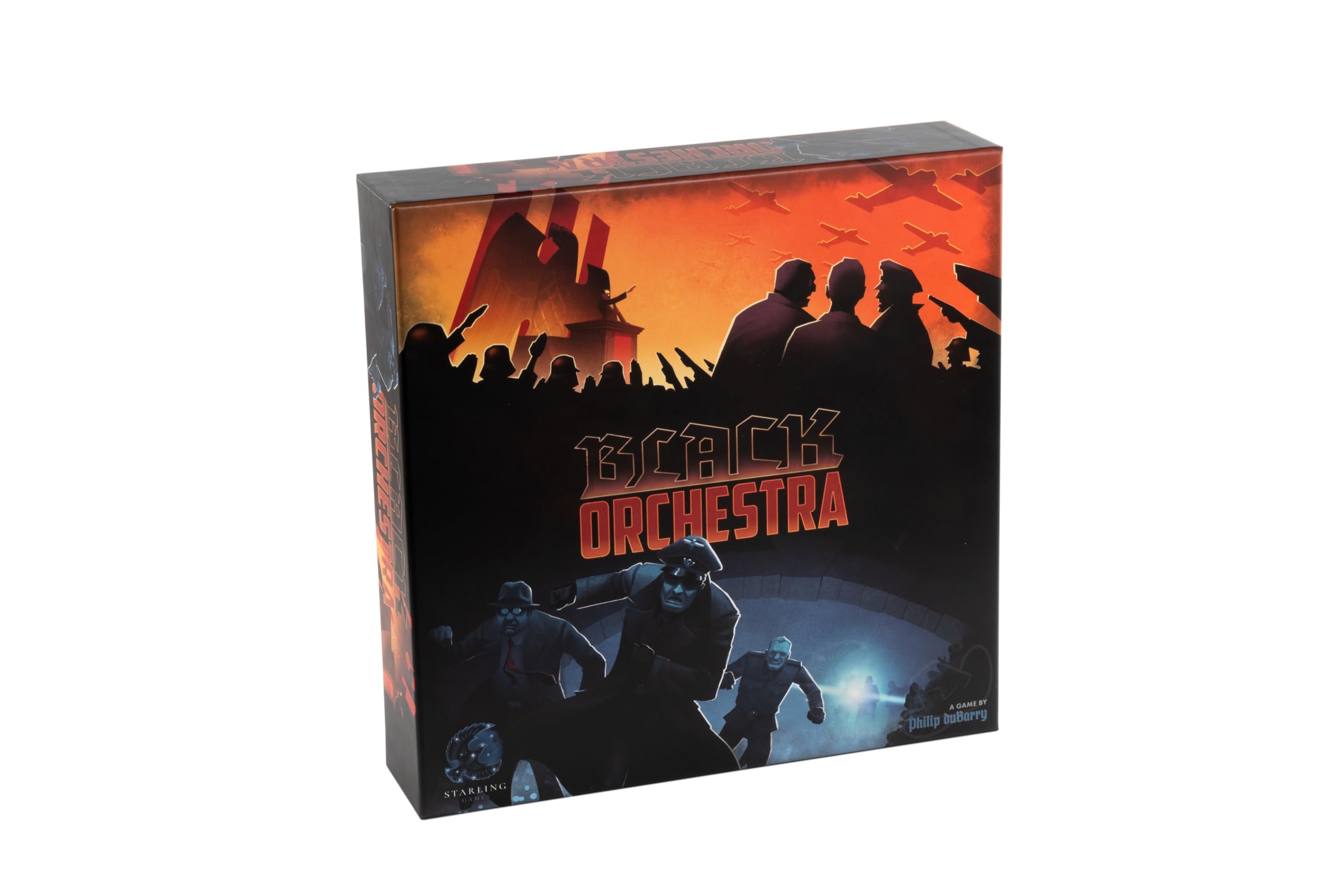
Black Orchestra is the deepest cooperative experience on this list, designed explicitly for up to five players working together to assassinate a historical figure during WWII. The game uses a tension system where players manage their personal suspicion and motivation while the Gestapo closes in. Each conspirator has unique abilities, and the conspiracy cards introduce variable paths to victory, giving the game strong replayability despite its fixed theme. The 2nd Edition includes updated rules and components that streamline the experience compared to the original release, though the core dice-based resolution still introduces luck that can swing outcomes.
Playtime runs 60–90 minutes, which feels tight because every player has meaningful decisions every turn. The cooperative format means nobody sits out waiting for elimination — instead, the group collectively strategizes about when to push for an assassination attempt versus when to lie low and gather resources. Reviewers highlight how the historical accuracy adds weight to the theme without making it dry, and the push-your-luck mechanic in the conspiring phase generates genuine table tension. The recommended age of 14+ is appropriate given the subject matter, but mature younger teens engage well with the historical context.
The primary drawback is the heavy theme, which isn’t suitable for every game night mood. Losing feels significant because of the historical stakes, and some groups may find the oppressive atmosphere too intense for casual play. Component quality is solid but not luxurious, and the rulebook requires a careful first read to grasp the interaction between suspicion, motivation, and Gestapo movement tracks. For groups that want a serious cooperative challenge, this is unmatched at the five-player count.
Why it’s great
- Historically immersive theme with real emotional weight.
- Deep cooperative planning with no elimination downtime.
- High replay value through different conspiracy paths.
Good to know
- Heavy subject matter limits the audience.
- Dice luck can sometimes negate strong strategic play.
3. Survive The Island (2024 Edition)

Survive The Island is the purest expression of high-player-interaction chaos on this list. The 2024 Edition expands the player count to five (up from four in earlier versions), and adds a new Kaiju monster that turns the endgame into a wild race. The premise is brutally simple: get your explorers off a sinking island while actively sabotaging everyone else’s escape. You can sink boats, unleash sharks, and drop boulders on opponents’ pieces — the game encourages direct conflict rather than passive point collection. The 45-minute playtime keeps the betrayal cycle moving fast enough that grudges reset between rounds.
Component quality in this edition is strong, with brightly colored explorer meeples, 40 terrain tiles that create a fresh island layout each game, and a dedicated creature dice that injects unpredictability into monster movements. The rulebook looks intimidating at first glance, but gameplay flows intuitively after one round. Reviewers praise the balance between risk and reward — do you sprint your explorer toward a waiting boat, or hang back to grab more treasure tiles from the sinking sections? The 2024 Edition’s new monsters add strategic depth without overcomplicating the core loop.
The biggest frustration is storage: the box lacks internal dividers for organizing the many tiles, boats, and meeples, so you’ll need separate bags or a storage solution. A few reviewers found the 3D artwork on the sand tiles slightly less polished than the rest of the board. For groups that love take-that moments and can handle a little friendly sabotage, this delivers the most memorable five-player sessions.
Why it’s great
- Maximum player interaction with constant table energy.
- New Kaiju and monster mechanics increase strategic depth.
- Variable island setup ensures no two games feel alike.
Good to know
- Box has no internal storage dividers.
- Instructions require a careful first read despite simple flow.
4. Castle Panic 2nd Edition

Castle Panic flips the competitive script and puts all five players on the same side against monster invaders. The 2nd Edition adds 3D towers and vibrant monster tokens that make the board pop, and the cooperative structure means every player has to trade cards and coordinate plans to keep Castle Bravehold’s walls standing. The tension escalates as plagues, boulders, and boss monsters enter the mix, forcing the group to make hard choices about who defends which section. With a 45-minute playtime, it fits perfectly as a main event or a warm-up game for longer sessions.
The game offers four distinct modes: standard cooperative, Solo, Master Slayer (competitive), and Overlord (where one player controls the monsters). For five-player groups, the cooperative mode works best because it eliminates elimination — everyone stays involved until the final tower falls or the last monster is defeated. The card-trading mechanic creates natural negotiation without slowing down the pace, and the 3D towers add a tactile satisfaction that flat boards can’t match. Families with kids as young as eight find the rules accessible, while adults appreciate the strategic decisions around when to attack versus when to build defenses.
The main limitation is that veteran strategy gamers may find the depth shallow after a handful of plays — the random monster draw can sometimes determine outcomes more than player decisions. The component quality is solid but the card stock feels thin compared to premium games. For groups that prioritize teamwork and shared victory over cutthroat competition, Castle Panic delivers the most cooperative fun per minute at the five-player count.
Why it’s great
- True cooperative play with no player elimination.
- Four game modes extend replayability significantly.
- 3D towers add visual and tactile engagement.
Good to know
- Random monster draws can feel unfair.
- Strategic depth plateaus after multiple plays.
5. 5-Minute Dungeon

5-Minute Dungeon is the antidote to slow, analysis-paralysis games. Each round is a frantic cooperative race against a real-time timer, where players flip cards as fast as they can to match symbols on the dungeon deck. The 2024 version includes 25 additional cards and a new Dungeon Master: Final Form boss that challenges even experienced groups. With six themed narrators available through a free companion app, the game feels fresh every time you hit Start. The 275-card count means plenty of variety, and the five double-sided hero mats give ten unique character abilities to explore.
For five players, the real-time mechanic is a secret weapon against downtime — there’s no waiting for turns because everyone acts simultaneously. The chaos creates laugh-out-loud moments as players accidentally play cards to the wrong decks or shout over each other to coordinate. The recommended age of 8+ is accurate, but adults find the challenge engaging at higher difficulties. A single round lasts five minutes, making it perfect for filler between longer games or as a warm-up activity that builds group energy. The portability is excellent — the box is compact and the timer app eliminates the need for batteries or electronic components.
The biggest complaint from reviewers is that the frantic pace makes it impossible to appreciate the card illustrations during gameplay — you’re too busy matching symbols. The noise level can be high, so it’s not suitable for quiet environments. Some players find the gameplay shallow after repeated sessions, though the boss variety and difficulty scaling mitigate this somewhat. For groups that want maximum energy in minimum time, this is the best five-player option available.
Why it’s great
- Zero downtime with simultaneous real-time play.
- Compact and highly portable for travel.
- Free timer app with themed narrators adds polish.
Good to know
- High noise level not suitable for quiet settings.
- Card art is impossible to see during gameplay.
6. Planted

Planted is a light resource management game that fits the five-player slot perfectly because its simultaneous play structure avoids the waiting problem. Players collect water and plant food tokens to grow 42 unique houseplant cards, from fiddle leaf figs to monsteras. Designed by acclaimed game creator Phil Walker-Harding, the game uses an optimization mechanism where you draft resource cards and decide whether to stockpile for a big plant or spread resources across multiple smaller ones. The 20-30 minute playtime makes it ideal for families with mixed ages, and the plant theme is a refreshing break from fantasy and war genres that dominate the board game space.
The tactile component quality stands out — the wooden token pieces have a satisfying weight, and the plant card illustrations are vibrant enough to appeal to non-gamers. The rulebook teaches the core loop in under two minutes, which reduces the friction of getting new players to the table. Reviewers note the game compares favorably to popular gateway titles like Sushi Go and Wingspan, but with a more approachable complexity ceiling. The inclusive houseplant card design means kids feel connected to the theme even if they don’t know the real plants.
The token system has a clear limitation: one token represents a value of four resources, and players report this feels cheap compared to having individual tokens for each unit. The game’s light weight means strategy enthusiasts may exhaust its depth within a few sessions. For family game nights where the goal is shared enjoyment rather than cutthroat competition, Planted fills the five-player niche with charm and efficiency.
Why it’s great
- Exceptionally easy to teach and learn.
- Unique plant theme attracts non-traditional gamers.
- Fast 20-30 minute rounds fit multiple plays per session.
Good to know
- Token system uses single markers for multiple units.
- Strategic depth limited for experienced gamers.
7. Risk The 1980’s Edition

Risk The 1980’s Edition is a deliberate nostalgia play, and for groups that grew up with the original, it delivers exactly what it promises. Winning Moves Games USA has recreated the classic graphics and Roman numeral-style army pieces from the 1980’s runs, giving the board that retro saturated color palette fans remember. The thick oversized board and injection-molded pieces feel substantial, and the inclusion of translucent red dice and white dice adds to the authentic experience. For five players, the base Risk rules work well — the map accommodates up to six, so five means one continent section is always competitive.
The gameplay remains the same global domination loop: place armies, attack adjacent territories, reinforce, repeat. With five players, the alliances and betrayals happen naturally because the board dynamics shift rapidly. The 1980’s Edition does not include modern rule variants or streamlined mechanics, so players should expect the same long play sessions that made Risk famous — often exceeding two hours. Reviewers note that the edition captures the visual nostalgia perfectly, though the package dimensions and board size differ slightly from the original 80’s production.
The fundamental downside is that Risk’s dated design, including player elimination and luck-heavy dice combat, frustrates modern gaming sensibilities. Eliminated players may wait 30+ minutes for the next game to start, and the early-game dice rolls can determine winners before mid-game even begins. The edition also lacks storage solutions for the many army pieces. For groups that want a pure classic experience and know the risks of long playtimes, this is the definitive five-player Risk edition available today.
Why it’s great
- Authentic 1980’s artwork and component reproduction.
- Thick oversized board and premium injection-molded pieces.
- Immediate nostalgic appeal for returning players.
Good to know
- Player elimination leads to long wait times for some.
- No internal storage for the many army pieces.
FAQ
Why do so many board games stop at four players?
What mechanics work best for five players without causing downtime?
Can I play a game meant for 2-4 players with five?
Final Thoughts: The Verdict
For most groups, the board games for 5 players winner is the Trekking The National Parks because it balances strategy, education, and accessibility without the downtime that plagues five-player games. If you want a cooperative challenge with real historical weight, grab the Black Orchestra. And for high-energy chaos that gets everyone laughing, nothing beats the 5-Minute Dungeon.